Best trolling speed for chinook salmon
Few things are more frustrating than spending a beautiful day on the water in British Columbia, diligently trolling for those prized Chinook salmon, only to come back with an empty cooler and a nagging feeling that you just weren't doing something right. It’s a common scenario: you’ve got the right gear, you’re in a known Chinook hotspot, but the fish just aren't biting. Often, the difference between a productive day and a disappointing one comes down to a seemingly small detail: your trolling speed. This guide will dive deep into the nuances of finding the best trolling speed for Chinook salmon, helping you unlock more strikes and bring more of these magnificent fish to the boat.
Understanding Chinook Salmon Behavior and Feeding Habits
Before we even talk about specific speeds, it's crucial to understand what makes a Chinook tick. These are powerful, intelligent predators, often considered the king of Pacific salmon for a reason. Their behavior and feeding habits dictate how they react to your presentation, and thus, how fast you should be moving your boat.
Why Speed Matters to Chinook
Chinook salmon are opportunistic feeders, but they're also highly attuned to the natural movements of their prey. Imagine a baitfish swimming naturally; it’s not always moving at a constant speed in a perfectly straight line. It darts, it pauses, it changes direction. Your trolling speed, combined with your lure's action, is trying to mimic this dance. If your lure is moving too fast, it might look unnatural, like something fleeing in a panic that’s too quick to bother chasing. Too slow, and it might appear sluggish, wounded, or simply not enticing enough to trigger that aggressive strike.
A perfectly presented lure at the right speed triggers what we call a "reaction strike." This isn't necessarily because the Chinook is hungry, but because its predatory instincts take over. It sees a vulnerable or fast-moving target and can't resist the urge to ambush it. The speed influences the wobble of a spoon, the rotation of a flasher, or the darting motion of a plug. Each of these actions, if dialed in, sends out vibrations and visual cues that attract Chinook.
Factors Influencing Chinook Aggression
Chinook aggression isn't constant; it fluctuates based on several environmental and biological factors. Understanding these can help you anticipate how willing a Chinook will be to chase your lure, and therefore, how much you might need to adjust your speed.
One of the biggest factors is water temperature. Like most cold-blooded fish, Chinook salmon become more active and aggressive in warmer, but not too warm, waters. If the water is on the colder side, their metabolism slows down, and they'll be less inclined to expend a lot of energy chasing a fast-moving bait. Conversely, in ideal temperatures, they might be much more willing to rocket after a rapidly trolled lure. You can find more information on Best water temperature for salmon fishing to refine your approach.
Light conditions also play a huge role. In bright sunlight, Chinook might be deeper, and less aggressive, preferring more subtle presentations. During low light conditions, such as dawn, dusk, or overcast days, they tend to be more active and willing to chase. This is often why you’ll hear anglers talk about the "golden hour" for salmon fishing. Finally, the time of year and the stage of their migration significantly impact their feeding drive. Early in the season, particularly when they are actively feeding in the ocean, they'll be more aggressive. As they get closer to spawning, their feeding drive diminishes, and they're more focused on migration, requiring more precise, subtle presentations to trigger a bite. Knowing Chinook Salmon Migration Patterns in BC is key here.
The Core: Ideal Trolling Speeds for Chinook Salmon
So, what's the magic number? The truth is, there isn't one single perfect speed for Chinook salmon, but there are definitely optimal ranges and a lot of variables that will help you narrow it down. Generally speaking, Chinook often prefer a relatively brisk pace compared to some other salmon species, but it's all about finding that sweet spot where your lure performs its best and the fish are most receptive.
General Speed Guidelines
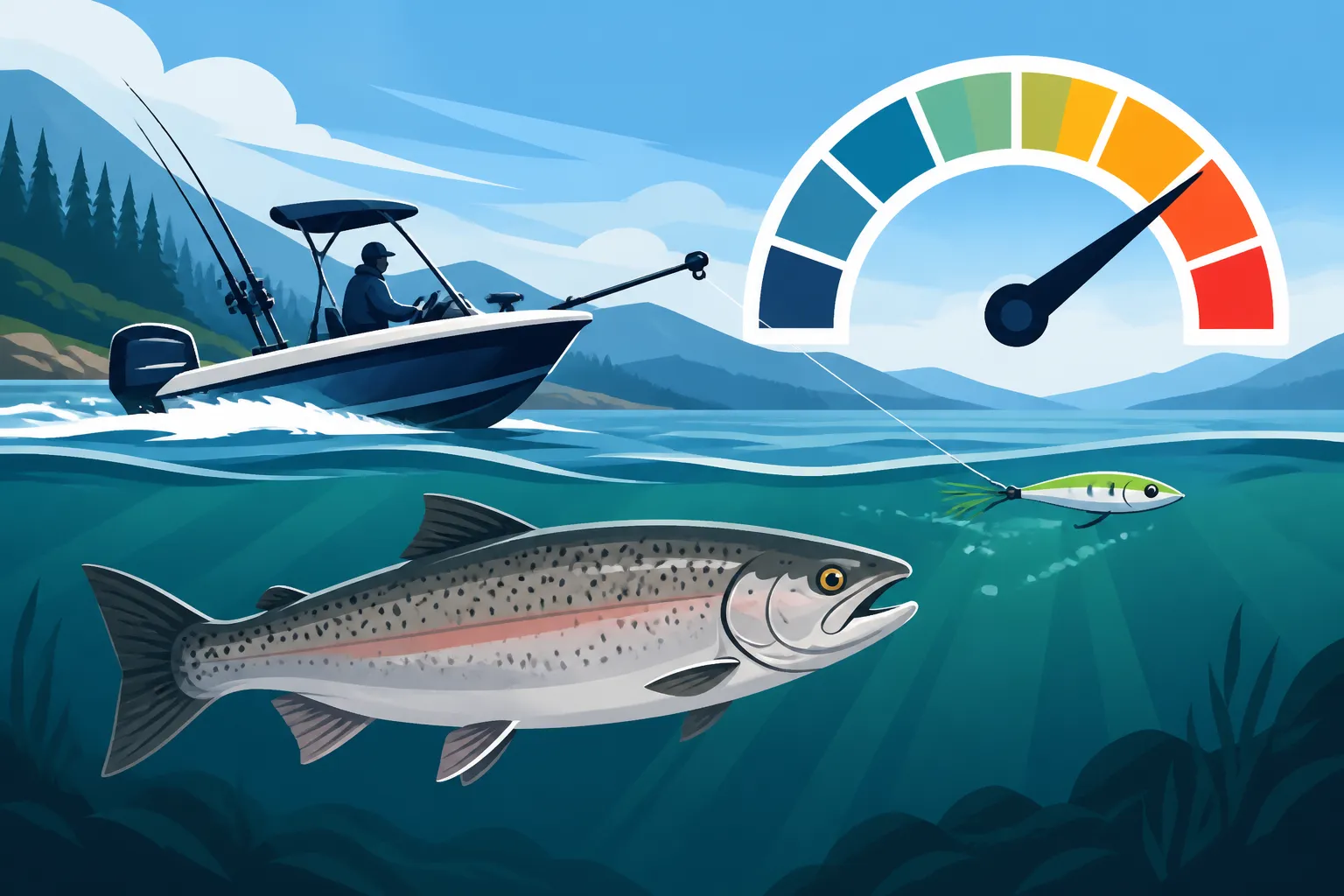
Most experienced BC anglers targeting Chinook will tell you that a good starting point for trolling speed is typically between 2.0 and 4.0 miles per hour (mph), or roughly 3.2 to 6.4 kilometers per hour (km/h). This range provides enough speed to impart an enticing action to most common Chinook lures while still allowing the fish to intercept the bait.
Within this range, "slower" speeds (around 2.0-2.5 mph) often work well in colder water, during slack tides, or when the fish seem lethargic. It gives them more time to react and commit to the strike. Conversely, "faster" speeds (3.0-4.0 mph, sometimes even higher) can be incredibly effective when the fish are aggressive, the water is warmer, or during strong tides when you need to impart more action to your lure against the current. It creates an impression of a fleeing baitfish, triggering those aggressive reaction strikes. Remember, these are just starting points, and constant adjustment based on how the fish are responding is paramount.
Adjusting Speed Based on Lure Type and Conditions
Your choice of lure dramatically influences your ideal trolling speed. Different lures are designed to perform optimally at different speeds, and understanding this relationship is vital for successful Chinook fishing.
-
Flasher/Hoochie Combos: These are incredibly popular for Chinook, and they typically perform best at the slower end of the spectrum, generally between 2.0 and 3.0 mph. The flasher is designed to rotate and create a lot of flash and vibration, attracting fish from a distance. The hoochie (a small, soft plastic squid imitation) trails behind, darting and dancing in an erratic pattern. Too fast, and the hoochie can "blow out" or spin unnaturally, looking more like a propeller than a squid. Too slow, and the flasher might not have enough action to be effective. It’s a delicate balance. Many anglers swear by the "kick" of their flasher, feeling the subtle vibration through the rod as evidence it's working properly. This is a common setup used in Salmon Fishing Techniques for BC Rivers.
-
Spoons and Plugs: These are often more versatile in terms of speed. Spoons, like the classic Gibbs Delta or Silver Horde, have a distinct wobbling action that can be effective from 2.5 to 4.0 mph or even higher. At slower speeds, they have a wider, more seductive wobble. As you speed up, the wobble becomes tighter and more frantic, mimicking a fleeing baitfish. Plugs, such as the Tomic or Apex, are designed to dive and wiggle. Their action is often built into their shape, allowing them to perform well across a broad speed range, sometimes even up to 5.0 mph for aggressive fish. The key is to watch your rod tip: it should show a steady, rhythmic bounce, indicating the spoon or plug is working correctly.
-
Natural Bait (e.g., Herring): When using natural baits like rigged herring, the goal is to mimic a wounded or panicked baitfish. This can be achieved with a slightly slower speed, usually between 2.0 and 3.5 mph. The way you rig your herring will also affect its action. A properly rigged herring should spin or roll subtly, creating a natural presentation. Too fast, and the herring can spin too wildly, looking unnatural, or even tear apart. Using bait can be a highly effective method, and understanding How to rig herring for chinook trolling is crucial for success. You can often find pre-rigged herring or bait heads from local tackle shops or from online retailers like Amazon.
Tidal currents, wind, and depth also require speed adjustments. If you're trolling against a strong current, your boat speed will need to be higher to achieve the desired lure speed through the water. Conversely, with the current, you'll need to slow your boat down. Wind can push your boat around, making it difficult to maintain a consistent speed, so utilizing your kicker motor and main engine together or a good autopilot system is key. Deeper water often requires slightly slower speeds to allow the lure to get down and maintain its action, especially when using downriggers. More details on Best downrigger settings for summer chinook can help ensure your bait is at the right depth.
| Lure Type | Recommended Trolling Speed (mph) | Notes |
|---|---|---|
| Flasher/Hoochie | 2.0 – 3.0 | Focus on flasher rotation, hoochie "kick". Slower for lethargic fish. |
| Spoons | 2.5 – 4.0 | Wider wobble at slower speeds, tighter at faster. Rod tip action is key. |
| Plugs | 2.5 – 5.0 | Versatile. Test for desired wiggle. Can handle higher speeds. |
| Natural Bait (Herring) | 2.0 – 3.5 | Mimic wounded bait. Proper rigging crucial for subtle roll/spin. |
| Anchovy/Sardine | 2.0 – 3.0 | Similar to herring. Consider scent trails. |
Fine-Tuning Your Trolling Speed for Success
Getting into the general speed range is one thing, but truly mastering Chinook trolling involves constant observation and adjustment. Think of it less as setting a speed and forgetting it, and more as a dynamic dance with the fish and the environment.
Reading Your Gear: Rod Tip Action and Downrigger Behavior
Your fishing rod is your primary feedback mechanism for lure action. When your lure is deployed, watch the tip of your rod. It should have a consistent, rhythmic bounce or vibration. This "thump" indicates that your flasher is rotating correctly, your spoon is wobbling, or your plug is wiggling as intended. If the rod tip is dead still, your lure might be fouled, or you’re trolling too slowly for it to engage. If it’s violently whipping, you might be going too fast, causing the lure to "blow out" or spin unnaturally.
For those using downriggers, the cable angle can also give you clues. A very steep cable angle might mean you're trolling too slowly, and your ball is dropping below your target depth. A very flat cable angle means you're moving quickly, and your ball might be riding higher than intended. Modern downriggers often have digital readouts for depth and even speed at the ball, which can be a game-changer. Keeping an eye on these visual cues, combined with your boat's speedometer, allows you to maintain the ideal presentation.
The "S-Curve" and Other Trolling Patterns
Consistent speed is important, but sometimes, a bit of inconsistency can trigger a strike. One highly effective technique is the "S-curve" or zig-zag pattern. Instead of trolling in a straight line, steer your boat in a gentle S-shape. As your boat turns, the lures on the inside of the turn will slow down, while those on the outside will speed up. This momentary change in speed and action can often be the exact trigger a finicky Chinook needs to commit.
Consider other variations as well. Short bursts of acceleration followed by a return to your target speed can also work wonders. Sometimes just a quick, sharp turn, similar to how a predator might corner its prey, can elicit a strike. The idea is to break the monotony and present your lure in a way that mimics a real, erratic baitfish. This often falls under advanced Salmon Fishing Techniques for BC Rivers.
Monitoring Conditions and Making Adjustments
British Columbia's waters are dynamic, and conditions can change rapidly. Staying vigilant and adapting your trolling speed accordingly is crucial. Your fish finder is an invaluable tool for this. Pay attention to not just where the fish are, but how they are reacting. Are they chasing your bait but not committing? Perhaps a slight speed adjustment is needed. Are they marking deep? You might need to adjust your Best downrigger settings for summer chinook.
Water temperature gauges are also vital. If the temperature drops, slow down. If it rises, you might be able to pick up the pace. Tidal cycles heavily influence Chinook behavior and current speed. Fishing during an incoming or outgoing tide can concentrate baitfish and salmon, making them more aggressive. The current itself will demand constant speed adjustments from your boat to maintain your desired lure speed through the water. Even cloud cover or bright sun can dictate how deep fish are and how aggressively they feed, suggesting a change in your trolling pace. Before you even head out, checking BC Fishery Notices and In-Season Closures, Explained can give you an edge by informing you of any sudden changes or hotspot reports.
Essential Gear for Precision Trolling
To truly dial in your trolling speed and presentation, having the right equipment isn't just a luxury—it's often a necessity, especially when targeting discerning Chinook. Investing in some key pieces of gear can make a profound difference in your success rate.
Downriggers and Depth Control
Chinook salmon often hold at specific depths, sometimes just a few feet below the surface, other times hugging the bottom in 200 feet of water. Downriggers are indispensable for consistently presenting your lure at these precise depths. They allow you to send your mainline, with your lure attached, down to a specific depth using a heavy cannonball weight, then release it when a fish strikes. This ensures your lure is in the strike zone, regardless of your boat speed. Without them, your line angle and lure depth would vary wildly with changes in speed, making consistent presentation almost impossible.
Modern downriggers, like those from Scotty or Cannon, often feature digital readouts for depth, adjustable retrieve speeds, and even positive ion control to attract fish. Pairing these with quality trolling rods designed to handle the pull of a downrigger and the fight of a big Chinook is essential. When you're consistently putting your lure in the fish's face at the right depth, your trolling speed becomes even more effective.
Speed and Temperature Monitoring Devices
While your boat's speedometer gives you your speed over ground, what really matters for your lures is your speed through the water. Currents can make these two speeds very different. Investing in a good paddlewheel sensor or a GPS-enabled plotter that provides speed over water can eliminate guesswork. Knowing your precise speed through the water allows for much more consistent lure action. Many higher-end fish finders available on platforms like Amazon will integrate these features.
Similarly, a dedicated water temperature gauge, or a fish finder with a reliable temperature sensor, is invaluable. As discussed, water temperature is a huge factor in Chinook activity. Being able to read the temperature at different depths can help you locate the thermocline (where temperatures change dramatically) where Chinook often feed. If you find a layer of water with an ideal temperature, you can then use your downriggers and precise trolling speed to keep your lures right in that zone.
Lures and Baits to Complement Your Speed Strategy
Finally, the lures and baits you choose must work in harmony with your trolling speed strategy. A cheap, poorly made spoon might "wash out" or stop wobbling at higher speeds, no matter how perfect your boat speed is. Conversely, a plug designed for fast trolling won't have much action if you're creeping along at 1.5 mph.
Always consider the lure's intended action and how it interacts with water speed. Carry a variety of spoons, plugs, and natural bait setups (like herring or anchovy) to give yourself options. Pay attention to colors that work well in different light conditions and water clarity. Many tackle shops in places like Campbell River or Tofino, and online retailers like Amazon, offer a vast selection. By understanding how each lure type reacts to different trolling speeds, you can make informed decisions and switch up your spread until you find what the Chinook are biting on that day. For a deeper dive into lure choices and techniques, consider reading How to fish a spoon for BC coastal salmon or How to rig herring for chinook trolling.
Ultimately, successful Chinook salmon trolling in BC is a blend of science, art, and adaptability. By understanding the fish, paying close attention to your gear, and making continuous adjustments to your speed, you'll dramatically increase your chances of connecting with these incredible fish.
Disclaimer
This article is for general informational purposes only and does not constitute professional advice. Laws, prices and regulations vary by location and change over time. Consult a qualified professional for guidance on your specific situation.