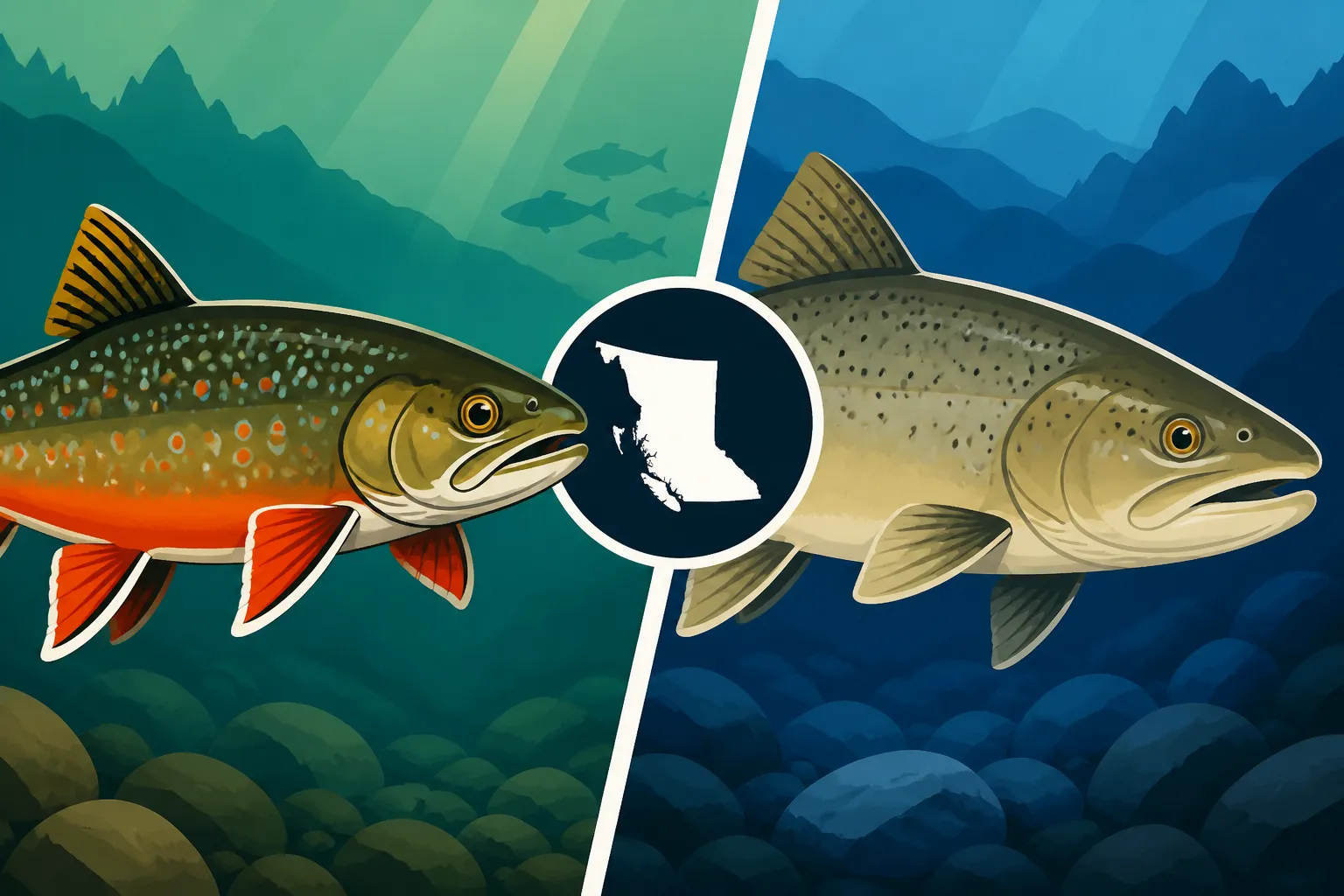
What a Dolly Varden looks like compared to a bull trout
It's incredibly frustrating, isn't it, when you're out on a beautiful British Columbia river or lake, you hook into a gorgeous fish, and then you stare at it, scratching your head, wondering if it's a Dolly Varden or a Bull Trout? These two species are so alike in appearance that even seasoned anglers can get stumped, and misidentification can lead to confusion about regulations. This comprehensive guide will help clear up that common confusion, offering clear visual cues and practical tips to distinguish between these magnificent char species.
The Perplexing Identity Crisis: Why Dolly Varden and Bull Trout Look So Similar
You’re not alone if you find yourself squinting at your catch, trying to decide its lineage. The similarity between Dolly Varden and Bull Trout is a tale as old as time for BC anglers. It’s a classic head-scratcher that stems from their deep-rooted biological connections and their shared watery homes.
A Shared Ancestry: Explaining the "Char" Family Tree
Both Dolly Varden and Bull Trout belong to the Salvelinus genus, which means they are both members of the "char" family. Think of it like a family reunion where all the cousins share some strong family resemblances. Other famous members of this genus include Brook Trout and Arctic Char. Because they're so closely related, sharing common ancestors, they naturally have many similar physical characteristics – torpedo-shaped bodies, adipose fins, and those tell-tale light spots on a darker body that are characteristic of char. For years, there was even scientific debate and reclassification, adding to the confusion. Some historical classifications lumped them all together, and it wasn't until more recent genetic studies that their distinct species status was fully clarified. This shared heritage is why the casual observer, or even the experienced angler focused on the fight rather than the fine details, can easily mistake one for the other.
Habitat Overlap and Regional Variations
Another layer to this identification puzzle is their shared habitat. In many parts of British Columbia, Dolly Varden and Bull Trout occupy similar cold, clean water environments. You might find them in the same river system, or even the same lake, sometimes in different reaches or depths. For instance, a Bull Trout might prefer the deep, cold pockets of a larger river, while a Dolly Varden could be found in a tributary stream just upstream. This overlap means you can't rely solely on location to identify your catch. Adding to the challenge, environmental factors like water clarity, diet, and even the fish's age can subtly alter their coloration and body shape, making an already tricky identification even harder. A young Bull Trout might look more slender and spotted, resembling a Dolly, while a large, robust Dolly Varden in prime condition could be mistaken for a Bull Trout. This variability across different regions of our vast province, from the coastal rainforests to the interior mountains, means you need to know the specific characteristics to look for.
Key Visual Differences: How to Spot a Dolly Varden
Don't despair! While they're cousins, Dolly Varden do have some distinct features that, once you know them, can help you confidently identify your catch. It just takes a little practice and a keen eye.
Spotting Patterns and Coloration Nuances
When you're looking at a Dolly Varden, pay close attention to the spots. Their spots tend to be smaller, more numerous, and often have a vibrant yellow, orange, or even reddish hue. Crucially, these spots often extend onto the fins, particularly the dorsal and caudal (tail) fins. This is a pretty good giveaway. Imagine sprinkling tiny, colourful candy dots all over the fish's back and sides, and even a few on its fins – that's often the Dolly Varden look. Their overall body shape can vary, but generally, they are a bit more slender and streamlined than their Bull Trout relatives, especially in their freshwater forms. While not as pronounced as on a Brook Trout, Dollies often exhibit subtle white leading edges on their pectoral, pelvic, and anal fins. It's a fine line of white, often followed by a darker band, but it's there if you look closely. You can find some excellent laminated fish identification guides on Amazon that highlight these subtle differences, which are fantastic to keep in your tackle box.
Head and Mouth Morphology
The head and mouth are often where the most reliable differences lie. A Dolly Varden typically has a more proportionate head, appearing smaller in relation to its body size. When you examine the mouth, you'll notice it's generally smaller and doesn't extend much beyond the posterior edge of the eye. It's a more modest, less aggressive-looking mouth compared to its Bull Trout cousin. Think of a "gentler" profile, even for a predatory fish. The jawline is usually not as pronounced or underslung. Taking a moment to gently open the mouth and see how far back it extends can be a very definitive identifier when you’re out on the water.
Size and Distribution Tendencies
In terms of size, Dolly Varden usually don't reach the colossal dimensions that some Bull Trout are known for. While they can grow to respectable sizes, especially the anadromous (sea-run) Dolly Varden in coastal areas, most freshwater populations are smaller. A Dolly Varden might typically range from 12 to 20 inches in many streams, though larger specimens are certainly caught. Their distribution is generally more widespread across British Columbia, particularly in coastal drainages, the Lower Mainland, and throughout northern BC. They often inhabit smaller, colder, and very clean streams, rivers, and even high-alpine lakes. If you're fishing in a smaller coastal river system, especially one with a strong salmon presence (as Dollies love to feed on salmon eggs and fry), chances are good you might encounter a Dolly Varden. Understanding Chinook Salmon Migration Patterns in BC can sometimes give you a hint of where Dollies might be feasting.
Key Visual Differences: How to Spot a Bull Trout
Now, let's talk about the Bull Trout – a true apex predator of many BC waterways. Once you've seen a few, their imposing presence and distinct features become much easier to recognize.
Distinctive Spotting and Body Features
When you look at a Bull Trout, the spots are one of the most immediate indicators. Unlike the small, numerous spots of the Dolly Varden, Bull Trout typically have fewer, larger, and more irregularly shaped spots. These spots are usually pale yellow, olive green, or even sometimes a pale pink, and a key difference is that they very rarely extend onto the fins. Imagine dropping larger, irregularly shaped pebbles onto the fish's back – that's the Bull Trout's spotting pattern. Their body shape is generally more robust, deeper-bodied, and powerful-looking. They often have a blockier, more muscled appearance, befitting their predatory nature. The white leading edges on their pectoral, pelvic, and anal fins, if present at all, are usually extremely faint and not nearly as crisp or distinct as those on a Dolly Varden or Brook Trout. This absence or faintness of white on the fins is a crucial point for differentiation.
The Gaping Maw: Head and Mouth Characteristics
This is often the most definitive characteristic of a Bull Trout: their head is distinctly larger and broader in proportion to their body. They have a prominent, often slightly underslung jaw, giving them a truly aggressive and formidable appearance. Their mouth is considerably larger than a Dolly Varden's, extending well past the posterior margin of the eye. If you can slide your finger under the corner of their jaw past their eye, you're almost certainly looking at a Bull Trout. This "gaping maw" is designed for swallowing larger prey whole, a clear adaptation to their predatory lifestyle. It's a feature that, once you've seen it a few times, becomes unmistakable. If you're looking for gear for these larger predators, a quick search on Amazon for "heavy duty fishing lures" will show you the kind of tackle that often targets these big fish.
Size and Distribution Tendencies
Bull Trout are renowned for their potential to grow to impressive sizes, particularly in the larger lakes and river systems of BC's interior. We're talking about fish that can easily exceed 25-30 inches, with the provincial record weighing in at a truly massive size. These fish are true trophies. Their distribution leans heavily towards the interior of British Columbia, especially in the larger, colder river systems like parts of the Fraser, Columbia, and Skeena drainages, and deep, cold lakes such as Kootenay Lake. They thrive in environments where they have access to abundant prey fish like Kokanee or Whitefish. If you're fishing in a large interior lake or river system known for its robust fish populations, and you hook into a substantial char, there's a good chance it's a Bull Trout. Learning about Bull Trout in BC's Interior Rivers or the BC record bull trout weight gives you a sense of just how impressive these fish can get.
A Side-by-Side Comparison: Dolly Varden vs. Bull Trout at a Glance
Sometimes, all you need is a quick visual cheat sheet when you're on the riverbank. Having these key differences summarized can make all the difference in a quick identification.
Creating a Quick Reference Guide
To make things easy, here's a table summarizing the main points of difference between Dolly Varden and Bull Trout. Keep this in mind next time you're debating your catch! This table is a simplified version of the detailed guides you might find in a comprehensive Trout Species Identification Guide for BC.
| Feature | Dolly Varden | Bull Trout |
|---|---|---|
| Spots | Numerous, small, often yellow/orange/red. Often extend onto fins. | Fewer, larger, irregular, pale yellow/olive. Rarely extend onto fins. |
| Head | Proportionate to body, generally smaller. | Large, broad, often blocky. |
| Mouth | Smaller, typically not extending past posterior eye margin. | Large, prominent, often extending well past posterior eye margin. |
| Body Shape | More slender, streamlined. | More robust, deeper-bodied, powerful. |
| Fin Edges | Subtle white leading edges often visible on paired fins. | White leading edges usually absent or very faint. |
| Coloration | Varies, often more iridescent, sometimes green-blue hues. | Varies, often darker olive-green to grey-brown, less iridescent. |
| Size | Generally smaller (12-20 inches common), though sea-run can be larger. | Can grow very large (25-30+ inches common in trophy waters). |
| Distribution | Widespread, especially coastal, northern BC, smaller systems. | Interior BC, larger lakes and rivers (e.g., Kootenay, Fraser). |
Why Identification Matters for Anglers
Accurate identification isn't just about satisfying your curiosity; it's a critical part of responsible angling and conservation. British Columbia has specific fishing regulations, including bag and possession limits, for different species, and these can vary significantly between Dolly Varden and Bull Trout, or even specific populations within those species. For example, some areas might have stricter BC bull trout conservation surcharge stamp requirements or catch-and-release rules for Bull Trout due to conservation concerns, while Dolly Varden regulations might be different. Misidentifying a protected Bull Trout as a Dolly Varden could inadvertently lead to an infraction. Always make sure to consult the current BC Fishing Regulations Explained for the specific area you are fishing. It’s not just about avoiding penalties; it’s about contributing to the health and sustainability of these incredible fish populations for generations to come.
Habitat, Diet, and Angling Considerations
Knowing where these fish live and what they eat can not only help you identify them but also significantly improve your chances of catching them. They are both formidable predators, but their nuances in habitat and diet lead to different angling approaches.
Preferred Haunts and Feeding Habits
Dolly Varden, particularly the resident freshwater populations, often prefer the colder, clear, smaller coastal and mountain streams. They are opportunistic feeders, preying heavily on aquatic insects, small fish, and critically, salmon eggs and fry during salmon spawning seasons. You'll often find them lurking behind rocks, in small pockets of slower water, or at the tail ends of runs where salmon might be laying their eggs. Their diet also includes terrestrial insects that fall into the water, making them a fun target for fly anglers.
Bull Trout, on the other hand, tend to dominate larger, colder rivers and deep, expansive lakes. They are known as voracious piscivores, meaning they primarily eat other fish. In lakes like Kootenay, for instance, Bull Trout are key predators of the abundant Kokanee, growing to immense sizes by feasting on these smaller salmonids. In river systems, they'll target Whitefish, juvenile salmon, and anything else they can overpower. They often hold in deep pools, under log jams, or at the mouths of tributary streams, acting as ambush predators. If you're fishing in a larger body of water like the Kootenay Lake Fishing Guide describes, and you're targeting big predators, you're likely aiming for a Bull Trout.
Tackle and Techniques: Adjusting Your Approach
Given their different feeding habits and typical sizes, your tackle and techniques will often diverge for each species.
For Dolly Varden, especially in smaller streams, lighter gear is usually appropriate. Small inline spinners, spoons (like a size 0 or 1 Mepps or Panther Martin), small flies (nymphs, streamers, or even dry flies in season), or small roe bags can be incredibly effective. You'll often be targeting them with stealth, casting into smaller pockets, riffles, and runs. Wading carefully and approaching spots quietly is key. Look for them in areas where BC steelhead season opening date might mean an abundance of eggs in the river.
For Bull Trout, you'll want to step up your gear. Their aggressive nature and potential size demand heavier rods and reels. Larger spoons, plugs (like Kwikfish or Flatfish), larger streamers for fly fishing, or even dead bait fished on the bottom in deeper pools are popular choices. When targeting them in lakes, trolling with dodgers and hootchies, or large plugs, is effective. In rivers, focusing on deep, slow pools, undercut banks, and heavy cover like submerged timber will be your best bet. Think about the techniques used for How to Catch Steelhead in BC or Best Baits for Steelhead on the Skeena – similar principles apply for targeting these powerful char, often requiring robust tackle that can be found on Amazon.
Conservation and Responsible Angling
Regardless of whether you've caught a Dolly Varden or a Bull Trout, responsible angling practices are paramount. Both species are sensitive to overfishing and improper handling, especially the larger, older fish which are vital for reproduction. Most anglers in BC practice catch-and-release for char, particularly for Bull Trout which often have very specific regulations due to their protected status in some areas. Always handle fish gently, minimize their time out of the water, and use wet hands or gloves when handling. Avoid dragging them on rocks or gravel. If you're taking a photo, do it quickly and with the fish partially submerged if possible. Proper release techniques are as important for a char as they are for a BC Fraser River Sturgeon Catch and Release Requirement. Always be aware of whether you're in BC Catch and Release Only Waters and follow all local regulations diligently to ensure these magnificent fish continue to thrive. You can always check BC Fishery Notices and In-Season Closures, Explained before your trip for any last-minute updates that might impact your day on the water.
Disclaimer
This article is for general informational purposes only and does not constitute professional advice. Laws, prices and regulations vary by location and change over time. Consult a qualified professional for guidance on your specific situation.