What baitfish BC salmon key on
It's a common dilemma for anglers: you're out on the vast waters of British Columbia, surrounded by incredible natural beauty, but the salmon just aren't biting. You see boils, you hear splashing, but what are they really chasing? Understanding what baitfish BC salmon key on isn't just a fun fact; it's the absolute cornerstone of successful salmon fishing, allowing you to "match the hatch" and present an offering they simply can't resist. This guide will peel back the layers to reveal the primary forage for our magnificent Pacific salmon, giving you the insights you need to make your next trip a triumph.
The Essential Role of Baitfish in the Salmon Ecosystem
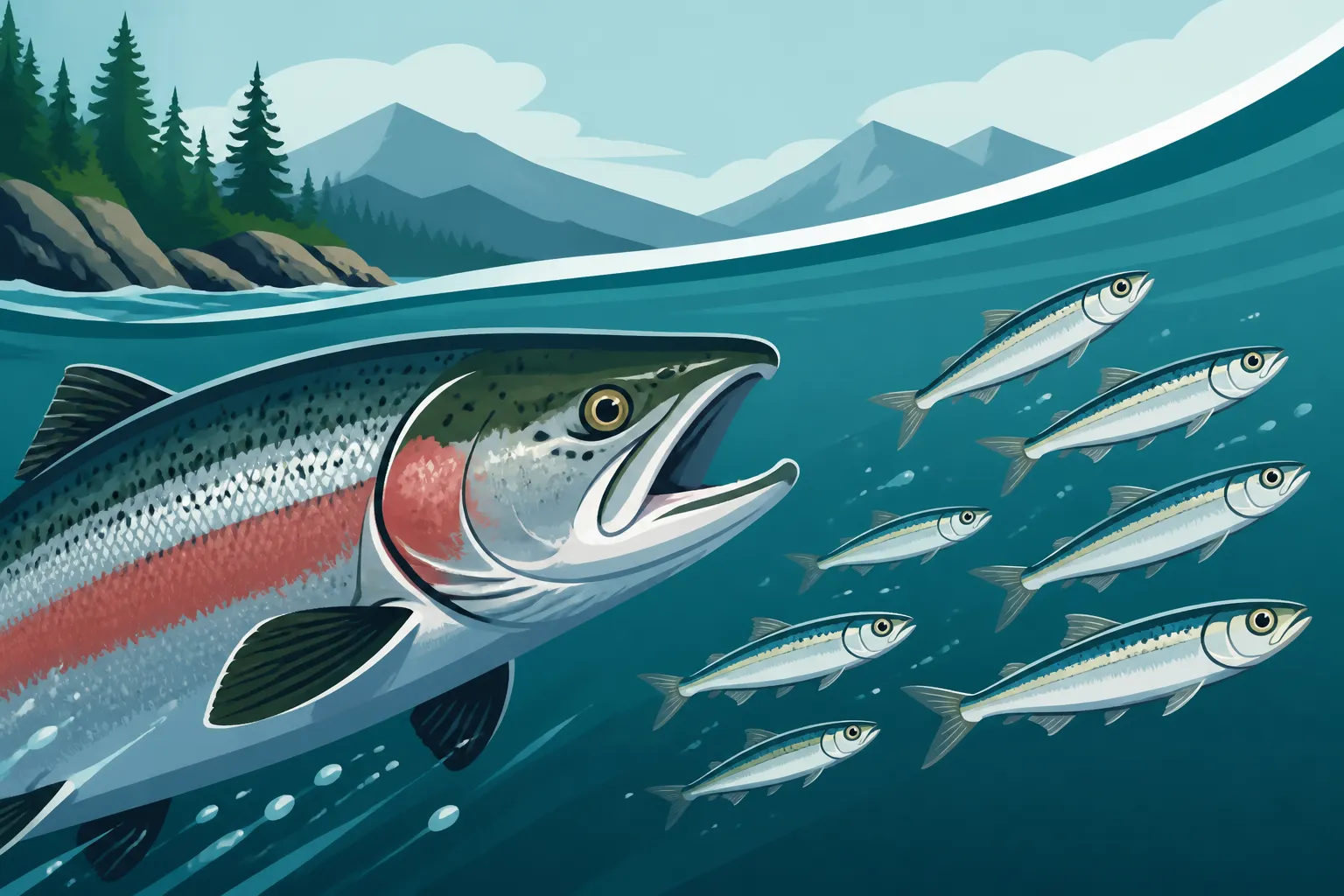
Think of the ocean as a giant buffet, and baitfish are the main course, dessert, and appetizers all rolled into one for British Columbia's salmon. These smaller, schooling fish are absolutely vital to the survival and growth of all five species of Pacific salmon – Chinook, Coho, Sockeye, Pink, and Chum – during their extensive ocean migrations. Without a rich and abundant supply of baitfish, our salmon simply wouldn't have the energy reserves needed to grow to their impressive sizes, make their arduous journey back to freshwater, and successfully spawn.
Imagine a young Chinook salmon, a mere fingerling, venturing out from the river mouth into the vast, open ocean. Its primary goal is to eat, grow, and avoid becoming a meal itself. The ocean is a demanding environment, and every calorie counts. Baitfish, often rich in oils and protein, provide that critical energy source. Their schooling behavior, while a defense mechanism against larger predators, also creates dense, easy-to-target feeding opportunities for salmon. It’s a dynamic, intricate dance of predator and prey, and as anglers, tuning into this dance is key to our success.
Understanding this foundational relationship allows us to approach salmon fishing with a more informed strategy. Instead of blindly casting, we start thinking like a salmon: "Where would I go to find my next meal?" This means looking for areas where baitfish congregate, understanding their movements, and recognizing the signs that salmon are actively hunting. It's about more than just fishing; it's about connecting with the natural rhythm of the ocean and the incredible creatures that call it home.
Principal Baitfish Species Salmon Hunt in BC Waters
British Columbia's diverse coastal and estuarine environments host a variety of baitfish, each playing a crucial role in the salmon diet at different times and in different locations. While salmon can be opportunistic feeders, certain species form the backbone of their diet.
Pacific Herring: The Cornerstone of the Salmon Diet
When you talk about baitfish for BC salmon, Pacific Herring (Clupea pallasii) are usually the first species that comes to mind, and for good reason. They are, without a doubt, a cornerstone of the Pacific salmon's diet, particularly for Chinook and Coho, but also for Sockeye, Pink, and Chum at various life stages. Herring are abundant, schooling fish that can reach lengths of up to 38 cm, though most are smaller. Their high fat content makes them an incredibly energy-rich food source, essential for salmon putting on weight for their long migrations.
You'll find herring in vast schools in nearshore waters, bays, and inlets, especially during their spawning season in late winter and early spring. This is a critical time, as salmon will gorge themselves on these readily available protein packs. Anglers often imitate herring with spoons that flash and wobble, mimicking a wounded herring, or by using actual cut-plug herring as bait. If you're wondering what makes the biggest salmon grow so big, it’s often a consistent diet of robust herring. The link What herring are and why salmon key on them dives deeper into this vital prey species.
Northern Anchovies: Small but Mighty Schools
Northern Anchovies (Engraulis mordax) might be smaller than herring, typically growing to about 18 cm, but their sheer abundance in dense schools makes them an incredibly important food source, especially for Coho and Pink salmon, and often juvenile Chinook. These highly energetic fish are found closer to the surface and in warmer, nutrient-rich waters. Their rapid movements and tendency to form enormous bait balls attract salmon from far and wide.
When anchovies are plentiful, salmon will key in on them with an almost singular focus. Anglers seeking to "match the hatch" with anchovies often turn to smaller, slender spoons, plastic hoochies, or even flies that imitate their darting, silvery profile. Fishing in areas where anchovy schools are visible on the surface or marked on your sonar can be incredibly productive. You'll often see birds diving and seals feeding, which are tell-tale signs of anchovy concentrations.
Pacific Sand Lance (Needlefish): The Slender Snack
Pacific Sand Lance (Ammodytes hexapterus), often called "needlefish" by anglers, are long, slender fish, typically growing to about 20 cm. What makes them unique and so attractive to salmon, particularly Coho and Chinook, is their habit of burying themselves in sandy or gravelly seabeds to escape predators. However, when they emerge to feed on plankton, they become easy targets. Their elongated, silvery body is a dead giveaway, and you'll often find them in shallower sandy areas, around river mouths, and in tidal flats.
Salmon will actively seek out schools of sand lance, and their presence can turn on a bite. Anglers looking to imitate sand lance often use thin, straight-bodied spoons or jigs, or sometimes even slender plastic lures retrieved with a darting, erratic action. It's crucial to present your offering in a way that suggests a disoriented sand lance, making it an easy meal for a hungry salmon.
Smelt and Other Estuarine Forage
Several species of smelt, such as Surf Smelt (Hypomesus pretiosus) and Longfin Smelt (Spirinchus thaleichthys), are also key baitfish, especially in estuaries and near river mouths. These smaller, silvery fish often run in dense schools and are a readily available food source for salmon that are transitioning between salt and freshwater, or those lingering in coastal bays. Their presence can be a huge draw for all salmon species, particularly Coho and Chinook.
Beyond these primary species, salmon are opportunistic predators. Larger salmon, especially Chinook, won't hesitate to prey on smaller fish, including juvenile salmon, small rockfish, or even various types of sculpins if the opportunity arises. This means that sometimes, a larger, more aggressive lure might be the ticket, mimicking a struggling smaller fish rather than a traditional baitfish.
Understanding Salmon Foraging Behavior: More Than Just Eating
Knowing which baitfish salmon prefer is only half the battle; understanding how and when they forage takes your angling game to the next level. Salmon aren't simply mindless eating machines; their feeding habits are intricately linked to environmental factors and their own life cycle.
Seasonal Shifts and Migration Patterns
The availability of baitfish changes throughout the year, influencing where and what salmon are eating. In spring, as salmon emerge from their wintering grounds, they're often aggressively feeding to build up strength for their migrations. This might coincide with herring spawns or increased anchovy activity. As summer progresses, different baitfish might become more abundant in various areas. Chinook Salmon Migration Patterns in BC shows how their epic journeys dictate what food sources they encounter.
For example, a Chinook salmon spending its early life in the coastal waters off Vancouver Island might primarily key on herring and sand lance. As it matures and moves to offshore feeding grounds, it might encounter different schools of baitfish. As salmon approach the rivers to spawn, their feeding often tapers off, but they'll still strike out of aggression or instinct. Understanding these seasonal shifts helps you anticipate what baitfish might be present and what presentations will be most effective.
The Power of Location: Finding the Bait Ball
Salmon are highly migratory, but when it comes to feeding, they are keenly focused on finding concentrations of their prey. This means if you can find the baitfish, you'll likely find the salmon. Baitfish schools often congregate around specific structures: ledges, drop-offs, kelp beds, current lines, and river mouths. These areas provide shelter, food, or natural funnel points that concentrate the smaller fish.
Modern electronics, like sonar and fish finders, are invaluable tools for locating bait balls. Seeing a dense cloud on your screen can be an electrifying moment because you know salmon are likely nearby. Best sonar settings for finding structure on Kootenay Lake offers some general principles, even if applied to a different lake, that can help you interpret what you're seeing. Pay attention to changes in depth, temperature breaks (especially for species like anchovies), and areas where current creates eddies or upwellings, as these can all be hotspots for baitfish.
Tidal and Current Influence: Nature's Conveyor Belt
Tides and currents play a monumental role in concentrating baitfish and, consequently, salmon. Strong tidal flows can push schools of baitfish into confined areas, making them easier targets for salmon. Tidal rips, current lines, and eddies are prime locations where baitfish might be disoriented or swept together, creating a feeding frenzy opportunity.
For instance, an incoming tide might push herring or anchovy schools into an inlet, and salmon will follow right behind them. Conversely, an outgoing tide might sweep baitfish out of an estuary, presenting a feeding lane for salmon staging at the mouth of a river. Learning to read the water, understand tidal charts, and observe current patterns will greatly enhance your ability to predict where baitfish (and therefore salmon) will be. This is especially true for coastal salmon fishing where the ebb and flow of the ocean dictate so much.
Replicating the Feast: Angler Strategies to Match the Baitfish
Now that we know what salmon are eating and why, it's time to talk about how we, as anglers, can best imitate those meals. Matching the baitfish isn't just about lure selection; it's about presentation, speed, depth, and even scent.
Lure Selection: Imitating Shape, Size, and Action
The tackle box of a successful BC salmon angler is typically a treasure trove of lures designed to mimic the principal baitfish species.
- Spoons: These are probably the most versatile and popular lures for salmon. Spoons like the popular Gibbs-Delta, Silver Horde, or Luhr Jensen Kwikfish (which are actually plugs but often grouped in action) come in various sizes, weights, and finishes. A long, slender spoon with a subtle wobble mimics a sand lance or a smaller herring. A broader spoon with a more aggressive flutter might imitate a fatter herring or a sardine. Experiment with finishes – chrome, chartreuse, blue/silver, or even glow-in-the-dark – depending on water clarity and light conditions. You can find a huge variety of these on Amazon, often in multi-packs, making it easy to build your collection.
- Plugs: These diving lures, often resembling larger baitfish or juvenile salmon, are excellent for Chinook. Brands like Hot Spot or Tomic are staples in BC. The key is to select a plug that dives to the desired depth and has an action that matches the baitfish's profile and movement. Larger, more aggressive plugs can mimic a wounded herring, triggering an instinctive strike from a big salmon.
- Hoochies/Squid Skirts: While often thought of for squid imitation, smaller hoochies in silvery or translucent colours, often rigged with a small baitfish fly or teaser, can effectively mimic anchovies or juvenile baitfish. They have a lifelike, undulating action when trolled behind a flasher.
- Flies: For fly anglers, specific streamer patterns are tied to imitate various baitfish. Clouser Minnows, Deceivers, and various local patterns are designed to replicate the size, shape, and flash of anchovies, herring fry, or sand lance. A retrieve that mimics the darting, erratic movement of a panicked baitfish is crucial.
Bait Fishing: The Real Thing
Sometimes, nothing beats the real thing. Using actual baitfish is incredibly effective, especially for Chinook salmon.
- Cut-Plug Herring: This is a classic for a reason. A properly cut and rigged herring spins in the water, creating a wounded baitfish action and releasing a potent scent trail that salmon find irresistible. The specific cut and hook placement are critical for achieving the perfect rotation. Learning How to rig herring for chinook trolling is a skill every serious salmon angler should master.
- Whole Herring/Anchovies: Trolling whole, natural bait behind a flasher is another deadly technique. The natural movement and scent can often outperform artificial lures, especially on wary fish. Ensuring your bait is fresh and properly rigged to swim naturally is paramount. Sometimes, having a good bait knife and fresh rigging elastic from Amazon can make all the difference.
| Baitfish Type | Common Imitations (Lures/Bait) | Key Features for Imitation | Salmon Species Often Targeted |
|---|---|---|---|
| Pacific Herring | Spoons (large, medium), Cut-plug bait | Flash, wobble, oily scent | Chinook, Coho, Sockeye |
| Northern Anchovy | Small spoons, hoochies, flies | Slender profile, darting action | Coho, Pink, Juvenile Chinook |
| Pacific Sand Lance | Slender spoons, jigs, plastic worms | Elongated shape, erratic darting | Coho, Chinook |
| Smelt | Small spoons, bucktail jigs, flies | Silvery flash, schooling action | Coho, Chinook, Pink |
| Juvenile Salmon/Finfish | Plugs (larger), large spoons, bucktails | Larger profile, aggressive action | Trophy Chinook, opportunistic |
Presentation and Technique: Bringing the Imitation to Life
Beyond choosing the right lure, how you present it is equally important.
- Depth: Salmon will feed at various depths, often following baitfish schools. Using downriggers is essential for getting your lures or bait down to the precise depth where the baitfish (and therefore salmon) are holding. Pay attention to your fish finder to see the depth of bait balls.
- Speed: Matching your trolling speed to the perceived activity of the baitfish is key. A fast retrieve might mimic a fleeing anchovy, while a slower, more deliberate troll could imitate a struggling herring. Trolling Techniques for BC Lake Trout shares principles that apply across species.
- Action: Ensure your lure has the correct action. Is it wobbling, darting, or spinning as intended? Sometimes a subtle adjustment to your leader length, a different flasher, or a slight bend in a spoon can drastically change its action and effectiveness.
- Scent: For bait, scent is naturally present. For lures, adding a scent attractant can provide an extra edge, masking human odors and providing a smell that salmon recognize as food. There are many commercially available scents you can buy on Amazon that are very popular with BC anglers.
In conclusion, the journey to becoming a more successful BC salmon angler is deeply intertwined with understanding the humble baitfish. They are the engine that drives the salmon's life cycle and the key to unlocking consistent bites. So next time you're on the water, take a moment to observe, consult your electronics, and think about what's on the menu beneath the waves. The salmon are telling you what they want; you just need to listen.
Disclaimer
This article is for general informational purposes only and does not constitute professional advice. Laws, prices and regulations vary by location and change over time. Consult a qualified professional for guidance on your specific situation.