How deep halibut live off the BC coast
It's a question that echoes in the minds of many anglers hitting the vast waters off British Columbia: "Just how deep do those big halibut really live?" It can feel like you're dropping your line into an abyss, wondering if you're even in the right zip code for these elusive flatfish. Understanding the depths at which halibut prefer to cruise isn't just a matter of curiosity; it's the key to turning a hopeful fishing trip into a successful one. This guide will take a deep dive into the world of Pacific halibut, uncovering their preferred depths, the reasons behind their choices, and how you can adapt your approach to find them, whether they're lurking in the shallows or hugging the ocean floor far below.
Understanding Halibut Habitats and Depth Preferences
Pacific halibut are truly fascinating creatures of the deep, and their preferred habitats dictate where you'll find them. They aren't just swimming around aimlessly; every depth and bottom contour serves a purpose in their survival. Knowing why they choose certain depths is just as important as knowing what those depths are.
The Flatfish Lifestyle and Bottom Composition
Halibut are classic flatfish, perfectly evolved for life on the ocean floor. Their flattened bodies and eyes on one side allow them to lie camouflaged against the seabed, waiting to ambush unsuspecting prey. Because of this lifestyle, the type of bottom composition is hugely important to them. They generally prefer soft, sandy, gravelly, or muddy bottoms where they can easily blend in and burrow slightly to hide. You'll rarely find them hovering over jagged rock piles for extended periods, though they might patrol the edges of such structure looking for food.
Think about it: if you're a fish designed to disappear, you're not going to hang out somewhere you stick out like a sore thumb. These soft bottoms are not only excellent for camouflage but also ideal for foraging for various invertebrates and smaller fish that also inhabit these areas. When you're dropping your gear, feeling for that soft thud or gentle drag against the bottom, you're confirming that you're in the right kind of neighbourhood for a halibut.
The Role of Temperature and Oxygen in Halibut Depth
Water temperature and oxygen levels are silent, yet powerful, influencers on where halibut decide to reside. Like most fish, halibut are cold-blooded, meaning their body temperature mirrors their surroundings. They thrive in colder waters, typically ranging from about 3°C to 8°C (37°F to 46°F). In British Columbia, these cooler temperatures are often found in deeper waters, which explains why they are so commonly associated with the depths.
As surface waters warm up, especially during the summer months, halibut will often retreat to deeper, cooler thermal refuges. However, it's not just temperature. Oxygen levels, or dissolved oxygen (DO), also play a critical role. While deeper waters are generally colder, some extremely deep trenches or stagnant areas can become anoxic (low in oxygen), pushing fish away. Halibut need a good balance of cold, well-oxygenated water, which is frequently found along the continental shelf and slopes off the BC coast. This balance means that while they might move around seasonally or even daily, they're always seeking that comfortable sweet spot where they can breathe easy and stay cool.
Food Sources and Foraging Habits
Ultimately, fish go where the food is, and halibut are no exception. Their depth preferences are strongly tied to the distribution of their prey. Halibut are opportunistic predators with a diverse diet, feasting on everything from herring, sandlance, cod, and sole to crab, octopus, and even smaller halibut. Many of these baitfish species, like herring, school up in different parts of the water column and at varying depths depending on the season, time of day, and presence of predators.
If there's a huge school of baitfish pushed up onto a shallower bank or reef by currents, a halibut might venture up from its usual haunts to capitalize on the easy meal. Conversely, if their preferred prey is holding in a deep trench, the halibut will be right there with them. This dynamic relationship with their food sources means that while there are "typical" depths, halibut can be found in a surprising range of environments. Anglers often find success by paying attention to what bait is present in the area – sometimes even seeing it on their fish finders – and then targeting those depths.
Typical Halibut Depths Off the BC Coast
So, let's get down to the brass tacks: what kind of depths are we actually talking about when we're searching for halibut in British Columbia? The answer, as with many things in fishing, isn't a single number. It's a range, influenced by location, season, and the specific characteristics of the underwater landscape. However, we can certainly outline the typical scenarios you'll encounter.
Shallow Water Halibut: The Unexpected Catch
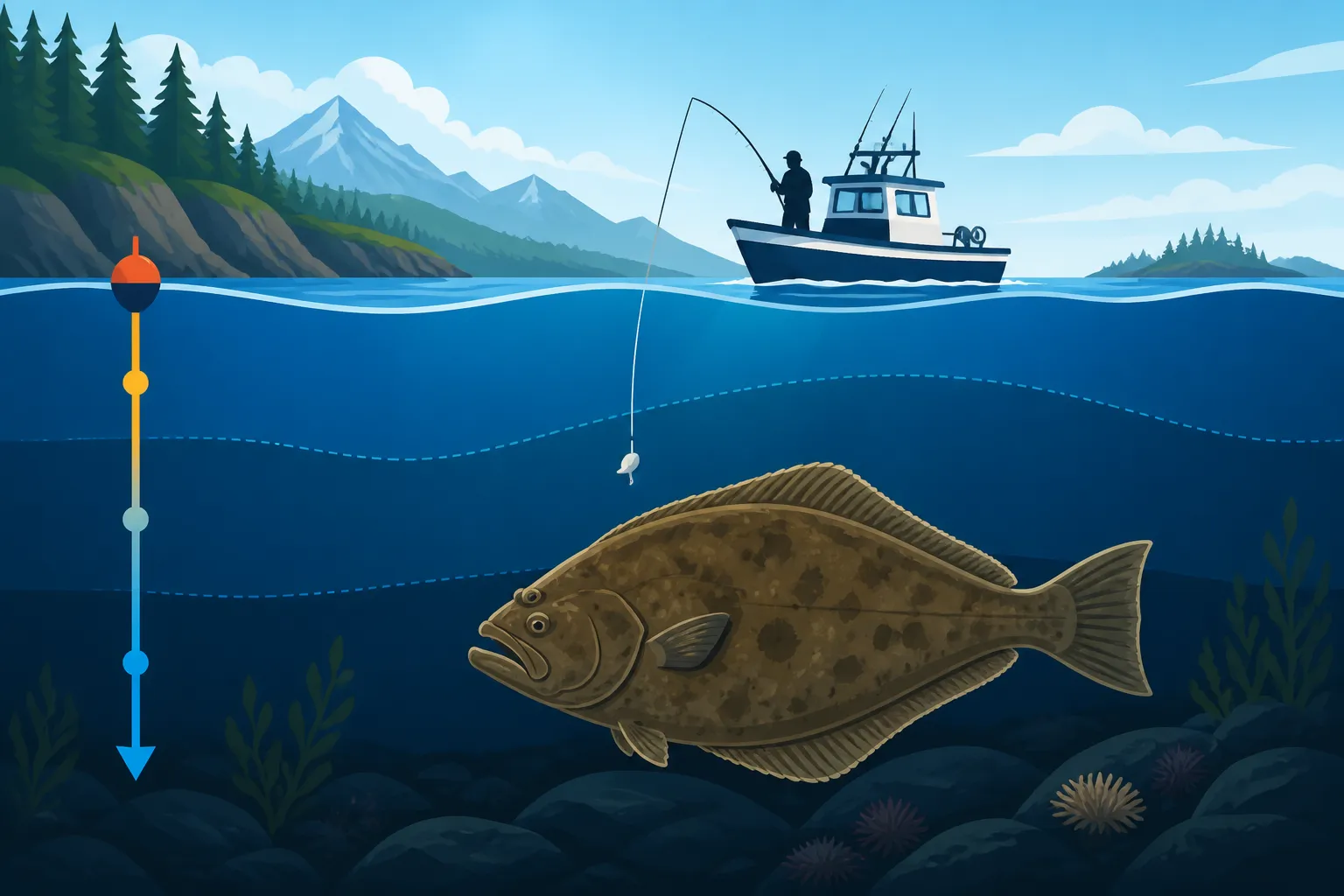
While many anglers associate halibut exclusively with the deep abyss, it's a common misconception that they only live in extreme depths. In fact, many trophy halibut are caught in surprisingly shallow water, especially during certain times of the year or in particular feeding zones. "Shallow" for a halibut can still mean 50 to 150 feet (roughly 15 to 45 metres), which to a freshwater angler might feel incredibly deep!
These shallower areas are often productive during periods of intense feeding, such as when large schools of baitfish push into shallower banks or around prominent points. Places like the expansive flats in Barkley Sound or some of the inshore banks around Vancouver Island can hold impressive numbers of halibut at these "shallower" depths. The key here is often a combination of current, ample food, and a suitable bottom type. Don't let the idea of super-deep fishing deter you from exploring shallower contours that fit the halibut's feeding profile. Sometimes, the unexpected shallower bite can be the most exciting! You might even find that a simple, weighted jig or bait rig, easily sourced from Amazon, is all you need.
Deep Water Giants: The Classic Halibut Grounds
For many, the image of halibut fishing involves dropping heavy gear into seemingly endless depths, and for good reason. The continental shelf and its breaks, where the seabed slopes dramatically into the abyss, are classic halibut territory. Here, depths typically range from 200 feet (60 metres) down to 800 feet (240 metres) or even deeper. This is where the truly massive "barn doors" are often found, dwelling in the cold, stable environment of the deep.
These deeper zones include submarine canyons, vast mud flats off the continental shelf, and the edges of seamounts or pinnacles that rise from the ocean floor. The sheer volume of water at these depths provides a consistent environment, rich in nutrients and often teeming with the larger prey items that trophy halibut seek. Targeting these areas requires heavier gear, more lead, and often an electric reel to manage the retrieve. This is where your sonar becomes your best friend, helping you identify structure and potential halibut marks amidst the vastness. It's a grind, but the rewards can be monumental.
Seasonal and Tidal Influences on Halibut Depth
Halibut are not static residents; their vertical movement throughout the water column can be influenced by seasons and tides.
- Seasonal Movements: During colder months, or particularly during spawning periods, halibut might consolidate in specific deeper areas. As spring transitions to summer, some halibut will move shallower to take advantage of warmer, more productive feeding grounds where baitfish are abundant. Then, as autumn approaches and waters cool, they may begin a migration back to deeper wintering grounds. Understanding BC Fishing Seasons by Month can provide crucial context for these movements.
- Tidal Changes: Tides play a significant role, especially in coastal areas. Strong tidal exchanges can create currents that push baitfish into certain areas, drawing halibut with them. On an incoming tide, halibut might move up onto shallower banks to feed, while on an outgoing tide, they could retreat to deeper channels or drop-offs. Anglers often pay close attention to the tide charts, timing their drifts to coincide with optimal feeding periods and preferred depths.
| Depth Category | Typical Range (feet) | Bottom Preference | Key Characteristics | Common Prey |
|---|---|---|---|---|
| Shallow | 50 – 150 | Sand, Gravel, Mud flats | Warmer, more dynamic, tidal influence | Herring, Sandlance, Crab |
| Moderate | 150 – 300 | Sand, Gravel, Mud, Ledges | Transition zone, good current breaks | Cod, Sole, Octopus, Herring |
| Deep | 300 – 800+ | Mud, Sand, Submarine Canyons | Cold, stable, often large structure | Larger Bottom Fish, Skates, Octopus, Crab |
Factors Influencing Halibut Depth Day-to-Day
While we have general depth ranges, halibut aren't robots. Their exact position on any given day can shift due to a variety of environmental cues. Mastering these daily nuances is what separates a good halibut angler from a great one. It's about more than just a depth number; it's about reading the water and the environment.
Structure and Bottom Topography
This is perhaps the most critical factor. Halibut, despite their flat appearance, are creatures of structure. They don't just sit on a flat, featureless seabed for no reason. Instead, they congregate around underwater features that offer an advantage for ambush, shelter from currents, or proximity to food.
Imagine a submerged hill (a "hump"), a sharp drop-off (a "ledge"), or a channel running through a flat. These are prime locations. Halibut will often position themselves on the "upcurrent" side of a hump, waiting for prey to drift over. They might line up along the edge of a deep channel where baitfish are swept past. Even a subtle change in the seabed, like a transition from soft mud to rocky gravel, can be a holding point. Your fish finder isn't just for seeing fish; it's for mapping the contours and understanding the "real estate" down below. Identifying these structures, whether they're at 100 feet or 600 feet, is often the secret to finding the fish. Knowing where the Best Halibut Fishing Spots in BC are often comes down to understanding these topographic features.
Current and Tide
We touched on this briefly, but current and tide deserve a deeper look. These forces are absolutely crucial for halibut. Halibut are not actively chasing down fast-moving prey over long distances; they are ambush predators. They use currents to their advantage.
- Positioning: Halibut will orient themselves into the current, facing upstream, allowing them to detect prey as it drifts by. They expend less energy waiting for food to come to them. If the current is too strong, they'll often tuck behind a piece of structure or into a slight depression on the seabed to avoid being swept away, waiting for the current to ease or for prey to be funnelled into their hiding spot.
- Feeding Windows: Specific tidal stages can trigger feeding frenzies. The turn of the tide, for example, often sees a burst of activity as currents change direction, stirring up the bottom and disorienting baitfish. During periods of slack tide, halibut might be less active, conserving energy. Conversely, a good strong drift, where your boat moves slowly over prime territory, can often be the most productive. Understanding How to catch halibut on the drift is vital for leveraging these currents.
Baitfish Movement and Forage Concentration
It cannot be stressed enough: halibut go where the food is. If herring are balled up at 150 feet, you'll likely find halibut close by. If sandlance are burying themselves in sandy patches at 500 feet, the halibut will be there.
- Sonar is King: Your fish finder is your window into this underwater food chain. Look for bait balls, arches, or lines on your screen that indicate concentrations of smaller fish. These are not necessarily halibut, but they are indicators that halibut could be nearby. Even if you don't see a "halibut arch," if you see a lot of bait, it's worth dropping a line.
- Seasonal Patterns: Certain baitfish have strong seasonal patterns. Herring, for instance, are a massive food source, and their spawning or schooling movements can dictate where halibut concentrate. This means that a spot that was red hot for halibut one month might be dead the next, simply because the bait has moved on. Keeping an eye on local BC Fishery Notices and In-Season Closures, Explained can sometimes offer clues about baitfish activity, even if indirectly. The more you learn about the local forage, the better you'll become at predicting where the halibut will be holding.
Gear and Techniques for Different Halibut Depths
Fishing for halibut, especially when you're targeting various depths, requires a thoughtful approach to your tackle and techniques. What works effectively in 100 feet isn't always practical, or even possible, in 700 feet. Let's break down how to gear up and fish smart.
Gear for Shallow to Moderate Depths (50-200 feet)
When you're working these "shallower" halibut grounds, you have a bit more flexibility and can often enjoy a more active, hands-on fishing experience.
- Rods and Reels: A stout salmon rod, or a medium-heavy conventional rod, paired with a good quality conventional reel spooled with 60-80 lb braided line is often ideal. You want something with enough backbone to fight a big fish but still sensitive enough to feel the bottom and subtle bites. Brands like Shimano or Penn make excellent reels for this purpose.
- Weight: Less weight is needed here. You might be using 16-32 oz (1-2 lbs) of lead, or even less if the current is light. This allows for a more natural presentation of your bait or jig.
- Techniques:
- Drift Fishing: This is super popular. You let the current and wind push your boat slowly over promising ground, dragging your bait or jig along the bottom. This covers a lot of territory and presents your offering to any halibut you drift over. How to catch halibut on the drift goes into much more detail.
- Jigging: A heavy metal jig, often tipped with a piece of bait, can be incredibly effective. Drop it to the bottom, reel up a few feet, and then aggressively jig it up and down. This mimics a wounded baitfish and can provoke an aggressive strike. Look for a good selection of jigs and leader material on Amazon.
- Bait Rigs: Simple two-hook spreader bars with large circle hooks, baited with herring, salmon heads, or octopus, are always a solid choice. Keep your leader material robust – 100-200 lb mono or fluorocarbon is not overkill.
Gear for Deep Water (200+ feet)
This is where the gear really has to step up. The sheer depth, pressure, and the potential size of the fish demand heavy-duty equipment.
- Rods and Reels: You'll need a very heavy conventional rod with a strong butt section, designed for deep dropping. Paired with this is often a large, high-capacity conventional reel (think 4/0 or 6/0 size) spooled with 100-150 lb braided line. Many serious deep-water halibut anglers opt for electric reels. These reels take the back-breaking work out of reeling up hundreds of feet of line, especially when you're bringing up heavy weights, or worse, a big fish and heavy weight!
- Weight: This is where you really pile on the lead. Weights from 3-8 lbs (sometimes even more in extreme currents) are common just to hold bottom. You'll want a variety of sizes as currents can change. Buying bulk lead weights or cannonballs from a marine supply store or even Amazon can save you some money in the long run. Don't skimp on quality swivels either; you'll want heavy-duty brass or stainless steel ones that can handle the strain.
- Techniques:
- Weighted Drifts: Similar to shallower drifts, but with significantly more weight. The goal is to keep your bait or jig on or very near the bottom as you slowly drift. This is a game of patience and constant monitoring of your electronics.
- Stationary Baiting: If you find a promising piece of structure or a concentration of fish on your sonar, you might anchor up and drop multiple lines, letting your heavy bait rigs sit on the bottom. This can be effective, but remember to stay vigilant for current changes that might move your bait off target.
- Deep Jigging: Heavy, glow-in-the-dark jigs, often 16 oz or more, are used. The technique is similar to shallower jigging, but the movements need to be more pronounced to be felt at such depths. Some anglers use specialized "squid" jigs or large plastic swimbaits rigged with heavy lead heads. Jigging for Halibut off Vancouver Island provides great insights into this.
Reading Your Electronics: Your Eyes Underwater
Regardless of the depth you're fishing, your fish finder or sonar unit is your absolute best tool.
- Bottom Contour: Learn to read the shape of the bottom. Look for those humps, ledges, and channels. Halibut will rarely be suspended high in the water column; they're almost always on or very close to the bottom.
- Fish Marks: Identify clear arches or marks on the bottom that indicate fish. A large, distinct arch right on the seabed is a good sign of a halibut. Don't ignore smaller marks, though, as they could be baitfish or smaller bottom dwellers that halibut prey upon.
- Bait Balls: Seeing dense schools of baitfish on your screen is a huge indicator of potential feeding activity. If the bait is there, the predators often are too.
- Depth and Speed: Always keep an eye on your actual depth and your boat's speed over the ground. Adjust your weight and technique to maintain bottom contact, which is crucial for halibut success. Many advanced units can show you temperature breaks and even bottom hardness, offering even more clues to where the halibut might be hiding.
By understanding the diverse depths halibut inhabit, the environmental factors that influence their movements, and adapting your gear and techniques accordingly, you'll significantly increase your chances of hooking into one of British Columbia's prized flatfish. It's a challenging but incredibly rewarding pursuit, and with this knowledge, you're well on your way to success.
Disclaimer
This article is for general informational purposes only and does not constitute professional advice. Laws, prices and regulations vary by location and change over time. Consult a qualified professional for guidance on your specific situation.