What chinook salmon eat in the ocean
Have you ever spent hours out on the beautiful, vast Pacific waters off British Columbia, diligently trolling or jigging, only to wonder why those elusive Chinook salmon aren't biting? It's a common frustration, feeling like you're fishing in the dark. Understanding exactly what these powerful fish are munching on in their oceanic home is the key to unlocking consistent success and transforming those quiet days into memorable catches. This guide is going to pull back the curtain on the Chinook's ocean menu, giving you the insider knowledge to think like a salmon and pick the perfect presentation every time.
The Ocean's Buffet: Chinook's Diverse Diet in the Wild
Chinook salmon, often called "Kings" for their impressive size and fighting spirit, are opportunistic and powerful predators in the vast marine environment of British Columbia. Their diet in the ocean isn't a static thing; it's a dynamic, ever-changing buffet dictated by prey availability, water conditions, and the salmon's own size and metabolic needs. While they might occasionally sample something unexpected, their primary focus is on high-protein, high-fat forage that fuels their incredible growth and arduous migrations back to freshwater spawning grounds. Think of them as top-tier oceanic athletes, constantly seeking the most efficient fuel source.
Small Fish and Forage Species
When we talk about the cornerstone of a Chinook's ocean diet, we're talking about other fish – specifically, smaller, often oily forage fish. These are the calorie-packed snacks that allow Chinook to pack on pounds at an astonishing rate, sometimes gaining several pounds a month. They are fast-moving, schooling fish that provide an easy, concentrated meal for a hungry salmon.
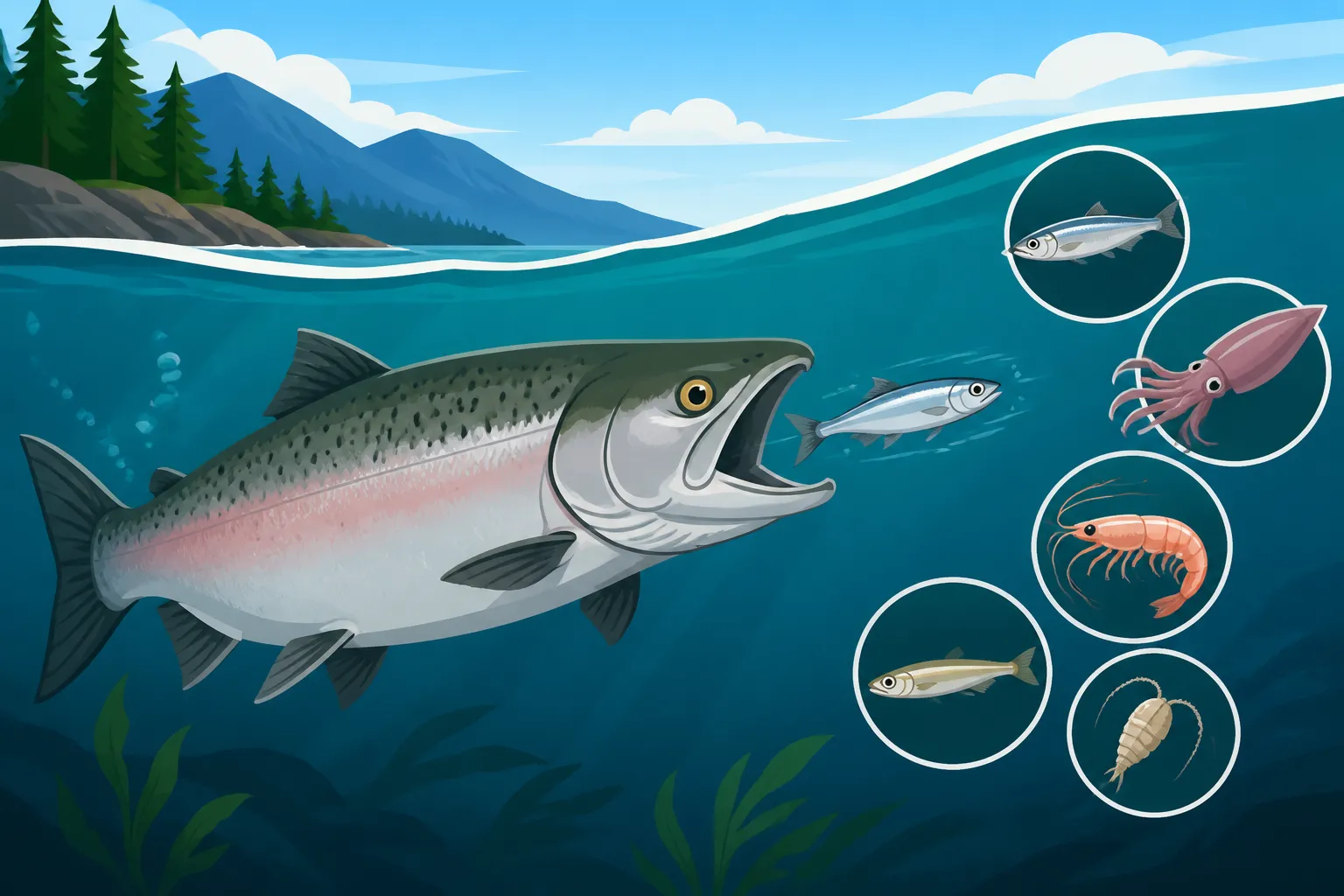
Among the most important forage species are herring, sandlance, and anchovies. Herring, in particular, are an absolute staple. They form massive schools along the BC coast, providing an irresistible target for Chinook. These silvery fish are rich in fats and proteins, making them the perfect energy source. Anglers who successfully mimic herring in size, colour, and action often find themselves hooked up more frequently. Imagine a massive school of herring, glinting like a liquid silver cloud in the sun, and suddenly a torpedo-shaped shadow erupts from below – that's a Chinook in hunting mode. Chinook Salmon Fishing in BC is a fantastic resource if you're looking to dive deeper into targeting these magnificent fish.
Sandlance, sometimes called "needlefish," are another crucial component. These slender, eel-like fish burrow into sandy bottoms during low light or when threatened, but they school actively in the water column at other times. They're prevalent in certain coastal areas and represent a significant food source. Anchovies, though perhaps less widespread in massive schools than herring in all parts of BC, are still an important, calorie-dense meal when present. Understanding the local prevalence of these different baitfish can be a game-changer. For example, if you're fishing an area known for abundant sandlance, your artificial lures might perform better if they are long, slender, and silver or blue, mimicking their natural profile.
Invertebrates and Crustaceans
While fish make up the bulk of an adult Chinook's diet, especially as they grow larger, invertebrates and crustaceans also play a surprisingly significant role, particularly for younger salmon and in specific areas or seasons. These smaller organisms are often the initial building blocks of the food web, eventually supporting the larger fish.
Krill, tiny shrimp-like crustaceans, are a prime example. While we often associate krill with filter-feeding whales, various salmon species, including Chinook, will gorge on dense krill swarms when available. This is particularly true for smaller, juvenile Chinook or sometimes larger adults in areas where krill are exceptionally abundant. If you ever cut open a Chinook and find its stomach packed with a reddish-pink paste, you've likely found a salmon that's been feasting on krill. This highlights how opportunistic these fish truly are; they won't pass up an easy meal.
Squid, another fascinating invertebrate, can also be on the menu. While not as universally consumed as herring, larger Chinook will certainly prey on squid, especially certain species like market squid or humboldt squid if they migrate into BC waters. Squid are high in protein and provide a substantial meal. Anglers might find lures designed to imitate squid, with their undulating tentacles and large eyes, can be effective in deeper waters or when targeting truly monstrous Chinook. On a rare occasion, you might even find small crabs or shrimp in a Chinook's stomach, especially if they're foraging closer to the bottom or in shallower areas, demonstrating their adaptability to whatever morsels the ocean provides. It’s truly a diverse marine ecosystem out there!
How Diet Changes with Age and Location
Just like humans have different dietary needs as we grow, Chinook salmon's eating habits evolve significantly from the moment they emerge from their gravel nests until they return as mature adults. This isn't just about growing bigger; it's about optimizing their energy intake for each stage of their life cycle, adapting to the available prey in different environments, from freshwater to coastal estuaries and out into the vast open ocean.
Juvenile Diets Near Shore
When Chinook fry first hatch and migrate down to the ocean, they spend a crucial period in estuaries and nearshore environments. These sheltered, nutrient-rich areas are their nurseries, providing a relatively safe haven with abundant food sources to fuel their initial growth spurt. Here, they're not yet equipped to chase down large herring schools. Instead, their diet consists primarily of smaller, more manageable prey.
Think tiny insects that fall into the water from overhanging vegetation, small crustaceans like amphipods and copepods, and various larval fish. They'll also actively prey on juvenile stages of other fish species, including young herring or even smaller salmonids. These early days are all about rapid growth and building up the strength needed to venture into the more challenging open ocean. They're honing their predatory skills on a menu of smaller, easier-to-catch items. As they grow, their predatory instincts sharpen, and they start to move further out, graduating from the estuarine smorgasbord to the richer coastal waters.
Adult Diets in Offshore Waters
Once Chinook salmon mature and move out into the open Pacific, sometimes migrating thousands of kilometers, their diet shifts dramatically. This is where they truly become the apex predators we know and love to target. The focus moves almost exclusively to larger, fattier baitfish, which provide the maximum caloric intake for the energy expenditures of open-ocean living and the intense demands of their eventual spawning run. Chinook Salmon Migration Patterns in BC shows just how far these fish travel, and why they need so much fuel.
Herring, needlefish (sandlance), and anchovies become their primary targets, often making up 90% or more of their diet by volume. These fish are usually found in dense schools, allowing Chinook to expend less energy for a high reward. The salmon will patrol offshore banks, ledges, and drop-offs, often congregating where baitfish schools are abundant. They'll also travel extensively with these schools, following the food. In certain deep-water areas, larger Chinook might also target Pacific hake or even small Pollock, especially if those species are plentiful. This consistent intake of high-fat forage is what gives Chinook their incredible strength and rich, red flesh, which is highly prized by anglers and seafood enthusiasts alike. It's a testament to the ocean's bounty and the Chinook's efficient predatory nature that they can grow to such impressive sizes purely on this protein-rich diet.
The Impact on Angling Success: Thinking Like a Chinook
Understanding what Chinook salmon eat isn't just a fascinating biological fact; it's perhaps the most critical piece of information an angler can have. When you know what's on their menu, you can then present them with something that looks, moves, or smells exactly like their natural prey. This "match the hatch" philosophy, borrowed from fly fishing, is absolutely fundamental to consistent success when pursuing salmon in BC's marine waters.
Matching the Hatch (or the Baitball)
The concept of "matching the hatch" in salmon fishing refers to choosing your lure, bait, or fly to closely imitate the size, shape, color, and action of the primary forage fish or invertebrates that the Chinook are currently feeding on. It sounds simple, but it requires observation and adaptability.
If you're out on the water and seeing lots of small, silvery baitfish flicking on the surface, or if your fish finder is showing dense schools of bait, then a lure that mimics those characteristics will be your best bet. For instance, if the Chinook are feeding heavily on needlefish (sandlance), a long, slender spoon or a plastic hoochie in silver or chartreuse might be incredibly effective. If herring are the main course, then a plug, flasher, and hoochie combination, or even whole herring presented on a brined bait rig, would be more appropriate. You can find a huge variety of these types of lures and baits on platforms like Amazon, from different brands and styles, allowing you to build up a versatile tackle box.
Even subtle differences matter. Sometimes, Chinook are very picky about the exact shade of green or blue in your hoochie if that matches the local krill or herring colouration. The action of your lure is also paramount. Is it a tight wobble like a fleeing anchovy, or a wide, erratic dart like a confused herring? Experimentation is key, but always start with what you believe the fish are eating. How to Rig Herring for Chinook Trolling offers detailed tips on presenting one of their favourite meals.
Here's a quick reference table for common Chinook prey and imitating lures:
| Primary Prey Species | Key Characteristics | Effective Lure/Bait Types | Typical Colors |
|---|---|---|---|
| Herring | Silvery, oily, schooling, fast swimmer | Spoons, plugs, hoochies (with flasher), whole/cut plug herring | Silver, blue, green, black back |
| Sandlance | Slender, silvery, often burrowing, quick | Slender spoons, soft plastics (e.g., swimbaits), hoochies | Silver, chartreuse, white, pearl |
| Anchovy | Small, oily, schooling, quick darts | Small spoons, hoochies, anchovy strips (on bait rig) | Green, blue, iridescent |
| Squid | Erratic movement, tentacles, larger profile | Squid jigs, larger hoochies, plugs (calamari patterns) | White, pink, purple, glow |
| Krill/Shrimp | Tiny, reddish-pink, swarming, slow | Small hoochies, plastic shrimp imitations (rarely targetted directly by adults) | Pink, red, orange, glow |
Seasonal and Regional Variations
The ocean is a dynamic place, and what Chinook eat isn't constant across the entire BC coast, nor throughout the year. Understanding these variations is crucial for an informed angler. In spring, for example, baitfish populations might be less concentrated, and Chinook might be more spread out, making them harder to locate. As summer progresses and baitfish schools become denser, especially around nutrient-rich upwellings or major migration corridors, Chinook will follow. Best Salmon Fishing Spots in BC often correlate directly with where these baitfish schools are reliably found.
Regions also play a role. Around Vancouver Island, for example, the baitfish profile might lean heavily towards herring, while in more northern coastal waters, different species of needlefish or even small rockfish might be more prevalent in the Chinook's diet. Even within a single bay, the type of baitfish can change week to week, or even day to day, based on tides, currents, and water temperature. That's why keeping a keen eye on your surroundings is so important. Watch for birds diving, baitfish showering on the surface, or even other anglers having success with a particular lure. Local tackle shops are also invaluable resources; they often know exactly what the fish are keying in on because they're hearing it from successful anglers every day.
Being adaptable and having a variety of lure types and colours that mimic different forage species will greatly increase your odds. Don't be afraid to change your presentation if what you're doing isn't working. Sometimes, a subtle shift in lure size, colour, or depth can make all the difference. Remember, the Chinook is thinking, "What's for dinner?" Your job is to serve it up exactly what it's craving. Knowing Salmon Fishing Techniques for BC Rivers might be useful when Chinook transition to freshwater, but for the ocean, it's all about that baitfish connection.
The Role of Water Conditions and Habitat
Chinook salmon don't just eat what's available; they also adapt their feeding behavior to the surrounding environment, influenced heavily by water conditions and the specific habitat they're in. From the murky depths to the sunlit shallows, and from calm bays to turbulent open ocean, these factors dictate not only what they eat, but also how and where they forage. This understanding adds another layer to our "think like a salmon" strategy.
Water Temperature and Currents
Water temperature is a huge driver for both Chinook and their prey. Every species has an optimal temperature range for feeding and activity. For Chinook, generally, cooler waters are preferred, which is why they thrive in the Pacific. If the water is too warm, they might become lethargic and less inclined to feed aggressively, or they might move to deeper, cooler thermoclines. Similarly, baitfish schools will congregate in specific temperature bands that are comfortable for them and rich in the plankton they consume. Finding these optimal temperature zones, often revealed by your boat's sonar or temperature gauge, can lead you directly to where the feeding action is.
Currents are equally vital. Chinook, being powerful swimmers, often use currents to their advantage, positioning themselves in ambush points where baitfish are swept past them. They'll hold in eddies, behind underwater structures, or along current seams, waiting for an easy meal to come by. Strong currents can also concentrate baitfish, forcing them into tighter schools, which creates a prime hunting opportunity for salmon. This is why certain tides are often considered "feeding tides" in particular areas – they create the ideal current conditions for baitfish to congregate and for Chinook to feed. Best Time of Day to Catch Salmon often correlates with these tidal movements.
Conversely, overly strong currents can disperse bait or make it too challenging for Chinook to hold position and feed efficiently. Understanding the local currents for your chosen fishing spot, perhaps through marine charts or local knowledge, can help you predict where the salmon will be holding and feeding. You might even find yourself buying specific trolling weights or downrigger balls (easily sourced from places like Amazon) to keep your lure in the strike zone amidst strong currents.
Structure and Depth
In the vastness of the ocean, structure provides critical refuge and hunting grounds for both prey and predator. For Chinook, "structure" can mean a variety of things: underwater reefs, pinnacles, ledges, drop-offs, kelp beds, or even significant changes in bottom contour. These features provide places for baitfish to hide or congregate, and for Chinook to ambush them.
Many of British Columbia's most productive fishing grounds are defined by incredible underwater topography. For example, a deep trench might run parallel to a shallow bank. Chinook might hold in the deeper, cooler water but rise to feed along the edge of the bank when baitfish move into shallower areas. Best Downrigger Settings for Summer Chinook will often be adjusted to target these specific depths.
The depth at which Chinook feed can vary dramatically. They might be right on the surface, smashing baitfish in a frenzied "bust," or they could be feeding hundreds of feet down near the bottom. This is where a good fish finder becomes an indispensable tool. It allows you to identify bait schools and the presence of salmon at specific depths, giving you clues as to how deep to run your lures or bait. Often, in deeper water, Chinook will stick to a specific "feed zone" where conditions are ideal and bait is plentiful. This could be a thermocline layer or simply where a large school of herring is holding. By paying attention to your electronics and adjusting your gear accordingly, you can target these specific depths with precision, rather than just blindly trolling.
The Human Factor: Bait Presentation and Ethics
Beyond understanding the biology and environment, the angler's choices in bait presentation, and indeed the ethical approach to fishing, play a significant role in successful and responsible Chinook salmon fishing in the ocean. It's not just about getting a bite; it's about making that bite count and ensuring the health of the fishery for generations to come.
Lure Action and Scent
Even if you've perfectly matched the hatch in terms of size and color, the action and scent of your presentation can be the final puzzle pieces. Chinook are highly visual predators, but their lateral line system is also incredibly sensitive to vibrations, and their sense of smell is legendary. A lure that wobbles or swims with an enticing, natural action can be irresistible, even if the color isn't a perfect match. Think of a spoon that has a tight, erratic dart like a panicking baitfish, or a plug that has a wide, seductive swim. Different lures are designed to achieve different actions at various trolling speeds, so experiment to find what works for the conditions.
Scent can be a game-changer, especially in murky water or when fish are being finicky. Many anglers add scent to their artificial lures, using commercially available gels or sprays designed to mimic natural baitfish oils or attractants. When using natural bait like whole or cut-plug herring, ensuring it's fresh and properly brined to maximize its natural scent trail is crucial. A fresh, oily herring will put out a far more potent and attractive scent than a washed-out, lifeless one. You can find a wide array of scent additives and bait-brining supplies on Amazon, making it easy to enhance your presentation. Bait Fishing for Chinook Salmon in BC goes into further detail on how to optimize your natural bait.
The combination of visual appeal, vibration, and scent creates a powerful drawing card for Chinook. It tells them: "Here's a distressed, easy meal!" Mastering these elements will elevate your fishing from simply hoping for a bite to actively provoking one.
Responsible Angling and Conservation
While maximizing your catch is certainly a goal for many anglers, it's paramount that we approach Chinook salmon fishing with a strong sense of responsibility and conservation. Chinook populations, particularly wild stocks, can be sensitive to fishing pressure, and adherence to regulations is not just a legal requirement but an ethical imperative.
Always be acutely aware of current fishing regulations, which can change frequently based on conservation concerns, stock assessments, and in-season updates. These regulations cover everything from bag limits and size restrictions to specific gear restrictions and time-area closures. For example, some areas might have non-retention rules for certain Chinook stocks or require barbless hooks. Ignorance is not an excuse, and violating regulations can lead to substantial fines and a loss of your fishing privileges. Regular checks of the BC Fishing Regulations Explained and fishery notices are crucial before heading out.
When practicing catch and release, particularly for larger, wild Chinook that might be heading to spawn, handle the fish with extreme care. Minimize their time out of the water, use appropriate landing nets that don't damage fins or scales, and revive them gently before release. The goal is to maximize their chances of survival so they can complete their spawning journey and contribute to future generations. Our privilege to fish for these incredible creatures comes with the responsibility to protect them.
Disclaimer
This article is for general informational purposes only and does not constitute professional advice. Laws, prices and regulations vary by location and change over time. Consult a qualified professional for guidance on your specific situation.