Pink Salmon Runs in BC
There's nothing quite like the sight of a river teeming with salmon, and for many anglers in British Columbia, the biannual pink salmon runs are a truly special event. You've probably heard the buzz – tales of plentiful fish, exciting bites, and the unique challenges of targeting these feisty "humpies." But sometimes it feels like a secret club, trying to figure out when they'll show up, where to find them, and what on earth to throw at them. This comprehensive guide is here to demystify pink salmon runs in BC, helping you understand their unique characteristics, find the best spots, and equip yourself for a memorable and successful fishing experience.
Understanding Pink Salmon in British Columbia
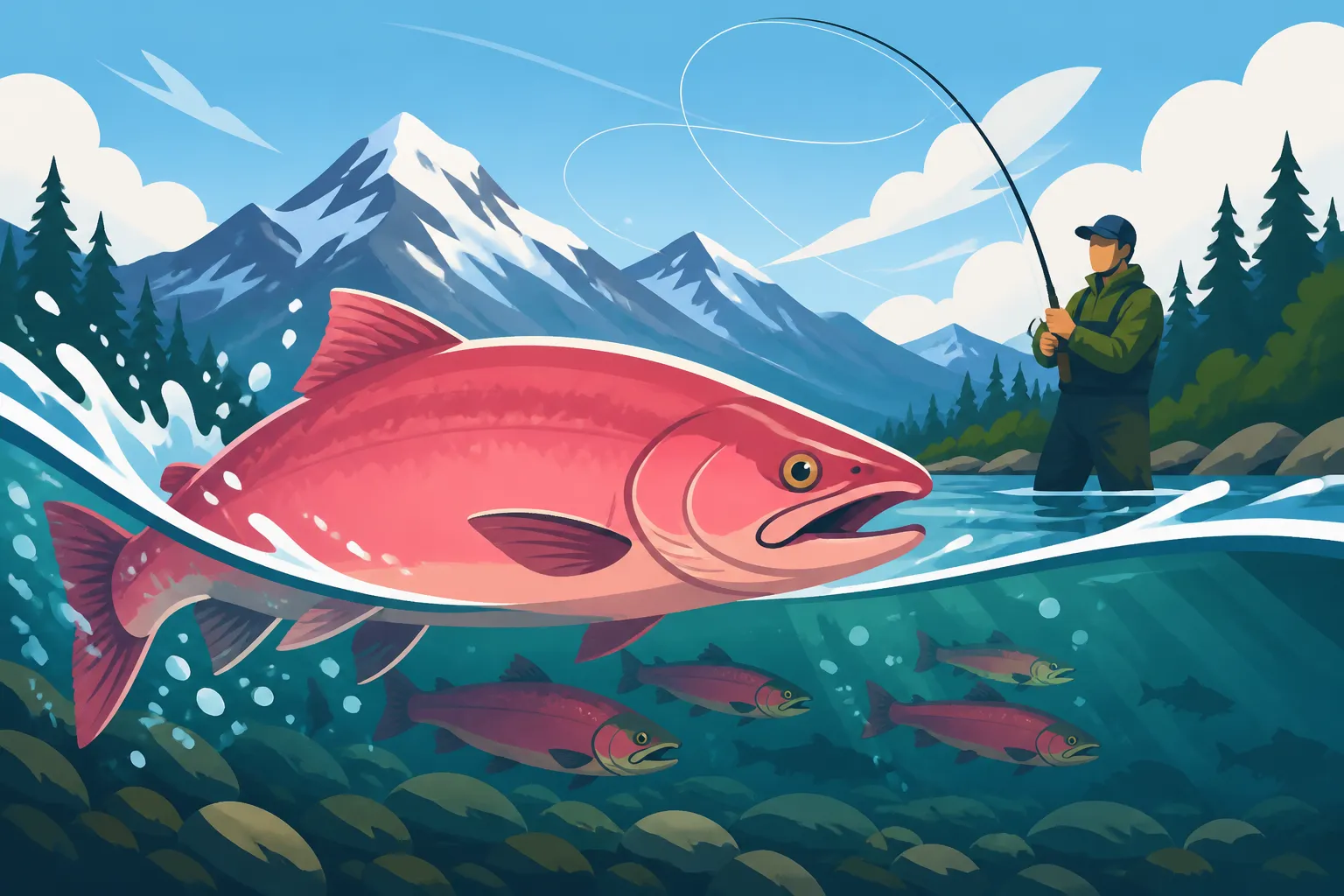
Pink salmon (Oncorhynchus gorbuscha) might be the smallest of the Pacific salmon, but don't let their size fool you. They offer some of the most accessible and exciting fishing opportunities in British Columbia, especially during their massive runs. Known for their distinct humpback appearance in spawning males and their incredibly aggressive takes, they're a fantastic target for beginners and seasoned pros alike.
The Pink Salmon Life Cycle and Unique Traits
What makes pink salmon truly stand out among their salmonid cousins is their incredibly consistent and short life cycle. Unlike sockeye or chinook that might spend several years in the ocean, pink salmon almost always complete their entire life cycle in just two years. This means they hatch, spend a brief period in freshwater, migrate to the ocean for about 18 months, and then return to their natal streams to spawn and die, all within a tight two-year window. This predictable cycle creates what we call "biennial runs," meaning major runs typically occur in either odd-numbered years or even-numbered years, depending on the specific river system.
Their short life cycle also contributes to their size; they don't have as much time to grow massive like a Chinook. However, what they lack in individual heft, they make up for in sheer numbers. When a big pink run is on, rivers can be absolutely packed with fish, creating incredible fishing opportunities. These fish are also quite distinct in their appearance as they approach spawning. Males develop a very prominent humped back (hence the nickname "humpies"), and both sexes take on a greenish-brown back with large oval spots, fading to a silvery belly, often with a white mouth and a black tongue.
Identifying Pink Salmon: What to Look For
When you're out on the water, especially in the thick of a salmon run, it can sometimes be a bit of a guessing game trying to identify exactly what species you've hooked. Pink salmon have several key characteristics that help them stand apart. The most obvious, particularly for males during their spawning migration, is the prominent hump on their back. This becomes more pronounced the closer they get to spawning. Their bodies are typically silver in the ocean, but once they enter freshwater, they develop a mottled green and brown coloration on their backs and sides, contrasting with a pale, often white, belly.
Another key identifier is their mouth. They typically have white gums with a black tongue, unlike some other salmon species that might have entirely black mouths. Perhaps the easiest distinguishing feature, however, is the presence of large, oval-shaped spots on their backs and tail fin. These spots are usually much larger and more distinct than those found on, say, Coho or Chinook salmon. If you're ever unsure, taking a quick look at the spots and the general body shape will usually give you the answer. Understanding these visual cues is part of the fun of fishing and helps you adhere to BC Bag and Possession Limits by Species.
Why Pink Salmon Runs are Important to BC
Pink salmon runs are incredibly vital to British Columbia, both ecologically and economically. From an ecological standpoint, these massive returns provide a crucial food source for a vast array of wildlife. Bears, eagles, wolves, and countless other species rely on the bounty of salmon carcasses left behind after spawning. These carcasses also contribute vital marine-derived nutrients back into the freshwater ecosystem, enriching the rivers and surrounding riparian zones, which in turn supports invertebrate populations and future salmon generations.
For recreational anglers, pink salmon offer an unparalleled opportunity, especially for those new to salmon fishing or families looking for action-packed days on the water. Their abundance means a higher chance of success, making them an excellent species to target when introducing children or novice anglers to the sport. The sheer volume of fish means many rivers and coastal areas become prime fishing destinations, supporting local businesses, guides, and tackle shops. While sometimes overshadowed by the allure of larger salmon, pinks truly are a cornerstone of BC's diverse fishery, offering both sport and a delicious meal.
Predicting and Locating Pink Salmon Runs
Finding pink salmon requires a bit of research and understanding of their unique migration patterns. Because they almost always return on a two-year cycle, knowing whether it's an "odd" or "even" year is your first step. Beyond that, pinpointing the right rivers and staying updated on local conditions is key.
The Biennial Return Cycle: Odd vs. Even Years
This is arguably the most crucial piece of information for pink salmon angling in BC. Pink salmon populations are largely segregated into odd-year and even-year stocks. What this means in practice is that some river systems will see huge returns of pink salmon in odd-numbered years (e.g., 2023, 2025), while other systems will have their big runs in even-numbered years (e.g., 2024, 2026). This isn't a hard and fast rule for every single river, as some might see smaller returns in their "off" year, but the general pattern holds true for the major runs.
For example, the Fraser River system, along with many rivers in the Lower Mainland and Southern Gulf of Georgia, typically experiences its largest pink salmon runs in odd-numbered years. Conversely, many rivers on the North Coast and Vancouver Island might have their peak runs in even-numbered years. Knowing which cycle a particular river follows is paramount. Always double-check current forecasts and local regulations, as conservation concerns can also influence openings and closures, even in years of expected high returns.
Key Rivers and Coastal Areas for Pink Salmon
British Columbia boasts numerous rivers and coastal areas that experience strong pink salmon runs. While the exact timing and strength of these runs can vary, some locations are consistently renowned for their pink salmon fishing.
Fraser River System: As mentioned, the Fraser River and its tributaries, particularly in odd-numbered years, are legendary for their massive pink salmon returns. Anglers flock to stretches of the main stem Fraser, as well as rivers like the Vedder/Chilliwack and Harrison, which feed into it. Access points along the Fraser River Fishing Guide can become incredibly popular during the peak of the run.
Coastal Rivers of the Lower Mainland: Rivers such as the Squamish River, Chehalis River, and other smaller streams flowing into the Georgia Strait often see excellent pink salmon runs, typically coinciding with the Fraser's odd-year cycle. These rivers offer diverse fishing environments, from estuarial flats to faster-moving upper reaches.
Vancouver Island Rivers: Many rivers on Vancouver Island, like the Campbell River, Gold River, and Cowichan River, also receive significant pink salmon returns. Their specific run timing might lean more towards even or odd years depending on the system, so local knowledge or fishery notices are essential. The Campbell River Fishing Guide is a great resource if you're planning a trip there.
North Coast Rivers: Rivers in the northern regions of BC, including parts of the Skeena River system, can also have impressive pink salmon runs, often on a different biennial cycle than the Fraser. These areas often offer a more remote and pristine fishing experience.
When planning your trip, consider that pinks typically start arriving in coastal waters in late July or early August, with runs peaking through August and into early September, depending on the specific location and water temperatures.
Reading Fishery Notices and Run Forecasts
The absolute best way to stay informed about pink salmon runs is to regularly consult official fishery notices and run forecasts. The Department of Fisheries and Oceans (DFO) Canada is the primary source for this crucial information. They issue regular updates throughout the salmon season, detailing expected returns, open and closed areas, specific gear restrictions, and daily bag limits. This information is dynamic and can change quickly based on actual fish returns and conservation needs.
You can often find these notices published on government websites, but they are also widely shared by local tackle shops, fishing guide services, and online forums dedicated to BC fishing. Subscribing to email alerts from DFO or frequently checking their online portals is highly recommended. These notices will tell you not just if a river is open for pinks, but when the runs are expected to be strong, sometimes even providing projections for the number of returning fish. For instance, before heading out, it's vital to check the BC Fishing Regulations Explained and any specific fishery notices for your chosen river to avoid any unpleasant surprises or violations. Remember, fishing regulations can change in-season to protect vulnerable stocks, so staying current is non-negotiable.
Essential Gear and Techniques for Pink Salmon
Pink salmon are not typically shy, and their aggressive nature makes them a fantastic target. While you don't need overly specialized gear, having the right setup and understanding effective techniques will significantly improve your success rate and enjoyment.
Recommended Rods, Reels, and Line
When it comes to tackle for pink salmon, you're looking for a setup that offers a good balance of sensitivity for detecting subtle bites and enough backbone to handle a spirited fight.
Rods: A medium-light to medium power rod, typically between 8 to 10.5 feet in length, is ideal. Longer rods (9-10.5 feet) are excellent for river fishing, allowing for longer casts, better line control, and easier mending when float fishing. A moderate-fast action will give you the sensitivity for lighter presentations while still providing the necessary hook-setting power. For fly fishing, a 7 or 8-weight fly rod is perfect, offering enough power to cast larger flies and handle fighting fish without being overkill.
Reels: A spinning reel in the 2500-4000 series size is a good match for the recommended rods. Look for a reel with a smooth drag system, as pinks, despite their size, can make surprisingly strong runs. For baitcasting setups, a low-profile baitcaster with a decent retrieve ratio works well. Fly reels should be appropriately sized for your fly rod (7/8wt), prioritizing a smooth drag over large capacity, as pinks aren't usually spool-stripping monsters.
Line: For spinning or baitcasting, a braided main line of 15-20 lb test is a popular choice due to its sensitivity and strength, especially when fishing in rivers with current. You'll want to use a fluorocarbon leader of 8-12 lb test, which is nearly invisible in water and more abrasion-resistant. For fly fishing, a floating line with a 9-12 ft tapered leader (8-10 lb test) is standard for presenting flies effectively. You can find a wide range of quality lines and leaders on platforms like Amazon.
Best Lures and Flies for Pink Salmon
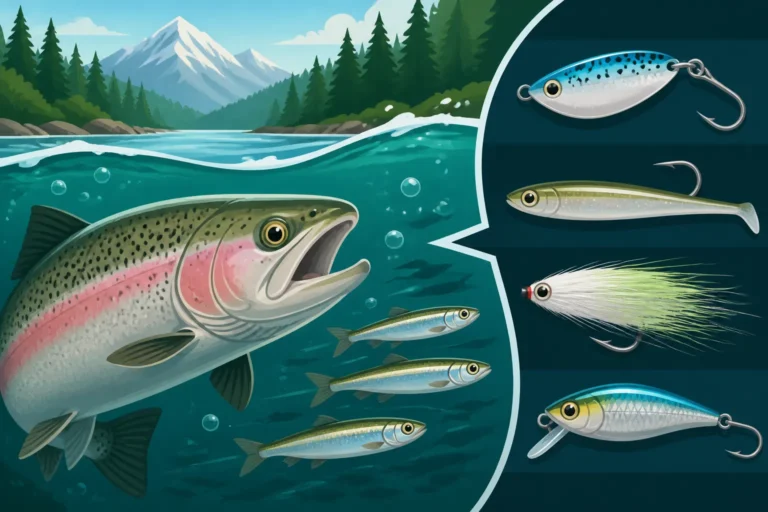
Pink salmon are visual predators and are often drawn to bright, flashy, and often pink-colored presentations. While they can be caught on a variety of offerings, some stand out as consistent producers.
Spinning/Casting Lures:
- Spinners: Small to medium-sized spinners (sizes 2-4) in bright colors like pink, chartreuse, or even a mix of pink and white are highly effective. Blades like Colorado or Aglia often create a good flash and vibration. Brands like Gibbs Delta or Blue Fox are common choices.
- Spoons: Casting spoons, particularly those in bright pink, orange, or silver, are also excellent. Think a 1/4 to 1/2 ounce spoon that can be cast a good distance and retrieved to flutter through the water. The flash and erratic movement mimic injured baitfish, triggering strikes.
- Jigs: Small jigs (1/8 to 1/4 ounce) dressed with pink, white, or chartreuse marabou or rabbit fur can be deadly, especially when fished under a float. The jig's pulsing action is irresistible to many pinks.
Flies:
- Pink/Chartreuse Flies: Any fly with a significant amount of pink or chartreuse is usually a winner. Patterns like Pink Poppers, Pink Clousers, or simple Pink Woolly Buggers are go-tos. Size 4-8 hooks are typical.
- Small Intruders/Flesh Flies: While often associated with steelhead, smaller intruder-style flies in pink or peach can also be very effective for aggressive pinks.
- Egg Patterns: Sometimes, particularly later in the run or if the fish are focused on other salmon spawning, a small glo-bug or egg pattern can entice a bite.
The key is often presentation. Experiment with colors and retrieve speeds until you find what the fish are reacting to on a given day. And remember, having a good selection means you can adapt. Many anglers stock up on these essentials via Amazon before their trip.
Effective Fishing Techniques for Pinks
Pink salmon can be caught using a variety of techniques, making them a versatile and fun fish to target. The best method often depends on the water you're fishing – whether it's a wide river, a small stream, or a coastal estuary.
1. Casting and Retrieving Lures: This is one of the most common and effective techniques. Cast your spinner or spoon across and slightly upstream, then retrieve it at a steady pace, allowing the current to sweep it naturally. Vary your retrieve speed and add small twitches to entice strikes. Pinks are aggressive, so don't be afraid to keep that lure moving. Pay attention to structure like seams, eddies, and tail-outs where fish might be holding.
2. Float Fishing (Bobber and Jig/Bait): Popular in rivers, float fishing allows you to present a jig, small spoon, or even a piece of roe (where legal) at a consistent depth. Set your float to keep your offering just above the river bottom. Cast upstream and let your float drift naturally downstream, mending your line to avoid drag. When the float dips, set the hook! This technique is particularly effective in runs and pools where fish are concentrated.
3. Fly Fishing: Pink salmon are excellent targets for fly anglers. Casting brightly colored flies (often pink) across and down current, then stripping them back, can be incredibly productive. Focus on swing or strip retrieves that give the fly an active, darting motion. In shallower water or estuaries, sight-casting to schools of fish can be exhilarating. Remember, a good pair of polarized sunglasses will help you spot those "humpies" holding in the water.
4. Bar Fishing (Limited areas): In some larger river systems like the Fraser, bar fishing can be effective. This involves anchoring a boat or setting up on a river bar, casting out a heavier weight with bait (like roe or cured salmon pieces) or a large lure, and letting it sit on the bottom. While often targeting larger salmon, pinks can also be picked up this way. Always check specific regulations for gear and bait restrictions for the area you are fishing. Techniques & Seasons like Salmon Fishing Techniques for BC Rivers offer further insight into optimal strategies.
Ethical Angling and Conservation for Pink Salmon
While pink salmon runs are often characterized by their abundance, responsible angling practices are crucial to ensure these vital populations remain healthy for future generations. Respecting the resource and the environment is paramount.
Catch and Release Best Practices
Even when bag limits are generous, practicing good catch and release is important, especially for any fish you don't intend to keep or if you're targeting other species and pinks are an incidental catch. Here are some key tips:
- Minimize Fight Time: Use appropriate tackle that allows you to land the fish efficiently, reducing stress on the fish.
- Keep Fish in Water: Try to keep the fish in the water as much as possible. If you must remove it for a quick photo, do so quickly and gently, supporting its body horizontally.
- Wet Hands: Always wet your hands before handling a fish. Dry hands can remove the protective slime coat, leaving the fish vulnerable to disease.
- Barbless Hooks: In many BC waters, barbless hooks are mandatory for salmon, especially during conservation-focused fisheries. Even where not mandatory, they significantly reduce harm to released fish. It makes hook removal much faster and easier.
- Proper De-hooking: Use needle-nose pliers or a de-hooking tool to carefully remove the hook. If the hook is deeply embedded and cannot be removed without causing significant trauma, cut the line as close to the hook as possible.
- Revive the Fish: Hold the fish gently in the current, facing upstream, until it can swim away strongly on its own. Don't simply toss it back; ensure it's fully revived.
Practicing these methods ensures that the salmon you release have the best chance of survival to continue their journey upstream to spawn.
Respecting Bag Limits and Regulations
Adhering to bag and possession limits, as well as all other BC Fishing Regulations Explained, is a non-negotiable part of ethical angling. Pink salmon regulations can vary significantly depending on the river system, the specific run year (odd vs. even), and in-season fishery notices.
- Know Before You Go: Before you even leave home, check the current DFO regulations for the specific river and time of year you plan to fish. This includes daily bag limits (how many you can keep in a day) and possession limits (how many you can have in your possession, including at home).
- Conservation Stamps: For certain salmon species, including pinks in tidal waters if you intend to retain them, you might need a BC Salmon Conservation Stamp Rules. Always ensure you have all the necessary stamps and licenses before fishing.
- Size Restrictions: While less common for pinks, some species have minimum or maximum size limits. Be aware of these rules.
- Time and Area Closures: Entire rivers or specific sections of rivers might be closed to fishing for certain periods to protect spawning fish or critical habitat. Never fish in a closed area.
- Gear Restrictions: Pay close attention to rules regarding hook types (barbless vs. barbed), single-point vs. multiple hooks, and bait restrictions. For instance, in some rivers, bait fishing might be prohibited to minimize incidental catch of more vulnerable species.
These regulations are put in place for a reason – to manage the fishery sustainably. Ignorance of the rules is not an excuse and can lead to significant fines and penalties.
Minimizing Impact on Spawning Grounds
As pink salmon move into the shallow, gravelly areas of rivers to spawn, they become incredibly vulnerable. It's crucial for anglers to minimize their impact on these sensitive habitats.
- Identify Spawning Beds (Redds): Spawning beds, or "redds," appear as clean, often lighter-colored patches of gravel, typically in shallower, moving water. Female salmon will actively dig these depressions to lay their eggs.
- Avoid Wading Through Redds: Never, ever wade through active spawning beds. Walking on redds can crush incubating eggs, destroying the next generation of salmon. Even if you don't see fish actively spawning, assume that clean gravel patches are potential redds.
- Give Spawning Fish Space: Fish that are actively spawning are focused on reproduction and are often not interested in feeding. Harassing them is unethical and can disrupt their critical reproductive activity. Give them a wide berth.
- Stay on Designated Paths: Where available, stick to established trails and access points along riverbanks to minimize bank erosion and disturbance to vegetation.
- Pack It In, Pack It Out: Leave no trace. Take all your garbage, including discarded fishing line, home with you. Lost fishing line can be a serious hazard to wildlife.
- Be Mindful of Wildlife: You'll likely encounter other wildlife drawn to the salmon. Observe them from a respectful distance and never disturb them.
By following these guidelines, you're not just being a good angler; you're actively contributing to the long-term health of British Columbia's incredible salmon resources.
Common Challenges and Tips for Pink Salmon Anglers
Even with the best preparation, fishing for pink salmon (or any species!) can present its share of challenges. Being prepared for these common hurdles can help turn a potentially frustrating day into a successful one.
Dealing with Crowded Fishing Spots
During the peak of a big pink salmon run, popular fishing spots, especially those with easy access near urban centers like the Lower Mainland, can become incredibly crowded. This can be frustrating, but with a bit of strategy and patience, you can still have a productive and enjoyable experience.
- Go Early or Late: Often, the busiest times are mid-morning to late afternoon. Consider hitting the river at dawn or staying until dusk to avoid the biggest crowds. You might be surprised at how peaceful and productive these fringe hours can be.
- Explore Lesser-Known Access Points: While main parking lots might be full, there are often smaller, less obvious access points or stretches of river that require a bit more walking but offer more solitude. Use online maps to scout for these areas.
- Practice Good Etiquette: Give other anglers plenty of space. Don't cast over someone else's line, and move downstream if someone is already fishing a particular run. A friendly nod and a "good morning" go a long way. Most anglers are happy to share general tips if you're respectful.
- Be Patient: Sometimes, the bite might be slow due to pressure. Instead of constantly moving, give a good spot some time. The fish are there, they just might need a moment to settle down or a change in your presentation.
- Focus on the Fish, Not the People: It's easy to get distracted or annoyed by crowds, but try to stay focused on reading the water, presenting your lure, and enjoying the natural surroundings. Remember, everyone is there for the same reason – to connect with nature and hopefully, catch some fish!
Adapting to Varying Water Conditions
Rivers are dynamic environments, and conditions can change rapidly, especially during the late summer and early fall when pink salmon run. Water level, clarity, and temperature all play a significant role in fish behavior and your fishing success.
- Water Level:
- High Water: After heavy rains, rivers can rise and become murky. In these conditions, fish often move closer to the banks to avoid strong currents. They also rely more on vibration and scent. Use heavier lures to get down, brighter colors (chartreuse, fluorescent orange, hot pink) for visibility, and try fishing slower, deeper runs or eddies close to shore.
- Low Water: During prolonged dry spells, rivers can become very low and clear. Fish will be warier and can be easily spooked. Use lighter lines, smaller and more natural-colored lures or flies, and focus on longer casts to avoid startling the fish. Approach quietly and stealthily.
- Water Clarity:
- Turbid/Murky Water: As mentioned above, bright, contrasting colors and lures with strong vibrations are key. Scented baits (where legal) can also be very effective.
- Clear Water: Light lines, natural colors, and subtle presentations are often best. Fish can see you and your line, so stealth is crucial. This is where a good fluorocarbon leader bought from a reputable seller on Amazon really shines.
- Water Temperature: Pink salmon prefer cooler water. If water temperatures are unusually high, fish might be less active or hold in deeper, cooler pockets. Conversely, a sudden drop in temperature can sometimes trigger a feeding response. Understanding What water temperature salmon prefer can significantly impact your strategy.
Always check local conditions before you head out, and be prepared to adjust your tactics based on what you find. This adaptability is a hallmark of a successful angler.
Maximizing Your Catch and Enjoyment
Beyond the technical aspects, there are a few overarching tips that can help you have a more rewarding pink salmon fishing experience.
- Observe and Learn: Before making your first cast, take a few minutes to observe the water. Are fish jumping? Are there active schools? What are other successful anglers doing? Look for seams, current breaks, and deeper pools where fish might be holding. This observational phase is often overlooked but incredibly valuable.
- Vary Your Presentation: Don't get stuck in a rut. If what you're doing isn't working, change it up. Try a different lure color, switch from a spinner to a jig, vary your retrieve speed, or try a different depth. Pinks can be finicky one moment and aggressive the next.
- Fish the "Right" Time: While pinks can be caught throughout the day, early morning and late evening often offer the best bites, especially in clear, sunny conditions. Overcast days can also be very productive. Understanding Best Time of Day to Catch Salmon can make a huge difference.
- Keep it Simple: Sometimes, the most basic presentations are the most effective. Don't overthink it, especially when the fish are numerous. A simple pink spoon or spinner fished effectively can often outfish complex rigs.
- Bring the Essentials: Beyond your fishing gear, remember to pack water, snacks, sunscreen, insect repellent, and rain gear. A small tackle box with a variety of lures is also smart. Consider a small collapsible net for easier, safer landing of fish. Many of these items are readily available on Amazon.
- Focus on Fun: Ultimately, fishing is about enjoying the outdoors and the experience. Even if the fish aren't biting as much as you hoped, take time to appreciate the beautiful BC scenery, the wildlife, and the simple act of being on the water. A good attitude is your most important piece of gear!
Here's a quick reference for common pink salmon gear:
| Gear Type | Recommended Specs | Key Features for Pinks | Where to Find |
|---|---|---|---|
| Spinning Rod | 8-10.5 ft, Medium-Light to Medium Power, Moderate-Fast Action | Long casts, good line control, sensitive tip | Local tackle shops, sporting goods, Amazon |
| Spinning Reel | Size 2500-4000 | Smooth drag, reliable retrieve | Local tackle shops, sporting goods, Amazon |
| Braided Line | 15-20 lb test | High sensitivity, strength for current | Local tackle shops, sporting goods, Amazon |
| Fluorocarbon Leader | 8-12 lb test | Nearly invisible, abrasion resistant | Local tackle shops, sporting goods, Amazon |
| Spinners | Sizes 2-4, Pink/Chartreuse/Silver | Flash, vibration, aggressive takes | Local tackle shops, sporting goods, Amazon |
| Casting Spoons | 1/4 – 1/2 oz, Pink/Orange/Silver | Fluttering action, long casting distance | Local tackle shops, sporting goods, Amazon |
| Jigs | 1/8 – 1/4 oz, Pink/White/Chartreuse marabou | Pulsing action, effective under a float | Local tackle shops, sporting goods, Amazon |
| Fly Rod | 7 or 8-weight | Power for casting, handles fighting fish | Specialty fly shops, Amazon |
| Flies | Pink Poppers, Pink Clousers, Pink Woolly Buggers (sizes 4-8) | Bright, visual trigger, aggressive retrieves | Specialty fly shops, Amazon |
| Waders | Chest waders (neoprene or breathable) | Stay dry and warm, access to more water | Local tackle shops, sporting goods, Amazon |
| Polarized Sunglasses | Amber or gray lenses | Reduces glare, helps spot fish and structure | Sporting goods stores, Amazon |
| Small Net | Rubberized mesh, collapsible | Safer for fish, easier for landing | Local tackle shops, sporting goods, Amazon |
Remember, pink salmon runs are a fantastic opportunity to enjoy what British Columbia's waters have to offer. With the right knowledge and a respectful approach, you're set for an amazing experience. You might even find yourself hooked on these feisty little salmon, eagerly awaiting the next "humpy" year!
Disclaimer
This article is for general informational purposes only and does not constitute professional advice. Laws, prices and regulations vary by location and change over time. Consult a qualified professional for guidance on your specific situation.