How to Catch Lingcod off Vancouver Island
Trying to hook into a feisty lingcod off Vancouver Island can feel like searching for buried treasure in a vast, unpredictable ocean. These aggressive, toothy bottom dwellers are incredibly fun to catch, offer a fantastic fight, and make for superb eating, but they certainly don't just jump into the boat. If you've spent hours dropping lines only to come up empty-handed or are simply looking to refine your technique and boost your success rate, you've landed in the right spot. This comprehensive guide will arm you with the knowledge, tips, and strategies you need to consistently land these magnificent fish in British Columbia's diverse coastal waters.
Cracking the Code of Lingcod: Understanding Your Prey Off Vancouver Island
Before you even think about dropping a line, it's crucial to understand the fish you're targeting. Lingcod, with their prehistoric appearance and voracious appetite, are one of British Columbia's most sought-after bottom fish. They aren't actually true cod, but rather a member of the greenling family, known for their powerful jaws and impressive size. Understanding their habits, preferred environments, and feeding behaviors is the first step to becoming a successful lingcod angler, especially in the rich, varied waters surrounding Vancouver Island.
The Lingcod's Domain: Habitat and Lifestyle
Lingcod are masters of ambush, perfectly adapted to their rocky, rugged homes. They primarily inhabit rocky reefs, kelp beds, ledges, and deep pinnacles, often found anywhere from shallow subtidal zones down to depths exceeding 400 feet. The complex structure of these underwater environments provides them with excellent cover to hide from predators, which are few once they reach a decent size, and, more importantly, prime ambush points to surprise unsuspecting prey. Off Vancouver Island, you'll find these fish tucked into crevices, lurking under rock overhangs, or camouflaged against the seabed, patiently waiting for a meal to swim by. They're not keen on wide, sandy flats unless there's some structure, like a lone boulder or debris, to call home. This strong preference for structure means that if you're not fishing near rocks, you're likely not fishing for lingcod.
Their life cycle typically begins in late fall and winter when females deposit large, adhesive egg masses in rocky crevices in shallower waters, often guarded diligently by the males. After hatching, the larvae drift in the open ocean before settling to the bottom. As they grow, they become more territorial and solitary, establishing their own hunting grounds. This territorial nature is something savvy anglers can exploit; once you find one lingcod, there's a good chance another might be holding nearby, especially if the structure is expansive. Knowing where these fish prefer to live means you can use your sonar to identify promising rock piles, pinnacles, and ledges, even in deep water, significantly increasing your chances.
What Makes Lingcod So Aggressive? Their Diet
Lingcod are apex predators of the nearshore environment, and their aggression stems from their opportunistic and carnivorous diet. They'll eat almost anything that moves and fits into their cavernous mouths. Their primary diet consists of other fish like herring, rockfish, Pacific cod, hake, and even smaller lingcod. They also have a fondness for crustaceans such as crab and shrimp, as well as squid and octopus. This broad palate is excellent news for anglers because it means a variety of baits and lures can be effective.
Their predatory nature is a key factor in how we target them. Lingcod are not subtle eaters; they strike with incredible force, often inhaling their prey whole. This powerful strike means you need robust gear that can withstand the shock. Furthermore, their tendency to ambush from cover means your presentation needs to be something that gets their attention, often mimicking a struggling or injured baitfish right in their strike zone. When they're on the chew, it's an unmistakable, aggressive tug that can feel like you've hooked a submarine. Their aggressive disposition is what makes them such an exciting sport fish – every bite is a surprise and a battle.
Lingcod vs. Other Bottom Dwellers: Identification Tips
When you're fishing the bottom off Vancouver Island, especially around rocky structures, you're likely to encounter a variety of species. It's important to be able to distinguish lingcod from other common catches, not only for identification purposes but also for adherence to specific fishing regulations. Rockfish, for example, are often found in the same habitats and can sometimes strike similar lures, but they have very different bag limits and sometimes even specific handling requirements. Understanding the distinctions helps you ensure you're compliant with all BC Bag and Possession Limits by Species.
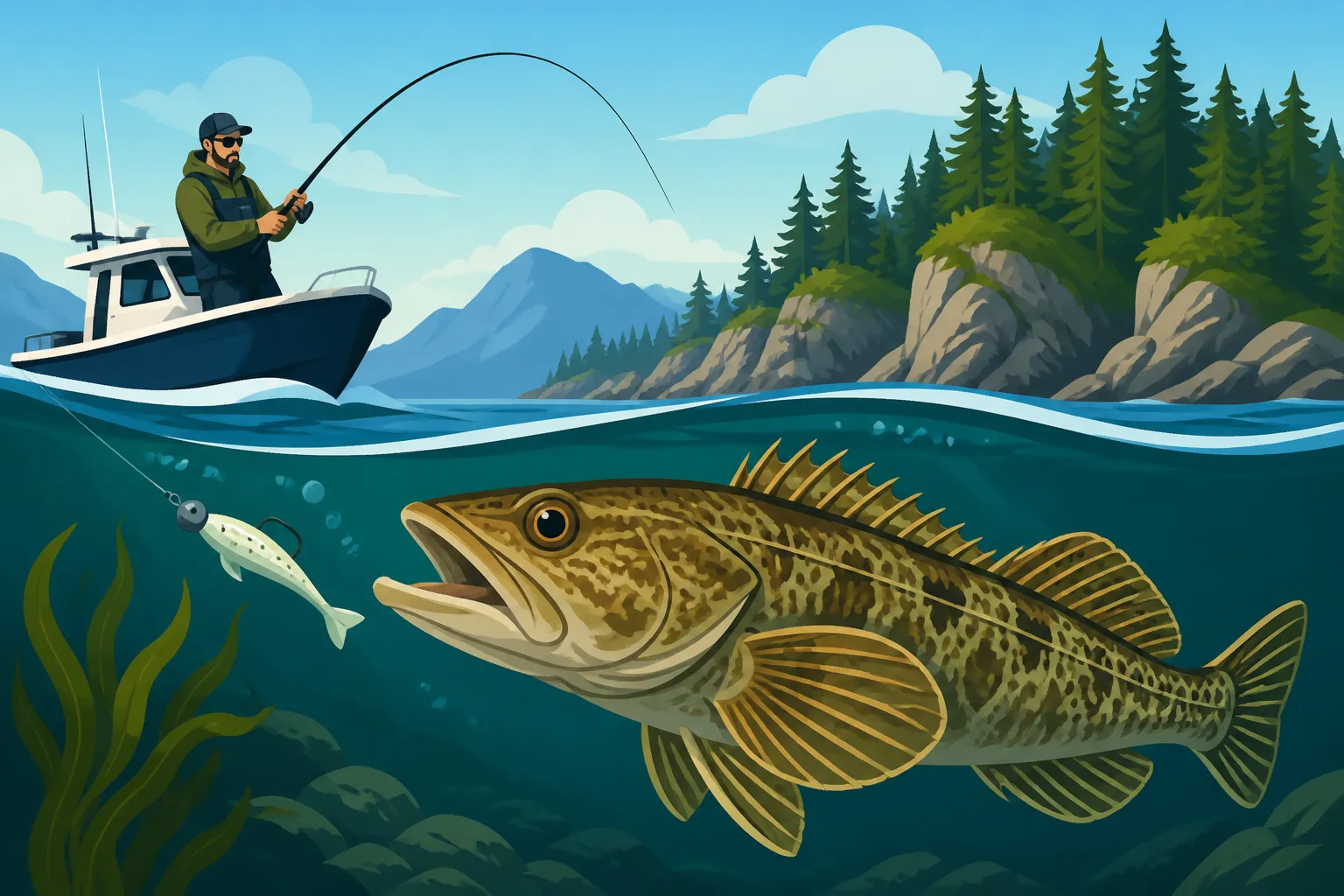
Lingcod are easily identifiable by their elongated bodies, large mouths full of sharp teeth, and a continuous dorsal fin that runs almost the entire length of their back. Their coloration varies widely depending on their habitat, ranging from mottled grey and brown to green or blue, providing excellent camouflage. In contrast, rockfish species like yelloweye, quillback, or copper rockfish have more compressed bodies, often with prominent spines on their dorsal fins, and generally lack the lingcod's characteristic head shape and overall length. Another common catch might be Pacific cod or hake, which have softer bodies, smaller mouths, and different fin structures. Always double-check your catch against a reliable identification guide if you're unsure, especially if you plan on retaining your fish.
Table: Quick ID Guide: Lingcod vs. Common Bottom Fish in BC
| Feature | Lingcod | Rockfish (e.g., Yelloweye) | Pacific Cod |
|---|---|---|---|
| Body Shape | Elongated, slender | Deep-bodied, compressed | Chubby, tapering |
| Mouth | Very large, broad, sharp teeth | Medium-sized, often spiny around mouth | Moderate, often with a chin barbel |
| Dorsal Fin | Continuous, long, deeply notched | Spiny anterior, soft-rayed posterior | Three distinct dorsal fins |
| Pectoral Fin | Large, fan-like | Large, fan-like | Moderate |
| Coloration | Highly variable (mottled brown, grey, green, blue) | Bright orange, red, brown, black, often mottled | Brownish, grey, mottled |
| Habitat | Rocky reefs, kelp, ledges | Rocky reefs, ledges, deep pinnacles | Varied bottom, often softer substrates |
| Aggression | Very aggressive, ambush predator | Moderately aggressive | Opportunistic feeder, less aggressive |
Timing is Everything: Best Seasons, Tides, and Depths for Lingcod
Just like real estate, fishing is often about location, location, location – but for lingcod, it's equally about timing. Knowing when and where to drop your line can dramatically increase your success. Vancouver Island's waters are dynamic, with shifting seasons and powerful tides that influence where lingcod are found and how actively they feed. Mastering these elements is crucial for anyone looking to consistently catch these formidable fish.
Seasonal Patterns: When Lingcod are Most Active
Lingcod are available year-round in many BC waters, but certain seasons offer better opportunities due to their lifecycle and feeding patterns. Generally, spring and fall are considered prime times for lingcod fishing off Vancouver Island.
- Spring (March to June): This is often heralded as one of the best times. After the winter spawning period, lingcod are typically very hungry and aggressive, actively feeding to regain energy. As the waters begin to warm slightly, baitfish become more active and plentiful, drawing lingcod out of their deepest lairs and closer to feeding grounds. This is also when males, having guarded nests in shallower rocky areas, might still be found in more accessible depths before dispersing. Targeting structure from 60 to 150 feet can be particularly productive.
- Summer (July to September): While still catchable, summer can be a bit more challenging. Lingcod may disperse to deeper, cooler waters as surface temperatures rise, and their feeding can be less frantic due to the abundance of food. However, they are still present, especially around deeper offshore reefs and pinnacles. Early mornings and late evenings often provide better action as fish may move shallower to feed under lower light conditions.
- Fall (October to December): Another excellent season! As water temperatures begin to cool, lingcod once again become very active feeders, preparing for the upcoming spawning season. Baitfish schools are often abundant and concentrated before winter, creating feeding frenzies that lingcod readily participate in. This period offers fantastic opportunities, especially in the 80 to 200-foot range.
- Winter (January to February): This is the spawning season for lingcod, and many areas have closures to protect spawning populations. It's absolutely critical to check the BC Fishing Regulations Explained for specific dates and regions, as closures can vary year to year and by location. When open, winter fishing can still be productive for larger, pre-spawn fish, but conservation is paramount during this sensitive period.
Harnessing the Tides: Currents and Feeding Windows
Tides and currents play an enormous role in successful lingcod fishing. Lingcod, being ambush predators, often position themselves in current breaks or eddies where they can dart out to snatch prey carried by the flow. Strong currents can also dislodge baitfish and other food sources from the bottom, making them easier targets.
- Slack Tide: This is often a less productive time for lingcod. With minimal current, baitfish tend to disperse, and lingcod become less active, hunkering down in their rocky homes. While you can still catch them, the bite typically slows considerably. The upside is that less current makes it easier to fish with lighter weights and maintain contact with the bottom, but the trade-off is often fewer bites.
- Moving Tide (Incoming or Outgoing): This is generally the sweet spot. As the tide begins to move, creating a moderate current, lingcod become much more active. They'll position themselves strategically to ambush prey being swept past them. Fishing the "shoulders" of the tide – the periods right after slack water as the current builds, and just before slack as it slows down – are often the most productive. The strength of the current is key: too strong, and it can be difficult to get your gear down and stay on the bottom; too weak, and the fish might not be actively feeding.
- Eddies and Current Breaks: Always look for areas where the current creates natural breaks or eddies around structure. These are prime ambush points where lingcod conserve energy while waiting for prey. Your sonar can help identify these pockets of calmer water adjacent to strong currents.
Learning to read the currents and understand how they interact with the underwater topography is a skill that will serve you well in all your BC saltwater fishing adventures.
Decoding Depth and Structure: Finding the Sweet Spot
Lingcod are synonymous with structure, and knowing how to find that structure, and at what depth, is paramount. They will gravitate towards anything that offers cover and ambush opportunities.
- Rocky Reefs and Pinnacles: These are classic lingcod havens. Look for sharp changes in depth, isolated rock piles, or extensive reef systems. Your boat's sonar is your best friend here. Learn to interpret the images to identify hard bottom, jagged lines indicating rocks, and baitfish schools that might be congregating around these structures. Modern fishfinders with side-scanning capabilities can be particularly effective in spotting structure that might be just off to the side of your boat.
- Kelp Beds: While most of the action is often deeper, don't overlook the edges of extensive kelp beds in shallower waters (30-80 feet). Lingcod love to hide in and around kelp, ambushing fish and crabs. These areas can be tricky to fish due to snags, but they can hold some surprisingly large fish.
- Drop-offs and Ledges: Anywhere the seabed abruptly changes depth is a potential lingcod zone. These vertical structures provide multiple ambush points at different depths. Drifting along these drop-offs, especially where they intersect with current, can be incredibly productive.
- Depths: While lingcod can be found from very shallow to very deep, the most consistent fishing off Vancouver Island typically occurs in depths ranging from 60 to 250 feet. In shallower areas, they tend to be closer to shore or specific reefs. In deeper water, they'll hold to prominent pinnacles that rise off the seabed. Experiment with different depths until you find the active zone on any given day. Remember that fish don't always stay at one depth; they might move up and down the structure depending on light, current, and bait availability.
When you've located a promising piece of structure, consider making several drifts over it from different angles. Often, one particular drift line will prove more productive than others as it passes right over the "sweet spot" where the lingcod are holding.
Arming Yourself: Essential Rods, Reels, and Tackle for Lingcod
Lingcod are not for the faint of heart, and neither is the gear required to tame them. Their aggressive strikes, powerful runs back into rocky cover, and sheer brute strength demand robust, reliable equipment. Skimping on tackle when targeting these tough bottom dwellers off Vancouver Island is a recipe for frustration and lost fish. Investing in the right rod, reel, and terminal tackle is crucial for success and enjoyment.
Building Your Lingcod Battle Station: Rods and Reels
When it comes to lingcod, think heavy-duty. These aren't trout; they're strong, determined fighters that will try to rock you in an instant.
- Rods: You'll want a stout rod, typically in the medium-heavy to heavy power range, with a fast to extra-fast action. This combination provides the backbone necessary to haul a heavy fish away from structure and the sensitivity to feel subtle bites at depth, especially if you're jigging. Look for rods rated for 40-80 lb braid or even higher, with a lure weight rating up to 16 oz (or more if you're fishing very deep or in strong current). A length of 6'6" to 7'6" is generally ideal for boat fishing, offering a good balance of leverage and casting accuracy (if bait casting). Brands like Ugly Stik, Shimano, and Fenwick offer durable, affordable options that can stand up to the abuse.
- For jigging, a slightly shorter, stiffer rod (around 6'6" – 7') with a powerful butt section and sensitive tip is excellent for working jigs and feeling those aggressive strikes.
- For bait fishing or heavy drift fishing, a slightly longer rod (7' – 7'6") with a more moderate action might be preferred by some for its ability to absorb head shakes and keep a constant load on the fish.
- Reels: A robust conventional (level-wind or star-drag) reel is almost universally preferred for lingcod. Spinning reels can work in shallower applications or with lighter jigs, but for the heavy weights and strong fish typically encountered, a conventional reel offers superior cranking power, line capacity, and durability. Look for models with a strong drag system capable of delivering at least 20-30 lbs of smooth drag pressure. Gear ratios around 4.0:1 to 5.0:1 offer a good balance of retrieve speed and torque. Brands like Penn, Daiwa, and Shimano are popular choices, offering models renowned for their toughness and reliability. Ensure your reel has enough line capacity to hold at least 200-300 yards of your chosen line.
Line Strength and Leader Configurations
Your line is the critical link between you and the fish, and it needs to be up to the challenge of lingcod.
-
Main Line (Braided): Braided line is highly recommended for lingcod. Its minimal stretch offers superior sensitivity, allowing you to feel every bump and bite, even in deep water. It also provides incredible strength-to-diameter ratio, allowing you to use a thinner line for less current resistance while still having plenty of pulling power. A 50-80 lb braided main line is a good starting point for most lingcod applications. For extremely deep water or very heavy tackle, some anglers might go up to 100 lb. You can find a wide selection of braided lines on Amazon from brands like PowerPro or Suffix.
-
Leader Material (Fluorocarbon or Monofilament): While braid is strong, it's highly visible in the water and can be easily abraded by sharp rocks or, more importantly, the lingcod's formidable teeth. Therefore, a leader is essential.
- Fluorocarbon: This is often the top choice. It's nearly invisible underwater, extremely abrasion-resistant, and has some stretch to absorb shock. A 60-100 lb fluorocarbon leader, typically 3-6 feet long, is standard. The heavier leader is crucial not just for toothy fish but also for protecting your main line from sharp rocks when a lingcod dives for cover.
- Monofilament: Heavy-duty monofilament (e.g., 80-120 lb test) can also be used as a leader, offering more stretch and often being more budget-friendly. While less abrasion-resistant than fluoro against direct contact with rocks, its extra diameter provides a good buffer against teeth.
-
Knots: Strong, reliable knots are non-negotiable. Learn to tie an FG knot or an Albright knot for connecting your braided mainline to your fluorocarbon or mono leader. For attaching hooks and swivels to your leader, a Palomar knot, improved clinch knot, or snell knot are excellent choices for their strength and reliability.
Terminal Tackle: Hooks, Weights, and Swivels
The business end of your line needs to be just as robust as the rest of your setup.
- Hooks: Lingcod have big mouths and strong jaws, so use strong, sharp, appropriately sized hooks.
- J-Hooks: Sizes ranging from 6/0 to 10/0 are common for bait fishing, depending on the size of your bait. Circle hooks are also excellent for bait fishing as they promote mouth hooking, reducing gut-hooking and improving the chances of a healthy release if you're practicing catch and release. Sizes 7/0 to 10/0 circle hooks are typical.
- Treble Hooks: While some lures come with trebles, single hooks are often preferred when fishing in rocky areas to reduce snags. If using lures with trebles, ensure they are heavy-duty and sharp.
- Weights: You'll need enough weight to get your bait or lure to the bottom and keep it there, especially in current.
- Lead Sinkers: Pyramid, cannonball, or "banana" style sinkers are common. Weights can range from 8 oz to over 24 oz, depending on depth and current. Always carry a variety.
- Drop-Off Rig: When fishing very rocky areas, many anglers use a "sacrificial" sinker on a lighter leader (e.g., 20-30 lb mono) that breaks off if it snags, saving your main line, leader, and fish.
- Swivels: Heavy-duty barrel swivels or ball-bearing swivels (rated for 100+ lbs) are essential to prevent line twist, especially when jigging or drifting with heavy gear. Use one to connect your main line to your leader, and another if you're using a dropper loop rig for bait.
- Snaps/Rings: Strong snaps are useful for quickly changing lures, but always ensure they are rated for heavy use. Solid rings can also be used for connecting leaders to assist hooks on jigs.
- Gaff or Net: Once you've successfully fought a lingcod to the surface, you'll need a way to get it into the boat. A sturdy, long-handled gaff is often preferred for larger lingcod, as their spiny fins and sharp teeth can make netting them difficult and potentially damaging to the net. Ensure your gaff has a sharp point and strong hook. For smaller fish, a large, sturdy landing net designed for saltwater use can work. Always exercise caution when bringing a lingcod aboard due to their aggressive nature and sharp teeth.
Having the right gear, properly rigged and maintained, will give you the confidence and capability to tackle even the biggest lingcod that Vancouver Island waters have to offer.
Mastering the Methods: Proven Techniques for Catching Lingcod
Lingcod are aggressive, but they’re not always easy to trick. Success often comes down to presenting your bait or lure effectively, right in their strike zone. Given their preference for structure and their ambush tactics, certain techniques consistently outperform others. Whether you're a seasoned angler or just starting out, mastering these proven methods will significantly increase your chances of landing a trophy lingcod off Vancouver Island.
The Art of Deep Water Jigging
Jigging is arguably the most popular and often most effective method for targeting lingcod. It allows you to actively work your lure near the bottom, mimicking an injured baitfish or octopus, which lingcod find irresistible.
- Vertical Jigging: This is the most common form. Once you've located promising structure on your sonar, position your boat directly over or slightly upcurrent from it. Drop your jig to the bottom, then retrieve it with a series of aggressive lifts and drops, letting it flutter and fall. The idea is to make the jig appear erratic and vulnerable. Lingcod often strike on the fall, so pay close attention as your jig drops. Vary your retrieve speed and the height of your lifts until you find what the fish prefer. Some days, a fast, aggressive jigging motion works best; other days, a slower, more subtle lift and drop, almost like bouncing it along the bottom, can be more effective.
- Heavy Jigs and Swimbaits: Large metal jigs (like Gibbs Minnows, Delta, or Kodiak jigs) ranging from 6 oz to 16 oz are excellent, especially in deeper water or strong currents. Rig them with a single, stout assist hook for better hookups and fewer snags. Soft plastic swimbaits (like those from Berkley Gulp! or Z-Man), often paired with a heavy lead head, are also incredibly effective. The soft plastic provides a realistic profile and irresistible action.
- Maintain Contact: The key to successful jigging is to maintain contact with the bottom and feel the bites. Use braided line for its sensitivity. If you drift too far off the bottom, you're out of the strike zone. If you're constantly snagging, you're too close or using too much weight. Adjust your drift and weight accordingly.
Bait Fishing: Anchored or Drifting for Lingcod
Sometimes, the simplest approach is the best. Bait fishing can be incredibly effective for lingcod, especially when they're less active or if you're trying to cover a wider area.
- Anchored Bait Fishing: If you find a particularly productive rock pile or ledge, anchoring directly over or upcurrent from it can allow you to precisely present your bait. Use a robust three-way swivel rig or a sliding sinker rig.
- Three-way Swivel Rig: Tie your main line to one eye of the swivel, a 1-3 foot leader with your hook to another, and a shorter (12-18 inch) leader with your sinker to the third. This keeps your bait slightly off the bottom and reduces snags.
- Sliding Sinker Rig: Your main line goes through the eye of a sliding sinker, then ties to a barrel swivel. A 2-4 foot fluorocarbon leader with your hook is tied to the other end of the swivel. This allows the fish to take the bait without feeling immediate resistance from the weight.
- Baits: Large pieces of cut herring, squid, or mackerel are excellent. Live bait, such as a medium-sized greenling, flounder, or even a smaller rockfish (if legal and available), can be absolutely deadly. Lingcod are drawn to the natural movement and scent.
- Drifting Bait Fishing: This technique is ideal for covering larger areas of structure, especially long ledges or broken ground. Use a similar rig to anchored bait fishing, but adjust your weight as needed to keep your bait near the bottom as you drift. Pay close attention to your depth sounder to ensure you're drifting over productive structure. Control your drift speed using a sea anchor (drogue) if the current is too fast. This allows your bait to naturally waft and bump along the bottom, covering more ground and enticing lingcod from their hiding spots. Drifting can be particularly effective during those crucial periods of moving tide.
Employing Trolling and Mooring Strategies
While not as common as jigging or bait fishing, trolling and mooring can also be effective lingcod strategies in specific situations, especially when trying to locate fish or cover large areas.
- Trolling: Deep water trolling for lingcod typically involves using downriggers to get large plugs, spoons, or weighted swimbaits down to the depth where lingcod are holding. This method is often more successful for salmon or halibut, but lingcod are opportunistic and will strike a trolled lure if it passes close by. The key is to run your lure just off the bottom, occasionally bumping it, especially over rocky areas. Use heavy-duty lures that can withstand the lingcod's bite and the strain of trolling. This technique is often used in conjunction with salmon or halibut trolling, sometimes resulting in a bonus lingcod.
- Mooring (or Anchoring and Waiting): This isn't strictly a "fishing technique" but rather a strategy for prolonged bait fishing. If you're in a known lingcod area with a strong tidal current, you might anchor your boat for an extended period, allowing the scent of your bait to permeate the water and attract fish. This is particularly effective if you're targeting multiple species, like when you're also hoping for salmon or halibut, and gives you time to really soak your bait. Just remember to frequently check your bait and ensure it’s still enticing. This strategy is also common for Fraser River Sturgeon Catch and Release Requirement, where anglers anchor to fish for sturgeon.
Regardless of the technique you choose, always remember that lingcod are structure-oriented. If you're not getting bites, it's often because you're not in the right spot, or your presentation isn't effectively reaching the fish within the structure. Continuously use your electronics, adjust your position, and don't be afraid to switch techniques until you find what works on a given day.
Lures and Baits That Lingcod Can't Resist
Lingcod are aggressive eaters, but that doesn't mean just any lure or bait will do the trick. To consistently hook these bottom-dwelling brutes off Vancouver Island, you need to present something that truly grabs their attention and appeals to their predatory instincts. Fortunately, their wide diet means you have a great arsenal of options, from natural offerings to flashy artificials.
The Power of Live and Cut Baits
Nothing beats natural bait for appealing to a lingcod's senses, especially their keen sense of smell. If you want to increase your chances, starting with fresh, natural baits is often the way to go.
- Live Baits: This is often the most effective method, hands down. A struggling live fish sends out irresistible vibrations and scent signals that lingcod can't ignore.
- Herring: A classic choice for many saltwater predators in BC. A live herring, hooked through the nose or dorsal fin, allowed to swim naturally near the bottom, is a potent lingcod magnet.
- Greenling/Flounder/Small Rockfish: These are natural prey for lingcod and can be incredibly effective. Small greenlings (if caught legally as bait) or even smaller, legal rockfish species (check specific regulations for use as bait) are excellent. Present them on a single, stout J-hook or circle hook. The movement of a live fish is often too much for an aggressive lingcod to resist.
- Mackerel/Sardines: While not native to BC waters, live mackerel or sardines can be purchased from tackle shops and are excellent lingcod baits due to their oily nature and strong scent.
- Cut Baits: When live bait isn't available, or you prefer a simpler presentation, cut bait is a fantastic alternative. The scent trail it leaves can draw in lingcod from a wider area.
- Large Pieces of Herring: Cut a whole herring into large chunks, leaving the skin on for durability. The oil and scent are highly attractive.
- Squid: Whole squid or large strips of squid are very tough, stay on the hook well, and have a unique scent that lingcod respond to. They are also readily available at most bait shops.
- Mackerel/Sardine Chunks: Oily fish like mackerel or sardines cut into large, appealing pieces release a lot of scent and are a lingcod favorite.
- Octopus: If you can get your hands on fresh octopus, a tentacle or large chunk can be a fantastic bait, especially for bigger lingcod. It's tough, stays on the hook, and is a natural part of their diet.
When using bait, ensure your hook is exposed for a good hookset, and use enough weight to keep your bait firmly on the bottom or just above structure, where lingcod are hunting.
Soft Plastics and Swimbaits: Mimicking Natural Prey
Artificial lures, especially soft plastics and swimbaits, have become incredibly popular and effective for lingcod. They offer the advantage of durability (compared to live bait) and come in a vast array of colors and sizes to match local baitfish.
- Large Paddle Tail Swimbaits: These are a go-to for many lingcod anglers. Soft plastic bodies ranging from 6 to 12 inches (or even larger!) with a distinct paddle tail create strong vibrations and a realistic swimming action. Rig them on heavy-duty jig heads, typically 4-16 oz, depending on depth and current. Popular brands available on Amazon include Berkley Gulp! (particularly their "Saltwater Jigging Grub" or "Swim Mullet" series), Z-Man (known for their tough ElaZtech material), and Keitech. Experiment with natural colors like green, brown, or white, but don't shy away from bright chartreuse or pink in murky water.
- Octopus/Squid Imitations: Large soft plastic octopus or squid skirts, often paired with a lead head or used as a trailer on a metal jig, can be highly effective. The tentacles provide a lifelike action in the current.
- Grubs and Curly Tail Worms: Oversized versions of these classic soft plastics can also entice lingcod. The curly tail creates a lot of action, making it a good choice for both jigging and drifting.
- Scented Baits: Some soft plastics come pre-scented, or you can add scent sprays/gels to enhance their appeal. The combination of realistic action and added scent can be a game-changer.
When fishing soft plastics, vary your retrieve. A steady lift and fall, a slow drag along the bottom, or sharp jigs can all trigger strikes. Lingcod often follow a lure for a bit before striking, so a pause in your retrieve can sometimes be the trigger.
Metal Jigs and Other Hard Baits: Flash and Vibration
Metal jigs and other hard baits are excellent for their durability, ability to get down quickly, and the flash and vibration they produce, which can call in lingcod from a distance.
- Vertical Jigs (Knife Jigs, Butterfly Jigs): These heavy, slender metal jigs are designed for deep water. Their fast sink rate and erratic flutter on the drop make them superb for enticing aggressive strikes. Brands like Shimano Butterfly Jigs, Daiwa Saltiga, or P-Line Laser Minnow jigs come in various weights and colors. Focus on 6-16 oz jigs for most Vancouver Island lingcod fishing. The flash and vibration can mimic a fleeing baitfish.
- Gibbs Minnow/Delta/Kodiak Jigs: These are classic BC saltwater jigs, often resembling herring. They have a more traditional spoon-like flutter and can be very effective when jigged aggressively or slow-trolled close to the bottom.
- Lead Fish Jigs: Simple, heavy lead jigs shaped like baitfish, often with a large single hook or assist hooks, are also highly effective. Their weight gets them down fast, and their profile is a familiar food source.
- Large Plugs/Diving Lures: While less common for direct lingcod targeting, large, deep-diving plugs or crankbaits (designed for halibut or large salmon) can sometimes pick up lingcod as a bycatch, especially if trolled very close to rocky structure. Ensure they are built tough with strong hooks.
When fishing metal jigs, a common technique is "power jigging" – a rapid lift and drop, letting the jig hit the bottom (or just above it), then lifting it quickly again. Lingcod will often hit it on the fall or immediately after it settles. The key is to keep your jig in the strike zone, near the structure.
Remember, the best lure or bait can vary day by day, and even hour by hour. Always carry a variety of options and be prepared to switch if one presentation isn't working. Matching the hatch – using colors and sizes that imitate the prevalent baitfish in the area – is often a good starting point.
Navigating the Waters: Top Lingcod Hotspots Around Vancouver Island
Vancouver Island is a lingcod paradise, ringed by diverse coastal waters, intricate reef systems, and deep drop-offs that are perfect for these ambush predators. However, knowing where to launch your boat and precisely where to fish once you're on the water can make all the difference. From the bustling south to the wild north, here are some of the most productive lingcod hotspots around Vancouver Island.
Southern Island Secrets: Victoria to Port Renfrew
The southern tip of Vancouver Island offers some fantastic lingcod opportunities, often within a reasonable boat ride from major population centers. The Strait of Juan de Fuca and the exposed West Coast can be highly productive.
- Victoria and Sooke Areas: Just outside Victoria, areas like Race Rocks Ecological Reserve (while fishing within the reserve is restricted, the surrounding rocky depths are prime) and the numerous reefs and ledges in the Strait of Juan de Fuca are excellent. Look for underwater pinnacles and rock walls between Sooke and Beecher Bay. Depths typically range from 80-200 feet, where the current can sweep baitfish over structure. The waters here are often fished heavily, but big lingcod still call these complex habitats home. Checking the BC Tidal Waters Area Boundary Map will help you understand exact fishing zones.
- Pedder Bay and William Head: These areas, slightly west of Victoria, have significant underwater structure where lingcod lurk. Drifting along the drop-offs and jigging around the points can yield good results.
- Port Renfrew: Heading further west, Port Renfrew is renowned for its incredible offshore fishing, and lingcod are a major draw. Spots like Swiftsure Bank, Carmanah Lighthouse, and the numerous offshore reefs and pinnacles are legendary. These areas are exposed to the open Pacific, offering truly wild fishing. Expect to fish in deeper water here, often 100-300 feet, around dramatic underwater topography. Charter boats from Port Renfrew frequently target these productive grounds, often combining trips for halibut and salmon with lingcod. This is a bucket-list destination for many serious BC anglers.
Central Island Gems: Nanaimo, Ucluelet, and Tofino
The central part of Vancouver Island, particularly its west coast, is a hub for sportfishing, with lingcod being a consistent target species.
- Nanaimo and Gulf Islands (Eastern Side): While the Strait of Georgia is more known for salmon, areas around the Southern Gulf Islands and deeper reefs near Nanaimo can hold lingcod. Look for isolated rock piles and ledges, especially those exposed to currents. These areas might be less consistent than the West Coast but can offer good fishing on the right day without the long travel.
- Ucluelet: This charming west coast town is a fishing mecca. The waters outside Ucluelet are teeming with structure. Great Bear Rock, Long Beach Bank, and the countless reefs and pinnacles extending offshore are prime lingcod territory. Similar to Port Renfrew, this is big water, often requiring fishing in 80-250 feet. Ucluelet is also a hotspot for Halibut Fishing Techniques for BC's Coast, and often lingcod are found in the same areas. The inshore rocky areas around Wickaninnish Bay also hold fish.
- Tofino: Just north of Ucluelet, Tofino offers equally spectacular fishing. La Perouse Bank and the surrounding offshore reefs are incredibly productive for lingcod, halibut, and salmon. The broken ground and deep channels provide perfect ambush points. Many charters operate out of Tofino, guiding anglers to these rich fishing grounds. The areas around the Esowista Peninsula and the many small islands and rocky outcrops also offer excellent lingcod opportunities closer to shore.
Northern Island Adventures: Port Hardy and Beyond
For those seeking a wilder, more remote fishing experience, the northern reaches of Vancouver Island deliver. The sheer amount of undeveloped coastline and diverse underwater features makes for exceptional lingcod habitat.
- Port Hardy and Queen Charlotte Strait: This is where the northern tip of Vancouver Island meets the mainland, creating a maze of islands, channels, and rich fishing grounds. The strong tidal currents of Queen Charlotte Strait sweep abundant baitfish over numerous reefs and pinnacles. Look for spots around Malcolm Island, Broughton Archipelago, and the many unnamed offshore structures. Fishing depths here can range from 50 to 300 feet, with some very large lingcod being caught regularly.
- Quatsino Sound: A deep, fjord-like inlet on the west coast, Quatsino Sound offers sheltered fishing with access to outer coast productivity. The steep rock walls and deep ledges within the sound, as well as the areas around its mouth, are known lingcod producers. The calmer waters inside the sound can be a blessing on windy days.
- Cape Scott (Northwestern Tip): This exposed, remote area is for the truly adventurous. The convergence of Pacific currents with the island's tip creates incredibly rich waters, but conditions can be challenging. The numerous reefs and banks here hold monstrous lingcod, though getting to them often requires careful planning and a robust vessel.
No matter where you choose to fish around Vancouver Island, local knowledge is invaluable. Talk to local tackle shop owners, charter captains, and other anglers. Always consult up-to-date marine charts, use your sonar diligently, and pay close attention to the specific BC Fishing Season Dates and Closures and local fishery notices, as regulations can vary significantly by area.
Regulations, Safety, and Ethical Angling for Lingcod
Successful lingcod fishing isn't just about catching fish; it's also about doing it responsibly, safely, and within the bounds of the law. British Columbia has comprehensive regulations to manage its valuable fisheries, and knowing these rules is non-negotiable. Furthermore, lingcod fishing often involves heavy gear and potentially challenging conditions, making safety paramount. Practicing ethical angling ensures the health of the lingcod population for generations to come.
Understanding BC Lingcod Regulations and Limits
The first rule of fishing in BC is to know and follow the regulations. These rules are put in place to ensure the sustainability of fish stocks.
- Fishing License: Before you even think about wetting a line, you must possess a valid tidal waters fishing license. You can purchase these online or from authorized vendors. Ensure you understand the distinction between a BC Freshwater vs Tidal Waters License, Explained if you plan to fish both.
- Bag and Possession Limits: Lingcod have specific daily bag limits and possession limits. These can vary by management area and can change throughout the year based on stock assessments. For example, often there is a limit of 1 lingcod per day, with specific size restrictions (e.g., minimum and maximum lengths). The possession limit might be twice the daily limit if you are storing fish at home. Always check the current year's BC Fishing Regulations Synopsis or DFO (Department of Fisheries and Oceans Canada) Fishery Notices for the most up-to-date information for your specific fishing zone. Ignorance of the law is not an excuse, and penalties for violations can be significant, including substantial fines and gear confiscation.
- Seasonal Closures: As mentioned earlier, lingcod often have seasonal closures, particularly during their spawning period in winter, to protect vulnerable populations. These closures are typically area-specific. For example, some areas might be closed from January 1 to April 30. Always confirm the dates and affected areas before planning your trip. These are critical for the long-term health of the fishery.
- Depth Restrictions and Rockfish Conservation Areas (RCAs): Many areas in BC, particularly off Vancouver Island, have depth restrictions for groundfish or are designated as Rockfish Conservation Areas (RCAs). These areas are closed to fishing for all groundfish species, including lingcod, to protect vulnerable rockfish species. Always consult detailed charts and current DFO notices to ensure you are not fishing in an RCA. Accidental bycatch of rockfish in an RCA can still result in fines. When fishing for Lingcod Habits Around Structure, you're also likely to encounter various Rockfish Species Identification Guide for BC, so awareness is crucial.
It cannot be stressed enough: always check the latest DFO Pacific Region recreational fishing regulations and fishery notices before every trip. These are easily accessible online and are updated regularly, often with in-season changes.
Safe Lingcod Handling and Release Practices
Lingcod are notoriously aggressive, even out of the water, and have a mouth full of sharp teeth. Safe handling is important for both the fish's well-being and your own.
- Handling: When bringing a lingcod aboard, use a gaff or a sturdy net. Do not try to lip-grab a lingcod like a bass; you'll regret it. If you need to handle the fish, grasp it firmly behind the head and gill plates, avoiding direct contact with the mouth. Many experienced anglers use thick gloves.
- De-hooking: Lingcod have powerful jaws. Use long-nosed pliers or a de-hooker to remove hooks. If the hook is deeply set and you plan to release the fish, sometimes cutting the line as close to the hook as possible is better than trying to wrench it out, which can cause more damage.
- Release Practices: For fish that are undersized or that you choose to release, prioritize their survival.
- Minimizing Time Out of Water: Get the fish back into the water as quickly as possible.
- Barotrauma: When lingcod are caught from deep water (typically deeper than 60 feet), they can suffer from barotrauma – a rapid change in pressure that causes their swim bladder to expand, making it difficult for them to swim back down.
- Descending Devices: If you're catching fish from deeper water that need to be released, a descending device (like a weighted inverted hook or a fish descender tool) is highly recommended. These devices quickly return the fish to depth, allowing their swim bladder to recompress. Many descending devices can be found on Amazon. This practice significantly increases their survival rate.
- Avoid Dropping: Do not drop a fish back into the water from a height, as this can cause internal injuries. Gently lower it back in.
Boating Safety and Essential Gear Checks
Fishing for lingcod often takes you to exposed coastal waters and over rugged underwater terrain. Boating safety is paramount, especially when targeting Lingcod Habits Around Structure.
- Vessel Safety: Ensure your boat is properly maintained and equipped with all required safety gear, including life jackets (one for every person, and children's sizes if applicable – review Life Jacket Requirements for BC Boaters), flares, a bailing device, a sound-signaling device, and a first-aid kit. File a float plan if you're heading out to remote areas.
- Weather Awareness: Coastal BC weather can change rapidly. Always check the marine forecast before heading out and be prepared to turn back if conditions deteriorate. Rough seas can make fishing dangerous and unproductive.
- Navigation and Electronics: Have reliable navigation tools (GPS, chart plotter) and a functioning depth sounder/fishfinder. These are not just for finding fish but also for safely navigating around reefs, shoals, and hazards.
- Communication: Carry multiple forms of communication, such as a VHF radio and a satellite messenger, especially if you're fishing out of cell service range.
- Anchor and Chain: If you plan to anchor, ensure you have an appropriately sized anchor, sufficient chain, and enough rode (line) for the depths and conditions you'll be fishing in. Lingcod fishing often requires anchoring in rocky areas, which can lead to snagged anchors. Carry a trip line if possible, or be prepared to lose an anchor occasionally.
- First Aid and Emergency Gear: Beyond the basic first-aid kit, consider having tools for dealing with hook injuries (e.g., side cutters to cut off a barbed hook) and a marine-specific first aid manual.
By respecting the regulations, practicing responsible handling, and prioritizing safety, you'll not only enjoy a more successful lingcod fishing experience but also contribute to the long-term health and enjoyment of BC's incredible marine resources.
Disclaimer
Fishing regulations, seasons, and limits are subject to change by the Department of Fisheries and Oceans Canada (DFO). It is the angler's sole responsibility to consult the most current BC Tidal Waters Sport Fishing Guide and any in-season fishery notices before heading out on the water. This guide provides general information and should not be considered a substitute for official DFO regulations. Always prioritize safety and ethical angling practices.