How to fish a spoon for big lake trout
Oh, the elusive, magnificent lake trout! Many an angler, myself included, has spent countless hours staring at a fishfinder screen, wondering how to tempt one of those truly massive, deep-water giants lurking in British Columbia's vast lakes. It's a real challenge, let me tell you, and it can feel like you're fishing in a different dimension sometimes. But here's the good news: mastering the art of fishing with spoons can dramatically increase your chances of hooking into one of these incredible fish. This guide is all about giving you the edge, helping you understand why spoons are so effective, what gear you'll need, and the techniques to make them irresistible to those big lake trout.
Understanding Big Lake Trout in BC and Why Spoons Work So Well
Before we even get to the tackle box, it’s vital to wrap our heads around what makes a big lake trout tick. These aren't your average stream rainbows; they're apex predators, often residing in some of the deepest, coldest, and most pristine waters BC has to offer. Understanding their habitat and dining preferences is the first step to making a spoon irresistible.
Where Big Lake Trout Hide
Imagine a vast, clear, cold lake. That's typically the domain of the lake trout. Unlike other trout species that might hang out in shallower, warmer waters, big lake trout are true denizens of the deep. They thrive in environments where the water temperature stays consistently cool, even in the height of summer. This often means they'll be found in depths ranging from 50 to 200 feet, or even deeper in some of our truly massive lakes like Kootenay Lake, Quesnel Lake, or Williston Lake.
They absolutely adore structure. Think about submerged reefs, underwater islands, steep drop-offs, old river channels, and even vast flat bottoms with subtle undulations. These features provide them with ambush points and areas to rest without expending too much energy. During the summer months, you'll often find them congregating along the thermocline – that invisible boundary where warm surface water meets cold deep water. This zone is rich in oxygen and often holds baitfish, making it a prime feeding ground. Being able to read your sonar and identify these structures and the thermocline is like having an X-ray vision into their world. For more general advice on where these magnificent fish reside, check out our guide on Best Fishing Lakes in British Columbia.
The Lake Trout's Diet and Behavior
Lake trout are opportunistic, voracious predators. Their diet primarily consists of smaller baitfish like kokanee, various species of whitefish, ciscoes, and even sculpins and suckers. When you look at their powerful jaws and sleek, torpedo-like bodies, it’s clear they're built for chasing down and ambushing prey. They don't typically "graze" like some other fish; they hunt. This predatory instinct is precisely why spoons are so incredibly effective.
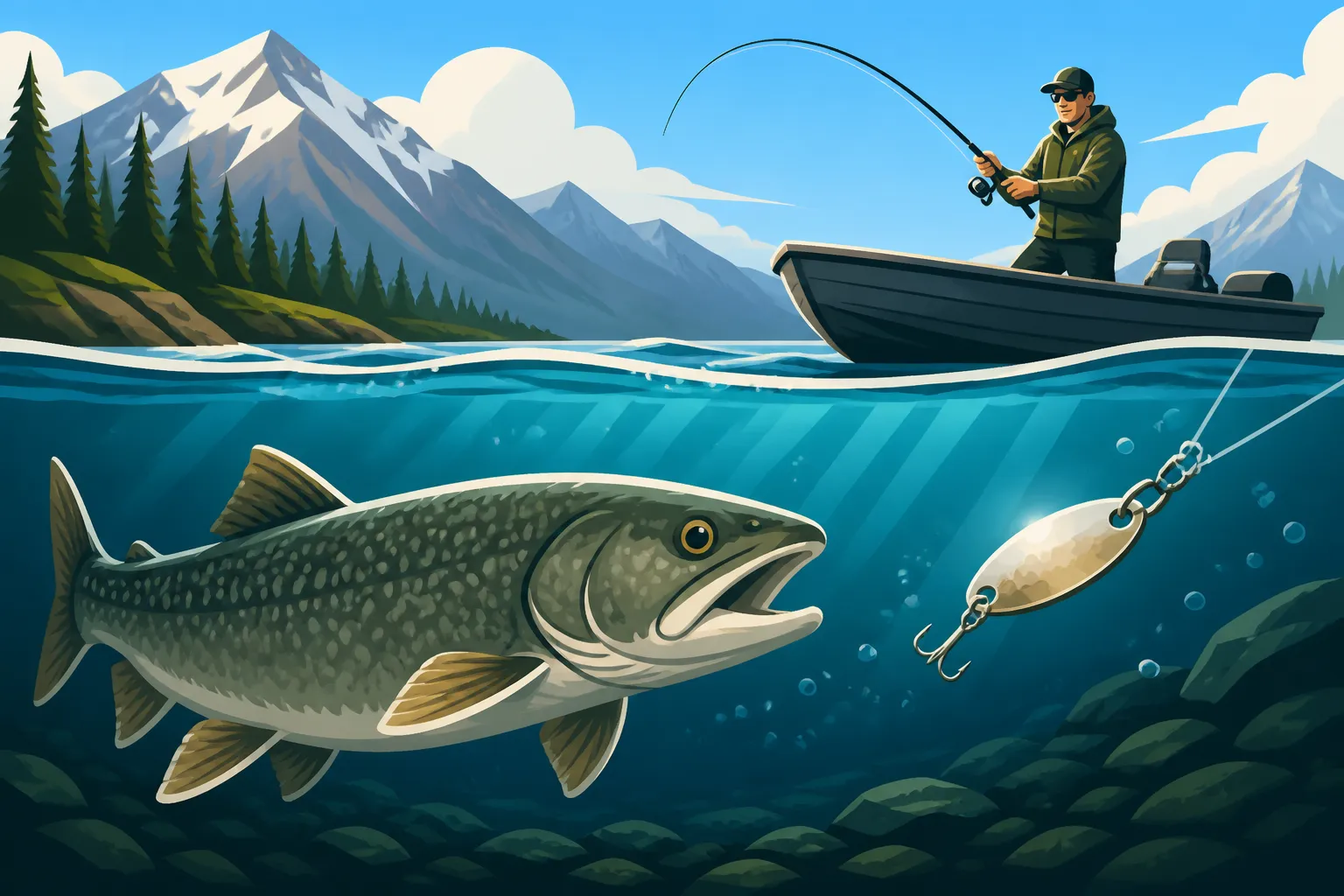
A well-presented spoon doesn't just look like a fish; it acts like an injured or disoriented one. The erratic wobbling, the flashing of light off its metallic surface, and the way it darts and pauses can perfectly mimic a struggling baitfish – an easy meal for a hungry lake trout. When a big lake trout sees that flash and feels that subtle vibration, their predatory switch flips, and they often strike with incredible aggression. It's a fantastic feeling when you get that solid, deep-water thud on your line! Knowing what kind of baitfish are prevalent in your target lake can also inform your spoon choice; for instance, if you know the lake is teeming with kokanee, a spoon that imitates their size and silvery flash will be a game-changer. For those who want to know more about what these trout feed on, Kokanee Fishing in BC can offer some excellent insights.
Essential Spoon Gear for BC Lake Trout
Alright, you understand the fish, now let’s talk tools. Getting the right gear is non-negotiable when you’re targeting big, powerful fish in deep water. You wouldn't bring a butter knife to a steak dinner, right? Same principle applies here. The right rod, reel, line, and, of course, the spoon itself, will make all the difference.
Rods and Reels
When it comes to rods for lake trout, you're usually looking at two main categories: trolling and jigging.
For trolling, a medium-heavy to heavy action rod, typically 7 to 10 feet in length, is ideal. You want something with enough backbone to handle the drag of heavy weights (like downrigger balls or lead core line) and to absorb the powerful runs of a large fish in deep water. A softer tip can help detect subtle bites and prevent the fish from tearing off the hook, while a strong butt section gives you the leverage you need to bring a heavy fish up from 100 feet. Fiberglass or composite rods are often preferred for their forgiving nature. As for reels, a level-wind baitcasting reel with a line counter is almost a must-have. This allows you to precisely control your depth, which is critical when you’re trying to hit that specific thermocline or structure. The ability to know exactly how much line you have out gives you a massive advantage.
For jigging, a medium-heavy spinning or baitcasting rod, around 6 to 7.5 feet, with a fast action, is usually the way to go. You need a sensitive tip to feel those deeper, often lighter bites, but enough power to set the hook and fight the fish. Graphite rods are excellent for jigging due to their sensitivity. A sturdy spinning reel in the 3000-5000 size range, or a baitcasting reel with a good drag system, will serve you well. Make sure it has enough line capacity for deep water.
Line Choices
Your line is the direct connection to that potential trophy, so don't skimp here.
- Braided Line: For jigging and deep-water trolling, braided line is a game-changer. Its zero stretch means incredible sensitivity – you'll feel every bump, every rock, and every subtle bite. It also has a much thinner diameter for its breaking strength compared to mono, which helps cut through the water and reduce drag, allowing you to get to depth faster with less weight. A 20-30 pound test braided line is a good all-around choice. However, because it has no stretch, you must use a leader.
- Monofilament Line: While braid excels for sensitivity, good quality monofilament still has its place, especially for some trolling setups where a bit of stretch can act as a shock absorber. A 15-20 pound test mono might be suitable for shallower trolling or if you prefer a simpler setup.
- Fluorocarbon Leader: This is non-negotiable for lake trout. Fluorocarbon is nearly invisible underwater, extremely abrasion resistant (which is crucial when fishing around rocky structure), and offers good knot strength. Attach a 10-20 foot fluorocarbon leader (15-25 lb test) to your main braided line using a strong knot like an FG knot or an Albright knot. The length of the leader gives the fish less to spook at, particularly in BC's clear lake waters.
Spoon Selection: Size, Shape, and Color
Now for the main event: the spoons themselves! This is where you can really get creative and match the hatch, so to speak. When you're browsing for tackle, perhaps even online at a store like Amazon, you'll see an incredible variety, and it can be a bit overwhelming.
- Size: The size of your spoon should generally mimic the prevalent baitfish in the lake. If lake trout are gorging on kokanee, a 3- to 5-inch spoon is often perfect. If they're targeting larger whitefish, you might go up to 6 or even 7 inches. Smaller spoons (2-3 inches) can be deadly in early spring or when fish are being finicky. Don't be afraid to go big; trophy lake trout are not shy about devouring a substantial meal.
- Shape: Different shapes create different actions.
- Casting/Trolling Spoons: These often have a more elongated, S-shaped curve (like a Little Cleo or a Williams Wabler). They wobble side-to-side, mimicking a swimming or injured baitfish. Thinner, wider spoons have a slower, wider wobble, while heavier, narrower spoons have a tighter, faster wiggle and sink quicker.
- Jigging Spoons: These are typically shorter, fatter, and heavier, designed to plummet quickly and flutter on the drop. Think about jigging spoons from brands like Luhr-Jensen or similar styles you'd find on Amazon. Their erratic fall and shimmer on the lift can be irresistible.
- Color: This is often hotly debated, but some general principles apply.
- Natural Baitfish Patterns: Silver, gold, chrome, blue/silver, green/silver, or patterns mimicking kokanee (pink/silver) or whitefish (perch patterns, pearl) are almost always a safe bet, especially in clear water.
- Bright Attractors: Sometimes, especially in lower light conditions or stained water, a bright color like fluorescent orange, chartreuse, or even a hot pink can trigger a strike. These colors create a "hot spot" that fish can't ignore.
- Glow-in-the-Dark: When you're fishing extremely deep (say, over 100 feet) or in very low light (dawn/dusk, overcast days), glow-in-the-dark spoons can be incredibly effective. Make sure to "charge" them with a flashlight before deploying.
Experimentation is key! What works one day might not work the next, so having a good selection of spoons in various sizes, shapes, and colors is vital.
Spoon Fishing Techniques for British Columbia's Lake Trout
Having the right gear is only half the battle; knowing how to use it is where the magic happens. Whether you're trolling, jigging, or even casting from shore, the presentation of your spoon is paramount to enticing those big lake trout.
Trolling with Spoons
Trolling is arguably the most popular and effective method for covering water and finding active lake trout, especially in BC's larger lakes. It allows you to present your spoon at precise depths over wide areas where fish might be scattered.
- Speed and Depth Control: This is critical. Lake trout typically respond best to slower trolling speeds, usually between 1.5 and 3 miles per hour. The ideal speed will impart the right action to your spoon – enough wobble without spinning. To get your spoon to the fish, you'll need depth control.
- Downriggers: These are the gold standard for precision depth control. They allow you to run your spoon at a specific depth, detaching when a fish strikes.
- Lead Core Line: This multi-coloured line sinks at a predictable rate (roughly 5-7 feet per colour segment at typical trolling speeds). It's a simpler, more affordable option, but less precise than downriggers.
- Diving Planers/Weighted Dipsy Divers: These devices pull your line down to a set depth, diving when you set them. They also have trip mechanisms when a fish hits.
Always vary your depth until you find the fish. Start at different depths with multiple rods if regulations allow, spreading them out to cover the water column.
- S-Curves and Erratic Movement: Don't just troll in a straight line! Making gentle S-curves with your boat will cause your outside lines to speed up and your inside lines to slow down and drop. This change in speed and action can often be the trigger that causes a following lake trout to strike. Likewise, occasional slight changes in boat speed can make your spoon dart or fall, mimicking a distressed baitfish.
- Reading Your Electronics: Your fishfinder/sonar is your best friend when trolling. Look for schools of baitfish, suspended marks that indicate trout, and structure on the bottom. If you see fish at a specific depth, adjust your presentation to hit that zone. Remember, those fish you see on the screen are often not the fish you're catching, but rather the ones you should be trying to target. It's truly eye-opening to see how active these deep-water ecosystems are. Many anglers find a good selection of specialized trolling spoons and associated gear from marketplaces like Amazon to cover all their bases.
Jigging with Spoons
Jigging is a highly effective, active way to target lake trout, especially when they're congregated over specific structure, during ice fishing, or when you've pinpointed them on your sonar. It's a more hands-on approach that can be incredibly rewarding.
- Boat Positioning and Sonar: When jigging from a boat, maintaining your position directly over the fish or structure is crucial. Use your bow-mount electric motor or anchor precisely. Your sonar is your window to the underwater world. Watch for fish arches, bait balls, and the spoon itself. You can actually see fish responding to your lure in real-time, which is an amazing experience! Check out Best sonar settings for finding structure on Kootenay Lake for tips on optimizing your electronics.
- The Drop and Lift: The basic jigging motion involves dropping your spoon to the desired depth, letting it settle, then sharply lifting your rod tip (anywhere from 1 to 5 feet) and letting the spoon flutter back down on a semi-slack line. Most strikes happen on the fall, so pay close attention! Vary the intensity of your lifts, the height of your drop, and the duration of your pauses. Sometimes a quick, aggressive jig is best; other times, a subtle lift-and-hold works wonders.
- Snap Jigging vs. Dead Sticking:
- Snap Jigging: This involves aggressive, sharp snaps of the rod tip, making the spoon dart wildly. It’s great for triggering reaction strikes from active fish.
- Dead Sticking: Sometimes, a subtle approach is needed. After a few jigs, let your spoon just hang perfectly still for 10-20 seconds. This "dead stick" presentation often entices cautious fish who are wary of too much movement.
- Scent and Trailer Hooks: Don't underestimate the power of scent! Applying a fish attractant gel or spray to your spoon can make a big difference, especially for hesitant fish. Some anglers also add a small piece of sucker meat, a minnow head, or a plastic grub to the hook to add even more appeal and a larger profile. This can be especially effective when you're targeting big, wary fish.
Casting and Retrieving (Shore or Boat)
While trolling and jigging are the bread and butter for deep-water lakers, casting spoons can be surprisingly effective, particularly in certain situations.
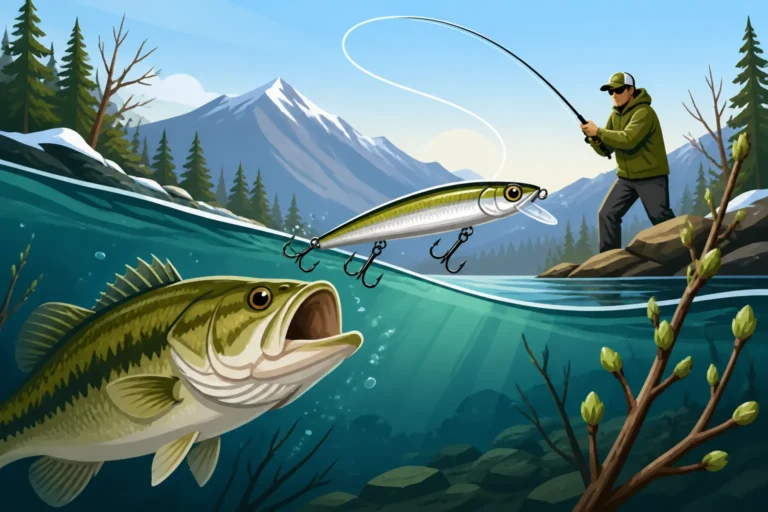
- Early Season and Shallower Areas: In the spring, just after ice-out, lake trout often move into shallower water (20-40 feet) to feed on schooling baitfish or to recover from spawning. This is prime time for casting spoons from shore or a boat, especially around points, rocky shoals, and abrupt drop-offs close to shore.
- Varying Retrieve Speeds: Cast your spoon out, let it sink to your desired depth (count it down!), and then begin a retrieve. Experiment with different speeds:
- Slow Roll: A steady, slow retrieve with occasional pauses can be deadly, making the spoon wobble enticingly.
- Rip and Kill: Retrieve quickly for a few cranks, then pause and let the spoon flutter down, then repeat. This erratic action can trigger strikes from aggressive fish.
- Targeting Structure: When casting from a boat, position yourself to cast over or alongside submerged structure that you've identified on your sonar. Fan-cast the area to cover as much water as possible. The key is to keep your spoon in the strike zone for as long as possible.
Mastering the Hunt: Tips for Big Lake Trout Success
Catching a big lake trout in BC isn't just about having the right lure; it's about understanding the environment, being patient, and constantly adapting. It's a rewarding pursuit that combines technology with old-school angling instincts.
Reading the Water and Electronics
Becoming proficient at reading your electronics is paramount. Your sonar isn't just a pretty picture; it's providing you with a constant stream of information. Learn to distinguish between baitfish schools, individual large fish (those thick, prominent arches), and bottom structure. The thermocline, that invisible layer of cooler water, is often where lake trout will suspend, and your fishfinder can help you pinpoint it.
Pay attention to water temperature. Lake trout prefer cold water, typically in the 40s and 50s Fahrenheit. If the surface water is too warm, they'll be deeper, seeking cooler temperatures. Understanding how depth, temperature, and structure interact will dramatically improve your ability to locate these fish. Think of it as putting together a puzzle, and your electronics are giving you crucial pieces. Many modern fishfinders also offer detailed mapping and GPS capabilities, allowing you to mark productive spots and navigate back to them with precision.
Seasonal Considerations
Lake trout behavior changes throughout the year, largely driven by water temperature and spawning cycles.
- Spring (Post-Ice Out): As the ice recedes, surface waters are still very cold. Lake trout often move shallower, sometimes as shallow as 10-30 feet, to feed aggressively after the long winter. This is a fantastic time for casting spoons from shore or trolling relatively shallow.
- Summer: This is when lake trout go deep! They'll retreat to the coolest, deepest parts of the lake, often suspending around the thermocline or hugging bottom structure in 50-200+ feet of water. Downriggers and lead core trolling, or vertical jigging, are essential during this period. For a broader look at what to expect throughout the year, see BC Fishing Seasons by Month and Best Time of Year to Fish in BC.
- Fall (Pre-Spawn): As water temperatures begin to cool again, lake trout will once again become more active and often move shallower as they prepare to spawn. This can be another fantastic time for aggressive spoon fishing, similar to the spring.
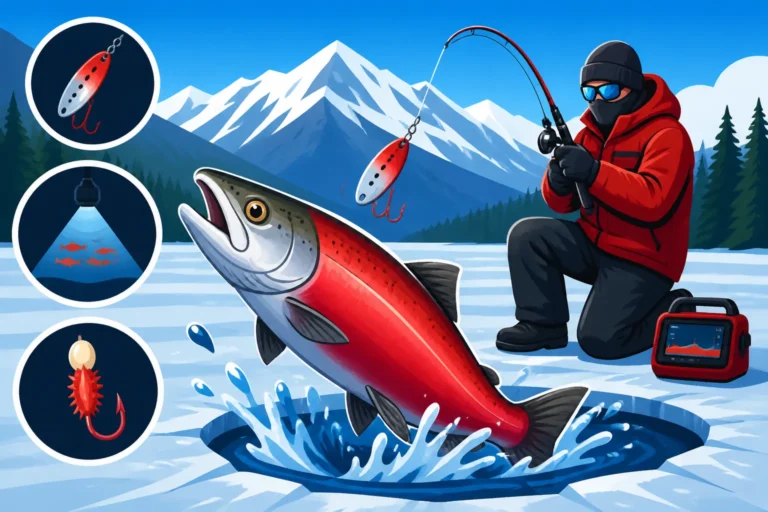
- Winter (Ice Fishing): For those brave enough to venture onto the ice, jigging spoons through the ice is incredibly effective. Again, focus on structure and suspended fish, using your ice fishing sonar (flasher) to watch your spoon and the fish's reaction.
| Technique | Primary Season | Target Depth | Key Gear | Spoon Type | Action/Retrieve |
|---|---|---|---|---|---|
| Trolling | Spring, Summer, Fall | Variable (20-200+ ft) | Downriggers, Lead Core, Line Counter Reel | Elongated, S-shaped | Steady wobble, S-curves, speed changes |
| Jigging | Year-round (incl. Ice) | Variable (30-200+ ft) | Sensitive Rod, Sonar | Shorter, Heavier | Sharp lifts, fluttering drops, pauses |
| Casting | Early Spring, Fall | Shallower (10-50 ft) | Medium-heavy Rod | Variable (often S-shaped) | Varying retrieve speeds, rip & kill, count-down |
Advanced Tactics and Patience
Lake trout fishing demands a certain level of dedication and patience. These aren't always easy fish to fool, especially the really big ones.
- Experimentation: If one spoon isn't working, change it. Try a different size, shape, or color. Adjust your trolling speed or jigging cadence. Even a slight modification can make all the difference. Sometimes, it's just about finding that one "hot" spoon for the day. Make sure your tackle box is well stocked with various options you can get, perhaps even browsing for specific brands or styles on Amazon.
- Keep Hooks Sharp: This sounds basic, but it's vital. A big lake trout has a tough mouth. A super-sharp hook penetrates easily, increasing your hook-up ratio and reducing the chances of a lost fish during the fight.
- Fighting Big Fish: When you hook into a big lake trout in deep water, the fight can be long and arduous. Take your time. Let the fish make its runs, but maintain constant pressure. Pumping the rod and reeling down helps bring the fish up. Be prepared for them to make a final surge when they see the boat!
- Catch and Release: Many of BC's big lake trout are old, slow-growing fish. If you're not planning to keep a fish for the table, practice responsible catch and release. Minimize handling, get them back in the water quickly, and use de-hookers if possible. Consider the depth you're bringing them up from; deep-water fish can suffer from barotrauma, so specialized release tools might be necessary.
- Stay Informed: Always, always check the current BC Freshwater Fishing Regulations Synopsis for the specific lake you are fishing. Regulations for bag limits, season dates, and specific gear restrictions can change frequently and vary widely from lake to lake. Being informed is part of being a responsible angler in British Columbia. You can read up on the basics with Reading the BC Freshwater Fishing Regulations Synopsis.
Ultimately, fishing for big lake trout with spoons in British Columbia is a deeply satisfying pursuit. It's about combining knowledge, technique, and a healthy dose of persistence. When that rod doubles over and you feel the powerful throb of a true deep-water giant, all the effort becomes incredibly worthwhile. Tight lines!
Disclaimer
This article is for general informational purposes only and does not constitute professional advice. Laws, prices and regulations vary by location and change over time. Consult a qualified professional for guidance on your specific situation.