Best salmon spots in Barkley Sound
Navigating the vast and intricate waters of British Columbia can be a real head-scratcher when you're trying to pinpoint those elusive, prime salmon fishing spots. It’s easy to feel overwhelmed by the sheer scale of our coast, wondering where to even begin to drop a line for a truly memorable catch. This comprehensive guide is here to cut through that confusion, focusing specifically on Barkley Sound and revealing the very best locations and strategies to help you hook into some fantastic salmon action.
Understanding Barkley Sound's Appeal for Salmon
Barkley Sound, nestled on the west coast of Vancouver Island, isn't just a picturesque stretch of ocean; it's a vibrant, dynamic ecosystem that acts as a superhighway and feeding ground for Pacific salmon. Anglers flock here from all over, and for good reason: the geography, the currents, and the sheer abundance of food create an irresistible draw for these prized fish.
Geographic Features and Water Dynamics
What makes Barkley Sound so special for salmon fishing is its unique blend of offshore and inshore characteristics. You’ve got a massive, open entrance directly facing the Pacific, allowing migrating salmon unimpeded access. But as you move deeper into the sound, it transforms into a complex maze of islands, reefs, channels, and bays. This varied underwater topography creates a multitude of current breaks, upwellings, and depth changes – all critical elements that concentrate baitfish and, subsequently, the salmon that feed on them. Imagine salmon funneling into these natural corridors, resting in eddies, or staging on underwater ledges before moving further inland. This intricate underwater landscape also provides countless ambush points and sheltered areas, making it an ideal habitat for both transient and resident salmon populations.
The tidal influences play a massive role here too. The ebb and flow of the tides push and pull nutrient-rich waters through the sound, creating a constant churn that disorients baitfish and makes them vulnerable. Savvy anglers know that understanding the local tides and currents is just as important as knowing where to drop your line; often, the bite will switch on or off with the change of the tide, especially around specific structures.
The Abundance of Baitfish
Salmon are here to eat, and Barkley Sound is a veritable buffet. The productivity of these waters is largely due to the vast schools of baitfish that call it home, or pass through during their migrations. Herring, pilchards, anchovies, and needlefish are all present in staggering numbers, forming the foundation of the salmon's diet. These baitfish congregate in specific areas – often around submerged structure, kelp beds, or in nutrient-rich upwellings – creating feeding frenzies that draw in salmon from miles around.
During certain times of the year, particularly in spring and fall, the density of baitfish can be astounding. When you find these baitballs, you're almost guaranteed to find salmon, especially Chinook and Coho, aggressively feeding. Keep an eye on your sonar for dense schools of bait, and watch for diving birds, which are often a tell-tale sign of an active feed below the surface. Understanding What baitfish BC salmon key on can give you a significant advantage, allowing you to "match the hatch" with your lure choices.
Salmon Species and Seasons
Barkley Sound offers opportunities for several species of Pacific salmon, each with their own peak seasons and preferred habitats.
- Chinook (King) Salmon: These are the big ones, often called "spring salmon" locally. They are present almost year-round as resident feeders, but large numbers of migratory Chinook begin to show up in late spring (May-June) and peak through summer (July-August) as they head towards natal rivers like the Somass. You'll often find them feeding aggressively on baitfish in both offshore and inshore areas. Learning When chinook salmon run on the Fraser can provide context for their broader migration patterns along the coast.
- Coho (Silver) Salmon: Known for their acrobatic fights, Coho are abundant from late summer through fall (August-October). They tend to feed higher in the water column and are often found closer to shore or in shallower depths, making them a favourite for light tackle anglers. Their aggressive nature and willingness to chase lures make for exciting fishing.
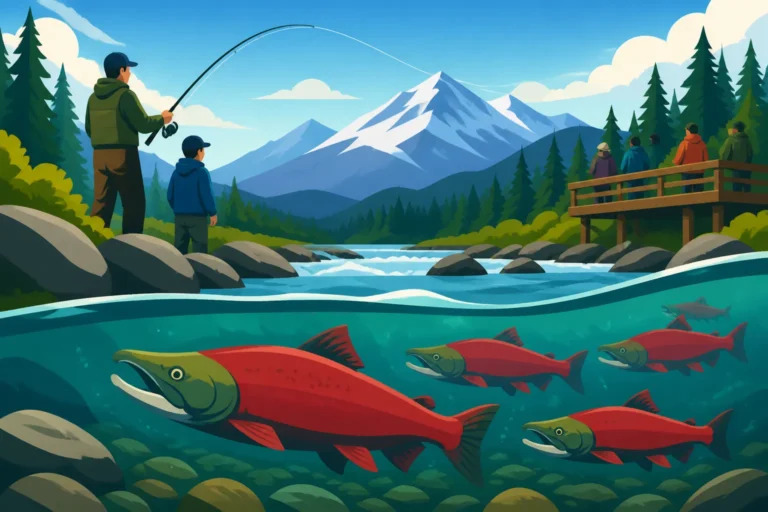
- Sockeye Salmon: While not as common a target for sport fishermen as Chinook or Coho, sockeye can be found in massive numbers when their runs are strong, particularly in July and August, especially closer to the mouth of the Somass River system. They are notoriously challenging to catch on traditional lures, often preferring smaller, red hootchies.
- Pink (Humpy) Salmon: These smaller, more numerous salmon appear in huge biennial runs (odd years in most areas) during late summer (August-September). They provide fast action and are an excellent species for beginners or for those just looking to bend a rod.
- Chum (Dog) Salmon: Chum salmon arrive in fall (September-October) and can be quite large. While often overlooked for their table quality compared to other salmon, they offer a powerful fight and are a blast on the right gear.
Understanding BC Fishing Season Dates and Closures for each species is paramount to planning a successful and legal trip.
Prime Salmon Fishing Locations Within Barkley Sound
Barkley Sound is a big place, and knowing where to focus your efforts can make all the difference. While salmon can be found almost anywhere in the sound, certain areas consistently produce more fish due to their specific characteristics that attract bait and salmon.
Offshore Structure and Islands
Many of the most legendary salmon spots in Barkley Sound are found around its numerous offshore islands and submerged rock formations. These areas act like magnets for baitfish, and consequently, for hungry salmon.
- Swale Rock: This is perhaps one of the most famous and productive spots in all of Barkley Sound. Located at the entrance to the sound, Swale Rock is essentially a large, submerged reef that rises dramatically from deep water. The currents here are strong and constantly sweep baitfish over the structure, creating a feeding highway for salmon. Chinook and Coho often stage around Swale Rock before moving further into the sound. Fishing here involves working the edges of the structure, watching your sonar for bait and salmon marks, and paying close attention to current lines. It can be a bit of a washing machine on big tides, so boat handling skills are key.
- The Great Bear Rock: Similar to Swale Rock, Great Bear Rock is another prominent underwater feature near the entrance, offering excellent opportunities for migratory salmon. Its deep-water access and surrounding rocky habitat make it a prime location for larger Chinook. Anglers often find success by trolling around the rock, especially on the tide changes, or by mooching with baitfish near the bottom.
- Pinkerton Islands and Diplock Island: These islands, located somewhat west of the main entrance, offer a mix of kelp beds, rocky drop-offs, and current seams that hold bait and salmon. Fishing the calmer, leeward sides during strong currents can be productive, as salmon seek refuge from the main flow. These areas are excellent for both trolling and jigging, depending on the activity level of the fish.
- Austin Island and Fleming Island: Further into the sound but still offering good exposure to ocean-migrating fish, these islands feature a variety of depths and structures. The channels and reefs around them are known to hold both transient salmon and resident feeders. Look for areas where the depth changes sharply, or where currents create obvious seams and eddies.
Nearshore Reefs and Inlets
While offshore spots get a lot of attention, Barkley Sound's nearshore areas and protected inlets are equally productive, especially for Coho and often for resident Chinook. These spots provide more sheltered fishing conditions and can be fantastic when the open ocean is too rough.
- Sarita Bay: Located on the mainland side of the sound, Sarita Bay is a large, protected inlet known for its consistent salmon fishing, particularly for Coho and often for a mix of Chinook. The bay has numerous small reefs, kelp beds, and a significant river system (the Sarita River) feeding into it. Trolling spoons or hootchies in Sarita Bay, especially near its entrance and along its varied shoreline, can be very rewarding. The calmer waters here make it a great option for smaller boats or for days with less-than-ideal weather.
- Toquart Bay: Another significant inlet, Toquart Bay offers similar characteristics to Sarita but with its own distinct charm. It's a popular launch point for kayakers and small boats, and the salmon fishing within the bay and just outside its mouth can be excellent. The confluence of freshwater from the Toquart River and the tidal flows creates ideal conditions for salmon, particularly during their migratory phases. Check out Best Kayak Fishing Spots in BC if you're considering a paddle-powered adventure here, as it's a fantastic way to explore these calmer areas.
- Ucluelet Inlet: While technically outside Barkley Sound proper, the waters immediately surrounding the entrance to Ucluelet Inlet and the nearby Wreck Bay are extremely productive. Many of the charters operating out of Ucluelet, often found on sites like FishingBooker, will target these areas for Chinook and Halibut. The "fingers" and other rock formations outside the inlet offer prime feeding grounds.
- Baitfish Concentrators within the Sound: Areas like the entrance to Pipestem Inlet, or the various passages between the Broken Group Islands, can become incredible baitfish concentrators. Salmon will stack up in these areas, waiting for an opportunity to feed. Observing bird activity and using your fish finder to locate bait schools are key tactics here.
River Mouths and Estuaries
As salmon prepare to spawn, they naturally gravitate towards the mouths of rivers and streams. Barkley Sound has several significant freshwater inputs that become major staging areas for returning fish.
- Somass River Mouth (Port Alberni Inlet): This is perhaps the most famous river mouth associated with Barkley Sound salmon fishing. While the main fishing occurs deep within the Port Alberni Inlet, salmon stage in significant numbers around the mouth of the inlet as they prepare for their journey upstream. The waters where the Alberni Inlet meets the wider sound can be extremely productive, especially during the peak of the Chinook and Sockeye runs in summer. Understanding the unique dynamics of Port Alberni Inlet would be crucial if you plan to extend your trip into the inlet itself.
- Sarita River and Toquart River Outflows: As mentioned, these rivers feed into their respective bays, creating brackish water conditions that attract staging salmon. While it's generally illegal to fish directly in river mouths or within specific boundaries, the waters immediately adjacent to these outflows can be hotspots. These areas are often rich in nutrients and offer a transition zone that salmon appreciate before pushing into freshwater. Always consult the BC Fishing Regulations Explained to ensure you're fishing legally, as river mouth closures and boundary restrictions are common for salmon conservation.
Essential Techniques and Gear for Barkley Sound Salmon
Successfully targeting salmon in Barkley Sound requires understanding the most effective techniques and having the right gear. These fish are powerful, and the conditions can vary, so being prepared is crucial.
Trolling and Downrigging
Trolling is, without a doubt, the most popular and often the most effective method for salmon fishing in Barkley Sound. It allows you to cover a lot of water, present multiple lures at various depths, and mimic the movement of baitfish.
- Downriggers are your best friend: Salmon in Barkley Sound, especially Chinook, often feed at specific depths, sometimes hundreds of feet down. Downriggers allow you to precisely control the depth of your lure, getting it right into the strike zone where the fish are holding or feeding on bait. Using your fish finder to identify bait balls or salmon marks, and then setting your downriggers to that depth, is a fundamental strategy.
- Lure Selection: Spoons are incredibly popular and effective, with brands like Gibbs Delta (e.g., Guide Series or G-Force spoons) and Silver Horde (e.g., Coho Killer) being staples. Hootchies (squid skirts) in various colors, especially greens, blues, and whites, are also highly productive, often fished behind a flasher. Plugs, particularly larger ones for Chinook, can also be deadly. Experiment with colors and sizes based on light conditions, water clarity, and what baitfish are prevalent.
- Trolling Speed and Pattern: A good starting point for trolling speed is usually between 2.5 to 3.5 knots, but this can vary. Watch your rod tips – you want to see a nice action on your lure. Varying your speed and making S-turns or gentle turns can often trigger a strike, as it changes the action of your lure. Understanding Trolling Techniques for BC Lake Trout can also provide transferable insights into varying your presentation to attract strikes.
Mooching and Jigging
While trolling is king, mooching and jigging offer more active and often exciting ways to target salmon, especially when they are concentrated in specific areas or feeding aggressively.
- Mooching: This technique involves slowly drifting with the current, presenting bait (usually a cut plug herring or anchovy) under a float or with minimal weight. It’s particularly effective when salmon are holding in schools or are more reluctant to chase fast-moving trolled lures. Mooching allows for a very natural presentation of bait. It requires a good understanding of currents and boat control to keep your bait in the strike zone. This method is often preferred in calmer waters or when fishing specific, smaller structures.
- Jigging: When salmon are actively busting bait on the surface or marked in dense schools on your sonar, jigging can be incredibly productive. Metal jigs (e.g., Gibbs Delta Crocs, P-Line Laser Minnows) dropped down and aggressively worked up through the water column can provoke an immediate strike. This is a highly active fishing style that rewards a good feel for your tackle and the fish. It's especially effective for Coho and often for Chinook when they are in a feeding frenzy. For those who enjoy active fishing, Jigging for Halibut off Vancouver Island shares some principles with jigging for salmon, focusing on presentation and depth control.
Recommended Gear and Bait
Having the right equipment is non-negotiable for success and to ensure the welfare of the fish, especially if you're practicing catch and release.
- Rods and Reels: For trolling, a medium-heavy to heavy rod (8.5-10.5 feet) with a forgiving tip and strong backbone is ideal, paired with a high-quality levelwind or conventional reel spooled with 25-50 lb monofilament or braided line. For mooching, lighter rods (10.5-11.5 feet) with sensitive tips are preferred, often with single-action reels. For jigging, shorter, stout jigging rods are best.
- Terminal Tackle: Use strong swivels, leaders (fluorocarbon is preferred for its invisibility), and good quality hooks appropriate for the size of fish you're targeting. Keep a variety of flashers (e.g., Hot Spot, Gibbs Delta) in different sizes and colors, as they are crucial for attracting salmon to your lures.
- Bait: Fresh or brined herring and anchovies are king. Having a variety of sizes is useful. Sometimes the salmon want small bait, sometimes large. Always carry a good bait knife and brining supplies. Many anglers swear by scent attractants to give their lures an edge.
Planning Your Barkley Sound Salmon Adventure
A successful fishing trip to Barkley Sound isn't just about knowing where the fish are; it's about preparation, timing, and understanding the local support systems available.
Timing Your Trip for Success
The "best" time to fish Barkley Sound depends heavily on what species you're targeting.
- Spring (April-June): This is a great time for resident Chinook salmon, often called "winter springs," which are feeding aggressively and can be found in good numbers. Migratory Chinook start to show up in late spring. Water conditions are generally calmer than later in summer.
- Summer (July-August): This is peak season for migratory Chinook salmon, as massive runs move through the sound towards their spawning grounds. Sockeye are also abundant, particularly towards the Port Alberni Inlet. Coho start to show up in good numbers by August. This is arguably the most popular time to fish, but also the busiest.
- Fall (September-October): Excellent for Coho salmon, which are very aggressive. Later in the fall, Chum and Pink salmon runs provide additional opportunities. Larger, trophy-sized Chinook can still be around. Conditions can start to get a bit choppier as winter approaches.
Always check local fishing reports and BC Fishery Notices and In-Season Closures, Explained before you head out, as regulations can change quickly based on stock assessments and conservation needs.
Hiring a Local Charter or Guide
For many, especially those unfamiliar with Barkley Sound's complex waters, hiring a local fishing charter or guide is the best way to ensure a safe and productive trip. These professionals possess invaluable local knowledge, including current hot spots, bait concentrations, and effective techniques.
- Benefits of a Guide: A good guide will provide all the necessary gear, bait, and most importantly, their expertise. They know how to read the water, understand the currents, and interpret sonar readings to put you on fish. They also adhere to all regulations, ensuring your trip is legal and responsible. This is particularly useful for new anglers or those seeking trophy fish in specific, challenging conditions.
- Finding a Reputable Charter: Many excellent charters operate out of Ucluelet and Port Alberni. You can often find and compare these services through online platforms like FishingBooker, which provides reviews and detailed information on available guides and their specialties. Looking for a charter that specializes in the specific type of salmon fishing you're interested in (e.g., light tackle for Coho, deep-water trolling for Chinook) is a good starting point. Checking out How to Choose a BC Fishing Charter can give you even more insight.
- What to Expect: Charters typically provide all gear, bait, and often cleaning services for your catch. Be sure to discuss what's included when booking. Remember that tipping your guide or deckhand is customary for good service.
Navigating Regulations and Safety
British Columbia has strict fishing regulations designed to conserve its precious salmon stocks. It's every angler's responsibility to understand and follow these rules.
- Fishing Licenses: Absolutely essential. Everyone fishing in BC waters needs a valid fishing license. For salmon in tidal waters, you'll also need a BC Tidal Waters Salmon Conservation Stamp Cost. These are typically available online or at local tackle shops. Make sure you understand Resident vs Non-Resident Fishing License Costs in BC if you're visiting from out of province.
- Bag Limits and Size Restrictions: Specific bag and possession limits apply to each salmon species, and these can change based on the season and area. There are also minimum size limits for Chinook salmon. Always consult the current year's BC Freshwater Fishing Regulations Synopsis or the online DFO (Department of Fisheries and Oceans) fishery notices. Ignoring these rules can lead to significant penalties, including Fishing Without a License in BC: Penalties.
- Conservation: Practice responsible angling. Handle all fish, especially those you intend to release, with care. Use appropriate gear to minimize stress on the fish. Many anglers opt for single, barbless hooks, which are often required in certain areas anyway, to facilitate easy release.
- Safety First: Barkley Sound can experience rapidly changing weather conditions. Always check the marine forecast before heading out. Carry all required safety equipment, including life jackets, flares, and a marine radio. Inform someone of your float plan. If you’re boating, remember the BC Boating Laws for Anglers and ensure you have your Pleasure Craft Operator Card.
Table: Prime Barkley Sound Salmon Spots & Seasons
| Spot Name | Primary Target Species | Best Time of Year | Key Features for Salmon | Typical Depth Range (ft) | Notes |
|---|---|---|---|---|---|
| Swale Rock | Chinook, Coho | Late Spring – Late Summer | Submerged reef, strong currents | 60 – 200 | Excellent for migratory fish, can be rough. |
| Great Bear Rock | Chinook | Early Summer – Mid Fall | Deep rock structure, bait concentration | 80 – 250 | Known for larger Chinook, watch currents. |
| Pinkerton/Diplock Is. | Chinook, Coho | Late Spring – Early Fall | Kelp beds, rocky drop-offs, current seams | 50 – 180 | Good for trolling & jigging, sheltered sides. |
| Sarita Bay (mouth) | Coho, Chinook | Late Summer – Early Fall | River outflow, protected bay | 40 – 120 | Calmer waters, consistent Coho action. |
| Toquart Bay (mouth) | Coho, Chinook | Late Summer – Early Fall | River outflow, varied shoreline | 30 – 100 | Good for smaller boats, access to open water. |
| Ucluelet Inlet (outside) | Chinook, Halibut | Mid Spring – Early Fall | Deep structure, baitfish schools | 70 – 300 | Often targeted by charters, exposed to swells. |
| Somass River Mouth | Sockeye, Chinook | Mid Summer (Sockeye), Late Summer (Chinook) | Staging area for river runs | 50 – 150 | Check specific DFO closures, very busy. |
Disclaimer
The information provided in this guide is for general informational purposes only and is subject to change. Fishing regulations in British Columbia can be complex and are regularly updated. It is the responsibility of every angler to consult the most current British Columbia Sport Fishing Regulations Synopsis, as well as the federal DFO Fishery Notices, before engaging in any fishing activity. Always prioritize safety and conservation.