Best ice fishing access in the Cariboo region
If you've ever dreamt of dropping a line through a hole in the ice, surrounded by pristine wilderness and the crisp, clean air of winter, but felt overwhelmed by the sheer size of British Columbia, you're not alone. Finding those hidden gems for ice fishing can feel like searching for a needle in a snowy haystack. This guide is here to cut through the confusion and point you directly to some of the best ice fishing access points in BC's legendary Cariboo region, ensuring your winter angling adventure is both successful and memorable.
Why the Cariboo Region is an Ice Angler's Dream
The Cariboo-Chilcotin region of British Columbia isn't just a summer paradise; it transforms into a breathtaking wonderland once the lakes freeze over, offering some of the most accessible and productive ice fishing opportunities in the province. Many anglers find the vastness of BC daunting, but the Cariboo's unique blend of thousands of lakes, relatively stable winter weather, and abundant fish populations makes it a prime destination, especially for those seeking a tranquil escape with excellent fishing.
A Landscape Ripe for Winter Adventures
Imagine a region dotted with more than 8,000 lakes, many of which are easily reachable by vehicle and provide excellent hardwater fishing conditions for months on end. The Cariboo's geographical makeup, with its rolling hills, expansive forests, and countless waterways, creates an ideal environment for consistent ice formation. Unlike some coastal areas where ice can be unpredictable, the Cariboo often experiences prolonged periods of safe ice, typically from December through to March, sometimes even into April in higher elevations. This stability means you can plan your trip with a greater degree of confidence, knowing that the conditions are likely to hold. Plus, the sheer number of lakes means less crowding, allowing for that peaceful solitude many ice anglers crave.
Abundant Fish Species Under the Ice
What truly sets the Cariboo apart for ice fishing is the diversity and abundance of its fish populations. While many lakes across BC offer winter fishing, the Cariboo is particularly renowned for its vibrant stocks of Rainbow Trout and Kokanee, with several lakes also holding trophy-sized Lake Trout (Char) and even the elusive Burbot. The Freshwater Fisheries Society of BC plays a significant role here, stocking many of these lakes annually with Rainbow Trout, ensuring healthy numbers and excellent catch rates. This means even if you're a beginner or bringing the family, your chances of bending a rod are incredibly high. Knowing what to expect when targeting these species, especially How to Catch Rainbow Trout in BC Lakes or How to Catch Kokanee in BC, can significantly boost your success. It’s not just about quantity either; the cold, clear Cariboo waters produce hard-fighting fish that are a joy to catch.
Top Cariboo Lakes for Ice Fishing Access
When it comes to picking an ice fishing spot in the Cariboo, the options can be overwhelming. To help you narrow it down, we've highlighted some of the region's most popular and accessible lakes, each offering a unique ice fishing experience. These aren't just names on a map; they are proven producers with good access for anglers of all skill levels.
Lac des Roches: Trophy Rainbows from Accessible Shores
Lac des Roches, located off Highway 24, also known as the "Fishing Highway," is arguably one of the most famous ice fishing destinations in the Cariboo. This deep, clear lake is legendary for its large, feisty Rainbow Trout. Anglers consistently report catching rainbows in the 2-5 pound range, with larger specimens not uncommon. The access here is fantastic, with several public access points and boat launches that are plowed in winter, making it easy to get onto the ice.
A popular access point is near the BC Parks day-use area, which usually has cleared parking. The lake's structure, with its rocky drop-offs and shoals, provides excellent habitat for trout even under ice. Many anglers find success using small jigs tipped with a maggot or a piece of prawn, fished close to the bottom, especially in depths of 20-40 feet. The beauty of Lac des Roches is its consistency; it's a lake you can often rely on for action, making it a great choice for a dedicated ice fishing trip.
Green Lake: Family-Friendly Fun and Diverse Catches
Green Lake, situated near the communities of Lone Butte and Watch Lake, is a sprawling, relatively shallow lake known for its stunning turquoise waters and exceptional fishing. It's a fantastic choice for families and those looking for a mix of species. The lake hosts healthy populations of Rainbow Trout, Kokanee, and even some Lake Trout. Access is plentiful, with numerous public beaches and resorts around its perimeter that often maintain access roads in winter.
The wide-open nature of Green Lake means there's plenty of space, even on busy weekends. For Rainbows, try fishing around the weed lines and drop-offs in 10-20 feet of water. Small spoons, jigs, or even simply a bare hook with a kernel of corn can be incredibly effective. For Kokanee, look for deeper flats or points and try vertical jigging with small, flashy lures. Green Lake is also a great place to set up a portable shelter and spend the day, enjoying the serene winter landscape while waiting for a bite. Just remember to check the BC Fishing Regulations Explained for specific limits on each species.
Bridge Lake: Secluded Spots and Varied Depths
Further along Highway 24, Bridge Lake offers a more diverse and often more challenging, but highly rewarding, ice fishing experience. This large lake boasts a complex underwater topography, with numerous bays, islands, and varying depths, providing habitat for Rainbow Trout, Kokanee, and some substantial Lake Trout. While access might require a bit more navigation than Green Lake, there are several public access points, including some informal spots that locals use, particularly around the areas near resorts like Fawn Lake Resort or Bridge Lake Store.
The key to Bridge Lake is exploring. Don't be afraid to drill a few holes and move around until you find where the fish are holding. For Lake Trout, focus on deeper areas and structure, using heavier spoons or tube jigs. Rainbows and Kokanee can be found in shallower bays and near drop-offs. The rewards here can be big, with potential for some truly impressive Lake Trout catches if you put in the effort. Always prioritize safety, especially on a larger, deeper lake like this.
Watch Lake: Reliable Action and Beautiful Scenery
Watch Lake, a smaller but incredibly popular lake located just north of Green Lake, is renowned for its consistent action and picturesque setting. It's a fantastic spot for Rainbow Trout, with a good number of brook trout also present. Access is generally good, with resorts and private properties dotting the shoreline, many of which offer public access points or designated parking for anglers. The lake is known for early and late ice opportunities, making it a reliable choice throughout the season.
Anglers often have great success with simple presentations here, such as a worm or power bait on a small hook, or micro jigs tipped with a single maggot. Fishing in 15-30 feet of water around the lake's many contours tends to be productive. Watch Lake's smaller size often means less travel time on the ice, making it perfect for those shorter trips or when conditions are particularly cold. It’s an ideal lake to introduce someone to the joys of ice fishing, with its beautiful views and high probability of success.
| Lake Name | Primary Species | Best Access Points | Key Features |
|---|---|---|---|
| Lac des Roches | Rainbow Trout | BC Parks Day-Use Area, various public launches off Hwy 24 | Known for trophy-sized Rainbows, deep clear water, consistent action. |
| Green Lake | Rainbow Trout, Kokanee, Lake Trout | Numerous public beaches, resort access near Lone Butte & Watch Lake | Family-friendly, diverse species, large lake with plenty of space. |
| Bridge Lake | Rainbow Trout, Kokanee, Lake Trout | Public launches, informal local access near Fawn Lake Resort | Diverse structure, good for larger Lake Trout, requires more exploration. |
| Watch Lake | Rainbow Trout, Brook Trout | Resort access, designated public parking points | Smaller, picturesque lake, reliable action, good for beginners/shorter trips. |
Essential Gear and Safety for Cariboo Ice Fishing
Ice fishing in the Cariboo is an incredibly rewarding experience, but it’s crucial to be prepared for the elements and understand the unique safety considerations that come with venturing onto frozen water. A successful and safe trip hinges on proper gear and a vigilant approach to ice conditions.
Safety First: Ice Thickness and Awareness
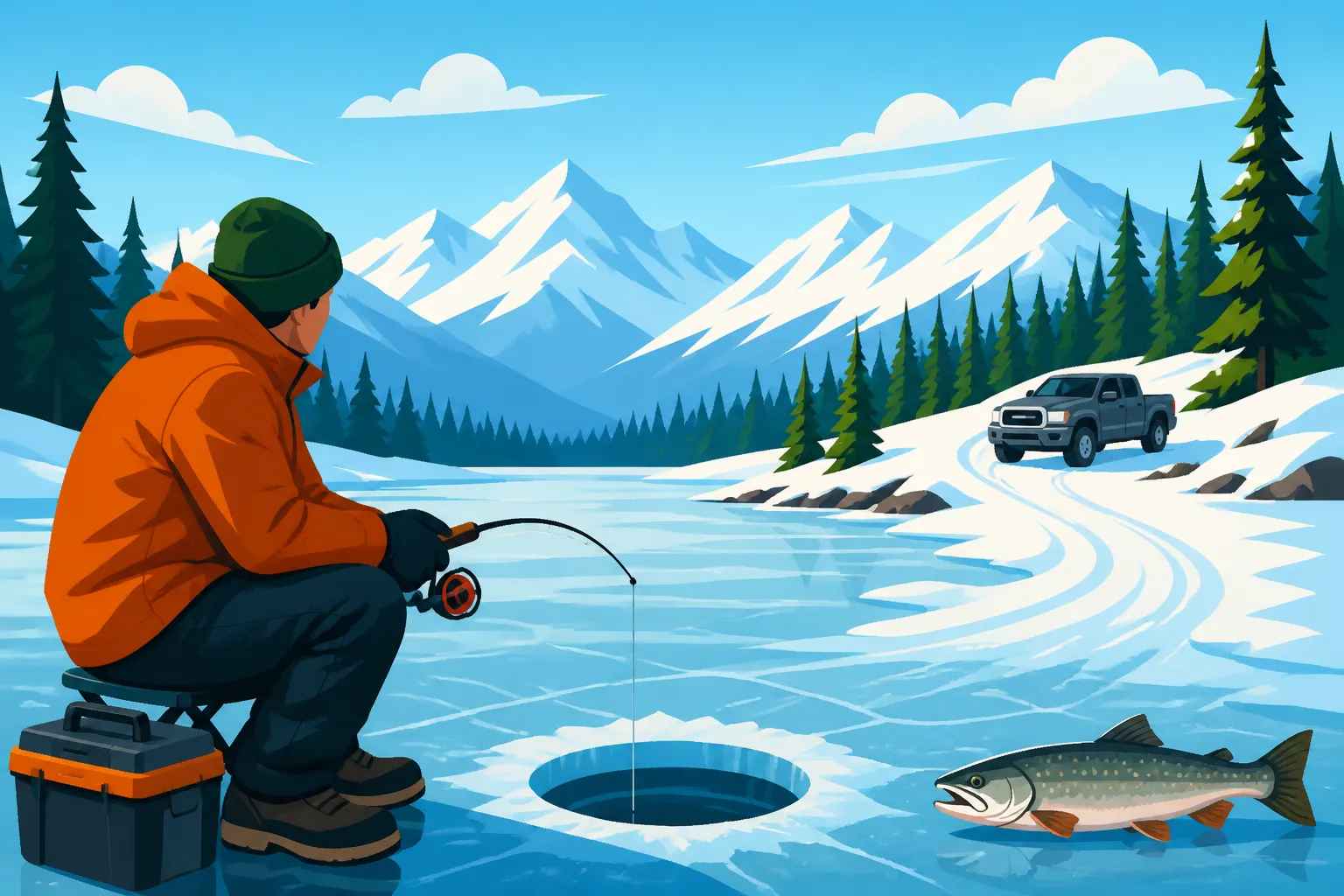
The golden rule of ice fishing is never assume the ice is safe. Always check ice thickness regularly with an auger or spud bar, especially if you're venturing onto a new lake or a different area of a familiar one. A minimum of 4 inches (10 cm) of clear, new ice is recommended for walking and fishing alone, while 5-7 inches (12-18 cm) is needed for small groups or snowmobiles. For larger groups or vehicles, even more is required. However, remember that ice thickness can vary greatly across a single lake, influenced by currents, springs, underwater structure, and snow cover. Always carry safety equipment, including ice picks (worn around your neck), a rope, and a whistle. It's also wise to inform someone of your fishing plans, including where you're going and when you expect to return. For comprehensive details on safety, be sure to look into How thick ice needs to be to fish safely in BC.
Gearing Up for the Cold and the Catch
The Cariboo winters can be chilly, so dressing in layers is paramount. Thermal base layers, fleece mid-layers, and a waterproof, insulated outer shell are essential. Don't forget warm, waterproof boots, gloves, and a hat. Beyond personal apparel, your fishing gear needs to be appropriate for ice fishing. This includes:
- Ice Auger: A gas, electric, or hand auger (6-8 inch diameter is common) to drill through the ice.
- Ice Fishing Rods: Shorter, stiffer rods designed for jigging or setting tip-ups.
- Lures and Bait: A variety of small jigs, spoons, and soft plastics. Tipping them with live bait like maggots, mealworms, or a piece of cured roe can often seal the deal. For specifics, research Best bait for opening day trout in BC.
- Bucket or Sled: To carry your gear and serve as a seat.
- Shelter: A portable ice fishing shelter (pop-up or flip-over style) can make a huge difference in comfort, especially on windy or very cold days.
- Fish Finder/Flasher: Essential for locating fish and understanding depth and structure beneath the ice.
- Safety Gear: Ice picks, rope, first-aid kit, and a fully charged cell phone.
Effective Techniques for Cariboo Ice Species
Ice fishing techniques in the Cariboo are generally straightforward, making it accessible for newcomers. For Rainbow Trout and Brook Trout, jigging small spoons (like Dick Nites or Krocodiles) or soft plastic lures tipped with bait is highly effective. Try varying your jigging action – slow lifts, quick drops, or a constant quiver – until you find what the fish prefer. Fishing just off the bottom or suspended a few feet higher often produces results.
For Kokanee, similar vertical jigging techniques apply, but often with even smaller, flashier jigs or specialized Kokanee lures. Understanding Best techniques for ice fishing kokanee can really improve your catch rate. For Lake Trout, heavier spoons or tube jigs fished near structure in deeper water are the go-to. These fish are powerful, so be ready for a fight! Remember, patience is key, but don't be afraid to move if you're not getting bites; sometimes a slight change in location is all it takes.
Navigating Regulations and Planning Your Trip
Beyond the thrill of the catch, a successful and legal ice fishing trip in the Cariboo means understanding the local regulations and planning your logistics. British Columbia has specific rules for freshwater fishing that all anglers must adhere to.
Understanding BC Fishing Licenses and Regulations
Before you even think about drilling a hole, you absolutely need a valid freshwater fishing license. This isn't just a recommendation; it's a legal requirement, and fines for fishing without one can be hefty. The good news is that acquiring a license is relatively simple, and you can usually purchase one online through the BC government's Angler's Atlas website or from authorized vendors throughout the province. Be sure to check out the British Columbia Fishing License Guide for 2026 for the most up-to-date information on types of licenses, costs, and where to buy them. If you’re a resident, your options will differ from non-residents, so it’s important to understand BC fishing license residency requirements.
Once you have your license, familiarize yourself with the current BC Freshwater Fishing Regulations Synopsis. This document outlines everything from daily bag limits and possession limits to specific tackle restrictions, bait rules, and closed seasons for individual lakes or species. Regulations can change, sometimes even mid-season, so always check for any BC Fishery Notices and In-Season Closures, Explained. For example, some lakes might have special bait restrictions or length limits for certain trout species. Ignorance of the rules is not an excuse, so a quick read can save you from a disappointing encounter with a conservation officer.
Finding Guides and Accommodations
While many Cariboo lakes offer excellent DIY opportunities, some anglers, especially those new to the region or ice fishing, might prefer the expertise of a local guide. A good guide can provide all the necessary gear, share local knowledge on hot spots and techniques, and ensure a safe and productive day on the ice. Websites like FishingBooker are excellent resources for finding reputable local guides and charters specializing in Cariboo ice fishing. You can often find guides who offer packages that include heated shelters, fish finders, and even shore lunches, making for a truly comfortable and hassle-free experience.
For accommodations, the Cariboo region offers a range of options, from cozy cabins and B&Bs to larger resorts and motels in towns like 100 Mile House or Williams Lake. Many resorts situated directly on popular fishing lakes often stay open in winter and cater specifically to ice anglers, sometimes even providing ice access directly from their property. Booking in advance, especially for weekend trips during peak ice fishing season, is always a good idea to ensure you get your preferred choice.
Disclaimer
The information provided in this guide is for general informational purposes only and is subject to change. Always consult the most current British Columbia Freshwater Fishing Regulations Synopsis and local fishery notices before planning any fishing trip. Ice conditions can be unpredictable; exercise extreme caution and prioritize safety at all times.