Best drop-offs to fish on the Fraser River
One of the biggest head-scratchers for anglers heading to British Columbia's mighty Fraser River is figuring out where to even begin. It's a huge, powerful river, and just casting a line anywhere often feels like trying to find a needle in a haystack. But here's the secret: the fish, especially those legendary sturgeon and powerful salmon, tend to stack up in specific spots, and understanding these "drop-offs" can totally transform your success. This guide will walk you through what drop-offs are, where to find the best ones on the Fraser, and how to fish them effectively.
Understanding Fraser River Drop-Offs and Why They're Key
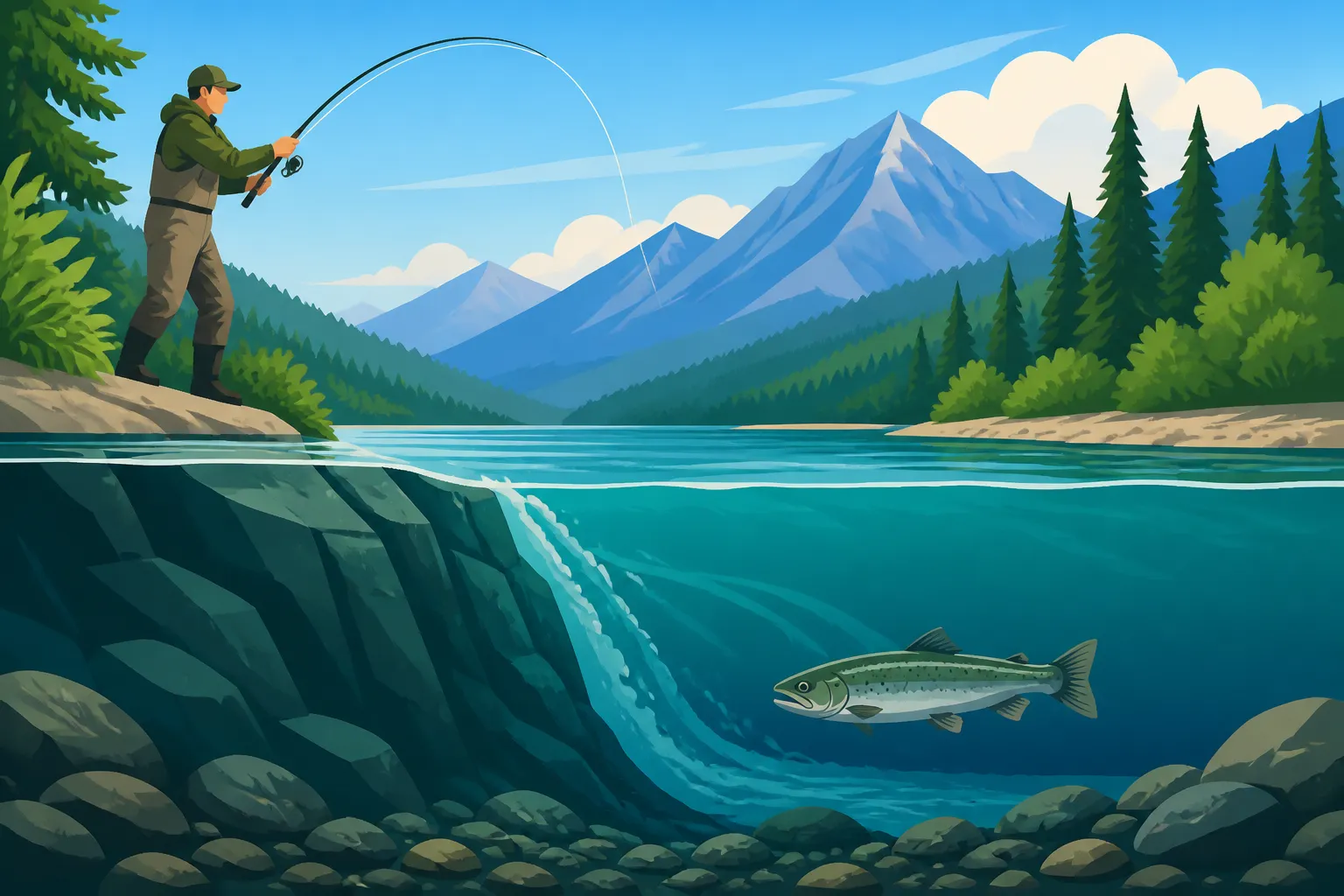
When we talk about drop-offs on the Fraser River, we're not just talking about any deep spot. We're referring to sudden changes in the riverbed's depth, often associated with structure, current breaks, or the confluence of smaller rivers. These aren't just random holes; they're critical habitat features that attract and hold fish for a variety of reasons.
What Makes a Drop-Off a Hotspot?
Think about it from a fish's perspective. The Fraser River is a highway of fast-moving water, and expending energy constantly fighting the current isn't sustainable. Drop-offs provide a much-needed respite.
- Current Breaks and Eddies: As the river flows over a sudden drop, it creates eddies and softer current lines along the edges of the deeper water. Fish, particularly the massive white sturgeon, can sit in these calmer zones, conserving energy while still being close to the main current to ambush passing food. Salmon, while actively migrating, will also use these breaks to rest or to stage before moving further upstream.
- Ambush Points: These deep edges and ledges are perfect ambush points. Baitfish, insects, and other food sources get swept along by the main current. When they hit the slower water or tumble over the edge of a drop-off, they become easy targets for predators lurking below. Sturgeon, with their keen sense of smell, are particularly adept at finding food that settles in these deeper pockets.
- Thermal Refuges: In some seasons, especially summer, deeper water at drop-offs can be cooler than the shallower areas, offering a thermal refuge for fish. Conversely, in winter, these deeper spots can be slightly warmer and more stable, providing comfort.
- Cover and Structure: Often, drop-offs are formed by underlying rock formations, submerged logs, scour holes around bridge pilings, or old river channels. This structure provides additional cover and habitat, further enhancing their appeal to fish. The combination of depth, current breaks, and physical structure creates an irresistible package for many species.
Types of Drop-Offs You'll Encounter
The Fraser River is incredibly diverse, and so are its drop-offs. Knowing what to look for will help you interpret your sonar and choose the right spots.
- Steep Bank Drop-Offs: These are common where the river carves directly against a bluff or a hardened bank. The bank continues underwater at a steep angle, creating an abrupt change from shallow shoreline to deep channel. These are often productive, especially for salmon moving along the bank or sturgeon holding close to the bank structure.
- Ledges and Shelf Drop-Offs: Sometimes, the riverbed might have a distinct, somewhat flat "shelf" that abruptly drops off into a deeper trench or channel. These ledges can be subtle, only dropping a few feet, or quite dramatic. Fish often sit right on the edge of the shelf, looking down into the deeper water or up into the shallows. Your sonar might show a sharp, distinct line where the depth changes quickly.
- Confluence Scour Holes: Where a tributary river, like the Pitt or Harrison, meets the main stem of the Fraser, the colliding currents create incredible turbulence and scour out deep holes and drop-offs. These are particularly powerful hotspots because they concentrate both food and migrating fish that are either entering the tributary or using the confluence as a staging area. These areas are truly dynamic and can change with every major freshet.
- Submerged Channel Edges: The Fraser River has shifted its course over geological time, leaving behind ancient, deeper channels that are now submerged. These old riverbeds often present as long, gradual or sometimes abrupt drop-offs along their edges, forming subtle but significant underwater highways for fish. These can be harder to spot without good mapping or sonar, but are goldmines once located.
Prime Drop-Off Locations on the Lower Fraser
The Lower Fraser River, generally considered from Hope downstream to the Strait of Georgia, is where most recreational fishing activity occurs, and it's absolutely riddled with fantastic drop-offs. Knowing the general areas can help you narrow down your search.
The Tidal Influence Zone: Richmond, Delta, and Steveston
This is where the Fraser meets the ocean, and the tidal push and pull create incredibly dynamic fishing opportunities. The river here is wide and deep, with massive sand and mud flats that are constantly shifting.
- Main Channel Edges: As you head towards the estuary, the main shipping channels that allow large vessels to navigate are constantly dredged, creating sharp, pronounced drop-offs along their edges. These deep troughs are magnets for migratory salmon preparing to enter the river or sturgeon feeding on rich estuarial offerings. You'll find these along the edges of Sea Island, Lulu Island, and Roberts Bank. Pay particular attention to spots near the mouth of the South Arm.
- Steveston and Finn Slough: The area around Steveston, where the fishing village meets the river, has numerous deeper pockets and historical fishing grounds. The Fraser River itself flows past Steveston, and just offshore in the Strait of Georgia, the continental shelf drops off. While not strictly a "river drop-off" in the traditional sense, the nearby deep waters and structure make it prime for salmon and bottom fish. Within the river, Finn Slough offers a unique tidal environment, and its mouth can be a subtle but productive drop-off for salmon staging.
- Entrance to Sturgeon Banks: Just before the river truly opens into the Strait, the famous Sturgeon Banks stretch out. While largely shallow, the transition points where the river channel deepens off these banks, or where historical sloughs intersect, can be exceptional. This is particularly true for bottom-feeding species like sturgeon. When considering booking a guide or charter, make sure to ask about fishing the Sturgeon Banks area; many experienced guides from services like FishingBooker know these areas intimately. For more detailed information, check out our guide on the Lower Fraser River Sturgeon Fishing.
Upriver Hotspots: Mission, Chilliwack, and Agassiz Stretches
Moving upstream, the river narrows, and the currents become stronger. The nature of the drop-offs changes, often becoming more defined by geological features.
- Mission Bridge and Associated Scour Holes: The pilings of the Mission Bridge act as significant current disruptors, creating massive scour holes and deep drop-offs around their bases. This is a well-known sturgeon hotspot, as the fish can easily hold out of the main current while waiting for food to wash past. The abrupt changes in depth here are legendary. It's an area that truly embodies the term "best drop-offs to fish on the Fraser River."
- Chilliwack/Vedder River Confluence: Where the Chilliwack/Vedder River enters the Fraser, a significant drop-off and scour hole is almost guaranteed. This area is a prime staging ground for salmon entering the Vedder system and offers excellent opportunities for sturgeon feeding on dislodged eggs or smolts. The turbulent waters here can be challenging but highly rewarding. You'll often find anglers specifically targeting this area for Middle Fraser River Salmon Fishing.
- Agassiz and Harrison River Mouth: The area around Agassiz and the mouth of the Harrison River is another exceptional zone. The Harrison, a major tributary, pours a massive volume of water into the Fraser, creating significant current breaks, eddies, and deep scour lines. This confluence is a prime migration corridor for salmon, especially sockeye, and the associated drop-offs are top-tier sturgeon habitat. Fishing here requires careful navigation due to the strong currents but is incredibly productive. Many anglers use services like FishingBooker to find guides experienced in these complex waters.
Confluence and Tributary Mouths: Pitt, Chehalis, and Stave Rivers
Beyond the major stretches, many smaller, yet significant, tributaries feed into the Fraser, each creating its own set of productive drop-offs.
- Pitt River Confluence: The Pitt River is a large, tidal river in its lower reaches, and its junction with the Fraser forms a sprawling area of deep channels and sudden drop-offs. This area is famous for its salmon runs, particularly coho and Chinook, and sturgeon follow suit. The mix of tidal flow and river current creates diverse fishing scenarios.
- Chehalis and Stave Rivers: While smaller than the Pitt or Harrison, the mouths of the Chehalis and Stave rivers also create localized drop-offs and current seams that attract fish. These spots might be less vast but can be incredibly productive, especially during salmon migrations, as fish will stage before entering these tributaries. Always check the latest BC Fishing Regulations Explained for specific rules around these tributary mouths.
Strategies for Fishing Fraser River Drop-Offs
Just knowing where the drop-offs are isn't enough; you need the right approach to fish them effectively.
Gear and Rigging for Deep Water and Strong Currents
Fishing the Fraser's deep drop-offs, especially for sturgeon, requires heavy-duty gear that can withstand immense pressure and powerful fish.
- Rods and Reels: For sturgeon, you'll want heavy-action rods, typically 7-9 feet long, rated for 80-200lb line, paired with robust, high-capacity conventional reels (e.g., a Shimano Tekota, Penn Squall, or similar). These need powerful drags to handle the initial runs of a large sturgeon. For salmon, lighter but still powerful gear is used, such as medium-heavy casting or spinning rods, paired with baitcasting or large spinning reels spooled with 20-30lb braided line.
- Line and Leader: Braided line (80-150lb test) is almost a necessity for sturgeon due to its zero stretch, which helps with bite detection in deep water and strong current. Use a heavy monofilament leader (60-150lb test) that can stand up to abrasion. For salmon, lighter braided line (30-50lb) with a fluorocarbon leader (20-40lb) is standard.
- Weights and Rigs: This is where it gets heavy! You'll often need pyramid or flat-bottom weights ranging from 8 ounces to 2 pounds, or even more in extreme currents, just to hold bottom. A standard sturgeon rig involves a heavy leader, a large circle hook (10/0 to 14/0), and a sliding weight above a swivel. For salmon, drift fishing rigs often use pencil weights or Slinky weights to keep the bait near the bottom without snagging. Learning How to Catch Sturgeon on the Fraser River effectively will require understanding these heavy setups.
Reading the River and Locating Fish
Modern electronics are a huge advantage, but your eyes and intuition are just as important.
- Sonar and Chartplotters: A good fish finder is invaluable for identifying drop-offs, marking bait, and seeing fish holding near structure. Look for sudden changes in depth, ledges, and deep holes. A chartplotter with detailed bathymetric maps can show you historical channels and submerged features that might not be obvious. Services like FishingBooker often list charters with top-tier electronics.
- Current Seams and Eddies: Visually identify where fast water meets slow water. These current seams are highways for debris and food, and fish will often sit right on the edge. Look for swirling water or calmer patches adjacent to the main flow.
- Debris and Structure: Keep an eye out for submerged logs, fallen trees, or visible rock outcroppings along the bank. These often indicate a change in the riverbed or provide cover that fish will utilize, creating small, localized drop-offs or holding areas.
- Understanding Tides (Lower River): In the tidal portions of the Fraser, understanding tide tables is paramount. Fish behavior changes dramatically with the incoming and outgoing tides. Often, a slack tide just before the change, or the initial push of an incoming tide, can be prime feeding windows.
Essential Techniques
Different species and river conditions call for different techniques when fishing drop-offs.
- Bottom Bouncing (Sturgeon): This is the go-to technique for sturgeon. Anchor upstream of a known drop-off and cast your bait (e.g., salmon roe, lamprey, eulachon) into the deeper water. Let your heavy weight settle, allowing the bait to sit on the bottom. The goal is to get your bait right in their strike zone. Monitor your rod tip for subtle taps or the tell-tale "thump" of a sturgeon mouthing your bait.
- Drift Fishing (Salmon): For salmon in deeper channels and drop-offs, drift fishing can be highly effective. This involves letting your boat drift with the current, while your lure or bait is presented near the bottom. This allows you to cover more water along the length of a drop-off. Spinners, spoons, roe bags, or even plugs can be effective. This technique is often detailed in guides for Salmon Fishing Techniques for BC Rivers.
- Jigging: While less common for sturgeon, jigging can be effective for salmon or bottom fish that are holding tight to structure on a drop-off. Large metal jigs or soft plastics can be dropped to the bottom and worked aggressively to trigger a reaction strike.
- Anchor Fishing (Salmon): Similar to sturgeon fishing, anchoring upstream of a salmon run on a drop-off and presenting bait or lures can be very effective, especially for Chinook salmon.
Safety and Conservation When Fishing Drop-Offs
The Fraser River is a wild and powerful place. Respect for its power and its inhabitants is crucial.
Navigational Hazards and River Awareness
Safety on the Fraser is non-negotiable. The river can be unpredictable and dangerous if you're not prepared.
- Strong Currents and Debris: Even on calm days, the underlying current is incredibly strong. Be aware of floating debris, especially after heavy rains or freshets, which can be a serious hazard to boats and anglers. Large logs can easily swamp a small boat or snap a prop.
- Shifting Sandbars and Shallow Areas: In the lower, tidal reaches, sandbars can shift, and shallow areas can appear seemingly out of nowhere. Always pay attention to navigation markers and use your depth sounder religiously. If you're unfamiliar with the area, consider going with an experienced guide found on platforms like FishingBooker, or stick to known, safer channels. Remember to always comply with BC Boating Laws for Anglers.
- Boat Traffic: The Fraser is a working river, with commercial fishing boats, tugs, and barges. Always be aware of your surroundings, maintain safe distances, and follow proper navigational rules.
- Weather Changes: Weather can change rapidly in BC. Be prepared for sudden winds, rain, or fog, which can quickly make conditions hazardous. Always have appropriate safety gear, including life jackets for everyone on board as per Life Jacket Requirements for BC Boaters.
Protecting Fraser River Fisheries
The Fraser River is a vital ecosystem, and responsible angling ensures its health for future generations.
- Catch and Release Best Practices: For species like white sturgeon, catch and release is mandatory. Use appropriate gear to land fish quickly, minimize time out of water, handle them gently, and ensure a strong release. Large sturgeon are ancient creatures, and their survival depends on our responsible handling. Even for salmon, practicing catch and release for non-retention species or when limits are met is a great conservation practice.
- Adherence to Regulations: Always, always, always be aware of and follow the latest BC fishing regulations. This includes bag limits, size restrictions, seasonal closures, and tackle restrictions. Regulations can change quickly, so checking BC Fishery Notices and In-Season Closures, Explained before every trip is vital. This also means having the correct British Columbia Fishing License Guide for 2026 for your specific species and region.
- Respecting Sensitive Habitats: Avoid disturbing spawning areas or sensitive habitats. Be mindful of your wake, especially near shorelines or smaller tributaries. Pack out everything you pack in, leaving no trace of your visit.
Fishing the drop-offs on the Fraser River is an experience unlike any other. It combines the thrill of targeting massive, powerful fish with the challenge of understanding a complex and dynamic river system. By understanding why fish use these areas, knowing where to find them, and employing the right techniques and safety measures, you'll be well on your way to a memorable and successful day on the water.
Disclaimer
Please remember that fishing conditions, regulations, and access points on the Fraser River can change frequently. Always consult the official Fisheries and Oceans Canada (DFO) website and the BC Freshwater Fishing Regulations Synopsis for the most current and accurate information before heading out. Safety should always be your top priority on the water.