Best bass spots on Osoyoos Lake
Osoyoos Lake is a true gem in British Columbia, offering some of the province's best warm-water fishing opportunities, especially for bass. However, its vastness and diverse underwater topography can make finding those elusive bronze and green monsters a real challenge if you don't know where to start. This guide is designed to cut through the guesswork, helping you pinpoint the best bass spots on Osoyoos Lake, understand the seasonal patterns, and equip you with the knowledge to make your next fishing trip a resounding success.
Understanding Osoyoos Lake's Unique Bass Fishery
Osoyoos Lake, nestled in the heart of the Okanagan Valley, stands out as Canada's warmest lake. This characteristic is precisely what makes it an unparalleled haven for bass fishing in British Columbia. Unlike many of BC's cold, deep glacial lakes, Osoyoos provides the ideal conditions for both largemouth and smallmouth bass to thrive, grow to impressive sizes, and offer thrilling angling experiences. Understanding the nuances of this unique ecosystem is key to unlocking its full potential.
Largemouth vs. Smallmouth Bass in Osoyoos
You'll encounter two primary bass species in Osoyoos Lake: largemouth bass and smallmouth bass. While they share the same waters, their preferred habitats and behaviors can be quite distinct, and knowing the difference will significantly improve your targeting strategy. Largemouth bass, often recognized by their dark lateral line and a jaw that extends beyond their eye, are typically ambush predators. They love to hide in dense cover, patiently waiting for prey. On the other hand, smallmouth bass, with their more bronze coloration and a jaw that doesn't extend past the eye, are often found in more open, rocky areas, preferring structure over heavy vegetation.
The abundance of food, from crayfish to various baitfish, allows both species to grow robustly in Osoyoos. Anglers often report catching largemouth in the 2-5 pound range, with larger specimens pushing past 6 pounds, while smallmouth can frequently be found in the 1-3 pound range, with some reaching 4-5 pounds. Knowing which species you're likely to encounter in a particular spot helps you choose the right presentation and bait, making your efforts much more efficient. To really deepen your understanding of these species, you might want to read our dedicated guide on Largemouth Bass in Okanagan Lakes and Smallmouth Bass in BC Lakes.
Typical Bass Habitat on the Lake
Osoyoos Lake offers a rich tapestry of habitats that cater perfectly to both largemouth and smallmouth bass. For largemouth, think shallow, weedy bays, lily pad fields, submerged logs, and docks. These areas provide excellent cover for them to ambush unsuspecting prey and escape from predators. The northern end of the lake, with its shallower, marshier characteristics, tends to favor largemouth bass due to the prevalence of this type of vegetation. Any area with dense aquatic plants, especially coontail or milfoil, is a prime target.
Smallmouth bass, conversely, are often found relating to hard structure. This includes rocky points, gravel beds, submerged humps, ledges, and transition zones where shallow water quickly drops off into deeper sections. They are also drawn to man-made structures like bridge pilings and rip-rap. The central and southern parts of Osoyoos Lake, with their more prominent rock formations and steeper drop-offs, tend to hold excellent populations of smallmouth. Look for areas where current might create seams or where baitfish are likely to congregate around underwater features. The diversity of structure here makes Osoyoos Lake one of the Best largemouth bass lakes in the Okanagan.
Key Bass Hotspots on Osoyoos Lake
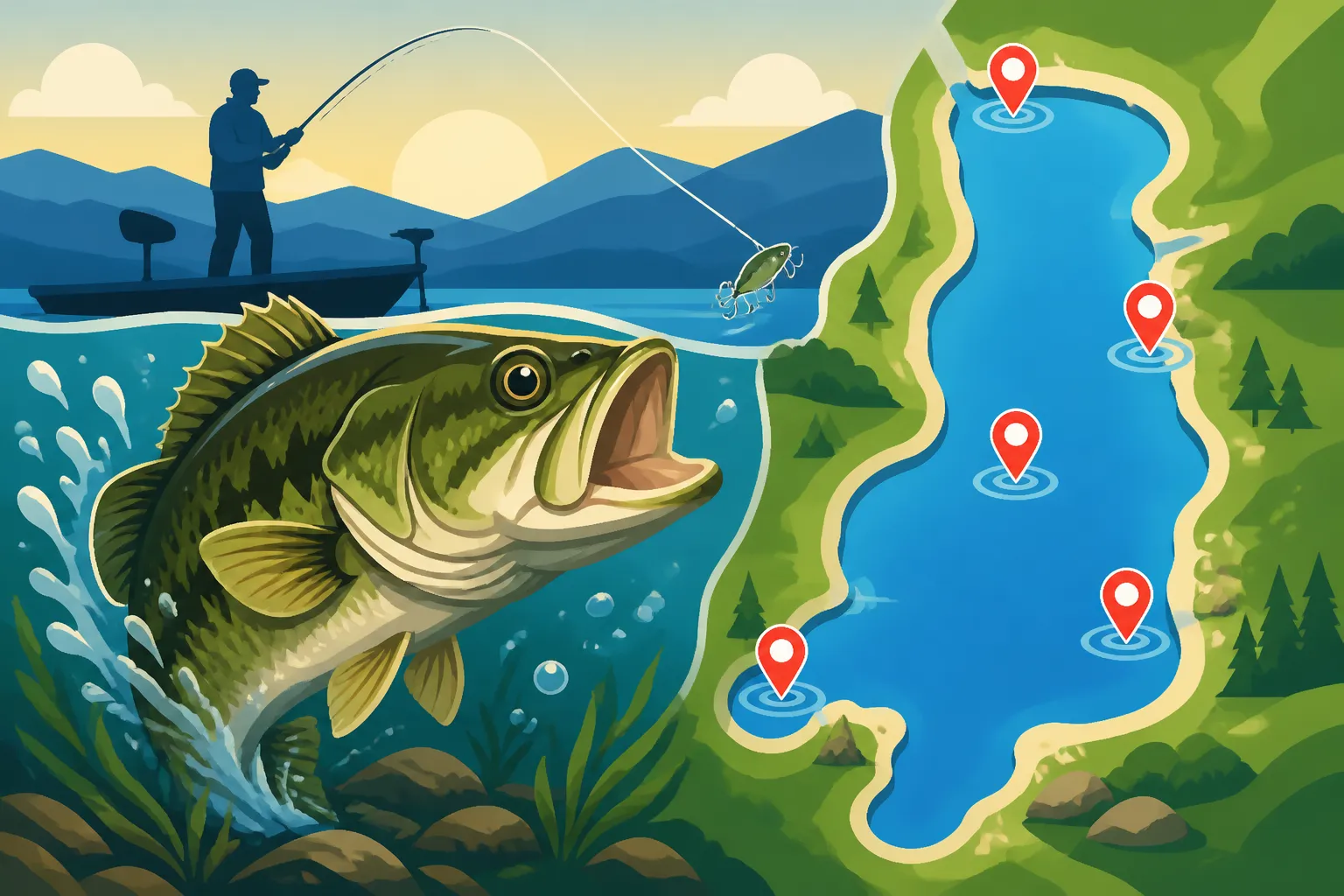
Finding the right spot on a large lake like Osoyoos can feel like searching for a needle in a haystack, but with a bit of local knowledge, you can narrow down your focus to areas that consistently produce. Osoyoos Lake has distinct sections, each with its own character and preferred bass species. Whether you're a boat angler or prefer to fish from shore, there are prime locations worth exploring.
North End Shallows and Marinas
The northern end of Osoyoos Lake, particularly north of the Highway 3 bridge, is often considered prime largemouth bass territory. This section is generally shallower and features extensive weed beds, lily pads, and marshy areas, along with numerous docks and marinas. These environments are exactly what largemouth bass seek for cover, ambush points, and spawning grounds. Areas around the Osoyoos Provincial Park beach, the northern shoreline near the town of Osoyoos, and the various resort marinas offer excellent opportunities.
When fishing these areas, focus on pitching and flipping jigs or soft plastics into the densest cover. Frog patterns or topwater lures cast over lily pads during low light conditions can be incredibly exciting. Don't overlook the shaded areas under docks, as these spots offer bass relief from the sun and a perfect hiding place. The key here is to be patient, work your lures slowly and methodically, and be ready for a powerful strike. Kayak anglers especially love these shallow, protected zones, making them some of the best kayak fishing on Okanagan Lake, a similar, albeit larger, bass fishery in the valley.
Mid-Lake Structure and Drop-offs
Moving towards the central part of Osoyoos Lake, and particularly on the south side of the Highway 3 bridge, the lake bottom begins to change. Here, you'll find more pronounced drop-offs, rocky points, and submerged humps that transition from shallow to deeper water. These are classic smallmouth bass haunts. The bridge pilings themselves are also significant attractors, creating current breaks and providing vertical structure that smallmouth love to orient themselves around.
Look for areas where the contour lines on your depth finder are tightly packed, indicating a steep change in depth. Smallmouth will cruise these breaks, moving between shallow feeding grounds and deeper holding areas. Jigs, drop-shot rigs, and crankbaits that mimic baitfish or crayfish are highly effective here. Cast towards the shallower side of the structure and work your lure down the break. Sometimes, simply finding baitfish schools on your sonar can lead you directly to actively feeding smallmouth. This zone, with its varied underwater landscape, offers some of the most consistent action for smallmouth bass throughout the season.
South End Rocky Shorelines
The southern reaches of Osoyoos Lake, closer to the U.S. border, are characterized by more distinct rocky shorelines, gravel beaches, and exposed rock formations. This rugged terrain continues to favor smallmouth bass, which thrive in these conditions. Areas with large boulders, rock walls, and stretches of rip-rap can be goldmines for bronze backs. The water here can also be slightly deeper than the northern end, offering cooler refuge during the peak of summer.
Casting tube jigs, grubs, or small swimbaits parallel to these rocky banks can be very productive. Smallmouth will often hold tight to the rocks, darting out to snatch passing prey. On windy days, the wave action against these shorelines can dislodge baitfish and stir up crayfish, making these spots particularly active. Consider using jerkbaits or lipless crankbaits to cover water quickly and locate active fish. If you're looking for guidance, local guides often know these productive rock piles and drop-offs intimately. Using a service like FishingBooker can help you find experienced local captains who specialize in bass fishing on Osoyoos Lake, ensuring you hit the prime spots with expert advice.
Best Times and Techniques for Osoyoos Bass Fishing
Timing and technique are everything when it comes to consistently catching bass, especially on a dynamic water body like Osoyoos Lake. Bass behavior changes dramatically with the seasons, influenced by water temperature, spawning cycles, and feeding patterns. Adapting your approach to these seasonal shifts is crucial for success, whether you're targeting a lunker largemouth hidden in the weeds or a feisty smallmouth cruising rocky ledges.
Spring and Pre-Spawn Tactics
Spring is arguably one of the most exciting times to fish for bass on Osoyoos Lake. As the water temperatures begin to climb from the cold winter months into the 50s and low 60s Fahrenheit (10-18°C), bass become incredibly active. This is the pre-spawn period, when they move from their deeper wintering grounds into shallower bays and flats, feeding heavily to build up energy for spawning. Look for them in sheltered areas that warm up quickly, like the northern shallow bays or protected coves with dark bottoms.
During this time, slow-moving baits that imitate vulnerable prey are highly effective. Spinnerbaits, chatterbaits, and medium-diving crankbaits can cover water efficiently and trigger aggressive bites. When the water gets a bit warmer, around 55-60°F, jerkbaits can be absolutely deadly, especially for smallmouth bass. They suspend in the water column, allowing you to impart erratic movements that perfectly mimic a struggling baitfish. Learning How to fish a jerkbait for early spring bass can significantly improve your spring success. Pitching jigs or soft plastic creature baits into emerging weed lines or around docks can also entice largemouth preparing to spawn.
Summer Patterns and Topwater Action
Summer on Osoyoos Lake means warm water, and active bass. As temperatures peak in the high 60s and 70s Fahrenheit (20-25°C+), bass activity shifts. During the brightest parts of the day, both largemouth and smallmouth will seek cooler, deeper water or dense cover to escape the intense sun. Largemouth will bury themselves in the thickest weed beds, under docks, or in shady overhangs, while smallmouth will retreat to deeper rocky points, ledges, and submerged humps.
However, the early morning and late evening hours, and sometimes even overcast days, bring exhilarating topwater action. Nothing beats the thrill of a bass exploding on a frog, popper, or walking bait across the surface. For largemouth, target those lily pad fields and dense weed lines with weedless frogs or hollow-bodied topwater lures. For smallmouth, try poppers or walking baits near rocky points at dawn or dusk. When the sun is high, switch to deeper presentations: Texas-rigged worms or jigs pitched into heavy cover for largemouth, or drop-shot rigs, finesse jigs, and deep-diving crankbaits worked along structure for smallmouth. For tips on maximizing those morning bites, check out our guide on the Best topwater lure for dawn bass fishing.
Fall Transition and Deeper Water
As fall approaches and water temperatures begin to cool, bass enter a feeding frenzy known as the fall transition. They are actively bulking up for the winter, making this another fantastic time for fishing. Both largemouth and smallmouth will often move out of the shallow summer cover and start congregating on main lake points, secondary points, and along deeper weed lines or rock ledges. They follow baitfish that are also moving into these areas.
During the fall, schools of bass can be found, and when you locate one, the action can be fast and furious. Crankbaits (both shallow and deep diving, depending on the depth the baitfish are holding), spinnerbaits, and swimbaits are excellent for covering water and finding these active schools. As the water continues to cool, bass will eventually move to their deeper wintering holes. At this point, vertical presentations like jigging spoons or blade baits become effective for targeting reluctant fish. Consider using a service like FishingBooker to connect with a guide in the fall; their intimate knowledge of changing patterns can make all the difference when fish are schooling up.
Essential Gear for Osoyoos Lake Bass Fishing
Having the right tackle can make a huge difference in your success, especially when you're targeting bass that can range from feisty pounders to true trophies. Osoyoos Lake's diverse habitats, from heavy cover to open water structure, demand a versatile array of rods, reels, and lures. Investing in quality gear tailored to bass fishing will enhance your experience and increase your chances of landing that fish of a lifetime.
Rod and Reel Setups
For bass fishing on Osoyoos Lake, you'll generally want a few different rod and reel setups to cover various techniques.
- Medium-Heavy Casting Rod (6'6" – 7'6") with a Baitcasting Reel: This is your workhorse for most bass applications. A medium-heavy power rod offers the backbone needed to pull largemouth out of heavy cover, set hooks firmly, and handle heavier lures. Pair it with a baitcasting reel with a gear ratio between 6.4:1 and 7.3:1 for versatility. This setup is ideal for jigs, spinnerbaits, chatterbaits, and pitching soft plastics. Spool it with 15-20 lb fluorocarbon or 30-50 lb braided line, especially when fishing around dense vegetation.
- Medium Action Spinning Rod (6'6" – 7'0") with a Spinning Reel: A lighter spinning setup is indispensable for finesse techniques, especially for smallmouth bass or when fish are pressured. This rig excels with lighter lines and baits, allowing for longer casts and more subtle presentations. Use it for drop-shotting, Ned rigs, small grubs, and wacky-rigged worms. Spool with 6-10 lb fluorocarbon or a thin braided line (10-15 lb) with a fluorocarbon leader.
- Heavy Casting Rod (7'0" – 7'10") with a High Gear Ratio Baitcasting Reel: If you plan on throwing big swimbaits, punching through mats of weeds, or frog fishing over thick lily pads, a heavy action rod with a strong backbone is essential. A reel with a faster gear ratio (7.5:1 or higher) helps you take up slack quickly and keep fish from burying themselves in cover. Spool this with 50-65 lb braided line.
Having a few options ensures you're prepared for whatever Osoyoos Lake throws at you, from the open water to the densest weed beds.
Lure Selection for Different Conditions
Your tackle box for Osoyoos Lake should be well-stocked with a variety of lures to match the conditions, the target species, and the time of year.
- Soft Plastics: These are incredibly versatile. Senkos (wacky or Texas-rigged), creature baits, swimbaits, and curly-tail grubs are all highly effective. Green pumpkin, black and blue, and natural baitfish colors are great starting points. Use them for pitching, flipping, drop-shotting, and shaky heads.
- Jigs: From weedless casting jigs to finesse football jigs, these are bass magnets. Pair them with a soft plastic trailer that mimics crayfish or baitfish. Black and blue, green pumpkin, and brown are staple colors.
- Crankbaits: Lipless crankbaits are great for covering water and finding active fish, especially in spring and fall. Shallow, medium, and deep-diving crankbaits are essential for matching bait depth. Look for colors that imitate perch, minnows, or crayfish.
- Topwater Lures: Poppers, walking baits (like a Zara Spook), and hollow-bodied frogs are crucial for exciting surface action, especially during low light or when bass are active in heavy cover.
- Spinnerbaits and Chatterbaits: These are excellent search baits, especially in murky water or windy conditions. Their flash and vibration can trigger reaction strikes. White, chartreuse, and perch patterns are reliable.
- Jerkbaits: As mentioned, these are deadly in cooler water, particularly for smallmouth. Suspending jerkbaits allow you to pause them in the strike zone, irresistible to hungry bass.
Don't forget the terminal tackle: a good selection of hooks (EWG, straight shank, drop-shot hooks), weights (bullet, tungsten, drop-shot), swivels, and leaders. It's also wise to have a pair of pliers, a line cutter, and a net on board. If you're new to the area or unsure about specific gear, a local guide booked through FishingBooker can often provide all the necessary equipment, or at least offer expert advice on what to bring. A guided trip can be a great way to learn the ropes and the best techniques for Best Techniques for Bass in Okanagan Lakes.
Disclaimer
Fishing regulations in British Columbia can change, sometimes without much notice due to conservation efforts or environmental factors. While we strive to provide the most accurate and up-to-date information, it is your responsibility to consult the official BC Freshwater Fishing Synopsis, Fisheries Notices, and any local advisories before heading out on the water. Always fish ethically, respect private property, and practice catch-and-release, especially for larger breeding fish, to help preserve Osoyoos Lake's incredible bass fishery for future generations.