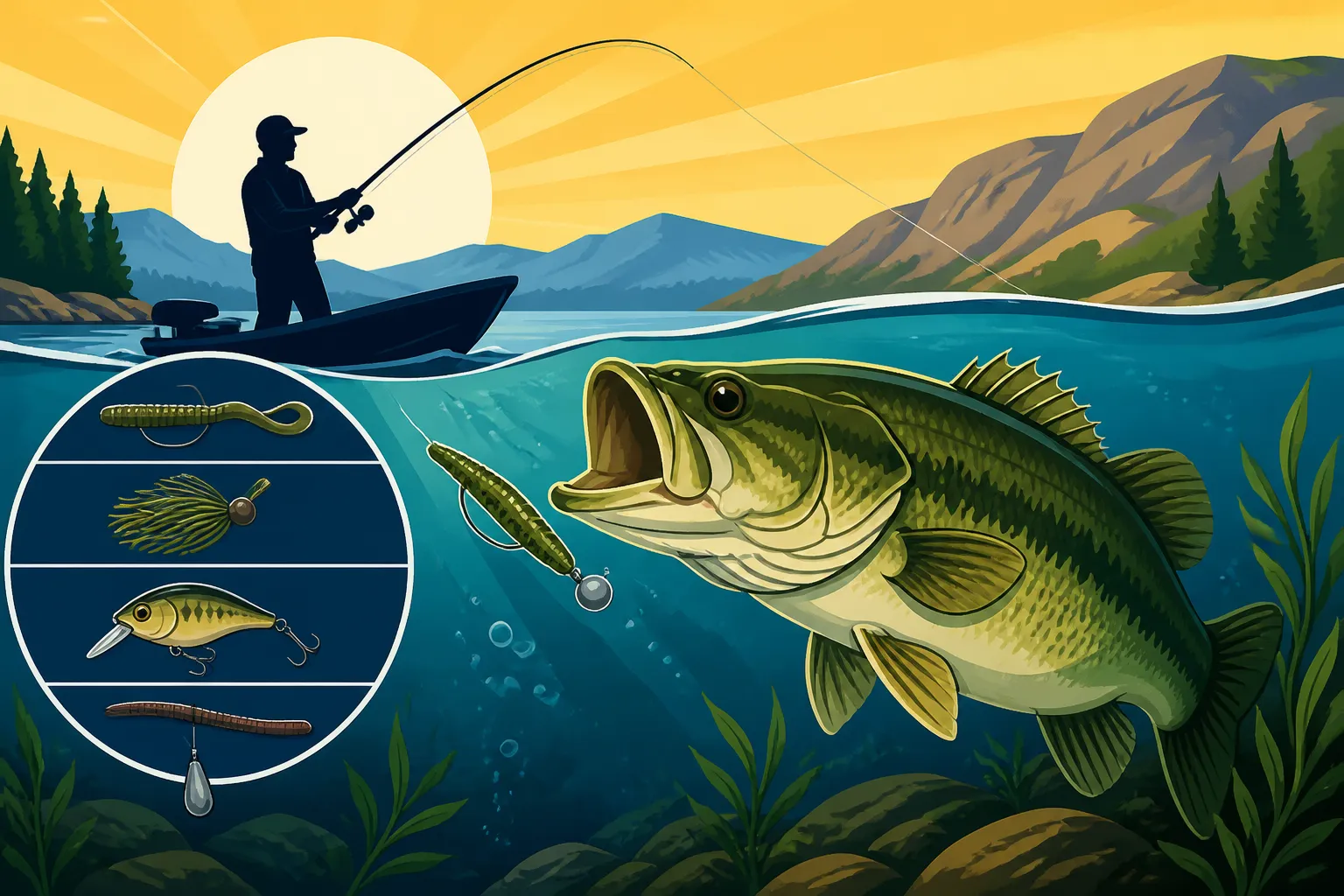
Best Techniques for Bass in Okanagan Lakes
It’s a unique challenge, isn't it? You head out to one of British Columbia’s stunning Okanagan Lakes, eager to tangle with some feisty bass, only to find them elusive or uninterested in your usual offerings. Many anglers feel that frustration, wondering if their techniques are falling flat in these distinctive waters. This guide is here to unravel those mysteries, diving deep into the most effective strategies and gear to help you consistently land both largemouth and smallmouth bass across the diverse environments of the Okanagan.
Understanding Okanagan Bass Behavior and Habitat
To truly become proficient at bass fishing in the Okanagan, you first need to get inside the fish's head, so to speak. Understanding their seasonal patterns and preferred hangouts is paramount. These lakes are dynamic, and what works one month might be completely ineffective the next.
Seasonal Movements of Largemouth and Smallmouth
Bass in the Okanagan, like anywhere, are creatures of habit tied to water temperature and spawning cycles. In early spring, as ice recedes and water temperatures climb into the low to mid-50s Fahrenheit (around 10-13°C), both largemouth and smallmouth begin to move into shallower areas. They're looking for warmer water to shake off the winter lethargy and eventually spawn. You'll find them near sun-drenched banks, shallow coves, and emergent vegetation. This pre-spawn period is a fantastic time for aggressive fishing, as they're feeding heavily.
Come late spring and early summer, when water temperatures reach the mid-60s to low 70s Fahrenheit (18-22°C), the bass start to spawn. Largemouth will build nests in very shallow, protected areas, often among reeds, lily pads, or under docks. Smallmouth tend to spawn a bit deeper, often on rocky or gravelly bottoms, sometimes a few feet down. During this time, they're highly protective of their nests. Post-spawn, they might be a bit lethargic for a week or two before resuming their aggressive feeding patterns. As summer progresses and water heats up, largemouth will often retreat into dense cover or slightly deeper water adjacent to it, while smallmouth will typically move to deeper rock structures, humps, and drop-offs. Fall brings a return to shallower water as they feed up for winter, often becoming quite aggressive again before moving back to their deep winter haunts.
Key Forage and Habitat Preferences
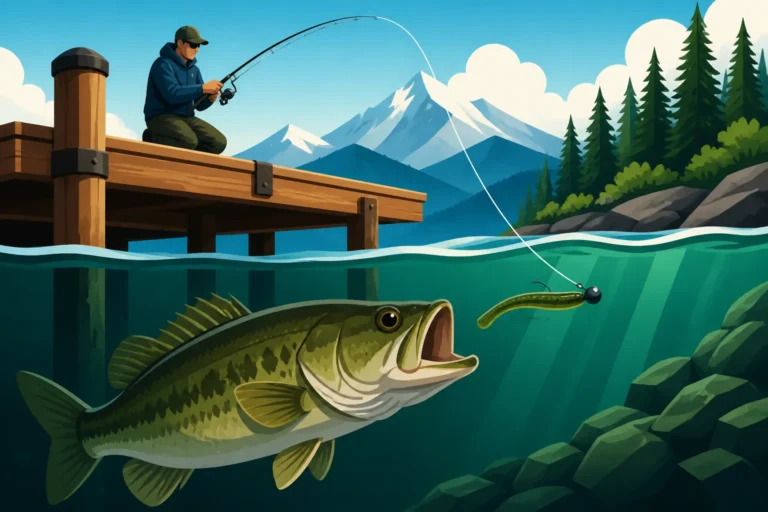
Okanagan bass have a varied diet, and knowing what they're eating can give you a significant advantage. Largemouth bass are ambush predators, often found lurking in dense cover. Their diet includes smaller fish like minnows and juvenile kokanee, crayfish, frogs, and even small birds or rodents that fall into the water. This explains why baits imitating these prey items—think frogs, large swimbaits, and jigs—are so effective. They love the cover of lily pads, dense weed beds, submerged timber, and boat docks. Think about the shores of Osoyoos Lake or the shallower bays of Okanagan Lake; these are prime largemouth territories.
Smallmouth bass, on the other hand, prefer rocky environments, gravel beds, and areas with broken bottom structure. They're often found in clearer, deeper water than largemouth. Their primary diet consists of crayfish, insect larvae, and smaller baitfish like sculpins or shiners. This preference for rocky structure and different forage means that baits like tube jigs, drop-shot rigs with small plastics, and crankbaits that mimic crawfish or baitfish are incredibly effective. You'll find smallmouth thriving along the steeper drop-offs and submerged points of places like Kalamalka Lake or the deeper sections of Shuswap Lake. Understanding these distinct preferences is your first step to choosing the right location and the right lure.
Gearing Up for Success: Rods, Reels, and Tackle
Having the right tools for the job is non-negotiable when bass fishing, especially in the diverse conditions of the Okanagan. You wouldn't use a sledgehammer to drive a finish nail, and the same principle applies to your fishing gear. The subtle differences in rod action, line type, and lure selection can make all the difference.
Rods, Reels, and Line Selection
For Okanagan bass, you'll generally want two primary setups: a baitcasting outfit and a spinning outfit. A medium-heavy power, fast action baitcasting rod, usually between 6'6" and 7'6", is a workhorse for largemouth. This rod has enough backbone to pull fish out of heavy cover and handle larger, heavier baits like spinnerbaits, jigs, and Texas rigs. Pair it with a high-quality baitcasting reel with a gear ratio around 7.1:1 or 8.1:1 for quick line retrieval, especially when working through weeds. For line, 15-20 lb fluorocarbon or braided line with a fluorocarbon leader (30-50 lb braid to 15-20 lb fluorocarbon) is excellent. Fluorocarbon is nearly invisible underwater and offers great abrasion resistance, while braid provides incredible strength and sensitivity. You can find a wide selection of these rods and reels on platforms like Amazon, often with helpful reviews from other bass anglers.
For smallmouth, and for finesse techniques often used for wary largemouth, a medium power, fast action spinning rod of similar length (6'6" to 7'0") is ideal. This setup is perfect for lighter lines and smaller baits like drop-shots, Ned rigs, and small tubes. A spinning reel in the 2500-3000 size range with a smooth drag is crucial. Spool it with 8-10 lb braided line and tie on a 6-10 lb fluorocarbon leader. The braid's sensitivity will help you detect subtle bites, while the fluorocarbon leader maintains stealth in clear Okanagan waters. Remember, the goal is versatility; having both setups allows you to adapt to whatever the bass are doing.
Tackle Box Essentials for Okanagan Bass
Your tackle box should be a well-organized arsenal, ready for any scenario. For largemouth in the dense cover of places like Vaseux Lake, you'll want a good supply of soft plastics. Think creature baits, plastic worms (Senkos are always a winner), and soft plastic frogs. Rig these with stout, weedless hooks—Texas rigs and weighted EWG hooks are key. Jigs, both football and swim jigs, in various weights and colours (black and blue, green pumpkin) are also indispensable. Don't forget spinnerbaits and chatterbaits in white, chartreuse, or natural baitfish patterns for covering water. Topwater lures like poppers, walking baits, and buzzbaits provide exciting action during low light conditions or over shallow weeds. Best topwater lure for dawn bass fishing explores this in detail.
For smallmouth, especially when they're deeper or acting finicky, your finesse game needs to be strong. Drop-shot weights and a variety of small soft plastics (straight tail worms, minnow imitators) are crucial. Ned rigs with small mushroom head jigs and compact worms are incredibly effective for slow, bottom-bouncing presentations. Small crankbaits that dive to different depths, jerkbaits, and tube jigs in crayfish or goby patterns are excellent for targeting rocky areas and suspended fish. Keep a selection of hooks (EWG, worm hooks, circle hooks for drop-shot) and weights (bullet weights, drop-shot weights) to match your chosen techniques. Also, don't overlook a good pair of pliers, line cutters, and a measuring tape to ensure you're within BC fishing regulations regarding size and bag limits. A small selection of tackle organizers from Amazon can keep all these essentials neat and easily accessible.
Master Techniques for Largemouth Bass
Largemouth bass are typically found in the warmer, shallower, and more vegetated parts of Okanagan Lakes. Their aggressive nature and preference for ambush points mean that certain techniques truly shine. These strategies leverage their predatory instincts and habitat choices.
Targeting Shallow Cover with Topwater and Frogs
There’s nothing quite like the explosive strike of a largemouth bass on a topwater lure. This is a thrilling and highly effective technique, particularly in low-light conditions (dawn and dusk) or on overcast days, and especially over shallow cover like lily pads, emergent weeds, or submerged timber. Start your day by casting walking baits like a Heddon Super Spook or a Lucky Craft Sammy, or poppers like a Rapala Skitter Pop, across open pockets in the weeds or along weed lines. The key is a stop-and-go retrieve, mimicking a struggling baitfish or insect. Make sure to let the lure sit for a few seconds after it lands, then twitch it, let it sit again, and repeat. The patience often pays off with a huge splash!
When the cover gets really thick, that's where soft plastic frogs become your best friend. Brands like Spro or Livetarget make incredibly realistic and weedless frog imitations. Cast these directly onto lily pads, matted vegetation, or dense slop. Work them slowly and deliberately across the surface, pausing occasionally. The idea is to make them look like a frog struggling to cross the water. When a bass blows up on your frog, resist the urge to set the hook immediately. Wait until you feel the weight of the fish on your line before sweeping the rod back firmly. This ensures the bass has fully engulfed the lure, increasing your hook-up ratio. This approach is fantastic for areas like the shallower, marshy sections of Best Largemouth Bass Lakes in the Okanagan.
Flipping and Pitching Docks and Weeds
Largemouth bass are notorious for hiding in tight, dark spaces, ambushing unsuspecting prey. Docks, submerged timber, and dense weed lines are prime real estate for these fish. This is where flipping and pitching techniques excel, allowing you to present a lure precisely and quietly into these hard-to-reach spots. Flipping involves using a short amount of line and swinging the bait in a pendulum motion, while pitching is a controlled underhand cast that sends the lure skipping or sliding into tight cover. Both methods minimize splash and maximize accuracy.
Your weapon of choice for this technique will typically be a heavy-action baitcasting rod, braided line, and a compact, weedless bait. Jigs, often paired with a creature bait trailer (like a craw imitation), are incredibly effective. Black and blue, green pumpkin, and brown are staple colours. Another fantastic option is a Texas-rigged soft plastic creature bait or worm, weighted with a tungsten bullet weight. The tungsten is denser than lead, allowing for a smaller profile and better sensitivity. Let the bait sink to the bottom, then slowly hop or drag it, feeling for the subtle "thunk" of a bite. Best technique for docks and laydowns provides more specialized insights on this. These techniques are particularly fruitful around the numerous private docks and dense vegetation found on many Okanagan Lakes.
Spinnerbaits and Chatterbaits for Aggressive Bites
Sometimes, you need to cover water quickly and provoke a reaction strike from active largemouth. This is where spinnerbaits and chatterbaits truly shine. These lures create a lot of flash and vibration, drawing bass out of cover and enticing them to strike. Spinnerbaits feature one or more blades (Colorado, Willow, or Indiana) that spin, creating flash and thump, and a skirt that mimics a baitfish. They are remarkably weedless, making them excellent for fishing through sparse weeds, around submerged wood, and along shorelines.
Chatterbaits (or bladed jigs) combine the flash of a jig with the vibration of a crankbait, creating a unique, erratic swimming action. The bladed front vibrates intensely, giving the skirted hook an irresistible shimmy. Both lures are best fished with a steady retrieve, varying the speed occasionally, or incorporating a few twitches to impart an erratic action. Focus on areas where baitfish might be congregating, such as points, submerged grass lines, or along drop-offs. Experiment with different colours – white and chartreuse are great for cloudy water or bright days, while natural baitfish colours work well in clear water. These are fantastic search baits for quickly locating active fish in new areas of the lake.
Proven Strategies for Okanagan Smallmouth Bass
Smallmouth bass, often referred to as "bronze backs," offer a different kind of fight and prefer distinctly different habitats than their largemouth cousins. Their penchant for rocky structures, deeper water, and cleaner environments necessitates a more refined, often finesse-oriented, approach.
Drop-Shotting and Ned Rigs for Finesse
When smallmouth are finicky, deep, or in clear water, finesse techniques like drop-shotting and the Ned rig become your secret weapons. Drop-shotting involves tying your hook directly to the main line, a foot or two above a weight. This allows your soft plastic bait (typically a small straight-tail worm, minnow imitation, or tiny creature bait) to suspend horizontally off the bottom, presenting a very natural, tantalizing target. This rig is incredibly sensitive, allowing you to feel even the slightest tap.
To fish a drop-shot, cast it out, let it sink to the bottom, and then simply shake your rod tip lightly while keeping the line taut. The weight stays on the bottom, while the bait dances enticingly. This technique is particularly effective over rock piles, ledges, and transition areas where smallmouth might be suspended or hugging the bottom. The Ned rig is another phenomenal finesse tool, especially for bottom-dwelling smallmouth. It consists of a small, mushroom-shaped jig head paired with a short, buoyant soft plastic worm. The buoyancy causes the worm to stand straight up off the bottom, mimicking a foraging critter. Cast it out, let it sink, and then slowly drag or hop it along the bottom. The Ned rig is incredibly effective at imitating small baitfish or crayfish. Both of these finesse techniques are perfect for clear Okanagan waters and when Best technique for finesse fishing clear water trout is needed for smallmouth.
Crankbaits and Jerkbaits for Open Water
While finesse is often key, smallmouth can be very aggressive, especially when actively feeding in open water or along rocky points. This is where crankbaits and jerkbaits come into play. Crankbaits are designed to dive to specific depths, making them ideal for targeting smallmouth that are relating to submerged rock piles, humps, or sloping banks. Lipless crankbaits, which sink and wobble on the retrieve, are great for covering large areas quickly and eliciting reaction strikes. Diving crankbaits, with their bills, are perfect for bouncing off rocks and deflecting, which often triggers a strike. Experiment with natural colours like crayfish or shad patterns, or brighter colours on cloudy days.
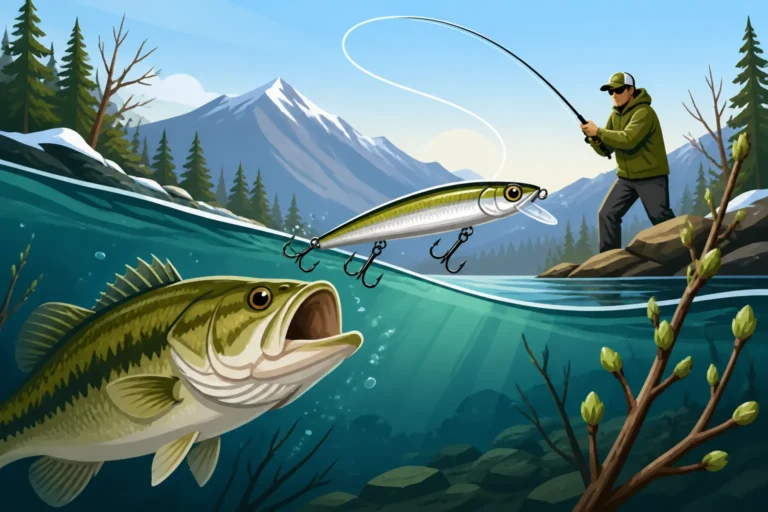
Jerkbaits are hard-bodied lures designed to be fished with a "twitch, twitch, pause" retrieve. The erratic darting action of a jerkbait perfectly imitates a wounded baitfish, and the pause often seals the deal, as following smallmouth will commit to the strike. These are excellent for targeting smallmouth suspended over deeper water or along prominent points and rock walls. Again, natural baitfish patterns are usually the most productive. How to fish rocky points for smallmouth is a great read if you're looking to refine these techniques in the Okanagan. Many anglers find high-quality jerkbaits from brands like Rapala or Lucky Craft to be indispensable for Okanagan smallmouth.
Tube Jigs and Grubs on Rocky Bottoms
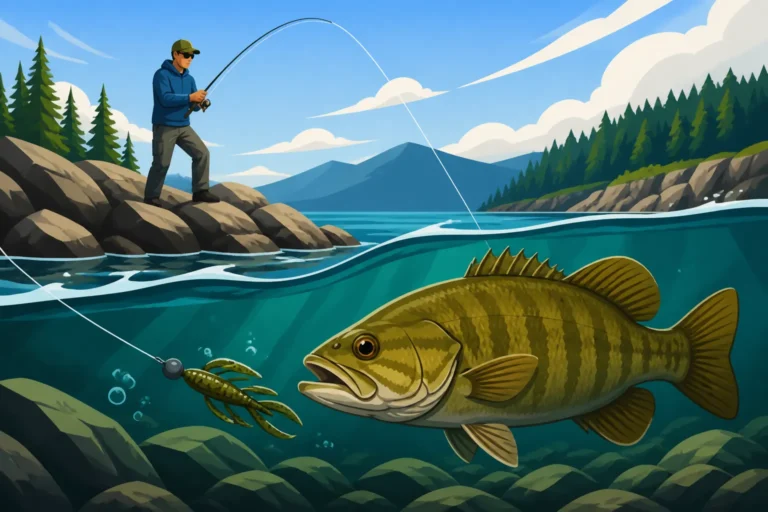
When smallmouth are hugging the bottom in rocky areas, nothing beats the versatility and effectiveness of a tube jig. These soft plastic baits, hollow and cylindrical with tentacles, perfectly mimic crayfish or goby, which are staple food sources for smallmouth. Rig them with an internal jig head, allowing them to fall with a spiral action and present a natural profile on the bottom. To fish a tube jig, cast it out, let it sink, and then drag it, hop it, or twitch it along the rocky bottom. The key is to impart subtle movements that make it look like a real crayfish scurrying around. Pay close attention to your line for any slight twitch or slackening, indicating a bite.
Grubs (single or double-tailed curly tail soft plastics) rigged on a lead head jig are another simple yet highly effective option. These are incredibly versatile and can be fished with a steady retrieve, hopped along the bottom, or even vertically jigged. Their continuous tail action is irresistible to smallmouth. Stick with natural colours like green pumpkin, brown, or watermelon with red flake to best imitate the local forage. These baits are particularly productive when exploring the rocky flats and deeper edges of islands in lakes like Kalamalka or Christina Lake. They are also easy to rig and cast, making them a great option for anglers of all skill levels.
| Technique/Lure | Target Species | Primary Habitat | Ideal Conditions | Retrieval Style | Key Advantages |
|---|---|---|---|---|---|
| Topwater Frogs | Largemouth | Dense weeds, lily pads, matted vegetation | Low light, overcast, shallow water | Slow, deliberate walk-the-dog or twitch and pause | Weedless, exciting surface strikes, draws fish from cover |
| Flipping/Pitching Jigs | Largemouth | Docks, submerged timber, heavy cover | Any, especially bright sun, high pressure | Precise drops, slow hops, short drags | Pinpoint accuracy, targets tight cover, extracts big fish |
| Spinnerbaits | Largemouth | Sparse weeds, points, shallow wood | Overcast, windy, stained water | Steady retrieve, varied speed, occasional jerks | Covers water quickly, triggers reaction strikes, fairly weedless |
| Drop-Shot Rig | Smallmouth | Rock piles, ledges, deep structure, clear water | Finicky fish, post-front conditions, clear water | Subtle shakes, light lifts, dead stick | Finesse presentation, bait suspends naturally, high sensitivity |
| Ned Rig | Smallmouth | Rocky bottoms, gravel flats, open pockets | Tough bites, cold water, clear water | Slow drag, subtle hops, long pauses | Mimics foraging prey, stands up off bottom, very effective on pressured fish |
| Crankbaits | Smallmouth | Open water, rocky points, humps, ledges | Active fish, covering water, moderate depths | Steady retrieve, deflect off structure, stop-and-go | Aggressive action, triggers reaction bites, covers various depths |
| Tube Jigs | Smallmouth | Rocky bottoms, gravel bars, transition zones | Crayfish forage areas, clear to slightly stained | Drag, hop, twitch, spiral fall | Mimics crayfish/goby, natural presentation, versatile |
Advanced Tips and Local Insights for Success
Beyond mastering specific techniques, true success in Okanagan bass fishing comes from continuously adapting to conditions, understanding the nuances of the local environment, and always keeping conservation in mind.
Reading the Water and Adjusting to Conditions
The Okanagan Lakes are dynamic ecosystems, and successful anglers are constantly observing and adjusting. Pay attention to obvious indicators:
- Water clarity: Clear water often means fish are warier and require more subtle, natural presentations (finesse techniques, natural colours, lighter line). Stained or murky water, on the other hand, might call for more vibrant colours, noisier baits (spinnerbaits, chatterbaits), and faster retrieves to help fish locate your lure.
- Weather changes: A sudden cold front can shut fish down, making them less aggressive and pushing them deeper or tighter to cover. Post-front fishing often demands finesse. Warm, stable weather, or even approaching storms, can make fish more active and willing to chase power fishing baits. Fishing after a heavy rain on BC rivers offers similar insights that apply to lakes.
- Wind: A moderate chop on the water surface can be your friend. It breaks up the water, making fish feel more secure and less able to scrutinize your bait. It also pushes baitfish, concentrating them and, in turn, the bass. Fish the windy side of points or structures where bait might be pushed. If the wind is too strong, look for protected coves or leeward sides of islands.
- Boat traffic: Especially in popular areas, heavy boat traffic can push fish deeper or into heavier cover. Try to target these areas during quieter times of day or consider less-frequented parts of the lake.
Don't be afraid to experiment with your retrieve speed, bait size, and colour until you find what the fish want on a given day. Sometimes, a slight variation is all it takes to trigger a strike.
Best Times of Day and Weather Considerations
Like many predatory fish, bass often exhibit peak activity during certain times of the day. Generally, the early morning hours (dawn until a few hours after sunrise) and late evening (a couple of hours before sunset into dusk) are prime times. During these periods, light levels are lower, making bass feel more comfortable moving into shallower water to feed. This is when topwater baits can be incredibly effective. On bright, sunny days, bass will often retreat into deeper water or seek shade under docks, overhanging trees, or dense submerged vegetation. Targeting these specific areas becomes crucial during midday.
Overcast days can provide excellent fishing throughout the day, as the reduced light keeps bass active for longer periods in shallower water. A light drizzle can also be fantastic, often activating a strong bite. Conversely, bright, bluebird skies after a cold front can make fishing tough, requiring slower presentations and extreme stealth. Remember, bass are cold-blooded, and their metabolism is directly tied to water temperature. Extreme cold or heat can make them lethargic. Focus on areas where the water temperature is within their comfortable range, which you can often find using a basic fish finder with a temperature gauge.
Respecting Regulations and Conservation
Fishing in British Columbia is a privilege, and it comes with the responsibility of adhering to regulations and practicing sound conservation. Before every trip, always consult the current BC Freshwater Fishing Regulations Synopsis for the specific lake you're fishing. Rules on BC Bag and Possession Limits by Species can vary widely, even between different lakes in the Okanagan region. Pay close attention to:
- Size limits: There might be minimum or maximum sizes for bass you can keep.
- Bag limits: The number of fish you can retain in a single day.
- Season dates: While bass generally have open seasons, it's always good to double-check.
- Specific lake regulations: Some lakes might have unique rules, such as special restrictions on motor use or specific gear.
Practicing catch and release is highly encouraged, especially for larger breeding fish, to ensure a healthy future population. If you do intend to keep fish within the legal limits, handle them with care. Use proper fish grippers or a net, minimize their time out of water, and revive them gently if releasing. Consider using single, barbless hooks, which make release much easier and less stressful on the fish. Leaving the area cleaner than you found it, picking up any discarded line or trash, is also part of being a responsible angler. By doing so, we ensure that the incredible bass fishing opportunities in the Okanagan Lakes remain vibrant for generations to come.
Disclaimer
Fishing conditions and regulations in British Columbia can change frequently. Always consult the official BC Freshwater Fishing Regulations Synopsis or the relevant DFO (Department of Fisheries and Oceans Canada) notices before heading out on any fishing trip. This guide is for informational purposes only and does not supersede official regulations. Stay safe, be aware of your surroundings, and respect the natural environment.