Best kokanee spots on Okanagan Lake
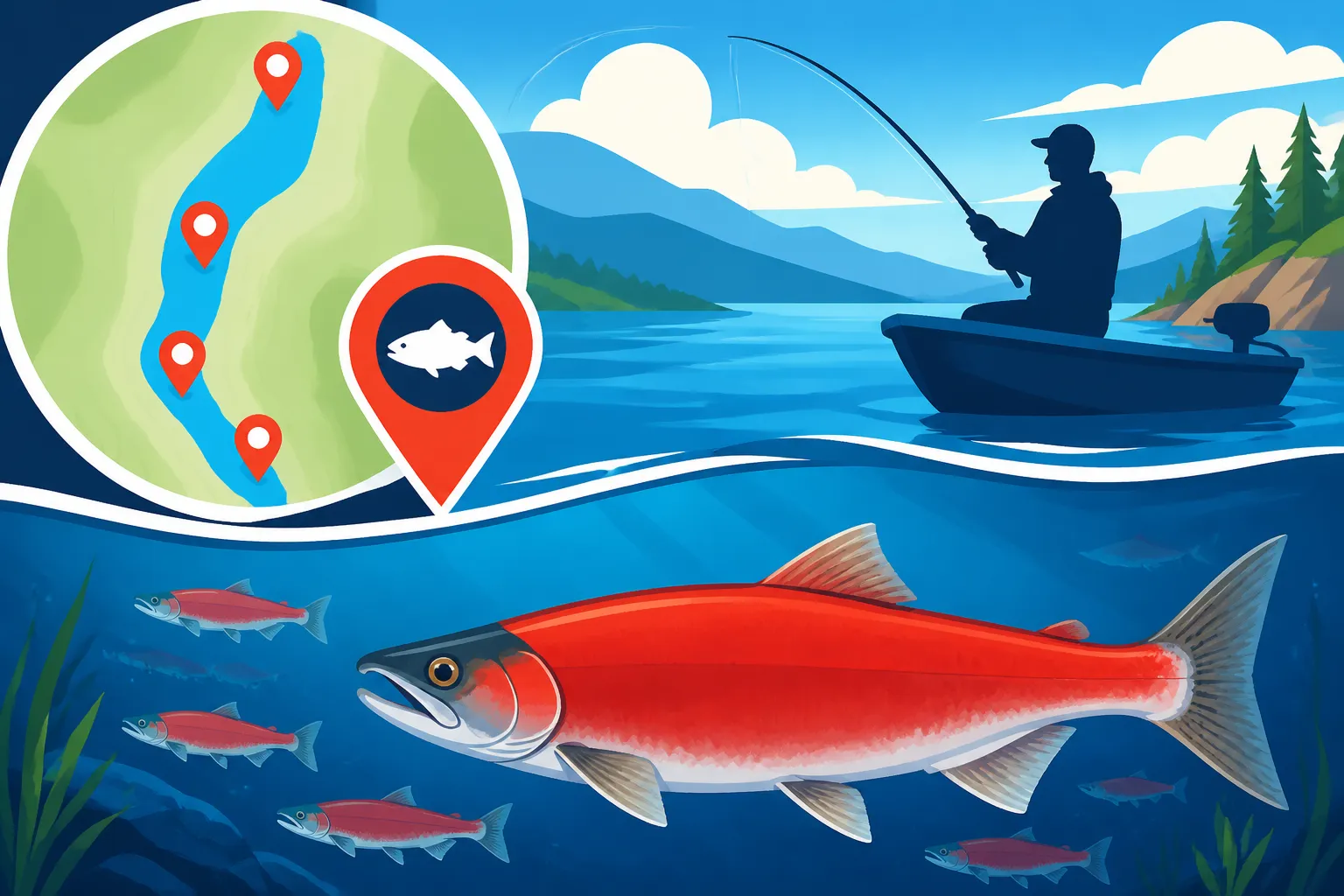
Okanagan Lake is a truly spectacular body of water, but its sheer size can be incredibly intimidating when you're trying to pinpoint a specific fish species, especially the feisty kokanee. It's not like fishing a small pond where you can easily cover every inch; this lake stretches over 135 kilometers, presenting a vast, deep expanse that can leave even seasoned anglers feeling a bit lost. This guide aims to demystify the process, revealing the best kokanee spots and strategies to increase your chances of success on this magnificent BC gem.
Understanding Kokanee Behavior on Okanagan Lake
Before we dive into specific locations, it's crucial to understand a bit about the kokanee themselves. These landlocked sockeye salmon are incredibly sensitive to light, temperature, and food availability, which dictates their movements throughout the year. Knowing their habits is half the battle won on a lake as large and diverse as Okanagan.
Seasonal Movements and Depths
Kokanee, much like their anadromous sockeye cousins, follow distinct seasonal patterns. In the spring, as ice melts and water temperatures rise slightly, you'll often find them in shallower bays and near creek mouths where early insect hatches occur and warmer water provides a comfortable feeding zone. We're talking depths of 10-30 feet during this time, often moving towards the surface in low light conditions. As the lake warms up in summer, they retreat to the cooler, deeper waters, typically suspending in the thermocline layer. This can be anywhere from 40 to 100 feet deep, sometimes even deeper on hot, sunny days. They're constantly searching for that perfect temperature zone, usually around 50-55°F (10-13°C), and will move vertically throughout the day.
Come fall, the lake water begins to cool and "turn over," mixing the oxygen and temperature layers. This signals the kokanee to start their spawning migrations. They'll move closer to shore and into tributary streams, making them more accessible, though fishing for them during their spawn is often regulated. Finally, in winter, if the lake freezes over in certain areas, kokanee can be found deep, but still actively feeding, often suspending over structure. Understanding these shifts is key to knowing how to locate kokanee in BC lakes throughout the year.
Forage and Food Sources
Kokanee are primarily planktivores, meaning their diet largely consists of zooplankton. This microscopic fare is abundant in Okanagan Lake, but its distribution can be patchy. Consequently, kokanee will school up and follow these plankton blooms. Larger kokanee might also consume small insects or even juvenile fish. The presence of plankton is directly influenced by water temperature, light penetration, and nutrient availability, creating a complex food web that kokanee navigate. If you're seeing signs of baitfish or plankton on your sonar, you're likely in the right area. This is why knowing what kokanee are and how they differ from sockeye in their feeding habits is important.
Spawning Habits and Locations
While the primary focus of recreational fishing is typically before the spawn, it's good to be aware of the kokanee spawning season in BC. In Okanagan Lake, kokanee will typically begin their spawning migrations in late summer and fall, usually between August and October, depending on the specific strain and water temperatures. They seek out clean, gravelly areas in tributaries and sometimes along specific shorelines within the lake. During this period, their flesh can degrade, and they are often protected by specific regulations. It’s always best to check the latest BC Fishing Season Dates and Closures to ensure you're fishing legally and ethically, especially around known spawning grounds.
Top Kokanee Hotspots on Okanagan Lake
Okanagan Lake offers a myriad of potential kokanee haunts. While they can be found throughout, some areas consistently produce better results due to unique underwater topography, current patterns, or proximity to food sources.
North End Vernon Oyama Area
The northern reaches of Okanagan Lake, particularly around Vernon and Oyama, can be incredibly productive, especially in the spring and early summer. Look for areas where creeks feed into the lake, such as Mill Creek or Vernon Creek. The slightly shallower depths here warm up faster, drawing in kokanee looking for early season food. Off the east side, near the community of Oyama, there are some excellent drop-offs and submerged points that consistently hold schools. These areas are also popular for kayak fishing, and finding the best kayak launch points on Okanagan Lake can give you an edge in accessing prime waters.
One particular spot worth investigating is the deep water just outside the bays north and south of the Kalamalka Lake connection. These transition zones often concentrate baitfish and, consequently, kokanee. As summer progresses, the kokanee in this region will move deeper, often suspending over depths of 100-200 feet, but still within that comfortable thermocline layer. Pay close attention to your sonar for any signs of bait balls or individual fish arches.
Central Lake Kelowna Peachland Area
Moving south towards the bustling Kelowna area, the lake deepens considerably, offering vast expanses of prime kokanee habitat. The area around Rattlesnake Island is legendary, not just for its mythical monster Ogopogo, but for its consistent kokanee fishing. The depths around the island's steep drop-offs and the surrounding flats can hold large schools. Another key area is off Peachland, particularly the stretches of water between Antlers Beach and Crescent Beach. Here, you'll find extensive deep water where kokanee suspend.
Many anglers launch from one of the public boat launches on Okanagan Lake in Kelowna or Peachland and head directly to these offshore zones. The trick in these central areas is often about finding structure even when fishing in open water, as kokanee will often orient themselves around subtle changes in the bottom, such as old river channels or submerged humps, which act as ambush points or current breaks. This is where a good fish finder becomes your best friend.
South End Summerland Penticton Area
The southern end of Okanagan Lake, stretching from Summerland down to the Penticton Channel, presents a different type of fishery. While still deep, it features more defined points and broader bays. The waters off Summerland, especially near the large drop-offs, are excellent. As you get closer to Penticton, the lake narrows, and the currents from the Okanagan River can influence fish behavior, particularly during the late season when kokanee are staging for their spawning runs.
The Penticton Channel itself is an important area, as it's a major spawning ground for kokanee. While fishing directly in the channel might be restricted during certain times of the year due to spawning regulations, the waters leading up to it can be very productive. Always check the local regulations and BC Kokanee Retention Rules before heading out. Sometimes, these southern waters offer some of the best fishing opportunities when the kokanee start to consolidate before moving into the river system.
Lesser Known Productive Areas
Don't overlook the slightly less famous spots that can still yield impressive catches. Consider the deep water pockets just outside of secluded bays and provincial parks like Fintry Provincial Park on the west side. These areas often receive less pressure but still hold healthy populations of kokanee. Early morning or late evening often provides the best window, as the fish move higher in the water column under low light conditions.
Another strategy is to look for areas with underwater benches or shelves that extend from the shoreline before dropping into very deep water. Kokanee will often patrol these transition zones, especially when feeding. These "secret spots" are often discovered through careful observation, consistent mapping with your sonar, and sometimes, a little bit of local knowledge from fellow anglers. If you're a visitor, platforms like FishingBooker can help you connect with experienced local guides who know these nuances.
Mastering Techniques for Okanagan Lake Kokanee
Catching kokanee consistently requires specific techniques, primarily trolling, but also some effective jigging methods when conditions are right.
Trolling Strategies
Trolling is undeniably the most popular and effective method for Okanagan Lake kokanee. The goal is to present your lure at the correct depth and speed to trigger a strike. Downriggers are almost essential for precise depth control, allowing you to target fish in the thermocline or at specific depths indicated by your sonar. When setting your downriggers, keep your lures within 5-10 feet of the depth where you're seeing kokanee on your fish finder.
Your tackle choice is critical. Small, flashy lures and flies are the name of the game. Popular choices include mini hootchies, wedding bands, small spoons, and Macks Lure Kokanee Killers, often paired with an attractor like a dodger or a small flasher. The dodger's erratic action mimics a struggling baitfish, drawing kokanee in. Scent is also a huge factor; try tipping your lures with a kernel of Pautzke's Bait Co. 's Fire Corn or a dab of Pro-Cure kokanee scent. Your trolling speed should typically be slow, between 1.0 and 1.8 miles per hour, but experiment to find what the fish prefer on any given day. Sometimes, subtle changes in speed or direction can trigger bites. For more detailed insights, check out Best Kokanee Trolling Techniques for Okanagan Lake.
Still Fishing and Jigging
While trolling covers more water, still-fishing or jigging can be incredibly effective when you've located a dense school of kokanee, particularly when fishing from an anchored boat or through the ice in winter. Once you've marked a school on your sonar, drop a small jig or bait straight down to their depth. Small glow jigs, buzz bombs, or even weighted wedding bands tipped with scent can work wonders.
For jigging, use a light action rod and a sensitive line. Drop your lure to the desired depth, then perform a gentle lift-and-drop motion, pausing occasionally. Kokanee often strike on the pause. This method is particularly rewarding during the early morning when the fish are often higher in the water column, making the best time to fish for kokanee at first light a prime opportunity for this technique. Ice fishing, when conditions permit safe access, also relies heavily on these vertical jigging methods, with anglers often using small ice jigs or spoons.
Essential Gear and Navigation for Success
Having the right equipment can make all the difference between a frustrating day on the water and a successful kokanee harvest.
Rods, Reels, and Line
For kokanee, you want a light to medium-light action rod, typically 6 to 8 feet long, with a sensitive tip to detect those subtle kokanee bites. Pairing this with a small spinning reel spooled with 6-10 lb monofilament or fluorocarbon line is ideal. Some anglers prefer braided line for its sensitivity, but a monofilament or fluorocarbon leader is always recommended, as kokanee can be line-shy in clear Okanagan waters. A long, soft leader of 8-12 feet is not uncommon when trolling, especially with dodgers.
Your rod and reel choice should balance sensitivity with enough backbone to handle a feisty kokanee, which, pound for pound, can put up a surprisingly strong fight. Remember to set your drag light; kokanee have soft mouths, and a too-tight drag can lead to pulled hooks.
Electronics and Navigation
On a lake as vast as Okanagan, good marine electronics are non-negotiable. A quality fish finder (sonar) with GPS capabilities is your most valuable tool. It allows you to:
- Locate schools: Identify baitfish and kokanee arches in the water column.
- Determine depth: See exactly where the fish are suspending.
- Identify structure: Mark submerged channels, humps, and drop-offs.
- Track trolling paths: Ensure you're covering productive water efficiently.
- Mark hotspots: Save waypoints for future reference when you find a productive area.
Modern units from brands like Humminbird or Garmin offer features like side imaging and down imaging, which provide incredibly detailed views of the underwater world, helping you to identify structure and fish with greater precision. Learning to interpret your sonar effectively is a skill that will dramatically improve your kokanee success. Remember, even though the lake is huge, the fish might only be in specific zones. Using your electronics to search for the best sonar settings for finding structure on Kootenay Lake (and applying similar principles to Okanagan) will lead you to fish. If you're looking for a guided trip where the guide already has all the top-notch electronics and expertise, check out available charters on FishingBooker.
| Okanagan Lake Kokanee Hotspots | Typical Season | Primary Method | Approx. Depth Range | Key Feature |
|---|---|---|---|---|
| Vernon/Oyama Bays | Spring, Early Summer | Trolling, Casting | 10-40 feet | Creek mouths, warmer water, early season forage |
| Rattlesnake Island Area | Year-round | Trolling, Jigging | 40-120+ feet | Steep drop-offs, deep water structure, current breaks |
| Peachland Offshore | Summer, Fall | Trolling | 50-100 feet | Thermocline zones, extensive deep flats |
| Summerland Drop-offs | Summer, Fall | Trolling | 60-150 feet | Underwater ledges, access to deep water |
| Penticton Staging Areas | Late Summer, Fall | Trolling | 30-80 feet | Near spawning tributaries, fish staging |
| Fintry Provincial Park Outskirts | Spring, Early Summer | Trolling, Jigging | 20-60 feet | Less pressured bays, subtle structure |
Disclaimer
Fishing conditions and regulations in British Columbia can change rapidly due to conservation efforts, environmental factors, and in-season adjustments by fisheries authorities. Always consult the most current BC Freshwater Fishing Regulations Synopsis and local fishery notices before planning your trip or heading out on the water. This guide provides general information and recommendations, but it is the angler's responsibility to ensure full compliance with all applicable rules and regulations.