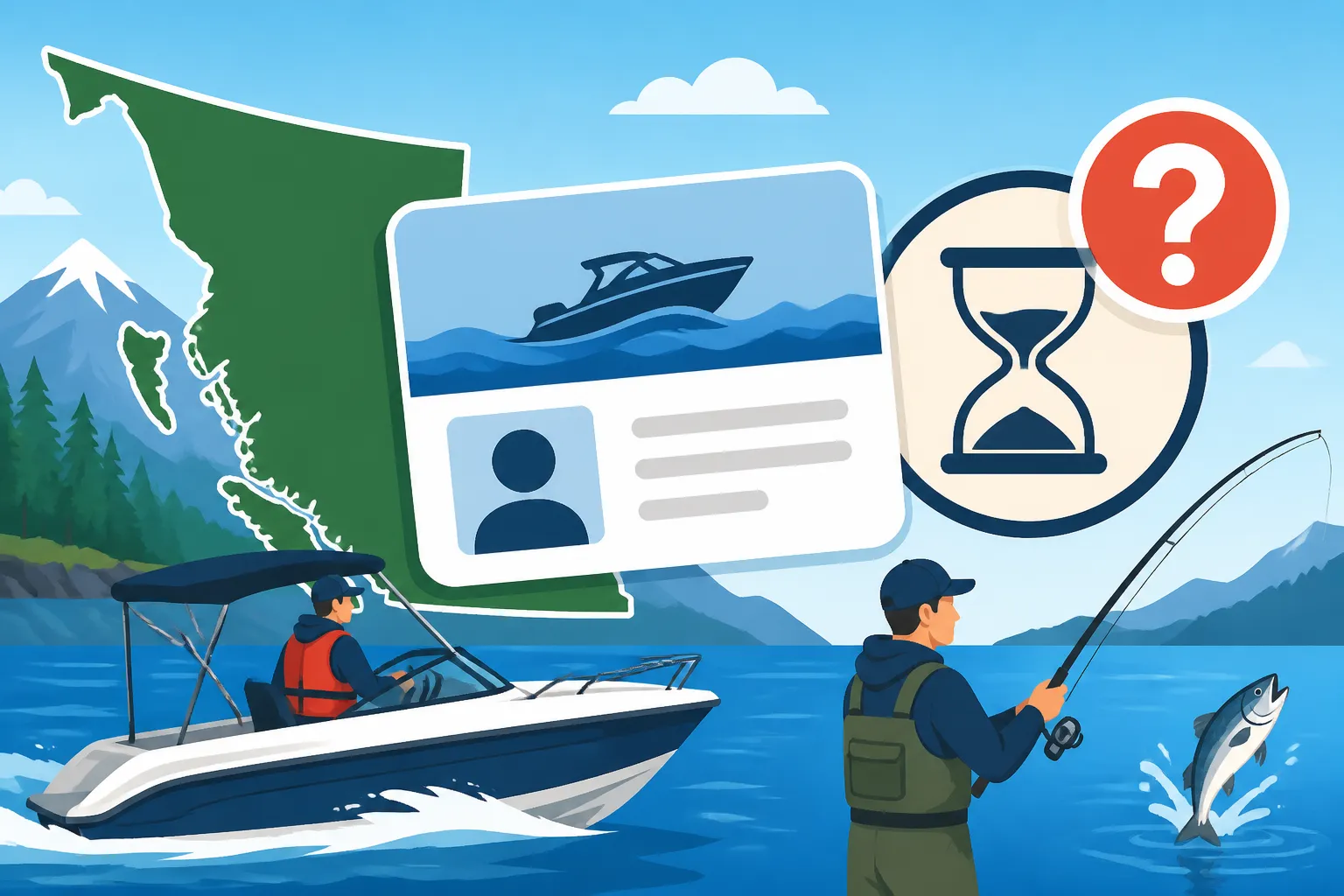
Does a Pleasure Craft Operator Card Expire in BC?
One of the most common headaches for recreational boaters, especially when planning a fishing trip in the beautiful waters of British Columbia, is keeping track of all the licenses, permits, and certifications. It’s easy to get tangled up wondering if your Pleasure Craft Operator Card (PCOC) is still valid, or if you need to renew it every few years like a driver's license or an annual fishing permit. This guide is here to untangle that particular knot and set your mind at ease about your PCOC in BC.
Does a Pleasure Craft Operator Card PCOC Ever Expire in British Columbia?
It's a question that pops up in online forums, at boat launches, and around campfires all the time: "Does my PCOC expire?" The relief that washes over people when they hear the answer is palpable, and I'm thrilled to deliver the good news right off the bat.
The Good News: It's a One-Time Deal!
Here's the definitive answer, and it’s likely to make your day: No, your Pleasure Craft Operator Card (PCOC) does not expire in British Columbia, or anywhere else in Canada for that matter. Once you successfully complete an accredited boating safety course and receive your PCOC, it is valid for life. This isn't like your driver's license that needs renewal every five years, or your passport that has a specific expiry date. Your PCOC is a one-time certification that demonstrates you’ve met the minimum competency requirements for operating a motorized recreational vessel in Canadian waters. Think of it as a permanent certification of your basic boating knowledge and skills.
This lifetime validity applies whether you got your card last year or two decades ago, whether you obtained it online or in a classroom. The rules are consistent across all provinces and territories. So, if you’re planning a fishing excursion on Okanagan Lake or heading out for some salmon in the Strait of Georgia, as long as you have your PCOC, you're good to go in terms of operator certification. This removes a significant administrative burden from boaters, allowing them to focus more on safe boating practices and less on expiry dates.
Why This Lifetime Validity Matters
The non-expiring nature of the PCOC is a huge benefit for recreational boaters. Imagine the frustration of having to retake a course or pay a renewal fee every few years for something you’ve already proven competence in. The lifetime validity means:
- Peace of Mind: You don't have to constantly check expiry dates or worry about accidentally operating your vessel illegally because your card lapsed. This is particularly useful for those who might not boat every single year but still want to be ready when the opportunity arises. It frees up mental space that can instead be used to review current fishing regulations or chart your course.
- Consistency Across Canada: Whether you live in Victoria, BC, or visit the Great Lakes in Ontario, your PCOC is recognized and valid everywhere. This national standard simplifies things immensely for boaters who travel with their vessels or rent boats in different regions. You don't need a specific "BC PCOC" versus an "Alberta PCOC."
- Focus on Ongoing Education: Because you're not bogged down with PCOC renewals, you can instead channel your efforts into ongoing boating education, which is always a good idea. This could mean taking advanced navigation courses, marine first aid, or brush-up sessions on local waterways. The core PCOC gives you the foundation, and its lifetime validity encourages you to build upon it rather than just re-validate it. For instance, while your PCOC doesn't expire, understanding specific BC Boating Laws for Anglers is crucial and these laws can change, requiring ongoing attention.
It's a testament to the system's design that once you've demonstrated your understanding of the basic rules for safe boating, you're considered good to go for the long haul.
Understanding the PCOC Requirement in BC
While the PCOC itself doesn't expire, understanding why it's required and who needs it is crucial for anyone enjoying the diverse waters of British Columbia. This isn't just a bureaucratic hurdle; it's a fundamental aspect of safe recreational boating.
Who Needs a PCOC?
Transport Canada, the federal body responsible for boating safety in Canada, mandates that anyone operating a motorized recreational vessel in Canada must have a valid Pleasure Craft Operator Card. This includes residents of British Columbia and visitors alike. So, if you’re cruising in your fishing boat on the Fraser River, zipping around on a personal watercraft (PWC) on Shuswap Lake, or even using an electric trolling motor on a small canoe in a quiet interior lake, you need a PCOC.
There are a few key points to clarify:
- Age Requirements: There's no minimum age to obtain a PCOC. However, there are restrictions on who can operate a pleasure craft based on age and length of the vessel if they don't have a PCOC. For example, individuals under 16 years of age have power restrictions even with a PCOC. But generally, if you're operating a motorized vessel, you need the card. We’ve covered BC fishing license age requirements in detail previously, and while different licenses, the principle of age-based rules is similar.
- Engine Size: The PCOC requirement applies to any motorized vessel, regardless of engine size. This is a common misconception; many people think it only applies to larger boats or powerful engines. If your canoe has a small electric motor, you still need a PCOC to operate it.
- Visitors: If you're visiting BC from another country, you might be exempt if you carry a valid equivalent competency certificate from your home country, or if you rent a pleasure craft from a licensed operator and complete a rental boat safety checklist. However, for most non-resident Canadians or long-term visitors bringing their own boat, obtaining a PCOC is often the simplest path to compliance. Many PCOC courses can be completed entirely online, making them accessible from anywhere.
The only real exception to the PCOC requirement is if you're operating a boat under the direct supervision of someone who already possesses a PCOC. However, this is generally meant for learning, not for independent operation. The best practice is for every individual who might operate a motorized vessel to get their own card.
What the PCOC Proves and Doesn't Prove
The PCOC serves as proof of competency. It demonstrates that you have a basic understanding of:
- Navigation Rules: The "rules of the road" for waterways, how to avoid collisions, and proper passing procedures.
- Boating Safety Equipment: What essential gear you need to have on board, from life jackets to flares. Understanding Life Jacket Requirements for BC Boaters is a critical part of the PCOC curriculum.
- Environmental Responsibility: How to boat in an environmentally friendly manner, prevent pollution, and protect aquatic habitats.
- Emergency Procedures: What to do in case of an accident, fire, or person overboard.
- Buoyage System: Understanding the meaning of buoys and other navigational aids in Canadian waters.
Essentially, the PCOC confirms that you've grasped the fundamentals of operating a pleasure craft safely and responsibly.
What the PCOC doesn't prove:
- Expertise: It’s a basic certification, not an advanced boating degree. It doesn’t mean you’re ready to navigate treacherous ocean waters in a storm or handle complex docking maneuvers in high winds.
- Boat Ownership: The PCOC is about the operator, not the vessel. Having a PCOC doesn't mean you own a boat, nor does owning a boat exempt you from needing one.
- Boating Experience: You can get a PCOC without ever having stepped foot in a boat. It tests theoretical knowledge, not practical experience. That's why hands-on experience and continuous learning are so important after you get your card.
- Specific Fishing Knowledge: While some courses might touch on general regulations, the PCOC doesn't certify you in specific BC Fishing Regulations Explained or how to properly measure fish. Those are separate areas of knowledge you’ll need to acquire as an angler.
In short, the PCOC is your ticket to operate, but it's just the beginning of your journey as a responsible boater.
Common Misconceptions and Similarities
The world of recreational boating and fishing in British Columbia is full of different rules and requirements. It's easy to confuse one type of documentation or certification with another. Let's clear up some common misunderstandings.
PCOC vs. Boat Registration/Licensing
This is perhaps the most frequent point of confusion. Many boaters, especially newcomers, conflate the PCOC with boat registration or licensing. They are, however, distinct and separate requirements.
- Pleasure Craft Operator Card (PCOC): This is for the person operating the boat. It proves your individual competency to safely navigate a vessel. It’s a bit like a driver's license for a car. As we've established, it doesn't expire.
- Pleasure Craft License / Boat Registration: This is for the boat itself. It's an identification document for your vessel. Most motorized pleasure craft are required to have either a Pleasure Craft License (for vessels with 10 horsepower or more) or be registered with Transport Canada (optional, but typically for larger, commercially used, or internationally travelling vessels). This is like your vehicle's license plate and registration papers. Crucially, Pleasure Craft Licenses do expire every 10 years and must be renewed, unlike the PCOC. We’ve covered BC Boat Registration and Licensing Rules in detail, which can help clarify these distinctions further. Failing to renew your boat's license, even if your PCOC is valid, can lead to fines.
Here’s a simple table to illustrate the difference:
| Feature | Pleasure Craft Operator Card (PCOC) | Pleasure Craft License (for the boat) |
|---|---|---|
| What it is for | The person operating the vessel | The vessel itself |
| Issued by | Transport Canada accredited providers | Transport Canada |
| Validity | Lifetime (does not expire) | 10 years (requires renewal) |
| Purpose | Proof of operator competency | Vessel identification and ownership |
| Requirement | For operating most motorized vessels | For most motorized vessels (10hp+) |
As you can see, the lifetime validity is a unique feature of the PCOC, setting it apart from other necessary boating documentation.
PCOC vs. BC Fishing License Expiry
Another common comparison is between the PCOC and your fishing license. This is an apt comparison because it highlights the distinct nature of the PCOC's validity.
- PCOC: Your lifetime boating credential. You acquire it once, and you're good to go forever, provided you don't commit a serious boating infraction that results in its suspension.
- BC Fishing License: Whether you hold a freshwater license or a tidal waters license, these are typically annual documents. They expire on a specific date each year (often March 31st for freshwater licenses) and must be purchased anew every fishing season. You'll also need specific stamps like a salmon conservation stamp depending on what you're targeting. For example, if you plan to target salmon, you’ll need to understand the BC Salmon Conservation Stamp Rules in addition to your base license. This annual renewal allows the provincial and federal governments to manage fisheries, collect revenue, and adapt regulations each year based on stock assessments and conservation needs.
The difference here is clear: the PCOC is about fundamental operator safety, a standard that doesn't change much over time. A fishing license, on the other hand, is about managing dynamic natural resources, which requires annual oversight and adjustment.
So, while your PCOC remains perpetually valid, do not forget to renew your fishing license every year. This is a mistake many anglers make, and fishing without a valid license can result in significant penalties, as outlined in our guide on Fishing Without a License in BC: Penalties. Always double-check your fishing license expiry dates before heading out on the water.
What if You Lose Your PCOC or Need a Replacement?
Even though your Pleasure Craft Operator Card doesn't expire, life happens. Cards get lost, damaged, or simply become illegible over time. What do you do then? You definitely need to carry proof of your PCOC while operating a vessel, so having a replacement is essential.
Replacing a Lost or Damaged Card
If you find yourself in the unfortunate position of a lost or damaged PCOC, don't panic! The process for replacement is usually quite straightforward, though it does require you to remember which company issued your original card.
- Identify Your Original Course Provider: The key step is to contact the accredited course provider from whom you originally obtained your PCOC. This could be a company like Boat Smart Exam, Ace Boater, or another Transport Canada-approved provider. Your original certificate or any email correspondence might jog your memory. If you completed a PCOC course, chances are you still have records from it. If you obtained it many years ago and the provider is no longer in business, or you simply can’t remember, Transport Canada maintains a database of PCOC holders and can direct you to the correct provider or even issue a replacement directly in some cases, although this is less common.
- Contact the Provider: Reach out to your original provider. Most have a "Lost Card" or "Replacement Card" section on their website, or a customer service line. You'll typically need to provide some identifying information, such as your full name, date of birth, and possibly the approximate date you took the course.
- Pay a Replacement Fee: There is usually a small administrative fee for issuing a replacement card. This fee covers the cost of printing, processing, and shipping the new card to you. For example, if you look up BC Pleasure Craft Operator Card cost, you’ll find the initial course fee, and replacement fees are a separate, smaller charge. Many providers accept payment online.
- Receive Your New Card: The provider will then mail a new physical PCOC to your address. The waiting time can vary, so if you have an upcoming boating trip, it’s best to request a replacement as soon as you realize your card is missing.
It's a good idea to keep a digital copy or a clear photo of your PCOC on your phone as a backup, but remember that Transport Canada requires you to produce the actual card or an acceptable printout upon request by enforcement officials.
Digital vs. Physical PCOC
In our increasingly digital world, many people wonder if a digital version of their PCOC is sufficient. While the convenience of having everything on your smartphone is undeniable, Transport Canada's regulations lean towards tangible proof.
- Physical Card Requirement: Generally, you are required to have your physical PCOC on board your vessel whenever it is in operation. This allows enforcement officers (like the RCMP or conservation officers) to easily verify your certification.
- Digital Copies as Backup: While a digital image on your phone might not be accepted as the primary proof in all situations, it's an excellent backup. It can be useful if you've misplaced your physical card temporarily but still have an immediate need to boat, though it's still best to carry the physical card if possible. Some providers offer a printable temporary card immediately after your course completion, which can serve this purpose until your permanent card arrives in the mail.
- Printing a Digital Card: If you receive a digital copy of your PCOC (often as a PDF from online course providers), printing it out and laminating it is a perfectly acceptable way to carry proof of certification. This is similar to how you might print and carry your Printing or Carrying a Digital Fishing License in BC if you purchased it online. Just ensure the printout is clear and legible.
Ultimately, while digital technology offers convenience, for regulatory compliance, a physical or clearly printed copy of your PCOC is the safest bet to avoid any potential issues with enforcement.
Ensuring Compliance and Safe Boating
Having a non-expiring Pleasure Craft Operator Card is a fantastic perk for boaters in British Columbia, but it's just one piece of the puzzle for safe and legal recreational boating. True compliance and responsible operation go far beyond just possessing the card.
Carrying Your PCOC on Board
This might seem obvious, but it's a critical point that many boaters, even experienced ones, sometimes overlook. It is a legal requirement under the Canada Shipping Act, 2001, to have proof of competency, such as your PCOC, on board your motorized recreational vessel at all times when it is in operation.
Imagine this scenario: you're enjoying a beautiful day fishing on the Shuswap, and a patrol boat approaches. An officer asks for your PCOC, and you realize it's back in your truck or at home on the fridge. Even if you have a valid, non-expiring PCOC, if you can't produce it when requested, you could face a fine. This is a common enforcement action, and it's easily avoidable.
- Store it Safely: Keep your PCOC in a waterproof bag along with your boat's registration and any other essential documents. A small dry box is perfect for this. Many anglers also keep it in their wallet, but make sure it’s protected from moisture.
- Know Where it Is: Make sure everyone who operates the boat knows where the PCOC and other documents are stored. In an emergency, or during a routine inspection, time is of the essence.
- Temporary Proof: If you've just completed your PCOC course and are waiting for your physical card to arrive, carry the temporary paper certificate or printout provided by your course provider. This temporary proof is usually valid for a limited period and serves the same purpose as the official card until it arrives.
The lifetime validity doesn't mean you can forget about it; it means you just have to remember to carry it.
Beyond the PCOC: Other Essential Boating Documents and Safety Gear
While the PCOC is a fundamental requirement, it's far from the only thing you need to be compliant and safe on BC waters. Recreational boating is a regulated activity for good reason, primarily to ensure the safety of all users and to protect the marine environment.
Here are other critical elements to consider:
- Vessel Licensing/Registration: As discussed, your boat itself needs to be licensed or registered. If your Pleasure Craft License expires every 10 years, you need to ensure you renew it. Keeping track of the BC boat registration renewal period is just as important as knowing your PCOC is valid for life.
- Required Safety Equipment: Transport Canada mandates a specific list of safety equipment that must be carried on board, depending on the size and type of your vessel. This includes items like life jackets for every person on board, a sound-signalling device (like a whistle or air horn), a bailer or pump, a buoyant heaving line, and potentially visual signals (flares). A comprehensive BC required boat safety equipment checklist is something every boater should review annually. Don't just buy the gear; know how to use it and ensure it's in good working order.
- Boat Insurance: While not always legally required for recreational vessels, boat insurance is highly recommended. It protects you financially in case of an accident, damage to your vessel, or liability claims.
- Knowledge of Local Regulations: Beyond federal PCOC requirements, specific local regulations might apply. For example, some lakes might have speed restrictions, noise bylaws, or specific rules for certain types of fishing. Always check local notices and regulations for your chosen fishing spot, especially when exploring new areas.
- Navigational Charts: If you're venturing into unfamiliar or complex waters, having up-to-date navigational charts (either paper or electronic) is crucial for safe navigation.
- Emergency Contact Information: Have a float plan – letting someone on shore know your route, expected return time, and who is on board. Carry a fully charged cell phone (in a waterproof case) or a VHF radio for emergencies.
You can find many of these safety items, from life jackets to emergency flares and dry bags for your PCOC, easily on platforms like Amazon, ensuring you’re well-equipped for your next adventure. Many boaters also find it convenient to purchase PCOC course materials, marine charts, and first aid kits through reputable online retailers like Amazon. Having these safety measures in place will not only keep you compliant but, more importantly, keep you, your passengers, and fellow boaters safe on the water.
Disclaimer
The information provided in this guide is for general informational purposes only and does not constitute legal advice. While efforts have been made to ensure accuracy and reflect current regulations, boating laws and regulations can change. Always refer to the official Transport Canada website, the BC Ministry of Forests, Lands, Natural Resource Operations and Rural Development, and local authorities for the most up-to-date and definitive information. It is your responsibility to ensure full compliance with all applicable federal, provincial, and local boating and fishing regulations.