How to catch kokanee through the ice
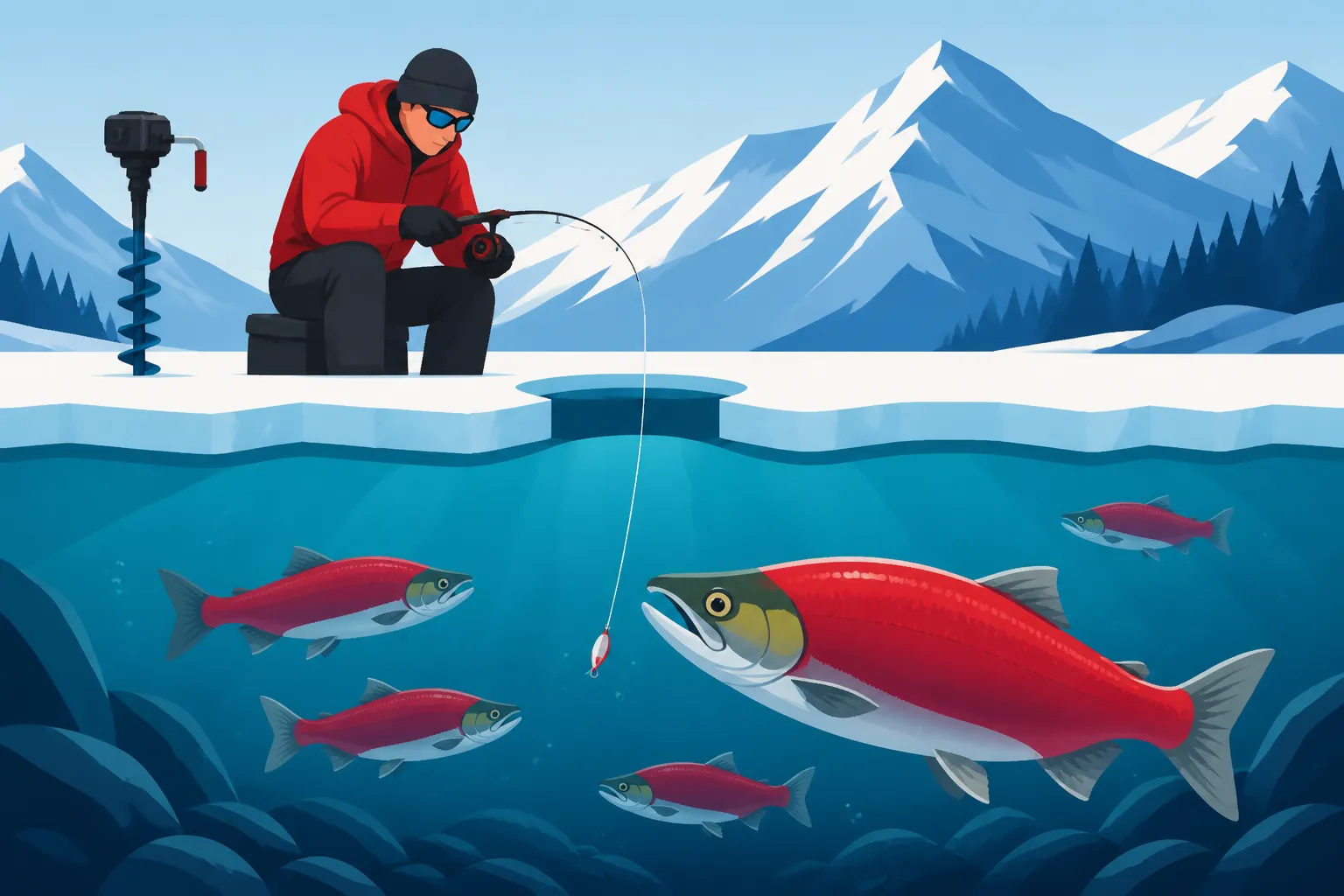
There's nothing quite like the crisp air and serene silence of a British Columbia winter day, standing on a frozen lake with an auger at your feet, hoping for a bite. But let's be real: trying to figure out how to catch kokanee through the ice can feel like solving a chilly mystery. These landlocked sockeye are known for being finicky, and the ice adds a whole new layer of challenge. This guide will cut through the guesswork, sharing practical, proven strategies to help you fill your bucket with those delicious, vibrant kokanee this winter.
Understanding Kokanee Behavior Under Ice
Kokanee, being a subspecies of sockeye salmon, have some unique characteristics that really come into play when the lakes freeze over. They’re cold-water fish by nature, which might make you think ice fishing is their jam, but they still behave quite differently than they do in open water. Knowing their winter habits is half the battle.
Where Kokanee Hold in Winter
During the open water season, kokanee are often found suspended in the water column, actively chasing zooplankton. When the ice caps the lake, their movements become more subtle, but their preferred zones remain tied to food and comfort. You're usually looking for them in the deeper, more open parts of the lake, often still suspended, but at very specific depths. They don't typically hug the bottom like burbot or perch might; instead, they'll be cruising at depths where the zooplankton they feed on are most concentrated. This could be anywhere from 20 to 80 feet, depending on the lake and time of day.
It's not just about depth, though. Structure plays a role, even if it's subtle. Underwater points, submerged humps, or the edges of sharp drop-offs can act as highways or ambush points for kokanee. They might stage near these features before moving out into open water to feed. Don't be afraid to set up on a flat, vast expanse of ice, but if you have a fishfinder, definitely pay attention to any submerged contours or variations that might concentrate baitfish or plankton. These subtle shifts can mean the difference between an empty bucket and a productive day.
What Kokanee Eat in the Cold Water
Kokanee are primarily planktivores, meaning their diet largely consists of tiny zooplankton. This doesn't change when the lake freezes over. The key is understanding that the abundance and distribution of zooplankton change with water temperature and light penetration under the ice. In colder water, metabolism slows down, so kokanee aren't quite as aggressive in their feeding. They’re still eating, but they might be more selective or require a more enticing presentation.
Therefore, your lures and baits need to mimic these tiny food sources effectively. Small jigs, mini spoons, and even bare hooks tipped with corn or maggots are often the go-to choices. The corn, in particular, isn't just an attractant; it actually resembles some of the larger zooplankton species kokanee feed on. It's about presenting a bite-sized, easy meal that requires minimal effort for the fish to consume. Think small, subtle, and appealing. Remember, while they're not actively "chasing" large prey, they're still opportunistically feeding on whatever microscopic goodness drifts their way. For more general insights into these fish, you might find What kokanee are and how they differ from sockeye helpful.
Seasonal Ice Fishing Variations
Just like with any fishing throughout the year, ice fishing for kokanee isn't a static activity; it changes as the winter progresses. Early ice conditions, often found in late November or early December in some BC regions, can be fantastic. The fish are often still quite active, having just experienced the colder water and not yet settled into the full mid-winter doldrums. They might be found shallower and respond more aggressively to lures.
As mid-winter sets in, typically from January through February, the fishing can get tougher. The ice is thickest, light penetration is minimal, and water temperatures are at their coldest. Kokanee become more lethargic, often suspending deeper and requiring more finesse and patience. This is when your presentation, scent, and subtle jigging actions truly matter. Finally, late ice, often in March, can bring a resurgence of activity as the days lengthen, more light penetrates the ice, and the water column starts to become more active again. Fish might move shallower as spring approaches, mirroring some of their early ice habits. Paying attention to these subtle shifts can significantly impact your success. For a broader understanding of where these fish thrive, consider reading Where kokanee live in BC lakes.
Essential Gear for Ice Fishing Kokanee
Having the right gear makes all the difference when you're out on the ice, especially for a sometimes-fussy species like kokanee. It's not just about comfort (though that's huge!), but about having the tools to detect those subtle bites and effectively land these soft-mouthed fish.
Rods, Reels, and Line
For kokanee ice fishing, you'll want specialized ice fishing rods. These are typically much shorter than conventional rods, ranging from 24 to 36 inches. A medium-light or light action rod with a fast tip is ideal. The sensitive tip is crucial for detecting the light, often almost imperceptible, bites of kokanee. You'll feel that slightest tap or "lift" in your line. Pair this with a small, lightweight spinning reel, something in the 500 to 1000 size. The reel doesn't need a powerful drag, but smooth operation is key for those times when a kokanee decides to make a run under the ice.
As for line, visibility under the ice can be an issue, so many anglers opt for a good quality fluorocarbon line, typically 4 to 6-pound test. Fluorocarbon is nearly invisible in water, which can be a huge advantage with line-shy kokanee. It also has less stretch than monofilament, improving bite detection, and it sinks faster. Some anglers prefer a braided main line with a fluorocarbon leader, giving them the strength of braid and the stealth of fluorocarbon. You can find a great selection of these specialized rods, reels, and lines on platforms like Amazon, making it easy to get exactly what you need delivered right to your door.
Lures, Jigs, and Bait
This is where the fun begins, and where you can really fine-tune your approach. Kokanee are generally attracted to small, flashy, or brightly colored lures that imitate zooplankton or small insects. Think tiny spoons, tungsten jigs, and even small leadhead jigs. Colors like pink, orange, chartreuse, and sometimes even silver or gold, are often effective. Many of these jigs come in glow-in-the-dark varieties, which can be excellent in deeper, darker water under the ice. For a general idea on lure selection, you might refer to Best kokanee jig colors for deep trolling and adapt those principles for ice fishing.
Beyond the lure itself, baiting your hook is often essential. The undisputed champion for kokanee ice fishing is white shoepeg corn. It’s sweet, has a unique texture, and its bright color makes it highly visible. Tipping your jig with 2-3 kernels of corn provides both scent and visual appeal. Other effective baits include maggots, mealworms, or even small pieces of cured shrimp. The goal is to add a natural scent and a bit of extra temptation to your artificial presentation. Having a variety on hand can help you dial in what the fish prefer on any given day.
Ice Fishing Safety Gear
Ice fishing, while incredibly rewarding, comes with inherent risks. Safety should always be your number one priority. Never venture onto the ice alone, and always tell someone where you're going and when you expect to return. The most critical piece of safety gear is a set of ice picks or claws, worn around your neck, ready to use if you ever break through the ice. These can literally save your life by helping you pull yourself out.
You also need to be equipped to check ice thickness. A spud bar or a cordless drill with an auger bit are essential for checking the ice as you move. A minimum of 4 inches of clear, solid ice is generally considered safe for walking, but 6-8 inches or more is better. Always exercise extreme caution on early or late ice, or around inlets, outlets, or areas with current. Other crucial items include a life jacket (worn, not just carried), a rope, a fully charged cell phone, a first-aid kit, and a change of warm, dry clothes. For comprehensive information on ice safety, check out How thick ice needs to be to fish safely in BC. Don't forget a basic kit of necessities available on Amazon for those last-minute additions to your safety pack.
Effective Ice Fishing Techniques for Kokanee
Okay, you've got your gear, you know a bit about kokanee. Now, how do you actually get those finicky fish to bite? Ice fishing for kokanee is often about patience and subtle presentation, but there are some techniques that consistently outperform others.
Drilling and Locating Fish
The first step is getting through the ice! A good quality ice auger, either manual, gas-powered, or electric, is indispensable. Electric augers have become incredibly popular due to their quiet operation and lighter weight. Once you've drilled your hole, the next crucial step is locating the fish. This is where a portable fishfinder, often called a flasher, becomes your best friend. Kokanee are often suspended, and without a flasher, you're essentially fishing blind.
Drop your transducer down the hole and scan the water column. Look for 'arches' or 'lines' that indicate fish, and pay close attention to the depth at which they're holding. This tells you exactly where to present your lure. Don't be afraid to drill multiple holes, especially if you're exploring a new area. Drill a series of holes in a line or grid pattern, moving from shallow to deep, covering different contours and depths until you find where the fish are concentrated. This active approach is often far more productive than simply waiting at one spot. Remember to consult your provincial fishing regulations, perhaps referenced in Reading the BC Freshwater Fishing Regulations Synopsis, for rules on the number of lines you can fish.
Jigging and Presentation Strategies
Once you've located a school of kokanee, your jigging technique is paramount. Kokanee bites are notoriously light, often feeling like a slight resistance or a subtle "tap." The key is to impart action without being overly aggressive. Start by dropping your lure to the depth where you've marked fish. Then, begin a gentle jigging motion. This often involves a series of small, upward lifts of a few inches, followed by a controlled drop, letting the lure flutter or fall naturally. Experiment with the retrieve speed and the intensity of the jigging motion. Sometimes a subtle, almost imperceptible quiver of the rod tip is all it takes.
Many successful kokanee ice anglers employ a "lift-hold-drop" technique. Lift the rod tip a few inches, hold it perfectly still for 5-10 seconds, then slowly lower it back to the starting point. The pause is often when the fish will strike, as the lure is "resting" and appears vulnerable. Vary the retrieve, sometimes jigging more aggressively for a few seconds to attract attention, then switching to a much more subtle approach. Always be ready to set the hook, even if you feel the slightest change in line tension. For more detailed jigging tactics, Best Techniques for Ice Fishing Kokanee could offer additional insights.
Setting Up Multiple Holes
One of the great advantages of ice fishing, where regulations allow, is the ability to fish multiple lines. This significantly increases your chances of finding and catching kokanee. While you're actively jigging one hole, you can set up a second or third hole with different presentations or at varying depths.
Consider deploying a "dead stick" rig: a second rod set up with a simple hook and corn, left in a rod holder, waiting for a bite. Or, try a tip-up, which automatically flags when a fish takes the bait. This allows you to cover more water and test different depths or bait combinations simultaneously. If you're fishing with a buddy, coordinate your efforts. One person might focus on a specific depth, while the other explores slightly shallower or deeper to pinpoint the active feeding zone. Just be mindful of the rules regarding the number of lines per angler, as outlined in BC Fishing Regulations Explained. This multi-hole strategy lets you quickly identify patterns and maximize your time on the ice.
Tips for Maximizing Your Kokanee Ice Fishing Success
Beyond the basic techniques, there are always those little extra tricks and considerations that can tip the scales in your favor when targeting kokanee through the ice. It often comes down to paying attention to the details and adapting to the conditions of the day.
The Importance of Scent and Attractants
Kokanee have a keen sense of smell, and in the cold, often low-light conditions under the ice, scent can be a powerful attractant. While corn provides some natural scent, supplementing it with commercially available kokanee-specific scents or krill oils can make a big difference. These come in squirt bottles or paste forms and can be applied directly to your lure or bait. The scent trail disperses in the water, drawing curious kokanee from a wider area to your offering.
Another effective strategy is to "chum" the hole, especially if you're finding fish but they're not biting. Dropping a small handful of corn kernels down the hole can mimic a natural food source and entice fish to come investigate. Just be sure to check local regulations on chumming, as rules can vary. Combining visual appeal with an enticing smell creates a powerful one-two punch that can trigger bites from even the most lethargic winter kokanee. Many anglers swear by specific kokanee scents, and you can often find a good selection on Amazon to try out for yourself.
Reading the Ice and Weather Conditions
Being observant of your surroundings is crucial, not just for safety but for fishing success. Pay attention to how the ice sounds and feels underfoot. Clear, black ice is generally strongest, while cloudy or "rotten" ice is weaker. Watch for cracks, pressure ridges, and areas where snowmelt might be compromising the integrity of the ice. But beyond safety, weather conditions themselves impact kokanee behavior. Overcast days with stable barometric pressure can often be excellent, as low light conditions are preferred by these light-sensitive fish.
Extremely bright, sunny days might push kokanee deeper or make them more hesitant. Conversely, drastic changes in weather, like a sudden cold front or a major drop in pressure, can shut the bite down completely. Always check the forecast before you head out, and be prepared to adapt. If the weather is challenging, focus on periods of stable conditions or the low-light hours of dawn and dusk. Sometimes, just moving to a different part of the lake, even a short distance, can put you on fish that are more active. For general season information, you might find BC Fishing Seasons by Month a useful resource.
Conservation and Responsible Angling
As with all fishing, responsible angling practices are paramount when ice fishing for kokanee. These are a valuable resource, and we want to ensure healthy populations for years to come. Always adhere to the BC Bag and Possession Limits by Species for kokanee in the specific lake you are fishing. These limits are in place for a reason and help manage fish stocks.
If you're practicing catch and release, handle the fish as little as possible with wet hands to protect their slime coat, and get them back into the water quickly. In freezing conditions, fish can freeze to the ice or suffer cold shock if left out too long. Consider using a dehooking tool to minimize handling. Also, be sure to clean up all your garbage, including any discarded fishing line or bait containers. Leave the ice as clean, or cleaner, than you found it. By following these simple guidelines, we can all contribute to preserving the incredible kokanee fishing opportunities that British Columbia offers. For broader regulations, Reading the BC Freshwater Fishing Regulations Synopsis is an essential guide for any angler.
Disclaimer
This article is for general informational purposes only and does not constitute professional advice. Laws, prices and regulations vary by location and change over time. Consult a qualified professional for guidance on your specific situation.