What kokanee are and how they differ from sockeye
It's incredibly common for anglers, especially those new to the beautiful waters of British Columbia, to feel a bit bewildered when trying to distinguish between a Kokanee and a Sockeye salmon. You've probably heard both terms used, perhaps even interchangeably, and found yourself wondering, "Are they the same fish?" It's a valid question, as they share a very close lineage, but understanding their distinct characteristics and life cycles is crucial for both successful fishing and responsible conservation. This guide will unravel the mysteries, clarify the key differences, and help you confidently identify whether you've hooked a spirited Kokanee or a powerful Sockeye.
The Basics: What is a Kokanee?
When you hear "Kokanee," think of a fish that loves the freshwater life so much, it decided to make a permanent home there. These are essentially Sockeye salmon that have adapted to live their entire lives in freshwater lakes, never making the epic journey to the ocean. They are vibrant, feisty, and a true delight for many BC anglers.
The Landlocked Life
Imagine a Sockeye salmon, but instead of heading out to the vast Pacific Ocean, it decides, "Nope, this lake is just perfect, thank you very much!" That's essentially the story of the Kokanee. They are non-anadromous, meaning they don't migrate to saltwater. Instead, they spend their entire existence in the freshwater lakes where they were born, growing, feeding, and eventually returning to their natal streams or lake shoals to spawn. This landlocked lifestyle means they rarely attain the massive sizes of their ocean-going cousins. If you're fishing a beautiful mountain lake in the Interior and catch what looks like a small Sockeye, chances are you've encountered a Kokanee.
Their preference for deep, cold, clear lakes makes them a staple in many of BC's stunning interior waterways, like Okanagan Lake or Kootenay Lake. They feed primarily on zooplankton, which gives them their distinctive orange-red flesh, highly prized by many for its flavour. This freshwater-only existence makes them a truly unique sport fish, providing consistent action throughout the year in many regions. Understanding this landlocked nature is the first major step in appreciating their difference from Sockeye.
Identifying Features of a Kokanee
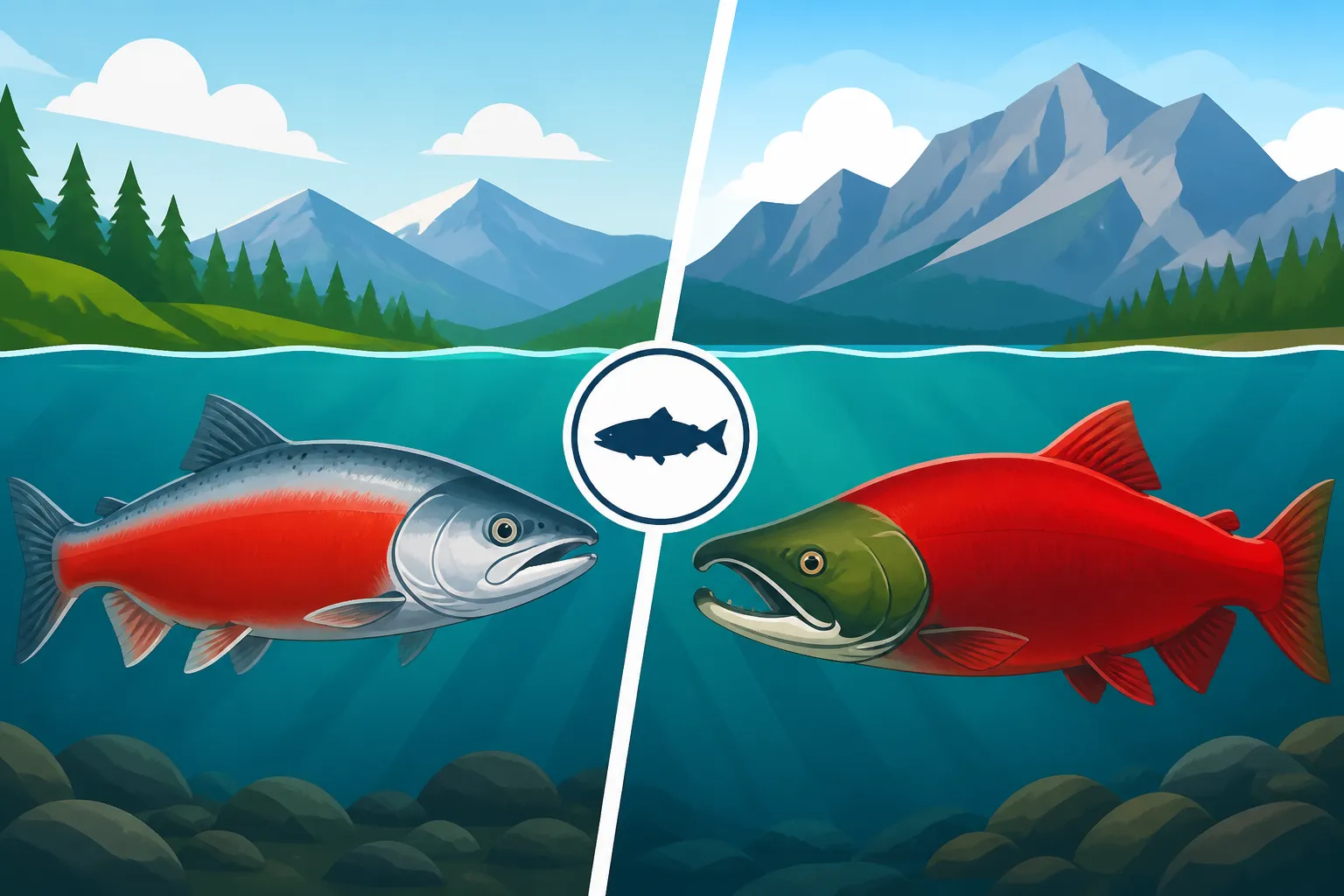
When you pull a Kokanee from the water, you'll immediately notice some distinct characteristics that set it apart. In their non-spawning phase, when they are actively feeding in the lake, they typically display a beautiful silvery body with a darker, bluish-green back, often with small, indistinct spots along their back. Their overall appearance is sleek and streamlined. One key feature to observe is their mouth: it's generally smaller and less pronounced than a Sockeye's, especially compared to a spawning Sockeye.
As they approach spawning season, usually in the late summer or fall, their appearance undergoes a dramatic transformation, much like their Sockeye relatives. The male Kokanee develop a brilliant red body, a green head, and a pronounced humped back. Their jaws become hooked, and their teeth become more visible. Females also take on the red and green hues, though often less intensely, and their bodies become somewhat darker. However, even in their spawning colours, a Kokanee will still be noticeably smaller than a spawning Sockeye, typically ranging from 10 to 18 inches, rarely exceeding 20 inches in most BC lakes. This size difference is often the most immediate giveaway for many anglers. You can learn more about their reproductive cycle in Kokanee Spawning Season in BC.
The Ocean Traveller: What is a Sockeye?
Now let's shift our focus to the Sockeye, a true icon of the Pacific Northwest and a species synonymous with epic salmon runs. These fish embody the spirit of migration, undertaking incredible journeys from freshwater to saltwater and back again.
The Anadromous Journey
The Sockeye salmon's life story is one of the most remarkable in the animal kingdom. Unlike their landlocked Kokanee cousins, Sockeye are anadromous. This means they hatch in freshwater rivers and lakes, spend their juvenile years there, then embark on an arduous migration to the Pacific Ocean. Here, they spend one to three years growing large and strong, feeding on plankton and small invertebrates, accumulating the rich, red flesh for which they are famous. After reaching maturity, they undertake another monumental journey, navigating thousands of kilometres back to their exact natal river and stream to spawn. This incredible round trip is what truly defines the Sockeye.
This oceanic phase is crucial for their growth. They face immense challenges and predators in the open ocean, which contributes to their robust build and impressive size upon their return. When you encounter a Sockeye in a river, you're looking at a fish that has travelled vast distances, battled currents, and survived against the odds. It's truly a testament to nature's resilience. The Fraser River Sockeye Closure Windows are often implemented to protect these returning fish during critical migration periods.
Key Identifying Characteristics of a Sockeye
In their ocean phase, Sockeye are beautiful, sleek fish with a metallic, iridescent blue-green back and shimmering silver sides, lacking any distinct spots. They are often described as having a very clean, almost torpedo-like shape, built for speed and endurance in the open water. Their eyes are relatively large, and their jawline is typically quite straight. These are the fish you might encounter if you're fishing for salmon in coastal waters, though Sockeye are less commonly targeted in the salt than Chinook or Coho, as they are primarily plankton feeders.
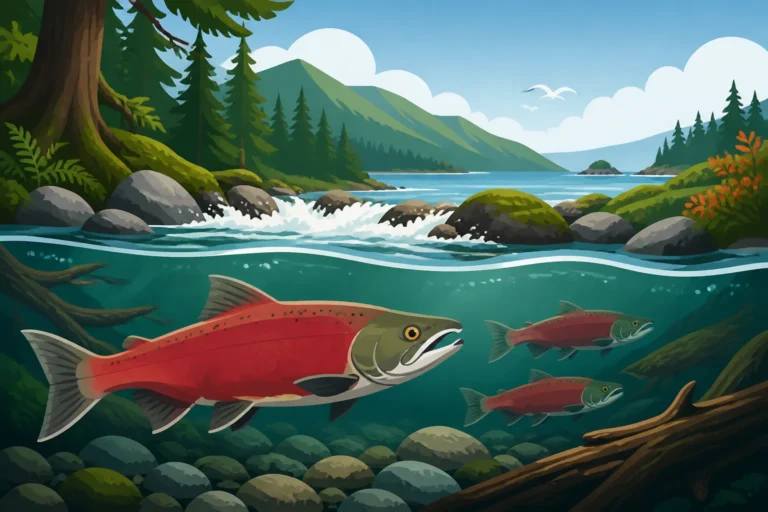
However, the most recognizable image of a Sockeye is during its spawning migration into freshwater. This is when they undergo their dramatic transformation. Their bodies turn a brilliant, fiery red, and their heads become a distinct olive-green. Males develop a pronounced humped back and a long, hooked snout (kype) with visible teeth, becoming quite fearsome-looking. Females also adopt the red body and green head, though their kype is less developed. At this stage, they are significantly larger than Kokanee, often weighing 6 to 12 pounds, with some individuals exceeding that. The sheer size and intensity of their spawning colours make them unmistakable when seen in their home rivers, such as the Adams River during a dominant Sockeye run. You can explore more about identifying these incredible fish in the Pacific Salmon Species Identification Guide.
The Core Differences: Kokanee vs. Sockeye at a Glance
So, while they are genetically very close, think of them as cousins who took different paths in life. One stayed home, enjoying the lake, while the other explored the vast ocean before returning to the family homestead.
Habitat and Life Cycle Divergence
The most fundamental difference between Kokanee and Sockeye lies in their habitat and life cycle. Kokanee are entirely freshwater fish. They are born in lakes or tributary streams, grow up in the lake, and return to those same freshwater environments to spawn. Their entire world is the lake system. This adaptation to a solely lacustrine (lake) existence means they don't develop the need for oceanic strength or the physiological changes required for saltwater survival. They are perfectly content with their freshwater home.
Sockeye, on the other hand, are the epitome of anadromous fish. Their life cycle is a grand, epic journey from freshwater nursery to the saline expanses of the Pacific Ocean, and then an arduous return to freshwater to complete their reproductive cycle. This ocean phase dictates much about their physical development, their size, and their incredible stamina. If you're fishing a tranquil, landlocked lake, you're targeting Kokanee. If you're on a major river system during the fall, witnessing a vibrant red horde, you're experiencing a Sockeye run. This divergence in their life's journey is the single most important factor that shapes their characteristics and ultimately, how we interact with them as anglers.
Size, Appearance, and Angling Impact
The differences in habitat and life cycle lead directly to noticeable distinctions in their size and appearance, which, in turn, influences how we fish for them.
| Feature | Kokanee (Landlocked Sockeye) | Sockeye (Anadromous Sockeye) |
|---|---|---|
| Habitat | Entirely freshwater (lakes and tributary streams) | Freshwater (spawn/juvenile) and Saltwater (adult growth) |
| Size | Smaller, typically 10-18 inches (rarely > 20") | Larger, typically 20-30 inches (6-12+ lbs) |
| Ocean Phase | None | Yes, 1-3 years in the Pacific Ocean |
| Non-Spawning Appearance | Silvery body, bluish-green back, small indistinct spots, smaller mouth | Metallic blue-green back, silver sides, no distinct spots, streamlined |
| Spawning Appearance | Red body, green head, humped back (males), hooked jaw (males), smaller overall | Brilliant red body, green head, pronounced humped back (males), very hooked jaw (males), much larger |
| Diet | Zooplankton (in lakes) | Zooplankton, small invertebrates (in ocean) |
| Flesh Colour | Orange-red | Deep red |
These differences have significant angling implications. For Kokanee, their smaller size means lighter tackle is generally preferred. Ultralight spinning rods or specialized Kokanee trolling rods are common. They respond well to small trolling spoons, wedding rings, or specialized Kokanee jigs, often tipped with corn or scent. Finding these specific small lures and attractants is easy; platforms like Amazon offer a huge variety, letting you stock up before your trip to one of BC's many fantastic Kokanee lakes. How to Catch Kokanee in BC provides more in-depth techniques.
Sockeye, especially during their river migration, require more robust gear. While they don't feed actively in freshwater, they will strike out of aggression or instinct. Heavier spinning or baitcasting rods, often paired with stout line, are necessary to handle their powerful runs. Techniques like drift fishing with small coloured offerings or even fly fishing with specific patterns can be effective. The fight from a returning Sockeye is considerably more powerful than that of a Kokanee, making it an exhilarating experience for anglers. When sourcing heavier leaders or specific river fishing gear, checking online retailers like Amazon can often provide a wider selection than local shops, especially for specialized items.
Why This Distinction Matters for Anglers
Understanding whether you're targeting Kokanee or Sockeye isn't just academic; it has very real, practical implications for your fishing trip, from what gear you pack to whether you're complying with the law.
Regulations and Conservation
This is perhaps the most critical reason to know your fish! British Columbia has specific regulations for different salmon species, and this includes differentiating between Kokanee and Sockeye. Because Sockeye undertake massive migrations and their populations can fluctuate dramatically due to oceanic conditions, river conditions, and other environmental factors, they are often subject to very stringent regulations. These can include daily bag limits, annual possession limits, specific retention periods, or even complete non-retention closures in certain areas or during particular times of the year, all designed to protect vulnerable runs. Ignoring these regulations, even unintentionally due to misidentification, can lead to significant penalties. BC Fishing Regulations Explained and BC Bag and Possession Limits by Species are essential reading.
Kokanee, while also managed, often have more consistent regulations in many lakes. However, they can also be subject to specific bag limits or seasonal closures to protect spawning populations. It's not uncommon for a lake to have a specific Kokanee limit that is different from river-based Sockeye limits. Always, and I mean always, check the current BC Fishery Notices and In-Season Closures, Explained before heading out. A quick check will confirm species-specific rules for your chosen fishing spot, ensuring you're fishing legally and contributing to sustainable management. Conservation efforts are paramount, and accurate identification is the first step in playing your part.
Fishing Strategies and Gear Choices
Beyond regulations, knowing which fish you're after will completely dictate your angling strategy and the gear you need. Imagine showing up to a river hoping for Sockeye with tiny Kokanee lures, or vice versa! It simply won't work.
For Kokanee, since they are smaller and feed on zooplankton, your approach will involve more finesse. Trolling with downriggers or weighted lines to get your lures to the right depth (often 30-80 feet or more) is extremely popular. Small, flashy lures like Wedding Rings, Kokanee Kandy, or micro hoochies in bright colours (pinks, oranges, greens) are highly effective, often tipped with a piece of scented corn. Rods will be light, with sensitive tips to detect their subtle bites, and reels spooled with light monofilament or fluorocarbon line. You can find excellent instructional videos and gear recommendations for Kokanee fishing online, and many of the specialized lures are readily available through large sporting goods retailers or convenient online stores like Amazon. Best Kokanee Trolling Techniques for Okanagan Lake offers great tips.
Sockeye fishing in rivers, on the other hand, is a different ballgame. As they typically aren't feeding in freshwater, your tactics will usually focus on provoking a "reaction strike" or presenting a lure in a way that mimics something they might instinctively snap at. Drift fishing small, weighted sockeye flies or short-leadered presentations along the bottom is a common method. Fly anglers might use specific Sockeye patterns. The gear needs to be robust enough to handle a powerful, ocean-fresh fish in river currents – think medium-heavy rods and reels with strong drag systems. Knowing the difference means you'll pack the right rod, the right line, and the right tackle, ultimately leading to a more successful and enjoyable day on the water.
Common Misconceptions and How to Avoid Them
The close genetic relationship between Kokanee and Sockeye naturally leads to some misunderstandings. It's easy to fall into traps of thinking they're identical, especially when seeing them in their spawning colours.
"They're the Same Fish, Just Different Locations"
While it's true that Kokanee are a freshwater form of Sockeye, calling them "the same fish" is an oversimplification that overlooks critical biological and ecological distinctions. Think of it like a domesticated dog versus a wolf – they share a common ancestor, but their lifestyles, behaviours, and even some physical traits have diverged significantly over generations due to their environments. The genetic blueprint is similar, but the expression of that blueprint is shaped by their unique life cycles. Kokanee have evolved to thrive entirely on a diet of zooplankton in lakes, never developing the physiological mechanisms to tolerate saltwater or the migratory instinct to seek the ocean.
Sockeye, conversely, are programmed for an epic journey. Their bodies are built for the rigors of ocean life – feeding, growing large, and then enduring a strenuous upstream migration. If you were to take a Sockeye egg and raise it in a landlocked lake, it would likely behave much like a Kokanee. Similarly, if you put a Kokanee into the ocean, it wouldn't survive. The environment they grow up in fundamentally alters their development and behaviour. This deep dive into their biology helps us appreciate them as distinct populations, each with their own unique challenges and roles in BC's diverse aquatic ecosystems. It’s why you'll often see them listed separately in regulatory documents and why understanding their individual traits is so vital for conservation.
Seasonal Appearance Changes
One of the biggest culprits for confusion between Kokanee and Sockeye is their dramatic colour changes during the spawning season. Both species adopt brilliant red bodies and green heads, along with physical deformations like humped backs and hooked jaws, as they prepare to reproduce. If you see a spawning Kokanee, it looks remarkably similar in coloration to a spawning Sockeye, just on a smaller scale. This can easily lead an uninformed angler to mistake a large Kokanee for a small Sockeye, or vice versa.
To avoid this confusion, focus on key differentiating factors even during their spawning phase. Firstly, size remains the most reliable indicator. A spawning Sockeye will almost always be significantly larger than a spawning Kokanee. Secondly, examine their overall body shape and fin structure. While both develop humps, the Sockeye's will typically be more pronounced and robust due to its larger frame. The head shape and jaw structure, though similarly hooked in males, will reflect the underlying size difference. Pay close attention to the exact location you're fishing. If you're in a completely landlocked lake with no ocean access, it's a Kokanee. If you're in a major river system that flows to the ocean, especially during the fall salmon runs, it's almost certainly a Sockeye. Consulting a comprehensive guide like Pacific Salmon Species Identification Guide can also provide visual aids to help cement these distinctions, even for the most colourful specimens.
Understanding these nuances ensures that you're not only correctly identifying your catch but also respecting the specific regulations that apply to each species, helping to conserve these incredible fish for future generations of anglers.
Disclaimer
This article is for general informational purposes only and does not constitute professional advice. Laws, prices and regulations vary by location and change over time. Consult a qualified professional for guidance on your specific situation.