How to locate kokanee in BC lakes
For many anglers in British Columbia, the kokanee can feel like the ghost of the lake – you know they're there, but actually finding them can be an incredibly frustrating challenge. These landlocked sockeye salmon are notorious for their schooling habits and often precise depth preferences, leaving many scratching their heads. This comprehensive guide will pull back the curtain on the mysteries of kokanee, helping you understand their behaviour, preferred hangouts, and practical strategies to consistently locate them in BC's diverse lakes, no matter the season.
Understanding Kokanee: The Enigmatic Landlocked Sockeye
Before you can even begin to think about casting a line, it's crucial to understand the fish you're pursuing. Kokanee are essentially sockeye salmon that have adapted to live their entire lives in freshwater, never migrating to the ocean. This unique life cycle means they behave differently than their anadromous cousins, and knowing these nuances is your first step to locating them. Their presence in a lake is a true gift, offering exciting angling opportunities, but only if you know where to look.
What Makes Kokanee Tick? Behavior and Diet
Kokanee are highly social fish, almost always found in large schools. They're filter feeders, primarily consuming zooplankton – tiny aquatic organisms that drift in the water column. This diet dictates much of their behavior and, most importantly, their location. They will go where the food is, and zooplankton distribution is heavily influenced by light, temperature, and water currents. If you've ever seen a fish finder light up with what looks like a cloud of tiny specs, you're likely seeing a zooplankton bloom, and kokanee won't be far behind. They're constantly on the move, grazing through these microscopic buffets. Because they feed on such small organisms, they have very specific habitat requirements to thrive, making them highly sensitive to changes in water conditions. Their schooling instinct also provides protection from predators, which is why you rarely find a solitary kokanee. Understanding these fundamental aspects is key to figuring out What kokanee are and how they differ from sockeye.
One common frustration anglers face is seeing kokanee on the sonar, but them refusing to bite. This often happens when the fish are simply cruising and feeding on incredibly dense plankton patches, not actively chasing larger prey. In these scenarios, matching the hatch, so to speak, with very small lures or even just a bare hook tipped with a kernel of corn can be surprisingly effective. Their mouths are small, and their feeding behavior is typically a gentle sip rather than an aggressive strike, especially when gorging on plankton.
Preferred Habitat: Depth, Temperature, and Structure
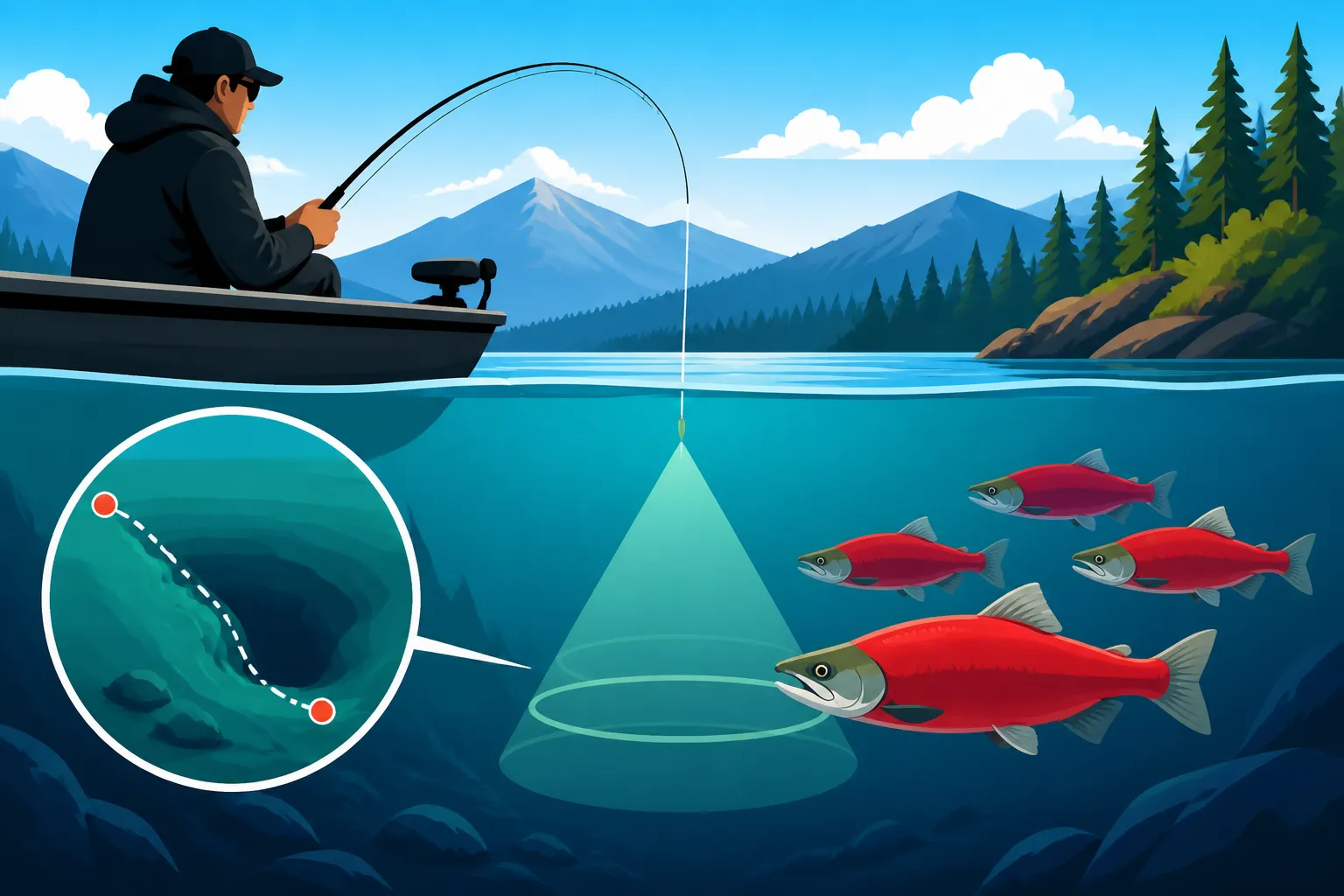
The most critical factors influencing kokanee location are water temperature and oxygen levels. Kokanee prefer cooler water, typically in the 8 to 14 degrees Celsius (46-57°F) range, and require good oxygen saturation. In most BC lakes, especially during the warmer months, this means they'll be found in or around the thermocline – the layer of water where the temperature changes most rapidly with depth. Above the thermocline, the water is too warm, and below it, oxygen levels often drop too low to sustain them comfortably.
While they are pelagic (open water) fish, they still relate to structure, particularly subtle underwater features like submerged humps, drop-offs, and old river channels. These areas can funnel currents, concentrate zooplankton, or provide thermal breaks. In larger lakes, they'll often hold in the deeper basins, suspending themselves at their preferred temperature and depth. Knowing Where kokanee live in BC lakes involves more than just a specific spot; it's about understanding the underwater landscape and how it interacts with the water column. A good quality lake map, perhaps one you can find and review on a tablet from a retailer like Amazon, can reveal these critical structural elements, helping you predict where thermoclines might intersect with points or ledges.
Seasonal Strategies for Locating Kokanee
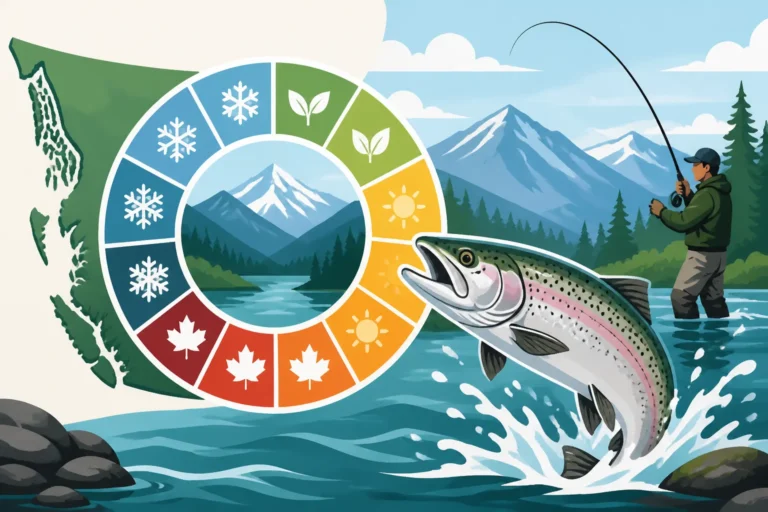
Kokanee are creatures of habit, but their habits shift dramatically with the seasons, primarily driven by temperature and their annual spawning cycle. What works in spring won't necessarily work in summer, and knowing these seasonal movements is paramount to success. Trying to find them in the same spot year-round is a recipe for disappointment.
Springtime Seekers: Shallow Water and Post-Spawn Recovery
As the ice recedes and spring arrives, kokanee begin to move out of their deep winter haunts. The shallower waters near shore warm up first, attracting zooplankton and offering a more comfortable environment after the cold, deep winter. You'll often find them cruising bays, points, and near creek mouths where fresh nutrients are flowing in. This is also a period where they're recovering from their demanding Kokanee Spawning Season in BC (if it's the spring after they've spawned, though many kokanee die after spawning, others are still immature). Younger kokanee, in particular, will be more active in these shallower zones. They're looking to rebuild energy reserves, so they might be more aggressive towards lures at this time.
Anglers should focus on the upper water column, from the surface down to about 20-30 feet, especially in the mornings and evenings. Look for areas where the sun has had a chance to warm the water slightly. Trolling small spoons or wedding bands near shore, or even casting from the bank in certain areas, can be productive. Keep an eye out for any surface activity, like subtle rises or splashes, which could indicate a school feeding close to the surface.
Summer Deep Dive: The Thermocline Connection
Summer is when kokanee truly become "deep dwellers." As surface temperatures soar, these cold-water fish retreat to the cooler, oxygen-rich waters of the thermocline. This can be anywhere from 30 to 100 feet deep, sometimes even deeper, depending on the lake's size and depth. Finding this thermal layer is absolutely critical for summer kokanee fishing. If you're not fishing at the right depth, you're simply not fishing where the fish are.
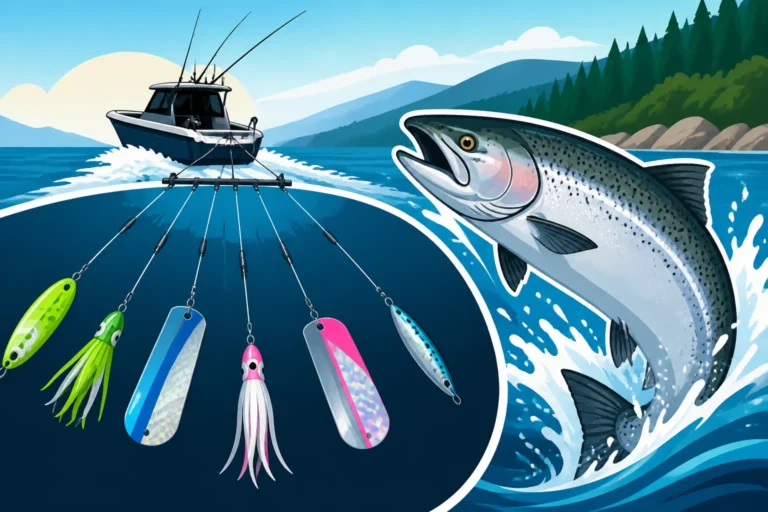
This is where equipment like downriggers, lead core lines, or specialized weighted lures come into play. Your fish finder will be your best friend here, helping you pinpoint the exact depth of the thermocline and mark schools of kokanee suspending within it. Once you find that productive depth, stick to it. Kokanee will often hold at that level for long periods, moving horizontally rather than vertically. Techniques like those described in Best Kokanee Trolling Techniques for Okanagan Lake become essential here. Many successful summer kokanee anglers will spend hours slowly trolling, fine-tuning their depth until they hit the zone.
Autumn Aggregations: Pre-Spawning Frenzy
As lake temperatures begin to cool in late summer and early fall, kokanee start to prepare for their annual spawning run. This is a fascinating time when their behaviour shifts significantly. They'll often move out of the deep thermocline and begin to stage in shallower areas, especially near the mouths of tributary rivers or streams where they intend to spawn. Their bodies will start to change, becoming more vibrant in colour as they transition into their spawning phase.
During this pre-spawning period, they can become more aggressive, feeding heavily to build up energy for the arduous journey ahead. Anglers might find success by targeting these staging areas with slightly larger, more vibrant lures. However, once they commit to their spawning run and enter the rivers, they typically stop feeding entirely, and targeting them at this stage is often prohibited by regulations and generally frowned upon as it interferes with their natural reproductive cycle. Always check the local BC Freshwater Fishing Regulations Synopsis for specific seasonal closures and rules around spawning kokanee, as these can vary significantly by lake and river.
Winter Wonderland: Ice Fishing for Kokanee
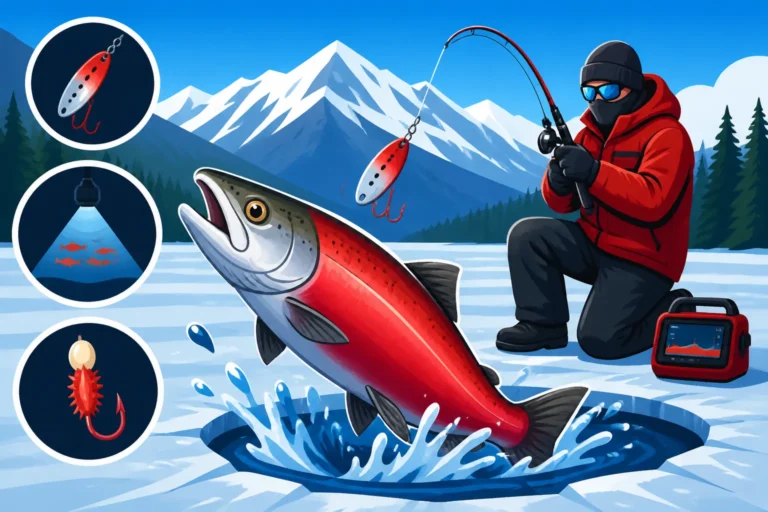
For many avid anglers in BC, the hardwater season offers a unique opportunity to target kokanee. Once the lakes freeze over, kokanee tend to congregate in specific, often deeper, areas of the lake. They're still schooling fish, but their movements are less about chasing plankton across vast distances and more about conserving energy in the cold water. They'll often suspend at various depths, sometimes just beneath the ice, other times much deeper, relating to subtle structure or current flows under the ice.
Locating them for ice fishing often requires a portable fish finder or flasher, allowing you to scan different depths. Drilling a series of holes in a grid pattern and sounding out each one with your electronics is a common strategy. Once a school is located, using small jigs tipped with bait like maggots or corn, or tiny spoons, can be incredibly effective. The key is gentle jigging motions, often just a few inches, to entice a strike. This specialized pursuit is well covered in resources like Best Techniques for Ice Fishing Kokanee. Remember, staying warm and safe on the ice is paramount, so always check ice thickness and conditions before venturing out.
Tools and Techniques for Pinpointing Kokanee
While understanding kokanee behavior is fundamental, having the right tools and knowing how to use them effectively can drastically improve your chances of locating these elusive fish. Modern technology has made it easier than ever to peer into the underwater world, but it still requires skill and interpretation.
Sonar and Fish Finders: Your Underwater Eyes
A good quality sonar or fish finder is arguably the single most important tool for locating kokanee, especially in larger, deeper lakes. These devices allow you to see what's happening beneath your boat, showing you schools of fish, bait balls (which are often the zooplankton kokanee are feeding on), and the all-important thermocline. Look for arches or dense clouds on your screen – these are often kokanee schools. Modern units, many of which can be found from online retailers like Amazon, offer advanced features like side imaging and down imaging, providing incredibly detailed views of the underwater environment.
Learning to interpret your sonar effectively takes practice. Kokanee schools often appear as dense, sometimes elongated, blobs or multiple arches suspended at a particular depth. They won't always be on the bottom; in fact, they very rarely are. You're looking for suspended targets. Don't be fooled by small, scattered marks; kokanee are schooled. Adjusting your sensitivity and range settings can help fine-tune your display to better identify these smaller, pelagic fish. Marking waypoints on your GPS when you find a productive depth or school is crucial, allowing you to return to that exact spot or troll along a similar contour.
Temperature Gauges and Depth Finders
Given kokanee's sensitivity to temperature, a reliable temperature gauge is an invaluable asset. Many modern fish finders have integrated temperature sensors, but a separate, accurate thermometer that can read water temperature at depth is a game-changer. Knowing the precise depth of the thermocline (the temperature break) allows you to set your lures and downriggers to the exact zone where kokanee are most likely to be holding. Without this information, you're essentially fishing blind in a vast three-dimensional space.
Depth finders, often integrated into fish finders, tell you how deep the bottom is, but more importantly, they help you maintain a consistent depth for your lures. When trolling for kokanee, precision is key. If you know the thermocline is at 60 feet, you want your lure at 60 feet, not 50 or 70. This constant monitoring of depth and temperature allows you to fine-tune your presentation and stay in the strike zone. Many advanced units allow for custom depth contour mapping, which is immensely helpful for understanding the underwater topography and identifying areas where the thermocline might intersect with beneficial structure.
Understanding Lake Topography and Structure
While kokanee are pelagic, they aren't just randomly swimming around. They use the underwater landscape – the topography and structure of the lakebed – to their advantage. Deep basins offer consistent cool water, while submerged humps, ridges, and drop-offs can funnel currents and concentrate plankton. Learning to read a bathymetric (contour) map of your chosen lake is as important as reading your fish finder. These maps, often pre-loaded on marine GPS units or available digitally, show you the contours of the lake bottom, identifying potential hotspots before you even launch your boat.
Look for areas where deep water meets a shallower shelf, or where an underwater point extends into a basin. These transition zones often hold kokanee because they offer a variety of depths and access to food sources. River channels running through a lake are also prime areas, as they often create current and oxygenation. Pre-trip planning with detailed maps can save you hours of aimless searching on the water, allowing you to focus your efforts on the most promising areas.
Reading the Water and Environmental Cues
Beyond electronics and maps, becoming a keen observer of your surroundings can provide crucial clues about kokanee location. Nature often gives subtle hints if you know what to look for, and experienced anglers learn to combine technology with good old-fashioned water sense.
Surface Activity and Bird Behavior
While kokanee typically feed below the surface, especially in summer, there are times when they might show themselves. Early mornings or late evenings, particularly in spring or fall, you might see subtle rises or splashes on the surface indicating fish feeding on insects or emerging plankton. These surface disturbances are often more pronounced with other trout species, but kokanee can also provide visual cues.
Perhaps more indicative is the behavior of birds. Loons, mergansers, and other diving birds are often very effective kokanee hunters. If you see these birds actively diving and feeding in a particular area, especially repeatedly, it's a strong indicator that there's a school of baitfish or kokanee concentrated below. Their natural instinct leads them to the food source, and you can often follow their lead. A flock of gulls aggressively working an area can also indicate baitfish being driven to the surface by predators from below, which could include kokanee.
Wind, Current, and Light Conditions
Environmental factors like wind, current, and light also play a significant role in where kokanee position themselves. Wind can create currents that push plankton into specific areas, often along windward shores or into bays. Trolling into or across the wind can sometimes be more productive as your lures are presented naturally to fish feeding on wind-blown food concentrations.
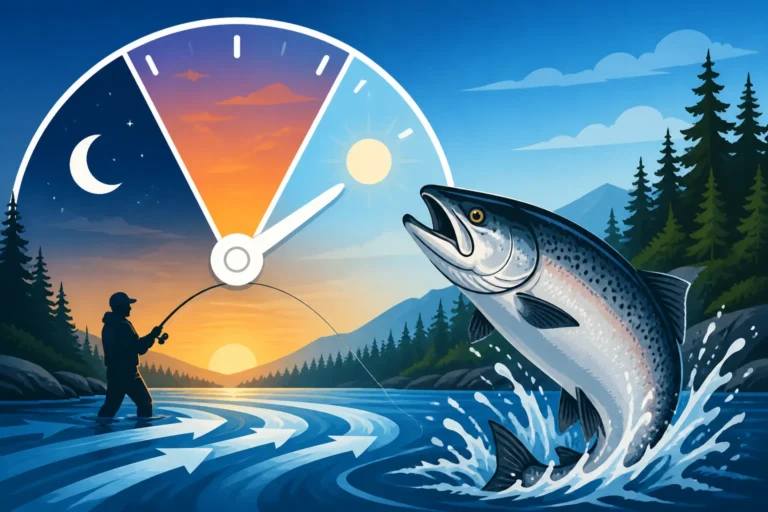
Light conditions greatly affect kokanee, as they are often sensitive to bright sunlight. On bright, sunny days, they tend to go deeper or hold in shadier areas, while on overcast days, they might be found shallower. This is partly due to their plankton food source also reacting to light – plankton often migrates deeper during bright sun. Adjusting your fishing depth based on cloud cover or time of day is a smart strategy. In rivers or areas with noticeable currents, kokanee will orient themselves into the current, waiting for food to drift by, much like river trout.
Common Kokanee Hotspots in BC Lakes
While every lake is unique, certain types of areas consistently attract kokanee due to their fundamental needs for food, suitable temperature, and oxygen. Knowing these common hotspots can help you narrow down your search and maximize your time on the water, whether you're chasing Kokanee Fishing in BC specifically or just generally enjoying the province's abundant freshwater opportunities.
Mid-Lake Basins and Deep Channels
During much of the year, particularly from late spring through early fall, kokanee will often be found suspended in the deep, open water of mid-lake basins. These are the deepest parts of the lake, where the water column provides the necessary thermal refuge from warm surface temperatures. They might not be directly on the bottom, but rather suspended hundreds of feet above it, following the thermocline.
When fishing these areas, slow, consistent trolling is often the most effective method, covering vast amounts of water until you mark a school. Using multiple rods at varying depths with downriggers or lead core can help you quickly find the "zone." Remember, these fish are constantly grazing on plankton, so they are always on the move, albeit often slowly within a defined depth range. Understanding how to use your electronics to identify these suspended schools is critical in these expansive areas. You can find prime examples of this behavior in lakes renowned for their kokanee populations, such as Best kokanee spots on Okanagan Lake.
Inlet and Outlet Areas
Inlet streams and river mouths, especially in the fall, become magnets for mature kokanee preparing to spawn. These areas offer both the necessary current and the gravel beds for spawning. However, even outside of spawning season, inlets and outlets can be productive. They often bring in fresh, oxygenated water and nutrients, which can concentrate plankton and attract kokanee, particularly in the spring when these areas warm up faster.
When fishing these zones, pay attention to current breaks, seams where faster water meets slower water, and eddies. These are often places where baitfish and plankton accumulate, making them prime ambush points for kokanee. In the fall, focusing on these areas requires careful attention to local regulations, as many areas may have closures to protect spawning fish. It's a fantastic time to observe nature, but always respect the fish's journey.
Submerged Structure and Underwater Features
Even though they're open-water fish, kokanee do relate to structure. Submerged islands, humps, sharp drop-offs, and old riverbeds can concentrate food and provide thermal breaks or current disruptions that appeal to kokanee. These features break up the monotony of the lake bottom and often create unique micro-habitats. For instance, a submerged point extending into a deep basin can cause an upwelling of nutrient-rich water, drawing in plankton and, subsequently, kokanee.
Using detailed contour maps, often available through marine electronics manufacturers or third-party mapping software that you can find on platforms like Amazon, is invaluable for identifying these subtle underwater features. Once you've pinpointed a promising structure, use your fish finder to scan around it, looking for schools suspended nearby. Trolling along the edges of these structures, or across their tops, can be a highly effective way to intercept moving schools. Don't be afraid to experiment with different depths around the structure, as kokanee might be holding just off the bottom or higher in the water column, depending on the conditions. These areas are also where you might find other desirable fish, so be ready for anything!
Seasonal Kokanee Location Strategies at a Glance
| Season | Typical Depth Range | Preferred Locations | Key Factors | Essential Tools |
|---|---|---|---|---|
| Spring | Surface to 30 feet | Bays, creek mouths, shallow points, warming flats | Warming water, post-spawn recovery | Light tackle, small spoons |
| Summer | 30 to 100+ feet (at thermocline) | Mid-lake basins, deep channels | Thermocline, cool oxygenated water | Sonar, downriggers, temp gauge |
| Autumn | 10 to 60 feet (staging) | River mouths, stream inlets, lake narrows | Pre-spawning aggregation, cooling water | Sonar, trolling gear |
| Winter | Varies (often suspended, deep basins) | Deep basins, subtle structure, current breaks under ice | Oxygenation, conserving energy | Ice auger, flasher, small jigs |
Always remember to check the current BC Fishing Regulations Explained before heading out, especially concerning species-specific limits and open seasons. For example, understanding BC Kokanee retention rules and whether you need a BC Kokanee retention without a salmon stamp is critical for legal and responsible angling. These guidelines are in place to ensure the health of our fisheries for generations to come.
Disclaimer
This article is for general informational purposes only and does not constitute professional advice. Laws, prices and regulations vary by location and change over time. Consult a qualified professional for guidance on your specific situation.