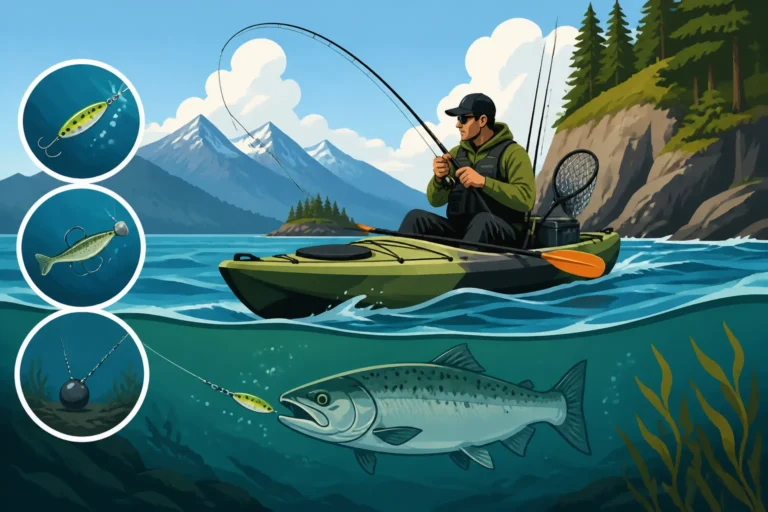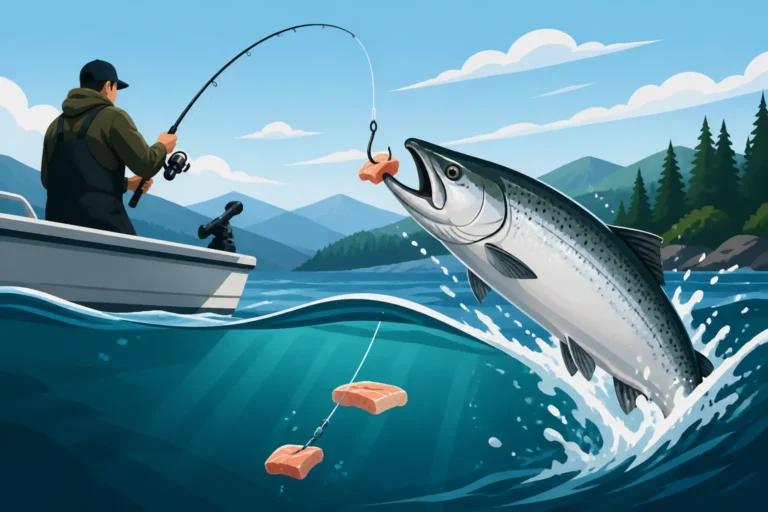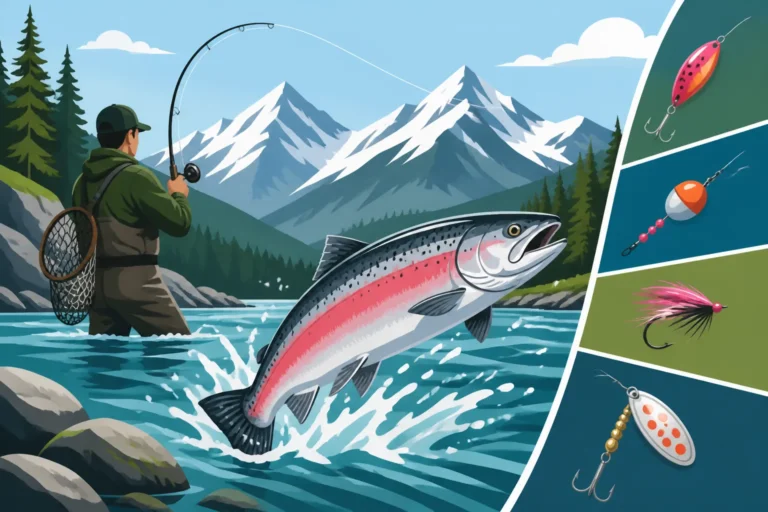
Best downrigger settings for summer chinook
You can see chinook marking on the sounder at 90 feet, the boats around you are netting fish, and your rods have not budged all morning. In summer, the difference between a slow day and a great one is often a few small downrigger adjustments. This guide walks through depth, speed, setback, release tension and spread so your gear sits where summer chinook actually feed.
How Summer Chinook Use the Water Column
Downrigger settings only make sense once you know where the fish are and why. Summer chinook along the BC coast are feeding hard on herring, needlefish and anchovy, and they follow that bait up and down the water column through the day. Your job is to put a lure in front of them at the right depth, at a speed that makes it look alive.
Temperature, Light and Bait
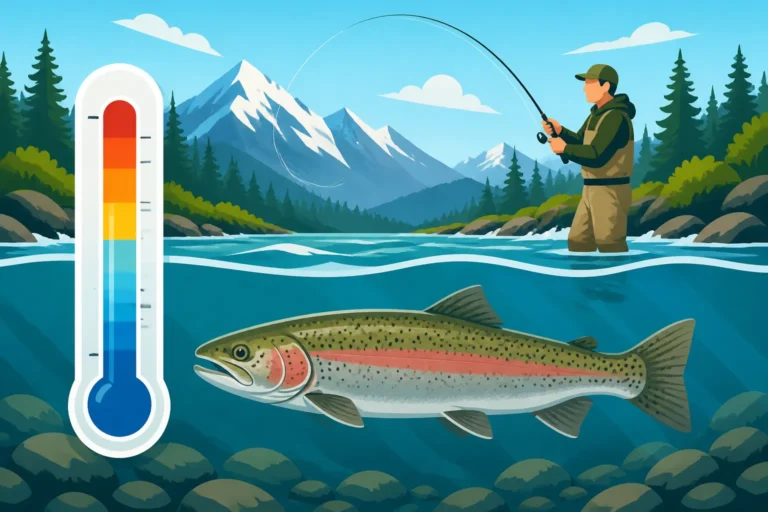
Chinook prefer cool water, and in summer the surface layer warms quickly in sheltered areas. On calm, sunny days the fish often drop below the warm layer, sometimes to the thermocline or right down near bottom. On overcast days or in areas with strong tidal mixing, such as Discovery Passage near Campbell River or the mouth of Juan de Fuca Strait, the water stays cooler and the fish may hold shallower.
Light matters too. At first light the fish are often higher, sometimes in the top 40 to 60 feet, and as the sun climbs they sink. Bait does the same thing. If you watch the sounder over a morning, you will often see the bait balls drop and the chinook marks follow them. For more on what they are eating, see What chinook salmon eat in the ocean.
Bottom-Oriented Versus Suspended Fish
On many summer grounds, chinook are bottom-oriented. They cruise along the slope or the edge of a bank, staying within 10 to 30 feet of the bottom. Off Swiftsure, around Sooke, on the banks off Tofino and Ucluelet, and along many inside waters, a large share of summer chinook are caught close to bottom.
At other times, especially over deep water or when bait is scattered mid-column, fish suspend. Then your sounder becomes your guide: look for arches or bait marks and set your balls at or just above that depth. Chinook rarely swim down to take a lure, but they will readily rise to one.
Reading Your Sounder for Depth Clues
Spend the first part of the morning watching the screen rather than just setting lines. Note the depth of the bait, the depth of the arches, and how far above bottom they sit. Then set your downriggers to bracket those depths. If you see marks between 70 and 110 feet in 140 feet of water, run one ball at 75 and one at 100 to start.
Remember that your sounder shows what is under the boat, while your gear trails behind. On a long, straight troll, that matters less. On a tight tack along a bank edge, the gear may be over shallower or deeper water than the boat. Keep that in mind when you adjust.
The Core Downrigger Settings for Summer Chinook
With the fish located, it is time to dial in the numbers. Below are the settings that consistently produce summer chinook on BC waters, and the reasons behind them.
Depth Settings by Time of Day
A simple starting framework for summer:
- First light to an hour after sunrise: set the shallow rod 40 to 60 feet, the deep rod 70 to 90 feet.
- Mid-morning: move both balls down, often to 80 to 120 feet, or within 10 to 20 feet of bottom if fish are bottom-oriented.
- Midday on bright days: fish the deepest marks you see; that can be 120 to 180 feet in open water.
- Evening: bring gear back up as light fades and fish rise.
Always adjust to what your sounder is telling you. If fish are clearly marking at 95 feet, put a ball there, regardless of the time of day.
Trolling Speed
Speed is the setting most anglers underestimate. Summer chinook respond well to flasher and hootchie or flasher and spoon setups trolled at roughly 2.2 to 3.0 miles per hour over ground, depending on tide and gear. Bait setups like herring in a teaser head often perform best on the slower end, while spoons can run a bit faster.
The key is speed at the ball, not GPS speed over ground. If you are trolling against a tide, your lure might be moving faster through the water than your GPS shows; with the tide, slower. Watch the angle of your downrigger cable. A consistent, modest sweep back is a good sign. If it is streaming far behind, you are going too fast or the current is strong. For more on speed tuning, see Best trolling speed for chinook salmon.
Leader Length and Setback
Behind a flasher, leader length controls how much the flasher’s action is transferred to the lure. Hootchies usually run on 30 to 42 inches of leader, spoons on 4 to 7 feet, and herring on 5 to 7 feet. Shorter leaders give more action; longer leaders let the lure swim more naturally.
Setback, the distance from the release clip to the flasher, is usually 6 to 15 feet in summer. Short setbacks keep the gear tight to the ball and help in dirty or deep water. Longer setbacks can help in clear, shallow water where fish may be spooked by the ball. Start in the middle, around 10 feet, and adjust based on bites.
Release Clip Tension
Your release clip should hold the line firmly enough to handle the drag of the flasher and the current, but release cleanly when a chinook hits. Too light, and the line pops free on every swell, leaving your gear fishing near the surface. Too heavy, and small fish can be dragged without tripping the release.
Test your clips before you set lines. With your gear in the water at trolling speed, the rod should have a deep, steady bend. If it is constantly popping, increase tension. If fish are hanging on the ball without tripping, back it off.
| Setting | Typical Summer Range | When to Go Lower | When to Go Higher |
|---|---|---|---|
| Ball depth | 40 to 180 feet | Bright sun, warm surface, deep bait | Low light, cool mixed water |
| Trolling speed | 2.2 to 3.0 mph | Bait setups, strong tide with you | Spoons, aggressive fish |
| Hootchie leader | 30 to 42 inches | Want more action | Want calmer swim |
| Spoon leader | 4 to 7 feet | Tighter action needed | Natural roll wanted |
| Setback | 6 to 15 feet | Deep or dirty water | Clear, shallow water |
| Ball weight | 10 to 15 pounds | Light current, shallow | Deep water, strong tide |
Building a Productive Downrigger Spread
A spread is the combination of all your lines: depth, lure type and position. Done well, it searches the water column and narrows down what the fish want.
Staggering Depths
On a two-downrigger boat, never run both balls at the same depth when you are searching. Stagger them by 15 to 30 feet. Once one rod gets bit, adjust the other closer to that depth. Many anglers also stack a second line on each downrigger with a stacker clip, running a second lure 10 to 20 feet above the main lure.
This is especially valuable early in the day when fish are moving. If you only fish one depth, you can miss a whole layer of fish. When you do stack, keep the top lure lighter and simpler, such as a spoon or a small hootchie without a big flasher, so the two lines do not wrap around each other on turns. Make wide, gradual turns with a stacked spread, and check both lines after every change of direction. For a full breakdown of spread options, see Best trolling spread for chinook salmon.
Mixing Lure Types
A good summer spread mixes gear types. One rod might run a flasher and hootchie, the other a flasher and spoon or a herring setup. Once one setup gets bit consistently, switch the other to match. Colours matter too: greens, glow, white and chrome are summer favourites on the BC coast, with UV finishes on bright days.
If you are fishing bait, keep the roll tight and consistent. A poorly rigged herring can spin and twist your line. The step-by-step for getting that right is in How to rig herring for chinook trolling.
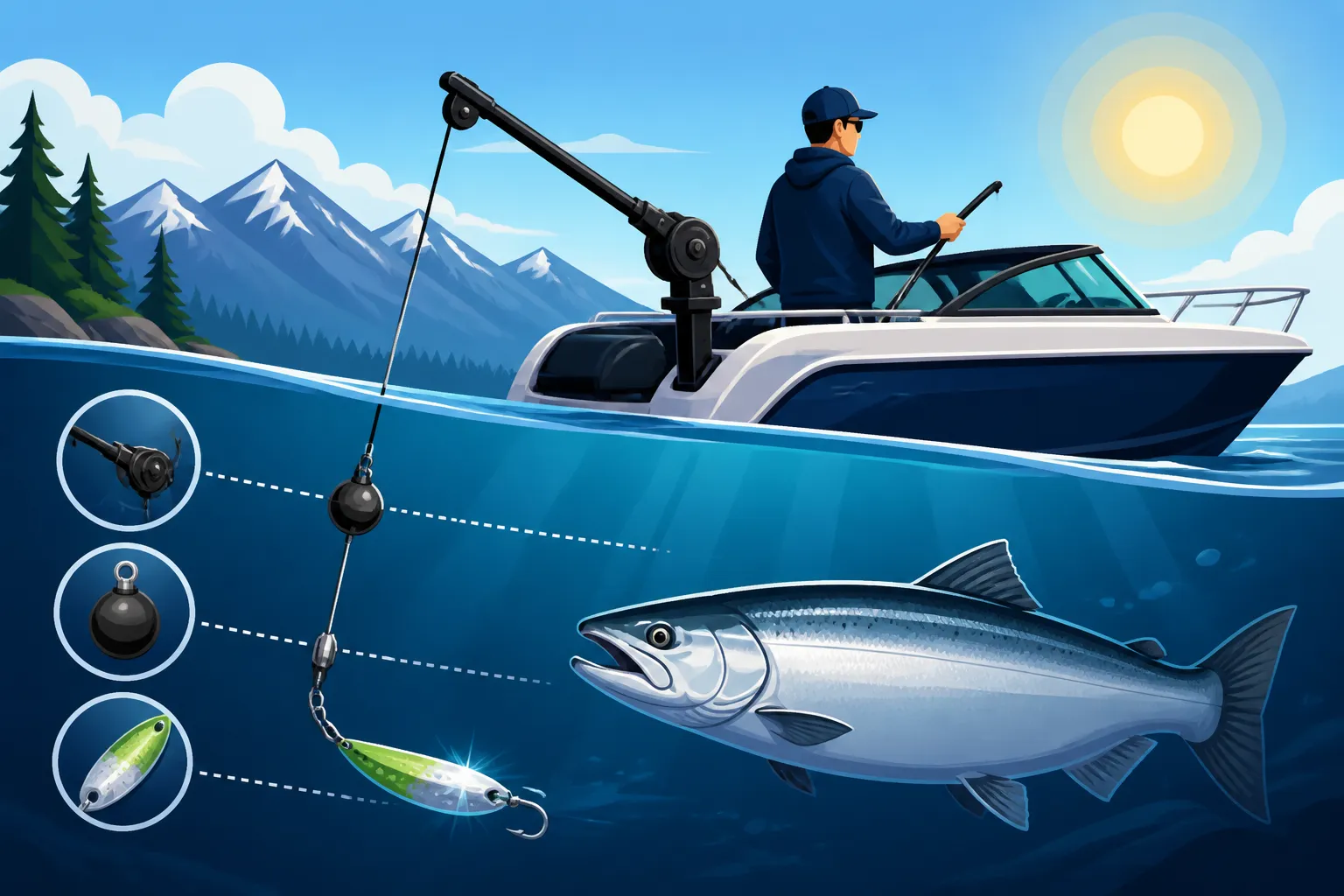
Ball Weight and Cable Angle
Most recreational boats run 10 to 15 pound downrigger balls. Heavier balls hold depth better in strong current and deep water, while lighter balls are fine in calm conditions. Check your cable angle often. If it is sweeping back more than 30 degrees or so, your ball is not as deep as your counter says.
A good rule is that the counter reading is the length of cable out, not the depth. On a steep angle, a reading of 120 feet might put your ball at 100 feet or less. Adjust accordingly, or use heavier weights to keep the cable more vertical.
Gear and Accessories
Many BC anglers find that small accessories make a big difference: stacker clips, quality release clips, rubber snubbers and spare downrigger cable. These are widely available at local tackle shops and through online retailers like Amazon. Look for saltwater-rated components and read reviews to avoid weak clips that fail at the wrong moment.
Downrigger maintenance kits, spare balls and cable repair sleeves are also worth carrying. A frayed cable that breaks can cost you a ball and your gear. Amazon and other retailers carry crimp kits and spare cable, but inspect and replace cables at the start of every season. Check current prices and availability yourself, as they change.
A Sample Summer Morning
To see how these settings fit together, picture a calm July morning off Sooke with 160 feet of water under the boat. At first light, the sounder shows scattered bait between 50 and 80 feet and a few arches just below it. You set the port downrigger at 55 feet with a green glow flasher and hootchie on a 36 inch leader, and the starboard at 85 feet with a flasher and a herring in a teaser head on a 6 foot leader. Speed is about 2.5 miles per hour, with a 10 foot setback on both.
By 7:30 the port rod has had one short hit and the starboard rod has a fish. The bait on the sounder has dropped to 90 to 110 feet. You move the port ball down to 95 feet and switch it to herring to match. As the sun climbs, the marks settle within 20 feet of bottom, so you drop both balls to 130 and 140 feet and slow down slightly. The bite continues through the tide change, then fades as the current picks up.
None of those changes were dramatic. Each one followed the fish and the bait, and each one kept the gear in the strike zone. That is the real secret of downrigger fishing: small, constant adjustments rather than one perfect setting.
Fighting a Fish Off the Downrigger
When a chinook trips the release, the rod snaps upright and line peels off. Grab the rod, reel quickly to come tight, and keep the rod tip up. Meanwhile, someone else should crank the other downrigger ball up to avoid tangles, especially if the fish runs toward the other side of the boat.
Bring the ball that caught the fish up as well once the fish is under control, so the cable does not cut your line. Keep the boat moving slowly forward in gear; stopping completely can let the fish swim under the boat and around the cables. When the fish is near the surface, net it head first in one smooth motion. If you plan to release it, keep it in the water and use a rubber net to protect its slime.
Fine-Tuning Through the Season and Staying Legal
Summer is not one season. Early summer, mid-summer and late summer each bring different conditions and different fish.
Early Summer Versus Late Summer
In June and early July, many feeder chinook and early migrating fish hold deeper and closer to bottom. In late July and August, larger migrating fish heading to rivers like the Fraser and the Campbell may hold higher in the column, especially in tidal mixing zones. Adjust your depths as the season moves on, and keep an eye on reports from local tackle shops and charter operators.
The timing of runs is covered in Best months to catch chinook in BC, and the bigger picture of migrations is in Chinook Salmon Migration Patterns in BC.
Tides and Time of Day
Tide changes often trigger bites. Many anglers plan to be on their best spot during the turn, fishing the hour before and after high or low slack. In strong current areas, the bite often comes on the softer part of the tide.
On a falling tide, fish may move to points and drop-offs, while on a rising tide they may push into bays and shallower water. Adjust your depth and location accordingly. More details are in Best time of day to catch salmon on an incoming tide.
Regulations and Hook Rules
Before setting lines, check the salmon regulations for your area. Barbless hooks are required when fishing for salmon in BC tidal waters, and some areas have chinook non-retention periods, size limits or gear restrictions. Some areas have closed or restricted chinook fishing to protect stocks of concern.
Review BC Chinook Salmon Non-Retention Areas and the current fishery notices before you go. If you are new to an area, a guided trip can help you learn the local settings; Best Salmon Charters in Campbell River is a good place to start if you are fishing the inside waters.
Troubleshooting a Slow Day
If you are not getting bites, run through a quick checklist:
- Are your balls actually at the depth the fish are marking? Check the cable angle.
- Is your speed right? Watch the flasher action at the boat before you drop it.
- Are your clips releasing properly?
- Is your leader length matching the lure type?
- Are you running a spread that covers multiple depths?
- Is weed fouling your gear? Check lines regularly.
Often a single adjustment, such as dropping ten feet or slowing a quarter mile per hour, will turn a slow morning into a productive one. Amazon and local marine shops also carry speed and temperature probes that clip to the ball, which can take a lot of the guesswork out of these adjustments.
Disclaimer
This article is for general informational purposes only and does not constitute professional advice. Laws, prices and regulations vary by location and change over time. Consult a qualified professional for guidance on your specific situation.