Bait Fishing for Chinook Salmon in BC
There's a special kind of frustration that comes with targeting Chinook salmon in British Columbia, especially when you're casting artificial after artificial, knowing those big, powerful fish are out there but just not biting. Sometimes, the most high-tech lures simply don't cut it, and that's where the age-old, incredibly effective method of bait fishing comes into its own. This comprehensive guide will strip away the mystery, delving into the best baits, rigging techniques, and strategic approaches for consistently hooking into those magnificent Chinook across BC's diverse waters, helping you unlock a whole new level of success.
Understanding Chinook Salmon and Their Feeding Habits
Chinook salmon, often called "Kings" for good reason, are apex predators. Their sheer size and strength are legendary, but what often gets overlooked is their discerning palate, especially when they're in transition or holding in certain waters. Understanding what drives their feeding and how that relates to bait is your first step to success.
Why Chinook Love Bait
It might sound obvious, but natural bait just works because it's what Chinook are programmed to eat. From the moment they hatch and head out to sea, their diet consists of smaller fish, crustaceans, and other marine organisms. An artificial lure, no matter how realistic, can only imitate. A real baitfish, a piece of cured roe, or a juicy prawn offers the unmistakable smell, taste, and texture that triggers an undeniable strike reflex. Think about it from the fish's perspective: an injured, struggling herring drifting by is a much easier and more nutritious meal than a piece of plastic wiggling past.
This inherent preference for natural food sources means that even on days when the bite is tough, presenting a well-prepared piece of bait can often coax a strike when nothing else will. It’s not just about scent, though that’s a huge factor; it’s about the complete package – the oil slick, the subtle movement, the true-to-life profile. These subtle cues are often the difference-makers between a slow day and a bent rod. Many seasoned anglers will tell you that while artificials can be hot, bait provides a consistent baseline, especially in challenging conditions.
Seasonal Bait Preferences
Just like us, Chinook's diets can change with the seasons and their life cycle stage. What they crave in the ocean might differ from what tempts them in a river.
- Ocean-Phase Chinook: When Chinook are out in the vast Pacific or coastal inlets, actively feeding and bulking up, their primary diet is baitfish. Herring, anchovies, pilchards, and even needlefish are high on their menu. This is when trolling whole or cut baitfish is paramount. They're looking for protein-rich, oily meals to fuel their incredible growth.
- Nearshore/Estuary Chinook: As Chinook begin their migration back to their natal rivers, they'll often stage in estuaries and nearshore areas. While they might still hit baitfish, their feeding drive can start to wane. However, they're still opportunistic, and a well-presented herring or even a prawn can elicit a "reaction strike" or satisfy a residual feeding impulse. This is a transitional phase where scent becomes even more critical.
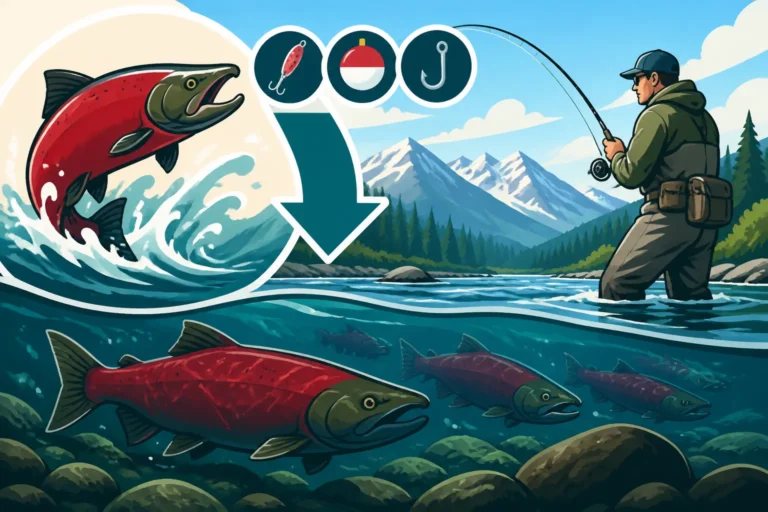
- River-Phase Chinook: Once Chinook enter freshwater, their feeding typically stops entirely as they focus on spawning. However, they can still be caught with bait, though it's less about active feeding and more about aggression, territoriality, or curiosity. Cured salmon roe (often from other species) becomes a prime choice, as does smaller baitfish or even worms, particularly for earlier runs. In rivers, the goal shifts from imitating prey to provoking a strike. This is where you really need to be aware of BC Fishing Regulations Explained, as bait restrictions are often tighter in freshwater and specific river systems.
Understanding these shifts in preference means you're not just throwing anything out there; you're offering what the fish are most likely to respond to based on where they are in their journey. This adaptation is key to unlocking consistent success.
Essential Gear for Bait Fishing Chinook
Bait fishing for Chinook demands robust gear. These fish are incredibly powerful, known for blistering runs and head-shaking fights that will test your tackle to its limits. Skimping on quality here can lead to heartbreak.
Rods, Reels, and Line Selection
The right rod and reel combination isn't just about handling the fish; it's about effectively presenting your bait and detecting subtle takes.
- Rods: For saltwater trolling, a medium-heavy to heavy action rod, usually 8.5 to 10.5 feet in length, is ideal. These rods have enough backbone to handle heavy weights, flashers, and the shock of a Chinook strike, yet still offer a forgiving tip to prevent pulling hooks. Brands like Shimano, Daiwa, or Fenwick offer excellent options that can often be found on Amazon. For river fishing, a heavier, longer casting or spinning rod (9 to 11 feet) with a moderate-fast action works well for drifting bait, providing casting distance and leverage. The length helps with line control and mending in current.
- Reels: Again, robust is the keyword. For saltwater, a level-wind conventional reel is preferred. Look for models with a strong drag system, a high line capacity (at least 300 yards of 30-50 lb test), and durable components to withstand saltwater corrosion. Penn, Daiwa, and Shimano offer workhorse reels perfect for this application. For river fishing, a durable baitcasting or large spinning reel with a smooth drag and good line retrieve will serve you well.
- Line: Your main line should be braided superline, typically 40-65 lb test. Braid offers incredible strength, minimal stretch (which means better bite detection), and a thinner diameter for less water resistance. Always use a monofilament or fluorocarbon leader, however. For saltwater, a 40-60 lb monofilament or fluorocarbon leader (6-10 feet long) is standard. In rivers, a lighter fluorocarbon leader, often 15-30 lb, is common for its invisibility and abrasion resistance. Remember that BC Boating Laws for Anglers often includes safety gear requirements, so ensure your boat is also properly equipped before heading out on the water with your new gear.
Terminal Tackle and Rigging
This is where the magic happens – connecting your line to your bait in a way that’s effective and legal.
- Hooks: Sharp, strong hooks are non-negotiable. For baitfish, a tandem hook rig is common, typically using 3/0 to 5/0 single hooks (barbless in many areas, so always check regulations). The top hook goes through the nose or upper jaw of the bait, and the trailing hook is positioned towards the tail. For roe, smaller, very sharp single or treble hooks (size 2-1/0) are used, often snelled to a leader. Many coastal regulations require barbless hooks for salmon.
- Weights: Depending on the depth and current, you'll need various weights. For saltwater trolling, cannonball weights (6-20 lbs) are used with downriggers, or diver planes (like the Delta Diver or Dipsy Diver) for shallower depths. For river fishing, slinky weights, pencil leads, or traditional lead cannonball weights (1-8 oz) are used to get your bait down and maintain contact with the bottom. Swivels are crucial to prevent line twist, especially when trolling or drifting. Barrel swivels and ball-bearing swivels are essential for both main line to leader connections and for attaching flashers/dodgers. You can often find great value multi-packs of these on Amazon.
- Flashers and Dodgers: In saltwater, these are almost universally used to attract Chinook. Flashers (like a Gibbs Delta or Pro-Troll) rotate, creating flash and vibration. Dodgers (like a Luhr-Jensen Dodger) have a side-to-side rocking motion. They're attached about 4-6 feet in front of your bait rig. The flash and vibration mimic schooling baitfish and can draw in salmon from a distance. The choice between flasher and dodger often comes down to water conditions and personal preference, with many anglers having a selection of both in their tackle box, readily available from retailers or online platforms like Amazon.
| Tackle Item | Purpose | Typical Sizes/Types | Key Consideration |
|---|---|---|---|
| Rods | Bait presentation, fighting fish | Medium-heavy to heavy, 8.5-11 ft | Backbone, tip action |
| Reels | Line capacity, drag system, retrieve | Conventional (saltwater), Baitcaster/Spinning (river) | Smooth drag, durability |
| Main Line | Strength, sensitivity | Braided 40-65 lb | Low stretch, abrasion resistance |
| Leader Line | Stealth, abrasion resistance | Fluorocarbon/Mono 15-60 lb | Visibility, breaking strength |
| Hooks (Baitfish) | Secure bait, hook fish | Single 3/0-5/0 (tandem rig) | Sharpness, barbless where required |
| Hooks (Roe/Worms) | Secure bait, hook fish | Single/Treble 2-1/0 (snelled) | Small profile, sharpness |
| Weights (Saltwater) | Depth control (trolling) | Cannonballs (6-20 lbs), Diver planes | Dive depth, water resistance |
| Weights (Freshwater) | Bottom contact (drifting) | Slinky, Pencil, Lead (1-8 oz) | Snag resistance, current penetration |
| Swivels | Prevent line twist | Barrel, Ball-bearing | Strength, smooth rotation |
| Flashers/Dodgers | Attract fish, create vibration | Gibbs Delta, Pro-Troll, Luhr-Jensen | Flash, vibration, color, action |
Top Baits for BC Chinook Salmon
Choosing the right bait is fundamental to bait fishing success. While some baits are universally loved, others shine in specific scenarios.
Herring and Anchovies: The Classics
When people think of bait fishing for salmon in the ocean, herring and anchovies are usually the first things that come to mind, and for good reason. They are the primary forage for ocean-going Chinook and are incredibly effective.
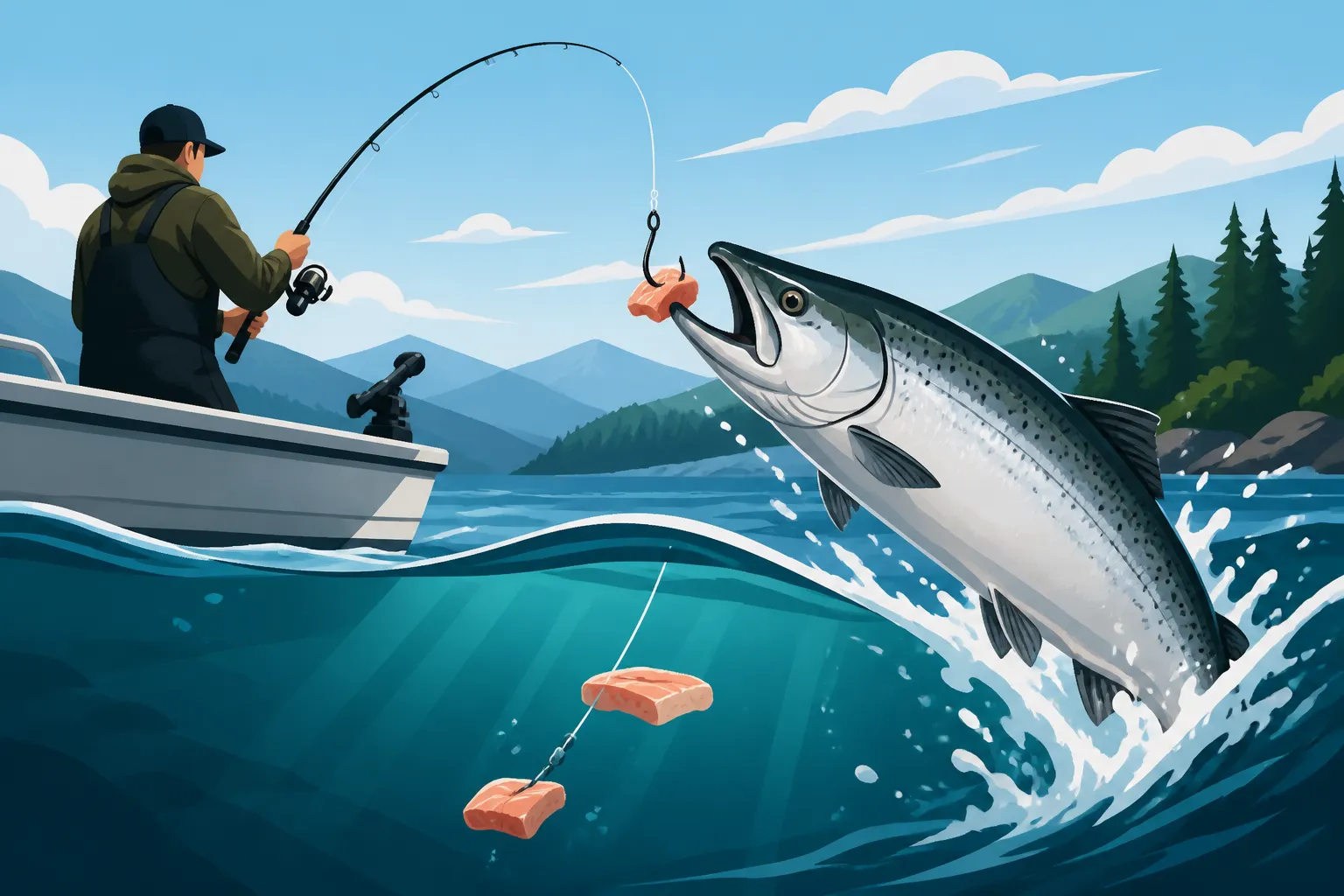
- Herring: Often considered the king of salmon baits, herring come in various sizes (e.g., "green label" for smaller, "blue label" for medium, "red label" for larger). The size you choose depends on the size of the salmon you’re targeting and the prevalent baitfish in the area. Fresh or properly brined and frozen herring are crucial. A well-presented herring, either whole or cut-plug, mimics a struggling baitfish, making it irresistible. The key is to achieve a perfect roll or spiral action when trolled. This can be achieved using a herring "hood" or by carefully cutting the bait to create the desired spin. Learning How to rig herring for chinook trolling is a critical skill that takes practice but pays off immensely.
- Pros: Highly effective, natural prey, strong scent trail.
- Cons: Can be delicate, requires careful rigging, sometimes difficult to keep on the hook with smaller fish pecking at it.
- Anchovies: Smaller and more delicate than herring, anchovies are also a fantastic bait, especially when Chinook are keying on smaller forage. They offer a very natural profile and an oily scent. Like herring, they are usually trolled whole or as cut-plugs. Because of their delicate nature, they are often rigged in an "anchovy helmet" or "hood" that protects the bait and imparts the desired rolling action. They also need to be properly brined to toughen them up.
- Pros: Excellent natural prey, very oily, great scent.
- Cons: Very delicate, easily mangled, can be hard to find consistently good quality.
The key to success with both herring and anchovies lies in the preparation and presentation. Brining them properly toughens them up and enhances their natural scent. Storing them on ice is critical to maintain their firmness. Many anglers buy pre-brined baits for convenience, which can be found at local tackle shops or sometimes even through online suppliers.
Roe and Other Natural Baits
While baitfish dominate saltwater bait fishing, river systems and specific situations call for different approaches, where roe and other options shine.
- Salmon Roe (Eggs): In freshwater, especially during salmon runs, cured salmon roe is a deadly bait for Chinook. While adult Chinook largely stop actively feeding in rivers, they can be highly aggressive and territorial, and roe presents a powerful attractant. Roe is also incredibly effective for other salmon species, like Coho, and trout species that key in on eggs dropped by spawning salmon. The curing process is vital; it toughens the eggs, enhances their color, and adds scent. Good quality roe cures are available, or you can buy pre-cured roe. Roe is typically fished in small clusters (dime to quarter-sized) in a "roe bag" made of mesh netting, or sometimes loose, drifted close to the bottom.
- Pros: Extremely effective in freshwater, strong natural attractant, good for enticing reaction strikes.
- Cons: Can be messy, requires proper curing and storage, may attract smaller fish.
- Prawns and Shrimp: While less common than herring or roe, prawns and shrimp can be very effective baits, particularly in estuaries or when Chinook are transitioning from saltwater to freshwater. Their strong scent and natural appeal can trigger strikes. They can be fished whole, or in pieces, depending on the size and desired presentation. They're often used in conjunction with a small weight for drift fishing or under a float.
- Pros: Strong natural scent, good texture.
- Cons: Can be expensive, may attract undesirable species.
- Worms: Believe it or not, earthworms (nightcrawlers) can also catch Chinook, particularly in rivers during high or murky water conditions, or when targeting younger, more opportunistic salmon. They offer a natural scent and wriggling action. They are typically fished on a single hook, perhaps with a small piece of brightly colored yarn for added attraction, and drifted with the current.
- Pros: Readily available, cost-effective, good in certain river conditions.
- Cons: Less targeted for large, actively migrating Chinook compared to roe or baitfish.
When using any of these baits, remember that freshness is always paramount. Properly storing your bait – whether it's brined herring in a cooler or cured roe in the fridge – will significantly impact its effectiveness.
Effective Bait Fishing Techniques in Different BC Waters
British Columbia offers an incredible diversity of fishing environments, and your bait fishing techniques need to adapt to them. From the vast ocean to winding rivers, the approach changes significantly.
Trolling with Bait in Saltwater
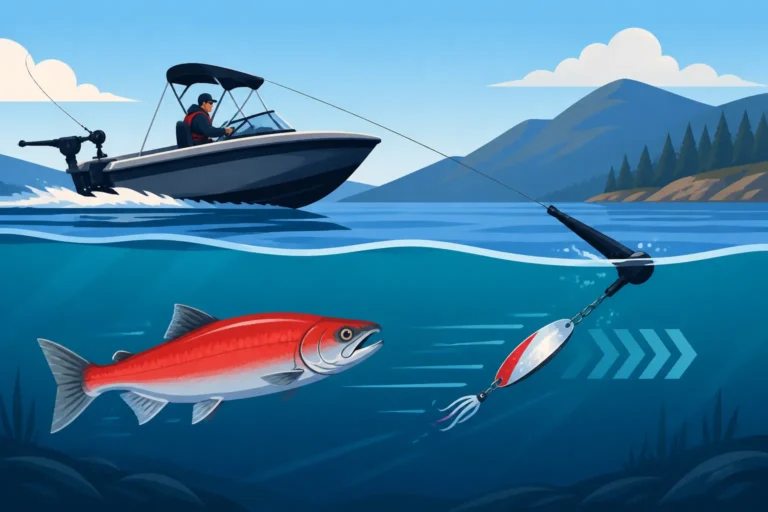
Trolling is the dominant method for bait fishing Chinook in BC's marine environments. It allows you to cover vast amounts of water and present your bait at precise depths where salmon are feeding.
- Understanding Downriggers and Divers: For deep water, downriggers are essential. These devices use heavy cannonball weights (often 8-15 lbs) to get your line and bait down to a precise depth, which is then released when a fish strikes. Modern downriggers, like those from Scotty or Cannon, often have electric motors and can be incredibly accurate. For shallower water or when you don't have downriggers, divers (like a Dipsy Diver or a banana weight) can take your line down without the need for a separate release mechanism.
- Achieving the Perfect Roll: The "roll" or "spiral" action of a trolled herring or anchovy is crucial. It mimics a wounded baitfish, which triggers a predatory response. This action is achieved by carefully cutting the bait (for a cut-plug) or using a plastic head (for whole bait) that imparts a tight, rapid spin. A good roll is tight, not a lazy wobble. Too fast or too slow a roll can be ineffective. Practice makes perfect here. Varying your trolling speed slightly can also change the roll, so experiment until you find what the fish prefer on that particular day. Generally, a speed of 2.0 to 3.5 mph is a good starting point for Chinook.
- Depth and Structure: Chinook often relate to structure such as drop-offs, underwater reefs, and current lines. They also prefer specific temperature bands. Your fish finder and GPS are your best friends for identifying these key areas and depths. Pay close attention to bait balls on your sonar – where there's bait, there are often salmon. You'll often find Chinook lurking just outside these schools, ambushing unsuspecting prey. Understanding BC Tidal Waters Salmon Conservation Stamp Cost and other specific regulations is crucial when fishing for salmon in saltwater.
Trolling can be a highly technical game, but the rewards are well worth the effort. It requires constant attention to detail, from your boat speed to your gear and bait presentation.
Drift Fishing and Bar Fishing in Rivers
Once Chinook enter freshwater, the dynamics change completely. Current becomes a major factor, and your techniques must adapt to present bait naturally to fish holding in river systems.
- Drift Fishing with Roe: This is arguably the most popular and effective method for river Chinook. It involves using a small amount of weight (often a slinky weight or pencil lead) to get your roe bag bouncing along the bottom, just slightly slower than the current. The goal is a completely natural drift, mimicking loose eggs or dislodged food items. This requires careful line management (mending) to eliminate drag and ensure your bait isn't being pulled unnaturally. Reading the water to identify seams, holding lies, and ambush points is paramount. Focus on slower water behind boulders, in deep pools, or along current breaks. Knowing Salmon Fishing Techniques for BC Rivers can provide a broader context, but drift fishing with bait is a specific and powerful tactic.
- Bar Fishing (Anchor Fishing): For anglers targeting Chinook on larger rivers like the Fraser, bar fishing is a staple. This involves anchoring your boat (or fishing from shore) in a strategic location, often a gravel bar or a deep run, and casting heavy weights with bait rigs (often roe or a large piece of cured baitfish) upstream. The weight holds the bait on the bottom, allowing the scent to wash downstream into holding fish. Rods are placed in sturdy rod holders, and anglers wait for the tell-tale "thump" of a Chinook picking up the bait. This method is often done in groups, especially on popular Fraser River spots. It's a more relaxed approach than active drifting but requires patience and good knowledge of productive spots.
- Float Fishing: While less common for large Chinook with bait, float fishing (or 'chucking and ducking') can be effective in certain river scenarios, especially for smaller Chinook or when targeting them in slower, clearer water. A large float (like a Raven or Aero-Float) is used to suspend your bait (roe or a worm) at a specific depth, allowing it to drift naturally through a seam or run. The float indicates a bite, making it visually engaging. This method requires a longer rod for line control and casting distance.
Each river technique demands a nuanced understanding of current, water depth, and fish behavior. It's about presenting your bait as naturally as possible, letting the river do the work, and being ready for a powerful strike.
Mastering Bait Presentation and Scent
Simply putting bait on a hook isn't enough. The way you prepare, rig, and scent your bait can exponentially increase its effectiveness and your chances of a successful outing.
Preparing Your Bait for Maximum Appeal
The difference between a mediocre day and a stellar one often comes down to bait preparation. It's an art as much as a science.
- Brining for Firmness and Scent: This is a crucial step for baitfish like herring and anchovies. Brining toughens the bait, making it more durable on the hook and able to withstand trolling speeds without falling apart. A good brine typically consists of rock salt, water, and sometimes additives like powdered milk (for brightness), scent enhancers, or even food coloring. You soak the bait for several hours or overnight. This process also helps lock in or even enhance the natural oils and scent that salmon find so attractive. Many anglers have their secret brine recipes, often passed down through generations.
- The Art of the Cut-Plug: For herring, specifically, the cut-plug technique is a game-changer. This involves making a precise diagonal cut through the bait, typically from the dorsal fin to the belly, removing the head and part of the body. The angle and location of this cut determine the bait's roll. The goal is a tight, consistent spiral that mimics an injured baitfish. It takes practice to perfect, but a well-cut plug can be absolutely deadly. Some anglers prefer to use a bait head or "hood" which secures a whole herring or anchovy and imparts the roll, offering a simpler rigging method.
- Roe Bag Consistency: For river fishing with roe, consistency is key. You want to use just enough roe to create a tempting target, typically a dime to quarter-sized cluster. It needs to be firm enough to stay in the mesh bag and on the hook, but not so hard that it won't leach scent. The mesh bags themselves should be tied tightly but without crushing the eggs, allowing the scent to slowly disperse in the current. Some anglers add small pieces of brightly colored yarn to their roe bags for visual attraction, especially in stained water.
Attention to these details can make a profound difference. A perfectly prepared and presented bait is a hard offering for a Chinook to resist, even if it's not actively "feeding."
Adding Scent Attractants
While natural bait has its own powerful scent, enhancing it with attractants can give you an undeniable edge, especially in off-color water or when fish are lethargic.
- Commercial Scent Gels and Sprays: The market is flooded with commercial scent products designed for salmon. These typically come in gel or spray form and replicate the smell of baitfish, crustaceans, or even specific amino acids known to attract fish. Brands like Pro-Cure, Pautzke, and Atlas Mike's are popular choices, and you can find a wide variety on Amazon. You apply these directly to your bait, ensuring good coverage. The scent trail they leave in the water can draw salmon in from a greater distance and encourage them to hold onto the bait longer, giving you more time to set the hook.
- Applying Scent Effectively: The key to using scent attractants isn't just applying them, but applying them strategically. Reapply frequently, especially after catching a fish or after a long period of fishing. In saltwater, apply to both the bait and your flasher/dodger to create an even larger scent footprint. In rivers, ensure the scent is impregnated into your roe bag or smeared on your baitfish to slowly leach into the current. Don't overdo it to the point where it becomes unnatural; a subtle, consistent trail is often more effective.
- Natural Oils and Juices: Beyond commercial products, some anglers use natural oils or juices from other baits. For instance, storing your herring in a container with a bit of tuna oil or even the natural juices from other baitfish can infuse them with extra attraction. Prawn juice or sardine oil can also be incredibly potent. These natural enhancements often provide a more complex and authentic scent profile than artificial additives.
Remember that scent is about attraction, but presentation is about conviction. The best scent in the world won't make a poorly presented bait effective. But combine a natural, well-prepared bait with an enticing scent, and you've got a winning combination for those elusive BC Chinook.
Adhering to Regulations and Ethical Practices
Fishing in British Columbia means fishing in a truly world-class environment, but with that privilege comes the responsibility to understand and abide by strict regulations. Bait fishing, in particular, often has specific rules you need to be aware of.
Understanding Bait Restrictions in BC
Navigating BC's fishing regulations can feel like a full-time job sometimes, but it's crucial for conservation and avoiding hefty fines.
- Freshwater vs. Tidal Waters: This is the most significant distinction. BC Freshwater vs Tidal Waters License, Explained covers the basics, but generally, bait restrictions are far more common and stringent in freshwater. Many rivers, especially those with sensitive steelhead or wild trout populations, have "bait ban" periods or are entirely "no bait" zones. This is to protect vulnerable fish, as bait can lead to deeper hooking and higher mortality rates, even with careful handling. Always check the BC Freshwater Fishing Regulations Synopsis and specific fishery notices for the river you plan to fish. For instance, the Thompson River and many Skeena River tributaries have very strict bait rules, especially for steelhead.
- Species-Specific Rules: Even in waters where bait is allowed, there might be rules around what kind of bait. For example, using natural salmon eggs might be allowed for Chinook, but if steelhead are present, certain roe presentations might be prohibited. Similarly, live baitfish is generally not permitted in freshwater to prevent the spread of invasive species. In saltwater, while baitfish are widely used, there can be restrictions on what you can harvest for bait.
- Barbless Hooks: For all species of salmon in both freshwater and tidal waters, barbless hooks are mandatory in BC. This is a critical regulation designed to improve the survival rate of released fish. Make sure all your hooks, whether singles for baitfish or trebles for roe bags, are pinched down or manufactured barbless. Fishing with barbed hooks for salmon will result in a ticket.
The onus is entirely on the angler to know and follow these rules. Ignorance is not an excuse. Before every trip, check the current Freshwater Fishing Regulations Synopsis (available online) and the most recent DFO (Department of Fisheries and Oceans) fishery notices for tidal waters. These notices are updated frequently and can announce sudden closures or rule changes, such as BC Fraser River Sockeye Closure Windows or BC Chinook Salmon Non-Retention Areas.
Responsible Catch and Release with Bait
While bait fishing can be incredibly effective, it also carries a higher risk of deep hooking, which can reduce a fish's survival chances, especially if you intend to release it. Ethical practices are paramount.
- Timely Hook Sets: When bait fishing, especially in freshwater, it's crucial to set the hook quickly at the first sign of a bite. Unlike lures where fish often mouth the offering, bait is meant to be eaten. A quick hook set can prevent the fish from swallowing the bait too deeply, leading to a lip or jaw hook-up, which is ideal for release. Waiting too long significantly increases the chance of a gut hook.
- Proper Fish Handling: If you plan to release a Chinook, minimize its time out of the water. Have a release tool (like long-nosed pliers or a de-hooker) ready. Handle the fish gently with wet hands, supporting its belly. Avoid touching its gills or eyes. If the fish is deeply hooked, and you can't easily remove the hook without causing significant damage, it's often best to cut the line as close to the hook as possible. The hook will usually corrode and fall out, or the fish's body will encapsulate it.
- Conservation Mindset: Bait fishing often leads to more incidental catches of non-target species or undersized fish. Treat every fish with respect, regardless of whether you intend to keep it or not. Understand and respect the BC Bag and Possession Limits by Species for Chinook and other salmon. The goal is to ensure healthy fish populations for future generations of anglers.
By combining effective bait fishing techniques with a deep understanding of regulations and a commitment to ethical angling, you can enjoy the thrill of targeting BC's mighty Chinook salmon for years to come.
Disclaimer
Please remember that fishing regulations in British Columbia are dynamic and can change frequently due to conservation concerns, stock assessments, and other factors. Always consult the official BC Freshwater Fishing Regulations Synopsis and the Fisheries and Oceans Canada (DFO) Pacific Region Fishery Notices before heading out on any fishing trip. These resources provide the most current and authoritative information on licenses, bag limits, seasons, and bait restrictions for all waters in British Columbia. Your adherence to these rules is vital for the conservation of our precious fisheries.