How to Fish a River for Chinook Salmon
Fishing for Chinook salmon in British Columbia's rivers can be one of the most exhilarating and, at times, frustrating experiences an angler can have. These powerful, intelligent fish demand a deep understanding of their habits, the river environment, and a refined set of techniques. If you've ever felt overwhelmed by the sheer size of the river or puzzled by why the fish just aren't biting, this comprehensive guide will unravel the mysteries and equip you with the knowledge to consistently hook into these incredible giants.
Understanding Chinook Salmon in British Columbia Rivers
Chinook salmon, often affectionately called "Kings" or "Springs" in British Columbia, are the largest and arguably most sought-after of the Pacific salmon species. Their journey from the ocean to their natal rivers is a testament to their strength and determination, making them a formidable and rewarding target for any angler.
Chinook Life Cycle and River Entry
The life cycle of a Chinook salmon is nothing short of epic, beginning in freshwater, moving to the vast Pacific Ocean, and then returning, often after several years, to the very river system where they hatched to spawn. When these magnificent fish enter BC's rivers, they undergo a dramatic transformation. Their silver ocean scales begin to darken, and their focus shifts entirely from feeding to reproduction. This transition influences their behavior significantly, making them less interested in actively feeding and more reactive to instinctual triggers.
Most of BC's major Chinook runs occur from late summer through the fall, typically from July well into October, depending on the river system. However, some rivers boast earlier "spring" runs, with fish entering as early as April or May. Understanding these seasonal variances is crucial for planning your trips. For a deeper dive into their incredible journey, check out our guide on Chinook Salmon Migration Patterns in BC. As they move upstream, they'll hold in specific areas, conserving energy, until their biological clock signals it's time to push further.
Identifying Chinook and Their Behavior
Identifying a Chinook salmon in the river is usually straightforward due to their impressive size. They possess a robust, muscular body with a square-shaped tail that is typically spotted on both lobes, and their gumline is entirely black. While their ocean-bright silver fades to various shades of bronze, olive, or even deep red upon river entry, their sheer girth and powerful head are unmistakable.
When it comes to behavior, Chinook are often found holding in deeper pools, behind large structure, or along current seams where they can rest out of the main flow but still react to anything drifting by. They can be incredibly aggressive when provoked, striking a lure or bait out of territoriality or an ingrained feeding response, even if they aren't actively foraging. However, they can also be notoriously finicky, giving only subtle nudges or ignoring presentations entirely. Understanding these nuances—the difference between a strong tug and a delicate "tick"—is key to successful hooksets. To get a sense of the monsters you might encounter, our article on How big chinook salmon get in BC provides some thrilling details.
Key Environmental Factors Affecting Chinook
Chinook salmon are incredibly sensitive to their environment, and several factors can dictate their presence and willingness to bite. Water temperature is perhaps one of the most critical elements; salmon are cold-blooded creatures, and their metabolism and activity levels are directly linked to the water's warmth. You can learn more about this in our piece on What water temperature salmon prefer. Too warm, and they can become lethargic and stressed; too cold, and they might shut down.
Water levels and clarity also play a massive role. High, murky water from heavy rains or snowmelt can push fish into slower, shallower edges, making them harder to find but sometimes more aggressive as they feel more secure. Conversely, low, clear water can make them incredibly spooky and challenging to approach, requiring more subtle presentations and longer leaders. Lunar phases and even barometric pressure changes can also influence their mood and movement, adding layers of complexity to the pursuit of these magnificent fish. Always consult current conditions before heading out, as these factors change rapidly in BC's dynamic river systems.
Essential Gear for River Chinook Success
Tackling a powerful Chinook salmon in a strong river current demands specialized gear. You wouldn't bring a butter knife to a sword fight, and the same principle applies here. Having the right tools won't just increase your chances of landing a fish; it will make the entire experience safer and more enjoyable.
Rods, Reels, and Line Selection
For river Chinook, you'll want heavy-duty equipment that can withstand immense pressure. For casting and drift fishing from shore or a boat, a robust salmon rod is essential. Look for rods typically 8.5 to 10.5 feet long with a medium-heavy to heavy power rating, capable of handling 15-40lb test line and casting weights from 1-6 ounces. This length provides the leverage needed to fight big fish and control your line in varying currents. For specific applications like bar fishing, shorter, stiffer rods might be preferred.
Matching your rod with a reliable reel is paramount. A high-quality baitcasting reel with a smooth, powerful drag system and ample line capacity is often favored by experienced anglers for its control and strength. Large spinning reels can also work well, especially for casting lighter lures or for anglers who prefer that style. Whichever you choose, ensure it has a retrieve ratio suitable for fighting strong currents and can hold at least 200-300 yards of your chosen line. Many excellent options are available on Amazon from reputable brands like Shimano, Daiwa, or Penn.
When it comes to line, braid is the main line of choice for most river Chinook anglers. Its zero-stretch properties offer incredible sensitivity, allowing you to feel even the slightest tap from a cautious Chinook, and its strength-to-diameter ratio is unbeatable. Opt for 50-80lb braided line. You'll then attach a fluorocarbon leader of 30-50lb test, usually 3-6 feet long, using a strong knot like a double uni-knot or an FG knot. Fluorocarbon is nearly invisible underwater and highly abrasion-resistant, which is crucial when fishing around snags and rocky bottoms.
Terminal Tackle and Baits
Your terminal tackle is where the magic happens, connecting you directly to the fish. Heavy weights are necessary to get your bait down to the salmon in fast currents. Pencil lead, slinkies (filled with lead shot, ideal for snaggy bottoms), or conventional pyramid/sash weights ranging from 1/2 ounce to several ounces will be in your kit. Barrel swivels (size 1/0 to 3/0) are used to prevent line twist, especially when using spinners or back-trolling plugs.
Hooks must be incredibly strong and sharp. Octopus-style hooks, ranging from 2/0 to 5/0, are popular due to their wide gap and ability to hold bait securely. Many BC rivers now mandate barbless hooks for salmon, so ensure yours are either pre-made barbless or have the barbs crimped down. You'll also need strong, sharp pliers for de-barbing and hook removal.
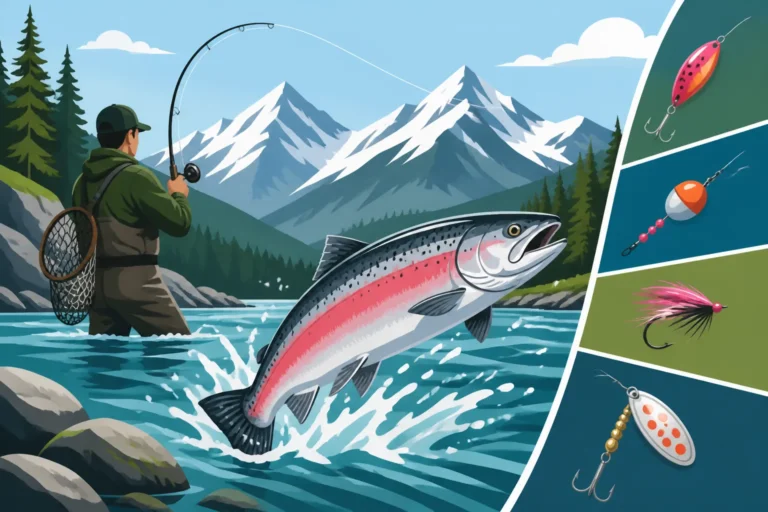
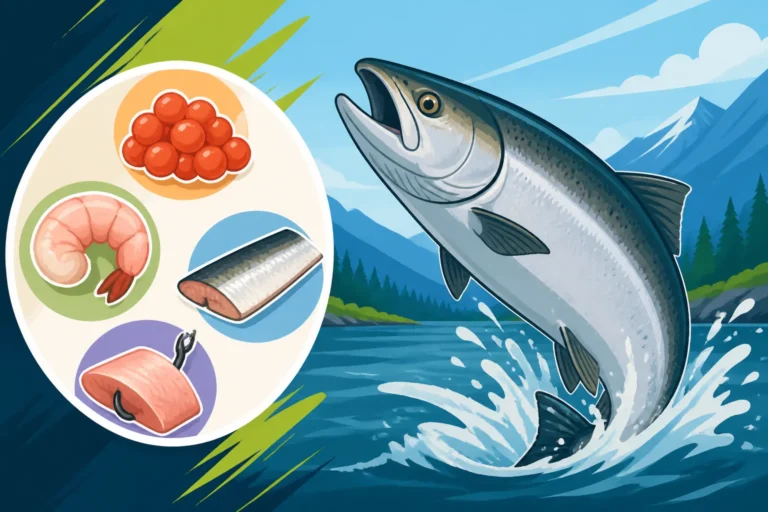
When it comes to bait, cured roe (salmon eggs) is often considered king for Chinook. Its natural scent and texture are irresistible. Other effective baits include cured shrimp, sardine fillets, or even small fish like anchovies or herring, especially when fishing larger river systems like the Fraser River Fishing Guide. For artificial presentations, large spoons (e.g., Koho, Gibbs Delta Croc, Luhr Jensen Kwikfish), brightly colored spinners (e.g., Blue Fox Vibrax, Aglia Long), and diving plugs or wobblers are all proven producers. Our guide on Bait Fishing for Chinook Salmon in BC offers more in-depth strategies.
Essential Accessories and Safety Gear
Beyond your primary rod and reel setup, a few essential accessories will make your Chinook fishing trip more efficient and comfortable. A good pair of breathable chest waders and sturdy wading boots with felt or studded soles are critical for accessing prime spots and staying dry in the often-chilly BC rivers. A large, rubberized landing net is crucial for safely landing and releasing big Chinook; rubberized nets are gentler on fish and prevent hooks from getting tangled. You'll also want a quality pair of needle-nose pliers or hemostats for hook removal, a sharp knife, and a small, organized tackle bag or vest to keep your essentials handy.
Safety should always be a top priority. Even for shore anglers, especially when wading in strong currents, a personal flotation device (PFD) is highly recommended. A first aid kit, headlamp (for early mornings or late evenings), and a whistle are also good to have. If you're venturing into more remote areas, bear spray and a plan for emergencies are non-negotiable. Always inform someone of your fishing plans and expected return time. Remember to familiarize yourself with BC Boating Laws for Anglers if you're planning to use a boat.
Top Techniques for River Chinook Fishing
Chinook salmon can be caught using a variety of methods, each suited to different river conditions and angler preferences. Mastering a few key techniques will greatly expand your success on the water.
Drift Fishing for Chinook
Drift fishing is one of the most effective and widely used techniques for river Chinook. The basic premise is to present your bait or lure naturally downstream, allowing it to tumble along the bottom or drift just above it, mimicking natural food items. This technique works exceptionally well in deeper runs, tail-outs of pools, and current seams where Chinook tend to hold.
There are two primary ways to drift fish: with a float (float fishing) or by "bottom bouncing." For float fishing, a large, buoyant float is used to suspend your bait or lure at a specific depth, usually just above the riverbed. This is particularly effective in waters with consistent depth and moderate current. Bottom bouncing involves using a lead weight (often a slinky or pencil lead) that periodically taps or "bounces" along the river bottom, keeping your bait in the strike zone. The key to both methods is using just enough weight to get down without constantly snagging, and mending your line to achieve a drag-free drift. If you're interested in refining your drifting skills, our article on Drift Fishing for Steelhead in BC Rivers offers many transferable tips for salmon.
Bar Fishing and Back-Trolling
Bar fishing is a classic technique, especially prevalent on larger rivers like the Fraser, where anglers target Chinook from a stationary position, often from a gravel bar or an anchored boat. This method involves casting heavy weights (often pyramid or pancake sinkers) with bait rigs out into the main current, allowing the scent of the bait to draw fish in. Multiple rods can be set up in rod holders, and anglers often use bells or visual strike indicators to detect bites. The waiting game can be long, but the reward of a screaming reel signal a Chinook strike is unforgettable.
Back-trolling is a boat-based technique where the boat is positioned upstream of a known holding area and slowly allowed to drift downstream, using a kicker motor or the main engine in reverse to control the speed. This allows lures (often diving plugs or wobblers) to "work" in the current, staying in the strike zone for extended periods. The boat's speed is precisely matched to the current, ensuring the lure's action is maximized. This is a highly effective way to cover prime water and is often done in deeper, wider sections of rivers where Chinook funnel through.
Casting Spinners and Spoons
For a more active approach, casting and retrieving spinners and spoons can be incredibly productive, especially when fish are aggressive or moving through shallower, faster runs. Spinners, with their rotating blade, create flash and vibration that can trigger a Chinook's predatory instinct. Spoons, with their wobbling action, mimic injured baitfish and can be particularly effective in both fast and moderate currents.
When casting spinners and spoons, focus on areas where current seams meet slower water, around submerged structure, or along current edges. Cast slightly upstream and across the current, allowing the lure to swing down and across the suspected holding water. Vary your retrieve speed—sometimes a slow, methodical retrieve is best, other times a faster, erratic retrieve can trigger a strike. It's often beneficial to let the lure "hang" in the current for a moment before reeling in, as this can often provoke a following fish into striking. Experiment with different colors and sizes; bright colors might work well in murky water, while more natural tones could be better in clear conditions. Don't forget to explore all your options discussed in Salmon Fishing Techniques for BC Rivers.
Reading the River: Locating Chinook Hotspots
Understanding where Chinook salmon hold and move within a river system is arguably more important than any specific lure or technique. The river itself tells a story, and learning to read its currents, depths, and structures will unlock prime fishing locations.
Understanding Current and Structure
Chinook salmon, especially after entering freshwater, are incredibly efficient energy conservers. They will seek out areas where they can rest out of the main force of the current but still have easy access to travel lanes. This means understanding current breaks is paramount. Look for the "soft water" created by large rocks, log jams, submerged boulders, or sharp bends in the river. These areas provide a respite from the exertion of fighting the flow.
Structure, both natural and man-made, is a magnet for holding salmon. This includes massive log jams that create deep scour holes, rocky reefs, submerged root wads, and even bridge pilings. These features not only offer current breaks but also provide cover and a sense of security for the fish. A key skill is to differentiate between "holding water" – areas where fish actively rest and gather – and "travel lanes" – the paths they use to move upstream. Often, you'll find holding water immediately adjacent to travel lanes, creating a perfect ambush point for your bait or lure. Exploring regions covered in the Fraser River Fishing Guide will quickly highlight these types of structures.
Interpreting Water Depth and Clarity
Water depth plays a crucial role in where Chinook decide to hold. While they might occasionally be found in shallower water, especially during dawn or dusk, they generally prefer deeper sections of the river, particularly large pools or depressions in the riverbed. Deeper water offers greater security from predators and provides a more stable environment in terms of temperature and current. Using a depth finder from a boat, or carefully observing changes in current speed from shore, can help you identify these deeper pockets.
Water clarity also dictates where Chinook will hold and how they react to your presentation. In high, murky water, Chinook often push closer to the banks, seeking clearer, slower water. They're less spooky in these conditions, and brighter, louder lures with strong vibrations can be very effective as they rely more on lateral line senses. Conversely, in low, clear water, Chinook become incredibly wary. They'll often hold in the deepest, darkest parts of a pool or under heavy overhead cover. In these conditions, subtle, natural presentations with longer, lighter leaders are essential to avoid spooking them. Knowing when to switch from a flashy spoon to a natural cured roe can make all the difference.
Prime Locations in BC Rivers
British Columbia is blessed with an abundance of incredible salmon rivers. The Fraser River, a true behemoth, is famous for its Chinook runs, with fish often holding in vast, deep pools and along its extensive gravel bars. Areas around Mission and Chilliwack on the lower Fraser are particularly popular. The Vedder River (also known as the Chilliwack River) is another iconic system, especially renowned for its fall Chinook. Anglers often target its many pools, runs, and riffles, focusing on areas with structure and defined current breaks. For detailed insights into specific locations, you might find our guides on Fraser River Fishing Guide and Vedder River Salmon Fishing incredibly useful.
Other notable rivers include the Squamish River and the Thompson River, both offering excellent Chinook opportunities, though specific regulations and openings can vary wildly. Always check current fishery notices before heading out. Be particularly aware of BC Chinook Salmon Non-Retention Areas and respect any closures or special regulations in place. Each river has its unique character, but the principles of understanding current, structure, depth, and clarity remain universal.
Timing Your Chinook River Adventure
Timing is everything when it comes to Chinook salmon fishing. Being on the right water at the right time can significantly increase your chances of success, turning a slow day into a memorable one.
Seasonal Runs and Peak Times
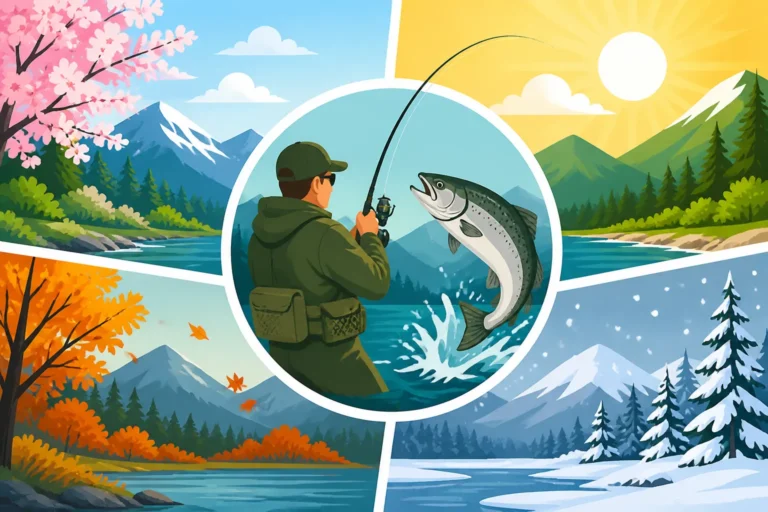
The Chinook salmon runs in British Columbia rivers typically peak from late summer through fall. Generally, you'll find the first significant pushes of Chinook entering rivers around late July or early August, with the main bulk of the migration often occurring from September into October. However, this varies considerably by river system and by year. Some northern BC rivers might see earlier runs, while others, particularly those with a long journey upstream, might have fish present well into November.
It's also important to distinguish between "early" or "spring" Chinook runs and the later "fall" runs. Some river systems have small, but highly prized, runs of Chinook that enter the river much earlier in the year, sometimes as early as April or May. These fish are often bright, aggressive, and incredibly powerful. For a comprehensive overview of when and where to find these fish, our guide on Best Months to Catch Chinook in BC is an invaluable resource. Always keep a close eye on the Department of Fisheries and Oceans (DFO) fishery notices, as salmon seasons are highly regulated and can change quickly due to conservation concerns. Understanding BC Fishing Regulations Explained is a fundamental part of responsible angling.
Tidal Influences and River Conditions
For rivers that are tidally influenced, such as the lower Fraser River or the Squamish River, the tide plays a crucial role in when Chinook move into and through the system. An incoming tide, or the "push" of the tide, often brings fresh fish into the river from the ocean. This creates a window of opportunity where fish are actively moving and can be more aggressive. Conversely, during the outgoing tide, fish tend to hold in deeper pools or move more slowly, conserving energy. Our detailed article on Best time of day to catch salmon on an incoming tide can help you strategize your trips around these critical tidal swings.
Beyond tides, river conditions like water levels and clarity are paramount. A sudden rise in water levels due to heavy rain can trigger a new push of fish upstream and often makes fish less wary. However, if the water becomes too high and murky, fishing can be challenging as fish spread out or hug the banks. Conversely, prolonged periods of low, clear water can make Chinook incredibly spooky and difficult to catch, requiring stealth and delicate presentations. Learning to read these conditions and adjust your approach accordingly is a hallmark of an experienced Chinook angler.
Daily Windows and Strategic Approach
While salmon can be caught at any time of day, certain windows tend to be more productive. Dawn and dusk are often prime times, as light conditions are low, and fish generally feel more secure. Many anglers find the early morning bite particularly strong as fish move after a night of resting. However, active fish can certainly be caught throughout the day, especially if weather conditions (like overcast skies or light rain) provide some cover.
A strategic approach involves not only knowing when to fish but also how to fish those windows. For example, during low light, you might opt for larger, darker, or more noisy lures to attract attention. In the bright midday sun, you might scale down your presentation, use natural baits, and target deeper, shaded holding water. Patience is perhaps the most crucial element; Chinook fishing can be feast or famine. There will be days when the fish are simply not active, and you might work hard for a single bite. But those single bites, from a powerful Chinook, are what keep us coming back for more.
Responsible Angling and Conservation
As anglers, we have a profound responsibility to protect the incredible salmon resources of British Columbia. Chinook salmon face numerous challenges, and our actions on the water directly impact their future. Ethical angling is not just about following the rules; it's about fostering a sustainable fishery for generations to come.
Navigating Regulations and Notices
The regulatory landscape for Chinook salmon in British Columbia is complex and subject to frequent changes, driven by conservation needs and run assessments. It is absolutely imperative that every angler checks the current Department of Fisheries and Oceans (DFO) regulations before every fishing trip. These regulations cover everything from open seasons, daily bag limits, and possession limits to specific gear restrictions (e.g., barbless hooks only, single hooks only) and even non-retention areas.
DFO Fishery Notices are the most up-to-date source for these changes and can be found online. For instance, sections of the Fraser River might be closed to Chinook retention for conservation reasons, or specific gear restrictions might be in place to minimize bycatch. Ignorance of the rules is never an excuse, and penalties for violations can be severe, including hefty fines and gear confiscation. Our comprehensive guide to BC Fishing Regulations Explained will help you get started, but always cross-reference with the latest DFO notices. Remember, a valid BC fishing license is always required, which you can often purchase online or from local tackle shops.
Ethical Catch and Release Practices
Many Chinook salmon caught in BC rivers, especially wild stocks or those from specific conservation-sensitive areas, are designated for catch-and-release only. Even when retention is permitted, practicing responsible catch and release (C&R) is vital for the survival of released fish. Here are key principles:
- Use Barbless Hooks: This is often a regulation for salmon but is also best practice for C&R as it minimizes tissue damage and allows for quicker hook removal.
- Minimize Fight Time: Use appropriate gear that can handle the fish quickly, reducing stress and exhaustion.
- Keep Fish in Water: Avoid removing the fish from the water whenever possible. The air can damage gills and remove their protective slime layer. If you must lift for a quick photo, support their weight horizontally.
- Handle with Care: Wet your hands before touching the fish to protect its slime coat. Avoid squeezing the fish or touching its gills.
- Quick Release: Remove the hook as gently and quickly as possible. If the hook is deeply embedded, cut the line as close to the hook as you can rather than trying to rip it out.
- Revive Properly: If the fish seems lethargic, hold it upright in a calm current, facing upstream, until it can swim away under its own power.
Practicing these steps ensures that the magnificent Chinook you release has the best possible chance of survival and fulfilling its spawning journey.
Respecting the Environment and Fellow Anglers
Responsible angling extends beyond fish handling. It also means being a steward of the environment and a respectful member of the fishing community. Always practice "pack it in, pack it out" – leave no trace of your presence behind. This includes all trash, broken line, and discarded bait. Litter, especially discarded fishing line, is incredibly harmful to wildlife.
On the river, courtesy goes a long way. Public access points can get crowded, especially during peak runs. Give fellow anglers ample space, avoid cutting lines, and be mindful of your casting and wading movements. If you're fishing a popular run, don't "high-hole" or crowd another angler. A simple "How's it going?" or "Mind if I fish below you?" can go a long way in fostering a positive atmosphere. Many rivers have designated walk-and-wade etiquette; learn it and adhere to it. The goal is for everyone to enjoy the natural beauty and incredible fishing opportunities that British Columbia offers.
Disclaimer
Please remember that fishing regulations in British Columbia, particularly for salmon, can change frequently based on conservation needs and DFO assessments. Always consult the latest DFO fishery notices and provincial regulations before heading out. This guide is for informational purposes only and does not supersede official government regulations.