How to Catch Kokanee in BC
There's a special kind of frustration that sets in when you're out on a stunning British Columbia lake, the sun is shining, and you know there are kokanee down there, but they just aren't biting. These landlocked sockeye salmon can be incredibly elusive, making even seasoned anglers feel like they're missing a crucial piece of the puzzle. If you've ever felt that pang of exasperation, wondering how to unlock the secrets to consistent kokanee success, you're in the right place. This comprehensive guide is designed to cut through the confusion and equip you with the knowledge, techniques, and confidence to start reeling in those shimmering beauties.
Understanding Kokanee: BC's Landlocked Salmon
Kokanee, often called "silver bullets" or "freshwater sockeye," are a unique and cherished sport fish in British Columbia. Unlike their anadromous sockeye relatives that migrate to the ocean, kokanee live their entire lives in freshwater lakes. This landlocked existence makes them a fascinating target, but also means their behavior and habitat preferences can be quite specific. Getting to know the life cycle, where they hang out, and how to tell them apart from other species is your first step to becoming a successful kokanee angler.
The Life Cycle and Habits of Kokanee
Kokanee typically have a three to four-year life cycle, culminating in a spectacular, often fiery red, spawning run. They begin their lives as eggs buried in gravel stream beds or along lake shorelines, hatching in the early spring. For their first year or two, they feed primarily on zooplankton, tiny crustaceans that drift in the water column. As they grow, their diet can diversify a bit, but plankton remains a staple. This dependence on microscopic food sources influences where they live in the water column and why certain lures and techniques are so effective.
Their schooling behavior is another critical habit to understand. Kokanee are almost always found in schools, sometimes vast ones. This means if you find one, you've likely found many. These schools will move throughout the lake, often following the concentrations of their preferred food source and seeking specific water temperatures. During the day, especially in warmer months, they tend to descend to cooler, deeper water, often holding along the thermocline – the layer where warm surface water meets colder deep water. This migration up and down the water column, and across the lake, is what makes locating them such a challenge and why precise depth control is so crucial.
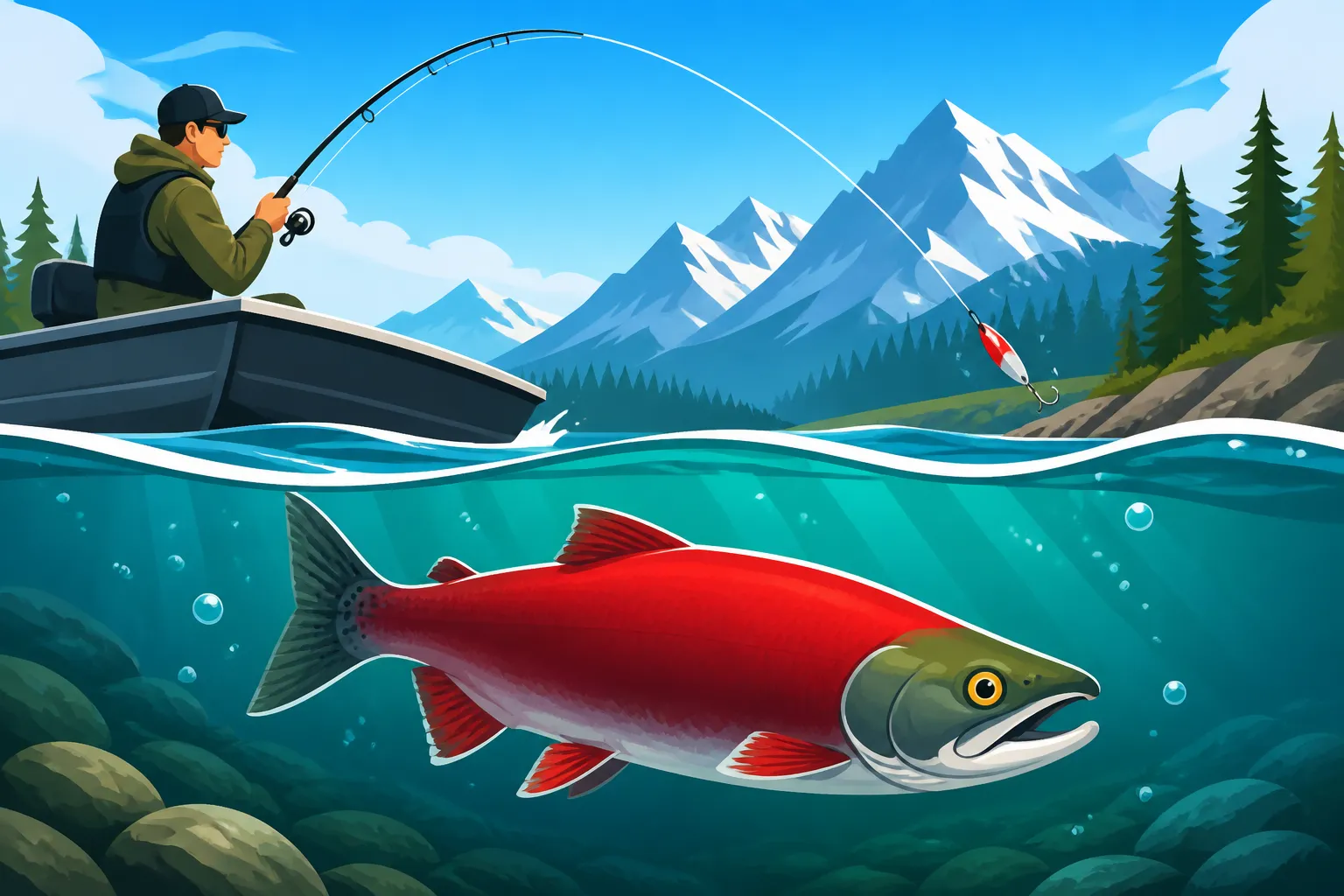
As they approach their final year, their bodies undergo a dramatic transformation. Their silver scales give way to a vibrant red, their jaws become hooked, and the males develop a pronounced hump on their back. This is their spawning phase, where they migrate into tributary streams or shallow lake shoals to deposit their eggs. At this point, they stop feeding and their flesh deteriorates. While they can still be caught, catch and release is generally practiced, and their meat quality is poor. Knowing the Kokanee Spawning Season in BC is vital, not just for conservation, but for understanding when to shift your focus to pre-spawn aggression or other species.
Where to Find Kokanee in BC Lakes
Locating kokanee often feels like searching for a needle in a haystack, especially on vast lakes. However, they aren't just anywhere; they have preferences. Their primary drivers are food availability and water temperature. In spring, when lake temperatures are cooler and more uniform, kokanee can be found closer to the surface and in shallower bays, sometimes even near inlets where new plankton blooms are occurring. As summer progresses and surface waters warm, they'll retreat to deeper, cooler sections of the lake.
The thermocline, as mentioned earlier, is your golden ticket in summer. This layer is often rich in oxygen and packed with the zooplankton they feed on. Finding the thermocline, usually with a good fish finder, is a huge step toward consistently finding kokanee. Beyond depth, look for underwater structures like submerged islands, humps, or drop-offs, especially those adjacent to deep water. These areas can funnel baitfish and concentrate plankton, creating kokanee hotspots. Identifying Where kokanee live in BC lakes and understanding the specific features of certain bodies of water, like Okanagan Lake or Kootenay Lake, will greatly increase your odds. Remember, they are pelagic, meaning they live in the open water column, not necessarily tight to structure like some other fish, but structure nearby can still influence their movements.
Don't forget the influence of currents, even in lakes. Inflows from rivers or underground springs can create subtle currents that concentrate food or provide preferred temperatures, drawing kokanee to those areas. Learning to "read" the water and understanding bathymetry maps (depth charts) can give you a significant advantage. If you're on a popular kokanee lake, pay attention to where other boats are fishing, though always be mindful of etiquette and giving ample space.
Identifying Kokanee vs. Other Trout Species
At first glance, especially when they're young and silver, kokanee can be confused with rainbow trout or even small cutthroat trout. However, there are some key distinguishing features that will help you correctly identify your catch and ensure you're adhering to BC Bag and Possession Limits by Species, as limits can differ.
The most reliable indicators are often found in their mouth and tail. Kokanee typically have a more streamlined body shape compared to the often chunkier build of a rainbow trout of similar size. Their mouths are generally smaller, and they rarely have the distinct black spots that are characteristic of rainbow trout (though some kokanee can have sparse, small spots). A critical difference is the absence of teeth on the tongue, which rainbow trout possess. You can gently check this with a gloved finger.
Their tail fin, or caudal fin, is another giveaway. Kokanee usually have a deeply forked tail, much more so than the slightly notched or square tails of most trout species. This forked tail is built for speed and cruising through open water, perfectly adapted to their pelagic lifestyle. As they near spawning, the males undergo a dramatic color change, turning brilliant red with a greenish head and a kype (hooked jaw), making them unmistakable. Prior to spawning, however, focusing on body shape, mouth structure, and tail fork will be your best bet for identification. Knowing What kokanee are and how they differ from sockeye is important, as they are indeed the same species but with different life histories.
Essential Gear for Kokanee Success
You wouldn't use a sledgehammer to drive a finishing nail, and the same principle applies to kokanee fishing. These fish are known for their delicate bite and often subtle fight, requiring specialized gear to maximize your chances of detection and successful landing. Using the right rod, reel, line, and terminal tackle is paramount.
Rods, Reels, and Line for Light Tackle Kokanee
When it comes to kokanee, think "light." Your rod should be a spinning or casting rod in the ultra-light to light power range, typically 6 to 7.5 feet long. A fast or moderate-fast action tip is ideal, as it allows for sensitivity to detect those soft bites while still providing enough backbone to handle a fish once it's hooked. Fiberglass rods or composite rods with a good amount of flex are often preferred over stiff graphite, as their parabolic bend helps absorb the sudden surges of a hooked kokanee and prevents hooks from tearing out of their soft mouths. A good quality kokanee rod will also have a soft tip to help keep the small hooks securely in place during the fight.
For reels, a small spinning reel in the 1000 to 2500 size range is perfect, paired with a light casting reel for those who prefer baitcasters. The key is a smooth drag system, as this is crucial for protecting light lines and preventing break-offs. You'll be using very light line, so any stickiness or jerkiness in the drag will quickly lead to lost fish.
Line choice is perhaps one of the most critical decisions. Monofilament line in 4 to 6-pound test is a popular choice for its stretch, which acts as a shock absorber. Fluorocarbon line of similar strength is another excellent option, especially for leaders, as it's nearly invisible underwater and has less stretch than mono, providing more sensitivity. Many anglers will spool their reels with 6-8 pound braided line for its incredible sensitivity and lack of stretch, then attach a 20-50 foot fluorocarbon leader of 4-6 pound test to the braid. This gives you the best of both worlds: casting distance and sensitivity from the braid, and invisibility and shock absorption (if using mono leader) or abrasion resistance (if using fluoro leader) near the lure. If you're running downriggers or heavy weights, this braided mainline setup is particularly effective.
The Right Terminal Tackle: Leaders, Swivels, and Hooks
Kokanee fishing often involves a bit of finesse, and your terminal tackle needs to reflect that. Leaders are non-negotiable. Fluorocarbon leaders ranging from 4 to 8-pound test are standard, with 6-pound being a good all-around choice. The length of your leader will vary depending on your setup – from a few feet when attaching directly to a dodger or flasher, to 10-20 feet when trolling plain lures behind a weight or downrigger. The goal is invisibility and a natural presentation.
Swivels are essential to prevent line twist, especially when trolling rotating lures or dodgers. Use high-quality, small, ball-bearing swivels. Barrel swivels can work, but ball-bearing swivels offer superior anti-twist properties. A small snap swivel at the end of your leader makes changing lures quick and easy. Sizes 10-14 are typically appropriate – again, think small.
Hooks are perhaps the most underestimated component. Kokanee have soft mouths, and using hooks that are too large or too heavy can result in lost fish. Small, sharp, light-wire hooks are key. Size 4 to 8 single hooks are common on many kokanee lures. Many anglers prefer octopus-style hooks or similar small, sharp, short-shank hooks. Some popular kokanee lures come pre-rigged with two small single hooks in tandem, which increases your hook-up ratio by providing two chances to connect. If you're adding bait, ensure the hook size allows for a natural presentation without overpowering the bait. You can find a vast array of these specialized kokanee components on Amazon, making it easy to experiment and stock up.
Downriggers, Dipsy Divers, and Weighting Systems
Getting your lure to the exact depth where kokanee are holding is paramount. This is where weighting systems come into play.
Downriggers are the ultimate tool for precise depth control. They allow you to run your mainline and lure back from the boat, then attach it to a heavy cannonball weight via a release clip. The cannonball takes your line down to a specific depth, which you can monitor on a depth counter. When a fish strikes, the line releases from the clip, allowing you to fight the fish directly on your light tackle without the weight of the cannonball. This setup is incredibly effective for targeting specific depths, like the thermocline. Many dedicated kokanee anglers consider downriggers an essential piece of equipment for summer fishing.
Dipsy Divers (or similar planers like Pink Lady divers) offer an alternative to downriggers for getting lures deep without heavy weights directly on your line. These devices clip onto your mainline and use a planing lip to dive to a set depth as you troll. They have an adjustable trip mechanism that releases the tension when a fish strikes, allowing you to reel in the fish without the resistance of the diver. Dipsy Divers can be adjusted to run to the side of the boat as well, spreading out your lines and preventing tangles. They are a good choice for smaller boats or anglers not ready to invest in downriggers.
Lead Core Line is another option, though it's less precise than downriggers. This line has a lead core encased in a braided sheath, causing it to sink. Each color segment (typically 10 yards) represents approximately 5 feet of depth at a typical trolling speed. You can deploy multiple "colors" to get your lure to various depths. It requires a specific technique to reel in, as you're fighting the fish and the heavy line, but it's a simple and effective way to get lures deep without additional weights on your leader.
Snap Weights are perhaps the simplest weighting system. These are lead weights that clip directly onto your mainline at a set distance in front of your lure. You can use different sizes to achieve different depths, but they are less precise than downriggers or divers and can be prone to snagging if you're not careful. Often used in conjunction with dodgers or flashers, they're a good option for targeting shallower kokanee or for those just starting out. Each of these methods has its pros and cons, and understanding them will greatly improve your ability to consistently present your lure at the correct depth.
Trolling Techniques for Kokanee in BC Lakes
Trolling is undeniably the most popular and often most effective method for catching kokanee in British Columbia. It allows you to cover vast amounts of water, present your lure at precise depths for extended periods, and imitate the natural movement of their zooplankton prey. However, it’s not as simple as dropping a line and driving around; success hinges on a meticulous approach to speed, depth, and presentation.
Mastering Speed, Depth, and Scent
The three pillars of successful kokanee trolling are speed, depth, and scent. Neglect any one, and your catch rates will suffer.
Speed is often the most overlooked factor. Kokanee typically prefer very slow trolling speeds, often between 0.8 to 1.5 miles per hour. This is much slower than you'd troll for trout or salmon. Why so slow? It allows their small plankton-imitating lures to flutter and dance enticingly, mimicking the subtle movements of zooplankton. Too fast, and your lures will spin unnaturally or plane out of the strike zone. Too slow, and they might lack enough action. Experiment within this range. A good GPS speed indicator is invaluable, as boat speed can vary significantly with wind and current. Pay attention to how your dodgers and lures are performing in the water; they should have a lively, almost erratic action.
Depth is paramount. As discussed earlier, kokanee are often found concentrated at specific depths, particularly along the thermocline in summer. A reliable fish finder (sonar) is your best friend here. Look for bait balls or arches indicating fish at certain depths. If you see a cluster of kokanee at 45 feet, that's where your lures need to be. Downriggers offer the most precise depth control, but even snap weights or lead core line can get you into the ballpark. Remember, their depth preferences can change throughout the day and with weather conditions, so be prepared to adjust. A good understanding of Best Kokanee Trolling Techniques for Okanagan Lake or any specific lake you're fishing will include local knowledge about typical kokanee depths.
Scent is the secret weapon many kokanee anglers swear by. Kokanee have an excellent sense of smell, and adding a scent attractant to your lures or bait can make a huge difference, especially on slower days. Popular scents include garlic, anise, krill, and various fish oils. You can apply these directly to your plastic lures, dodgers, or to the corn or worm bait you tip your hooks with. Some anglers will even pre-soak their corn in scent solutions for hours or days before fishing. The idea is to leave a scent trail that kokanee can follow, drawing them in for a closer look and encouraging them to bite. Consistency is key; reapply scent regularly.
Popular Lures and Baits for Trolling
The market is flooded with kokanee-specific lures, and for good reason—they work! The key characteristics of effective kokanee lures are small size, vibrant color, and enticing action.
Dodgers and Flashers are an integral part of many kokanee trolling setups. These are not lures themselves, but attractors. A dodger creates a wide, erratic side-to-side wobble that sends out vibrations and flashes of light, drawing kokanee from a distance. Flashers spin rapidly, creating a different kind of flash and vibration. They are typically placed 12-36 inches in front of your actual lure. The size of the dodger or flasher should be appropriate for the size of your lure and target fish – usually 3 to 6 inches for kokanee. Colors like silver, chrome, pink, chartreuse, and sometimes reflective tape patterns are very effective. The action of your dodger or flasher is also crucial for giving your trailing lure the right amount of movement.
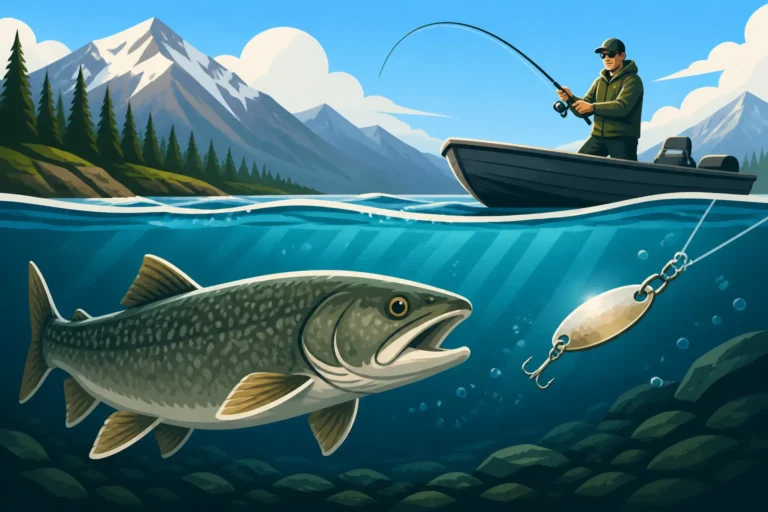
Small Spoons are classic kokanee producers. Brands like Sep's Pro Fishing, Dick Nite, and Rocky Mountain Tackle offer excellent kokanee spoons. These spoons are often brightly colored (pink, orange, chartreuse, silver, gold) and feature unique shapes that give them an erratic, fluttering action at slow trolling speeds. They often come with single or tandem hooks.
Small Hootchies or Squids are soft plastic lures that imitate small baitfish or invertebrates. They are usually 1.5 to 3 inches long and come in a dazzling array of colors. Pink, orange, green, and chartreuse are perennial favorites. They are typically fished behind a dodger or flasher, often tipped with a piece of corn or worm. The dodger's action imparts a jigging, darting motion to the hootchie, making it irresistible.
Wedding Rings and Spinners are another staple. A wedding ring is essentially a small spinner blade followed by beads and a hook. The blade creates flash and vibration, while the beads add color and body. Spinners like those from Mack's Lures or Worden's Rooster Tail in small sizes are also effective, especially when tipped with bait. These often perform well with or without a dodger, depending on the desired action and depth.
PowerBait and Corn: While plastic lures are great, tipping your hooks with a natural bait is often the final touch that seals the deal. White shoepeg corn is by far the most popular kokanee bait. It's firm, stays on the hook well, and can be easily scented. Some anglers dye their corn with food coloring to match their lures or simply use it plain. Small pieces of worm can also be effective. The corn or worm provides both scent and a slightly different texture that can entice a bite when kokanee are finicky.
Reading Your Electronics for Kokanee Schools
Your fish finder isn't just for showing depth; it's a powerful tool for locating kokanee and understanding their behavior. Learning to interpret what you see on the screen can drastically improve your success.
First, familiarize yourself with what kokanee schools look like on your specific unit. Because they often school tightly and individually are not very large, they might appear as dense clouds or "bait balls" rather than distinct arches like larger fish. Sometimes you'll see a distinct line of arches or a fuzzy cloud suspended at a certain depth. If you're seeing small, individual arches that quickly disappear, those could be kokanee that are less tightly schooled or just passing by.
Pay close attention to the thermocline. On many fish finders, this appears as a distinct band where the water temperature changes abruptly. If your unit has temperature sensing, it will show as a clear line. Kokanee often congregate just above, in, or just below this layer. If you see fish concentrated near the thermocline, that's your target depth.
Bottom contours are also important. While kokanee are pelagic, they will often relate to underwater structure, particularly drop-offs, humps, and submerged points. If you see a sudden change in depth, scan the water column above it for kokanee. These changes in contour can create upwellings or current breaks that concentrate plankton.
Finally, use your electronics to monitor your lure depth. If you have a downrigger, some fish finders can even track the downrigger ball, giving you an exact reading of where your cannonball (and thus your lure) is in relation to the fish. If your lures are consistently above or below the schools you're seeing, adjust immediately. Modern sonar technology, especially side-imaging and forward-facing sonar, can provide even more detail, allowing you to spot schools off to the sides of your boat and adjust your trolling path accordingly. The more you use your electronics, the better you'll become at deciphering their secrets and pinpointing where kokanee are hiding.
Still Fishing and Jigging for Kokanee
While trolling is king for kokanee, there are other effective methods, particularly when kokanee are holding in specific, concentrated areas or during certain times of the year. Still fishing and jigging offer a more stationary or vertical approach that can be incredibly rewarding.
Anchoring Up: The Art of Still Fishing
Still fishing for kokanee is less common than trolling but can be highly effective, especially in smaller lakes, during specific feeding windows, or when kokanee are schooled tightly in a known area. The key is to anchor precisely where you know the fish are, or where they are likely to pass through. This often requires prior knowledge of the lake, good sonar readings, or even observing other successful anglers.
Once you've found a likely spot – perhaps a submerged hump, a drop-off, or an area where you've seen schools on your fish finder – drop anchor. Use two anchors if possible to ensure your boat is perfectly still, preventing any drift that could mess with your presentation. Your setup for still fishing will be similar to your trolling setup, but you might use slightly heavier weights to get your bait down quickly and keep it in the strike zone. A slip sinker rig, where the weight slides freely on the mainline above a swivel and leader, allows the fish to take the bait without feeling immediate resistance.
The bait for still fishing is crucial. White shoepeg corn, often soaked in garlic or anise scent, is still the top choice. You can thread a few kernels onto a small, sharp hook (size 6-8), or use a small piece of worm. The goal is to keep the bait suspended at the exact depth where the kokanee are. Use a bobber for shallower water, or rely on your rod tip and sonar for deeper presentations. Some anglers use a very small dodger or flasher on their leader even when still fishing, just to add some flash and vibration, but it should be a very subtle one. The gentle current caused by your boat rocking can be enough to give it action. Patience is a virtue here; wait for those subtle tugs that indicate a kokanee bite.
Vertical Jigging: An Active Approach
Vertical jigging for kokanee is a more active and engaging technique that can be incredibly productive, especially when fish are tightly schooled directly beneath your boat. This method is particularly popular during winter ice fishing but can also be effective from a boat in open water.
The setup for jigging involves a short, sensitive spinning rod (3-5 feet for ice fishing, 5-7 feet for open water) with a light spinning reel. Spool with braided line (4-8 lb) for maximum sensitivity, tied to a 3-5 foot fluorocarbon leader (4-6 lb). The lures are small, compact jigs that imitate plankton or small baitfish. Popular choices include small lead jigs, Swedish Pimples, or tube jigs, often in bright colors like pink, chartreuse, or metallic silver. Many anglers also use small teardrop-shaped jigs tipped with a single kernel of scented corn.
The technique involves lowering your jig to the depth where you're seeing kokanee on your fish finder. Once at depth, you use short, sharp lifts of your rod tip (anywhere from 6 inches to a couple of feet) followed by a controlled fall. The idea is to make the jig dart and flutter, then fall enticingly. Most bites occur on the fall, so pay close attention to your line for any twitch or slack. Experiment with the aggressiveness of your jigs and the length of your pauses. Sometimes a rapid, aggressive jigging motion is best, other times a subtle quiver with long pauses is what triggers a strike. This active presentation is a great way to elicit reaction bites from kokanee that might be hesitant to chase a trolled lure.
Ice Fishing for Kokanee: A Winter Delight
For those brave enough to embrace the cold, ice fishing for kokanee offers a unique and often highly productive experience in BC. Many lakes that hold kokanee provide excellent hardwater opportunities once the ice is thick enough. The principles remain similar to open-water jigging, but with specific adaptations for the ice.
Safety first! Always check ice thickness and conditions before venturing out. Once safely on the ice, use an auger to drill holes strategically. Look for areas you know hold kokanee in open water, such as deep drop-offs, submerged humps, or near known thermoclines. A portable fish finder (flasher or LCD unit) is an absolute must-have for ice fishing kokanee. It allows you to see the exact depth of the fish, your lure, and even watch kokanee approach and react to your presentation.
Rods for ice fishing are typically very short, sensitive rods (2-3 feet) with light action. Small reels spooled with 2-6 pound test monofilament or fluorocarbon line are common. As with open water jigging, small, flashy jigs are the ticket. Popular choices include tiny spoons, Swedish Pimples, or specialized ice fishing jigs often tipped with a kernel of scented corn, a small piece of shrimp, or a mealworm. Colors like chartreuse, pink, and glow-in-the-dark patterns are particularly effective in the often dim light under the ice.
The jigging motion is usually subtle. Small lifts, twitches, and pauses are key. Watch your flasher carefully; if a fish rises to your lure but doesn't bite, try lifting it slowly away to entice a chase, or dropping it slightly to put it right in front of their face. When the bite is hot, you can often catch multiple kokanee from a single hole. Ice fishing offers a more intimate connection to the fish, as you're often looking directly at your lure and the fish on your screen. You can find more specific advice on Best Techniques for Ice Fishing Kokanee for a deeper dive.
Seasonal Strategies for Kokanee Anglers
Kokanee are creatures of habit, but those habits change significantly with the seasons. Water temperature, food availability, and their biological drive to spawn all dictate where they are and how they behave. Adapting your strategy to the time of year is crucial for consistent success.
Spring: Targeting Shallow, Hungry Kokanee
Spring, typically from ice-off (late March/April) through May, is a fantastic time to target kokanee. After a long winter under the ice, kokanee are often hungry and more accessible in shallower waters. The entire lake water column is generally cooler and more uniform in temperature, meaning kokanee aren't yet driven to deep thermoclines.
During early spring, focus your efforts in the upper 10-30 feet of the water column, particularly in bays, near river inlets, and along gently sloping shorelines that receive early sunlight. These areas often warm up first and experience early plankton blooms, attracting hungry kokanee. Trolling with small dodgers and lures like wedding rings, small spoons, or hootchies tipped with corn is highly effective. Speeds should remain slow, 0.8 to 1.5 mph. Because they might be shallower, you might not need downriggers initially, but snap weights or lead core line can still help you maintain consistent depth.
As spring progresses into late May and early June, and surface temperatures begin to rise, kokanee will start to move slightly deeper, but often still within the top 40-50 feet. They are still actively feeding, making this a prime time before they fully descend to their summer haunts. Pay attention to early signs of a developing thermocline on your fish finder, as this will hint at their upcoming summer patterns. This is also a great time for bank fishing in some lakes if kokanee are feeding near shore. Remember to always check BC Fishing Season Dates and Closures as regulations can change.
Summer: Deep Water and Thermocline Tactics
Summer (June through August) presents the classic kokanee challenge: finding them deep. As surface waters warm significantly, kokanee retreat to the cooler, oxygen-rich waters found deeper in the lake, typically along or just above the thermocline. This is where your downriggers and advanced electronics become invaluable.
During the peak of summer, kokanee can be found anywhere from 30 to 100 feet deep, sometimes even deeper in very large, deep lakes. The thermocline is your primary target. Use your fish finder to locate this layer and then deploy your lures precisely within it or just above it. Trolling remains the dominant technique, often with dodgers and hootchies or spoons tipped with corn. Maintain slow speeds, and constantly monitor your depth and the action of your lures.
Early mornings and late evenings can be particularly productive as kokanee might temporarily move shallower to feed. On overcast or rainy days, they might also be higher in the water column compared to bright, sunny days. The intense sun pushes them deeper. Some kokanee lakes see a "mid-day lull" in fishing, so consider fishing during the cooler parts of the day. Don't be afraid to experiment with different colors and scents, as their preferences can change based on the specific plankton they are feeding on.
Fall: Pre-Spawn Aggression and Spawning Runs
Fall (September through November) brings a dramatic shift in kokanee behavior as they approach their spawning cycle. Early fall can offer some of the most aggressive kokanee fishing, but it quickly transitions to a focus on conservation once they begin their actual spawning run.
In early to mid-September, kokanee are in their "pre-spawn" phase. They are still actively feeding, but also starting to stage for their migration. They might be found shallower than in mid-summer, sometimes in the 20-50 foot range, as the lake begins to cool from the surface. Their colors might start to intensify with hints of red or orange. This is a period of heightened aggression, as they feed heavily to build energy for the strenuous spawning journey. Trolling with spoons, hootchies, and even larger lures can be very effective as they hit anything that looks like food.
As late September and October roll around, the kokanee begin their upstream migration into tributary rivers and streams, or move to shallow gravel beds along the lake shore. At this point, their bodies undergo the full spawning transformation: brilliant red bodies, green heads, and hooked jaws for males. They cease feeding, and their flesh becomes soft and unpalatable. While they can still be caught, it's generally advised to avoid targeting actively spawning kokanee for ethical reasons and to ensure successful reproduction. Many anglers shift their focus to other species or to lakes that have later spawning runs. Understanding Kokanee Spawning Season in BC is crucial to ensure you're fishing responsibly and ethically during this sensitive time.
Advanced Tips and Common Kokanee Fishing Pitfalls
Catching kokanee consistently isn't just about having the right gear; it's about understanding the nuances of their behavior and avoiding common mistakes. Even experienced anglers can benefit from a few advanced tips and a reminder of pitfalls to sidestep.
The Importance of Scent and Attractants
We touched on scent earlier, but it truly cannot be overstated for kokanee. These fish rely heavily on their sense of smell to locate food, especially zooplankton which don't create a lot of visual commotion. Therefore, imparting a strong, appealing scent to your presentation can make the difference between a slow day and a banner day.
Beyond simply applying a commercial scent to your lure, consider the power of marinating your bait. White shoepeg corn is excellent for this. You can soak corn in garlic juice, anise extract, krill oil, or specialized kokanee attractants for hours, even overnight. This infuses the corn with a potent scent that slowly leeches into the water as you troll, creating an irresistible trail for kokanee. Brands like Pro-Cure offer a wide range of super concentrated scents designed specifically for kokanee, which you can also find readily available on Amazon.
Another advanced tip is to vary your scents. If one scent isn't producing, don't be afraid to switch it up. Some days garlic is king, other days anise or even a strong shrimp scent might be the ticket. Also, don't forget to regularly reapply scent, especially to plastic lures. Trolling through water will wash off scent over time, so every 30-60 minutes, or after every few fish, give your lures a fresh dab. The cumulative effect of a strong scent trail in the water can draw kokanee from surprisingly far distances.
Understanding Water Temperature and Barometric Pressure
Kokanee are incredibly sensitive to their environment, and paying attention to subtle changes in water temperature and barometric pressure can give you a significant edge.
Water Temperature: We've already discussed the importance of the thermocline. A good depth sounder with a surface temperature gauge and, ideally, a downrigger with a temperature probe, allows you to pinpoint the exact temperature kokanee prefer. This often falls within a relatively narrow band, typically between 8°C and 14°C (46°F to 57°F). If your lures are in water that's too warm or too cold, your chances of a bite decrease dramatically. Monitor the surface temperature, the temperature at your lure depth, and the depth of the thermocline. On large lakes like Okanagan Lake, even slight temperature differences across different arms or bays can concentrate fish.
Barometric Pressure: The "fish bite" is often influenced by atmospheric pressure, and kokanee are no exception. A rising or stable high-pressure system typically leads to clearer skies and can make fish more active, though sometimes they might hold deeper. A falling or low-pressure system, often associated with stormy or unsettled weather, can sometimes trigger a feeding frenzy before a storm, or make fish sluggish and inactive during it. Rapid changes in barometric pressure, particularly sharp drops, tend to put fish off the bite. While you can't control the weather, being aware of the barometric pressure using a simple barometer or weather app can help you understand why the fish are biting (or not) and adjust your strategy accordingly (e.g., trying a different depth or slowing down your presentation during a lull).
Avoiding Common Mistakes: Depth, Speed, and Presentation
Even with the right gear, common errors can lead to frustrating days. Here are the biggest pitfalls to avoid:
- Fishing the Wrong Depth: This is, hands down, the most common mistake. If kokanee are at 60 feet and your lure is at 40 feet, you're not going to catch them. Invest in a good fish finder and a reliable depth control system (downriggers are ideal) and don't be afraid to adjust your depth frequently until you find where the fish are holding. Always ensure your lure is in the strike zone.
- Trolling Too Fast: As mentioned, kokanee prefer very slow speeds. Many anglers accustomed to targeting other species will troll too quickly, causing their lures to spin unnaturally or plane above the fish. Stick to the 0.8-1.5 mph range, and use a GPS to confirm your speed.
- Lack of Scent: Skipping scent or not reapplying it regularly is a huge missed opportunity. Kokanee are scent-driven. Think of it as leaving a breadcrumb trail.
- Using Overly Large or Stiff Lures: Kokanee have relatively small mouths and are feeding on tiny prey. A lure that's too large or has too aggressive an action can intimidate them. Opt for small, subtle lures that flutter and dance at slow speeds.
- Dull Hooks: Kokanee have soft mouths, making hooksets delicate. A dull hook can easily tear out or simply not penetrate. Always check your hooks for sharpness and sharpen or replace them as needed.
- Ignoring the Dodger/Flasher: While not always necessary, a properly matched dodger or flasher can significantly improve your success by adding crucial flash and vibration. Ensure your dodger is imparting the correct action to your trailing lure.
- Not Varying Your Approach: If a particular color, depth, or speed isn't working after a reasonable amount of time, change something! Try a different lure, a different scent, a different depth, or a slight speed adjustment. Kokanee can be finicky, and cracking the code often involves experimentation. Don't be afraid to change your tactics.
Top Kokanee Fishing Lakes in British Columbia
British Columbia boasts an incredible diversity of fishing opportunities, and kokanee are found in many lakes across the province. While specific regulations and peak seasons vary, some lakes are consistently renowned as kokanee powerhouses, offering excellent chances for anglers.
Okanagan Lake: A Kokanee Powerhouse
When you talk about kokanee fishing in BC, Okanagan Lake inevitably comes up. This massive, deep lake, stretching over 135 kilometers through the Okanagan Valley, is truly a kokanee powerhouse. It's known for producing not only high numbers of fish but also some impressive sizes, making it a bucket-list destination for many kokanee enthusiasts.
The sheer size and depth of Okanagan Lake mean kokanee have ample room to roam and find their preferred temperatures and food sources. They typically inhabit the deeper, cooler sections of the lake, particularly during the warm summer months. Popular areas include the waters off Peachland, Summerland, and near the deep sections of Kelowna. Anglers here rely heavily on downriggers to target fish often found anywhere from 40 to 100 feet deep, sometimes even deeper. The key is finding the bait balls and the thermocline, which can vary day by day.
Trolling is the most effective method on Okanagan Lake, with small dodgers and a variety of hootchies, small spoons, and wedding rings tipped with scented corn being the go-to setups. Pink, chartreuse, and silver are very popular colors. Early mornings and late evenings are often the most productive. The lake can get busy, especially in summer, so be mindful of other boaters and give ample space. Understanding Okanagan Lake Kokanee Fishing specifics will give you the local edge needed for success on this iconic body of water.
Kootenay Lake: Gerrard Rainbows and Kokanee
While Kootenay Lake is world-famous for its colossal Gerrard rainbow trout, it also harbors a significant and healthy population of kokanee. In fact, the kokanee are a crucial part of the food chain, providing forage for those trophy rainbows. For kokanee anglers, this means a dual opportunity: target kokanee for their own merit, and potentially hook into a giant rainbow that's feeding on them!
Kootenay Lake is another vast, deep, and oligotrophic (nutrient-poor) lake, creating prime conditions for kokanee. They are found throughout the lake but often concentrate in the deeper basins. Similar to Okanagan, summer kokanee will be found along the thermocline, often 50-100 feet deep or more. Trolling with downriggers is the standard, employing small dodgers, hootchies, and spoons. Given the clarity of Kootenay Lake's water, fluorocarbon leaders are absolutely essential for stealth, and subtle scents like krill or garlic are favored.
Fishing near the confluence of the Kootenay River or along prominent underwater structure can be productive. Anglers targeting the "Gerrards" often use larger gear, but for kokanee specifically, stick to your light tackle. If you're using a fish finder, you'll want to differentiate between the large, distinct arches of the Gerrard rainbows and the smaller, more numerous schools of kokanee. This lake offers a unique chance to experience two of BC's most sought-after freshwater fisheries simultaneously. If you're interested in Kootenay Lake Gerrard Rainbow Trout Fishing, you'll quickly learn how vital kokanee are to that fishery.
Other Productive Kokanee Lakes Across BC
Beyond these two giants, British Columbia is dotted with numerous other lakes that offer fantastic kokanee fishing opportunities. Each has its own unique character, regulations, and best practices.
- Shuswap Lake: Another large interior lake, Shuswap is known for its impressive kokanee runs and also supports a significant fishery for them. Like Okanagan, deep water trolling is key in summer.
- Nicola Lake: Located in the Southern Interior, Nicola Lake is a popular spot for kokanee, often yielding good numbers. It's a bit smaller and shallower in some areas, which can make kokanee more accessible at certain times.
- Adams Lake: This deep, pristine lake is less developed than others and offers excellent kokanee fishing. It's known for its clear waters, so stealth is particularly important here.
- Bear Lake (near Prince George): In the northern interior, Bear Lake is a gem for kokanee, often producing good numbers and sizes, especially in the spring and fall.
- Jones Lake (near Hope): A smaller, easily accessible lake in the Fraser Valley, Jones Lake is stocked with kokanee and can provide good action for those looking for a closer option to the Lower Mainland.
- Kalamalka Lake (near Vernon): Often called the "Lake of Many Colours," Kalamalka is connected to Okanagan Lake and also holds a healthy kokanee population.
Before heading out to any of these or other lakes, always consult the most current BC Freshwater Fishing Regulations Synopsis and local fishery notices. Regulations on bag limits, retention rules, and even specific gear restrictions can vary significantly from lake to lake and can change in-season. Visiting a local tackle shop near your chosen lake is always a great idea for the most up-to-date information and hot tips. To find out about more options, you can explore guides on the Best Fishing Lakes in British Columbia which often highlight kokanee hotspots.
Disclaimer
Fishing regulations in British Columbia can change frequently. Always consult the latest BC Freshwater Fishing Regulations Synopsis and local fishery notices before heading out. This guide is for informational purposes only and does not constitute legal advice regarding fishing regulations. The author and publisher are not responsible for any incidents, accidents, or regulatory infractions incurred by readers. Fish responsibly and safely.