Kootenay Lake Fishing Guide
For anyone looking to experience some of British Columbia's most incredible freshwater fishing, Kootenay Lake often stands out as a jewel. But let's be honest, it can feel a bit overwhelming, right? This massive, deep body of water holds a legendary reputation for trophy fish, yet its sheer size and diverse ecosystems can make it daunting for anglers new to its depths, or even seasoned veterans looking for specific species. This comprehensive guide is designed to cut through the confusion, offering you an in-depth look at everything from the famous Gerrard rainbow trout to the best fishing techniques, regulatory nuances, and prime locations to help you unlock the full potential of Kootenay Lake.
Understanding Kootenay Lake's Unique Fishery
Kootenay Lake isn't just a large body of water; it's a dynamic, interconnected ecosystem with a rich history and a reputation that draws anglers from around the globe. Its sheer scale, carved by glaciers, contributes to its mystique and the incredible fishing opportunities it presents.
Geographic Overview and Ecosystem
Stretching approximately 104 kilometers (65 miles) long and averaging 4 kilometers (2.5 miles) wide, Kootenay Lake is truly immense, dominating the landscape of southeastern British Columbia. It's an integral part of the Columbia River Basin, fed primarily by the Kootenay River from the south and numerous smaller tributaries, eventually draining into the West Arm, which then flows into the Columbia. The lake is remarkably deep, reaching depths of over 150 meters (500 feet) in places, creating vast cold-water habitats that are perfect for certain species.
The lake's unique geography is largely responsible for its productivity. Surrounded by the Selkirk and Purcell mountain ranges, it receives a constant influx of nutrient-rich waters. These nutrients support a robust food web, starting with plankton and small crustaceans, moving up to the incredibly abundant kokanee salmon, which in turn form the primary food source for the lake's legendary predator, the Gerrard rainbow trout. The West Arm, a shallower and warmer section, offers a slightly different environment, providing habitat for other species and different fishing dynamics. The water clarity can vary throughout the year, influenced by snowmelt runoff in spring and early summer, and the overall health of the watershed.
Target Species: The Famous Gerrard Rainbows and More
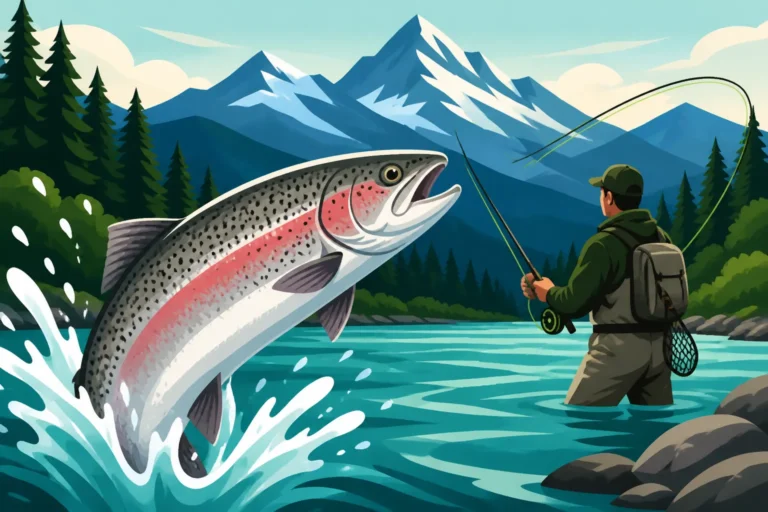
When you talk about Kootenay Lake, the first fish that comes to most anglers' minds is undoubtedly the Gerrard rainbow trout. These are not your average rainbows. They are a unique, genetically distinct strain of rainbow trout known for their massive size and aggressive fighting spirit. Gerrard rainbows are piscivorous, meaning they primarily feed on other fish, specifically the plentiful kokanee salmon in the lake. This abundant food source allows them to grow to truly colossal proportions, often exceeding 20 pounds, with the provincial record standing at an astounding 32 pounds, 8 ounces. These fish are true apex predators, patrolling the open waters, looking for schools of kokanee.
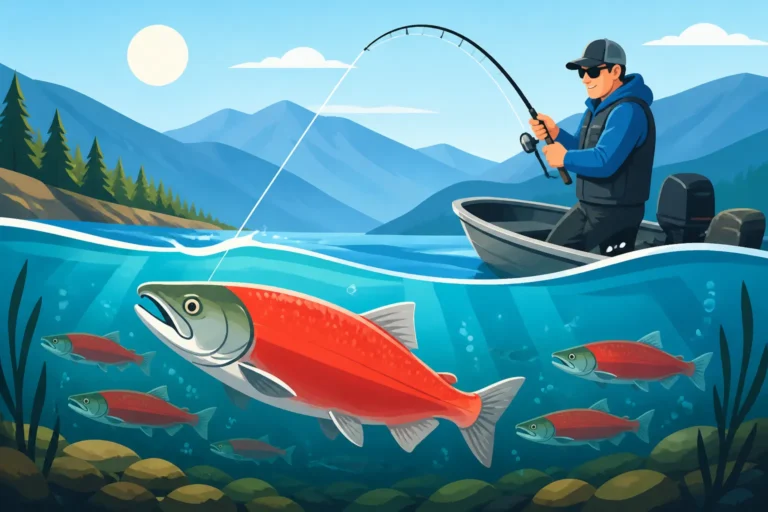
While the Gerrard rainbow trout might steal the spotlight, Kootenay Lake offers a diverse range of other exciting species. Kokanee salmon, the landlocked sockeye salmon, are incredibly popular targets themselves. These smaller, schooling fish are delicious and provide consistent action for many anglers. They are also crucial to the ecosystem, acting as the primary forage base. Beyond salmonids, the lake also holds good populations of bull trout (often mistaken for Dolly Varden, though distinct), which are also predatory and can reach impressive sizes. You'll also find burbot (sometimes called freshwater cod or ling), which are often targeted in deeper, colder waters, especially during the winter months. Various species of whitefish also inhabit the lake, providing additional opportunities, particularly for ice anglers.
For more on the lake's star species, check out our guide on Gerrard Rainbow Trout of Kootenay Lake.
Kootenay Lake's Fishing History and Conservation
Kootenay Lake has a storied fishing history, with its reputation for monster rainbows attracting anglers for generations. Early settlers and Indigenous peoples recognized the lake's bounty, but it was in the mid-20th century that the Gerrard strain gained international fame for its trophy potential. This led to increased fishing pressure, and like many productive fisheries, Kootenay Lake has faced its share of conservation challenges.
Over the decades, changes in the lake's ecosystem, including nutrient levels and the health of the kokanee population, have directly impacted the Gerrard rainbows. Significant conservation efforts by organizations like the Freshwater Fisheries Society of BC and various local angling clubs have been crucial in managing the fishery. This includes ongoing stocking programs for kokanee and careful regulation of catch limits and seasons for all species. The goal is always to balance recreational fishing opportunities with the long-term health and sustainability of the fish populations. Anglers play a vital role in this by adhering to regulations and practicing responsible fishing methods, especially catch and release for larger trout. Understanding this history helps foster a deeper appreciation for the resource and encourages adherence to current conservation mandates.
Essential Gear and Tackle for Kootenay Lake
Fishing Kootenay Lake, especially for its legendary Gerrard rainbow trout, often requires specific gear tailored to the size of the fish and the vastness of the water. While you can certainly catch fish with basic setups, having the right rods, reels, lines, and electronics can significantly improve your success and overall experience.
Rods, Reels, and Line for Lake Trolling
For trolling for Gerrard rainbows, you're going to want a robust setup that can handle powerful runs and potentially large, heavy fish. A medium-heavy to heavy action rod, typically 8 to 10 feet in length, is ideal. These longer rods provide better shock absorption when a large fish strikes and help spread out your lines when trolling multiple setups. Graphite or composite rods are good choices as they offer a balance of sensitivity and backbone. Brands like Shimano, Fenwick, or Ugly Stik offer dependable options that many Kootenay Lake regulars trust.
Matching your rod with a reliable baitcasting or levelwind reel is crucial. Look for reels with a smooth, powerful drag system and a good line capacity. You'll want to be able to hold at least 200-300 yards of line, especially if you're targeting those big Gerrard rainbows that can make incredibly long runs. A gear ratio around 4.0:1 to 5.0:1 is common for trolling, offering a good balance of power for reeling in and line retrieval speed. When it comes to line, many anglers opt for a main line of 15-25 lb monofilament or braided line. If using braid, a fluorocarbon leader of 15-20 lb test is almost universally recommended for its invisibility in clear water and abrasion resistance. Some anglers also prefer lead core or copper line setups to get their lures down to specific depths without the need for downriggers, though downriggers are very popular on Kootenay.
Lures, Baits, and Fly Patterns for Specific Species
The lure choice on Kootenay Lake is heavily influenced by your target species. For the big Gerrard rainbow trout, imitating their primary food source – kokanee salmon – is key. Large spoons are extremely popular, with common sizes ranging from 3 to 6 inches. Patterns like the Gibbs-Delta "G-Force" or "Savage" in natural baitfish colours (silver, blue, green, chartreuse) are consistent producers. Apex lures, particularly the "Hot Spot" models, are also Kootenay Lake staples, as are large plugs and even bucktail flies fished behind a dodger or flasher.
Kokanee fishing calls for a slightly different approach. These smaller salmon prefer smaller lures and subtle presentations. Popular choices include small kokanee spoons (like the FST or Dick Nite spoons), wedding bands, or small hoochies (squid skirts) trolled behind a dodger or flasher. Tipping these lures with a small piece of scented corn often makes a huge difference, as the kokanee are attracted to both the scent and the visual. For burbot, bottom fishing with cut bait (like pieces of kokanee or sardine) is incredibly effective, often fished on a three-way swivel rig. Whitefish can be caught similarly or by jigging small spoons or ice jigs tipped with bait. Fly fishing on Kootenay is less common for the main lake but can be effective in tributary mouths or the shallower West Arm, using streamers that imitate baitfish or larger nymph patterns.
For more specifics on lures for this fishery, check out our guide on Kootenay Lake Gerrard Rainbow Trout Fishing.
Electronic Aids: Sonar and GPS for Success
Given the immense size and depth of Kootenay Lake, modern electronics are more than just a luxury; they're essential tools for consistent success. A good quality fish finder (sonar/CHIRP sonar) is paramount. It allows you to visualize the underwater topography, identify drop-offs, humps, and submerged structure where fish might congregate. More importantly, it helps you locate schools of kokanee, which are the food source for the larger Gerrard rainbows, and directly mark larger fish themselves. Look for units with high-resolution displays and advanced features like side imaging or down imaging, which can give you a much clearer picture of what's beneath and around your boat.
GPS mapping, often integrated into modern fish finders, is equally critical. Kootenay Lake has many excellent fishing spots, but finding and returning to these precise locations on such a large body of water without landmarks can be incredibly difficult. GPS allows you to mark waypoints for productive areas, submerged structure, or even where you previously hooked a fish. It also helps with navigation, especially in adverse weather conditions or when exploring new areas. Mapping cards that show detailed bathymetry (underwater contours) of Kootenay Lake can be invaluable, helping you understand depth changes and potential fish-holding structures before you even drop a line. Brands like Garmin, Lowrance, and Humminbird are industry leaders, offering a range of units suitable for serious Kootenay Lake anglers.
Top Fishing Techniques for Kootenay Lake
Kootenay Lake demands a variety of techniques due to its diverse fish populations and expansive waters. While trolling might be the most iconic method, understanding how to adapt your approach for different species and conditions will significantly improve your catch rates.
Trolling for Trophy Gerrard Rainbow Trout
Trolling is undeniably the king of techniques for targeting the famed Gerrard rainbow trout on Kootenay Lake. These fish are pelagic, meaning they roam the open water, often following schools of kokanee. Trolling allows you to cover vast amounts of water and present your lures at various depths where these predators might be feeding. Most anglers use downriggers to precisely control the depth of their lures, typically ranging from 50 to 150 feet, depending on the time of year and where the kokanee schools are holding. The goal is to imitate a stray kokanee, so large spoons, plugs, or bucktail flies (often behind flashers or dodgers) are common choices.
A common setup involves running multiple lines at different depths and distances from the boat to cover the water column effectively. Many boats will run two or four downriggers, with additional lines sometimes fished off planner boards to expand the spread. The key is to experiment with speed (usually 2.5 to 4.5 mph for Gerrard rainbows), lure colour, and depth until you find what the fish are keying into on any given day. Watch your sonar for kokanee schools and focus your trolling efforts around these baitfish concentrations. Patience is a virtue when trolling for Gerrard rainbows; these are trophy fish, and bites might be infrequent, but when they hit, it's usually an unforgettable fight.
Our guide on Trolling Techniques for BC Lake Trout offers even more detailed advice on this popular method.
Kokanee Fishing: Deep Water Jigging and Trolling
Kokanee salmon are a staple of Kootenay Lake's fishery, not only as a food source for Gerrard rainbows but also as a highly sought-after sport fish in their own right. They are delicious and offer consistent action, making them a fantastic target, especially for families or those looking for a high-volume day.
Trolling is also a primary method for kokanee, but with some crucial differences. You'll typically use smaller lures (small spoons, wedding bands, hoochies) and troll at slower speeds (1.0 to 2.5 mph). Again, downriggers are your best friend for consistently reaching the depths where kokanee hold, which can vary widely from 20 feet to over 100 feet depending on light, temperature, and food availability. Tipping your lures with a piece of corn soaked in scents like "Krill" or "Anise" is almost mandatory, as kokanee are very scent-oriented. Another highly effective technique for kokanee, especially when you mark dense schools, is deep water jigging. Using small, flashy jigs (like Gibbs Minnows, Crippled Herring, or specialized kokanee jigs) dropped directly into the school can elicit aggressive strikes. Electric downriggers and precise boat positioning using GPS are invaluable for keeping your jig in the strike zone when jigging for kokanee.
For more detailed tips on catching kokanee, explore our post on Best Techniques for Kokanee in BC Lakes.
Bottom Fishing for Burbot and Whitefish
While less glamorous than the pursuit of trophy trout, bottom fishing for burbot and whitefish provides excellent year-round opportunities and can be incredibly rewarding, especially during colder months or at night. Burbot, being nocturnal predators, are often most active after sunset. They prefer colder, deeper water and congregate around structure on the lake bottom.
The setup for burbot is straightforward: a stout rod with a spinning or baitcasting reel, spooled with 20-30 lb monofilament or braid. A typical rig involves a three-way swivel, with a heavy sinker (1-4 oz, depending on depth and current) on a short dropper line, and a leader (1-2 feet) with a large hook (2/0 to 4/0) baited with cut bait. Pieces of kokanee, sardine, or even dew worms are excellent choices. Position your boat over known burbot haunts – deep flats, ledges, or points – and let your bait sit on the bottom. Be patient; burbot bites can be subtle. Whitefish are often caught incidentally while fishing for burbot, but they can also be targeted with smaller hooks and baits like worms or even tiny jigs. Both species are excellent table fare and provide a different challenge than the lake's open-water predators. Ice fishing on Kootenay Lake, particularly in the shallower West Arm, can also be very productive for these bottom dwellers, using similar bait setups or small jigging spoons.
Navigating Kootenay Lake's Regulations and Seasons
British Columbia's fishing regulations are designed to protect and sustain its world-class fisheries, and Kootenay Lake is no exception. Understanding these rules is not just about compliance; it's about being a responsible angler and contributing to the longevity of the resource. Regulations can be complex and change seasonally, so staying informed is crucial.
Understanding BC Fishing Licenses and Stamps
Before you even cast a line in Kootenay Lake, you absolutely need to have the correct fishing license. For freshwater fishing in British Columbia, all anglers over the age of 16 are required to purchase a valid basic freshwater fishing license. This license is available for residents and non-residents, with different pricing tiers. If you're a resident of BC, the annual license is quite affordable, but non-residents (both Canadian and international) will pay more, often opting for shorter-duration licenses (e.g., 1-day, 8-day) if their trip is brief.
Beyond the basic license, specific species require additional stamps. For Kootenay Lake, if you plan to retain any salmon, you'll need a BC Freshwater Salmon Conservation Stamp. While kokanee are technically landlocked sockeye, in freshwater, they generally fall under "salmon" regulations in this regard if you intend to keep them, so verify current rules. Additionally, there are specific stamps for certain species like steelhead, though they are not a primary target in Kootenay's main lake. It's vital to purchase and carry both your physical or digital basic license and any required stamps with you while fishing. Conservation officers regularly patrol Kootenay Lake, and fishing without the proper documentation can result in hefty fines and potential gear seizure. You can check out BC Fishing License Age Requirements for more specific details on who needs what.
Species-Specific Regulations and Bag Limits
Kootenay Lake has detailed, species-specific regulations that dictate what you can catch, how many you can keep (bag limits), and sometimes even minimum or maximum sizes. These rules are in place to manage fish populations and ensure healthy breeding stocks.
Kootenay Lake Fish Species & General Regulations (Always check current synopsis for exact details)
| Species | Daily Bag Limit (General) | Size Restrictions | Notes |
|---|---|---|---|
| Gerrard Rainbow Trout | 1-2 | Varies (e.g., minimum 50 cm) | Highly regulated; often catch-and-release only for larger fish, or specific slot limits. Always confirm the current Freshwater Fishing Regulations Synopsis for Kootenay Lake. |
| Kokanee Salmon | 10-15 | None generally specified | Abundant, but limits can change based on population health. Requires a Freshwater Salmon Conservation Stamp if retaining. |
| Bull Trout | 1-2 | Varies (e.g., minimum 50 cm) | Often similar regulations to large rainbow trout due to their predatory nature and conservation status. |
| Burbot | 5-8 | None generally specified | More liberal limits, popular for eating. |
| Whitefish (Mountain/Lake) | 10-15 | None generally specified | Liberal limits. |
- Note: This table provides a general overview. Always refer to the official British Columbia Freshwater Fishing Regulations Synopsis for the most up-to-date and specific rules for Kootenay Lake and its various zones (e.g., main lake vs. West Arm).
Bag limits often specify a daily limit and a possession limit, which is the total number of fish you can have on your person or in your possession, including at your accommodation or in your freezer, at any given time. For Kootenay Lake's Gerrard rainbows, there are often specific size restrictions or slot limits, meaning you can only keep fish within a certain size range, or larger fish might be mandated for catch and release to protect breeding stock. For a broader understanding of general rules, see our guide on BC Fishing Regulations Explained and BC Bag and Possession Limits by Species.
Seasonal Closures and Conservation Measures
Fishing seasons on Kootenay Lake are designed to protect spawning fish and manage population health. While much of Kootenay Lake is open to fishing year-round for certain species, there can be specific closures or restrictions for certain areas or fish at different times of the year. For example, some tributary mouths might have seasonal closures to protect spawning kokanee or rainbow trout. The West Arm of Kootenay Lake, being a distinct management zone, often has different regulations and seasons compared to the main lake, particularly regarding daily limits for certain species.
Conservation efforts also extend to gear restrictions. For instance, sometimes bait bans or single-barbless hook requirements might be in place for sensitive species. It's imperative to consult the current BC Freshwater Fishing Regulations Synopsis (available online through the BC government website or at license vendors) before each trip. This document outlines all specific regulations, including those for special management waters, which Kootenay Lake often includes. Additionally, fishery notices are regularly issued to announce in-season changes or emergency closures due to environmental conditions (e.g., drought, high water temperatures) or unexpected fish returns. Staying updated on these BC Fishery Notices and In-Season Closures, Explained is a critical responsibility of any Kootenay Lake angler.
Best Fishing Spots and Access Points on Kootenay Lake
Kootenay Lake's vastness means that "finding the fish" can be a real challenge. However, local knowledge and understanding the lake's structure can point you to areas that consistently hold fish. From the deep, cold northern arm to the more productive southern reaches and the unique West Arm, each section offers different opportunities.
Northern Arm Hotspots: Ainsworth to Riondel
The northern arm of Kootenay Lake is characterized by its significant depth and sheer, rocky shorelines. This area, from the popular Ainsworth Hot Springs south towards Riondel and the main body of the lake, is prime territory for large, pelagic Gerrard rainbow trout. The deep, cold water provides ideal habitat for these big fish, especially during warmer months when they retreat to cooler depths.
Anglers targeting Gerrard rainbows here often focus their efforts on the numerous submerged points, ledges, and deep drop-offs that extend from the shoreline. These structures can concentrate kokanee, which in turn attract the larger trout. Popular spots include the area around Ainsworth, the deep water off the ferry landing at Balfour (on the west side), and various offshore humps that are only visible on a good sonar unit. Trolling large spoons and plugs at depths of 80-150 feet is the go-to method. Due to the depth, downriggers are almost essential for precise depth control. Finding schools of kokanee on your sonar is the best indicator of where the Gerrard rainbows will be hunting. The northern arm can also yield good numbers of bull trout, often found patrolling similar structures but sometimes shallower, closer to tributary mouths.
Central Lake Structure: Queens Bay to Balfour
The central section of Kootenay Lake, roughly from Queens Bay on the west side to the ferry crossing at Balfour and the stretch south towards Kootenay Bay, represents a transition zone. While still deep, it features more varied underwater structure and can be highly productive for both Gerrard rainbows and kokanee.
This area is particularly known for its extensive underwater shelves, humps, and subtle contour changes that create excellent holding areas for baitfish. The Queens Bay area, in particular, has a reputation for being a productive zone due to its complex bottom structure. Further south, past Balfour, the lake widens a bit, offering more open-water trolling opportunities. Many anglers report success targeting Gerrard rainbows here by focusing on the edges of deep channels or where pronounced changes in depth occur. Look for schooling kokanee in the 50-100 foot range, especially in the mornings and evenings. Shore access here is limited, but public boat launches are available, including one near Balfour, making it a convenient staging point for exploring both the northern and central sections of the lake.
Southern Arm Productivity: Kootenay Bay to Wynndel
The southern arm of Kootenay Lake, extending from Kootenay Bay down to the Wynndel and Creston Flats area, tends to be shallower and slightly warmer than the northern reaches, especially in its southernmost extremities. This difference in thermal stratification and nutrient flow makes it a highly productive area for kokanee salmon, and by extension, for the predators that feed on them.
While large Gerrard rainbows are still present, this area often sees excellent kokanee fishing. Anglers targeting kokanee will find success trolling smaller spoons, wedding bands, or hoochies, often tipped with corn, at depths that can range from 30 to 80 feet. The extensive flats and gradual drop-offs provide ample feeding grounds for kokanee. The area around the mouth of the Kootenay River, near the south end, can be particularly productive as it's a major inflow of nutrients and a migration route. Besides kokanee, this region also supports good populations of bull trout and burbot, with the latter often found near the bottom in deeper pockets. Access points are more varied here, with several smaller communities and some public launch ramps, making it a good option for those staying on the southern end of the lake.
Shore Access and Public Boat Launches
While Kootenay Lake is best explored by boat, there are a few options for shore anglers and ample facilities for launching watercraft. For those without a boat, the West Arm offers some of the best shore fishing opportunities. Areas around Nelson, like Lakeside Park or the waterfront along the power dam, can yield rainbow trout, kokanee, and even some smallmouth bass (an introduced species that has established itself). These spots are generally more accessible and can be great for a casual outing or for introducing kids to fishing.
For boat anglers, Kootenay Lake has several public boat launches strategically located around the lake. On the northern end, there are launches near Ainsworth and a popular multi-lane ramp at Balfour. In the central section, the Queens Bay area also offers launch facilities. Further south, you'll find launches near Kootenay Bay and some smaller, more rustic options towards the very southern tip. When using public launches, always be mindful of other users, clean up your refuse, and inspect your boat and trailer for invasive species before and after launching to prevent their spread. Consider our guide on BC Boating Laws for Anglers and Life Jacket Requirements for BC Boaters to ensure you're compliant with all regulations before heading out on the water.
Planning Your Kootenay Lake Fishing Trip
A successful Kootenay Lake fishing trip involves more than just knowing where to cast. Thoughtful planning, from choosing whether to hire a guide to securing accommodation and understanding safety protocols, will enhance your experience on this majestic body of water.
Hiring a Local Guide or Charter
For many anglers, especially those visiting Kootenay Lake for the first time or those specifically targeting a trophy Gerrard rainbow, hiring a local guide or charter is an invaluable investment. Kootenay Lake is enormous, and its complex fishery changes with seasons and conditions. A seasoned guide possesses years of accumulated knowledge about the lake's hot spots, current fish patterns, effective techniques, and the latest regulatory nuances. They often have top-of-the-line equipment, including specialized boats, downriggers, and electronics, that would be costly for a recreational angler to acquire for a single trip.
A guide can dramatically shorten your learning curve, putting you on fish faster and teaching you the intricacies of Kootenay Lake fishing. They also handle the boat operation, letting you focus entirely on fishing. Many guides operate out of communities like Nelson, Balfour, or Crawford Bay. You can often find reputable guides through local tackle shops, tourism boards, or online platforms. For instance, platforms like FishingBooker list various guides and charters operating on Kootenay Lake, allowing you to compare services, read reviews, and book directly. When choosing a guide, ask about their experience, what species they specialize in, what's included in the price (e.g., tackle, bait, fish cleaning), and ensure they are fully licensed and insured. For more advice on this, check out our guide on How to Choose a BC Fishing Charter.
Accommodation and Amenities Around the Lake
Kootenay Lake is surrounded by charming towns and communities that offer a range of accommodation options and amenities to suit any angler's preference and budget. The largest hub is Nelson, located on the West Arm, which boasts a vibrant arts scene, numerous restaurants, hotels, motels, and bed and breakfasts. It's a great base if you appreciate a lively town atmosphere after a day on the water.
Other popular spots include Balfour, which is conveniently located near the main lake ferry terminal and offers motels, resorts, and vacation rentals, often with boat moorage. Crawford Bay, on the east shore, and the communities around the southern arm (like Wynndel or Creston) provide a quieter, more rural experience with campgrounds, lodges, and cabins. Many of these lakeside accommodations cater specifically to anglers, offering facilities like boat launches, docks, and even freezer space for your catch. Before your trip, research and book accommodations well in advance, especially during peak fishing seasons (spring and fall) or holiday weekends, as popular spots fill up quickly. Ensure your chosen accommodation can handle your boat and trailer if you're bringing your own.
Safety Considerations on Large Lake Waters
Kootenay Lake, while beautiful, is a large, deep body of water that demands respect, particularly concerning safety. Weather conditions can change rapidly, and high winds can whip up significant waves, making navigation challenging and potentially dangerous for smaller boats. Always check the marine weather forecast before heading out and be prepared to cut your trip short if conditions deteriorate.
Essential safety equipment is paramount. This includes personal flotation devices (PFDs) for everyone on board, a sound-signaling device, a bailer or pump, a spare paddle, and a throw bag. A marine radio (VHF) is highly recommended for communication, as cell service can be spotty in some areas of the lake. Carry a fully charged cell phone as a backup, and always let someone know your float plan – where you're going, when you expect to return, and who is with you. Be mindful of cold water immersion risks, especially during the spring and fall; the lake's deep waters remain very cold year-round. Operating your boat responsibly, maintaining a safe speed, and being aware of other boaters (including the Kootenay Lake ferry) are critical for a safe and enjoyable experience.
Conservation and Responsible Angling Practices
Fishing on Kootenay Lake isn't just about catching fish; it's about being a steward of this incredible natural resource. Responsible angling practices are crucial for maintaining healthy fish populations, protecting the ecosystem, and ensuring that future generations can enjoy the same world-class fishing experiences we do today.
Catch and Release Best Practices
For many of the trophy-sized Gerrard rainbow trout and bull trout on Kootenay Lake, catch and release is not just a recommendation, it's often a regulatory requirement and a vital conservation practice. Handling these large, powerful fish correctly drastically increases their survival rate after release.
When you hook a large fish, fight it efficiently and bring it to the boat as quickly as possible to minimize exhaustion. Use appropriate gear that matches the fish's size to prevent overly long fights. Once at the boat, use a large, knotless, rubberized landing net to support the fish gently. Avoid lifting large fish vertically by the jaw or gills, as this can cause internal damage. If you need a photo, do so quickly with the fish partially submerged or supported horizontally. Keep the fish in the water as much as possible, as exposure to air can damage gills and protective slime coats. Use long-nosed pliers or hemostats to quickly remove hooks, especially if they are barbless (which are often required or highly recommended). If the fish is deeply hooked, it's sometimes better to cut the line as close to the hook as possible rather than tearing tissue. Finally, support the fish in the water, facing into the current, until it regains strength and swims away on its own. Seeing a powerful Gerrard swim off to fight another day is one of the most rewarding parts of Kootenay Lake fishing.
Preventing the Spread of Invasive Species
Invasive species pose a significant threat to Kootenay Lake's delicate ecosystem and its native fish populations. Species like zebra mussels, quagga mussels, and various invasive aquatic plants can outcompete native species, alter habitat, and disrupt the food web. Once established, they are incredibly difficult, if not impossible, to eradicate.
The most effective way to prevent the spread of invasive species is through vigilance and the "Clean, Drain, Dry" protocol for all boats and gear. Before leaving any water body (including Kootenay Lake) and before entering another:
- Clean: Remove all visible plants, animals, and mud from your boat, trailer, and fishing gear. Pay special attention to anchors, ropes, and inside the hull.
- Drain: Pull your boat's drain plug and drain all water from the bilge, livewells, ballast tanks, and motor. Even small amounts of water can harbor microscopic larvae.
- Dry: Allow your boat and all gear to dry completely for at least 24-48 hours, or longer if possible, before launching in another body of water.
British Columbia has strict regulations and inspection stations in place for boats entering the province or moving between water bodies. Always stop at these stations, even if you think your boat is clean. Your cooperation is vital in protecting Kootenay Lake and other precious BC waters.
Respecting Wildlife and Other Lake Users
Kootenay Lake is not just a fishing destination; it's a shared natural space enjoyed by many for various activities, and it's home to abundant wildlife. As anglers, it's important to be respectful of everyone and everything around us.
This means maintaining polite interactions with other boaters, kayakers, swimmers, and shore users. Give ample space to other boats that are fishing, especially if they are trolling, to avoid tangling lines or disrupting their patterns. Be mindful of noise levels, especially early in the morning or late in the evening near residential areas. Observe wildlife from a respectful distance; Kootenay Lake is home to eagles, ospreys, bears, deer, and many other creatures. Do not feed wildlife, as this can habituate them to humans and lead to dangerous situations. Finally, practice Leave No Trace principles: pack out everything you pack in, including all fishing line, bait containers, and food wrappers. Avoid littering at all costs. Keeping Kootenay Lake pristine ensures that its natural beauty and incredible fishing opportunities can be enjoyed by all, for generations to come.
Disclaimer
The information provided in this Kootenay Lake Fishing Guide is for general guidance and informational purposes only. Fishing regulations in British Columbia, including those for Kootenay Lake, are subject to change at any time. It is the angler's sole responsibility to consult and adhere to the most current official British Columbia Freshwater Fishing Regulations Synopsis, available from the provincial government, before engaging in any fishing activities. We are not responsible for any violations or consequences resulting from failure to comply with current regulations. Always prioritize safety and responsible angling practices.