Gerrard Rainbow Trout of Kootenay Lake
There's a certain magic that draws anglers to Kootenay Lake, a mystique woven around tales of gigantic, elusive trout that push the limits of what a rainbow trout can be. If you've ever found yourself daydreaming about that once-in-a-lifetime tug on your line, the kind that tests your tackle and your resolve, chances are you've heard whispers of the legendary Gerrard Rainbow Trout. It's not just a fish; it's an icon, a true testament to British Columbia's incredible angling heritage. This guide is dedicated to unraveling the secrets of these magnificent fish, offering insights into their unique lives and practical advice for those hoping to connect with a true Kootenay leviathan.
What Makes Gerrard Rainbow Trout So Special?
The Gerrard Rainbow Trout isn't just any rainbow trout; it's a specific, genetically unique strain found predominantly in Kootenay Lake, British Columbia. What makes them so legendary isn't just their size, but the remarkable story of their adaptation and survival in a truly unique aquatic environment. For many anglers, the Gerrard is the pinnacle of freshwater trophy fishing in Canada, a fish that demands respect, patience, and often, a little bit of luck.
The Kootenay Lake Ecosystem and Gerrard's Unique Adaptation
Kootenay Lake is a massive, deep, glacier-fed body of water in southeastern British Columbia, known for its pristine beauty and incredible fishing. It's this specific environment that has shaped the Gerrard rainbow into the powerhouse it is. Unlike many other rainbow trout populations that rely heavily on insect hatches or smaller baitfish, the Gerrards of Kootenay Lake have evolved to become incredibly piscivorous, meaning they primarily feed on other fish. Their staple diet? The abundant kokanee salmon that also call Kootenay Lake home. This rich, oily food source allows the Gerrards to grow at an astonishing rate, transforming them from typical stream-dwelling trout into formidable, deep-water predators. The clear, cold, and highly oxygenated waters of Kootenay Lake provide the perfect conditions for these fish to thrive, offering vast expanses to roam and deep thermal refuges during warmer months. Understanding this intricate relationship between the Gerrards and their ecosystem is fundamental to appreciating their special status. You can learn more about this remarkable fishery in our Kootenay Lake Fishing Guide.
Incredible Size and Elusiveness: Why Anglers Chase Them
When we talk about Gerrards, we're not talking about your average ten-inch trout. These fish regularly reach double-digit weights, with many in the 15-25 pound range, and truly colossal specimens pushing well over 30 pounds. Imagine reeling in a rainbow trout that's nearly as big as a small salmon – that's the kind of experience a Gerrard can offer. Their sheer size is what initially hooks most anglers, but it's their elusiveness that keeps them coming back year after year. Kootenay Lake is vast, and these fish are constantly on the move, following their kokanee prey. They are intelligent, powerful, and notoriously hard to fool, making every hook-up a genuine triumph. The thrill of the chase, the strategic planning, and the sheer power of these fish when hooked are what cement their legendary status. It's a true game of cat and mouse, where the "mouse" can pull like a freight train.
Identifying a Gerrard Rainbow Trout
When you hook into a fish on Kootenay Lake, you want to be sure it's the famed Gerrard. While they are a strain of rainbow trout, their adaptations to this unique lake environment give them some distinct features that set them apart from other trout species you might encounter in BC. Proper identification is key, not only for bragging rights but also for adherence to specific regulations, as their size and importance make them a protected and valued species.
Key Physical Characteristics and Distinctions
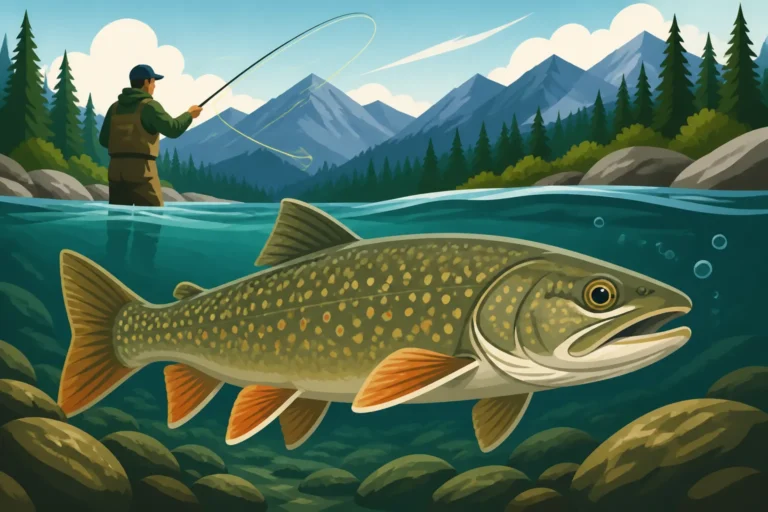
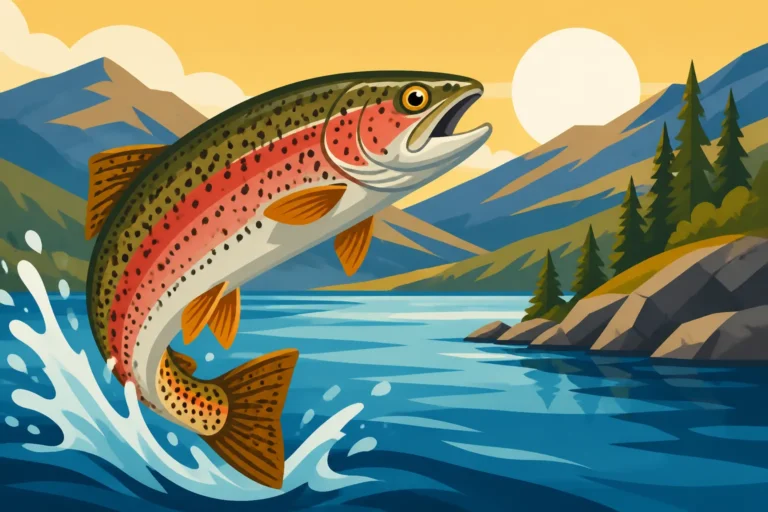
Gerrard Rainbows typically exhibit a sleek, torpedo-like body built for speed and power, perfectly adapted for hunting down kokanee in open water. Their coloration can vary depending on their feeding habits and time of year, but generally, they are a silvery-blue to olive-green on their backs, fading to silvery sides and a white belly. While they do have the characteristic rainbow trout stripe, it might be more subtle or faded in some larger, older fish. Look for the small, irregular black spots scattered across their back, fins, and tail. What truly sets them apart is their sheer bulk and deep body, especially around the shoulder area. Their fins, particularly the tail fin, are often broad and powerful, evidence of their strong swimming capabilities. They often have a more pronounced, almost hooked jaw in mature males, similar to salmon, which is a tell-tale sign of a truly predatory fish.
Compared to other rainbow trout found in smaller lakes or rivers, Gerrards simply look bigger and hardier. Their size alone is often the first clue. An average Kootenay Lake Gerrard will outweigh and outmuscle most other rainbows, even those from productive fisheries.
Gerrard Rainbow Trout vs. Other Kootenay Lake Trout
Kootenay Lake is home to a few different trout species, and it's easy to get them mixed up, especially if you're new to the area.
For instance, you might encounter other strains of rainbow trout, often smaller, that are less exclusively piscivorous. However, the Gerrard's size and distinct predatory build usually make it stand out.
Another common inhabitant of Kootenay Lake is the Bull Trout, a gorgeous native species also known for its predatory nature. Bull trout typically have a dark, olive-green to brown back with pale spots – sometimes pink or yellow – and no black spots on their fins, which is a major distinguishing factor. They also have a larger, more flattened head and a deeper mouth than a rainbow. Bull Trout vs Dolly Varden Identification covers similar species that can often be confused. It's critical to know the difference, as catch limits and regulations can vary significantly between species. If you're unsure, it's always best to practice catch and release and consult the BC Bag and Possession Limits by Species for specific details.
| Feature | Gerrard Rainbow Trout | Bull Trout |
|---|---|---|
| Primary Color | Silvery-blue to olive-green back, silvery sides | Dark olive-green to brown back |
| Spotting Pattern | Small, irregular black spots on back, fins, and tail | Pale spots (pink/yellow) on back; no black spots on fins |
| Body Shape | Sleek, torpedo-like, deep-bodied | More robust, larger, flattened head |
| Mouth/Jaw | Can have a pronounced or slightly hooked jaw in males | Larger, deeper mouth extending past the eye |
| Dietary Focus | Primarily kokanee salmon (piscivorous) | Primarily other fish (piscivorous) |
| Average Size | Often 10-25+ lbs, can exceed 30 lbs | Can reach significant size, often 5-15 lbs, larger specimens exist |
The Lifecycle and Habits of Gerrard Rainbows
Understanding the lifecycle and habits of Gerrard Rainbow Trout is crucial for any angler hoping to successfully target these magnificent fish. Their annual movements, spawning rituals, and feeding patterns are all intricately tied to the Kootenay Lake ecosystem, particularly the presence of kokanee salmon. When you grasp these natural rhythms, you start to see patterns and can anticipate where these trophy fish might be.
Spawning Behavior and Habitat
One of the most defining characteristics of Gerrard Rainbow Trout is their unique spawning migration. While they spend most of their lives in the vast expanse of Kootenay Lake, mature Gerrards undertake an incredible journey each spring, typically from April to early June, to spawn in the Lardeau River, a major tributary flowing into the north end of Kootenay Lake. This specific river system provides the clean, oxygenated gravel beds essential for successful reproduction. During this migration, these usually elusive fish become more concentrated, though still incredibly challenging to catch. The journey is arduous, and the fish are focused solely on perpetuating their species.
It's during this time that strict regulations are often in place to protect the spawning population. Anglers must be acutely aware of BC Fishing Season Dates and Closures and specific rules for the Lardeau River and surrounding areas, which may include tackle restrictions or temporary closures. Responsible angling during this sensitive period means minimizing stress on these crucial spawning fish, ensuring that future generations of Gerrards continue to thrive. Their ability to return to the Lardeau to reproduce, often multiple times, is a testament to their resilience and the health of the Kootenay watershed.
Feeding Patterns and Preferred Forage
As mentioned earlier, the Gerrard Rainbow Trout's diet is overwhelmingly dominated by kokanee salmon. These landlocked sockeye salmon are incredibly abundant in Kootenay Lake, forming the base of the food chain that allows Gerrards to achieve their immense size. The Gerrards essentially follow the kokanee schools throughout the lake, adapting their feeding patterns to the availability and depth of their prey. In spring and early summer, kokanee are often found in shallower waters, making them more accessible. As the lake warms, kokanee move to deeper, cooler waters, and the Gerrards follow suit. This deep-water pursuit often involves long periods of slow trolling, mimicking the movement of these baitfish.
The Gerrards are opportunistic predators, often ambushing individual kokanee from below or darting through schools. Their powerful bodies and keen eyesight make them incredibly efficient hunters. Understanding the kokanee's seasonal movements – their spawning aggregations in the fall, their schooling behavior in open water, and their depth preferences throughout the year – is paramount to locating Gerrards. When you're on the water, pay close attention to signs of kokanee, whether it's bait on your sonar or other anglers successfully targeting them. A good resource for understanding their prey is Kokanee Spawning Season in BC.
Best Times and Locations to Target Gerrards
Catching a Gerrard Rainbow Trout isn't just about showing up with a rod; it's about timing your trip right and knowing where to focus your efforts on a lake as vast as Kootenay. These fish move with the seasons and their food source, so being in the right place at the right time significantly increases your chances.
Seasonal Strategies and Peak Fishing Windows
While you can catch Gerrards year-round, certain seasons offer better odds due to their predictable movements and feeding patterns.
- Spring (April – June): This is often considered prime time, especially after the fish have completed their spawning run in the Lardeau River. Hungry and recovering, they return to the main lake to feed aggressively on kokanee. They might be found in shallower bays and near river mouths as water temperatures begin to rise. However, as the spawning run peaks, fishing on the Lardeau itself can be very restricted. Targeting them as they transition back into the main body of the lake can be incredibly productive.
- Summer (July – August): As Kootenay Lake warms up, Gerrards retreat to deeper, cooler sections of the lake, following the kokanee. This means more vertical fishing, often using downriggers to present lures at specific depths. Early mornings and late evenings can still offer shallower opportunities when the fish move up to feed. It's a challenging time, but big fish are still caught by those who know how to work the depths.
- Fall (September – November): This is another fantastic window, often rivaling spring. Kokanee begin their own spawning migrations, which can concentrate Gerrards near tributary mouths and spawning grounds. The cooler water temperatures also make the Gerrards more active and willing to chase lures higher in the water column. The fall colours around Kootenay Lake also make for an incredibly scenic fishing experience.
- Winter (December – March): Ice fishing for Gerrards is less common due to the lake's immense size and deep, unpredictable ice conditions. However, open-water fishing is still possible in certain areas that remain ice-free, though often very cold. Fish activity slows down, but the possibility of a truly massive, solitary Gerrard is always there for the dedicated angler.
Kootenay Lake Hotspots and Access Points
Kootenay Lake is enormous, stretching over 100 kilometers (60 miles) long. Focusing on key areas is essential.
- North End near the Lardeau River: Post-spawn, the area around the mouth of the Lardeau River is a major congregation point for hungry Gerrards. Drifting or slow-trolling spoons and bucktail flies in this vicinity can be highly effective. The nearby communities offer good launch points.
- West Arm: This section of the lake near Nelson and Castlegar can also hold good numbers of Gerrards, particularly during periods when kokanee are abundant. It's often more sheltered from strong winds than the main lake, making it a good option on blustery days.
- Main Lake Basin: The vast, open waters of the main lake, especially around the middle and south end, are where you'll find schools of kokanee, and thus, the Gerrards. This is deep-water trolling territory. Look for structure and drop-offs on your sonar where kokanee might congregate. Some popular access points include public boat launches near Balfour, Ainsworth, and Riondel. For a general overview, check out Best Fishing Lakes in British Columbia.
Always check local conditions and fishery notices, as specific areas might have temporary closures or special regulations to protect vulnerable populations. Using a detailed marine chart or a good GPS system with lake contours will be invaluable for identifying prime feeding grounds and safe navigation.
Effective Techniques and Gear for Gerrard Rainbow Trout
Targeting Gerrard Rainbow Trout is a unique challenge that often requires specialized techniques and robust gear. These are not your average pond trout; they are powerful predators that demand respect from your tackle box. Getting your presentation right is paramount, as these fish can be surprisingly selective despite their aggressive nature.
Trolling and Downrigging Strategies
For many Kootenay Lake anglers, trolling is the go-to method for Gerrards, especially in the vast open waters where these fish cruise for kokanee.
- Speed and Depth: Varying your trolling speed is crucial. Start slow, then incrementally increase your speed until you find what triggers bites. Typically, speeds between 2.0 and 3.5 mph are effective, but sometimes slower or faster can work. Downriggers are indispensable for getting your lures down to the precise depth where the kokanee are holding, which can range from 30 to over 100 feet deep. Trolling Techniques for BC Lake Trout offers excellent general advice. Having a good fishfinder is essential for locating bait schools and identifying thermal layers where fish are active. Knowing Best sonar settings for finding structure on Kootenay Lake will be a huge advantage.
- Lure Selection: Imitating kokanee is key. Long, slender spoons in silver, blue, green, or chartreuse patterns are highly effective. Favourites include Gibbs-Delta, Coyote, or Apex spoons. Bucktail flies, often trolled behind a dodger or flasher, are also incredibly successful, especially in patterns that mimic a wounded kokanee. You'll want a variety of sizes and colours to experiment with.
- Leader Length and Line: Use a strong main line, typically 15-20 lb monofilament or braided line, with a fluorocarbon leader of 10-15 lb test. The leader should be long enough to allow your lure to swim naturally, often 20-50 feet behind a dodger or flasher, or 6-10 feet directly behind your downrigger release clip if trolling a spoon.
Fly Fishing and Lure Presentations
While trolling dominates, fly fishing for Gerrards is possible, particularly during the spring and fall when fish might move shallower or near river mouths. This is an incredible challenge and often requires a boat to access prime areas.
- Fly Patterns: Streamer patterns that imitate kokanee are your best bet. Think large, flashy flies in silver, blue, green, and white. Flies like the Mickey Finn, Clouser Minnow, or specific kokanee fry patterns tied on heavy-duty hooks are essential.
- Technique: Trolling streamers behind a fly line, often with a sinking tip or full sinking line, can be effective. Alternatively, if you find fish congregating in shallower areas, casting and stripping large streamers can elicit explosive strikes. This is a game for experienced fly anglers, demanding powerful rods (8-10 weight) and strong leaders to handle these hard-fighting fish.
For traditional lure presentations, casting large spoons or heavy spinners from shore (if accessible to deep water) or from a boat can also work, especially in the spring. Again, focus on mimicking kokanee.
Essential Gear for Targeting Trophy Gerrards
Don't skimp on your gear when chasing Gerrards. A 20-pound fish in Kootenay Lake is not to be trifled with.
- Rods and Reels: For trolling, a medium-heavy to heavy action trolling rod (8-10.5 feet) paired with a high-quality level-wind or baitcasting reel spooled with 15-25 lb monofilament or braid is recommended. For fly fishing, a sturdy 8-10 weight rod with a matching reel and a reliable drag system is crucial. Brands like Fenwick, Shimano, and Penn are popular choices among BC anglers for their durability.
- Line: As mentioned, strong monofilament or braided mainline, coupled with fluorocarbon leaders (10-15 lb test), offers the strength and stealth needed. You can find a good selection of these lines on Amazon for your next trip.
- Downriggers: If you're serious about trolling, a pair of electric or manual downriggers are a must. They allow you to precisely control your lure's depth, a critical factor when fish are holding deep.
- Electronics: A reliable fishfinder with GPS and detailed mapping is invaluable. It helps locate baitfish, identify underwater structure, and navigate safely on the large lake.
- Landing Net: A large, sturdy landing net with a deep, rubberized mesh is essential for safely landing and releasing big Gerrards. Avoid knotted nylon nets that can damage fins and slime coats.
- Other Essentials: Always carry appropriate safety gear, including life jackets, and a cooler with ice to properly care for any fish you decide to retain within legal limits. Don't forget your British Columbia Fishing License Guide for 2026!
Conservation and Responsible Angling Practices
The Gerrard Rainbow Trout population, while robust, is a precious resource. The incredible trophy size these fish achieve makes them highly sought after, and as such, responsible angling practices are paramount to ensure their sustainability for future generations. British Columbia has a strong conservation ethic, and anglers play a vital role in maintaining healthy fisheries.
Understanding Regulations and Limits
Before you even launch your boat or cast a line into Kootenay Lake, it's absolutely crucial to familiarize yourself with the current fishing regulations. These regulations are designed to protect the Gerrard population, particularly the large, mature spawners. The Province of British Columbia publishes a comprehensive Freshwater Fishing Regulations Synopsis, which is available online and at most tackle shops. Pay special attention to:
- Bag and Possession Limits: There are strict limits on how many Gerrards (rainbow trout over a certain size) you can keep per day and how many you can have in your possession. These limits are often very restrictive, sometimes as low as one fish over a specific length. BC Bag and Possession Limits by Species will provide detailed information.
- Size Restrictions: Often, there are minimum and/or maximum size limits. These are put in place to protect juvenile fish and the large, reproductively valuable older fish. Always measure your fish carefully.
- Seasonal Closures: Specific areas, especially spawning tributaries like the Lardeau River, may have seasonal closures or gear restrictions during the critical spawning period. Ignoring these closures can have severe consequences for both the angler and the fish population. Consult BC Fishing Season Dates and Closures for up-to-date information.
- Tackle Restrictions: Certain baits or methods might be prohibited in specific areas or during certain times to reduce harm to fish. Always verify these details for Kootenay Lake.
Ignorance of the regulations is never an excuse. Always double-check the most current synopsis before your trip. Getting caught fishing without the proper license or violating regulations can result in hefty fines and equipment seizure, as outlined in Fishing Without a License in BC: Penalties.
Catch and Release Best Practices for Large Trout
Given the trophy nature and importance of Gerrard Rainbows, many anglers choose to practice catch and release, especially for the largest specimens. Even if you plan to retain a legal-sized fish, responsible handling is essential to ensure its survival if you decide to release it or to maintain the quality of the meat if keeping it.
Here are key best practices for catch and release:
- Minimize Fight Time: Use appropriate gear that can subdue the fish relatively quickly without totally exhausting it. Prolonged fights lead to higher mortality rates.
- Use Barbless Hooks: Barbless hooks greatly reduce injury to the fish and make removal much faster and easier. You can usually crimp down the barbs on existing hooks with a pair of pliers.
- Keep the Fish in the Water: This is perhaps the most critical rule. Avoid removing large Gerrards from the water entirely if you intend to release them. Their internal organs are not designed to support their weight out of water, and even a few seconds can cause significant damage.
- Wet Your Hands: Always wet your hands before touching the fish. Dry hands can remove the fish's protective slime coat, making it vulnerable to disease and infection.
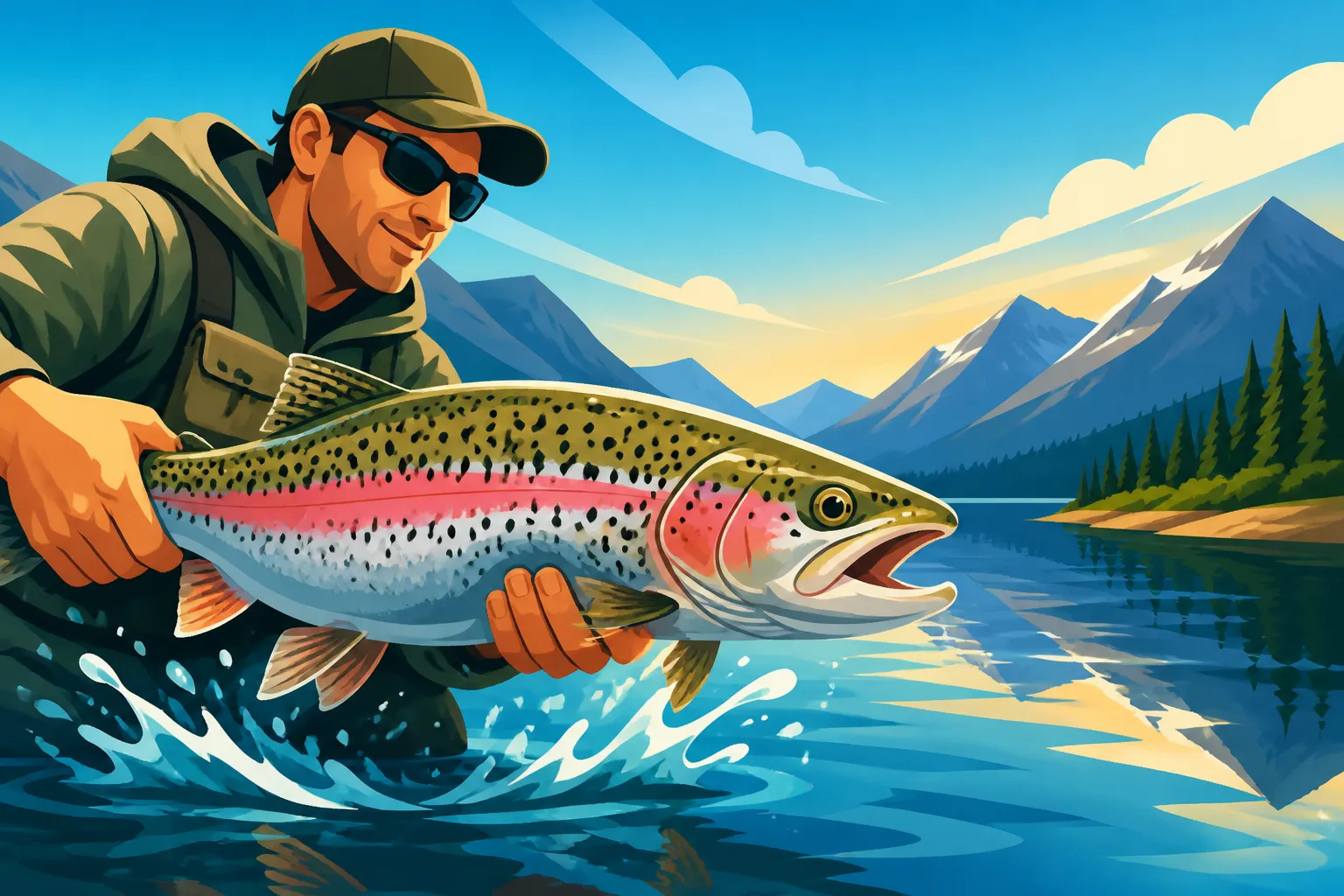
- Support the Fish Properly: If you must momentarily lift the fish for a quick photo, support its weight horizontally with two hands – one under the tail and one gently under the belly, never by the jaw or gills. Do not squeeze.
- Use a Rubberized Net: A large, knotless, rubberized landing net is ideal. It protects the fish's scales, fins, and slime coat much better than traditional nylon nets.
- Quick Hook Removal: Use pliers or hemostats to quickly and carefully remove the hook. If the hook is deeply embedded and removal would cause more damage, cut the line as close to the hook as possible.
- Revive the Fish: Hold the fish gently upright in the water, facing into a gentle current (if applicable), until it can swim away under its own power. Never throw a fish back; ensure it's fully revived.
By following these practices, you contribute to the health and vitality of the Kootenay Lake Gerrard Rainbow Trout fishery, ensuring that these incredible fish continue to inspire anglers for generations to come.
Disclaimer
This article is for general informational purposes only and does not constitute professional advice. Laws, prices and regulations vary by location and change over time. Consult a qualified professional for guidance on your specific situation.