BC annual fishing license expiration date
It's happened to the best of us: you're planning an exciting fishing trip, gear all laid out, maybe even got that new lure you've been eyeing, and then suddenly it hits you – "Is my fishing license still valid?" That moment of panic, scrambling to find a tiny piece of paper or log into a website, is a frustration every angler in British Columbia knows. This comprehensive guide is here to shed light on the BC annual fishing license expiration date, helping you understand the system, manage your renewals, and avoid the dreaded "fishing without a license" scenario.
The Annual Cycle of Your BC Fishing License
For those of us who cherish our time on the water in British Columbia, understanding the validity of our fishing license is as crucial as knowing your knot-tying skills or the best time of year to fish in BC. It’s not just a piece of paper; it’s your legal permission to enjoy the incredible angling opportunities our province offers. But unlike many other yearly subscriptions or memberships, fishing licenses in BC operate on a standardized, fixed schedule.
Understanding the Standard Expiration Date
Let's cut right to the chase: almost all annual freshwater and tidal (saltwater) fishing licenses in British Columbia expire on a specific, non-negotiable date: March 31st. This is a hard deadline, regardless of when you originally purchased your license. So, if you bought your annual license on April 1st last year, it will be valid for a full year. However, if you bought it, say, on September 15th, it will still expire on March 31st of the following year, giving you less than seven months of validity for that specific purchase.
This fixed expiration date can certainly feel like a bit of a raw deal if you're a late-season purchaser. Imagine you decide in February that you want to get into ice fishing or try for some early spring trout. You buy your annual license, use it for a month or two, and then suddenly, come March 31st, it's expired! It’s a common point of confusion and sometimes irritation for anglers, especially newcomers to BC or those accustomed to licenses that run for exactly 365 days from the purchase date. However, understanding this system is the first step to navigating it effectively and ensuring you’re always compliant.
Why a Fixed Expiration Date?
You might wonder why the province opts for such a seemingly rigid system. Why not just make licenses valid for one year from the date of purchase, like a car insurance policy? The answer lies in administrative efficiency and regulatory consistency. The fixed March 31st expiration date aligns seamlessly with the provincial government's fiscal year and, more importantly, with the annual cycle of updating and implementing fishing regulations.
Every year, Fisheries and Oceans Canada (DFO) and the BC government conduct extensive research, consult with stakeholders, and review countless data points to determine the health of fish stocks, assess environmental conditions, and set the rules for the upcoming fishing season. This often culminates in the release of new or updated regulations, bag limits, and conservation measures, typically coming into effect around April 1st. By having all annual licenses expire on March 31st, it creates a clean break, allowing new regulations to coincide with the renewal period for licenses. This simplifies enforcement for conservation officers, streamlines data collection, and ensures that all anglers are operating under the most current set of rules for the new angling year. While it might seem like a minor detail, this synchronization is vital for the sustainable management of our precious fish populations and the overall health of BC's aquatic ecosystems.
Different License Types and Their Expiration Nuances
While the general rule of March 31st applies to annual licenses, it’s crucial to recognize that British Columbia offers a variety of license types, each with its own specific validity period. Misunderstanding these differences can lead to unintended non-compliance, which is never a fun situation to be in when you’re out on the water.
Freshwater vs. Tidal Waters Licenses
In British Columbia, you need a separate license for freshwater fishing and tidal (saltwater) fishing. It's a common oversight for anglers who might fish both environments. The good news, however, is that for annual licenses, both the freshwater and tidal licenses follow the same expiration date: March 31st. So, if you have both, they will both need to be renewed simultaneously at the end of March each year.
The real complexity often arises when targeting species that migrate between fresh and saltwater, such as salmon. For instance, if you're planning on salmon fishing in a freshwater river like the Fraser, you’ll actually need both a freshwater angling license and a tidal waters fishing license, along with the appropriate salmon conservation stamps. This is clearly outlined in guides like BC Freshwater vs Tidal Waters License, Explained. If one of your annual licenses expires on March 31st and you forget to renew it, you could be fishing illegally even if you renewed the other one. Always double-check both if you're pursuing multi-habitat species, especially around that crucial end-of-March window.
Short-Term and Youth Licenses
Not everyone needs or wants an annual license. British Columbia offers convenient short-term options that cater to visitors, those trying fishing for the first time, or residents who only fish a few times a year. These include 1-day, 3-day, and 5-day licenses. The expiration for these is straightforward: they are valid for the specific number of consecutive days you select, typically from the date and time of purchase, or for the chosen calendar days. For example, a 1-day license purchased on a Monday morning might be valid for 24 hours, or simply until the end of that specific Monday, depending on how it's issued. It's always best to check the exact wording on your purchased short-term license for clarity. You can find more details on options like the BC 1-Day Non-Resident Freshwater License Cost if you're visiting.
When it comes to our younger anglers, British Columbia has some specific exemptions. Generally, children under the age of 16 do not need a basic freshwater fishing license. However, there are nuances. For instance, even if exempt from the basic license, they might still need to acquire certain conservation stamps if they wish to retain specific species like salmon or steelhead. For tidal waters, while youth under 16 don't need to purchase a license, they still need to register for one (which is free) and carry it with them. This is important to remember, as explained in resources like BC Youth Fishing License Exemption Under 16 and BC Fishing License Age Requirements. These rules are in place not to make things difficult, but to help manage fish populations and ensure that everyone, regardless of age, understands their role in conservation.
Conservation Surcharges and Stamps
Beyond the basic fishing license, many anglers will also need to purchase specific conservation surcharges or stamps, depending on the species they intend to target. The most common of these is the Salmon Conservation Stamp, required for anyone wishing to retain any species of Pacific Salmon in either fresh or tidal waters. Other stamps exist for species like Steelhead, Sturgeon, and even Rainbow Trout in specific designated waters.
Here’s the critical point about these stamps and surcharges: they are intrinsically linked to your underlying annual fishing license. If your annual freshwater or tidal license expires on March 31st, then any conservation stamps you’ve purchased for that angling year expire simultaneously. You cannot legally retain salmon, steelhead, or any other species requiring a stamp with an expired basic license, even if you just bought the stamp a month prior. Think of the stamps as an add-on feature that only works when the main system (your license) is active. This interconnectedness is a fundamental aspect of British Columbia’s fisheries management, detailed further in resources such as BC Salmon Conservation Stamp Rules and BC Conservation Surcharge Stamps, Explained. So, when you renew your annual license each spring, remember to also purchase new stamps if you plan on targeting those specific, often highly managed, species.
Practical Tips for Managing Your License & Avoiding Penalties
Fishing in British Columbia is a privilege, and like any privilege, it comes with responsibilities. One of the most basic yet often overlooked responsibilities is ensuring your fishing license is always current. Falling short on this can lead to uncomfortable encounters with conservation officers and, potentially, costly penalties.
Marking Your Calendar and Setting Reminders
The fixed March 31st expiration date for annual BC fishing licenses is easy to forget, especially when you bought it months earlier in the fishing season. It's not uncommon for anglers, caught up in the excitement of a new fishing year, to suddenly realize in mid-April that they've been fishing on an expired license. This oversight can quickly turn a relaxing day into a stressful one if you encounter a conservation officer.
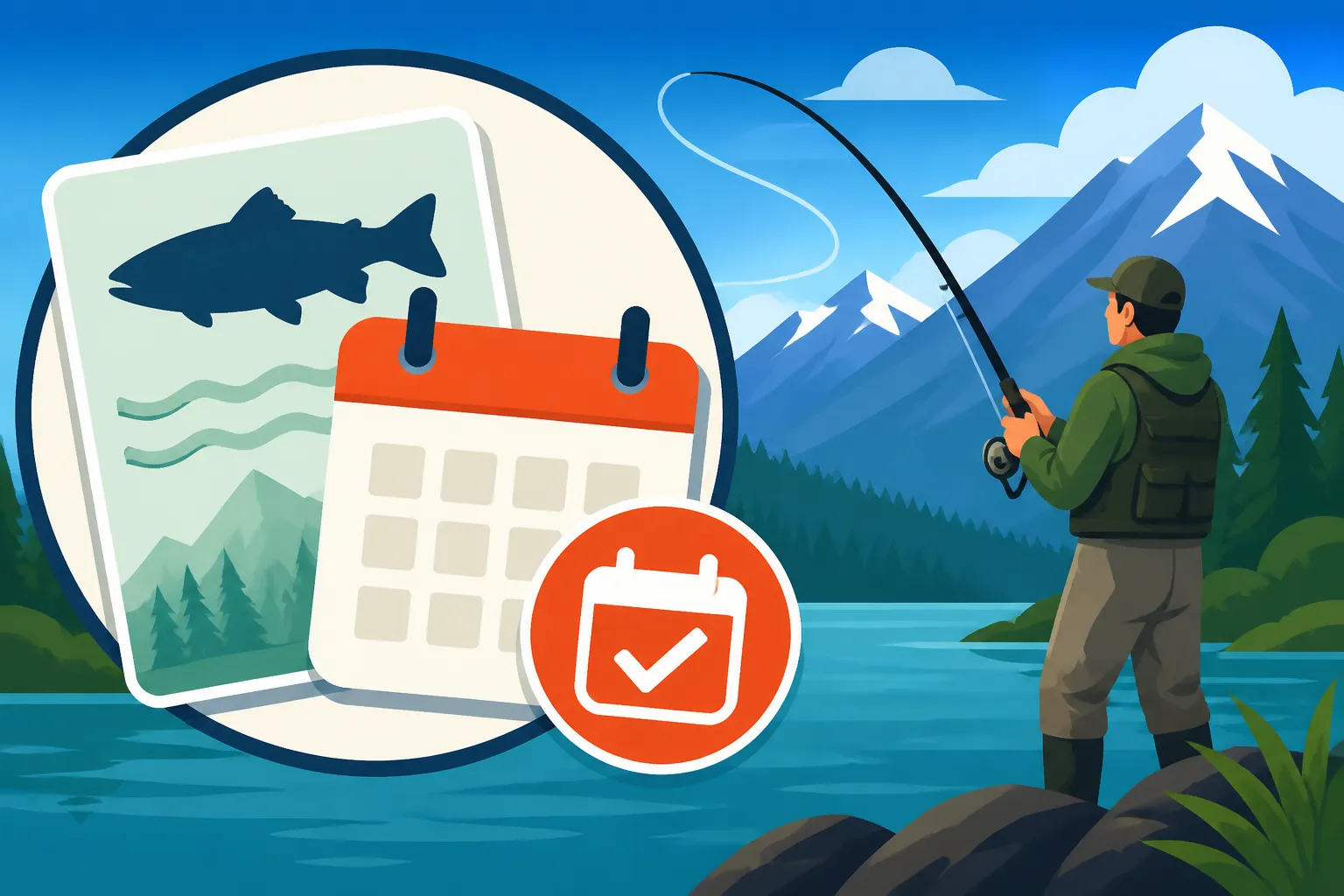
To avoid this unnecessary stress, treat your fishing license expiration like any other important annual date. Set a reminder on your smartphone for early to mid-March, giving you plenty of time to renew. You can even set a recurring annual reminder. If you prefer a more traditional approach, mark it clearly on your physical calendar or jot it down in your fishing journal. The key is to make it impossible to forget. Imagine the frustration of reeling in the catch of a lifetime only to realize you can't legally keep it, or worse, facing a significant fine for fishing without a valid license. These penalties, as outlined in guides like Fishing Without a License in BC: Penalties, can range from hundreds to thousands of dollars, far exceeding the cost of an annual license. A simple reminder can save you a lot of headache and heartache.
Renewing Your License: Online and In-Person
Gone are the days when you absolutely had to trek to a government office or a specific vendor to get your fishing license. British Columbia has streamlined the renewal process, offering both convenient online options and traditional in-person avenues.
The most popular and often easiest way to renew your BC fishing license is online through the provincial government's angling licensing system. This platform allows you to purchase both freshwater and tidal licenses, along with any necessary conservation stamps, from the comfort of your home. It's usually available 24/7, making it perfect for those late-night "oh no, I forgot!" moments. The process is typically quick and straightforward, and once completed, you'll receive a digital copy of your license that you can save to your phone or print out immediately. More details on this process can be found in How to Buy a BC Fishing License Online.
If you prefer a more personal touch or need assistance, you can still renew your license in person at various authorized vendors across the province. These often include local sporting goods stores, tackle shops, and some general stores in fishing communities. These vendors are equipped to help you navigate the process, answer questions, and print your license on the spot. It's a great way to support local businesses and often pick up some last-minute bait or gear at the same time. You can search for authorized vendors in your area by referring to resources like Where and How to Buy a BC Fishing License. Regardless of your chosen method, aiming to renew in the first few weeks of March will prevent any last-minute stress, website congestion, or potential technical glitches.
Digital vs. Physical Copies
In our increasingly digital world, British Columbia recognizes the convenience of electronic documents. For your fishing license, you have the flexibility to carry either a digital copy on your smartphone or a printed paper copy. Both are considered valid proof of license.
If you choose the digital route, make sure your phone is charged and the license is easily accessible. Saving a screenshot or a PDF copy to your device's "favorites" or a dedicated fishing folder can save you precious minutes if a conservation officer requests to see it. There’s nothing worse than fumbling through emails or trying to load a webpage with spotty cell service. A durable, waterproof phone case is also a wise investment to protect your digital lifeline while on the water.
For those who prefer a physical document, printing a copy of your license is always an option. Many anglers print several copies: one for their wallet, one for their tackle box, and even one to leave in their vehicle. If you go this route, consider laminating it or keeping it in a waterproof document holder to protect it from the elements. Whether digital or physical, the crucial point is that your license, along with any required stamps, must be in your possession and readily available for inspection at all times while you are engaged in fishing activities. Detailed guidelines on Printing or Carrying a Digital Fishing License in BC can help you make the best choice for your angling style.
Planning Your Fishing Year Around License Cycles
Smart anglers don't just react to license expiration; they plan around it. By understanding the annual cycle and making informed decisions about when and how you purchase your license, you can maximize your angling opportunities and ensure you're always fishing within the rules.
Strategic Purchase Timing
Given the fixed March 31st expiration date, the timing of your annual license purchase can significantly impact how much value you get from it. The absolute "best" time to purchase an annual BC fishing license to maximize its duration is on or after April 1st. A license bought on April 1st will be valid for a full 12 months, right up until March 31st of the following year. This is ideal if you're planning a full season of fishing.
Consider a hypothetical: Angler A buys an annual license on April 5th. It's valid until March 31st next year – almost a full year of fishing. Angler B, however, gets an unexpected chance to fish in mid-February and buys an annual license then. Their license is only valid for about six weeks before it expires on March 31st. In this scenario, Angler B would have been better off purchasing a short-term license, perhaps a 1-day or 3-day option, for that specific trip. This would have saved them money and allowed them to buy a fresh annual license on April 1st for the full season. Evaluate your fishing plans carefully. If you're only making a single, late-season trip before the March 31st deadline, a short-term license is often the most cost-effective and logical choice.
Keeping Up-to-Date with Regulations
Another critical aspect of the annual license cycle, and one that often catches anglers off guard, is the synchronization of license renewals with regulatory updates. The period around April 1st isn't just about new licenses; it's also when new or revised fishing regulations for British Columbia are often implemented. What was legal last year might not be this year, and vice-versa.
It's absolutely essential to consult the latest edition of the Freshwater Fishing Regulations Synopsis for freshwater fishing, and the current Pacific Region Salmon and Recreational Fishing Regulations for tidal waters. These documents are your fishing bible, detailing everything from open seasons and bag limits to gear restrictions and conservation areas. Relying on outdated information can lead to inadvertent violations. Guides like BC Fishing Regulations Explained and Reading the BC Freshwater Fishing Regulations Synopsis are invaluable resources. Beyond the annual synopsis, it’s also crucial to regularly check for in-season closures or regulation changes that can occur at any time due to conservation concerns or fluctuating fish stocks. These are often published as Fishery Notices, and knowing how to access and interpret them, as detailed in BC Fishery Notices and In-Season Closures, Explained, is a hallmark of a responsible and successful angler in BC. Make it a habit to check before every trip, especially early in the season, to ensure you're compliant with the most current rules.
License Validity Overview
To summarize the key points on license validity in British Columbia, here’s a quick overview:
| License Type | Expiration Date/Period | Key Considerations |
|---|---|---|
| Annual Freshwater License | March 31st of the following year | Fixed date, regardless of purchase date. Best to buy April 1st or later for full year validity. |
| Annual Tidal Waters License | March 31st of the following year | Fixed date, aligns with freshwater license. Essential for saltwater species and often for salmon in freshwater. |
| 1-Day Freshwater/Tidal | 24 hours from purchase or end of day | Valid for chosen day(s) only. Ideal for short trips or trying fishing. |
| 3-Day Freshwater/Tidal | 72 hours from purchase or end of day | Valid for chosen consecutive days. Good for weekend trips. |
| 5-Day Freshwater/Tidal | 120 hours from purchase or end of day | Valid for chosen consecutive days. Offers more flexibility than 1- or 3-day options. |
| Conservation Surcharges | Expires with associated annual license | Salmon, Steelhead, Sturgeon, Rainbow Trout stamps are only valid when the base annual license is active. |
| Youth (Under 16) Freshwater | No basic license needed | Exempt from basic license, but still need to follow regulations and may need stamps for retention. |
| Youth (Under 16) Tidal | Must register for free license | No purchase needed, but mandatory registration and carrying of the free license. Follows March 31st renewal. |
This table provides a concise reference to help you quickly identify the validity of different BC fishing license types. Always double-check the specifics on your actual purchased license.
Disclaimer
The information provided in this guide is for general informational purposes only and does not constitute legal advice. While we strive to keep the information up-to-date and accurate, regulations can change. It is the responsibility of every angler to consult the most current British Columbia Freshwater Fishing Regulations Synopsis and the Pacific Region Salmon and Recreational Fishing Regulations, as well as any in-season Fishery Notices, before engaging in any fishing activity. Always adhere to all local, provincial, and federal fishing laws and regulations.