BC Steelhead Conservation Surcharge Stamp
It's incredibly frustrating when you're just trying to enjoy a day on the water, pursuing the magnificent steelhead in British Columbia, only to find yourself buried under layers of regulations and wondering if you've got all the right "stamps" for your license. It feels like every year there's a new nuance, a fresh fee, and another rulebook to decipher. Trust me, you're not alone in feeling this way. This guide is here to untangle the complexities of the BC Steelhead Conservation Surcharge Stamp, explaining exactly what it is, why it matters, and how to make sure you're legally and responsibly prepared for your next steelhead adventure.
Understanding the BC Steelhead Conservation Surcharge Stamp
Anglers often come across various "surcharges" or "stamps" when purchasing their fishing licenses in British Columbia, and it can be a bit of a head-scratcher. The BC Steelhead Conservation Surcharge Stamp is one such essential addition, specifically designed for those who wish to fish for or retain (when permitted, which is rare for wild steelhead) steelhead in freshwater systems across the province. It’s not just another fee; it's a direct investment in the future of these incredible fish. Think of it as your personal contribution to keeping those iconic runs alive and thriving for generations to come. Without this critical funding mechanism, many of the vital conservation projects that protect steelhead habitats and populations simply wouldn't exist.
The 'Why' Behind the Surcharge
The existence of the Steelhead Conservation Surcharge Stamp isn't about making fishing more expensive or complicated; it's rooted deeply in the urgent need for conservation. Steelhead populations across British Columbia, particularly wild populations, face numerous threats. These can range from habitat degradation due to logging, agriculture, and urban development, to the impacts of climate change affecting water temperatures and flow regimes, and even historical overfishing pressures. These fish are highly sensitive indicators of watershed health, and their decline signals broader environmental issues that affect us all.
The surcharge provides dedicated funding that goes directly towards initiatives aimed at mitigating these threats. This includes critical habitat restoration projects, scientific research to better understand steelhead life cycles and challenges, stock assessment programs to monitor population health, and enforcement efforts to ensure sustainable fishing practices. For instance, funds might support projects to plant native vegetation along riverbanks to stabilize soil and lower water temperatures, or to remove old culverts that block fish passage. It’s a collective effort, and every angler who purchases this stamp plays a tangible part in the ongoing fight to protect these magnificent, ocean-going rainbow trout.
Who Needs This Stamp
Navigating who exactly needs the BC Steelhead Conservation Surcharge Stamp can sometimes feel like a pop quiz. The short answer is: if you are 16 years of age or older and intend to fish for steelhead in freshwater in British Columbia, you need this stamp. This applies to both residents of British Columbia and non-residents, including those from other Canadian provinces and international visitors. There's no separate stamp for different residency statuses; it's a universal requirement once you meet the age and intent criteria.
It's crucial to remember that this stamp is an add-on to your primary freshwater fishing license. It's not a standalone license that grants you permission to fish. You absolutely must first possess a valid BC Freshwater vs Tidal Waters License, Explained for the appropriate duration (annual, 1-day, 8-day, etc.). The steelhead stamp then complements that base license, specifically authorizing your pursuit of steelhead. Even if you only accidentally catch a steelhead while targeting other species, if you don't have the stamp, you could still be in violation of regulations, so it's always better to be prepared if there's any chance you might encounter these fish. Thankfully, the BC Youth Fishing License Exemption Under 16 means younger anglers typically don't need this specific stamp, but it's always wise to double-check current regulations for any changes or specific exceptions.
How the Steelhead Surcharge Funds Conservation
When you fork over that extra bit for the Steelhead Conservation Surcharge Stamp, you're probably wondering, "Where does this money actually go?" And honestly, that's a fair question. Unlike some general revenue streams, the funds generated from these specific conservation stamps are typically earmarked for very targeted initiatives. This transparency is key to building angler confidence and showing that their contributions genuinely make a difference. The money doesn't disappear into a black hole; it's channeled directly into programs and projects that have a measurable impact on steelhead populations and their critical habitats.
Projects Supported by Your Contribution
The funds from the Steelhead Conservation Surcharge Stamp are a lifeline for numerous projects across British Columbia. These initiatives are often spearheaded by government agencies like the BC Ministry of Forests, alongside dedicated non-profit organizations and local watershed groups. Here are some real-world examples of where that money is put to work:
- Habitat Restoration and Enhancement: This is a huge one. Funds are used to restore degraded spawning and rearing habitats. This could involve removing invasive species that compete with native vegetation, stabilizing eroding stream banks with bioengineering techniques, planting native trees and shrubs to provide shade and cool water temperatures, or reintroducing large woody debris to create complex in-stream habitats. Imagine a bulldozer removing an old, impassable culvert under a logging road, replaced by a fish-friendly bridge – that's the kind of project directly funded by these stamps, opening up miles of crucial spawning grounds for steelhead.
- Scientific Research and Monitoring: Understanding steelhead is paramount to protecting them. Your contributions support vital research on their migration patterns, population dynamics, genetic diversity, and responses to environmental changes. This scientific data informs management decisions, helps identify critical bottlenecks in their life cycle, and ensures conservation efforts are evidence-based. It might involve acoustic tagging fish to track their movements, conducting redd (nest) counts to assess spawning success, or analyzing water quality parameters.
- Stock Assessment and Management: To manage steelhead sustainably, we need to know how many there are and how healthy the populations are. The surcharge helps fund rigorous stock assessment programs, including data collection on catch rates, size, and age structure of steelhead populations. This information is critical for setting appropriate fishing regulations, like BC Steelhead Season Dates or retention limits (when applicable), to ensure that angling pressure remains sustainable and does not jeopardize recovery efforts.
- Public Education and Engagement: Conservation isn't just about fish; it's about people. Funds are also allocated to educational programs that raise public awareness about the importance of steelhead conservation, responsible angling practices, and watershed stewardship. This includes workshops for anglers, outreach to local communities, and the creation of informative materials. Many conservation groups rely on these funds to educate the next generation of stewards.
- Enforcement and Compliance: Unfortunately, not everyone adheres to the rules. The surcharge helps support the enforcement efforts of conservation officers who patrol rivers and ensure anglers are complying with fishing regulations, including those pertaining to steelhead. This protects legal anglers and, more importantly, the fish themselves from illegal or unsustainable practices.
These projects aren't abstract; they are tangible actions that directly benefit steelhead and the health of our freshwater ecosystems. For instance, organizations like the Freshwater Fisheries Society of BC, which is a major player in freshwater conservation, often utilize funds from these types of stamps to support their various initiatives, including stocking programs for other species and habitat work that indirectly benefits wild fish.
The Role of Anglers in Steelhead Recovery
As anglers, we have a unique connection to the resource. We are often the first to notice changes in fish populations or habitat health, and our passion for the sport naturally extends to a desire to see these fish thrive. By purchasing the Steelhead Conservation Surcharge Stamp, you’re not just paying a fee; you’re stepping up as a direct conservation partner. This stamp empowers you to be an active participant in the recovery and long-term sustainability of steelhead.
Beyond the financial contribution, anglers play an enormous role in data collection and ethical practice. Many dedicated steelhead anglers voluntarily participate in citizen science programs, reporting catch data, water conditions, and observations that are invaluable to researchers. Furthermore, practicing stringent catch-and-release techniques is paramount, especially for wild steelhead populations, which are often catch-and-release only. Understanding how to properly handle fish to minimize stress and injury, as detailed in sections like How to Catch Steelhead in BC and Steelhead Fishing in BC, is a direct extension of the conservation ethic the stamp represents. Your actions on the water, combined with your financial support, create a powerful force for steelhead recovery.
Cost and Acquisition of the Steelhead Surcharge Stamp
Alright, let's talk brass tacks: how much does this thing cost, and where do you actually get it? Understanding the practicalities of acquiring your BC Steelhead Conservation Surcharge Stamp is just as important as knowing why it exists. The pricing structure is relatively straightforward, and purchasing options are designed to be accessible, whether you prefer shopping online or visiting a local vendor.
Current Costs and Variations
As of my last check, the BC Steelhead Conservation Surcharge Stamp typically has a single price point for all anglers, regardless of residency. This differs from the base fishing license, where you'll find significant distinctions between Resident vs Non-Resident Fishing License Costs in BC. For the steelhead stamp, everyone pays the same price, reinforcing the idea that steelhead conservation is a universal concern.
While exact figures can fluctuate slightly from year to year, the cost for the Steelhead Conservation Surcharge Stamp is generally quite modest, usually in the range of $10 to $15. This small amount, when aggregated across thousands of anglers, forms a substantial fund for conservation. It's important to always check the most up-to-date BC Freshwater Fishing Regulations Synopsis or the official government website before purchasing, as fees can be subject to change.
Let's look at a typical breakdown for an annual license to give you an idea of how it stacks up:
| License Type | Base Cost (Approx. CAD) | Steelhead Surcharge (Approx. CAD) | Total (Approx. CAD) |
|---|---|---|---|
| Resident Annual Freshwater | $36 | $11 | $47 |
| Non-Resident Canadian Annual | $55 | $11 | $66 |
| Non-Resident Non-Canadian Annual | $80 | $11 | $91 |
Note: These are approximate costs for illustrative purposes. Always verify current prices on the official BC government fishing regulations website or at authorized vendors.
Where to Purchase Your Stamp
Getting your Steelhead Conservation Surcharge Stamp is thankfully a pretty simple process. You have a few convenient options, allowing you to choose what works best for your schedule and location:
- Online Through the Official BC Government Licensing System: This is by far the easiest and most common method for many anglers. The BC government's angling licensing system allows you to purchase your base freshwater license and add any necessary stamps, including the Steelhead Conservation Surcharge, all in one go. You simply select your desired license type, add the steelhead stamp, pay securely, and then you can either print your license at home or carry a digital version on your smartphone. The process is streamlined and ensures you have all the necessary endorsements before you even leave the house. You can find detailed instructions on How to Buy a BC Fishing License Online.
- Authorized Vendors: Many tackle shops, sporting goods stores, and even some convenience stores across British Columbia are authorized vendors for fishing licenses and stamps. This is a great option if you prefer to buy in person, want to ask questions, or need to pick up some last-minute gear (maybe even check out some new flies or lures on Amazon beforehand!). These vendors are usually knowledgeable about local regulations and can help ensure you get the correct licenses and stamps for your planned fishing trip.
- Service BC Centres: Provincial government Service BC Centres also typically sell fishing licenses and stamps. While less common for many anglers compared to online or tackle shops, it's another reliable option, especially if you're dealing with specific inquiries or prefer government service points.
Remember, once purchased, you must carry proof of your license and all required stamps with you while fishing. Whether it's a printed copy or a digital version on your phone, you need to be able to present it to a conservation officer if requested. Make sure your phone is charged if you're going digital, or consider having a laminated paper copy for rugged adventures. You can learn more about Printing or Carrying a Digital Fishing License in BC to ensure you're always compliant.
Important Regulations and What the Stamp Doesn't Cover
It’s a common misconception that once you have the Steelhead Conservation Surcharge Stamp, you’re all set to go. While it's an absolutely necessary piece of the puzzle, it's far from the only regulation you need to consider. Think of it this way: the stamp grants you permission to pursue steelhead, but it doesn't dictate how, when, or where you can do it, nor does it override other critical rules designed to protect these vulnerable fish. Being a responsible angler in BC means staying informed about the entire regulatory framework.
Beyond the Stamp: Other Licensing Requirements
The Steelhead Conservation Surcharge Stamp is just one component of a legal fishing setup. Here's what else you absolutely need, and why it's so important to understand the hierarchy of regulations:
- Your Primary Freshwater Fishing License: This is the foundational requirement. Before you even think about a steelhead stamp, you must have a valid British Columbia Fishing License Guide for 2026. This license grants you the general right to fish in freshwater. It comes in various durations (annual, 1-day, 8-day for non-residents, etc.) and is specific to freshwater. If you're heading out for steelhead, you're definitely in freshwater territory. Without this base license, all other stamps and surcharges are moot.
- Knowledge of BC Fishing Regulations Explained: This is your Bible for BC fishing. The annual Freshwater Fishing Regulations Synopsis, available online and at license vendors, details everything from general province-wide rules to highly specific regional and even lake- or river-specific regulations. It covers tackle restrictions, daily bag limits, possession limits, and general closures. Just because you have a steelhead stamp doesn't mean you can use barbed hooks everywhere or fish during a spawning closure.
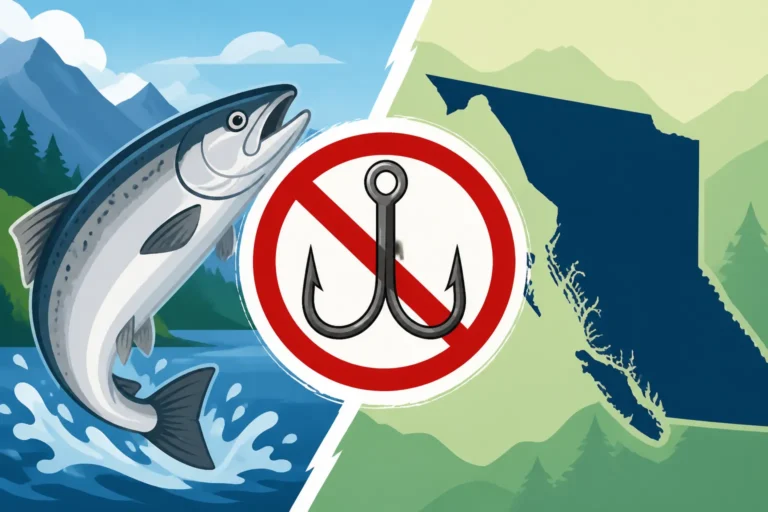
- Specific Waterbody Regulations: Some rivers or sections of rivers are designated as "Special Regulation Waters" or BC Catch and Release Only Waters. These areas often have unique rules regarding gear, bait, and retention, which are much stricter than general regulations. For example, certain prime steelhead rivers might be fly-fishing only, or prohibit the use of bait entirely, regardless of your stamp. Always check the specific rules for the river you intend to fish. A general rule of thumb for steelhead is to expect catch-and-release only, often with single, barbless hooks.
Failing to adhere to any of these additional requirements, even with your steelhead stamp in hand, can lead to significant fines and penalties. Conservation officers are diligent in protecting BC's fisheries, and ignorance of the rules is never an acceptable defense.
Species-Specific Regulations and Closures
Steelhead are particularly vulnerable, and as such, they are subject to some of the most stringent and frequently updated regulations in British Columbia. The Steelhead Conservation Surcharge Stamp supports these efforts, but it doesn't exempt you from them. In fact, understanding these rules is a critical part of ethical steelhead angling.
- Catch Limits and Retention: For wild steelhead, virtually all waters in BC are designated as catch-and-release only. This means that while you can fish for them, you must immediately and safely release any steelhead you catch. There are very rare exceptions for hatchery-origin steelhead in a few specific systems, but these are clearly marked in the regulations and require careful identification. Always assume catch-and-release for steelhead. If retention is ever permitted, specific bag limits would apply.
- Gear Restrictions: Many prime steelhead rivers have strict gear restrictions. Common rules include the use of single, barbless hooks only. Bait is often prohibited, and sometimes even weighted lines or specific types of lures might be restricted. These rules are designed to minimize harm to the fish, especially important for catch-and-release angling. Fishing with a barbed hook in a barbless-only section, even if you intend to release the fish, is a violation.
- Time and Area Closures: Steelhead migrations and spawning periods are incredibly sensitive times. Rivers, or specific sections of rivers, are frequently closed to all fishing or to steelhead fishing during certain periods to protect vulnerable spawning fish or migrating smolts. These closures can be seasonal, such as during BC Steelhead Season Dates, or they can be implemented "in-season" via BC Fishery Notices and In-Season Closures, Explained if conditions (like low water, high water temperatures, or poor returns) warrant additional protection. Always check these notices before you head out, even if you've fished the same river a hundred times. Conditions and regulations can change overnight.
- Fraser River Sturgeon Catch and Release Requirement: While not directly related to steelhead, it’s worth noting that other iconic species like Fraser River Sturgeon also have specific conservation requirements, such as the BC Fraser River Sturgeon Catch and Release Requirement. This highlights a broader conservation ethic in BC fishing, where protecting vulnerable species through specific rules and surcharges is commonplace.
The essence here is that your Steelhead Conservation Surcharge Stamp is a passport to participate in steelhead fishing, but it's not a license to disregard the incredibly important safety nets of regulations that protect these precious fish. Responsible angling means knowing and respecting all the rules.
Tips for Responsible Steelhead Fishing in BC
Beyond the legal requirements of your BC Steelhead Conservation Surcharge Stamp, there’s a deeper layer to responsible angling for these magnificent fish. Steelhead are often referred to as "the fish of a thousand casts" for a reason; they are elusive, powerful, and often found in fragile environments. Our actions on the water have a direct and lasting impact on their populations. Embracing best practices not only helps conserve these incredible fish but also enhances your own fishing experience and the reputation of the angling community.
Best Practices for Catch and Release
Given that virtually all wild steelhead fishing in British Columbia is catch-and-release, mastering proper handling techniques is not just recommended, it's a moral imperative. A poorly handled fish is a fish less likely to survive, negating the entire purpose of catch-and-release. Here’s how to give every steelhead the best possible chance of survival:
- Minimize Fight Time: While the thrill of a long fight is undeniable, it exhausts the fish, building up lactic acid in its muscles, which can be fatal. Use appropriately strong tackle for the conditions and the size of fish you expect to encounter. A heavier rod and stronger line might feel like overkill, but it allows you to bring the fish in quickly.
- Keep the Fish in the Water: This is arguably the most crucial rule. Never beach a steelhead on dry ground or drag it onto rocks. Keep the fish submerged as much as possible, especially its gills. Removing a fish from water, even for a quick photo, can strip away its protective slime layer, damage its internal organs due to gravity, and severely hinder its ability to breathe.
- Use Wet Hands or Gloves: If you must touch the fish, wet your hands thoroughly first. Dry hands can remove the fish’s protective slime coat, leaving it vulnerable to infections. Some anglers use specialized rubberized or cotton gloves that are designed to minimize slime removal.
- Barbless Hooks are Essential: Not only are barbless hooks often legally required in steelhead waters, but they also make hook removal far easier and less damaging to the fish's mouth. If your hooks aren't barbless, crimp them down with pliers.
- Gentle Hook Removal: Use hemostats or needle-nose pliers to quickly and carefully remove the hook. If the hook is deeply set and removal would cause excessive damage, consider cutting the line as close to the hook as possible. In many cases, the hook will eventually rust out.
- Support the Fish Properly: If you absolutely must lift the fish for a quick photo (and we mean quick), support its entire body horizontally with both hands—one hand gently gripping the tail and the other supporting its belly just behind the pectoral fins. Never hold a large fish vertically by the jaw or tail alone, as this can dislocate its spine and severely damage internal organs.
- Revive Before Release: Once the hook is out, hold the fish gently upright in the current, facing upstream, allowing water to flow over its gills. Don't force it back and forth. Support it until it regains its strength and can swim away under its own power. It will often give a strong kick when it's ready.
- Consider a Rubberized Net: If you use a net, opt for one with a soft, knotless, rubberized mesh. These nets are much gentler on fish, preventing scale and fin damage, and reducing the chance of hooks getting tangled. You can often find excellent options for these types of nets on platforms like Amazon, ensuring a safer and more humane release.
Staying Informed About Fishery Notices
British Columbia’s fishing regulations, especially for sensitive species like steelhead, are not static documents. They are dynamic and can change frequently, sometimes with little notice, due to environmental conditions, conservation concerns, or in-season stock assessments. Relying solely on a printed copy of the annual synopsis can be risky if you don't cross-reference it with the latest updates.
- Check BC Fishery Notices and In-Season Closures, Explained: This is your daily or weekly go-to resource, especially if you're planning a trip. The Department of Fisheries and Oceans Canada (DFO) issues these notices for both tidal and freshwater fisheries, providing real-time updates on closures, openings, gear restrictions, and other critical information. Before any fishing trip, make it a habit to check the DFO website for fishery notices relevant to your intended fishing area. Many experienced anglers even set up email alerts to receive these notices directly.
- Consult Local Tackle Shops and Guides: Local tackle shops are often the first to know about changes on their home waters. They interact with anglers daily and often have direct communication with fisheries managers. Similarly, if you're considering a guided trip, a reputable Best Steelhead Guides in BC or Best Guided Steelhead Trips on the Skeena will be intimately familiar with all current regulations and notices.
- Understand Environmental Factors: Be aware of conditions that might trigger emergency closures or impact fish health, even if no official notice has been issued yet. Things like unusually high water temperatures, prolonged low water, or severe weather events can stress fish. If conditions seem unfavorable, consider postponing your trip or targeting a less sensitive species. Sometimes, the most responsible choice is to leave the fish undisturbed.
By integrating these responsible angling practices and staying diligently informed, your BC Steelhead Conservation Surcharge Stamp truly becomes a symbol of your commitment to the long-term health and vitality of British Columbia's spectacular steelhead fisheries.
Disclaimer
The information provided in this guide is for general informational purposes only and is not intended as legal advice. Fishing regulations in British Columbia can be complex and are subject to change without notice. Always consult the official British Columbia Freshwater Fishing Regulations Synopsis, the Department of Fisheries and Oceans Canada (DFO) fishery notices, and other relevant government resources for the most current and accurate information before engaging in any fishing activities. Compliance with all regulations is the sole responsibility of the angler.