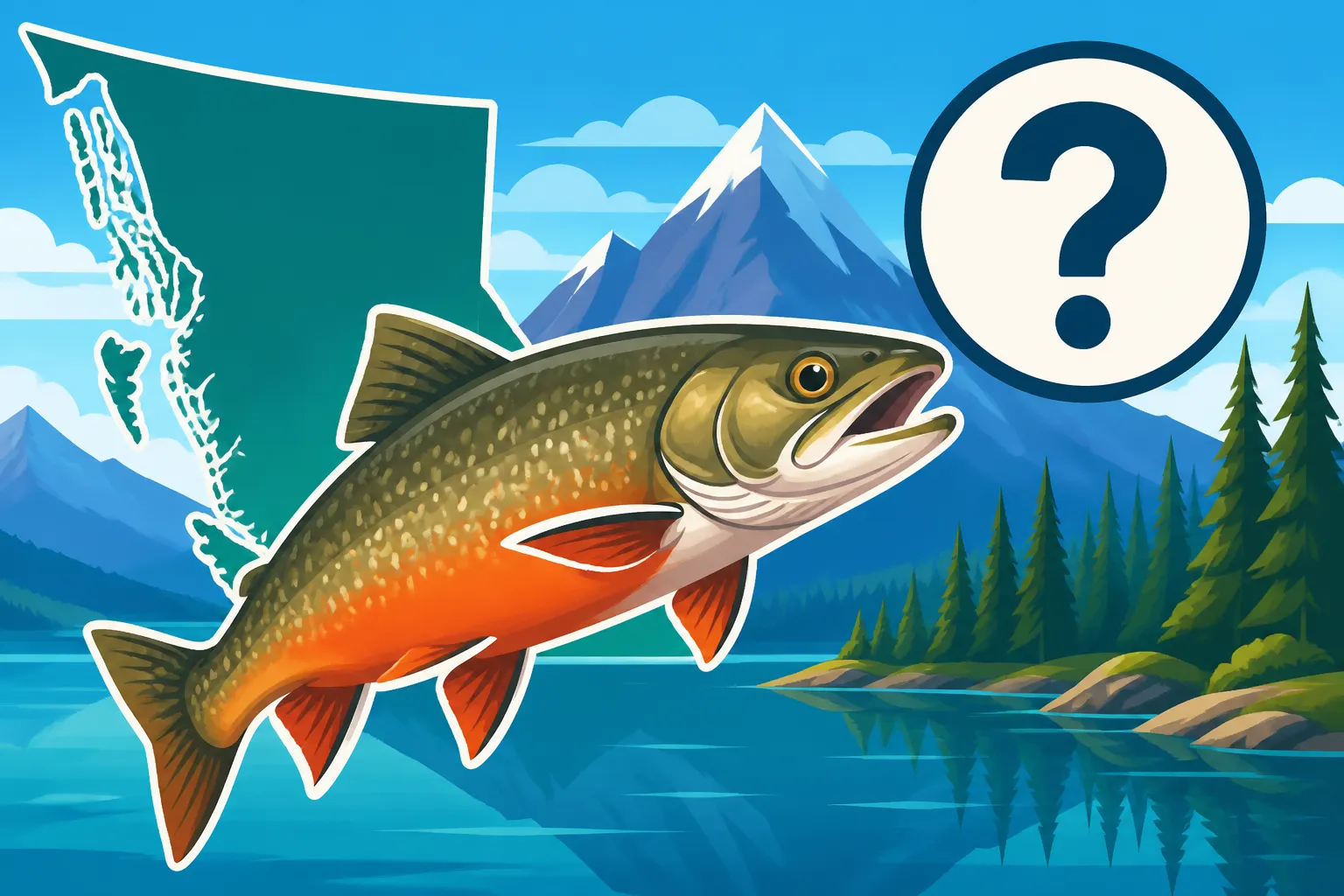
Are Splake Stocked in BC Lakes?
It’s a common question among anglers, especially those new to British Columbia or coming from other provinces and states: are Splake, those interesting brook trout-lake trout hybrids, actually stocked in BC lakes? The world of fish stocking can be a bit of a maze, with different regions having unique approaches, and it’s easy to get confused about which species are introduced where. This guide aims to clear up that confusion, diving deep into what Splake are and whether you’ll find them as part of BC's extensive freshwater fisheries programs.
Understanding Splake: A Unique Hybrid Trout
Before we delve into their presence (or absence) in BC, let's get to know the Splake a little better. They are fascinating fish, bred for specific angling and management purposes, and understanding their origins helps explain why certain regions choose to stock them.
What Exactly is a Splake?
A Splake is not a naturally occurring species; it's a hatchery-created hybrid, a cross between a male Brook Trout (Salvelinus fontinalis) and a female Lake Trout (Salvelinus namaycush). The name "Splake" itself is a portmanteau, cleverly combining "Speckled Trout" (a common name for brook trout) and "Lake Trout." This hybridization isn't something that happens regularly in the wild, as the two parent species typically spawn at different times and in different habitats. It takes human intervention, carefully managed in a hatchery setting, to produce these fish.
The creation of Splake began decades ago, primarily in areas of North America where both parent species were native, such as parts of Ontario, Quebec, and some northern US states. The goal was to combine the best traits of both – the aggressive nature and relatively fast growth of the brook trout with the deeper-water habits and larger size potential of the lake trout. It’s a bit like creating a designer dog breed, but for fish, with specific performance characteristics in mind for anglers. Their unique genetic makeup means that most Splake are sterile, which can be an advantage in certain stocking programs, preventing them from establishing self-sustaining populations that might compete with native species.
Why Fishery Managers Create Splake
Fishery managers are always looking for ways to enhance recreational angling opportunities, and Splake offer several attractive qualities. One of the primary reasons for their creation and stocking in some regions is their ability to thrive in a range of environments. They tend to grow faster and reach larger sizes than brook trout, providing a more substantial catch for anglers. Yet, they don't grow quite as large or live as long as their lake trout mothers, which can make them a more manageable species for smaller lakes.
Another significant factor is their feeding habits and habitat use. Splake often occupy a niche between the shallow-water brook trout and the deep-water lake trout, making them accessible to different types of anglers and potentially utilizing different parts of the lake's food web. They are known for being relatively aggressive biters, which translates to a higher catch rate, boosting angler satisfaction. For regions looking to provide diverse fishing experiences without introducing species that might outcompete delicate native populations, sterile hybrids like Splake can seem like a good option. However, as we'll explore, this doesn't mean they fit every management philosophy.
Key Characteristics and How to Identify Them
Identifying a Splake can be tricky, as they possess traits from both parents. They generally have a body shape that is intermediate between the more streamlined brook trout and the chunkier lake trout.
Here are some key characteristics to look for:
- Tail Fin: This is often the most telling feature. A brook trout has a distinctly square or slightly emarginate (slightly forked) tail, while a lake trout has a deeply forked tail. A Splake's tail will typically be moderately forked – not as deep as a lake trout's, but more so than a brook trout's.
- Coloration: They often display a mottled pattern similar to both parents. Their body might be olive green to brown with lighter, worm-like markings (vermiculations) on the back, much like a brook trout. They can also have pale spots on a darker background, reminiscent of a lake trout, though these spots are usually larger and less numerous than on a lake trout.
- Dorsal Fin: Look for the pattern on the dorsal fin. Brook trout usually have a dark, wavy pattern, while lake trout have more irregular, scattered spots. Splake will typically have a mix, often with some dark vermiculations.
- Pectoral, Pelvic, and Anal Fins: Like brook trout, Splake often have white leading edges on their lower fins, usually bordered by a black stripe. Lake trout do not typically have these distinctive white fin edges.
If you're ever unsure about a catch, especially in waters where hybrids might be present, snapping a clear photo and consulting with local fisheries offices is always a good idea. Sometimes, even experienced anglers can be stumped!
Splake Stocking in British Columbia: The Current Landscape
So, with all these interesting qualities, are Splake part of British Columbia's extensive recreational fishing programs? The answer, for the most part, is no. BC has a distinct approach to fisheries management that prioritizes native species and ecological integrity.
The BC Freshwater Fisheries Society and Stocking Programs
The primary organization responsible for freshwater fish stocking in British Columbia is the Freshwater Fisheries Society of BC (FFSBC). This society plays a crucial role in enhancing freshwater fishing opportunities across the province, managing hatcheries, and releasing millions of fish into lakes each year. Their programs are designed to sustain and improve recreational fisheries, often focusing on species that are native or well-established in BC.
The FFSBC meticulously plans its stocking efforts, taking into account factors like habitat suitability, disease prevention, genetic diversity, and the impact on existing ecosystems. Their main goal is to create diverse and accessible fishing experiences for resident and visiting anglers, all while upholding strong conservation principles. You'll often find them stocking lakes with species like rainbow trout, kokanee, and various strains of cutthroat trout, which are all integral to BC's aquatic heritage. They also provide incredible resources online, from List of BC stocked trout lakes to detailed fishing reports.
Why Splake Are Not a Common Stocking Choice in BC
Despite the perceived benefits of Splake in other regions, they are not a common, nor generally accepted, stocking choice within British Columbia. There are several compelling reasons for this, rooted in BC's unique conservation philosophy and environmental considerations.
Firstly, BC has a very strong emphasis on protecting and enhancing its native fish populations and their habitats. Introducing a non-native hybrid, even a sterile one, goes against this core principle for many of BC's management strategies. While a sterile hybrid theoretically cannot reproduce and spread, the concern often lies with potential competition for food or habitat with wild, native species. BC's waters are home to a rich diversity of trout and char, including wild rainbow trout, various strains of cutthroat trout, bull trout, and Dolly Varden, all of which are highly valued by anglers and conservationists alike. The focus is often on supporting these species.
Secondly, the FFSBC already has highly successful and well-established stocking programs for native species, particularly rainbow trout. These programs are effective at providing abundant angling opportunities across thousands of lakes. There isn't a perceived "gap" that Splake would uniquely fill that isn't already being met by existing programs or by the province's naturally occurring fisheries. Why introduce a hybrid when native species are thriving and preferred? For many anglers who enjoy BC’s waters, the draw is often the chance to catch a vibrant, wild-spawned fish, or at least a stocked fish that is genetically aligned with the region's natural fauna.
Finally, managing a new species, even a hybrid, requires resources, research, and monitoring. When existing programs are already robust and delivering good results, introducing another element might be seen as an unnecessary complication or diversion of resources. Instead, the focus remains on optimizing the production and stocking of species that are proven performers and align with the province's conservation ethos. When you're looking for gear for these native BC species, remember you can always find excellent rods, reels, and tackle on Amazon to suit your fishing adventure.
The Focus on Native and Naturalized Species
British Columbia's fisheries management strategy is largely centered around native species, which include several distinct strains of rainbow trout (like the famed Kamloops trout), various cutthroat trout, Dolly Varden, bull trout, and the anadromous steelhead. In addition, kokanee, the landlocked sockeye salmon, are also a popular and widely stocked species that are native to many BC lake systems.
This focus isn't just about tradition; it's about ecological responsibility. Native species are inherently adapted to BC's diverse aquatic environments, contributing to the health and balance of these ecosystems. Their presence ensures the integrity of the food web and genetic diversity. Stocking programs for species like rainbow trout and kokanee are highly refined, utilizing specific genetic strains appropriate for different lake types, and have been incredibly successful in creating world-class fisheries. Anglers travel from all over to experience the thrill of catching a wild Steelhead Fishing in BC or a powerful Chinook Salmon Fishing in BC, species that are quintessentially British Columbian.
While some non-native species like Eastern Brook Trout have been introduced in the past and are now naturalized in some areas, the current trend and policy steer away from introducing new non-native or hybrid species where healthy native populations exist or can be restored. This commitment ensures that BC's unique aquatic biodiversity is preserved for future generations, offering fishing experiences that are both exciting and ecologically sound.
Where You Might Encounter Splake (and Similar Species) in BC
Even though Splake are not intentionally stocked in British Columbia, it's natural to wonder if there's any chance you might encounter them, or perhaps misidentify another species as a Splake. It’s important to understand the distinctions between fish that are and aren’t part of BC’s management plans.
Neighboring Jurisdictions and Accidental Introductions
While BC doesn't stock Splake, some neighboring jurisdictions do. Alberta, for example, has stocked Splake in some of its lakes as part of their recreational fisheries programs. Similarly, some states in the northern United States that border BC might also stock them. The possibility of these fish making their way into BC waters from cross-border lakes or rivers is generally very low. Most of these stocked lakes are isolated or part of systems that don't have direct, free-flowing connections to BC's major watersheds that would allow for easy fish migration.
For example, a lake that has Splake in Alberta might be relatively close to the BC border, but if there's no continuous river system or if the fish are confined to that specific waterbody, the chances of them appearing in a BC lake are remote. Fisheries agencies in both provinces have measures in place to prevent the spread of non-native species, but vigilance is always key. Anglers are encouraged to be aware of the regulations and species lists for the specific waters they are fishing, especially in border regions.
How to Distinguish Splake from Other BC Trout and Char
Given that Splake are a hybrid of a brook trout and a lake trout, it's easy to see how they could be confused with either of their parent species, both of which do exist in BC. It's also possible to confuse them with other native char species. Here’s a quick guide and a table to help you tell the difference:
- Brook Trout (Salvelinus fontinalis): These are relatively common in many small, cold, high-elevation lakes and streams in BC, often introduced historically but now naturalized in many areas. They have distinct worm-like markings (vermiculations) on their back and dorsal fin, and their tail is typically square or only slightly notched. They also have the characteristic white leading edges on their lower fins, often bordered by black.
- Lake Trout (Salvelinus namaycush): These are native to many of BC's larger, deeper, colder lakes, particularly in the northern and interior regions. They are distinguished by their deeply forked tail, a lighter body color with many irregular, light-coloured spots, and no white leading edges on their fins. They can grow very large.
- Bull Trout (Salvelinus confluentus) and Dolly Varden (Salvelinus malma): These are native char species in BC, often confused with each other. They typically have light spots on a darker body (which can be green, olive, or grey), but usually lack the worm-like markings of a brook trout or Splake. Their tail is square or slightly forked, and they do not have white fin edges. Bull trout tend to have larger heads and mouths. Bull Trout vs Dolly Varden Identification is a great resource if you want to dive deeper into those distinctions.
- Rainbow Trout (Oncorhynchus mykiss): These are BC's provincial fish and the most widely stocked and popular species. They are identifiable by a pink or red stripe along their lateral line and small, dark spots scattered over their body, dorsal fin, and tail. Their tail is usually slightly forked to square, but never deeply forked. They lack vermiculations and white fin edges.
To simplify, here’s a comparison table:
| Feature | Splake (Hybrid) | Brook Trout (Parent) | Lake Trout (Parent) | Rainbow Trout (Common BC Stocker) | Bull Trout / Dolly Varden (Native Char) |
|---|---|---|---|---|---|
| Tail Fin | Moderately forked | Square to slightly forked | Deeply forked | Slightly forked to square | Square to slightly forked |
| Body Color | Mottled, olive/brown | Olive/green to dark brown | Grey/brown/greenish | Silvery to olive/bronze | Dark olive/grey/brown |
| Markings | Vermiculations & pale spots | Distinct vermiculations | Irregular light spots | Dark spots, pink stripe | Light spots (no vermiculations) |
| Lower Fin Edges | Often white, black band | Distinct white, black band | No white edges | No white edges | No white edges |
| Habitat (Typical) | Cool, deep lakes | Small, cold streams/lakes | Deep, cold lakes | Diverse: rivers, lakes, streams | Cold, clear rivers, large lakes |
When in doubt, always lean on identification guides and photos. On a quiet evening at the cabin, I often pull out a trusted fish identification book – a physical one, not just my phone – but you can certainly find many resources, including digital guides and even fish-ID apps, on Amazon to help you hone your skills.
Reporting Unusual Catches and Conservation
If you ever catch a fish in BC waters that you strongly suspect is a Splake, or any other species that doesn't seem to fit the known profile for that waterbody, it's incredibly important to report it to the provincial fisheries authorities, specifically the Freshwater Fisheries Society of BC.
Reporting unusual catches is vital for several reasons:
- Monitoring: It helps fisheries managers monitor for unauthorized introductions or the accidental spread of non-native species. Early detection can be crucial in preventing potential ecological harm.
- Conservation: Understanding what fish are present where is fundamental to effective conservation. If an unauthorized species is found, steps can be taken to assess its impact and potentially mitigate any negative effects on native populations.
- Data Collection: Your observation contributes to a larger dataset that informs management decisions. Every piece of information helps build a more complete picture of the health and composition of BC's aquatic ecosystems.
When reporting, try to provide as much detail as possible: the exact location (GPS coordinates are ideal), date and time of catch, a clear photograph of the fish (showing its fins, tail, and overall body pattern), and any noticeable characteristics. You can usually find contact information for reporting on the FFSBC website or through provincial government natural resource offices. Never illegally transport live fish between waterbodies, as this is a major pathway for invasive species.
The Broader Context of Fish Stocking in BC
British Columbia's approach to fish stocking is multifaceted, balancing recreational opportunities with a deep commitment to environmental stewardship and the health of native aquatic ecosystems. It’s a dynamic process that reflects scientific understanding and public interest.
Goals of BC's Stocking Programs
The Freshwater Fisheries Society of BC's stocking programs are driven by several key goals, all designed to enhance the angling experience while ensuring sustainability:
- Creating Diverse Angling Opportunities: One of the main objectives is to provide a wide variety of fishing experiences for people of all ages and skill levels. This means stocking different species in various types of lakes, from small, easily accessible urban ponds to remote, high-elevation alpine lakes. Whether you're after a trophy rainbow or simply looking for a fun day out with the family, BC's programs aim to cater to you.
- Enhancing Recreational Fisheries: By releasing millions of fish each year, the FFSBC directly supports healthy fish populations that can withstand angling pressure. This ensures that anglers have a good chance of success, contributing to the economic benefits of recreational fishing for local communities across the province.
- Conservation of Native Stocks: Paradoxically, stocking can also serve a conservation purpose. In some cases, stocking hatchery-raised native fish can help supplement struggling wild populations, especially in areas impacted by habitat degradation or overfishing, providing a buffer while recovery efforts for wild stocks are undertaken. It’s also about drawing angling pressure away from sensitive wild areas.
- Ecosystem Management: Stocking decisions are also made with broader ecosystem health in mind. For example, some lakes might be stocked with sterile fish (though not Splake in BC) to prevent overpopulation or genetic mixing with wild strains. The choice of species and the timing of stocking are carefully considered to minimize negative impacts on other aquatic life.
Understanding these goals helps explain why a species like Splake, despite its appeal in other areas, doesn't align with BC's current strategic direction. The province has found its success in working with its native fish and their environments.
Popular Stocked Species in BC
While Splake aren't on the menu, BC lakes and rivers are brimming with other fantastic opportunities, largely thanks to a robust stocking program. The most popular species you'll find stocked include:
- Rainbow Trout: These are undoubtedly the stars of BC's stocking show. Various strains, including the famous Kamloops rainbow trout, are released into thousands of lakes. They grow quickly, fight hard, and are highly adaptable, making them a favorite for both beginner and experienced anglers. You can find them in everything from urban ponds to vast interior lakes. Knowing How to Catch Rainbow Trout in BC Lakes is a fundamental skill for any BC angler.
- Kokanee Salmon: These landlocked sockeye salmon are another hugely popular species. They provide excellent recreational fishing, especially in deeper, colder lakes. They are known for their vibrant red flesh and strong fighting spirit, particularly when trolled with light gear. Best Kokanee Lakes in the interior of BC are fantastic spots to target them.
- Cutthroat Trout: Both coastal cutthroat and westslope cutthroat trout are native to BC and are stocked in certain areas to enhance local fisheries. They are prized for their beautiful markings and their willingness to strike at a variety of lures and flies.
- Brook Trout: As mentioned earlier, while largely considered naturalized from historical introductions, brook trout are still found and occasionally managed in some smaller, high-elevation lakes. They offer a unique, vibrant catch, particularly attractive for fly anglers.
The FFSBC provides detailed stocking reports and lake profiles on their website, so you can easily find out which species are stocked in a particular lake and plan your trip accordingly. This transparency is a huge asset to anglers in the province.
How Anglers Can Stay Informed
Staying informed about BC's fishing regulations, stocking programs, and any changes to fisheries management is crucial for responsible and successful angling. Here are the best ways to keep up-to-date:
- BC Freshwater Fishing Regulations Synopsis: This is your bible for freshwater fishing in BC. It's published annually and details all the rules, regulations, bag limits, and special restrictions for every region and waterbody. You can find it online or pick up a physical copy at most tackle shops and license vendors. Always read it thoroughly before heading out.
- Fishery Notices: For tidal waters (saltwater), Fisheries and Oceans Canada (DFO) issues fishery notices that provide real-time updates on openings, closures, and regulation changes, especially for salmon and other marine species. These can change frequently due to conservation concerns or stock assessments, so checking them just before you go is a must. For freshwater, the FFSBC also issues important updates.
- Freshwater Fisheries Society of BC Website: This is an invaluable resource. The FFSBC website offers stocking reports, lake profiles, fishing tips, educational materials, and news about their programs. It’s a treasure trove of information for anyone looking to fish in BC's lakes and rivers.
- Local Tackle Shops and Guides: Never underestimate the knowledge of local experts. Your community tackle shop owners and professional fishing guides are often the first to know about local conditions, hot spots, and any unofficial news that might affect your fishing trip. They can also advise on the best gear, whether you're buying in-store or looking for specific items on Amazon.
- Social Media and Forums: Many local fishing clubs and online communities share up-to-date information, experiences, and advice. Just be sure to cross-reference any information with official sources.
By actively seeking out and utilizing these resources, anglers can ensure they are fishing legally, ethically, and with the best possible chance of success. It means you’re not only enjoying the sport but also contributing to the sustainability of BC’s incredible fisheries.
Disclaimer
This article is for general informational purposes only and does not constitute professional advice. Laws, prices and regulations vary by location and change over time. Consult a qualified professional for guidance on your specific situation.