What fish species thrive in warm interior lakes
If you're an angler in British Columbia, it's easy to get caught up in the allure of our spectacular coastal salmon runs or the legendary steelhead rivers of the north. But for those of us who love exploring the vast beauty of BC's interior, the fishing experience can be wonderfully different, presenting its own unique challenges and rewards, especially when it comes to warmer lakes. This guide will shine a light on the hardy and exciting fish species that don't just survive, but truly thrive, in the often-milder waters of our interior lakes, ensuring you know exactly what to target for a fantastic day on the water.
Understanding BC's Unique Warm Interior Lakes
When we talk about "warm interior lakes" in British Columbia, we're not just throwing around a casual phrase; we're referring to a distinct ecological environment that shapes the type of fish species you'll encounter. Unlike the frigid, deep, and often nutrient-poor glacial lakes found at higher elevations or the vast, cold Pacific Ocean, these interior lakes tend to be shallower, exposed to more direct sunlight, and thus experience higher average water temperatures, especially during the long summer months. This warmth influences everything from aquatic plant growth to insect hatches, and most importantly, the metabolism and preferred habitat of the fish themselves.
What Makes Them "Warm"?
Several factors contribute to the warmth of these interior lakes. First, their geographical location, often nestled in valleys like the Okanagan or Thompson regions, means they receive more prolonged periods of sunshine and are less influenced by cold ocean currents or high-altitude meltwater. Think about a lake like Okanagan Lake, Shuswap Lake, or Osoyoos Lake—these are massive bodies of water that soak up the sun's energy, warming their surface layers considerably. Many are also relatively shallow compared to coastal fjords, allowing the sun to penetrate and warm a larger proportion of the water column.
The surrounding landscape plays a role too. Less dramatic mountain shading and often more arid climates in these regions mean less cooling influence from snowmelt streams once the spring freshet is over. This consistent warmth creates an environment rich in aquatic life, from plankton to various insect larvae, forming a robust food web that specific fish species absolutely adore. It's a completely different world from the wild, raging rivers full of salmon or the deep, dark ocean depths where halibut lurk.
Contrasting with Cooler Waters
The difference between these warm interior lakes and, say, a high-mountain tarn or a coastal inlet is stark. In cooler waters, you're often targeting cold-water specialists like Arctic grayling in northern BC or certain strains of trout that prefer icy depths year-round. These fish thrive where oxygen levels are high and water temperatures remain consistently low. In a warm lake, however, those species would struggle immensely as the water heats up, causing stress and making them lethargic.
The species we'll discuss thrive in conditions that might be considered challenging for their cold-water cousins. They are adapted to tolerate wider temperature fluctuations, often seeking out deeper, cooler pockets during the peak of summer heat, but otherwise spending their days actively feeding and growing in the warmer, shallower zones. This adaptation allows them to capitalize on the abundant food sources that also flourish in these milder conditions, creating a vibrant ecosystem where different fish species rule the roost. You’ll notice these Differences between BC's coastal and interior fish populations immediately when you start fishing.
Top Fish Species Thriving in BC's Warm Interior Lakes
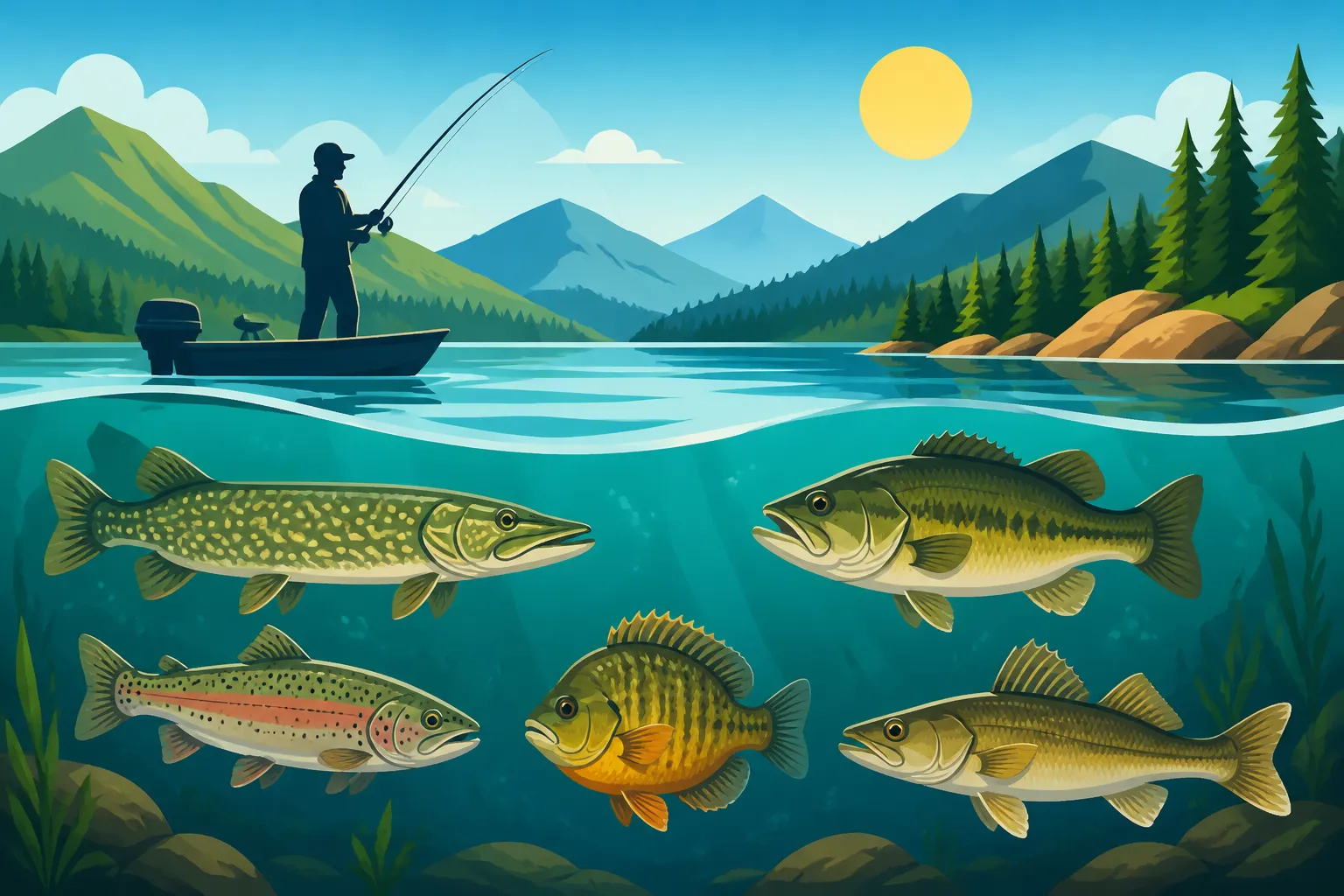
Now that we understand the unique environment, let's dive into the stars of these warm interior lakes: the fish species that truly call them home and offer fantastic angling opportunities. These aren't just fish that tolerate the warmth; they genuinely prefer it, growing to impressive sizes and providing thrilling fights.
Rainbow Trout
While many associate rainbow trout with cold, clear mountain streams, certain strains, particularly the native Kamloops trout, absolutely thrive in the warmer, nutrient-rich interior lakes. These fish benefit from the extended growing seasons and abundant food sources found in these waters, often reaching impressive sizes. They're opportunistic feeders, keying in on everything from aquatic insects and minnows to leeches.
Fishing for these rainbows in warmer lakes can be incredibly rewarding. During the spring and fall, when water temperatures are ideal, they’ll often cruise the shallower shoals and weed beds, making them accessible to shore anglers or those fishing from small boats. As summer progresses and surface temperatures climb, they tend to move to deeper, cooler water, often suspending over structure or near thermoclines where they can find both comfort and food. Rainbow Trout Fishing in BC is a provincial favourite, and for good reason! Many anglers turn to trolling with small spoons or plugs, or still-fishing with bait like worms or corn, often enhanced with a scent. It's a different approach than fly-fishing a fast-moving river, but equally, if not more, effective for big fish. For those seeking true giants, a visit to the Shuswap or Kootenay systems, home to the famous Gerrard Rainbow Trout, can be an unforgettable experience.
Kokanee Salmon
Kokanee are landlocked sockeye salmon, and they are incredibly popular targets in many of BC's interior lakes. These feisty, silver-sided fish are typically smaller than their ocean-going cousins, but what they lack in size, they make up for in fight and abundance. They are perfectly adapted to the slightly warmer, productive waters of interior lakes, where they feed primarily on zooplankton. Their life cycle is shorter than an anadromous sockeye, typically maturing in 3-4 years before returning to spawn in the very streams and lake shallows where they were born.
The best part about kokanee fishing is how accessible it can be. They often school in open water, making them prime targets for trollers. Anglers typically use downriggers to get their small lures, wedding rings, or dodger-and-hoochie combinations down to the depth where the schools are feeding. Look for specific depths where baitfish are concentrated, often indicated by your fish finder. Early mornings and late evenings are prime times, especially during the warmer months, when kokanee tend to come shallower. For those new to the pursuit, learning Best Kokanee Trolling Techniques for Okanagan Lake is a great starting point, as this lake is a fantastic example of thriving kokanee populations. Many anglers, myself included, have spent countless hours perfecting our kokanee rigs, often ordering specialized gear through online retailers like Amazon.
Smallmouth Bass
Ah, the smallmouth bass! While not native to British Columbia, these tenacious fighters have established healthy, self-sustaining populations in several of our warm interior lakes, particularly in the Okanagan region. Smallmouth are true warm-water specialists, preferring rocky shorelines, submerged timber, and weed beds where they can ambush prey. They are incredibly aggressive and offer a thrilling fight, often leaping clear of the water when hooked.
Targeting smallmouth bass is a completely different ballgame than trout or kokanee. You're looking for structure: rock piles, fallen trees, docks, and even sharp drop-offs. They feed voraciously on crayfish, minnows, and larger insects, making them susceptible to a wide array of lures. Spinnerbaits, crankbaits, jigs, and soft plastics are all highly effective. Cast your lure right up to the structure, let it sink, and work it back with erratic movements, imitating a struggling baitfish or crawfish. Places like Osoyoos Lake are renowned for their smallmouth populations. Before you head out, checking Best Techniques for Bass in Okanagan Lakes can give you a real edge. Just be mindful of local regulations, as while abundant, their status as an introduced species can sometimes come with specific guidelines.
Largemouth Bass
Like their smallmouth cousins, largemouth bass are an introduced species that have found a comfortable home in the warmer, often shallower, and weedier pockets of some BC interior lakes and ponds, particularly in the Okanagan Valley. These fish are true ambush predators, preferring dense cover like lily pads, cattails, and thick submerged vegetation. They can grow to impressive sizes and offer a powerful, bulldog-like fight, often trying to bury themselves back into the weeds.
To catch largemouth, you need to be prepared to fish in the thick stuff. Topwater lures like hollow-bodied frogs, poppers, and buzzbaits are incredibly exciting when cast over lily pads, as a largemouth exploding from below can be quite a shock! For fishing in dense cover, weedless jigs, Texas-rigged worms, and creature baits are your go-to options. The key is to get your lure into the fish's living room. Don't be shy about casting right into the gnarliest looking patches of weeds – that's often where the biggest bass are hiding. For more detailed information on where to find these fantastic fighters, check out Largemouth Bass in Okanagan Lakes, which will guide you to some prime locations. And remember, good polarized sunglasses are essential for spotting structure and lurking bass in these waters. You can find some excellent, affordable options for fishing on Amazon.
Essential Strategies for Warm Interior Lake Fishing
Fishing warm interior lakes successfully requires a slightly different approach than the cold-water tactics often employed in other parts of BC. Understanding the fish's behaviour in these specific conditions and adapting your techniques accordingly will greatly increase your chances of a memorable day on the water.
Timing is Everything
In warmer waters, fish activity often fluctuates more dramatically with the time of day and season. During the peak of summer, the hottest part of the day might see fish retreating to deeper, cooler waters or becoming less active. This makes early mornings and late evenings, often referred to as "low light periods," particularly productive. At these times, surface temperatures are lower, and many species will move into shallower feeding areas.
| Time of Day | Temperature | Fish Activity (General) | Strategy |
|---|---|---|---|
| Dawn/Early Morning | Coolest | High | Focus on shallow feeding grounds, topwater lures for bass, trolling higher for kokanee. |
| Mid-Day (Summer) | Warmest | Low | Target deeper water, shaded areas, thermoclines. Slower presentations. |
| Late Afternoon/Dusk | Cooling | Increasing | Fish moving back to shallower feeding zones. Topwater/surface presentations becoming effective again. |
| Night | Cool | Moderate | Certain species (like larger trout or bass) can be active in shallow water. |
Beyond the daily cycle, seasonal timing is also crucial. Spring and fall often present the most consistent fishing, as water temperatures are in the optimal range for many species, encouraging active feeding throughout the day. In winter, some of these lakes might freeze, opening up ice fishing opportunities for species like kokanee or burbot (though burbot are more common in colder, northern interior lakes). Always check local conditions and specific lake regulations before heading out.
Gear and Technique Adaptations
Your tackle box might need a few adjustments for warm interior lakes. For bass, you'll want a medium-heavy to heavy action rod with braided line if you're punching through thick weeds for largemouth or throwing heavier lures for smallmouth. For trout and kokanee, lighter spinning or trolling setups are often preferred, allowing for delicate presentations of small lures or bait.
Here are a few technique adaptations:
- For Trout: As mentioned, trolling is a huge producer. Using a lead core line or downrigger to get your gear to the right depth is key, especially during summer. Look for Kamloops trout suspending in deeper water or cruising the edges of drop-offs. Fly fishing can also be highly effective during hatches, particularly in spring and fall. Many anglers prefer a sturdy baitcasting reel for bass, which provides the backbone needed for battling big fish out of heavy cover, and Amazon offers a wide selection.
- For Kokanee: Precision in depth is paramount. Experiment with different depths until you find the school. Small, bright lures, often tipped with a kernel of corn or a maggot, are irresistible. Consider specialized kokanee flashers and dodgers to attract attention. The Fraser Valley and Okanagan regions have some of the Best kokanee lakes in the interior of BC.
- For Bass: Focus on structure. For smallmouth, rocky points, ledges, and transition zones are gold. For largemouth, think dense weeds, lily pads, and fallen trees. Vary your retrieve speed and incorporate pauses to entice strikes. Soft plastics, especially Texas-rigged worms or jigs, are incredibly versatile for bass, allowing you to get into dense cover without snagging.
Many anglers find that stocking up on various lures and baits specific to these species, and having a good selection of terminal tackle, is much easier online. I personally find Amazon an excellent resource for getting my hands on those niche items that local shops might not always carry.
Finding the Hot Spots
Finding the right spot on a large interior lake can feel daunting, but a few general principles apply. Look for areas where different habitats meet—a rocky point transitioning to a weed bed, a sharp drop-off near a flat, or the mouth of an incoming stream. These transition zones often concentrate baitfish, which in turn attract predators.
Topographical maps, depth finders, and even local knowledge are invaluable. Many of these lakes have public access points, boat launches, and even fishing piers. For example, knowing the Best public boat launches on Okanagan Lake can save you valuable time on the water. Observing other anglers (from a respectful distance, of course!) can also provide clues about productive areas and techniques. Remember that fish are creatures of habit and will often return to productive feeding grounds year after year, or even day after day.
Conservation and Responsible Angling in Warm Waters
As passionate anglers, we all have a role to play in protecting the fisheries we love, and this is especially true in the sensitive ecosystems of BC's warm interior lakes. Conservation isn't just about following the rules; it's about adopting practices that ensure these fantastic fishing opportunities remain for generations to come.
Understanding and Adhering to Regulations
British Columbia has a comprehensive set of fishing regulations, and they are regularly updated to reflect the health of various fish populations. It's absolutely crucial to always have the most current Freshwater Fishing Synopsis (and Tidal Waters if you're also hitting the coast) and understand the rules for the specific lake you're fishing. Regulations can vary widely from one lake to another, even for the same species.
Pay close attention to:
- Bag and Possession Limits: How many fish of a certain species you can keep in a day, and how many you can have in your possession.
- Size Restrictions: Minimum or maximum lengths for certain species, designed to protect juvenile fish or large breeding adults.
- Gear Restrictions: Some lakes or areas might have restrictions on bait use, hook types (e.g., single barbless), or even the number of rods you can use.
- Seasonal Closures: Certain areas or species might be closed to fishing during critical spawning periods. For example, BC Okanagan Lake fishing regulations will detail any specific closures or limits for that massive waterway. Fishing without a proper license or ignoring these rules not only risks hefty fines but also puts undue pressure on fish stocks.
Always make it a habit to check the BC Freshwater Fishing Regulations Synopsis before each trip. It's usually available online, or you can pick up a physical copy from most tackle shops or license vendors. The information in there is vital for legal and ethical angling.
Catch and Release Best Practices
While many warm interior lake species like kokanee and smaller trout are excellent table fare, and bass can be delicious, sometimes you'll catch a fish you intend to release, or one that's outside the legal size limit. Implementing proper catch and release techniques is vital for the survival of those fish, especially in warmer waters where fish can experience more stress.
Here are some key practices:
- Minimize Fight Time: Use appropriate tackle that allows you to land the fish relatively quickly, reducing exhaustion.
- Handle With Care: Avoid touching the fish with dry hands, as this can remove their protective slime layer. If possible, keep the fish in the water while unhooking.
- Barbless Hooks: Using barbless hooks (or pinching down barbs) makes unhooking much quicker and causes less damage to the fish's mouth.
- Proper Unhooking Tools: Have pliers or a de-hooking tool readily available to quickly remove hooks.
- Revive Gently: If a fish is lethargic, hold it upright in the water, facing into a gentle current if available, until it swims away under its own power. Never throw a fish back into the water if it's not ready to swim off.
These practices are not just for the "big ones." Even smaller fish deserve our respect and the best chance of survival. A little care goes a long way in ensuring healthy fish populations continue to thrive.
Protecting the Habitat
Beyond the fish themselves, protecting the surrounding habitat of these warm interior lakes is paramount. This means being mindful of your impact when you're on the shore or in your boat.
- Leave No Trace: Pack out everything you pack in. This includes all your fishing line, bait containers, and any other garbage. Our lakesides should be as pristine as we found them.
- Prevent Invasive Species: Be incredibly careful not to transport invasive aquatic plants or species from one body of water to another. "Clean, Drain, Dry" your boat, trailer, and gear thoroughly between fishing trips to different lakes. This is especially important in the Okanagan, where invasive species are a constant threat.
- Respect Private Property and Sensitive Areas: Always be aware of where you are fishing and respect private property signs. Avoid disturbing spawning beds or other sensitive habitats, especially during known spawning seasons for species like kokanee.
By embracing these responsible angling practices, we contribute to the long-term health and vitality of BC's incredible warm interior lake fisheries. It ensures that future generations, just like us, can experience the joy and challenge of reeling in a beautiful rainbow trout, a feisty kokanee, or a hard-fighting bass from these unique and productive waters. After all, the best fishing spots, from Best fishing spots between Kamloops and Kelowna to the quieter ponds, are those that remain healthy and vibrant.
Disclaimer
This article is for general informational purposes only and does not constitute professional advice. Laws, prices and regulations vary by location and change over time. Consult a qualified professional for guidance on your specific situation.