Halibut Habits off the BC Coast
The vast, deep waters off British Columbia's coast hold incredible mysteries, and one of the most intriguing is the mighty halibut. Many anglers find themselves wondering where to even begin looking for these colossal flatfish, frustrated by the sheer size of the ocean and the elusive nature of their quarry. This comprehensive guide will pull back the curtain on the fascinating habits of Pacific halibut, helping you understand their preferred habitats, feeding behaviors, seasonal movements, and how to approach catching them responsibly.
Understanding Halibut Habitat: Where They Call Home
Halibut are truly creatures of the deep, masters of camouflage, and perfectly adapted to life on the ocean floor. Their preferred haunts are typically not the shallow, sunlit waters you might associate with other coastal species. Instead, they seek out specific underwater terrains that offer both ample food and opportunities to ambush unsuspecting prey. Knowing these preferred environments is the first step in unlocking successful halibut fishing.
Deepwater Structure and Bottom Composition
When you're searching for halibut, think structure and varied bottom. While they are often associated with sandy or gravelly bottoms, it's more accurate to say they prefer areas adjacent to structure. This could be underwater pinnacles, ledges, seamounts, or even deep-water trenches and canyons. These structural elements create current breaks and upwellings that concentrate baitfish, making them prime feeding grounds. The halibut will often lie on the flatter, softer bottom near these structures, waiting for a meal to drift by. For example, in areas like Hecate Strait or the deeper parts of Queen Charlotte Sound, you'll find them holding near significant underwater rises or along the edges of vast, relatively flat plains that transition into deeper water.
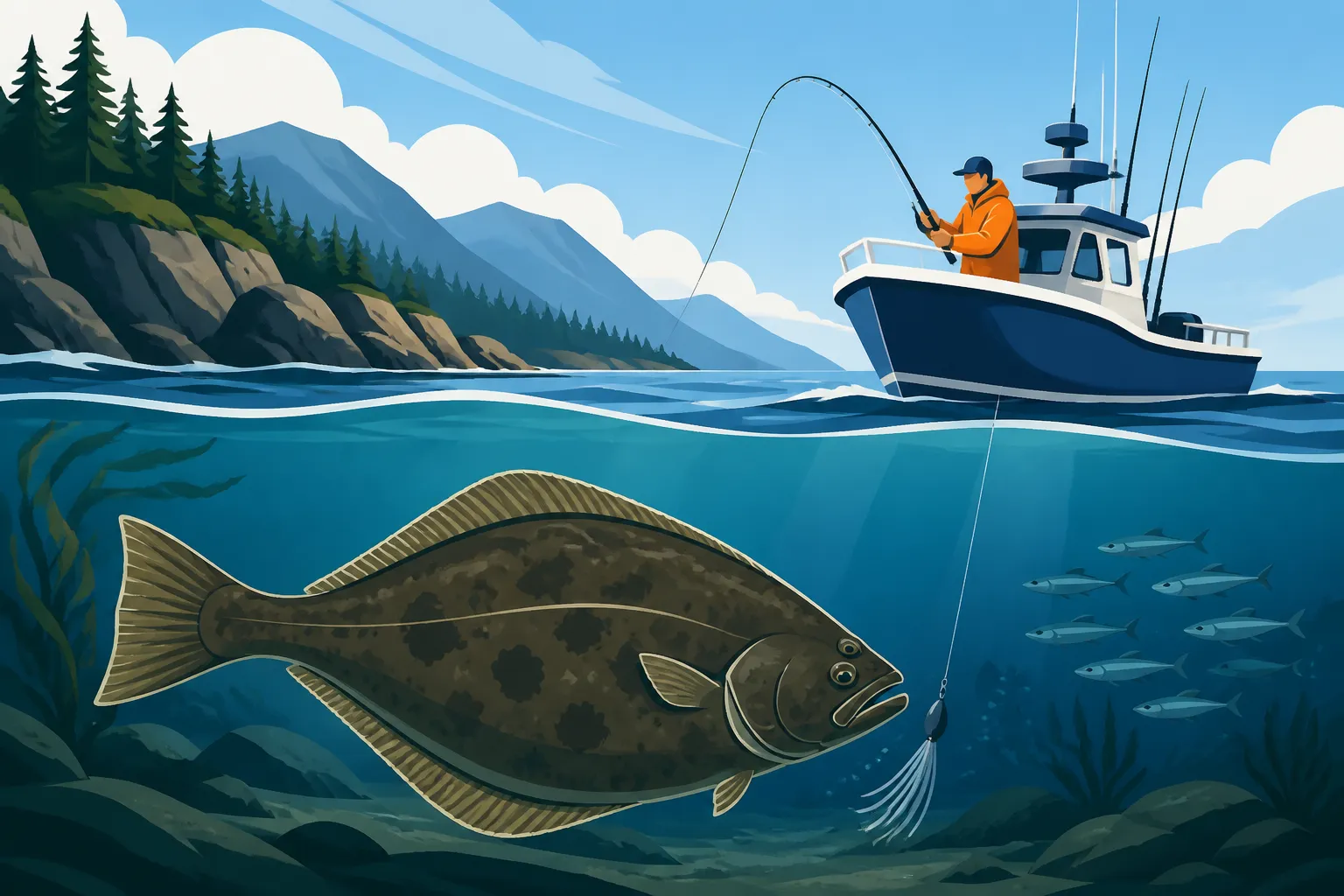
The ideal bottom composition for a halibut is often a mix of sand, gravel, and mud, sometimes with scattered rock or shell beds. This diverse substrate allows them to easily blend in with their surroundings, burying themselves slightly to become almost invisible to prey and predators alike. Imagine a halibut, perfectly flat, its mottled brown and grey top side blending seamlessly with the seafloor, while its white underside remains hidden from above. When a school of herring or a passing crab gets too close, it bursts from its hiding spot with surprising speed. Understanding this blend of bottom types and structure is crucial for knowing How deep halibut live off the BC coast.
Preferred Depths and Temperature Ranges
Halibut are generally found in deeper, cooler waters, typically ranging from 60 to 900 feet, though they can be found shallower or much, much deeper depending on the time of year and their life stage. Younger halibut might linger in slightly shallower waters, while the really massive, trophy-sized individuals often patrol the true abyssal plains and continental shelf edges. These deep waters offer stable temperatures and less light penetration, which suits their ambush hunting style and allows them to conserve energy.
The ideal water temperature for halibut is usually in the cooler range, often between 3°C and 8°C (37°F to 46°F). This isn't to say you won't find them outside this range, but these temperatures typically coincide with abundant food sources and comfortable conditions for the fish. Advanced sonar units, many of which you can find good deals on through retailers like Amazon, are invaluable for identifying not just the depth but also the thermal layers where baitfish might be congregating, which in turn indicates where halibut could be lurking below. Best deep water structure spots on Kootenay Lake might not be for halibut, but the principle of finding structure and preferred temperatures remains universal for deep-water species.
The Halibut Diet: What These Bottom Dwellers Feast On
Halibut are opportunistic predators with a voracious appetite. Their diet is incredibly varied, reflecting the diverse array of marine life found in their deepwater habitats. Understanding what halibut eat gives you a significant advantage in choosing the right baits and lures, effectively mimicking their natural food sources.
Primary Forage Fish and Crustaceans
The bulk of a halibut's diet consists of various fish and crustaceans. On the finfish side, common prey includes herring, sandlance, cod, pollock, flatfish like sole and flounder, and even smaller salmon. These baitfish often congregate in large schools near the bottom or migrate through the deeper channels where halibut reside. A halibut's large mouth and powerful jaws are perfectly suited for engulfing these slippery meals whole. Imagine a massive halibut, lurking motionless on the bottom, its camouflaged body a living trap, waiting for a unsuspecting school of herring to pass overhead.
Crustaceans and cephalopods also make up a significant portion of their menu. Crabs, particularly Dungeness and Tanner crabs, are a favourite, along with various shrimp and prawns. Octopus are also a highly prized food source for halibut, providing a substantial, protein-rich meal. Anglers often take advantage of this by using octopus for bait or employing artificial lures that mimic the movement of an injured crustacean. If you're looking for Halibut Fishing Techniques for BC's Coast, using these natural prey items as bait is often highlighted as a top strategy.
Ambush Predation and Hunting Strategies
Halibut are classic ambush predators. Their flat bodies and bottom-dwelling lifestyle are perfectly designed for this. They spend most of their time lying in wait, often partially buried in the sand or gravel, with only their eyes protruding above the substrate. Their eyes are unique, both located on the upper, darker side of their head, giving them an excellent field of vision upwards and forwards. This allows them to scan the water column for any potential prey swimming above.
When a target is spotted, the halibut uses its powerful caudal fin (tail) to launch itself off the bottom with surprising speed and agility, snatching its prey in a sudden, explosive strike. They can quickly return to the bottom, often stirring up a cloud of sediment to obscure their presence. This "sit and wait" strategy means that presenting your bait or lure directly in their strike zone, often right on or very near the bottom, is critical. Sometimes, they'll even swim short distances off the bottom, especially when actively hunting a school of baitfish, but their primary mode is the ambush from below.
Seasonal Movements and Spawning Habits
Halibut aren't static residents of the deep; they undertake significant seasonal migrations, often travelling vast distances. These movements are primarily driven by two critical factors: food availability and spawning cycles. Understanding these seasonal patterns is key to predicting where you'll find them at different times of the year.
Winter Migrations and Deepwater Spawning
As the cooler months of late autumn and winter set in, many halibut begin their offshore migration to deeper waters. This isn't just about seeking warmer or more stable temperatures; it's primarily about their spawning aggregation. Halibut are broadcast spawners, releasing eggs and sperm directly into the water column. They typically spawn in deep, offshore areas, often at depths exceeding 600 feet, from November through March, with peak activity in January and February.
These deepwater spawning grounds are often located on the edges of continental shelves, in canyons, or around major seamounts where currents can help disperse the eggs and larvae. During this period, their focus shifts from feeding to reproduction, and they become less accessible to recreational anglers due to the extreme depths and often challenging winter weather conditions. However, a small percentage of halibut may remain in shallower, nearshore feeding grounds year-round, particularly in areas with consistent baitfish populations. Knowing this deepwater winter habit helps explain why Best Halibut Fishing Spots in BC are often linked to specific offshore banks or structures.
Summer Feeding and Nearshore Movements
With the arrival of spring and warmer water temperatures, halibut begin their return migration from the deep spawning grounds to shallower, more accessible feeding areas along the coast. This is when the majority of the recreational halibut fishery takes place in British Columbia. They move into depths where baitfish are abundant and easier to intercept, often congregating on banks, ledges, and rocky reefs that are within comfortable reach for anglers.
During the summer months, from late spring through early fall, halibut are actively feeding to rebuild energy reserves after spawning. This is when they are most aggressive and responsive to baits and lures. Locations like the banks off Tofino and Ucluelet, or the vast grounds in Hecate Strait, become prime halibut territory. They spread out across these feeding grounds, often lying in wait for schools of herring or other prey to pass by. This seasonal shift is a critical piece of the puzzle for knowing Best Time of Year to Fish in BC for halibut.
The Influence of Tides and Currents on Halibut Behavior
Just like many other marine species, halibut movements and feeding behaviours are heavily influenced by the rhythm of the tides and the strength of ocean currents. Ignoring these forces can lead to a frustrating day on the water, while understanding them can dramatically increase your chances of success.
Slack Tide vs. Moving Water
Many experienced halibut anglers will tell you that moving water is key. As the tide shifts and currents begin to flow, it activates the baitfish, which in turn activates the predators like halibut. The currents help to dislodge bottom-dwelling organisms, stir up the seabed, and carry scents, making it easier for halibut to detect food. Furthermore, halibut are ambush predators who often use currents to their advantage. They will position themselves on the upstream side of a structure or depression, facing into the current, waiting for prey to be swept past them.
However, "moving water" doesn't mean any moving water. Extremely strong currents can make it impossible to get your bait to the bottom effectively, requiring excessively heavy weights that make fishing cumbersome. Often, the ideal scenario is the period when the current is starting to build, or when it's slowing down after a strong push. The transition points, typically an hour or so before and after slack tide, can be incredibly productive. Slack tide itself, when the water is completely still, can sometimes see a lull in feeding activity, as baitfish become less active and the halibut's ambush strategy is less effective without current delivering prey to them.
How Halibut Use Currents to Ambush Prey
Halibut are incredibly adept at using currents to their advantage. They are not chasing down fast-moving fish in open water for long distances; instead, they prefer to expend minimal energy. By positioning themselves behind a rock, a ledge, or in a depression on the ocean floor, they create a natural ambush point. As the current sweeps over and around these features, it creates eddies and concentrated flows where baitfish might pause or become disoriented.
The halibut lies patiently, its flat body allowing it to stay pinned to the bottom without being swept away. When a school of herring or a lone cod is carried past their hiding spot by the current, the halibut explodes into action, capitalizing on the element of surprise. This is why knowing the underwater topography of an area, and being able to read how currents interact with it, is invaluable. A good fishfinder, easily found on Amazon with features like CHIRP sonar, can help you map these bottom features even in deep water. This understanding is crucial for implementing Best technique for vertical jigging halibut or How to catch halibut on the drift.
Key Identification Features and Growth Patterns
Identifying a Pacific halibut is generally straightforward once you know what to look for, but understanding their growth and how their appearance can vary is helpful. These fascinating fish undergo a remarkable transformation as they mature, and their size can be truly astounding.
Distinguishing Pacific Halibut from Other Flatfish
The Pacific halibut (Hippoglossus stenolepis) is one of the largest flatfish in the world. Its most distinctive features include its diamond or kite-like body shape, which is proportionally thicker and more robust than most other flatfish. Both eyes are typically on the right side of its head, and its dorsal and anal fins extend almost the entire length of its body, tapering gracefully. The lateral line, which runs along its side, has a distinct arch above the pectoral fin.
Coloration is also a key identifier. The upper side of a halibut is generally a mottled dark brown, olive green, or grey, perfectly camouflaged to match the ocean floor. The underside is typically pure white. This countershading helps them blend in whether viewed from above or below. Other flatfish, like various sole and flounder species, tend to be thinner, smaller, have different eye placements (some on the left side, some with straighter lateral lines), and often lack the sheer bulk and diamond shape of a true halibut. Fish Species Identification Guide for BC can offer more visual comparisons.
Growth Rates and Size Potential
Halibut are slow-growing and long-lived fish, which contributes to their impressive size. They can live for 50 years or more, with females generally growing larger and living longer than males. A mature female halibut can reach lengths of over eight feet and weigh hundreds of pounds. The BC record halibut weight is a testament to their incredible growth potential. While such giants are rare, even smaller "chickens" (halibut under 20 pounds) or "turkeys" (20-50 pounds) provide a significant fight and a bounty of delicious meat.
Their growth rate is influenced by food availability, water temperature, and genetic factors. For the first few years, they grow relatively quickly, but as they age, growth slows down, with most of their energy shifting towards reproduction. The slot limits and bag limits in place in BC, like the BC Halibut Bag Limit Rules, are designed to protect these larger, more prolific breeders to ensure the long-term sustainability of the population. Catching a large halibut is often the culmination of years of the fish's life and a true angling achievement.
| Feature | Pacific Halibut | Other Large Flatfish (e.g., Turbot, Pacific Cod – not a flatfish, but often confused with large bottom dwellers) |
|---|---|---|
| Body Shape | Thick, robust, diamond-shaped | Flatter, often more oval or rounded (Turbot); Elongated, cylindrical (Pacific Cod) |
| Eye Placement | Both eyes typically on the right side of head | Varies; often left side or both eyes on top in juvenile stage (e.g., Sole, Flounder) |
| Lateral Line | Distinct arch above the pectoral fin | Straight or gently curved, no pronounced arch |
| Coloration (Top) | Mottled dark brown, olive green, grey | Varies, often uniform brown, grey, or spotted |
| Coloration (Bottom) | Pure white | White, sometimes cream or yellowish |
| Size Potential | Can exceed 8 feet, hundreds of pounds | Typically smaller; most sole/flounder rarely exceed 2 feet. Cod can be large but are not flat. |
| Mouth | Large, powerful, extending past the eye | Smaller, terminal (Sole/Flounder); Large, but different structure (Cod) |
Conservation and Responsible Fishing for Halibut
Halibut are an iconic species in British Columbia, highly prized by both commercial and recreational anglers. Due to their slow growth, long lifespan, and historical pressures, sustainable management and responsible fishing practices are paramount to ensure healthy populations for future generations. Every angler has a role to play in this conservation effort.
Understanding Regulations and Quotas
British Columbia has stringent regulations in place for halibut fishing, which are regularly updated based on scientific assessments of the stock. These regulations typically include daily bag limits, possession limits, minimum and maximum size limits (often referred to as "slot limits"), and sometimes even annual quotas for recreational fishers. These rules are designed to protect breeding stock and ensure that a sustainable number of fish are harvested. It's not uncommon to find areas with specific closure windows or gear restrictions, especially to protect other species that might be caught incidentally.
Before heading out on any halibut fishing trip, it is absolutely essential to check the most current regulations. These can change in-season due to fishery notices, so relying on old information is a recipe for trouble. The Fisheries and Oceans Canada (DFO) website is the primary source for these updates. Always make sure your BC Halibut Bag Limit Rules and other related regulations are up-to-date. Failure to comply can result in significant penalties, including hefty fines and confiscation of gear and catch.
Best Practices for Catch and Release
While many anglers enjoy bringing home halibut for their delicious meat, catch and release is an important component of sustainable fishing, especially for fish outside the legal slot limit or when you've already met your retention quota. Ensuring a high survival rate for released fish is crucial. The first step is to minimize the fight time; use appropriate gear that can bring the fish to the boat efficiently.
Once alongside, avoid bringing oversized or undersized fish into the boat if possible. Use a dehooker or needle-nose pliers to carefully remove the hook while the fish is still in the water. If the fish must be brought onboard, handle it minimally and gently. Avoid touching the gills or eyes. Support its body horizontally, especially larger fish, to prevent internal organ damage. Releasing a fish quickly, headfirst back into the water, and allowing it to swim away on its own power, maximizes its chances of survival. Always have a plan for releasing fish that you cannot legally retain. Sturgeon catch and release survival tips provides an excellent example of careful handling that can be adapted to other large, sensitive species like halibut.
Disclaimer
This article is for general informational purposes only and does not constitute professional advice. Laws, prices and regulations vary by location and change over time. Consult a qualified professional for guidance on your specific situation.