Best technique for vertical jigging halibut
There's nothing quite like the immense satisfaction – and sheer muscle ache – of battling a true barn door halibut in British Columbia's deep, nutrient-rich waters. However, many anglers get frustrated staring at their sonar, seeing promising marks, yet struggling to entice a bite. It's often not about the fish not being there, but about how you're presenting your offering. This comprehensive guide is dedicated to unlocking the secrets of vertical jigging for halibut, turning those frustrating sonar pings into exhilarating hookups and memorable catches.
Understanding Halibut and Their Habitat for Jigging Success
Before you even think about dropping a line, truly understanding the Pacific halibut is your first step toward success. These magnificent flatfish are ambush predators, perfectly camouflaged and designed to lie in wait on the ocean floor, ready to strike at unsuspecting prey. Knowing where they prefer to hide, and what makes them active, is fundamental to effective vertical jigging.
Where Halibut Hold in BC Waters
Halibut aren't just lounging anywhere on the bottom; they have preferences, much like any predator. They are particularly drawn to areas that offer both concealment and a steady supply of food. Think like a halibut: where would you wait for an easy meal?
They love structure. This means anything that breaks up the flat seabed: rock piles, ledges, underwater pinnacles, and even sunken logs or debris. These structures provide current breaks where they can rest, and ambush points to dart out from. Pay close attention to the "lips" of drop-offs, where a flat shelf suddenly plunges into deeper water. These transition zones are prime real estate. Depths can vary wildly, from 60 feet on shallower banks to over 600 feet in the deeper canyons and troughs, though many anglers target them successfully in the 150-400 foot range.
Current is another huge factor. Halibut are not strong swimmers over long distances, so they prefer to position themselves in areas where the current brings food directly to them, without having to expend too much energy. This often means the lee side of underwater humps or in eddies formed by submerged reefs. However, too much current makes it impossible to get your jig to the bottom and keep it there effectively, so finding that sweet spot is key. Look for areas where the current is present enough to deliver prey, but not so strong that your gear is unmanageable. The bottom composition also plays a role; while they'll be on rocks, they're often found on the edges where soft sand or gravel meets the hard structure, allowing them to bury themselves slightly for camouflage. Understanding Halibut Habits off the BC Coast can really help you pinpoint these prime locations.
Seasonal and Tidal Influences on Halibut Location
Halibut aren't static residents; their behavior, and therefore their location, shifts with the seasons and the rhythm of the tides. Ignoring these influences is a common mistake that leads to fruitless fishing trips.
During the warmer months, roughly late spring through fall, halibut tend to be more active and can be found in shallower waters, as baitfish and other prey move closer to the surface and shorelines. This is when you might find them on shallower banks and plateaus. As winter approaches, many halibut will migrate to deeper, more stable waters, often congregating in vast feeding grounds or overwintering areas where temperatures and food sources are more consistent. This doesn't mean they disappear, just that your search needs to go deeper.
Tidal currents are perhaps the most immediate and critical influence on halibut behavior. Halibut are opportunistic feeders, and strong tidal movements stir up the seabed, dislodging baitfish, crabs, and other bottom-dwelling organisms. This makes them active feeders. The prime time for jigging is often during the slack tide leading up to and immediately following the peak of the current, particularly on the incoming or outgoing tide when the water is moving, but not raging.
Fishing during a ripping current is incredibly challenging because your jig will simply be swept away, making it difficult to reach the bottom and present naturally. Conversely, dead slack tide can sometimes see halibut less active, though it's often the easiest time to fish in terms of gear management. The sweet spot is usually during moderate current, when there's enough flow to bring food but not so much that your jig can't get down and stay in the strike zone. Observing the tide charts and local current predictions for your chosen fishing spot is non-negotiable for success. This knowledge is crucial for Best Halibut Fishing Spots in BC.
Essential Gear for Vertical Jigging Halibut in BC
Successfully battling a large halibut requires more than just luck; it demands specialized, heavy-duty gear capable of withstanding immense pressure and the sheer power of these formidable fish. Skimping on tackle will lead to heartbreak.
Rods, Reels, and Line – The Powerhouse Trio
When it comes to vertical jigging for halibut, you're not bringing a knife to a gunfight; you're bringing a battleship. Your rod, reel, and line combination needs to be incredibly robust.
For rods, think heavy-action, conventional jigging rods, typically 5'6" to 7' in length. These rods are designed with a powerful backbone to lift heavy jigs and a sensitive tip to detect subtle bites in deep water. Graphite or composite blanks are preferred for their strength-to-weight ratio and sensitivity. A good rod will allow you to impart action to your jig without feeling like you're fighting the rod itself, while still having the power to turn a fish. Many excellent options can be found through online retailers; a quick search on Amazon will reveal a wide array of specialized jigging rods that fit the bill for BC halibut.
Reels must be conventional (lever drag or star drag) and robust, capable of holding a substantial amount of heavy braided line, and boasting a smooth, powerful drag system. Think reels designed for offshore bottom fishing or even small tuna. A reliable reel with good cranking power is essential for retrieving heavy jigs and fighting powerful fish from deep water. Lever drags offer excellent control during the fight. Brands known for their durability and performance are highly recommended. Look for models with a high gear ratio for faster retrieve but ensure they still have plenty of torque.
Line choice is critical. Braided line, with its incredibly thin diameter for its breaking strength and zero stretch, is the only way to go for vertical jigging halibut. It allows you to feel subtle bites at extreme depths and reduces drag in the current, helping your jig reach the bottom faster. A minimum of 60 lb test, often up to 100 lb, is common. You'll need several hundred yards of it. At the business end, a long (6-10 foot) leader of heavy fluorocarbon (80-150 lb test) is essential. Fluorocarbon is nearly invisible underwater and highly abrasion-resistant, crucial when fishing around rocky structure. Connect your braid to your leader with a strong knot like an FG knot or a high-quality barrel swivel.
Lures and Baits: What Gets Their Attention
The right presentation is everything when a halibut is scrutinizing your offering. Vertical jigs for halibut come in various forms, each designed to mimic their natural prey and provoke a strike.
Metal jigs are a staple. These heavy, slender, or broader-bodied lures sink quickly and are designed to be worked vertically. They come in a multitude of shapes, weights (from 6 to 20 ounces or more, depending on depth and current), and colors. Popular colors include chartreuse, glow-in-the-dark, blue/silver, pink, and white. The flash and vibration of metal jigs as they flutter and fall can be irresistible. Some jigs are designed for a faster, darting action, while others have a wider, slower flutter. Having a selection of weights is crucial so you can adapt to changing depths and currents.
Soft plastics are another highly effective option, often fished on heavy leadhead jigs (jig heads). These can range from large curl-tail grubs to realistic swimbaits, often 8 to 12 inches long or more. The soft, undulating action of these lures can be incredibly enticing. Again, glow-in-the-dark colors are phenomenal in deep, dark water. Scent is also a major factor; applying a strong fish attractant to your soft plastic jigs can significantly increase your strike rate. Consider purchasing scent or specialized soft plastic jigs from retailers like Amazon before your trip to ensure you have a variety.
Sometimes, combining bait with a jig is the ultimate halibut magnet. Tipping your leadhead jig with a piece of herring, squid, or a salmon belly strip can add natural scent and texture that a wary halibut simply can't resist. This hybrid approach often produces when artificials alone are struggling. The natural bait provides a scent trail and flavor, while the jig provides the action and weight to get it into the strike zone. Remember, halibut are primarily scent-oriented predators in deep water, so don't underestimate the power of a good bait.
Here's a quick comparison of popular jig types:
| Jig Type | Material | Key Characteristics | Best For | Pros | Cons |
|---|---|---|---|---|---|
| Metal Jig | Lead/Steel | Heavy, compact, erratic fall/flutter | Deep water, strong currents, aggressive bites | Sinks fast, good vibration/flash, durable | Less natural action, requires active jigging |
| Leadhead Jig | Lead + Soft Plastic | Realistic profile, natural movement of plastic | Moderate currents, wary fish, scent addition | Mimics natural prey, can be tipped with bait, good color variety | Sinks slower than metal, plastic can be torn by fish/structure |
| Scented Jig | Rubber/Soft Plastic | Infused with fish attractants | Any conditions, especially slow bites | Strong scent trail, highly attractive to scent-feeding halibut | Scent can dissipate, often more expensive |
| Spoon Jig | Metal | Broad, concave shape, strong wobble | Moderate depths, less current, enticing flash | Mimics injured baitfish, strong visual attraction | Can be difficult to get deep in strong current, less versatile |
Mastering the Vertical Jigging Technique for Halibut
Having the right gear is only half the battle. The true art lies in how you present that gear to a discerning halibut. Vertical jigging is about precision, rhythm, and feel.
Dropping Down and Finding the Zone
Getting your jig to the bottom, and keeping it there, is the first critical step. Halibut are bottom dwellers, so if your jig isn't in the strike zone, you're not getting a bite.
Once you've identified a promising spot – perhaps a ledge, a humpy, or a transition zone on your sonar – position your boat directly over it. If drifting, account for current and wind to ensure your drift will carry you over the target. Drop your jig straight down, free-spooling the line, keeping a thumb on the spool to prevent backlashes and control the descent. You want a controlled, rapid descent.
Watch your line carefully. When it goes slack, you've hit the bottom. Immediately reel up a few feet, just enough to get your jig off the seabed. You don't want it lying flat, as this makes it less visible and prone to snagging. Keep a keen eye on your sonar; it's your best friend in deep water. It will show you the bottom contour, any structure, and even fish marks. If you see marks just off the bottom, adjust your jigging depth to match. If you drift off the target or into much deeper or shallower water, retrieve and redeploy. This constant adjustment is what separates successful jigging from random drops. The deep water requires specific techniques, especially when you consider How deep halibut live off the BC coast.
The Art of the Jig and Retrieve
This is where the "jigging" comes in! There isn't one single "best" way to jig; halibut often respond differently to varying presentations. Experimentation is key, but some core techniques form the foundation.
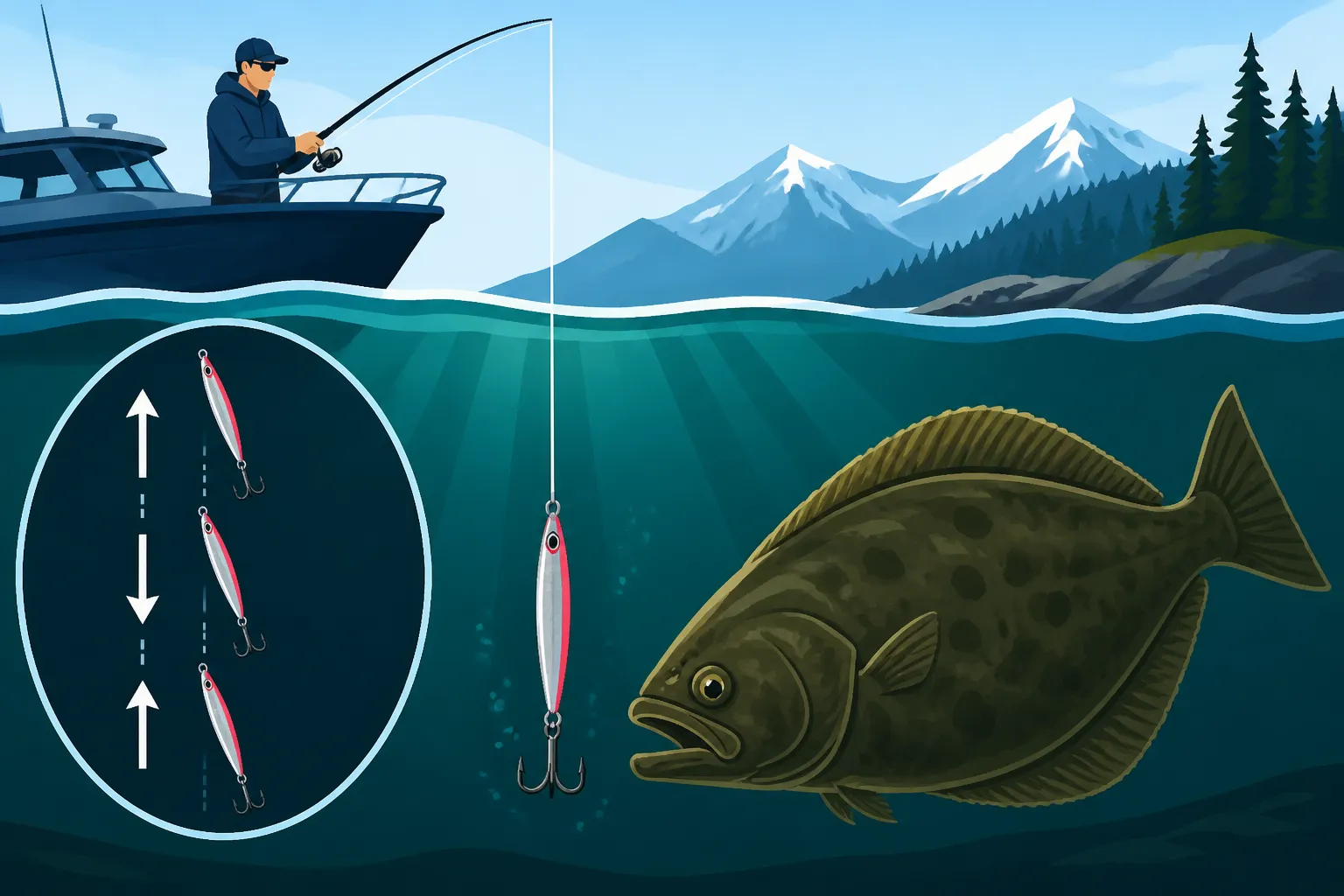
Start with a classic lift-and-drop. Lift your rod tip sharply, maybe 2-4 feet, then let it fall back down on a semi-slack line, allowing the jig to flutter naturally. As the jig falls, keep just enough tension to feel its weight and detect any subtle takes. Halibut often hit on the drop, so be ready. After it settles, give it a moment, then repeat. Vary the speed and height of your lifts. Sometimes a long, slow sweep is what they want; other times, short, sharp hops are more effective. Think of mimicking a wounded baitfish or a crab trying to escape.
Another effective technique is "pounding" the bottom. This involves letting your jig hit the bottom, then immediately lifting it a foot or two, letting it hit again, and repeating. This creates a puff of sediment, mimicking a bottom-dwelling creature digging or fleeing, which can attract curious halibut. Once you've pounded for a bit, go back to your lift-and-drop.
The retrieve is just as important. After a few minutes of working a spot, slowly reel up 10-20 feet, jigging as you go, then let the jig drop back down. Halibut will sometimes suspend slightly off the bottom, or you might find a fish higher in the water column that your initial drop missed. Keep that line straight and perpendicular to the boat as much as possible; heavy current makes this difficult, but minimizing line angle is crucial for feeling bites and maintaining control. Jigging for Halibut off Vancouver Island dives into more region-specific techniques.
Hookset and the Fight: Bringing Up a Barn Door
Detecting the bite can be tricky in deep water. Halibut bites can range from a gentle "thump" or spongy resistance to a rod-wrenching strike that nearly pulls the rod from your hands. Often, it feels like your jig just got heavy, or you feel a subtle tap that isn't the bottom. When in doubt, set the hook!
The hookset needs to be firm and authoritative. When you feel a bite, drop your rod tip slightly, then crank down fast to take up any slack, and then sweep the rod upwards with all your might. Because of the no-stretch braid and often large, heavy-gauge hooks on halibut jigs, a strong, quick hookset is usually enough to drive the hook home into their tough, cartilaginous mouths.
Once hooked, be prepared for a fight. Halibut are incredibly powerful, especially the larger ones, earning them the nickname "barn doors." Their initial run can be long and deep, trying to get back to the bottom or into structure. Resist the urge to crank down too hard on the drag initially; let them run, but maintain pressure. Work the fish slowly and steadily, using the rod's parabolic bend to your advantage. Pump and reel: lift the rod, reel down as you drop the tip, and repeat. Do not try to hoist a big halibut straight up. It's a marathon, not a sprint. Take breaks if your arms burn, and keep the pressure on. What to Expect on a BC Fishing Charter often includes tips from experienced guides on fighting these fish.
As the halibut gets closer to the surface, it might make several strong dives. Be ready for these and adjust your drag accordingly. When the fish surfaces, it's a critical moment. Have a large, sturdy gaff or harpoon ready. For smaller halibut, a large landing net might suffice, but for anything over 30-40 pounds, a gaff is essential. Aim for the head or shoulders, avoiding the body cavity if you plan to keep the fish for consumption. Always be mindful of your BC Halibut Bag Limit Rules and measure your catch quickly if there's a size limit.
Safety and Best Practices for Halibut Jigging
Halibut fishing, especially in the often-rough coastal waters of British Columbia, requires a strong emphasis on safety and responsible practices. These are heavy-duty fish in potentially challenging environments, so preparedness is paramount.
Boating Safety and Positioning
Before you even leave the dock, ensure your boat is sea-worthy and properly equipped. The waters where halibut reside can be unpredictable. Check the marine weather forecast meticulously and be prepared for changing conditions. Never venture out in conditions beyond your comfort level or your boat's capabilities.
When jigging, boat positioning is crucial. If you're anchoring, ensure your anchor system is robust enough to hold in deep water and strong currents. A good anchor with plenty of chain and rode is essential. Always set an anchor watch, especially if you're alone, to ensure you don't drag. If you're drifting, carefully monitor your drift speed and direction using your GPS and sonar. Pay attention to any obstacles, other boats, or shallow areas you might drift into. Modern boat electronics, including radar and VHF radio, are not just luxuries but essential safety tools in these waters. Familiarize yourself with all BC Boating Laws for Anglers before heading out.
Personal safety gear is non-negotiable. Everyone on board must have a properly fitting life jacket or PFD, and know where all other safety equipment (flares, air horn, first aid kit, bailing device, etc.) is located. The ocean can be unforgiving. It's always a good idea to file a float plan with someone on shore, letting them know where you're going and when you expect to return. Remember that a BC Pleasure Craft Operator Card Requirement exists for a reason – knowing how to safely operate your vessel is key.
Handling and Releasing Halibut Responsibly
Whether you're keeping your catch or releasing it, responsible handling is vital for both angler safety and fish conservation. Halibut are powerful, and their large size can make them dangerous on deck.
For fish you intend to keep, dispatch them quickly and humanely once on board. A sharp blow to the head or a brain spike (ikejime) is effective. Bleeding the fish immediately by cutting the gills will improve the quality of the meat. Be aware of the halibut's powerful tail; even when seemingly subdued, a slap from a large halibut's tail can break bones or knock you overboard. Clear the deck of any tripping hazards before bringing the fish aboard.
If you're practicing catch-and-release, especially with larger halibut, minimizing stress and handling time is critical. Whenever possible, revive the fish in the water. If the fish is too large to bring aboard safely or you want to maximize its survival chances, release it at the boat without bringing it over the gunwale. Use a de-hooker tool to remove the hook while the fish is still in the water, if possible. Avoid dragging the fish onto the deck, as this can strip off its protective slime coat and cause internal damage. For very large fish caught from extreme depths, barotrauma can be an issue, though halibut are generally more resilient than some other deep-water species. If releasing a large fish, hold it gently upright in the water until it regains its strength and swims away on its own. Every effort to ensure the survival of released fish contributes to healthy populations for future generations.
Disclaimer
This article is for general informational purposes only and does not constitute professional advice. Laws, prices and regulations vary by location and change over time. Consult a qualified professional for guidance on your specific situation.