Pacific Salmon Species Identification Guide
There's nothing quite like the thrill of a screaming reel and the heavy throb of a powerful fish on the end of your line in British Columbia's incredible waters. But as that magnificent silver bullet breaks the surface, a common thought crosses many anglers' minds: "What exactly is that?" Identifying the different Pacific salmon species can be a real head-scratcher, even for seasoned fishers, especially when they're fresh out of the ocean. This comprehensive guide is designed to cut through the confusion, helping you confidently distinguish between the five main species of Pacific salmon you're likely to encounter in BC.
The Big Five: Getting to Know BC's Pacific Salmon
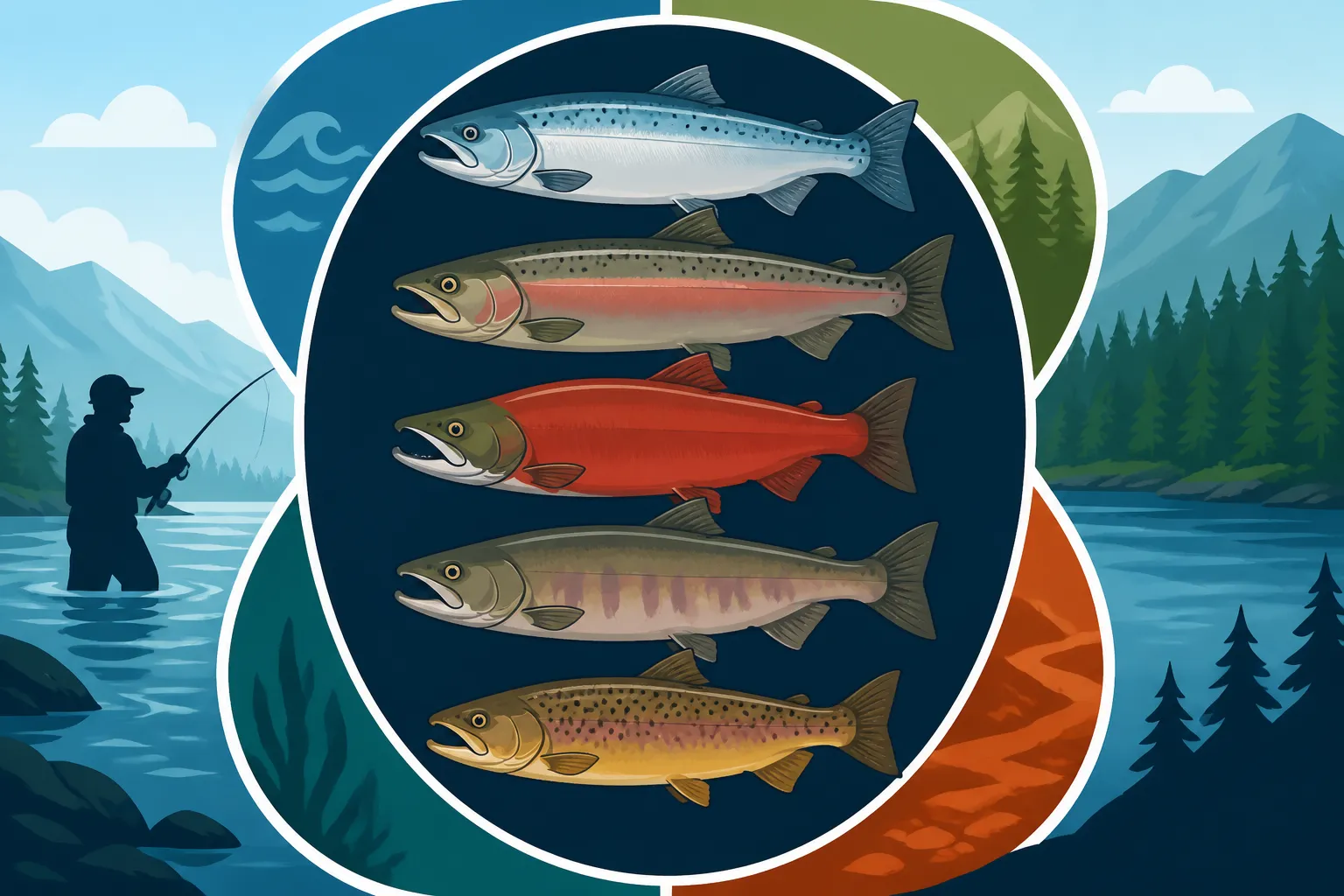
British Columbia is truly blessed with an abundance of Pacific salmon, making it a world-renowned fishing destination. The five species you'll most commonly encounter are Chinook (King), Coho (Silver), Sockeye (Red), Pink (Humpy), and Chum (Dog) salmon. Each has its own distinct characteristics, behaviors, and fishing challenges. Understanding these differences isn't just about satisfying curiosity; it's vital for adhering to BC Bag and Possession Limits by Species and local regulations, which often vary by species, size, and even river system.
It's important to remember that salmon undergo incredible transformations as they transition from their pristine ocean-bright phase to their spawning colours as they enter freshwater. This can make identification a bit tricky, as a vibrant silver Chinook fresh from the saltwater can look drastically different from a dark, hook-jawed Chinook just days away from spawning. We'll focus on key features that remain relatively consistent or dramatically change in predictable ways.
Chinook Salmon The King of the Catch
Ah, the mighty Chinook! Often called "King Salmon," "Spring Salmon," or "Blackmouth," these are the undisputed heavyweights of the Pacific salmon family. When you hook into a big one, you'll know it – their powerful runs and dogged fighting style can test even the most experienced angler and their gear. Many anglers dream of catching The largest chinook ever caught in BC.
Key Physical Traits of Chinook Salmon
Chinook salmon are generally the largest of the Pacific salmon, with some individuals reaching truly impressive sizes. In their ocean phase, they are typically a beautiful silvery-blue or green on their backs, fading to silver on their sides and a pure white belly. The tell-tale sign for a Chinook is their black gum line. If you gently lift the gill plate and look at the roof of their mouth, you'll see a solid black line along the base of their teeth. Another critical identifier is their heavily spotted tail. Chinook have spots on both the upper and lower lobes of their tail fin, and often on their backs and dorsal fin as well. Their scales tend to be larger than those of Coho but smaller than those of Chum.
As they enter freshwater and prepare for spawning, Chinook undergo a dramatic colour change. Their silver flanks darken, often turning a coppery-red, dark olive, or even black. Males develop a pronounced humped back and a distinctive, hooked upper jaw (kype). The black gum line, however, remains a consistent identifier throughout their lifecycle. Always double-check this feature if you're uncertain, as it's one of the most reliable indicators.
Habitat, Migration, and Fishing Considerations
Chinook salmon are known for their long migrations, often travelling hundreds, even thousands, of kilometers up major river systems like the Fraser River and its tributaries. They can be found in both coastal and interior rivers, with different runs peaking at various times of the year. For instance, When chinook salmon run on the Fraser can vary significantly. They prefer cooler, deeper waters and are often targeted by trolling in saltwater or by drift fishing, bar fishing, or fly fishing in freshwater. When targeting these magnificent fish, remember their size and power. You'll need robust rods and reels, strong lines, and reliable tackle.
Knowing the specific regulations for Chinook is paramount, as conservation efforts often mean selective retention or catch-and-release rules in certain areas or during particular seasons. Always check the current BC Fishing Regulations Explained before you head out, as these can change rapidly depending on run sizes and conservation concerns.
Coho Salmon The Acrobat of the Rivers
Coho salmon, affectionately known as "Silvers," are celebrated for their incredible acrobatic displays and aggressive strikes. Hooking a Coho in a river can lead to spectacular jumps and powerful runs, making them a favourite target for many anglers seeking a thrilling fight. They're often found in the same waters as Chinook, but their behaviour is distinctly different.
Key Physical Traits of Coho Salmon
Coho are typically smaller than Chinook, though they can still reach respectable sizes, particularly the "trophy" Coho. In the ocean, their backs are a metallic blue or green, with bright silver sides and a white belly. A key identification feature for Coho is their white gum line, or at least a partially white gum line, which distinguishes them from the solid black gum line of a Chinook. When you look inside their mouth, the gums will be light or mottled, not uniformly black. Their tail fin usually has spots only on the upper lobe, and the spots are generally smaller and less numerous than on a Chinook.
Similar to Chinook, Coho change dramatically during their freshwater migration. Males develop a reddish-maroon body, a dark green head, and a prominent kype. Females also take on a darker, reddish hue. Despite the colour transformation, the white gum line and spotting pattern on the tail remain the most reliable features for positive identification. Their scales are typically smaller and feel smoother than a Chinook's.
Habitat, Migration, and Fishing Considerations
Coho salmon are widespread throughout BC's coastal rivers and streams, known for their shallower migrations and tendency to hold in riffles, pools, and undercut banks. They're very responsive to lures and flies, especially brightly coloured ones. Coho Salmon Habits in Coastal Streams make them a fantastic target for fly fishing, spin casting, or float fishing. They are known to be quite aggressive, often striking at a variety of presentations.
Their runs typically peak in late summer and fall, offering fantastic fishing opportunities. However, like all salmon, their populations are carefully managed. It's crucial to understand BC Bag and Possession Limits by Species for Coho, as regulations can vary significantly depending on the river system and run strength. Many anglers find that investing in a quality pair of polarized sunglasses, available on Amazon, can greatly aid in spotting these elusive acrobats in clear river water.
Sockeye Salmon The Prized Red Salmon
Sockeye salmon, often called "Red Salmon" for their stunning spawning colours, are perhaps the most visually distinct of the Pacific salmon when they enter freshwater. While they may not grow to the same colossal sizes as Chinook, their meat is highly prized for its rich, firm texture and vibrant red colour, making them a favourite for canning and smoking.
Key Physical Traits of Sockeye Salmon
In their ocean phase, Sockeye are a brilliant, almost iridescent blue-green on their backs with silvery sides and a white belly. They are quite sleek and torpedo-shaped. Unlike Chinook and Coho, Sockeye typically lack prominent spots on their backs or tail fins. If there are any spots, they are usually very faint and sparse. Their most distinguishing feature in the ocean is often their streamlined body and overall lack of strong markings. Their eyes tend to be noticeably larger in proportion to their heads compared to other salmon species.
However, the real transformation occurs as they approach their spawning grounds. Sockeye turn a spectacular bright red body with a green head and tail. Males develop a pronounced humped back and a kype, but it's their fiery red bodies that make them unmistakable. This intense coloration is a strong indicator, but remember, it only appears once they've entered freshwater and begun their spawning journey. When sockeye salmon spawn in the Fraser system is a breathtaking sight for many.
Habitat, Migration, and Fishing Considerations
Sockeye salmon are unique in their lifecycle, requiring freshwater lakes for their juvenile rearing phase before migrating to the ocean. This means they are often found in river systems connected to large lake systems, such as the Fraser River and its vast network of lakes. They are predominantly filter feeders in the ocean, feeding on plankton, which makes them notoriously difficult to catch on traditional lures or bait in saltwater.
In freshwater, as they approach their spawning grounds, Sockeye fishing often involves specialized techniques like "flossing" or "dredging" with unbaited hooks, which are designed to snag fish in their mouths as they migrate. Specific gear and regulations are critical for Sockeye fishing, as catch limits are often very strict and openings are sometimes short and highly regulated due to conservation concerns. Always consult BC Fishing Season Dates and Closures and local fishery notices before targeting Sockeye.
Pink Salmon The Abundant Humpy
Pink salmon, or "Humpies," are the most abundant of the Pacific salmon species and are easily identifiable, especially the males during their spawning migration. They are known for their biennial runs, meaning they typically run in odd-numbered years in some systems and even-numbered years in others. In many BC rivers, the odd-numbered years see massive returns, making them a popular target for new anglers or those looking for consistent action.
Key Physical Traits of Pink Salmon
Pink salmon are the smallest of the Pacific salmon, generally weighing between 3 to 5 pounds. In the ocean, they are bright silver with a greenish-blue back. Their most distinctive feature in both ocean and freshwater phases is the presence of large, oval-shaped spots on their backs and, crucially, on both lobes of their tail fin. These spots are typically much larger and more widely spaced than those found on Chinook or Coho.
Males, as they enter freshwater, develop a huge, distinct humped back, hence the nickname "Humpy." Their bodies turn a dull greenish-grey on the back, fading to white on the belly, with a pinkish-brown tint on their sides. Females are similar but without the pronounced hump. The large black spots on the back and tail are the most consistent identifier, even as their colours change. How to tell a sockeye from a pink salmon often comes down to the spots (Pink) versus no spots (Sockeye) in their spawning phase.
Habitat, Migration, and Fishing Considerations
Pink salmon have the shortest freshwater migration of all Pacific salmon, often spawning very close to the ocean in the lower reaches of rivers and even in intertidal zones. They are incredibly aggressive biters, making them excellent targets for light tackle. Many anglers enjoy casting small, flashy spoons, spinners, or pink-coloured flies for them. Their abundance makes them a great species for families or beginner anglers. Pink Salmon Runs in BC can offer incredible opportunities for high-volume catch and release.
Due to their sheer numbers, Pink salmon often have more liberal retention limits than other species, but strict adherence to local regulations is still essential. Always check current regulations before heading out. A pair of lightweight fishing pliers, easily purchased from Amazon, is a must-have for quickly and safely unhooking these plentiful fish, especially when practicing catch and release.
Chum Salmon The Dog Salmon
Chum salmon, also known as "Dog Salmon" or "Keta Salmon," are perhaps the most overlooked of the Pacific salmon for sport fishing, but they are incredibly important ecologically and commercially. While not known for acrobatic fights, they are powerful fish, especially larger individuals. Their unique markings make them fairly easy to identify once you know what to look for.
Key Physical Traits of Chum Salmon
Chum salmon are generally the second-largest Pacific salmon species, behind Chinook, with individuals often weighing 10-20 pounds or more. In the ocean, they are metallic greenish-blue on their backs with silvery sides and a lighter belly. They generally lack significant spots on their backs or tail, similar to Sockeye. However, their defining characteristic, particularly as they approach spawning, is the presence of tiger-striped vertical bars or blotches of green, purple, and red along their flanks.
As they enter freshwater, Chum develop these striking vertical bars, making them truly unique. Males also develop a massive, canine-like set of teeth, which gives them their "Dog Salmon" nickname, and a moderately humped back. Their scales are relatively large and feel quite coarse compared to other salmon species. The combination of large scales, lack of spots, and the distinctive vertical barring in freshwater are key identifiers. Chum Salmon Runs in BC are often a sight to behold, with thousands of these distinct fish entering river systems.
Habitat, Migration, and Fishing Considerations
Chum salmon are found in river systems throughout BC, often spawning in the lower to middle reaches of rivers and even in smaller coastal streams. They are not as strong a fighting fish as a Chinook or Coho, but their sheer power and size, especially the males, can still provide a solid tug on the line. They are often targeted with large, colourful flies, jigs, or spoons, especially in shades of pink, purple, or chartreuse.
Chum salmon are important for commercial fisheries, and specific conservation measures are often in place. Checking the local BC Fishing Regulations Explained for Chum is always advised, as restrictions can apply. While not everyone's first choice for table fare due to their paler flesh, they are excellent smoked or cured.
A Quick Reference Guide to Salmon Identification
To help you quickly differentiate between the Pacific salmon species, here's a handy comparison table summarizing their key visual characteristics. Remember, these are general guidelines, and individual fish can vary!
| Feature | Chinook (King) | Coho (Silver) | Sockeye (Red) | Pink (Humpy) | Chum (Dog) |
|---|---|---|---|---|---|
| Size (Avg. Adult) | Large (15-30+ lbs) | Medium (8-15 lbs) | Medium (5-10 lbs) | Small (3-5 lbs) | Large (10-20+ lbs) |
| Gum Line Color | Black | White/Light | White/Light (often faint) | White/Light | White/Light |
| Tail Spots | Present on both lobes, heavy | Present on upper lobe only, sparse | Generally absent | Large oval spots on both lobes | Generally absent |
| Body Shape (Ocean) | Stout, muscular | Sleek, torpedo-like | Sleek, very streamlined | Small, slender | Stout, deep-bodied |
| Spawning Body Color | Dark olive, coppery-red, dark black | Reddish-maroon, green head | Bright red body, green head | Greenish-grey back, pinkish sides | Green/purple/red vertical bars |
| Spawning Jaw (Male) | Pronounced kype | Pronounced kype | Moderate kype | Very pronounced humped back (kype less pronounced) | Prominent kype, large teeth |
| Scales | Relatively large | Small, smooth | Fine, embedded | Small, very fine | Large, coarse |
General Tips for Confident Salmon Identification
Even with all the guidelines, sometimes a fish just doesn't seem to fit perfectly. Here are a few extra tips to help you make a positive identification:
Consider the Context of Your Catch
Where are you fishing? If you're in a coastal estuary in an odd-numbered year, chances are high you'll encounter a Pink salmon. If you're deep in the Fraser Canyon in late summer, Sockeye are a strong possibility. Knowing the general BC Fishing Seasons by Month and typical migration patterns for Pacific Salmon Species Identification Guide in your area can narrow down the possibilities considerably. Fish in ocean environments, especially those caught far offshore, will often be vibrant silver, making the gum line and tail spot patterns even more critical.
Handle With Care for Examination and Release
When you're trying to identify a fish, remember to handle it gently and quickly, especially if you intend to release it. A soft rubber net can help protect the fish's slime coat and fins. If you need to check the gum line, gently cradle the fish and use wet hands. Avoid squeezing or laying the fish on rough surfaces. A waterproof measuring tape and a small, easily accessible camera (many anglers now use durable models from brands like GoPro, or even their smartphone in a waterproof case, both often found on Amazon) can help you document your catch for later identification if you're still unsure. Always remember that the health of the fish you release is paramount, so keep it wet and get it back in the water as quickly as possible.
Don't Be Afraid to Consult Local Experts or Resources
Still scratching your head? Don't be shy! Most tackle shops in British Columbia are staffed by passionate anglers who can often help identify a fish from a photo or description. The official BC Freshwater Fishing Regulations Synopsis, available from fishing license vendors and often online, also contains excellent illustrations and detailed descriptions. Familiarize yourself with this document, as it's the ultimate authority on BC Fishing Regulations Explained.
The Importance of Correct Identification
Beyond satisfying your angler's curiosity, correctly identifying the salmon species you've caught is incredibly important for several reasons. First and foremost, it ensures you comply with fishing regulations. Bag limits, size restrictions, and even acceptable fishing methods often vary by species. Misidentifying a fish could lead to accidental over-retention or keeping a fish that is protected or out of season, which can result in penalties. Fishing Without a License in BC: Penalties can be severe, and violating species-specific regulations is no different.
Secondly, it contributes to conservation efforts. By understanding which species you're catching, you're better informed about their population status and can make responsible choices, such as practicing catch and release for vulnerable stocks or adhering strictly to retention limits. Finally, knowing what you've caught enhances your appreciation for British Columbia's diverse aquatic ecosystems and the incredible journey these fish undertake. It turns every catch into a learning experience and deepens your connection to the sport.
Disclaimer
This article is for general informational purposes only and does not constitute professional advice. Laws, prices and regulations vary by location and change over time. Consult a qualified professional for guidance on your specific situation.