Osoyoos Lake Bass Fishing
Many anglers, myself included, have faced the frustration of showing up to a new fishing spot only to find themselves unprepared for its unique challenges, especially when targeting specific species like bass. Osoyoos Lake, nestled in British Columbia's warm Okanagan Valley, is an absolute bass fishing gem, but it demands local knowledge and tailored techniques to truly unlock its potential. This comprehensive guide is designed to equip you with everything you need to know for a successful and memorable bass fishing adventure on Osoyoos Lake, from understanding its distinct characteristics to mastering the best methods for landing those hard-fighting fish.
Osoyoos Lake Overview and Why It's a Bass Haven
Unique Lake Characteristics and Habitat
Osoyoos Lake isn't just another pretty face in British Columbia's vast array of fishing destinations; it's a true gem, especially for bass anglers. What makes it so special? Well, it's Canada's warmest lake, and that balmy water is the secret ingredient for a thriving bass population. Situated right on the border with Washington State, Osoyoos Lake is quite long and relatively narrow, stretching over 18 kilometers with an average depth of about 14 meters. This unique geography, combined with its warm water, creates an ideal environment for bass, which absolutely love those warmer temperatures.
Beyond the temperature, the lake boasts an incredible variety of structure and cover, which is precisely what bass crave for ambushing prey, spawning, and seeking shelter. You'll find everything from expansive weed beds that grow dense in the shallower bays, offering perfect ambush points for largemouth, to rocky drop-offs, submerged timber, and countless docks and boat lifts that provide fantastic cover. This diversity means that no matter your preferred fishing style, or the specific conditions of the day, there's always a productive spot to explore. It’s a stark contrast to some of the colder, deeper alpine lakes, making it a standout destination for warm-water species like bass.
The nutrient-rich waters also support a healthy forage base, which is critical for growing big, healthy bass. You'll find a smorgasbord of food sources, including various minnows, crayfish, and even smaller panfish, ensuring the bass are well-fed and aggressive. This abundance contributes directly to the robust sizes and fighting spirit these Osoyoos bass are known for. It’s truly a self-sustaining ecosystem that makes for exhilarating fishing, attracting anglers from all over for its consistent action and the chance at a trophy-sized catch.
Impact of Border Location and Climate
The fact that Osoyoos Lake straddles the Canada-U.S. border isn't just a geographical quirk; it significantly influences the lake's fishing dynamics. On the Canadian side, you're in British Columbia, with its specific regulations, while the southern portion dips into Washington State. For anglers fishing primarily on the Canadian side, understanding BC Fishing Regulations Explained is paramount. This cross-border aspect means the lake benefits from two distinct management strategies, potentially enhancing the overall fishery through broader conservation efforts and stocking programs.
The Okanagan Valley's semi-arid climate plays a massive role in shaping Osoyoos Lake. This region is known for its hot, dry summers and relatively mild winters, which keeps the lake water temperatures consistently higher than many other BC lakes. These extended periods of warmth allow bass to grow larger and reach maturity faster. It also means a longer, more active fishing season for bass, stretching from early spring right through late fall. The climate influences the vegetation growth too, with lush aquatic plants providing extensive cover for bass, particularly largemouth, throughout the warmer months.
This unique climatic zone also brings a different feel to your fishing experience. Imagine bright, sunny days, warm breezes, and the distinct scent of sagebrush and ponderosa pine – it's a far cry from the dense coastal rainforests or rugged mountains of other parts of BC. This environment not only affects the fish but also your comfort as an angler, often allowing for lighter clothing and extended hours on the water. It’s a beautiful place to spend a day or a week chasing bass, with the added bonus of the surrounding orchards, vineyards, and desert landscapes.
Understanding Osoyoos Lake's Bass Species
Largemouth Bass: The Heavy Hitters
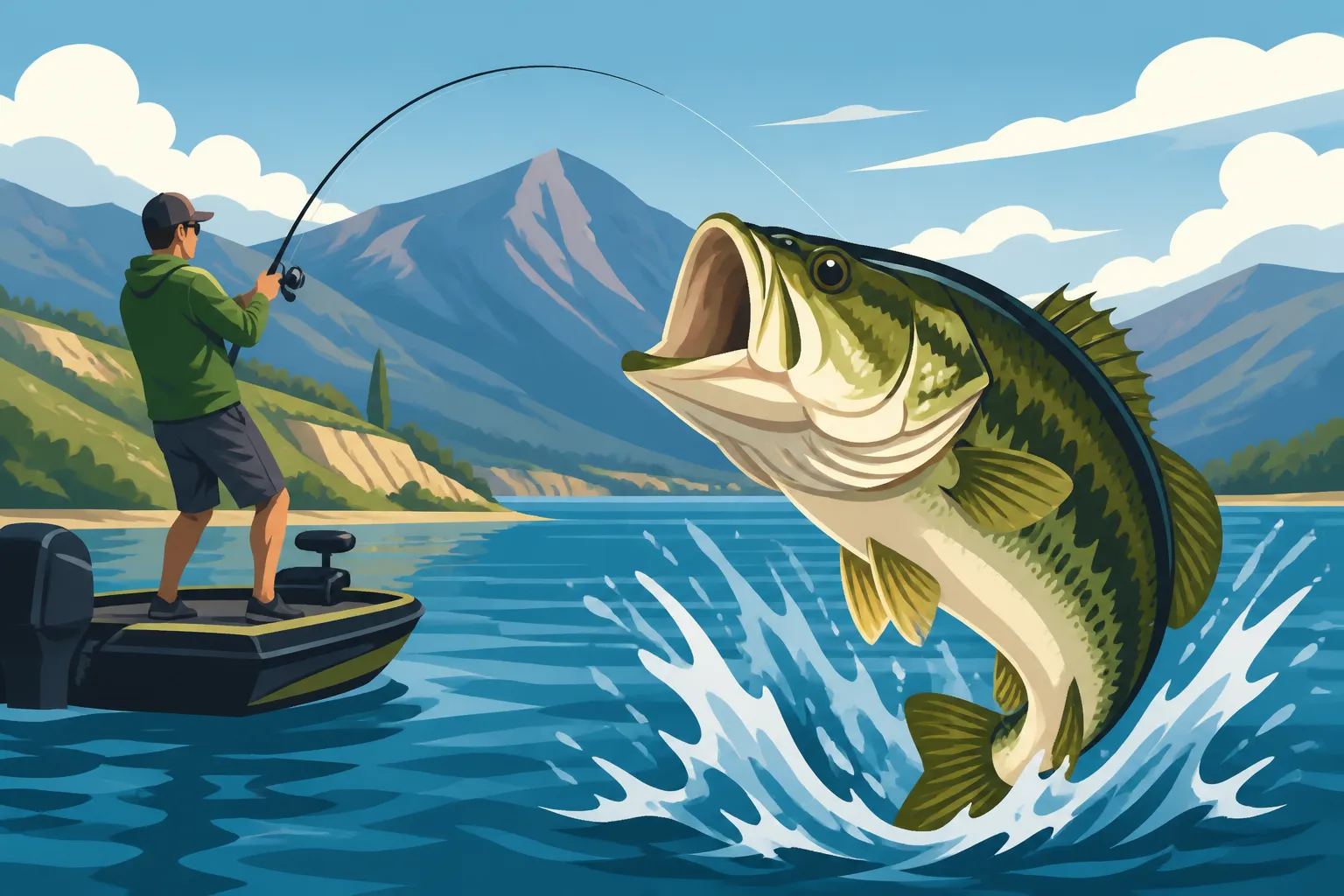
When most people think of bass fishing, the largemouth bass often comes to mind. On Osoyoos Lake, these fish are a true delight for anglers who love a powerful fight and a good challenge. Largemouth are typically found in the shallower, weedier parts of the lake, preferring areas with abundant cover where they can ambush unsuspecting prey. Think lily pads, dense coontail grass, submerged logs, and the shadows cast by docks and boat lifts – these are prime largemouth territory. Their greenish bodies with a distinctive dark, horizontal stripe along their sides allow them to blend seamlessly into this vegetative cover.
The average largemouth on Osoyoos can range from a couple of pounds up to impressive sizes, with fish in the 5-7 pound range not uncommon, and even larger trophies occasionally landed. They are known for their explosive strikes and acrobatic jumps once hooked, making for a truly thrilling experience. Targeting them often involves finesse techniques around cover or power fishing with heavier gear to pull them out of thick vegetation. If you're looking for a serious battle with a fish that will test your tackle and your patience, the largemouth of Osoyoos Lake will certainly deliver. Many anglers specifically visit Osoyoos for the chance to hook into one of these big bucketmouths, recognizing it as one of the Best Largemouth Bass Lakes in the Okanagan.
Their diet is quite varied, consisting of everything from smaller fish like minnows and sunfish, to crayfish, frogs, and even small rodents or birds that happen to fall into the water. This opportunistic feeding habit means a wide range of lures and baits can be effective. From plastic worms and creature baits fished on Texas or Carolina rigs, to topwater frogs and buzzbaits worked over lily pads, there's a technique for every angler. Learning how to catch largemouth bass in Okanagan ponds can also translate well to the shallower, more pond-like areas of Osoyoos Lake.
Smallmouth Bass: The Aggressive Fighters
While largemouth might be the poster child for bass fishing, the smallmouth bass on Osoyoos Lake are equally, if not more, aggressive and offer a different kind of fight. Often referred to as "bronzebacks" due to their brownish-bronze coloration, smallmouth prefer cooler, clearer water than their largemouth cousins, and are typically found around rocky structures, gravel beds, points, and drop-offs. Think rocky shorelines, submerged humps, and areas with current, especially near the river inputs or narrows within the lake.
Smallmouth bass are incredibly tenacious fighters, often making long runs and powerful dives once hooked. They might not jump as much as largemouth, but their sheer power and stamina are legendary. On Osoyoos Lake, you can expect to find smallmouth in the 1-4 pound range regularly, with larger specimens pushing 5 pounds or more providing exceptional sport. They often school up, meaning if you find one, you're likely to find more, leading to some incredibly fast-paced action. It's a different kind of thrill, relying more on covering water and detecting subtle bites rather than punching through heavy cover.
Their diet is largely composed of crayfish, minnows, and aquatic insects, which influences the best lures and techniques. Jigs, crankbaits, tubes, and spinnerbaits are all highly effective for smallmouth, especially when presented near rocky bottom structure. Drop-shot rigs with finesse worms are also incredibly productive when the bite gets tough. When exploring Smallmouth Bass in BC Lakes, Osoyoos stands out as a top destination, offering ample opportunities to experience the thrill of catching these hard-fighting fish. The key is often finding those rocky transitions where baitfish and crayfish congregate.
Prime Bass Fishing Spots on Osoyoos Lake
Northern Lake Hotspots
The northern end of Osoyoos Lake, particularly near the town of Osoyoos, offers some fantastic bass fishing opportunities. This area is generally shallower and features extensive weed beds, docks, and residential development, creating ideal habitat for largemouth bass. One of the classic spots is the area around Haynes Point Provincial Park. The long, narrow spit of land extending into the lake provides sheltered bays and dense submerged vegetation, which are perfect ambush points. Casting weedless jigs, Texas-rigged worms, or topwater frogs over and around these weed beds can be incredibly productive, especially during the warmer months.
Further north, as you approach the channel that connects to the Okanagan River, you’ll find more current and rocky transitions, which can attract smallmouth. However, the numerous residential docks and boat lifts along the shorelines of Osoyoos offer consistent action for both species. Bass love to hide under these structures, ambushing baitfish. Flipping and pitching jigs, senkos, or even smaller crankbaits into the shadows and tight spaces around these docks is a highly effective strategy. Always remember to be courteous to property owners when fishing near private docks.
The northernmost bays, often protected from the main lake's wind and boat traffic, can also be overlooked gems. These calmer waters allow for lush weed growth and offer excellent opportunities for kayak or float tube anglers. Consider launching a kayak from one of the accessible points, perhaps from the beach areas in town or near public parks. For those looking to explore the lake thoroughly, booking a guided trip through services like FishingBooker can provide invaluable local knowledge about these specific honey holes and the best approaches for each. It’s a great way to maximize your time on the water, especially if you’re new to the area.
Mid-Lake Structures and Transitions
As you move into the central part of Osoyoos Lake, the character of the fishery begins to change. The lake widens in some sections, and you'll find a mix of shallower flats giving way to more significant drop-offs and deeper water. These transition zones are goldmines for both largemouth and smallmouth bass, as they provide diverse feeding and holding patterns. Look for areas where weed lines suddenly meet rocky bottom, or where a gradual slope drops sharply into deeper water. These are natural congregation points for baitfish, and consequently, for bass.
Submerged humps and points that extend out into the lake are also prime targets. These underwater features often act as highways for bass, especially smallmouth, as they move between deeper resting areas and shallower feeding grounds. Using your sonar to identify these contours and any baitfish schools around them can be incredibly effective. Deep-diving crankbaits, football jigs, or even slow-rolled spinnerbaits can entice strikes from smallmouth patrolling these structures. For largemouth, focus on any isolated clumps of weeds or timber found on these mid-lake flats.
One of the often-overlooked aspects of mid-lake fishing is the presence of old, submerged timber or man-made structures from historical developments. These can be incredible magnets for big bass, offering both cover and ambush points in deeper water. While challenging to locate without good electronics or local knowledge, they can produce some of the largest fish. If you're a fan of kayak fishing, these mid-lake areas can be very rewarding, allowing you to quietly explore contours and cover without the disturbance of a larger boat. Check out Best Kayak Fishing Spots in BC for more insights, though Osoyoos Lake offers its own unique kayak opportunities.
Southern Lake Opportunities
The southern end of Osoyoos Lake, closer to the US border, maintains its warmth but often presents different types of structure and fishing dynamics. This area can be particularly productive for smallmouth bass, especially where rocky outcroppings and steeper banks dominate the shoreline. Look for points that jut out into the lake, creating current breaks and deep-water access. Smallmouth will stack up on these points, waiting for bait to swim by. Jigging with tubes or grubs, or casting crankbaits that mimic crayfish, can be very effective here.
Another key feature in the southern section is the presence of several coves and bays that, while still warm, may have slightly less dense weed growth than the extreme northern end. However, these areas still hold plenty of largemouth, especially around any remaining submerged vegetation or the numerous residential docks. Targeting these shallower zones with topwater lures during low-light conditions can be exhilarating, as bass explode on the surface. Don't be afraid to experiment with different presentations.
For anglers with boats, the southern lake offers some fantastic opportunities to explore larger areas of open water where smallmouth might be schooling on baitfish. Pay attention to bird activity, as diving birds often indicate baitfish schooling near the surface, and hungry bass won't be far behind. Finding and staying on these schools can lead to non-stop action. When planning your trip, consider using a platform like FishingBooker to scout local guides who specialize in these varied lake sections, as they can save you a lot of time by pinpointing exactly where the fish are holding based on current conditions.
Best Times to Target Bass on Osoyoos Lake
Spring Pre-Spawn Excitement April-May
Spring on Osoyoos Lake is truly an exhilarating time for bass fishing, particularly during the pre-spawn period from late April through May. As the lake waters gradually warm after the winter chill, bass become incredibly active, feeding aggressively to build up energy for the upcoming spawning season. This is often when some of the biggest bass of the year are caught, as both largemouth and smallmouth move from deeper wintering holes into shallower, warmer flats and bays. The water temperatures typically range from 10°C to 15°C (50°F to 60°F), which signals to the bass that it's time to start thinking about reproduction.
During this phase, bass are typically found cruising along transitions – where deep water meets shallower structure, or where main lake points extend into warmer coves. They are looking for easy meals, making them susceptible to a wide array of presentations. For largemouth, focus on the sun-warmed northern bays and weed lines, using lipless crankbaits, spinnerbaits, or jigs to cover water and locate active fish. Smallmouth will be gravitating towards rocky points and gravelly flats, and suspending jerkbaits, hair jigs, or small crankbaits can be deadly. The key is to find those slightly warmer pockets of water where baitfish are abundant and the bass are staging.
This is also a fantastic time to explore with a kayak or a smaller boat, as the bass are often shallower and more accessible to anglers exploring the fringes. Early mornings and late afternoons are prime times, but often the bite can be consistent throughout the day as the sun warms the shallows. Keep an eye on weather patterns; a few consecutive sunny days can really turn the bite on. Don't forget your BC Fishing License Age Requirements before you head out, as regulations apply even in the prime spring season.
Summer Patterns and Deep Water Tactics June-August
As summer heats up from June through August, Osoyoos Lake lives up to its reputation as Canada's warmest lake. Water temperatures can soar into the low to mid-20s Celsius (70s Fahrenheit), and this significantly changes the bass's behavior. While you can still find active fish in the mornings and evenings along shallower weed lines and docks, the midday heat often drives bass into deeper, cooler water. This is when understanding summer patterns and adopting deeper water tactics becomes crucial for consistent success.
For largemouth, focus on shaded areas and the densest, thickest cover you can find. Flipping and pitching heavy jigs or soft plastics into deep weed beds, under docks, or into the shade of overhanging trees can be incredibly effective. These fish often become lethargic in the heat but will strike aggressively if a bait lands right in front of them. Smallmouth, on the other hand, will often move to deeper rock piles, ledges, and submerged humps, especially those with access to main lake currents or oxygen-rich depths. Drop-shotting finesse worms, vertical jigging spoons, or slowly dragging football jigs are excellent techniques for coaxing bites from these deeper fish.
Night fishing can also be surprisingly productive during the hottest summer months. As temperatures drop and light levels decrease, bass will often move back into shallower feeding grounds. Topwater lures, spinnerbaits, and dark-colored jigs fished along shorelines and weed edges can trigger violent strikes under the cover of darkness. Remember that boating at night requires extra caution and proper navigation lights. If you're looking for an unforgettable experience, an evening outing on Osoyoos Lake chasing bass under the stars can be truly magical.
Fall Feeding Frenzy September-October
The fall on Osoyoos Lake, typically from September through October, is arguably the best time of year for bass fishing. As the days shorten and the water temperatures gradually begin to cool (often falling from the low 20s to the mid-teens Celsius), both largemouth and smallmouth bass enter a frantic feeding frenzy. They know winter is coming, and they need to pack on as much weight as possible, making them incredibly aggressive and willing to chase down baits. This means more consistent bites and often larger fish.
During this period, bass will follow baitfish into shallower bays and coves as the baitfish seek warmer water. You’ll find bass actively cruising points, main lake flats, and the edges of weed beds. This is prime time for power fishing techniques: crankbaits (especially those with a rattle), spinnerbaits, and chatterbaits are excellent for covering water and eliciting reaction strikes. Topwater action can also remain strong, particularly on warmer days or in the early mornings, as bass key in on schooling baitfish near the surface.
Smallmouth will often school up even tighter during the fall, particularly around rocky structures and deep-water humps. If you find a school, you can often catch multiple fish in a short amount of time. Tubes, grubs, and jigs worked slowly along the bottom can be incredibly effective. The cooler water also means the fish are often more active and spirited, offering some of the best fights of the year. This transition period is fantastic for exploring the entire lake, as bass can be found in a variety of depths and covers. If you're planning a trip, consider exploring Okanagan Valley Fishing Guide for broader regional insights, but keep Osoyoos Lake firmly in mind for your fall bass adventure.
Essential Gear and Techniques for Osoyoos Bass
Lures and Baits for Every Scenario
Having the right arsenal of lures and baits is crucial for success when fishing for bass on Osoyoos Lake, given the varied habitats and conditions. For largemouth bass, especially in the thick weed beds and around docks, weedless presentations are key. Think Texas-rigged soft plastics like worms, creature baits, and senkos, often paired with a bullet weight to penetrate cover. Jigs, particularly flipping and pitching jigs with trailers, are also incredibly effective for targeting largemouth in heavy cover and under docks. Topwater lures such as frogs, poppers, and buzzbaits are thrilling choices for early morning or late evening action over lily pads and sparse weeds, or near docks.
For smallmouth bass, which prefer rocky structures and open water, a different set of lures shines. Crankbaits, especially those that dive to different depths and mimic crayfish or baitfish, are highly productive when retrieved along rocky points and ledges. Tube jigs and grubs fished on light jig heads are classic smallmouth baits, imitating crayfish perfectly. Drop-shot rigs with small finesse worms or creature baits are excellent for presenting a bait naturally to deeper, finicky smallmouth. Spinnerbaits and chatterbaits can also be effective for covering water and triggering reaction strikes from active fish, especially in spring and fall. Don't forget to have a selection of colors that match the forage, like green pumpkin, black and blue, or natural baitfish patterns.
A quick table of common bass baits and their best uses:
| Lure Type | Target Species | Best Use | Retrieval/Action |
|---|---|---|---|
| Texas-Rigged Worms/Creatures | Largemouth | Heavy cover, docks, weed lines | Slow drag, hop, or pitch into cover |
| Jigs (Flipping/Pitching) | Largemouth | Docks, heavy weeds, submerged timber | Flipping, pitching, subtle hops, swim jig |
| Topwater (Frogs, Poppers) | Largemouth | Lily pads, sparse weeds, calm water (low light) | Walk-the-dog, pop, slow retrieve |
| Crankbaits (Shallow/Deep) | Smallmouth | Rocky points, ledges, open water, covering water | Steady retrieve, erratic retrieve, deflecting off structure |
| Tube Jigs/Grubs | Smallmouth | Rocky bottoms, gravel flats, drop-offs | Drag, hop, twitch, imitating crayfish or baitfish |
| Drop-Shot Rigs | Smallmouth | Deep water, finicky fish, vertical presentation | Subtle shakes, suspend bait off bottom |
| Spinnerbaits/Chatterbaits | Both | Covering water, active fish, reaction strikes | Steady retrieve, stop-and-go |
Rods, Reels, and Line Selection
Matching your rod, reel, and line to your chosen technique is paramount for successful bass fishing on Osoyoos Lake. Generally, you'll want to have a couple of different setups to handle various situations.
For power fishing techniques like throwing jigs into heavy cover, or working larger spinnerbaits and crankbaits, a medium-heavy to heavy power casting rod (6'6" to 7'6" in length) paired with a baitcasting reel is ideal. A reel with a gear ratio around 6.4:1 to 7.1:1 offers a good balance of power for pulling fish out of cover and speed for quick retrieves. Spool these with 15-20 lb fluorocarbon line for sensitivity and abrasion resistance, or 30-50 lb braided line for extreme strength and cutting through vegetation. Braided line is particularly useful when fishing frogs over matted weeds.
For more finesse applications, like drop-shotting, throwing lighter worms, or small tubes for smallmouth, a medium-light to medium power spinning rod (6'6" to 7' in length) with a spinning reel is the way to go. A reel in the 2000-3000 size range is versatile. Spool these with 6-10 lb fluorocarbon or monofilament line for stealth and natural bait presentation, or use 8-15 lb braided line with a fluorocarbon leader for maximum sensitivity and strength, especially in clearer water. The fluorocarbon leader ensures invisibility to wary bass. The light tip on a spinning rod allows for delicate presentations and better bite detection, while still having enough backbone to handle a good fight.
It's also a good idea to bring extra leader material, scissors, pliers, and a net. A good landing net is especially important for bass, as it helps protect the fish if you plan on releasing it, and keeps them secure when you're bringing them aboard. Considering using services like FishingBooker to connect with local guides can also offer you insights into specific gear setups they prefer for Osoyoos Lake, as they're always up-to-date with the latest effective techniques and tackle.
Effective Fishing Techniques
Success on Osoyoos Lake, like any bass fishery, hinges on adapting your techniques to the conditions and the fish's behavior. For largemouth bass, especially those hunkering down in dense cover, flipping and pitching are highly effective. This involves a short, accurate cast that drops your lure silently into tight spots – under docks, into holes in weed mats, or next to submerged logs. Once your bait hits the water, let it sink, twitch it a few times, and be ready for an immediate strike. Remember, big largemouth are often lazy and won't chase far.
When bass are more active or scattered, power fishing techniques come into play. Covering water with crankbaits, spinnerbaits, or chatterbaits allows you to quickly locate aggressive fish. Vary your retrieve speed, incorporate pauses, and try to make your lure deflect off structure to trigger reaction strikes. For topwater lures, a "walk-the-dog" retrieve or quick pops can mimic injured baitfish or frogs, drawing explosive strikes. This is particularly effective during low-light hours or in calm, shallow areas.
For smallmouth bass, especially when they're deeper or finicky, finesse techniques like drop-shotting, Ned rigging, or working tube jigs are invaluable. With a drop-shot, keep your bait suspended just above the bottom, subtly shaking the rod tip to impart action without moving the weight. When working tubes or grubs, cast them out and let them sink, then slowly drag or hop them along the bottom, mimicking a crawling crayfish. Pay close attention to your line for subtle taps or slack-line bites. Don't be afraid to experiment with different speeds and actions until you find what the fish are responding to on a given day. And remember, exploring Best Kayak Fishing Spots in BC could give you an edge by allowing you to access shallow, untouched areas that larger boats can't reach, especially for sight-fishing active bass.
Navigating Regulations and Conservation for Bass Fishing
Understanding Licenses and Limits
Before you even cast a line into Osoyoos Lake, it's absolutely crucial to have the correct fishing license and to be familiar with the current regulations. In British Columbia, this means purchasing a Freshwater Fishing Licence. These licenses are required for anyone aged 16 or older who wishes to fish in BC's freshwater bodies. You can buy these licenses online through the provincial government's website or from authorized vendors. It's not just a formality; it's a legal requirement, and fishing without one can result in hefty fines. Always keep a copy, digital or physical, readily accessible while you're fishing. For more specific details on where and how to acquire yours, consult Where and How to Buy a BC Fishing License.
Beyond the general license, you must also be aware of the specific bag and possession limits for bass on Osoyoos Lake. These limits are in place to ensure sustainable fishing and healthy fish populations. While bass aren't usually under the same stringent conservation pressures as some salmon or steelhead species, limits still apply. For instance, there might be a daily quota on how many bass of a certain size you can keep, or specific regulations regarding single barbless hooks. Always consult the latest BC Freshwater Fishing Regulations Synopsis, which is updated annually. Pay particular attention to the regional regulations for the Okanagan region (Region 8), as rules can vary across the province. Ignoring these rules isn't just illegal; it undermines the conservation efforts that keep our fisheries thriving.
Practicing Responsible Catch and Release
Bass fishing on Osoyoos Lake often involves a strong emphasis on catch and release, especially for the larger, trophy-sized fish. Practicing responsible catch and release is vital for maintaining healthy bass populations and ensuring future generations of anglers can enjoy this fantastic fishery. When you catch a bass, minimize its time out of the water. Handle the fish gently with wet hands to avoid removing its protective slime coat. If you plan to take a photo, do so quickly and support the fish horizontally, never vertically by the jaw, as this can damage its internal organs.
Use appropriate de-hooking tools, like needle-nose pliers or a dedicated de-hooker, to remove hooks quickly and cleanly. If the fish is deeply hooked, it's often best to cut the line as close to the hook as possible rather than tearing at the fish's throat. For really large bass, a landing net with rubber mesh (which is much gentler on fish than knotted nylon) can make the landing and release process much smoother and less stressful for the fish. After de-hooking, gently hold the fish in the water, supporting its belly, and allow it to revive itself until it can swim away strongly under its own power. Sometimes, a gentle side-to-side motion can help water pass over its gills.
Beyond handling, consider using single, barbless hooks where legal and practical. Barbless hooks greatly reduce the amount of damage done to a fish's mouth, making hook removal easier and quicker, and significantly increasing the fish's chances of survival. These conservation practices are not just for the benefit of the fish; they ensure that Osoyoos Lake remains a premier bass fishing destination for everyone. By doing our part, we contribute to a vibrant and sustainable fishery that can be enjoyed for years to come.
Planning Your Osoyoos Bass Fishing Trip
Accommodation and Amenities
Planning a fishing trip to Osoyoos Lake is more than just packing your rods; it's about making the entire experience enjoyable. The town of Osoyoos itself is well-equipped to host anglers, offering a range of accommodations to suit every budget and preference. You'll find everything from cozy motels and charming bed & breakfasts to larger resorts, many with lake access and amenities like boat launches and cleaning stations. For those who prefer a more rustic experience, there are several campgrounds nearby, including the popular Haynes Point Provincial Park, which offers lakeside sites and direct access to prime fishing areas.
Beyond lodging, Osoyoos provides all the essential amenities you'll need. There are several grocery stores for stocking up on supplies, tackle shops that can provide local insights and last-minute gear, and plenty of restaurants to enjoy a meal after a long day on the water. Fuel stations, boat repair services, and even specialized fishing charter operations can be found within easy reach. The Okanagan Valley is also renowned for its wineries, so if you're traveling with non-fishing companions, or just want a relaxing evening activity, wine tasting is a popular option.
When considering your trip, think about what kind of experience you're after. If you're bringing your own boat, ensure your chosen accommodation has adequate parking and launching facilities. If you're flying in, consider the closest airports (Penticton is typically the most convenient regional option, with Kelowna being a larger international airport a bit further north) and car rental options. For a hassle-free experience, especially if you're new to the area, exploring local guides and charters through platforms like FishingBooker can provide a complete package, often including gear, boat, and expert knowledge.
Boat Launches and Access Points
Getting your boat onto Osoyoos Lake, or simply accessing the shore, is fairly straightforward, but knowing the best spots can save you time and hassle. For boaters, there are several public boat launches available around the lake. In the town of Osoyoos, you'll find accessible launches that cater to various boat sizes. These often have ample parking, but they can get busy during peak summer weekends, so arriving early is always a good strategy. It's always a good idea to check local municipal websites or Parks BC for the most up-to-date information on launch fees and operating hours.
If you’re launching a kayak, canoe, or paddleboard, your options are even more extensive. Many public beaches and parks offer easy hand-launch access. Haynes Point Provincial Park, for example, has excellent access for smaller watercraft, allowing you to paddle directly into prime largemouth habitat without the need for a motorized launch. The calm, shallower bays in the northern sections are particularly well-suited for these non-motorized vessels. For specific locations, you might find valuable information in resources like Best Public Boat Launches on Okanagan Lake, though Osoyoos Lake has its own distinct launches. For those interested in Best Kayak Launch Points on Okanagan Lake, many principles apply to Osoyoos as well, offering quiet access to excellent fishing.
Beyond boat launches, there are also numerous shore fishing opportunities, particularly along accessible public parks and pathways. While shore access might limit your ability to reach deeper structures, it's still possible to catch bass, especially largemouth, near weed edges and docks. Always be mindful of private property when exploring shore fishing options. A little reconnaissance using online maps or consulting a local tackle shop before your trip can highlight the most convenient and productive access points for your chosen fishing style.
Hiring a Local Fishing Guide
For anglers looking to maximize their time on the water, learn the intricacies of Osoyoos Lake, or simply increase their chances of a trophy catch, hiring a local fishing guide is an excellent investment. A professional guide brings invaluable local knowledge – they know the secret spots, the current bite patterns, and the specific techniques that are working on any given day. They've spent countless hours on the water, tracking bass movements and understanding the nuances of the lake's ever-changing conditions. This kind of expertise can turn a good fishing trip into an unforgettable one, especially if you're visiting Osoyoos for the first time or want to target a specific species or size of bass.
Guides typically provide all the necessary high-quality gear, including specialized rods, reels, and a wide array of lures, saving you the hassle of transporting your own or guessing what tackle to use. Their boats are usually well-equipped with advanced electronics like sonar and GPS, allowing them to put you directly on the fish. This means less time searching and more time fishing. Many guides also offer instruction on different techniques, helping you refine your skills and become a more effective angler.
When choosing a guide, platforms like FishingBooker are incredibly useful. You can browse various Osoyoos Lake bass fishing charters, read reviews from other anglers, compare prices, and check availability. Look for guides who specialize in bass fishing and have a strong track record on Osoyoos Lake. Don't hesitate to contact them beforehand to discuss your expectations and any specific goals you have for your trip. A good guide will ensure you have the correct British Columbia Fishing License Guide for 2026 in place and understand all the local regulations, making your day on the water not only productive but also compliant and stress-free.
Conservation and Future of Osoyoos Bass Fishing
Maintaining Healthy Bass Populations
The vibrant bass fishery on Osoyoos Lake isn't just a happy accident; it's the result of a delicate ecological balance and ongoing conservation efforts. Maintaining these healthy bass populations requires continuous vigilance from both fisheries managers and anglers alike. Key to this is understanding the lake's ecosystem and how various factors influence bass health. Water quality, for instance, is paramount. Osoyoos Lake, being relatively shallow and warm, is susceptible to issues like excessive nutrient loading, which can lead to algal blooms and reduced oxygen levels, impacting fish health. Local stewardship groups and government agencies work to monitor water quality and manage lakeside development to mitigate these risks.
Another critical aspect is habitat preservation and enhancement. Bass rely heavily on healthy aquatic vegetation, submerged timber, and rocky structures for spawning, feeding, and protection. Protecting shorelines from erosion, minimizing destruction of critical spawning beds, and even thoughtful placement of artificial structures can all contribute to robust bass populations. Education plays a huge role here, informing anglers and residents about the importance of these habitats. The goal is to ensure a stable forage base and suitable conditions for bass to thrive naturally, rather than relying solely on stocking programs.
Finally, managing fishing pressure through appropriate regulations is essential. While bass are abundant, unchecked harvesting could deplete local populations. Size limits, bag limits, and seasonal closures (especially during peak spawning periods) are all tools used to allow fish to reproduce and grow to maturity. Adherence to these rules is non-negotiable for every angler. It's a shared responsibility to ensure that Osoyoos Lake remains a premier destination for bass fishing for generations to come.
Role of Anglers in Stewardship
As anglers, we play an incredibly important, almost guardian-like, role in the stewardship of Osoyoos Lake's bass fishery. Our actions on and off the water directly impact the health and sustainability of this precious resource. The most immediate way we contribute is through responsible angling practices. This includes careful catch and release techniques, as discussed earlier, ensuring that released fish have the best possible chance of survival. It also means using appropriate tackle to minimize harm, such as choosing hook sizes suitable for the target species and considering barbless hooks.
Beyond individual fishing practices, active participation and awareness are crucial. This might involve supporting local conservation organizations, participating in volunteer efforts like shoreline clean-ups, or reporting any suspicious activity (like poaching or environmental damage) to fisheries authorities. Staying informed about current BC Fishing Season Dates and Closures and any specific notices for Osoyoos Lake is also vital. These notices often highlight temporary closures or special restrictions implemented to protect vulnerable fish stocks or habitats.
Ultimately, being a responsible angler means understanding that we are part of a larger ecosystem. It's about respecting the fish, their habitat, and fellow anglers. Sharing knowledge about conservation, advocating for sustainable practices, and simply leading by example on the water are powerful ways to contribute. The future of world-class bass fishing on Osoyoos Lake rests squarely on the shoulders of those who cherish it most – the anglers. By embracing our role as stewards, we help guarantee that the thrill of hooking into an Osoyoos bass will be experienced by many more people long into the future.
Disclaimer
Please note that fishing regulations, license requirements, and local conditions can change frequently. Always consult the official British Columbia Freshwater Fishing Regulations Synopsis for the most current and accurate information before planning any fishing trip. The information provided in this guide is for general informational purposes only and should not be considered a substitute for official regulations or professional advice.