How many salmon return to the Fraser each year
Standing on the banks of the mighty Fraser River, watching the currents churn, it's natural to wonder about the incredible journey unfolding beneath the surface. How many salmon actually make that epic return from the vast Pacific Ocean to their natal spawning grounds each year? It’s a question that captivates anglers and conservationists alike, and the answer is rarely simple, often fluctuating dramatically. This guide will take a deep dive into the complex world of Fraser River salmon returns, helping you understand the immense effort involved in counting these iconic fish and the myriad factors that influence their annual pilgrimage.
The Grand Migration: Understanding Salmon Life Cycles and the Fraser River's Role
The Fraser River is not just any waterway; it's the heartbeat of British Columbia's salmon populations. For millions of Pacific salmon, it's both nursery and highway, a place where life begins and ends, marking the completion of an incredible cycle. From the vast, open ocean, these fish undertake an arduous journey, battling currents, predators, and human pressures to return to the very streams, rivers, and lakes where they were born, sometimes hundreds of kilometers inland. It’s an instinctual drive, a biological imperative that has defined these species for millennia.
Different Species, Different Journeys
When we talk about "salmon" in the Fraser, we're not just talking about one type of fish. British Columbia is home to five species of Pacific salmon, and all of them use the Fraser River system to varying degrees: Chinook (King), Sockeye (Red), Coho (Silver), Pink (Humpback), and Chum (Dog) salmon. Each species has its own unique life history, preferred spawning habitats, and timing of return, which adds layers of complexity to understanding the overall salmon picture. For instance, you'll find certain species like the Sockeye making incredibly long migrations deep into the interior, while others might spawn closer to the coast.
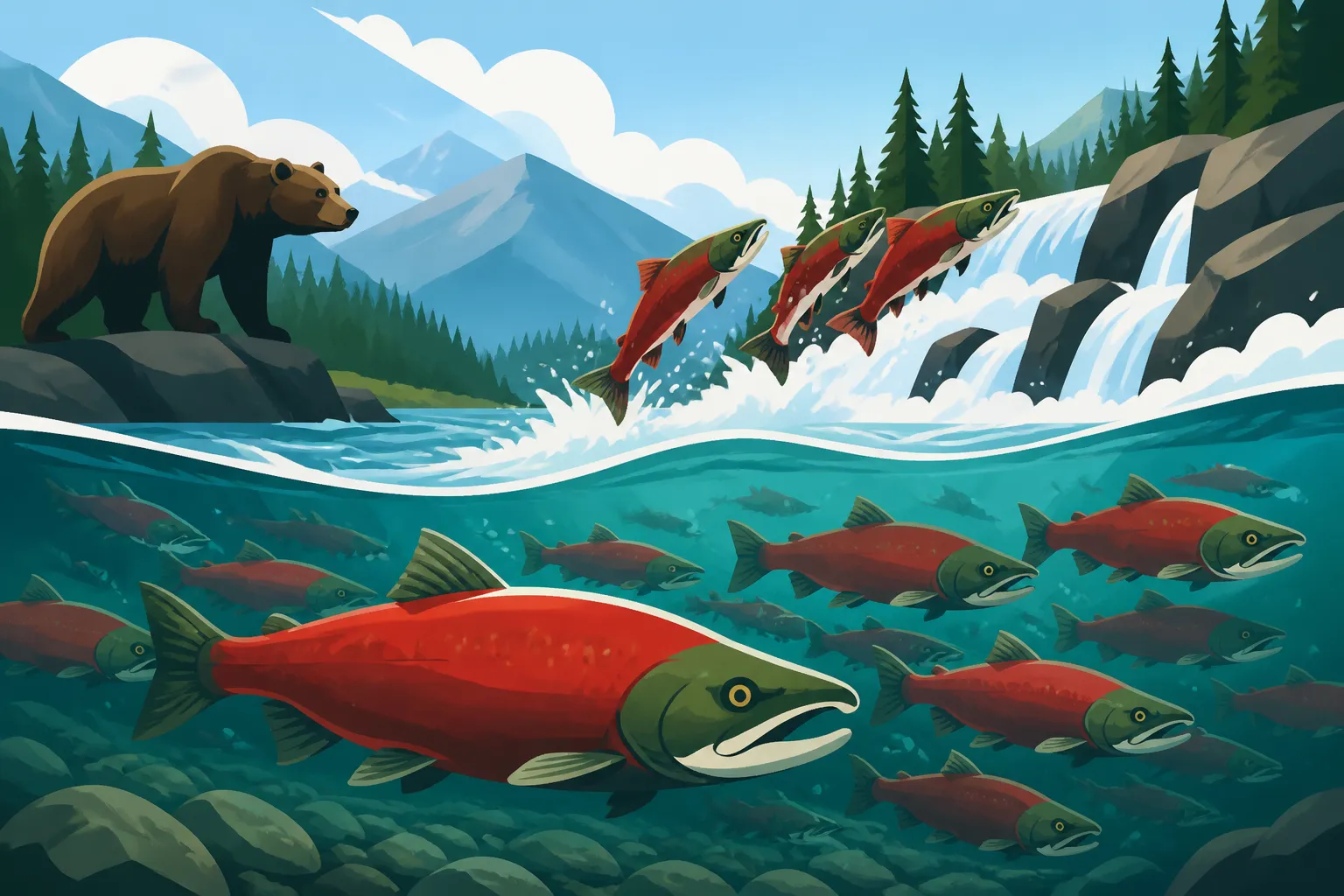
Sockeye salmon, for example, are known for their spectacular, synchronized migrations and their striking red spawning colours. They often travel thousands of kilometres from the ocean to tributaries far upriver, like those feeding into Shuswap Lake. Chinook salmon, often the largest of the Pacific salmon, are powerful swimmers, and while many spawn upriver, there are also important runs in the lower Fraser tributaries. Pink and Chum salmon tend to have shorter freshwater migrations, often spawning in the lower reaches of the Fraser and its smaller coastal tributaries. Coho salmon are incredibly agile and can navigate smaller, steeper streams, often returning a bit later in the season. Understanding these individual journeys is key to appreciating the overall health and diversity of the Fraser's salmon runs. It's truly a marvel of nature unfolding right here in our backyard.
The Significance of the Fraser River System
The Fraser River drainage basin is absolutely massive, covering roughly a quarter of British Columbia's land area. This means it encompasses an incredible diversity of habitats, from the coastal estuaries where young salmon first adapt to saltwater, through the wide, fertile valleys, and up into the rugged interior mountains. This vastness provides crucial spawning and rearing grounds for an enormous number of salmon, making it arguably the most important salmon river in the world. The health of the Fraser River system directly impacts the future of these salmon populations, and by extension, the ecosystems that depend on them, from bears and eagles to local communities. Fraser River Fishing Guide can give you a deeper look into this incredible watershed.
For centuries, Indigenous communities have relied on Fraser salmon, developing intricate knowledge and sustainable harvesting practices. Beyond cultural significance, the salmon runs fuel a robust sportfishing industry and commercial fisheries, directly supporting countless livelihoods. The river itself acts as a natural highway, guiding salmon upstream to their ancestral spawning beds. The sheer scale and biodiversity that the Fraser supports make it irreplaceable, and any changes to its water quality, flow, or habitat can have ripple effects throughout the entire system. It's a lifeline not just for the fish, but for so much of what defines British Columbia.
Estimating the Numbers: How Salmon Returns Are Counted and Why It's Tricky
When we talk about "how many salmon return," it's rarely a precise headcount. Instead, fisheries scientists and managers use a variety of methods to estimate the returns. This isn't because they don't want exact figures, but because tracking millions of fish in a vast, dynamic river system like the Fraser is an incredibly complex undertaking. Imagine trying to count every single car on every highway in British Columbia on a given day—now imagine those "cars" are underwater, moving, and you can only see a fraction of them!
Methods for Counting and Estimating Salmon
Fisheries biologists employ a suite of tools and techniques to get the most accurate picture possible of returning salmon. It's a multi-pronged approach because no single method is perfect, and combining data from different sources helps to create a more robust estimate. These methods are constantly being refined, relying on both traditional observation and modern technology.
One common method involves test fisheries. These are carefully controlled fishing operations in specific areas, often near the mouth of the Fraser River, where a small percentage of the returning salmon are caught, counted, and identified by species. This provides an index of abundance—if the test fishery catches a lot of Sockeye on a given day, it suggests a large run is currently moving through. Another crucial tool is hydroacoustics, which uses sonar technology to "listen" for fish in the river. Transducers are deployed at strategic locations, sending out sound waves that bounce off fish and return to the receiver, allowing scientists to estimate the number of fish passing by. This is particularly effective in murky waters where visual counting isn't possible.
Further upstream, especially in smaller tributaries, spawning ground surveys become vital. Biologists walk or fly over spawning beds, visually counting the number of live salmon and "carcasses" (dead fish that have completed spawning). This gives a direct count of the fish that made it to their final destination. In some areas, fish wheels or weirs might be used to capture and count fish as they migrate past a certain point. Each of these methods has its strengths and weaknesses, and the real magic happens when data from all these different sources are integrated and analyzed using sophisticated statistical models. It's a huge undertaking, requiring dedicated teams and significant resources.
The Challenges of Accurate Counting
Even with all these methods, getting truly accurate numbers for Fraser River salmon returns is incredibly challenging. There are so many variables at play that can skew counts or make comprehensive data collection difficult. It’s not just about seeing the fish; it’s about understanding their movements, the environment, and the human factors impacting their journey.
Think about the sheer size of the Fraser River system. It's not a contained laboratory experiment; it's a vast, dynamic natural environment. Heavy rainfall can lead to high, turbid water conditions, making visual counts nearly impossible and even affecting the efficiency of hydroacoustic equipment. Fish can choose multiple paths, or sometimes certain populations will "hold" in areas for longer, making it hard to track their progress consistently. Predation by marine mammals like seals and sea lions, and even bears and eagles further upstream, means not every fish that enters the river mouth will make it to the spawning grounds. This natural attrition needs to be factored into estimates, which is easier said than done.
Then there are the human impacts, including fishing pressure from commercial, recreational, and Indigenous fisheries. While these are managed, they still mean a portion of the returning fish are harvested before they reach the spawning grounds. Fisheries managers work hard to project run sizes in-season, adjusting fishing opportunities based on real-time data to ensure enough salmon escape to spawn. It's a constant balancing act. Lastly, some fish simply die before spawning due to stress, disease, or injury sustained during their epic journey. All these factors contribute to why salmon return numbers are always estimates, and why they can often be revised as more complete data becomes available. It's an imperfect science, but one that is absolutely critical for managing these precious resources. If you're looking for gear to help you on your next fishing adventure, remember that platforms like Amazon offer a huge selection of fishing equipment, from waders to specialized salmon rods, that can help you be prepared for whatever conditions you face.
Factors Influencing Annual Salmon Runs: The Ebbs and Flows of Nature and Human Impact
The number of salmon returning to the Fraser River isn't static; it fluctuates wildly from year to year, sometimes by millions. These variations are the result of a complex interplay of natural environmental conditions and human activities. It's like a giant biological puzzle where every piece, from ocean currents to river temperatures, has a significant impact on the final picture. Understanding these factors is crucial for predicting future runs and implementing effective conservation strategies.
Oceanic Conditions and Early Life Survival
The journey of a Pacific salmon begins not in the river, but in the vast, open ocean, where they spend most of their adult lives feeding and growing. The conditions they encounter here profoundly impact their survival rates and, consequently, the number of fish that will eventually return to the Fraser. If the ocean isn't providing enough food, or if conditions are too harsh, fewer fish will survive to adulthood.
Consider the role of ocean currents and water temperatures. Phenomena like El Niño and La Niña can dramatically alter ocean productivity, affecting the availability of the small fish and invertebrates that salmon feed on. A strong El Niño, for example, often brings warmer waters and can reduce the abundance of salmon prey, leading to smaller, less robust fish and higher mortality rates. Conversely, favourable ocean conditions with abundant food and optimal temperatures can lead to exceptionally strong returns years later. Predators in the ocean, from larger fish to marine mammals like seals and orcas, also take their toll, and fluctuations in these predator populations can impact salmon survival. Even small changes in ocean acidity or oxygen levels, which are increasingly a concern due to climate change, can affect salmon health and their ability to navigate and find food. What water temperature salmon prefer is a key factor, even in the ocean. These oceanographic forces are largely beyond human control, making them a significant wildcard in salmon forecasts.
Freshwater Conditions and Spawning Success
Once salmon leave the ocean and enter the freshwater system, a new set of environmental challenges awaits them. The conditions in the Fraser River and its tributaries during their upstream migration and spawning periods are critical for determining how many fish successfully reproduce and, ultimately, how many future generations will return.
River flow, temperature, and habitat quality are paramount. High water levels and strong currents, particularly during early summer freshets, can make migration incredibly difficult, exhausting fish and even washing them downstream. Conversely, low water levels, often exacerbated by drought conditions, can expose spawning gravels, create impassable shallow sections, or concentrate fish, making them more vulnerable to predation and disease. Water temperature is another huge factor; salmon are cold-blooded and are highly sensitive to thermal stress. If river temperatures climb too high, especially during the peak of the Sockeye or Chinook runs in warmer summer months, fish can suffer from disease, reduced oxygen, and even die before they reach their spawning grounds. This has been a growing concern in recent years, leading to increased mortality events.
Furthermore, the quality of spawning habitat directly influences reproductive success. Pristine gravel beds are essential for salmon to lay their eggs, which then need consistent water flow and temperature until they hatch. Habitat degradation due to logging, urbanization, pollution, and agricultural runoff can reduce the amount of viable spawning habitat, impacting the number of eggs laid and the survival of alevins and fry. When young salmon emerge and begin to rear in the freshwater, the availability of food and shelter is also critical. They need cool, clean water and complex habitats (like undercut banks and woody debris) to hide from predators and find insects and other food sources. Any disruption to these freshwater conditions, whether natural or human-induced, can have a ripple effect for years to come on the returning adult population. For anglers looking to understand these complex dynamics, resources like Amazon offer detailed books on fish ecology that can deepen your appreciation for these magnificent creatures.
Human Activities and Management
While nature plays a significant role, human activities are undeniably a major influence on salmon returns. From historical overfishing to ongoing habitat alteration and climate change, our footprint is constantly impacting these vulnerable populations. Understanding and mitigating these impacts is at the core of salmon conservation.
Historically, commercial fishing was a major driver of salmon population declines. While management has evolved significantly, fishing pressure remains a critical factor. Fisheries managers now work tirelessly, often using in-season updates from test fisheries and hydroacoustics, to estimate run sizes and adjust fishing quotas for commercial, recreational, and Indigenous fisheries. The goal is always to ensure sufficient "escapement"—the number of salmon that successfully make it to the spawning grounds to reproduce. This is a complex and often contentious process, balancing conservation needs with the economic and cultural importance of fishing. BC Fishing Season Dates and Closures are often adjusted based on these in-season estimates.
Habitat destruction and degradation, however, might be the most insidious long-term threat. Urban sprawl, industrial development, logging, and agriculture can all lead to the loss of crucial spawning and rearing habitat, increased sedimentation in streams, and pollution. Efforts are constantly underway to restore degraded habitats, but prevention is always better than cure. Climate change is another overarching human impact, manifesting in warmer ocean temperatures, altered precipitation patterns leading to extreme floods and droughts, and rising river temperatures, all of which stress salmon throughout their life cycle.
Finally, disease transfer from aquaculture operations, particularly open-net salmon farms along the coast, is a long-standing concern for wild salmon advocates. While the exact impact is debated, the potential for disease and parasite transfer to migrating wild salmon is a worry that many believe contributes to overall declines. All these human activities, when combined with natural fluctuations, create an incredibly complex challenge for the long-term health of Fraser River salmon. For those passionate about these issues, seeking out information on conservation efforts and sustainable fishing practices is a great step, and you can find many reputable sources and conservation-focused gear on Amazon to support your own responsible angling.
What These Numbers Mean for Anglers and Conservation
The annual estimates of salmon returning to the Fraser River are more than just statistics; they are vital indicators that inform fishing regulations, guide conservation efforts, and influence the very experience anglers can expect on the water. These numbers dictate what species can be fished, when, where, and in what quantities, directly impacting local communities and the environment.
Implications for Recreational Anglers
For recreational anglers, the annual Fraser River salmon forecasts and in-season updates are absolutely critical. A strong forecast for a particular species, like Sockeye, might lead to more generous openings and bag limits, allowing anglers a greater chance to participate in these iconic fisheries. Conversely, a poor forecast, or weaker-than-expected in-season returns, will often result in tighter restrictions, earlier closures, or even complete non-retention rules to protect the spawning population.
These decisions are made by fisheries managers who are constantly monitoring the runs. It can be frustrating to plan a trip only to find out that a target species is closed or under strict regulations, but it's essential for the long-term health of the fishery. Understanding the projected run sizes for Sockeye Salmon Fishing in BC or Chinook Salmon Fishing in BC is crucial for planning your trips. For instance, if the Sockeye run is predicted to be low, you might shift your focus to Coho or Chinook, which might have healthier populations that year. Being informed means being a responsible angler, and it helps manage expectations. You can often find the latest updates on BC Fishery Notices and In-Season Closures, Explained provided by government agencies, which are essential reading before you head out. Ultimately, a healthy salmon run means better fishing opportunities for everyone in the long run.
The Role of Conservation and Management
The primary goal behind all the counting, estimating, and analyzing of Fraser River salmon returns is conservation. These numbers directly inform the management decisions designed to ensure sustainable populations for future generations, balancing the needs of fish with the needs of people. It's a delicate and continuous effort.
Fisheries management operates on the principle of sustainable yield, meaning they aim to allow enough fish to spawn to replenish the population, while also permitting harvesting where appropriate. When returns are robust, there's more flexibility for various fisheries. When returns are weak, conservation becomes the absolute priority, and stringent measures are put in place to maximize escapement. This often means difficult decisions, such as closing entire fisheries or implementing selective fishing methods that minimize impacts on vulnerable stocks. Organizations like the Pacific Salmon Foundation and numerous local watershed groups play a critical role in habitat restoration, scientific research, and advocacy, working tirelessly to support Fraser River salmon.
The long-term health of the Fraser River salmon runs hinges on effective, adaptive management informed by the best available science. This includes monitoring for Invasive Fish Species in BC Waters and understanding the impact of climate change. As anglers and members of the community, supporting these conservation efforts, adhering to regulations, and educating ourselves about the challenges facing salmon are vital contributions. Every salmon that successfully spawns contributes to the future, and by respecting the resource, we ensure that the incredible spectacle of the Fraser River salmon return continues for generations to come.
Disclaimer
This article is for general informational purposes only and does not constitute professional advice. Laws, prices and regulations vary by location and change over time. Consult a qualified professional for guidance on your specific situation.