Do BC Rivers Have Five Species of Pacific Salmon?
It’s a common question that pops up around campfires and on the docks, especially for folks new to fishing in our incredible province: "Do BC rivers really have all five species of Pacific salmon?" You hear a lot of chatter, sometimes even confusion, about what’s swimming in our waters. Many anglers, even seasoned ones, might be surprised by the nuances of salmon identification, particularly when you factor in their diverse life stages and appearances. This guide is here to clear up that very question, dive deep into the world of British Columbia's Pacific salmon, and help you confidently identify these magnificent fish when you encounter them.
The Five Kings: Pacific Salmon in British Columbia's Rivers
Yes, absolutely! British Columbia is truly blessed to be home to all five species of Pacific salmon that return to freshwater to spawn. It's one of the defining characteristics of our province's rich aquatic ecosystems and a huge draw for anglers from all over the globe. These aren't just any salmon; they are the iconic, wild, and incredibly important species that underpin much of our culture, economy, and natural heritage. Each species has its own unique story, its own preferred habitats, and its own distinctive journey from ocean to spawning grounds.
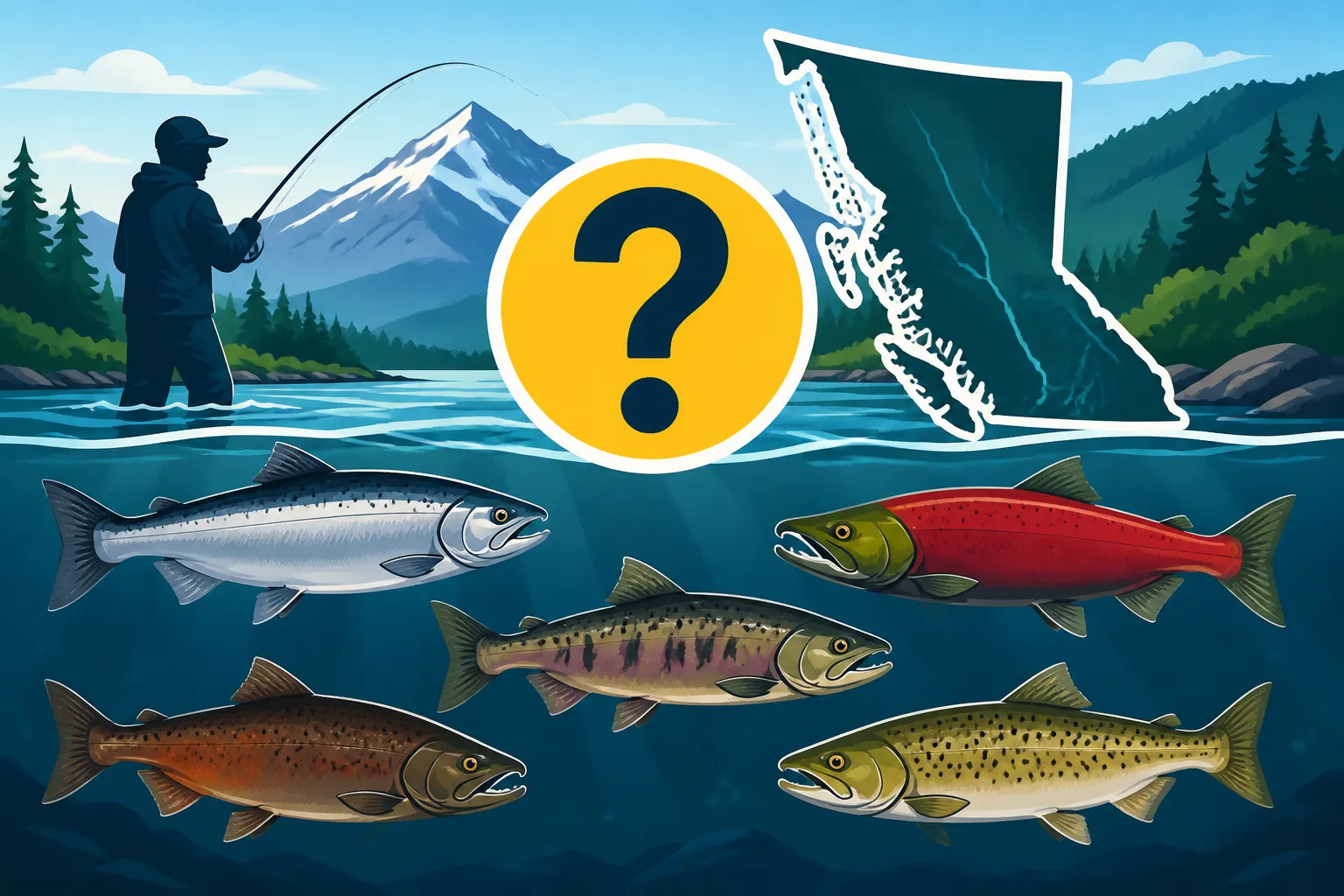
The fact that we have all five species – Chinook, Coho, Sockeye, Pink, and Chum – making their way back to our rivers is a testament to the health and biodiversity of our coastal and interior watersheds. It’s a delicate balance, and understanding each one is crucial, not just for fishing, but for appreciating the natural wonders surrounding us. When you're standing on the banks of a river like the Fraser, watching a salmon run, it’s not a single, monolithic event; it’s a symphony of different species, each playing its part. Pacific Salmon Species Identification Guide can be incredibly helpful for a quick overview.
Chinook Salmon: The King of the River
Let's start with the big one, literally. Chinook salmon, often called "Kings" or "Springs" due to their size and early run timing, are the largest of the Pacific salmon species. They are the prized catch for many anglers, known for their powerful fights and incredible stamina. Seeing a large Chinook leap from the water is an unforgettable experience. These fish often have a darker overall body color, sometimes with a purplish sheen, and distinct black spots on their backs and both lobes of their caudal (tail) fin. Inside their mouths, you'll typically find black gums and teeth, which is a key identifier.
Chinook are not just about brute strength; they're also a fascinating study in migration. They can travel vast distances from their ocean feeding grounds, sometimes hundreds of kilometers inland, to reach their natal rivers and streams. Think about the mighty Fraser River, for example. Chinook caught near its mouth might have originated from tributaries deep in the interior, requiring an incredible journey against strong currents. For many, catching a Fraser River Chinook is a bucket-list item, and understanding their migration patterns is key to success. Chinook Salmon Migration Patterns in BC offers deeper insights into these journeys. When gearing up for a Chinook expedition, many anglers like to browse for heavy-duty rods and reels on platforms like Amazon, ensuring they have the right tools for these powerful fish.
Coho Salmon: The Silver Bullet
Next up is the Coho salmon, affectionately known as "Silvers" or "Bluebacks." These fish are celebrated for their acrobatic fights and aggressive takes, making them incredibly fun to catch on lighter tackle. Coho are generally smaller than Chinook but what they lack in size, they make up for in agility and pure fighting spirit. They have bright silver sides, often with a slightly bluish-green back, and small, irregular black spots predominantly on their upper back and the upper lobe of their tail fin. Unlike Chinook, Coho typically have white gums, which is an easy way to distinguish them from their larger cousins.
Coho tend to return to rivers and streams later in the season than Chinook, often in the fall, coinciding with cooler temperatures and increased rainfall. They prefer smaller, shallower streams and often spawn closer to the ocean, though significant runs do occur in larger river systems too. Their readiness to chase flies and lures makes them a favourite among fly anglers and spin fishermen alike. The fast action of Coho fishing is a quintessential BC experience, especially in coastal streams or rivers closer to the Strait of Georgia.
Sockeye Salmon: The Red Runner
Sockeye salmon, or "Reds," are probably the most iconic in terms of their stunning transformation during spawning. While in the ocean, they are a beautiful metallic blue-green on their backs with silvery sides, completely devoid of spots. However, as they journey upstream to spawn, their bodies turn a brilliant, fiery red, and their heads become a vibrant olive green. The males also develop a pronounced humped back and a hooked jaw (kype). This dramatic change makes them unmistakable once they are in their spawning phase.
Sockeye are unique among Pacific salmon because they primarily feed on zooplankton in the ocean, which gives their flesh its distinct, rich red color and highly sought-after flavor. Their runs are often massive, with millions of fish returning to specific river systems, most famously the Fraser River. These monumental migrations are a spectacle of nature, crucial for the entire ecosystem, providing food for bears, eagles, and many other animals. Fishing for sockeye is often highly regulated due to conservation concerns, so checking BC Fishing Regulations Explained and BC Fraser River Sockeye Closure Windows is always paramount. Even when not fishing for them, witnessing a sockeye run is an awe-inspiring experience for anyone spending time near our rivers.
Pink Salmon: The Humpback Horde
Pink salmon, also known as "Humpies" due to the pronounced dorsal hump that develops on spawning males, are the smallest and most abundant of the Pacific salmon. They have a two-year life cycle, meaning they return to spawn reliably every odd-numbered year in most rivers (though even-numbered runs exist in some areas, particularly northern BC). In the ocean, they are bright silver with a greenish-blue back, but once they enter freshwater, they lighten considerably, and develop large, oval-shaped black spots on their backs and prominent, oversized spots on their tail fins. Their mouths are white, similar to Coho, but the large spots on the tail are usually the dead giveaway.
Pink salmon runs are often incredibly prolific, and in peak years, our rivers can literally teem with them. They're not generally as prized for their fighting ability as Chinook or Coho, but they offer incredible action for beginners and families, or anyone looking for consistent bites. Their abundance makes them a vital food source for coastal communities and wildlife. Fishing for Pinks with light gear can be a blast, and it's a fantastic way to introduce new anglers to the sport without the challenge of bigger, stronger fish. Lures like small spoons and spinners work wonderfully, and many great options can be found on Amazon to stock your tackle box.
Chum Salmon: The Dog Salmon
Finally, we have the Chum salmon, often called "Dog Salmon" because of the large, canine-like teeth that spawning males develop, along with their tendency to grow a fearsome-looking kype. While in the ocean, Chum are metallic greenish-blue on their backs with silver sides, sometimes with faint vertical bars. As they move into freshwater, their appearance undergoes a dramatic transformation: their bodies become mottled with vertical green and purple or red bars, sometimes called "tiger stripes," and their mouths turn black. They lack spots on their backs and tails, which helps differentiate them from Chinook and Pink.
Chum salmon are powerful, muscular fish known for their incredible strength and endurance once hooked. They typically run in the fall, often later than Coho, and are found in many coastal rivers and estuaries. While not always sought after for their table fare as much as Sockeye or Chinook, they provide an exhilarating fight and are highly valued in some fisheries, particularly for their roe. They also play a crucial ecological role, especially in smaller coastal streams where their large carcasses contribute significant marine nutrients to the riparian ecosystem after spawning. Landing a big Chum on a fly rod is a true test of an angler's skill and tackle.
Why the Confusion? Distinguishing Your Salmon Species
It’s easy to get confused when you’re out on the water, especially if you’re new to the BC fishing scene or you encounter a fish that's in an unusual stage of its life cycle. Salmon identification isn’t always black and white, and there are a few reasons why anglers might struggle to correctly name their catch.
One major factor is the incredible transformation salmon undergo as they transition from the ocean to freshwater. A bright, chrome-colored Sockeye fresh from the ocean looks wildly different from one that’s been in a river for weeks, turning brilliant red. The same goes for Chinook and Coho, whose colors can deepen and spots can become more pronounced as they near spawning. Size can also be misleading. While Chinook are generally the largest, you might encounter a small, early-returning Chinook that’s not much bigger than a large Coho.
Another point of confusion can arise from regional variations or less common occurrences. For example, while the five Pacific species are dominant, Atlantic salmon have sometimes been found in BC waters, though usually as escapees from aquaculture facilities rather than wild, naturally occurring runs. These are distinctly different from Pacific species, but their presence can add to the identification challenge. Similarly, some BC lakes have landlocked forms of Sockeye (often called Kokanee) that spend their entire lives in freshwater, never making the journey to the ocean. These are genetically Sockeye, but their lifecycle and appearance differ from their anadromous relatives. Understanding What kokanee are and how they differ from sockeye is important for anglers fishing in interior lakes.
Finally, the vastness and diversity of BC’s waterways mean that fish populations can look slightly different depending on where you are. A Chum from the Skeena River might have slightly different markings than one from a Vancouver Island stream. This variation adds to the richness of our fisheries but also necessitates a keen eye and a bit of local knowledge. Always remember that conservation is paramount, and being able to correctly identify your catch is crucial for adhering to species-specific regulations.
| Species Common Name | Scientific Name | Key Identifying Feature (Freshwater Spawning) | Typical Size (Ocean) | Average Run Timing in BC |
|---|---|---|---|---|
| Chinook (King/Spring) | Oncorhynchus tshawytscha | Black gums, black spots on both tail lobes | 10-50+ lbs | Spring to Fall |
| Coho (Silver/Blueback) | Oncorhynchus kisutch | White gums, spots mainly on upper tail lobe | 5-15 lbs | Late Summer to Fall |
| Sockeye (Red) | Oncorhynchus nerka | Bright red body, green head (no spots) | 4-8 lbs | Summer to Early Fall |
| Pink (Humpy) | Oncorhynchus gorbuscha | Large oval spots on back/tail, pronounced hump (males) | 3-6 lbs | Late Summer (Odd years dominant) |
| Chum (Dog) | Oncorhynchus keta | Vertical green/purple bars, no spots, canine teeth (males) | 8-18 lbs | Fall |
The Importance of Accurate Salmon Identification for Anglers
For those of us who love to fish in British Columbia, being able to accurately identify the different salmon species isn't just a fun trivia fact; it's a critical skill. Our fishing regulations are incredibly complex, and for good reason. They are designed to protect fragile populations, ensure sustainable harvests, and manage the health of our fisheries for generations to come. And these regulations are almost always species-specific.
Imagine you're out on the river, and you've just hooked into a beautiful salmon. Before you even think about putting it in the cooler, you need to know what kind of salmon it is. Is it a Chinook, which might have a different bag limit or size restriction than a Coho? Is it a Sockeye, which might be entirely catch-and-release only in that particular system or at that time of year? There are often specific rules about how many of each species you can keep, minimum or maximum sizes, and even gear restrictions that vary by species. Fishing without a proper understanding of these rules can lead to fines and penalties, and more importantly, can inadvertently harm conservation efforts. BC Bag and Possession Limits by Species is an essential read for every angler.
Furthermore, being able to identify your target species helps you immensely with your fishing techniques. Different salmon species prefer different baits, lures, and methods. For example, a heavy spoon might be ideal for a deep-running Chinook, while a smaller spinner or fly might be perfect for an aggressive Coho. Understanding their feeding habits, preferred habitats, and run timings will dramatically increase your chances of success. A comprehensive guide like Salmon Fishing Techniques for BC Rivers can provide a lot of valuable information tailored to each species.
It's also about appreciation and stewardship. When you can correctly identify a Chinook from a Coho, or a Pink from a Chum, it deepens your connection to the natural world. You begin to understand the intricate cycles of these fish, their incredible journeys, and the fragile ecosystems they depend on. This knowledge fosters a greater sense of responsibility for their conservation. So, take the time to learn, carry a good field guide (there are many excellent ones available, often found on Amazon, that can fit right in your tackle box), and don't hesitate to ask experienced anglers or local tackle shop staff for advice. They're usually more than happy to share their wisdom.
Protecting Our Pacific Salmon Heritage
The presence of all five Pacific salmon species in British Columbia’s rivers is a truly special phenomenon that we, as anglers and stewards of the land, have a responsibility to protect. Each species faces its own set of challenges, from habitat degradation and climate change to overfishing and marine survival issues. That’s why the regulations are so important, and why our commitment to responsible angling practices is more critical than ever.
When we talk about conservation, it's not just about what you keep or release. It's about minimizing our impact in every way possible. This includes using appropriate gear to reduce harm to non-target species, practicing proper catch and release techniques (especially for species that are protected or have strict limits), and being aware of BC Fishery Notices and In-Season Closures, Explained that can change rapidly based on fish returns and environmental conditions.
Our Pacific salmon are more than just fish; they are keystone species that support entire ecosystems, from the smallest invertebrates in our rivers to the largest bears in our forests. They are also deeply intertwined with the history and cultures of First Nations peoples across BC. By understanding them better, by identifying them correctly, and by adhering to the rules, we contribute to their survival and ensure that future generations can also experience the magic of fishing for all five species of Pacific salmon in British Columbia’s incredible rivers.
Disclaimer
This article is for general informational purposes only and does not constitute professional advice. Laws, prices and regulations vary by location and change over time. Consult a qualified professional for guidance on your specific situation.