Best bait for sturgeon in deep pools
For many anglers venturing out onto British Columbia's mighty Fraser River, the dream of hooking into a prehistoric white sturgeon is a powerful one. However, these incredible giants are often found lurking in the river's deepest, most challenging pools, making bait selection and presentation absolutely critical. It can be incredibly frustrating to spend hours on the water without a bite, wondering if your bait is even being noticed down there. This guide will dive deep into the best baits for sturgeon in these deep pools, helping you understand their preferences and how to rig your offering for maximum success.
Understanding Fraser River Sturgeon and Their Feeding Habits
Before we even talk about specific baits, it’s crucial to understand the magnificent white sturgeon. These are not your average fish; they are bottom-dwellers with a highly developed sensory system designed to find food in dark, often murky, river environments. The Fraser River, especially in its deeper sections, presents a unique challenge, and understanding how a sturgeon perceives its world will dramatically improve your chances.
The Sturgeon's Sensory World: Smell and Touch
Sturgeon rely heavily on their sense of smell and their barbels to locate food. Unlike salmon or trout that actively chase prey, sturgeon are scavengers, often sifting through the riverbed. Their mouth is located on the underside of their head, perfectly adapted for sucking up food from the bottom. This means a visual presentation isn't nearly as important as a strong scent trail and a bait that feels natural when they mouth it. Think about it: in a deep, dark pool, they're not seeing your vibrant lure; they're smelling and feeling the distress signals of a juicy meal. This is why a highly odorous bait that disperses scent effectively in the current is king.
Natural Forage in Deep Pools: What They Already Eat
To pick the best bait, it makes sense to look at what sturgeon naturally consume in their habitat. Their diet in the Fraser River is incredibly diverse, but it primarily consists of other fish, crustaceans, and anything else that happens to be available on the river bottom. This includes various species of salmon, eulachon (also known as oolichan or candlefish), lamprey, and even small freshwater mussels. When you're trying to entice a sturgeon from the depths of a powerful river, presenting something that mimics their natural food sources is incredibly effective. They're already accustomed to these smells and textures, making your bait far more appealing.
Why Deep Pools are Key Sturgeon Habitat
Deep pools aren't just random spots; they are critical sanctuaries for sturgeon. These areas offer several advantages: consistent water temperatures, protection from strong currents, and often, an accumulation of natural food sources. Sturgeon will typically seek out these deeper, calmer stretches during periods of high flow or when they're not actively migrating. They also use these pools as resting areas and, crucially for anglers, as feeding grounds where detritus and dead fish settle. Understanding that these areas are essentially their comfort zones and dining rooms helps explain why placing your bait accurately here is so vital. If you're wondering where to start, many anglers focus on Best sturgeon spots on the Lower Fraser River.
Top Baits for Targeting Sturgeon in BC's Deep Pools
When it comes to outsmarting these magnificent creatures in their deep-water lairs, certain baits consistently outperform others due to their scent, texture, and ability to hold up in strong currents. You want something that screams "dinner" to a sturgeon's sensitive nose.
Salmon Roe: The Classic and Consistent Choice
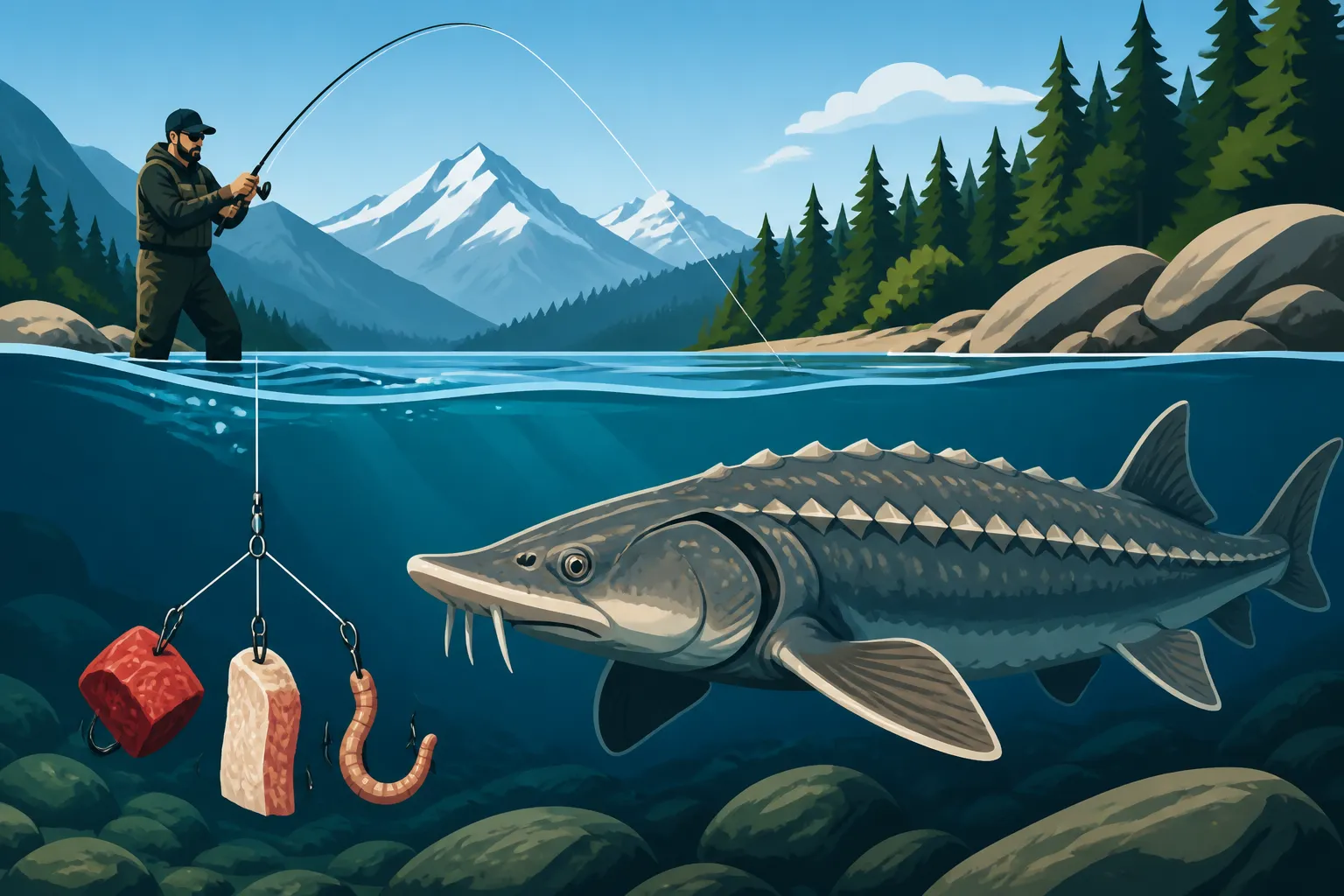
Salmon roe is arguably the most famous and effective bait for Fraser River sturgeon, especially when targeting fish in deep pools. The strong, natural oils and distinct smell of salmon eggs are incredibly potent and disperse well in the water column, creating an irresistible scent trail that draws sturgeon in from a distance. The naturalness of salmon roe means it's a familiar food source, especially during salmon runs. Anglers often use large clusters of roe, sometimes in mesh bags, to ensure durability and a sustained scent release in the powerful currents of deep pools. It’s a staple for a reason, and if you're not getting bites with other baits, a fresh roe presentation is often the answer.
Lamprey: A Natural and Potent Option
Lamprey are another highly effective bait, particularly large pieces or whole lamprey. These eel-like fish are a natural part of the sturgeon's diet in the Fraser River. They are incredibly oily and have a strong, distinct scent profile that sturgeon find hard to resist. The tough, leathery skin of a lamprey also makes it incredibly durable on the hook, which is a huge advantage when fishing in heavy currents or trying to avoid bait stealers like smaller fish. Many experienced guides swear by lamprey for trophy-sized sturgeon because of its size and the long-lasting appeal it offers. Finding good quality lamprey can sometimes be a challenge, but the results often speak for themselves.
Eulachon (Oolichan): The Oily Temptation
Eulachon, also known as oolichan or candlefish, are small, oily fish that migrate up the Fraser River in huge numbers, making them a primary food source for sturgeon. Their extremely high oil content creates an intoxicating scent slick in the water, which sturgeon can detect from a significant distance. Eulachon are highly prized bait due to their natural abundance in the sturgeon's habitat and their undeniable effectiveness. They can be used whole or cut into chunks, depending on the size of the bait and the desired presentation. The soft texture means they might not last as long on the hook as lamprey, but their scent appeal is almost unparalleled, making them fantastic for getting a quick bite. Some anglers find them available in frozen packs at tackle shops or even through online retailers like Amazon during certain seasons.
Other Effective Baits: Getting Creative
While salmon roe, lamprey, and eulachon are the top contenders, other baits can also be effective, especially if you're experimenting or those primary baits are hard to come by. Pieces of fresh salmon or other oily fish, cut into chunks, can work well. Even baits like squid or pieces of mackerel, while not native to the Fraser, offer a strong scent and tough texture that can appeal to a hungry sturgeon. The key here is always freshness and a strong scent. If you're on a multi-day trip, keeping your bait fresh is paramount. Consider a good cooler and even portable vacuum sealers to maintain peak bait quality. Remember that local regulations may have rules about what you can use as bait, so always check the BC Fishing Regulations Explained before you go.
Rigging Your Bait for Success in Deep Water
Having the best bait in the world won't do you much good if it's not presented correctly. Fishing for sturgeon in deep, often powerful pools requires specific rigging techniques to ensure your bait stays where it needs to be and creates the desired scent trail.
The Importance of a Scent Trail
As we've discussed, scent is king for sturgeon. Your rigging should facilitate the maximum release of that alluring odor. When using roe, many anglers use bait mesh or roe bags. These small mesh pouches allow the oils and scent from the eggs to seep out slowly, creating a consistent trail without losing the bait off the hook too quickly. For lamprey or eulachon, cutting the bait to expose more flesh can increase the scent release. Some anglers even gently squeeze the bait before casting to release more oils. The goal is to create a "scent bomb" that travels downstream, alerting any sturgeon in the vicinity to a potential meal. This is a critical aspect of How to Catch Sturgeon on the Fraser River.
Keeping Your Bait on the Bottom
Sturgeon are bottom feeders, so your bait absolutely must be on the bottom, in the strike zone. This usually means using a heavy weight, often an egg sinker or a pyramid sinker, to combat the strong currents often found in deep pools. The weight should be heavy enough to hold your bait in place, preventing it from rolling or drifting too far from your desired spot. Most anglers use a sliding sinker rig, where the weight slides freely on the main line, above a swivel. This allows the sturgeon to pick up the bait and move off without immediately feeling the resistance of the heavy sinker, giving you a better chance for a solid hookset. Getting the right setup for this is crucial, and you can find detailed information on the Best rig for bottom fishing for sturgeon.
Hook Selection and Presentation
For sturgeon, you need strong, sharp hooks that can handle the power of these massive fish. Circle hooks are generally preferred and often required by regulation for sturgeon fishing, as they are safer for the fish, leading to jaw hook-ups rather than gut hooking. This is especially important for adhering to the BC Fraser River Sturgeon Catch and Release Requirement. The size of your hook should match the size of your bait – you want the hook point exposed to ensure a good set. When rigging, make sure your bait is securely attached to the hook, whether threaded on, tied with elastic thread, or held within a bait mesh. The bait should present naturally on the bottom, not bunched up or twisted. A clean presentation helps ensure that when a sturgeon mouths the bait, the hook is in a prime position to set.
Tips for Maximizing Your Success with Sturgeon Baits
Beyond choosing and rigging your bait, there are several other factors that can significantly influence your success when targeting sturgeon in deep Fraser River pools. It’s all about creating the perfect storm of conditions to entice these magnificent fish.
Freshness is Paramount
This might sound obvious, but it cannot be stressed enough: fresh bait is always better. Sturgeon have an incredible sense of smell, and they can detect even subtle differences in bait quality. Stale, freezer-burned, or partially thawed-and-refrozen bait will simply not perform as well as fresh, vibrant offerings. If you're using salmon roe, try to source it fresh during the salmon runs. For other baits like eulachon or lamprey, ensure they've been properly stored and handled. Think about what appeals to you – a fresh, delicious meal or something past its prime? Sturgeon are no different. Store your bait in a cooler with plenty of ice, keeping it away from direct sunlight, and only take out what you need for immediate use.
Scent Boosters and Attractants
While the baits discussed are naturally smelly, some anglers swear by adding extra scent boosters or attractants to their bait. These can come in various forms, from liquid scents and sprays to powders that you mix with your bait. Products specifically designed for predator fish or even those with a strong anise or garlic scent can sometimes trigger a response. You can find many options for these types of attractants on platforms like Amazon. The idea is to amplify the natural scent or add an additional layer of appeal that might grab a sturgeon's attention in a large, deep pool. Experimentation is key here – what works one day might not the next, but having these tools in your arsenal can give you an edge.
Understanding Current and Water Levels
The Fraser River is a dynamic system, and its currents and water levels can change dramatically. These factors directly impact how your bait disperses scent and how effectively it stays on the bottom. In strong currents, a heavier weight might be needed, and a tougher bait like lamprey might be more durable. In slower currents, a softer, more fragrant bait like eulachon or roe might create a better, lingering scent cloud. Pay attention to the river's flow. High, fast water often means sturgeon hug the bottom even tighter, making accurate bait placement crucial. Conversely, lower flows might see them more actively exploring. Checking BC Fishery Notices and In-Season Closures, Explained can also provide insights into conditions that might affect fishing.
Ethical Bait Use and Conservation
When fishing for white sturgeon, conservation and ethical practices are non-negotiable. These are ancient, long-lived fish, and their protection is paramount. This includes proper handling during catch and release, which is mandatory for all Fraser River sturgeon. Ensure your bait is rigged correctly to minimize harm, such as using appropriate circle hooks. Also, be mindful of any bait restrictions in place. Using excessive amounts of bait can sometimes lead to issues with other species or simply be wasteful. When you do land one of these giants, remember the Sturgeon catch and release survival tips to ensure it swims away healthy to fight another day. Being a responsible angler not only helps the fish but also preserves this incredible fishery for future generations.
Disclaimer
This article is for general informational purposes only and does not constitute professional advice. Laws, prices and regulations vary by location and change over time. Consult a qualified professional for guidance on your specific situation.