BC fishing without a license penalty
There’s nothing quite like the excitement of heading out to your favorite fishing spot in beautiful British Columbia, whether it's the rushing waters of the Fraser River or a serene Okanagan lake. But imagine the gut-wrenching feeling of having your peaceful day interrupted by a Fisheries Officer, only to realize you’ve forgotten your license, or worse, never bought one in the first place. Many anglers, especially those new to BC, don't fully grasp the serious implications of fishing without a proper license. This guide will walk you through exactly what constitutes fishing without a license here, the penalties you face, and crucially, how to always stay on the right side of the law.
The Reality of Fishing Without a License in BC: What Counts?
It's easy to think "fishing without a license" is just about not having purchased one at all. But the truth is, the regulations are far more nuanced than that, and ignorance is rarely an excuse in the eyes of the law. Many anglers unknowingly fall afoul of the rules, leading to frustrating and expensive encounters with enforcement.
Forgetting Your License at Home
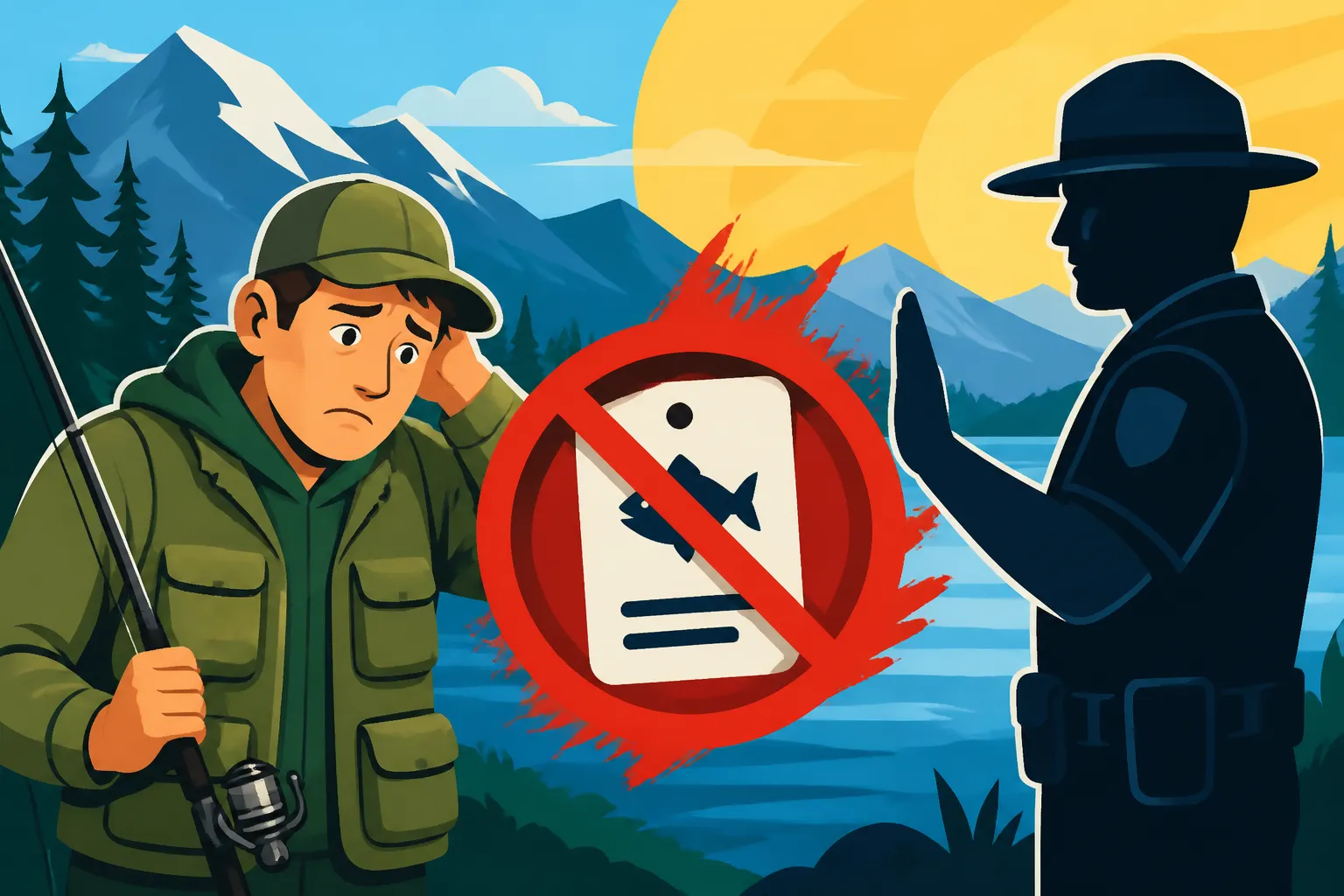
We've all been there: you're packed, you're excited, and you rush out the door, only to realize halfway to the river that your wallet, or a crucial piece of gear you ordered from Amazon, is still on the kitchen counter. If that item happens to be your fishing license, you could be in a tricky situation. While you might have purchased a valid license, not being able to produce it upon request by a Fisheries Officer or Conservation Officer is considered a violation.
The expectation is that you carry proof of your valid license at all times while fishing. This can be a physical printout, or increasingly common, a digital copy displayed on your smartphone. Some officers might give you a warning and the chance to produce it later, especially if you're cooperative and can quickly verify it on your phone or through a quick call to a family member back home. However, they are entirely within their rights to issue a ticket. The rationale is simple: they need to confirm your compliance on the spot to ensure fair play and conservation.
Not Having the Right Type of License
This is where things can get particularly confusing for many anglers, and it's a common trap. British Columbia has different licensing requirements depending on where and what you're fishing. For instance, if you're casting lines in a freshwater lake like Kootenay Lake for rainbow trout, you need a valid Freshwater Fishing License. But if your goal is to chase salmon in the ocean waters off Vancouver Island, you'll need a Tidal Waters Fishing License.
It gets even more specific:
- Freshwater vs. Tidal: You absolutely cannot use a freshwater license to fish in tidal waters, or vice-versa. The jurisdictions, regulations, and even the species targeted are entirely different. We've got a detailed explanation on BC Freshwater vs Tidal Waters License, Explained that can clear up any confusion.
- Conservation Stamps: Beyond the basic license, many species require additional conservation stamps. Targeting salmon in either freshwater or tidal waters, for example, typically necessitates a Salmon Conservation Stamp. If you’re after Steelhead in certain rivers, there might be a BC Steelhead Conservation Surcharge Stamp required. Fishing for these species without the correct stamps, even if you have the base license, is akin to not having a complete license and can result in penalties.
- Residency Status: The cost and type of license also depend on whether you are a BC resident, a non-resident Canadian, or an international non-resident. Mistakenly purchasing a resident license if you don't qualify for it (e.g., an out-of-province college student who doesn't meet the residency criteria) can invalidate your license and lead to fines. Our guide on BC fishing license residency requirements offers more clarity on this.
Misunderstanding these distinctions is a frequent reason anglers find themselves ticketed. Always double-check the specifics for your target species and fishing location.
Misunderstanding Age Requirements
A question that often comes up is, "Do Kids Need a Fishing License in BC?". The answer is nuanced. In British Columbia, residents and non-residents under the age of 16 are generally exempt from needing a basic freshwater fishing license. However, this exemption does not extend to federal salmon conservation stamps or specific species tags, which they would still need if targeting those fish. For tidal waters, all anglers, including youth, generally need to at least register for a free basic license, and then purchase any necessary stamps for salmon.
The rules around youth fishing are designed to encourage participation but still maintain conservation efforts. If an older teen, for example, is caught without any form of documentation or stamp when targeting salmon, they could still face penalties. It's crucial for parents and guardians to understand these specific age requirements to ensure the whole family enjoys a compliant fishing trip.
The Immediate Repercussions: Fines and Tickets
Alright, let's talk about the cold, hard facts: what actually happens when you're caught fishing without a license in British Columbia? The penalties vary depending on the severity of the offense, whether it's a first-time mistake or a repeat transgression, and sometimes even the discretion of the officer.
Basic Fine Amounts
For simply fishing without a valid license or failing to produce one, you're typically looking at a monetary penalty. These fines are often issued as violation tickets, similar to a traffic ticket.
Based on current regulations, a basic contravention of the BC Angling and Aboriginal Fisheries Regulation, such as "Angling without a licence," can result in a fine. While specific amounts can change, you can generally expect a fine in the range of $100 to $200 for a straightforward first offense of not having a basic freshwater license. For tidal waters, the fines can be similar under the federal Fisheries Act regulations.
It might seem like a manageable amount, but think about it: for the price of a fine, you could have easily purchased an annual license and had peace of mind for an entire year. For instance, the BC resident freshwater fishing license cost 2026 is a fraction of what a fine would set you back.
Aggravating Factors and Increased Penalties
Now, imagine this scenario: you're caught fishing without a license, but you're also over the daily bag limit for sockeye salmon in a closed area on the Fraser River. Or maybe you're using prohibited gear, like a treble hook in a fly-fishing-only zone. When fishing without a license is combined with other violations, the penalties escalate quickly and significantly.
- Multiple Offenses: Each violation can be ticketed separately. So, no license, plus over-limit, plus fishing in a closed area means multiple fines stacked against you.
- Serious Infractions: If your unlicensed fishing activity involves serious environmental damage, illegal commercial activity, or targeting protected or endangered species, the case can move beyond a simple ticket. Under the federal Fisheries Act, individuals can face fines up to $100,000 for a first offense and even imprisonment for very severe cases. This is rare for a simple forgotten license but becomes a real possibility when commercial poaching or significant ecological harm is involved.
- Repeat Offenders: Fisheries officers maintain records. If you've been ticketed for a fishing offense before, especially for being unlicensed, future penalties will likely be harsher. Repeat offenders are seen as deliberately flouting the law and will face higher fines and potentially more severe consequences.
It's clear that the system is designed to deter not just simple mistakes, but especially those who show a disregard for conservation laws.
Here's a simplified table outlining potential penalties for common license-related infractions in BC. Please remember these are general guidelines, and actual fines can vary based on specific circumstances, changes in regulations, and the discretion of the issuing officer.
| Infraction | Typical Fines (Approximate) | Additional Consequences (Potential) | Jurisdiction |
|---|---|---|---|
| Angling without a valid basic license | $115 – $230 | Equipment seizure, future license denial | Provincial / Federal |
| Failing to produce license upon request | $115 – $230 | Warning, request to produce digitally, equipment seizure | Provincial / Federal |
| Angling without required conservation stamp (e.g., Salmon, Steelhead) | $115 – $230 (per stamp) | Equipment seizure, forfeiture of catch, future license denial | Provincial / Federal |
| Non-resident fishing with resident license | $230 – $575+ | Equipment seizure, forfeiture of catch, future license denial | Provincial |
| Using incorrect license type (e.g., freshwater in tidal waters) | $230 – $575+ | Equipment seizure, forfeiture of catch, future license denial | Provincial / Federal |
| Commercial fishing without a license | Up to $100,000+ | Vessel/equipment seizure, imprisonment, severe future license impact | Federal |
Note: These figures are subject to change and should be considered estimates. Always consult the official BC Freshwater Fishing Regulations Synopsis and federal Fisheries and Oceans Canada guidelines for the most up-to-date information.
Beyond the Fine: Deeper Consequences You Might Not Expect
While a monetary fine is certainly a headache, the repercussions of fishing without a license in British Columbia can extend far beyond a dent in your wallet. These deeper consequences can impact your ability to fish in the future, and even have legal implications.
Equipment Seizure and Forfeiture
This is perhaps one of the most immediate and painful consequences for any angler. If a Fisheries Officer catches you fishing without a license, they have the authority to seize your fishing gear. This isn't just a temporary hold; it could lead to permanent forfeiture. Imagine losing your prized fly rod, your carefully curated tackle box, or even your boat if it's deemed to be an instrument used in committing the offense.
This isn't just about a simple ticket anymore; it's about a significant financial loss. That brand-new high-end reel you just bought from Amazon, or the custom-built fishing kayak you saved up for, could be gone for good. The process to get seized equipment back, even if you eventually win your case or pay your fine, can be long, complicated, and frustrating. In many cases, it's simply forfeited, with the equipment eventually sold off or destroyed. This serves as a powerful deterrent, hitting anglers where it truly hurts.
Suspension or Denial of Future Fishing Privileges
One of the most impactful long-term consequences is the potential suspension of your existing fishing license or the denial of future license applications. If you're found guilty of a fishing offense, especially repeated instances of fishing without a license, the Ministry responsible for issuing licenses (like the BC government for freshwater, and Fisheries and Oceans Canada for tidal) can flag your name.
This means that when you go to renew your British Columbia Fishing License Guide for 2026 or apply for a new one, your application could be denied for a set period, or even indefinitely in severe cases. Imagine being an avid angler, passionate about BC's beautiful waters, and suddenly being told you can't legally fish for two or three years. This isn't just an inconvenience; it can cut deeply into a cherished hobby and lifestyle. It's a stark reminder that fishing is a privilege, not a right, and that privilege can be revoked if you don't adhere to the rules.
A Legal Record and Reputation Damage
While a minor violation might just result in a ticket, more serious offenses, or repeated infractions, can lead to a court appearance and potentially a criminal or quasi-criminal record. A conviction under the federal Fisheries Act or provincial regulations can be a serious matter.
Having a legal record for a fishing offense might seem minor compared to other crimes, but it can still have ramifications. It can show up on background checks, potentially affecting employment opportunities, especially in fields that require a clean record or involve outdoor activities. Beyond that, there's the damage to your reputation within the angling community. News of significant violations can spread, and other anglers who respect the rules and conservation efforts might view you differently. The BC angling community is generally close-knit and values responsible practices, making it even more important to uphold ethical conduct.
Smart Angling: How to Ensure You're Always Compliant
The good news is that avoiding penalties for fishing without a license is incredibly easy if you take a few simple, proactive steps. It all comes down to understanding the rules and being prepared.
Always Purchase the Correct License
The absolute foundation of compliant angling is acquiring the correct license. Don't guess, don't assume, and don't rely on old information.
- Where to Buy: The provincial Freshwater Fishing License can be purchased online through the BC government's Angler's Atlas portal, or in person at various vendors like tackle shops, sporting goods stores (such as a local Canadian Tire or independent fishing store), and some general stores. Our guide on Where and How to Buy a BC Fishing License provides a comprehensive list of options. For Tidal Waters licenses, you'll purchase them online through the Fisheries and Oceans Canada National Recreational Licensing System.
- Know Your Needs: Before you buy, know exactly what you'll be fishing for and where. Are you targeting trout in a freshwater lake, or salmon in the Strait of Georgia? Do you need a BC Freshwater Salmon Retention Rules endorsement? Will you be fishing for Steelhead, which requires an additional stamp in freshwater? Take a moment to review your plans and ensure you're getting everything you need. If you're uncertain about BC Fishing License Age Requirements, ensure you check that too.
- Annual vs. Short-Term: Consider if an annual license makes sense, especially if you plan to fish more than a few days a year. Often, the cost difference isn't that great, and it saves you the hassle of repeat purchases. For non-residents, there are options like the BC non-resident 1-day freshwater fishing license cost or multi-day tidal licenses.
Carry Proof of License at All Times
Once you have your license, you must carry proof of it while you're fishing.
- Physical Copy: Printing a physical copy of your license is always a good idea. Keep it in a waterproof bag in your tackle box or wallet. It never runs out of battery and is easily presented.
- Digital Copy: Most anglers now rely on their smartphones. You can save a PDF of your license to your phone's files, take a screenshot, or use a dedicated app if available. Just make sure your phone is charged! Having both a digital backup and a physical copy is the safest bet, just in case your phone battery dies or you drop it in the drink. Our article on Printing or Carrying a Digital Fishing License in BC delves deeper into this.
- Photo ID: Always carry government-issued photo identification (like a driver's license). Officers may need to verify your identity against your license information.
Stay Up-to-Date with Regulations and Fishery Notices
BC's fishing regulations can change, sometimes rapidly, especially with conservation efforts for species like salmon and steelhead. What was open last week might be closed today due to in-season management decisions.
- The Synopsis is Your Bible: Always consult the current BC Freshwater Fishing Regulations Synopsis for freshwater, and the federal Pacific Region Fishing Regulations for tidal waters. These documents detail season dates, bag limits, gear restrictions, and specific closures for various water bodies.
- Check Fishery Notices: For tidal waters and some major freshwater systems (like the Fraser River), Fisheries and Oceans Canada issues "Fishery Notices" for in-season changes. These are critical and can literally change overnight. Before every fishing trip, especially if you haven't been out in a while, check these notices. Our piece on BC Fishery Notices and In-Season Closures, Explained will guide you through this process. You can usually sign up for email alerts to stay informed.
- Local Knowledge: While official sources are paramount, local tackle shops and guides often have excellent, up-to-the-minute local knowledge. They might be aware of recent changes or specific conditions that aren't yet widely publicized. Just remember to always verify with official sources.
By taking these steps, you not only avoid penalties but also become a more responsible and informed angler, contributing to the sustainable future of British Columbia's incredible fisheries. You can even find waterproof cases for your license and phone on Amazon to keep them safe out on the water.
Disclaimer
The information provided in this article is for general guidance only and is not legal advice. Fishing regulations in British Columbia are subject to change and vary by location, species, and time of year. Always consult the official British Columbia Freshwater Fishing Regulations Synopsis, federal Fisheries and Oceans Canada regulations, and any in-season fishery notices before heading out to fish. It is the individual angler's responsibility to know and follow all applicable laws and regulations.