How many people can join a Campbell River charter boat
One of the trickiest parts about planning a fantastic fishing trip to a renowned spot like Campbell River is figuring out the logistics, especially if you're traveling with a group. You've got your crew, everyone's excited, but then the question hits: just how many of us can actually fit on a charter boat? It's a common headache, trying to match your group size with available vessels, and nobody wants to be left on the dock. This guide will help you understand the factors that determine how many people can join a Campbell River charter boat, ensuring your trip is smooth sailing from start to finish.
Understanding Charter Boat Capacity Regulations in BC
When you're looking at booking a fishing charter, especially in a place like Campbell River where professional guiding is a cornerstone of the industry, it's not just about how many chairs are bolted to the deck. There are strict regulations in place that dictate how many passengers a commercial vessel can legally carry. These rules are designed first and foremost for safety, and they impact everything from the size of the boat to the equipment on board.
Transport Canada Regulations and Safety Standards
In Canada, any vessel operating commercially, including fishing charter boats, falls under the purview of Transport Canada. They set the rules for vessel construction, safety equipment, crew certification, and, crucially, passenger capacity. This isn't just a suggestion; it's the law. Every charter boat in Campbell River will have a specific "certificate of inspection" or similar documentation that clearly states its maximum passenger capacity. This limit is determined by a myriad of factors, including:
- Vessel Stability: How stable the boat is with a certain number of people and their gear on board.
- Life-Saving Equipment: The number of life jackets, rafts, and other emergency gear must match or exceed the maximum number of people on board.
- Fire Safety Equipment: Adequate fire extinguishers and systems for the vessel's size and occupancy.
- Emergency Procedures: The crew must be trained to handle emergencies with the specified number of passengers.
- Deck Space: There needs to be enough safe and comfortable space for all passengers to move around, fish, and sit, especially in case of rough water.
These regulations mean that a charter operator can't just decide on the fly to add an extra person if your group is slightly over their limit. It's a hard limit, and reputable operators adhere to it strictly. This is for your safety, and it ensures that if something unexpected happens, everyone on board can be properly accounted for and protected. BC Boating Laws for Anglers covers more on the general rules for vessels.
Vessel Size and Type Impacts on Passenger Limits
The specific design and size of a charter boat play a huge role in its passenger capacity. You'll find a range of vessels operating out of Campbell River, each suited for different types of fishing and group sizes.
- Smaller, Open Boats: Many guides operating in more sheltered waters or targeting specific inshore species might use smaller, open center console or tiller-steer boats. These are fantastic for a highly personalized experience, but their capacity is typically quite limited, often to 2-4 passengers. They're nimble and allow for intimate fishing, but they simply don't have the space or the stability rating for larger groups.
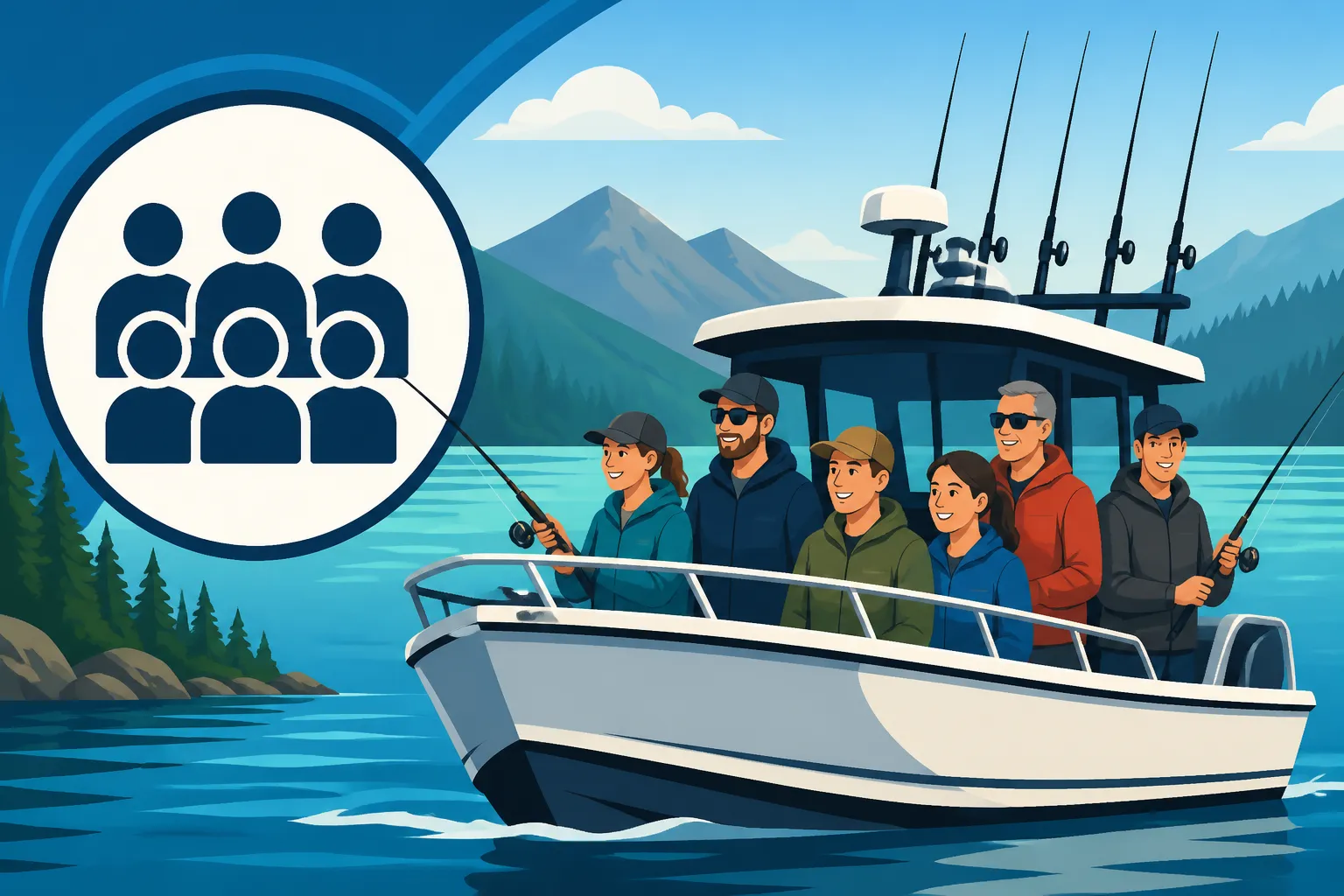
- Mid-Sized Cruisers/Sportfishers: This is probably the most common type of charter boat you'll encounter for salmon and halibut fishing out of Campbell River. These vessels are generally 20-35 feet long, often with a cuddy cabin or a fully enclosed cabin for shelter. Their capacities usually range from 4-8 passengers. This size offers a good balance of comfort, fishing space, and seaworthiness for coastal waters. They often have enough deck space for multiple anglers to cast simultaneously without feeling too cramped.
- Larger Yachts/Expedition Vessels: While less common for day-trip fishing charters, some larger operations or multi-day fishing lodges might utilize larger vessels, upwards of 40 feet or more. These can accommodate larger groups, sometimes 10 or more passengers, and often come with more amenities like multiple heads (bathrooms), full galleys, and sleeping quarters. However, these are generally reserved for more specialized, longer, or luxury trips rather than your typical 6-8 hour fishing excursion.
The type of fishing also subtly influences practical capacity. If you're mooching for salmon, where everyone is essentially dropping a line straight down, you can fit more people comfortably than if you're casting large spoons or fly fishing, which requires more elbow room.
Typical Passenger Capacities for Campbell River Charters
So, what can you actually expect when you're browsing for a charter in Campbell River? While specific numbers vary by boat and operator, there are general ranges that most fall into. Understanding these will help you manage expectations and plan your group accordingly.
Small vs. Large Charter Vessels
Most charter operations in Campbell River offer a few different boat options, or at least one standard size that they typically run.
- Smaller Vessels (2-4 passengers): These are perfect for couples, small families, or a few close friends. Think of a nimble 18-22 foot boat. They offer a very personalized experience, with the guide able to dedicate more attention to each angler. If you're looking for an intimate learning experience, or just don't want to feel like part of a crowd, these are fantastic. They're often slightly more affordable per person for small groups, but the overall cost for a large group would be prohibitive as you'd need multiple boats. These boats are common for focusing on How to Catch Steelhead in BC in rivers or targeting specific nearshore species.
- Standard Vessels (4-6 passengers): This is the sweet spot for many Campbell River charters. Boats in the 24-30 foot range are very capable in Discovery Passage and beyond, offering a good balance of space, comfort, and fishing room. A group of four anglers will feel quite spacious, while six can still fish comfortably, though it might feel a bit cozier. Many families or groups of friends find this capacity ideal. If you're checking out options on a platform like FishingBooker, you'll often see this as the most common listed capacity. These are great for Chinook Salmon Fishing in BC or a mixed bag day.
- Larger Vessels (6-10+ passengers): These are less frequent for individual bookings but are available. Some larger operations or lodges run bigger boats (30-40+ feet) that can accommodate more people. These are excellent for corporate outings, larger family reunions, or groups where everyone absolutely wants to stay on the same vessel. They generally offer more amenities, like a private head, and a more stable ride in choppier conditions. You might find these for specific Best Salmon Charters in Campbell River options that cater to bigger parties.
It's always best to be upfront about your group size when inquiring with a charter. Some guides might have slightly flexible interpretations of "comfortable" versus "maximum legal" capacity, but they will never exceed the legal limit.
Here's a quick overview of typical capacities:
| Vessel Type | Typical Length (feet) | Common Passenger Capacity | Ideal For | Considerations |
|---|---|---|---|---|
| Small, Open Fishing Boat | 18-22 | 2-4 | Couples, small families, specialized fishing | Intimate experience, less shelter, more affordable per boat |
| Standard Sportfishing Cruiser | 24-30 | 4-6 | Families, groups of friends | Good balance of comfort, space, and offshore capability |
| Larger Sportfishing/Yacht Style | 30-40+ | 6-10+ | Large groups, corporate outings, luxury trips | More amenities, more stable, higher cost per boat |
Group Size Considerations for Different Fishing Experiences
The number of people in your party isn't just a regulatory issue; it's also about the kind of experience you want to have.
- Intimate Experience vs. Social Gathering: A smaller group (2-3 people) on a smaller boat means more one-on-one time with the guide, more casting room, and a generally more focused fishing experience. If you're serious about learning techniques or just prefer quiet solitude, this is ideal. A larger group (6+) on a bigger boat can be a fantastic social event. There's more banter, more people cheering on a hooked fish, and a generally livelier atmosphere. However, it also means less individual attention from the guide and potentially more tangled lines if everyone is casting at once.
- Active vs. Passive Fishing: If your group wants to be actively casting spoons for salmon or jigging for halibut, having fewer people on board allows for more personal space. Imagine six people all trying to cast simultaneously from a 24-foot boat – it can get crowded quickly! If the fishing involves more passive methods, like bottom bouncing for sturgeon or trolling with multiple lines from rod holders, then more people can be accommodated comfortably as less active movement is required. For instance, How to Catch Sturgeon on the Fraser River often involves anchoring and waiting, which is quite different from actively casting.
- Kids and Beginners: If you're bringing children or novice anglers, consider how much personal space and attention they might need. A smaller group allows the guide to spend more time helping them with casting, baiting, and reeling in. A crowded boat can be frustrating for a beginner who might struggle to find room or get assistance. When looking for Best Guided Kids Fishing Trips in BC, ask about their typical group sizes and if they cater to beginners.
Ultimately, the best group size depends on your priorities. Do you value an intimate learning experience, or a lively social trip? Communicating this to your charter operator will help them suggest the best fit.
Factors Influencing Your Group's Charter Choice
Beyond the sheer numbers dictated by regulations, several practical considerations should guide your decision when booking a Campbell River charter for your group. You want everyone to have a good time, be safe, and get the most out of their fishing adventure.
Balancing Comfort, Cost, and Fishing Experience
This is often the triple threat when planning any group outing.
- Comfort: Cramming too many people onto a boat, even if it's technically legal, can lead to a less enjoyable experience. Consider how much personal space your group prefers, especially if you're out on the water for many hours. Will everyone have a comfortable seat? Is there enough room to move around, re-tie lines, or land a fish without bumping into someone? For instance, a half-day charter might be more tolerable with a slightly larger group than a full-day offshore trip where comfort becomes paramount. What to Expect on a BC Fishing Charter can give you a general idea of the experience.
- Cost: Charter boats are priced per boat, not per person, for private charters. So, dividing the cost among more people can make a charter more affordable individually. However, remember the comfort factor. Sometimes, paying a little more per person for a less crowded boat is worth it for the improved experience. If your group is very large, say 8-10 people, it might actually be more practical and enjoyable to book two smaller, more focused charters rather than one large one. This also gives your group more flexibility in terms of what species to target or even exploring different fishing grounds. When searching on platforms like FishingBooker, you can compare prices and capacities easily.
- Fishing Experience: What are your group's fishing goals? Are you aiming for trophy Halibut Fishing off Vancouver Island? Or perhaps chasing multiple species like salmon and rockfish? The type of fishing might require specific gear setups or techniques that are more easily managed with fewer people. For example, some specialized techniques for How to Catch Lingcod off Vancouver Island might be difficult to coordinate with a large, inexperienced group on deck. A smaller, more focused group often leads to a more efficient and successful fishing trip.
When weighing these factors, a good strategy is to discuss them openly with your group and with potential charter operators. They are experts in their local waters and can provide valuable insights into what works best for different group sizes and fishing ambitions.
Communication with Your Charter Operator
This cannot be stressed enough. Clear, honest communication with your Campbell River charter operator from the very beginning will save you a lot of headaches and ensure a smoother trip.
- Be Upfront About Your Group Size: Don't try to sneak an extra person on board. Not only is it illegal and dangerous, but it puts the guide in a very awkward position. Clearly state your exact group size when you first inquire.
- Discuss Your Expectations: Tell them what kind of experience you're looking for. Is it a serious fishing trip, a relaxed family outing, or a celebration? This helps them match you with the right boat and guide. If you have specific targets like Best Halibut Fishing Spots in BC or a desire to focus on Sockeye Salmon Fishing in BC, share that too.
- Inquire About Boat Layout and Amenities: Ask about the seating arrangements, the amount of deck space, and if there's an enclosed cabin or a marine head (toilet). If anyone in your group has mobility issues, this is crucial information.
- Ask About Gear and Fishing Methods: Understand what gear is provided and what fishing methods will be used. This will help you gauge how much space each angler will need. Some charters might have specific rod setups that work best with fewer anglers.
- Confirm What's Included: Knowing if snacks, drinks, or fish cleaning services are included can influence your overall experience and comfort on board. What Gear a BC Charter Provides is a great question to ask.
Many excellent operators in Campbell River, whether found through direct booking or via services like FishingBooker, are keen to provide the best experience possible. They'll appreciate your thoroughness and will be happy to answer all your questions, ensuring that your group's size and expectations align perfectly with what their boat and crew can offer. Don't be afraid to ask about Booking a Last-Minute Fishing Charter in BC if you find yourself in a pinch, but remember that the best boats often book up well in advance, especially during peak season.
Ultimately, while the desire to keep a group together is strong, prioritizing safety and a quality fishing experience should always come first. Sometimes, splitting into two smaller boats can yield a more enjoyable and productive day for everyone involved than trying to squeeze into one.
Disclaimer
This article is for general informational purposes only and does not constitute professional advice. Laws, prices and regulations vary by location and change over time. Consult a qualified professional for guidance on your specific situation.