Life span of a steelhead in BC rivers
It's truly amazing to think about the journey a fish takes, especially something as magnificent and elusive as a steelhead in our incredible British Columbia rivers. Many anglers, myself included, often wonder just how long these resilient creatures live, given the incredible migrations and challenges they face. It's not a simple answer, as their lifespan is a complex dance between genetics, environment, and sheer will. This guide will dive deep into the fascinating life cycle of BC steelhead, exploring the factors that influence how long these powerful fish grace our waters and what makes their journey so unique.
The Incredible Journey of BC Steelhead: From Egg to Ocean
The life of a steelhead is one of the most compelling stories in the natural world, a testament to resilience and adaptation. Unlike their Pacific salmon cousins who typically spawn once and die, steelhead, being anadromous rainbow trout, have the incredible ability to return to the ocean after spawning, potentially repeating the cycle. This fundamental difference is key to understanding their potential lifespan in BC rivers and how they contribute to future generations.
The Freshwater Beginnings: Fry and Parr
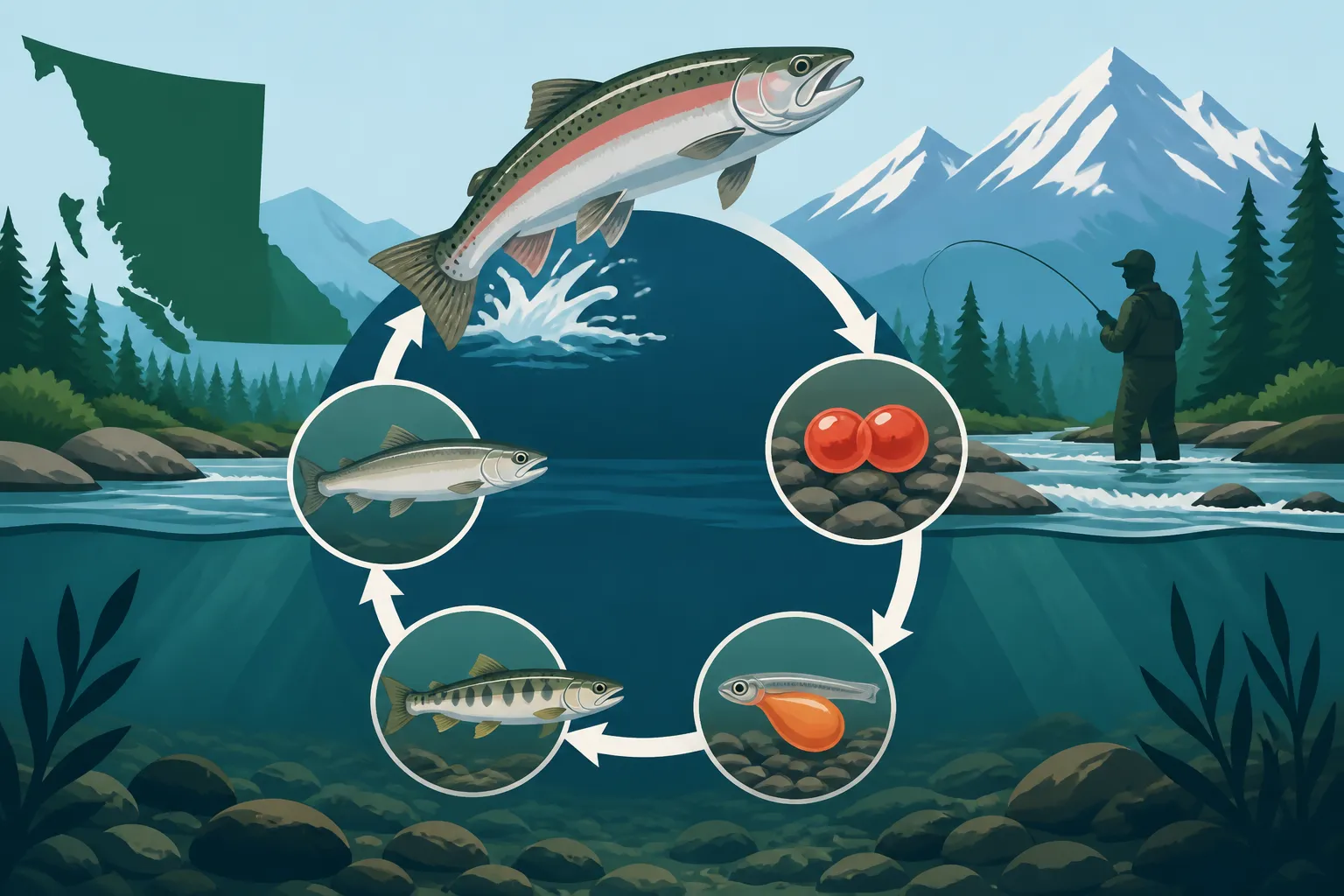
Every steelhead's life begins in the cold, oxygen-rich gravel beds of a BC river, usually in the spring. After hatching from an egg, the tiny alevin, still carrying its yolk sac for nourishment, hides within the gravel. Once the yolk is absorbed, it emerges as a free-swimming fry. This little fish is incredibly vulnerable, a tiny flicker of life amidst a vast river system. It spends its first year or two, sometimes even three, growing in the freshwater, establishing a territory and learning to hunt for insects and small aquatic life. During this period, they are known as parr, characterized by distinctive vertical bars along their sides, a perfect camouflage against the riverbed.
These juvenile steelhead are quite literally the future of the species, and their survival during this early freshwater phase is paramount. They face immense challenges: predators like birds, larger fish, and even other trout, as well as fluctuating water levels, harsh winters, and food scarcity. The health of our BC rivers, the presence of ample cover, and the availability of diverse food sources are critical during these formative years. If you're ever exploring stream-side habitats, you might spot these little parr darting among the rocks, a truly humbling sight. You can find many guides on identifying Trout Species Identification Guide for BC that cover these stages.
The Ocean Phase: Growth and Maturation
Once the parr reach a certain size, typically 10 to 20 cm, and sensing the right environmental cues (like changes in water temperature and photoperiod), they undergo a remarkable physiological transformation called smoltification. They change color, becoming more silvery, and their bodies adapt to tolerate saltwater. These young fish, now called smolts, embark on their perilous migration downstream, often under the cover of darkness, to the vast Pacific Ocean.
The ocean is where steelhead truly grow into their legendary size and power. They spend anywhere from one to four years in the marine environment, feeding voraciously on smaller fish, crustaceans, and squid. This period of rapid growth is crucial for their maturation and for building the energy reserves needed for their arduous return journey to their natal river to spawn. The time spent in the ocean is a huge determinant of a steelhead's ultimate size and, by extension, often a factor in their overall lifespan, as larger, stronger fish may have a better chance of surviving the return trip and subsequent spawning events. Many anglers are keen to know about Steelhead Runs on BC's North Coast Rivers which showcase some of the largest fish after their ocean phase.
What Determines a Steelhead's Lifespan in BC Rivers?
The lifespan of a steelhead is a delicate balance, heavily influenced by both natural and anthropogenic factors. While some might live for an extraordinary number of years, many do not make it past their first or second spawning attempt. It's a tough life out there for these amazing fish.
The Perils of Migration and Predation
Every single migration, both to the ocean as smolts and back to the freshwater as mature anadromous adults, is fraught with danger. On their way downstream, smolts face predators in the rivers and estuaries, and then out in the vast ocean, they are prey for larger fish, marine mammals, and birds. When they return to their spawning grounds, often after a year or more without feeding, they are again vulnerable. Rivers can be low, making them easy targets for eagles, bears, and other predators. High water can sweep them off course, or swift currents can expend their precious energy reserves.
Consider a mature steelhead making its way up a challenging river like the Skeena or Thompson. They're battling currents, jumping waterfalls, and evading hungry predators. It's an energy-intensive feat, and for many, it's their last. The physical toll is immense. Even human interactions, such as catch-and-release fishing, while intended to be conservation-minded, still put stress on these fish. That's why careful handling and quick releases are so vital. If you're looking for gear to minimize handling stress, you can find excellent landing nets and release tools on platforms like Amazon.
Environmental Challenges and Water Conditions
Beyond predators and the physical demands of migration, steelhead face a myriad of environmental challenges that directly impact their survival and, therefore, their lifespan. Climate change is bringing warmer water temperatures, which can be lethal for cold-water species like steelhead, reducing oxygen levels and increasing susceptibility to disease. Drought conditions can lower river levels, making migration impossible or exposing critical spawning habitat. Conversely, extreme floods can scour riverbeds, destroying eggs and fry.
Habitat degradation, through logging, urbanization, and agricultural runoff, also plays a significant role. Spawning gravels can become choked with sediment, oxygen levels can drop due to pollution, and crucial riparian vegetation that provides shade and insect food sources can be lost. When you're trying to figure out Best Time of Year to Fish in BC, these environmental conditions are always at play, affecting when and where fish can thrive. Understanding these challenges helps us appreciate the fragility of their existence and why every single fish that makes it back to spawn is a miracle.
The Remarkable Repeat Spawners
One of the most defining characteristics of steelhead that sets them apart from most Pacific salmon is their ability to survive spawning and return to the ocean, only to come back and spawn again. These are the true giants, the legendary fish that have defied the odds multiple times, and they contribute disproportionately to the genetic health and resilience of the population.
Kelts and Their Odds of Return
After spawning, a steelhead that survives is known as a kelt. They are typically emaciated and exhausted, having expended almost all their energy reserves in the spawning process. Their bodies are often scarred, and their scales are rubbed. Many kelts do not survive the downstream migration back to the ocean, falling victim to predators, disease, or simply succumbing to exhaustion.
However, those that do make it back to the ocean begin to feed heavily, regaining their strength and condition. This period of recovery is vital. The percentage of kelts that return to spawn a second (or even third or fourth) time varies greatly between populations and years, but it's generally a small fraction of the total spawning run. They are truly the veterans of the river, carrying valuable genes for survival and resilience. Protecting these kelts is critical for ensuring strong future runs, as they often produce more eggs or sperm than first-time spawners. Many conservation efforts focus on ensuring safe passage for kelts during their downstream journey.
Maiden Spawners vs. Multi-Year Returns
The lifespan of a steelhead, therefore, depends heavily on whether it's a "maiden" spawner or a repeat spawner.
- Maiden Spawners: These are fish returning to spawn for the very first time. They have typically spent 1-3 years in freshwater as parr/smolts, followed by 1-4 years in the ocean. So, a maiden spawner could be anywhere from 2 to 7 years old. If they survive this first spawning, they become kelts.
- Repeat Spawners: These are the truly old fish, those who have successfully returned to the ocean and then migrated back to spawn again. A steelhead could spend another 1-2 years in the ocean between spawning events. This means a steelhead could potentially live for 8, 9, or even up to 11 years if it makes multiple successful spawning migrations.
The proportion of repeat spawners in a population is often an indicator of the overall health of that steelhead run. A higher percentage suggests better survival conditions both in the river (during spawning and kelting) and in the ocean. It's a fascinating aspect of their biology, and it's why every angler respects the power and tenacity of a large, scarred steelhead. You can learn more about how to protect these fish in Steelhead Catch and Release Survival Tips.
Here's a simplified look at the potential age ranges:
| Life Stage | Time Spent (Approx.) | Cumulative Age Range (Years) |
|---|---|---|
| Egg to Fry/Parr | 1-3 years | 1-3 |
| Parr to Smolt | 0-1 year | 1-4 |
| Smolt to Ocean | (Migration) | |
| Ocean Phase | 1-4 years | 2-8 |
| First Spawning | (Return to river) | 2-8 |
| Kelt Recovery (Ocean) | 1-2 years | 3-10 |
| Second Spawning | (Return to river) | 3-10 |
| Kelt Recovery (Ocean) | 1-2 years | 4-12 |
| Third Spawning | (Return to river) | 4-12 |
Note: This table represents typical ranges; individual lifespans can vary significantly based on specific river systems, ocean conditions, and genetic factors.
Conserving the Future of BC's Steelhead
Understanding the lifespan of steelhead in BC rivers isn't just an academic exercise; it's a critical component of effective conservation and management strategies. When we know how long these fish typically live and what challenges they face at each stage, we can better target our efforts to protect them. The ongoing health of these populations is paramount, especially for wild steelhead populations which are under increasing pressure.
Human Impact and Conservation Efforts
Human activities have a profound impact on steelhead lifespan. From historical overfishing to ongoing habitat loss, every action we take echoes through their fragile life cycle. Dams can block migration routes, making it impossible for fish to reach their spawning grounds. Logging practices, if not done responsibly, can lead to increased siltation in rivers, smothering eggs and disrupting juvenile habitat. Climate change, largely driven by human emissions, is altering river ecosystems in ways that challenge steelhead survival at every stage.
However, there's also immense hope in human efforts. Conservation groups across British Columbia are working tirelessly to restore habitat, remove barriers, and advocate for stronger protections. Anglers play a vital role too, through responsible fishing practices, supporting conservation initiatives, and sharing their passion for these fish. You can find many informative books about steelhead conservation and biology on Amazon, which can deepen your understanding and appreciation. Ensuring healthy ecosystems means not just protecting the fish, but the entire web of life they depend on, from microscopic organisms to large predators.
Understanding the Data: Why Lifespan Matters for Management
Fishery managers and biologists rely heavily on data about steelhead lifespan, growth rates, and return rates to make informed decisions. By tracking individual fish using tagging programs, they can gather crucial information on how long fish survive in the ocean, how many return to spawn, and how many are repeat spawners. This data helps them:
- Assess Population Health: A declining average age or fewer repeat spawners can signal underlying problems in the environment or fishing pressure.
- Set Fishing Regulations: Understanding how long it takes for a steelhead to mature and spawn allows regulators to set appropriate BC Bag and Possession Limits by Species and fishing seasons to ensure enough fish survive to reproduce.
- Prioritize Habitat Restoration: If juvenile survival is low, it points to issues in freshwater habitats that need urgent attention. If ocean survival is low, it prompts broader ecological investigations.
- Evaluate Hatchery Programs (where applicable): While our focus here is on wild steelhead, understanding the lifespan of both wild and hatchery-reared fish helps compare their respective success and contribution to populations.
The more we understand the intricate details of a steelhead's life in BC rivers – their incredible migrations, their resilience against countless odds, and their remarkable ability to spawn multiple times – the better equipped we are to protect them for future generations. Each fish truly is a miracle, and their long, challenging lives are a testament to the wild spirit of British Columbia. For those looking to delve deeper into these remarkable creatures, researching topics like BC Steelhead Season Dates can provide specific insights into when these fish are present in our rivers.
Disclaimer
This article is for general informational purposes only and does not constitute professional advice. Laws, prices and regulations vary by location and change over time. Consult a qualified professional for guidance on your specific situation.