Common Carp in BC Waters
For many anglers in British Columbia, the sight of a common carp might elicit a groan or a dismissive shrug. Often misunderstood and frequently underestimated, these powerful freshwater fish are far more prevalent than many realize, often found finning in our lakes and slow-moving rivers. This comprehensive guide aims to shed light on the common carp in BC waters, from their ecological role and fascinating behaviours to the incredibly rewarding sport they offer, helping you understand and perhaps even appreciate this unique species.
Understanding the Common Carp in British Columbia
When we talk about carp in BC, we're usually referring to the common carp (Cyprinus carpio). These aren't the tiny ornamental koi you see in garden ponds, but rather robust, often substantial fish that can provide a serious challenge on the end of a line. They're part of the cyprinid family, which includes many other well-known freshwater fish.
A Brief History and Introduction to Carp in BC
The common carp isn't native to British Columbia, nor is it native to North America. It's an introduced species, much like many other fish that have found their way into new ecosystems around the world. Carp were originally brought to North America from Europe in the late 19th century, primarily for aquaculture purposes and as a food source. They were seen as a hardy fish that could thrive in a variety of conditions, and they quickly spread across the continent. In BC, they found suitable habitats in many of our warmer, slower-moving bodies of water. For decades, they were largely ignored by sport anglers, often seen as a nuisance fish that competed with native species. However, that perception has slowly started to shift, as more anglers discover the thrill of battling a large, determined carp.
Their establishment here wasn't without consequence, but their presence is now a permanent fixture in many ecosystems. Unlike some invasive species, carp are often already well-integrated into the local food web, though debates about their overall impact continue. What's undeniable is their resilience; once established, carp populations are incredibly difficult to eradicate, making understanding and managing them a more practical approach than aiming for complete removal in most cases.
Identifying Common Carp: What to Look For
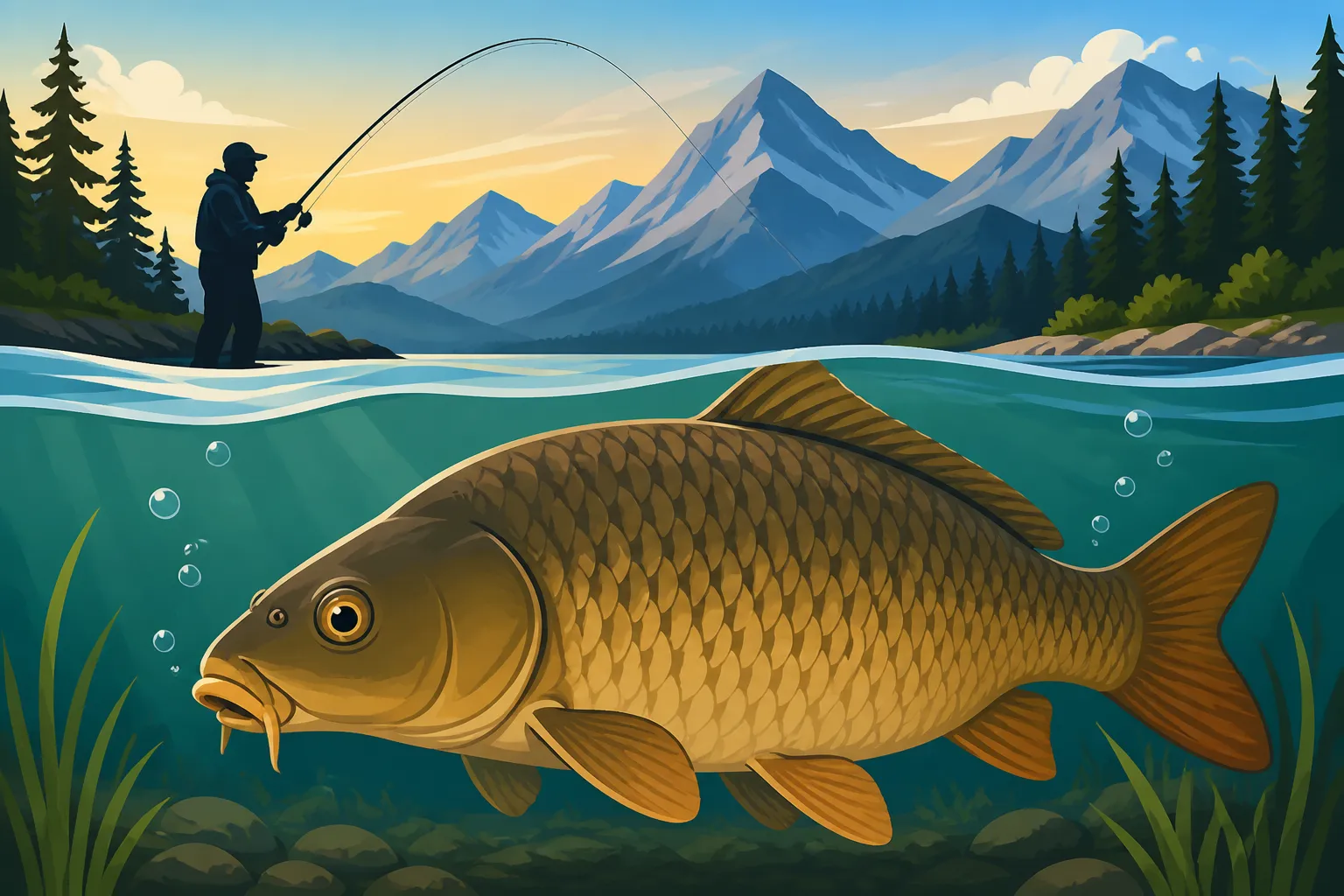
Identifying a common carp is relatively straightforward once you know what to look for. They have a distinctive, deep-bodied, somewhat chunky appearance, often with an arched back and a relatively small head compared to their body size. Their scales are large, thick, and typically a brassy, golden-brown colour on their backs, fading to a lighter yellow or white on their bellies. Sometimes they can appear quite dark, almost olive, depending on the water conditions and the specific strain.
One of the most defining characteristics of the common carp is the presence of two pairs of barbels, or whisker-like protrusions, on either side of their mouth. These barbels are sensory organs that carp use to forage for food on the bottom. Their mouth is protrusible and downturned, perfectly adapted for sifting through sediment. You might occasionally encounter different varieties in BC, such as mirror carp (which have very large, irregularly placed scales, often with large patches of skin between them) or leather carp (which are mostly scaleless). These are just genetic variations of the common carp and are caught using the same techniques. If you're ever unsure about distinguishing them from other coarse fish, pay close attention to those barbels – they're the key identifier that separates them from large suckers, which lack these prominent whiskers. For further details, our guide on Common carp size and habits in BC lakes provides an excellent overview.
Where Carp Thrive in BC Waters
Carp are incredibly adaptable fish, which is precisely why they've been so successful in establishing themselves in new environments. In British Columbia, they tend to favour warmer, shallower, and often more fertile waters. You won't typically find them in the cold, fast-flowing mountain streams or deep, oligotrophic (nutrient-poor) lakes where trout and salmon thrive. Instead, look for them in the slow-moving sections of larger rivers, large shallow lakes, and even some urban ponds.
The Fraser River system, particularly the lower and middle reaches, is a prime carp habitat. They'll frequent the slower back channels, oxbow lakes, and sloughs off the main current. The Okanagan Valley lakes, like Osoyoos Lake and parts of Okanagan Lake, also hold robust carp populations. These waters often have abundant aquatic vegetation, muddy or silty bottoms, and warm summer temperatures – all ideal conditions for carp. They are often found quite close to shore, rooting around in the shallows for food, making them an excellent target for Best Shore Fishing Spots in BC or even from a kayak or small boat. Don't be surprised to find them in irrigation ditches or small ponds in agricultural areas, too; their tolerance for varied water quality is quite remarkable.
Carp Behavior and Habitat in BC
To successfully target carp, understanding their daily routines, diet, and seasonal patterns is paramount. These fish aren't just random bottom feeders; they exhibit distinct behaviours that astute anglers can exploit.
Diet and Feeding Habits
Common carp are omnivorous bottom feeders, meaning they'll eat just about anything they can find on or in the substrate. Their diet is incredibly varied and largely depends on what's available in their specific habitat. They'll spend a significant amount of time sifting through mud, silt, and sand with their protrusible mouths, sucking up anything edible.
Their primary food sources include insect larvae, worms, small crustaceans, mollusks, and plant matter like aquatic weeds and seeds. They're also not above consuming small fish or fish eggs if the opportunity arises. This broad diet is one of the reasons they can thrive in such diverse environments where other species might struggle. When carp are actively feeding, you'll often see tell-tale signs: muddy plumes rising from the bottom as they root around, or sometimes even their tails breaking the surface as they "tail-stand" to access food in shallow water. They are opportunistic feeders and will readily take advantage of concentrated food sources, which is why chumming (pre-baiting) is such an effective strategy for enticing them.
Spawning and Reproduction
Carp are prolific spawners, another key factor in their successful establishment and proliferation in BC waters. Spawning typically occurs in late spring or early summer when water temperatures reach around 18-20°C (65-68°F). This usually happens from May through July, though exact timing can vary slightly depending on the specific body of water and local weather conditions.
During spawning season, carp move into very shallow, vegetated areas of lakes, backwaters, or floodplains. They'll thrash around vigorously in the reeds and grasses, often in large groups, creating quite a disturbance. The females release tens of thousands, sometimes even hundreds of thousands, of small, adhesive eggs that stick to aquatic vegetation and submerged debris. The males then fertilize these eggs. There's no parental care; the eggs are left to develop on their own. This mass spawning event, combined with the sheer number of eggs produced, contributes significantly to their high reproductive success rate, especially when conditions are favourable. Anglers sometimes find carp harder to catch during this period as they are focused on reproduction rather than feeding, though post-spawn they can be incredibly hungry.
Seasonal Movements and Patterns
Carp, like many freshwater fish, exhibit seasonal movements and activity patterns influenced primarily by water temperature and food availability. In BC, these patterns dictate where and when you're most likely to encounter them.
- Spring: As ice melts and water temperatures begin to rise, carp become more active. They'll often move into shallower areas to feed on newly emerging insect life and warm up in the sun. This is a fantastic time for carp fishing, as they're often hungry after a colder winter and can be found in accessible locations. They'll also begin their pre-spawning migrations towards shallow, vegetated bays.
- Summer: During the warmest months, carp activity is high. They'll continue to feed heavily, especially during cooler parts of the day, such as early mornings and evenings. Mid-day heat can sometimes push them into slightly deeper, shadier areas or under cover. This is when you'll see them actively spawning in the shallows. Our article on Best Kayak Fishing Spots in BC can provide some excellent insights into accessing these shallow, vegetated areas where carp hold during summer.
- Fall: As water temperatures cool down, carp will go on another feeding binge, packing on weight in preparation for winter. They often remain in shallower areas longer than many other species, but as temperatures drop further, they'll eventually retreat to deeper holes, channels, or sheltered areas where water temperatures are more stable. This can still be a productive time for larger fish.
- Winter: Carp become much less active in winter, especially under ice. They'll often school up in deep, slow-moving sections of rivers or in the deepest parts of lakes. Their metabolism slows down, and they feed much less frequently. Ice fishing for carp is less common in BC than for other species, but it's not unheard of, particularly in milder winters or specific lakes where they concentrate.
Understanding these seasonal shifts can significantly improve your chances of finding and catching carp throughout the year.
The Debate: Invasive Species or Sport Fish?
The common carp occupies a peculiar position in British Columbia's fishing landscape. For decades, it was largely viewed through the lens of an invasive species, something to be eradicated or ignored. However, in recent years, a growing number of anglers have started to appreciate carp for their sport-fishing qualities, leading to an interesting debate about their role in our waters.
Ecological Impact of Carp in BC
When carp were first introduced, the prevailing scientific understanding was that they were highly detrimental to native ecosystems. And there's certainly some truth to these concerns, especially in systems where they are newly introduced or exist in extremely high densities. Carp's feeding behaviour, rooting around on the bottom, can stir up sediments, increasing water turbidity. This can reduce light penetration, negatively impacting submerged aquatic vegetation, which in turn affects native fish species that rely on these plants for food, shelter, and spawning habitat. This disturbance can also release nutrients from the bottom sediments, potentially contributing to algal blooms.
Furthermore, carp can compete with native species for food resources, especially other bottom-feeding fish. They are also known to consume the eggs of other fish, including some sport fish. However, it's also important to note that many of BC's carp populations have been present for over a century. In many of these established systems, the ecosystem has adapted, and the carp have become integrated. The initial, most severe impacts may have already occurred, and continued eradication efforts can sometimes be more disruptive than beneficial. The conversation around Invasive Fish Species in BC Waters is complex, and carp are a prime example of a species where the long-term impact needs careful consideration beyond initial knee-jerk reactions. It's a nuanced situation, where localized problems might exist, but a blanket condemnation across all BC waters may not always be accurate.
Carp as a Recreational Fishing Target
Despite the ecological debate, there's an undeniable truth: carp are incredibly fun to catch. They are powerful, hard-fighting fish that will test your tackle and your angling skills. In many parts of the world, particularly Europe, carp fishing is a highly specialized and revered sport, with dedicated gear, techniques, and a passionate following. That enthusiasm is slowly but surely making its way to BC.
What makes them such a great sport fish? Firstly, their size. Common carp can grow very large in BC, with fish well into the 20-30 pound range being relatively common, and true giants pushing 40 pounds or more. Hooking into a fish of that calibre in shallow water provides an unforgettable fight, with long runs and powerful headshakes. Secondly, their intelligence. Carp are notoriously wary and can be challenging to fool, especially in pressured waters. This makes them a thinking angler's fish, requiring stealth, observation, and careful bait presentation. Lastly, their accessibility. Carp often inhabit waters that are easily accessible from shore, making them a fantastic target for anglers without boats, or for families looking for an exciting fishing experience close to home. They are a worthy opponent that demands respect.
Management and Conservation Perspectives
Given their status as an introduced species, management of common carp in BC waters typically focuses on controlling their populations where they pose a significant threat to native species or habitats, or on utilizing them as a recreational resource. Unlike native species, there are typically no retention limits or closed seasons for common carp in BC. In fact, many regions encourage their harvest, although most dedicated carp anglers practice catch and release due to their appreciation for the sport.
Conservation efforts for native species sometimes involve carp removal programs, particularly in sensitive wetlands or small lakes where their impact can be localized and significant. However, in large, complex systems like the Fraser River, complete eradication is largely impractical. Therefore, management often shifts towards education and promotion of responsible angling. Many carp anglers are strong advocates for catch and release, ensuring these incredible fighting fish continue to provide sport for others. It’s an interesting paradox where an introduced species, once seen solely as a problem, is now valued by a segment of the angling community, making their management a balancing act between ecological concerns and recreational opportunities.
Gear and Techniques for Targeting Carp in BC
If you're ready to embrace the challenge and excitement of carp fishing, you'll need the right tools and strategies. Carp fishing can be as simple or as complex as you want to make it, but having appropriate gear will drastically improve your success.
Essential Gear for Carp Fishing
Carp are strong fish, so don't show up with ultralight tackle expecting to land a twenty-pounder. You'll need gear that can handle powerful runs and sustained fights.
- Rods: A medium-heavy to heavy action spinning or baitcasting rod, typically 7 to 10 feet in length, is ideal. Longer rods help with casting heavier baits, controlling fish in weedy areas, and absorbing powerful lunges. Many specialized carp rods are 10-12 feet long with a strong backbone but a parabolic action that bends deep into the blank, protecting light hookholds.
- Reels: A sturdy spinning reel in the 3000 to 6000 size range, or a baitcasting reel capable of holding a good amount of line, is essential. Look for reels with a smooth, reliable drag system, as carp are notorious for making sudden, strong runs. A 'baitrunner' or 'free spool' style reel is a favourite among carp anglers, allowing the fish to take line freely until the angler engages the main drag. You can find a good selection of these on platforms like Amazon.
- Line: Monofilament line in the 10-20 lb test range is a popular choice for its stretch and abrasion resistance. Braided line (20-40 lb test) offers superior sensitivity and strength but has no stretch, so a rod with good flex or a fluorocarbon leader is recommended to absorb shock. Some anglers opt for a fluorocarbon leader regardless, for its invisibility and abrasion resistance.
- Terminal Tackle: You'll need strong hooks (size 2 to 8, wide gap or circle hooks are popular), heavy sinkers (1-4 oz pyramid or flat-bottomed weights to hold against current or for casting distance), swivels, and various rig components like lead clips, anti-tangle sleeves, and hair rigs. A good starter kit of carp-specific terminal tackle can often be found readily available.
- Bite Indicators: Since carp often feed subtly, bite indicators are crucial. Electronic bite alarms (which beep when a fish takes line) paired with bobbin indicators (which show line movement) are standard. Alternatively, simple bell alarms clipped to your rod tip work, or even just careful observation of your rod tip for subtle twitches.
- Landing Net: A large, soft-mesh landing net is absolutely essential. Carp are big fish and can easily break lighter nets. The mesh should be soft and knotless to protect the fish's fins and scales during landing. This is an investment you won't regret, especially if you plan on practicing catch and release.
Remember, carp fishing can be a waiting game, so a comfortable chair, rod rests, and a spacious tackle box (like those often reviewed on Amazon) are also highly recommended additions to your setup.
Popular Carp Fishing Techniques
Carp anglers employ a range of techniques, often adapted from European carp fishing traditions, to entice these wary giants.
- Bottom Fishing (Static Bait Fishing): This is by far the most common and effective method. It involves casting a weighted bait rig out and leaving it stationary on the bottom, often with multiple rods deployed. The goal is to present a tempting bait directly in a carp's feeding zone. Anglers will often "chum" or pre-bait an area with a mixture of corn, pellets, or boilies to attract and hold fish. The Best bait for sturgeon on the Fraser River article might give you some ideas for bottom fishing tactics, as there's some overlap in how you approach these larger, bottom-dwelling species.
- Float Fishing: For carp feeding in shallower water or near obstacles, float fishing can be very effective. This involves suspending your bait under a float (a bobber) at a specific depth. It allows for a more visual bite indication and precise bait placement. This technique is particularly popular when carp are visible cruising or tailing in shallow areas.
- Stalking: This highly active and exciting method involves quietly moving along the bank, spotting individual carp, and then presenting a bait discreetly to them. It requires stealth, good polarized sunglasses, and a quick, accurate cast. This is often done with lighter tackle and a single rod, focusing on sight fishing.
- Surface Fishing: In warm weather, carp will sometimes feed on the surface, taking bread crusts, dog biscuits, or other floating baits. This is a thrilling visual experience, watching a large carp slowly approach and slurp down your offering. It requires a very light and subtle presentation.
No matter the technique, patience is key. Carp can be finicky, and waiting for the right fish to commit to your bait is often part of the game.
Best Baits and Lures for BC Carp
Carp are primarily attracted to scent and taste, making natural baits and specially prepared "chum" mixes highly effective. While they aren't typically caught on traditional lures, there are certainly some go-to baits that carp in BC simply can't resist.
- Corn: Sweet corn, either canned or frozen, is probably the most widely used and successful carp bait worldwide, and BC is no exception. It's cheap, readily available, and carp absolutely love it. You can fish a few kernels directly on the hook or on a hair rig.
- Boilies: These are specially formulated, protein-rich, dough-based baits that are boiled to give them a tough, durable outer skin. They come in countless flavours, sizes, and colours and are designed to be fished on a hair rig, which keeps the hook exposed for better hook-ups. Boilies are a staple for serious carp anglers and can be found at dedicated tackle shops or on online marketplaces like Amazon.
- Dough Balls & Bread: Simple bread crusts, flakes, or dough balls made from flour, water, and various flavourings (like vanilla, garlic, or anise) are very effective, especially for surface fishing or in highly pressured areas where carp might be wary of more elaborate presentations.
- Worms: Earthworms and nightcrawlers are natural food sources for carp and can be very effective, especially when they're feeding actively. A large gob of worms on a hook can be irresistible.
- Pack Baits/Method Feeder Mixes: These are sticky, often highly scented concoctions designed to break down in the water, creating a cloud of attractant around your hook bait. They often include ground corn, breadcrumbs, oats, and various flavourings. The hook bait is often embedded within this ball of chum.
- Other options: Some anglers also use chickpeas, tiger nuts, or even hot dogs. Experimentation is often key to finding what the carp in your specific fishery prefer on a given day.
When it comes to lures, carp are generally not targeted with artificials in the same way you might target bass or trout. However, some very small jigs tipped with corn or worms, or even tiny flies in highly specific situations, might draw a strike. For the most part, though, focus on natural or prepared baits for consistent success.
Catching and Releasing Carp Responsibly
Catching a large carp is an incredible experience, but it comes with the responsibility of ensuring the fish's well-being, especially if you intend to release it. Practicing proper catch and release techniques is vital for the health of the fish and the sustainability of the sport.
Handling Large Carp Safely
Large carp are powerful and can be surprisingly heavy and awkward to handle. Their strength, combined with their sometimes slimy exterior, means careful handling is essential to prevent injury to both the fish and yourself.
- Wet Hands: Always wet your hands thoroughly before touching a carp. Dry hands can remove the fish's protective slime coat, leaving it vulnerable to infection.
- Supporting the Fish: Never hold a large carp vertically by its mouth or gills, as this can severely damage its jaw, spine, or internal organs. Instead, support its entire body horizontally, with one hand under its belly and the other gripping the base of its tail. If it's a very large fish, cradle it with both arms or use a carp cradle/mat if available.
- Unhooking: Use needle-nose pliers or a disgorger to carefully remove the hook. If the fish is thrashing, wait for it to calm down. If the hook is deeply embedded, it's sometimes better to cut the line as close to the hook as possible rather than tearing the fish's mouth. Barbless hooks can make unhooking much easier and less traumatic for the fish.
- Minimize Time Out of Water: The longer a fish is out of water, the more stress it experiences. Get your photos quickly, and release the fish as soon as possible. A good rule of thumb is to hold your breath; if you need to breathe, so does the fish.
Many dedicated carp anglers use specialized unhooking mats or cradles (often found on Amazon) to provide a soft, wet surface for the fish while unhooking and taking photos. This ensures the fish doesn't get injured by being placed on hard, dry ground.
Best Practices for Catch and Release
Releasing a carp properly gives it the best chance of survival and helps ensure future angling opportunities.
- Revive the Fish: Once unhooked, gently place the carp back into the water, head first, in an area with a gentle current or where you can move it back and forth. Support its belly until it regains its strength and can swim away on its own. Look for strong kicks of its tail and proper upright orientation. This is especially important for larger fish or after a prolonged fight.
- Check Local Regulations: While carp generally have no specific limits in BC, always double-check local regulations for any specific water body, especially if it's a designated sensitive area or a special regulation water. Our guide on BC Fishing Regulations Explained is a great resource for this.
- Reduce Stress: Fight the fish as quickly as possible without over-stressing your tackle. Prolonged fights can exhaust a fish to the point where it cannot recover after release. Use appropriately sized gear to land the fish efficiently.
- Avoid Handling Gill Plates: The gill plates are very sensitive and crucial for respiration. Avoid touching them directly.
By following these practices, you're not just releasing a fish; you're contributing to a healthy fishery and upholding the ethics of responsible angling.
Photography and Record Keeping
After a successful battle, it's natural to want to capture the moment with a photograph. With proper technique, you can get great photos while still prioritizing the fish's health.
- Preparation: Before taking the fish out of the water for photos, have your camera ready, focus set, and a friend on standby if possible. This minimizes the fish's time out of the water. Ensure your unhooking mat is wet and ready.
- Quick Shots: Get your shots quickly. A few good photos are better than many mediocre ones that exhaust the fish.
- Fish Position: Hold the fish low over the unhooking mat or water. This way, if it slips from your grasp, it won't fall onto a hard surface. Support its weight evenly with both hands.
- Submerged Shots: Consider partially submerging the fish for photos. This keeps it wet and often results in stunning, natural-looking images.
- Respect the Fish: Never hold a fish by the gills, through the eye sockets, or in any other way that could cause injury for the sake of a photo. The majestic appearance of a carp is best captured when it's treated with respect.
If you land a truly exceptional fish, consider submitting its details for a potential record, though BC primarily tracks native species for official records. Still, keeping your own personal records – length, estimated weight, location, and conditions – can be incredibly rewarding and help you track your progress as a carp angler. There's a true sense of accomplishment when you land a trophy carp, and a photograph is a perfect way to remember that moment.
Culinary Aspects and Other Uses
One of the most common questions people ask about carp is, "Can you eat them?" The answer is yes, absolutely, but there's a bit more to it than a simple yes or no, especially in BC. The perception of carp as a food fish varies widely culturally and regionally.
Are Carp Good to Eat from BC Waters?
Yes, carp are edible, and in many parts of the world, they are a highly prized food fish. However, in North America, they often get a bad rap, sometimes unfairly. The taste and texture of carp are largely dependent on the water quality from which they are caught and how they are prepared.
Carp from clean, cold, clear waters often have a much milder, sweeter flavour than those caught from muddy, warm, stagnant ponds. In BC, many of our rivers and larger lakes are relatively clean, so carp from these environments can be quite palatable. The biggest complaint about carp is often their "muddy" taste, which can be mitigated by bleeding the fish immediately after capture and soaking the fillets in saltwater or milk. Another common issue is the presence of numerous small, Y-shaped intramuscular bones, especially along the lateral line. These can be challenging to navigate for those unfamiliar with filleting bony fish. Our detailed article, Are Carp Good to Eat from BC Waters?, dives deeper into this topic and provides practical advice.
Preparing Carp for the Table
If you decide to keep a carp for dinner, proper preparation is key.
- Bleeding: Immediately upon capture, bleed the fish by cutting the gill arches. This helps remove blood that can contribute to a "fishy" taste.
- Filleting: Carp can be filleted like any other fish, though you'll need a sharp knife and some patience to work around the ribs and the pesky intramuscular bones. Some people score the fillets deeply, almost to the skin, and then bake or fry them, as the scoring helps break down or hide the small bones. Others grind the meat for patties.
- Cooking Methods: Carp meat is firm and flakes well when cooked. It's versatile and can be baked, fried, smoked, grilled, or stewed. Smoked carp is a particular delicacy for many. Traditional European recipes often involve slow cooking or marinating to tenderize the meat and infuse flavour.
- Skinning vs. Scaling: Due to their large, tough scales, many prefer to skin carp rather than scale them.
Ultimately, whether you find carp good to eat is a matter of personal preference and how well it's prepared. Don't knock it until you've tried it from a clean BC water body!
Alternative Uses for Caught Carp
Beyond the dinner plate, carp can have other uses, particularly if you're not planning to eat them but still choose to harvest them for management purposes.
- Fertilizer: Carp make excellent garden fertilizer. They are rich in nitrogen, phosphorus, and other minerals that can enrich soil. Burying whole or filleted carcasses (away from pets and wildlife) can be a natural way to give back to your garden.
- Bait: Larger carp can be cut up and used as bait for other species, such as crabs or prawns (check local regulations for bait restrictions, especially if using in fresh water for other fish). While not common for BC freshwater game fish, it's an option to consider for other purposes.
- Pet Food/Animal Feed: In some areas, carp are processed into pet food or animal feed, though this is usually done on a larger commercial scale rather than by individual anglers.
It's important to be mindful of local regulations regarding disposal of fish carcasses. Always dispose of fish waste responsibly, either by returning it to the water in appropriate deep sections (if allowed and environmentally sound) or by bagging it and disposing of it in designated waste receptacles.
No matter your personal stance on common carp in BC waters, it's clear they are a fascinating and challenging fish. Whether you choose to target them for sport, culinary adventures, or simply wish to understand them better, respecting this hardy species and the ecosystems it inhabits is paramount.
Disclaimer
This article is for general informational purposes only and does not constitute professional advice. Laws, prices and regulations vary by location and change over time. Consult a qualified professional for guidance on your specific situation.