How to catch halibut on the drift
Chasing the elusive halibut in British Columbia's vast coastal waters can be a challenge, often leading to frustrations with anchoring in deep, unruly currents or simply not finding where these magnificent flatfish are holding. This comprehensive guide will walk you through the serene yet highly effective technique of drift fishing for halibut, offering practical advice to increase your chances of landing a true barn door.
Understanding Halibut and Their Preferred Haunts in BC
Before you even think about dropping a line, it's crucial to understand the fish you're after. Halibut are apex predators of the deep, known for their immense power and delicious white flesh. They are truly an iconic species in our BC waters, drawing anglers from all over.
Where Halibut Live and Feed
British Columbia's coast is a prime habitat for Pacific halibut. These fish prefer cold, deep waters, typically ranging from 60 to 900 feet, but are often caught by recreational anglers in depths of 100 to 400 feet. They love structured bottoms: think rocky reefs, ledges, drop-offs, underwater pinnacles, and gravel banks. These features provide ambush points and act as holding areas where baitfish congregate. Identifying these underwater structures using your boat's sonar or local charts is paramount to successful drift fishing. For instance, areas off the west coast of Vancouver Island, like those near Tofino or Ucluelet, or in the Hecate Strait further north, are renowned for their prime halibut grounds. Understanding these preferred habitats is the first step in mastering Halibut Habits off the BC Coast.
Halibut are opportunistic feeders. Their diet primarily consists of smaller fish like herring, cod, and salmon, as well as octopus, squid, and various crustaceans. They often lie camouflaged on the seafloor, waiting for prey to swim by. This ambush predator behavior makes drifting an ideal technique, as it presents your bait naturally along their feeding lanes.
Halibut Behavior and Seasonal Movements
Halibut are not static; they exhibit seasonal movements influenced by water temperature, food availability, and spawning cycles. In spring and early summer, as waters begin to warm and baitfish move closer to shore, halibut often migrate into shallower, more accessible depths for feeding. This makes late spring through early fall generally the best time to target them, aligning perfectly with when most recreational anglers are out on the water. As fall progresses and waters cool, many halibut return to deeper offshore banks for spawning and wintering.
Understanding these patterns can greatly improve your success. For example, knowing that halibut are actively feeding in shallower, rocky areas in June might lead you to target a 150-foot rock pinnacle, whereas in October, you might focus on a 300-foot channel edge. Their general behaviour is to follow bait and seek out comfortable temperatures, so keeping an eye on water temperatures and fishery notices can give you a significant edge.
The Art of Drifting for Halibut
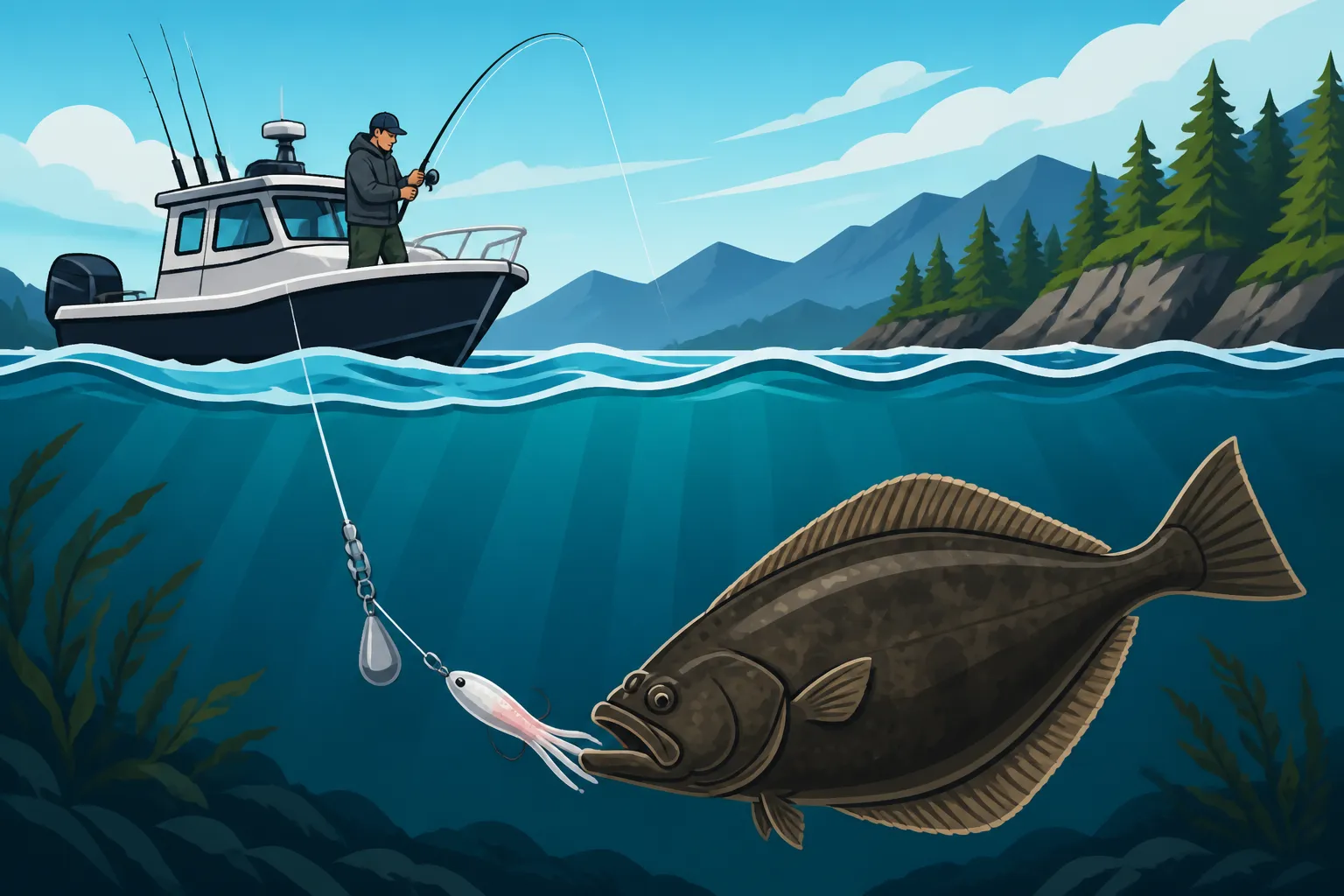
Drift fishing, as its name suggests, involves allowing your boat and bait to move naturally with the current or wind, covering a larger area and presenting your offering in a way that mimics live prey. It's less about static waiting and more about controlled movement.
Essential Gear for Drifting
When you're drift fishing for halibut, you're not just waiting for a nibble; you're often targeting powerful fish that can weigh over a hundred pounds. This means your gear needs to be robust and reliable.
- Rods and Reels: You'll need heavy-duty conventional rods, typically 6 to 7 feet in length with a fast or moderate-fast action, rated for 80-130 lb line. Paired with this should be a large, high-capacity conventional reel, like a Penn International, Shimano Tiagra, or Daiwa Saltiga, capable of holding at least 400-500 yards of braided line. A good reel will have a strong, smooth drag system that can handle sustained pressure. For those looking to stock up on reliable, heavy-duty fishing equipment, many options are available through online retailers like Amazon, offering a wide selection to compare and choose from.
- Line: Braided line is king for halibut fishing due to its low stretch, which provides incredible sensitivity for feeling bites and detecting bottom structure, even in deep water. Opt for 80-100 lb test braid. A monofilament or fluorocarbon leader of 100-200 lb test, about 6-10 feet long, is then tied to the braid to provide abrasion resistance against sharp rocks and the halibut's abrasive mouth.
- Terminal Tackle: This includes robust swivels, heavy-duty snaps, and large circle hooks. Circle hooks are preferred for halibut as they tend to hook the fish in the corner of the mouth, reducing gut-hooking and improving the chances of a successful release if you decide to let a smaller fish go. Sizes typically range from 14/0 to 20/0, depending on your bait size.
- Weights: This is where drift fishing for halibut gets interesting. You need enough weight to get your bait down and keep it near the bottom while drifting. Pyramid or cannonball sinkers ranging from 16 ounces up to a couple of pounds are common, but for deeper drifts or stronger currents, you might need specialized halibut weights weighing 3 to 5 pounds or even more. The exact weight will depend heavily on current, depth, and drift speed. Sometimes, a "spreader bar" rig can also be effective, allowing you to present two baits at once or keep your bait off the bottom more effectively.
Selecting and Preparing Your Bait
Halibut are not picky, but they do have preferences, and presentation is everything. Fresh bait is always superior.
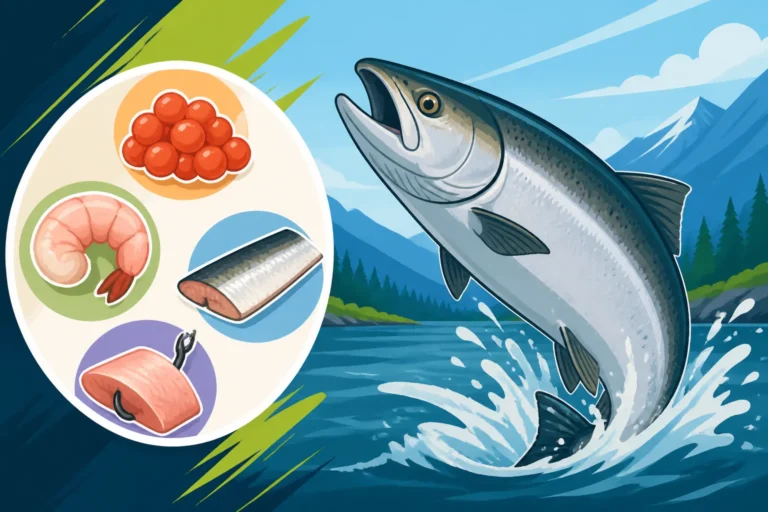
- Preferred Baits: Large, oily baits are highly effective. Whole or large chunks of salmon (especially the heads, bellies, or tails from a recent catch), herring, mackerel, cod, and octopus are all excellent choices. Many anglers swear by a fresh salmon head, as its scent trail is irresistible to cruising halibut.
- Rigging Your Bait: The key is to present your bait naturally and securely. For salmon heads or large chunks, use one or two large circle hooks threaded through the bait so the hook point is exposed. For whole herring or smaller fish, you might use a double-hook rig or thread a single large hook through the head and out the body. Ensure your bait is rigged so it doesn't spin wildly in the current, which can twist your line and make bites harder to detect. Some anglers also use bait harnesses or skirts over their bait to add visual appeal and help keep it intact. These can often be found at specialized tackle shops or purchased online from sites like Amazon.
Reading the Tides and Currents
The ocean's currents are the engine of drift fishing. Understanding and utilizing them is what separates a successful day from a frustrating one.
- Tide Tables and Current Charts: These are your best friends. Study them before you even leave the dock. You want to identify periods of moderate current. Too much current, and your weights might not hold bottom, or your bait will skip too fast. Too little current, and your drift will be slow or non-existent, making it harder to cover ground and find actively feeding fish. The optimal window often falls between slack tide and peak current.
- Planning Your Drift: Once you understand the current, you can plan your drift line. Look for areas where the current will naturally carry your bait over promising structures like rocky ledges, pinnacles, or drop-offs. Imagine where the halibut would be waiting in ambush along that drift path. This might involve starting your drift a mile or two upcurrent from your target zone, letting the boat slowly carry you over the prime habitat. Observing the direction of the current on the surface, or using your boat's GPS track, will help you adjust your strategy.
Mastering the Drift Technique
This is where skill and patience come into play.
- Deploying Your Lines: Once you've identified your starting point, gently lower your baited lines to the bottom. Don't just free-spool; control the descent to avoid tangles and ensure your bait hits the bottom correctly. As you drift, continuously monitor your line angle. You want to keep it as vertical as possible, typically at a 45-degree angle or less, to maintain contact with the bottom and detect bites.
- Maintaining Bottom Contact: This is crucial. Your weight should be periodically bumping the bottom, stirring up silt and creating a natural presentation. However, you don't want it dragging constantly, which can cause snags. It's a subtle dance: let out a little line, feel the bottom, reel in a few feet, then repeat. Your electronics (fish finder/sonar) will be invaluable here, showing you the depth and bottom contours as you move.
- Feeling the Bite: Halibut bites can range from a gentle tug to a rod-bending thud. Often, it feels like your weight has snagged on something. When you feel anything unusual, resist the urge to immediately yank the rod. Instead, keep the rod tip low, allow the fish to take the bait for a few seconds, then steadily lift the rod tip to engage the circle hook. Do not set the hook with a violent jerk, as this can pull the circle hook out of the fish's mouth. The circle hook is designed to set itself as the fish swims away.
- Controlling Your Drift Speed: Sometimes the wind and current aren't perfectly aligned, or the wind is too strong. You can use a drift sock or sea anchor deployed off the bow to slow your boat's drift. This can be a game-changer, allowing you to maintain a slower, more controlled presentation over productive areas, increasing your chances of a hook-up.
Navigating Challenges and Maximizing Success
Even with the right gear and knowledge, drift fishing presents its own set of challenges. Being prepared for them can turn a difficult day into a memorable one.
Dealing with Wind and Swell
British Columbia's coastal weather can be unpredictable. Strong winds and heavy swells are common and can make drift fishing difficult or even dangerous.
- Adjusting for Wind: Wind often pushes the boat faster than the current, making it difficult to maintain a vertical line. This is where a large drift sock or two, deployed off the bow or stern depending on the wind direction relative to the current, becomes indispensable. It acts as a parachute in the water, slowing your boat's speed and allowing the current to have more influence on your drift. You might also need to use significantly heavier weights to keep your bait down when battling wind-induced drift speed. Always prioritize safety; if conditions are too rough, it's better to stay ashore or find a more sheltered fishing spot.
- Managing Swell: Large swells can make it hard to feel subtle bites and keep your balance. If you're on a smaller boat, consider staying in more protected waters or waiting for calmer days. For larger vessels, adjust your position to run with or quarter the swells to minimize discomfort and maintain better control over your lines. Seasickness is a real concern for many; consider prevention methods if you're prone to it.
Locating Promising Drift Lines
Finding halibut is often about finding structure and bait. Your electronics are key tools in this quest.
- Using Sonar and GPS: A good fish finder (sonar) with clear bottom imaging is critical. Look for sharp drop-offs, underwater humps, rock piles, and areas where the bottom changes from soft sand to hard gravel. These are halibut magnets. Mark these spots on your GPS. As you drift, watch your sonar for signs of baitfish schools or even individual large marks near the bottom, which could be halibut.
- Mapping Your Success: When you hook a fish, mark that exact spot on your GPS immediately. If you catch multiple fish along a particular drift path, you've likely found a productive "drift line." Repeat that drift, or slightly adjust it, to cover the same productive water. Over time, you'll build up a personal chart of honey holes. Resources like Navionics or C-MAP on your chart plotter can also highlight promising bottom contours and depth changes before you even get there. For more general advice on finding fish, consider reading up on Best Fishing Rivers in British Columbia or Best Fishing Lakes in British Columbia, though the principles of finding structure apply broadly.
The Fight and Landing a Big Halibut
Hooking a halibut is one thing; landing it is another entirely. They are incredibly powerful fish that will fight hard all the way to the boat.
- The Fight: Once hooked, a halibut will often make powerful, deep runs. Keep constant pressure on the fish and let your rod and reel's drag do the work. Pump the rod up, then reel down to gain line. Be patient; these fights can last a long time, especially with larger fish in deep water. Avoid horsing the fish, as this can lead to pulled hooks or broken lines.
- Bringing it to the Boat: As the halibut nears the surface, it may make one or two more strong dives. Be ready for these "death runs." Once it's at the surface, it's crucial to be prepared. A large halibut can be extremely dangerous in the boat, capable of causing serious injury or extensive damage with its powerful tail and jaws.
- Gaffing or Harpooning: For fish you intend to keep, a sturdy gaff (for smaller fish) or a harpoon (for larger ones) is essential. Aim for the head or gill plate area for a quick and clean subdue. Once harpooned, you can attach a buoy to the harpoon line and let the fish tire itself out further away from the boat, or bring it alongside to bleed it out quickly. This humane practice improves the quality of the meat and makes handling safer.
- Ethical Handling and Release: If you catch an undersized fish or one that exceeds your daily limit, or if you simply wish to practice catch and release, do so with care. Use a de-hooker to remove the circle hook while the fish is still in the water, if possible. If you must bring it aboard for measurement, minimize its time out of the water, support its body horizontally, and release it gently, headfirst, ensuring it swims away strongly. For more details on the rules, check out BC Halibut Bag Limit Rules.
Regulations and Responsible Angling
Fishing in BC is a privilege, and with it comes the responsibility to adhere to regulations and practice conservation to ensure healthy fish stocks for future generations.
BC Halibut Regulations
British Columbia's halibut fishery is managed carefully to ensure sustainability. Regulations can change, sometimes even in-season, so always consult the most current Department of Fisheries and Oceans (DFO) Pacific Region Integrated Fisheries Management Plans (IFMPs) or Fishery Notices before each trip.
- Bag and Possession Limits: There are strict limits on the number of halibut you can catch and keep per day, and the total number you can possess. These often include specific slot limits for size, meaning you can only keep fish within a certain length range. For example, some years have allowed one halibut between a certain minimum and maximum length, or sometimes one of any size and one smaller one. These rules are in place to protect spawning stocks and ensure a healthy population. Staying informed on BC Halibut Bag Limit Rules is crucial.
- Licensing Requirements: To legally fish for halibut in BC tidal waters, you absolutely need a valid Tidal Waters Sport Fishing Licence. If you intend to retain any species of salmon, you'll also need a BC Salmon Conservation Stamp. These are mandatory, and fishing without the proper licenses can result in significant fines. Make sure you know Where and How to Buy a BC Fishing License and also check out BC Tidal Waters Salmon Conservation Stamp Cost.
- Season Dates and Closures: While halibut fishing is generally open for much of the spring and summer, there can be specific closures or quota-based closures, especially if the recreational catch limit is met early. Always consult the DFO fishery notices for the most up-to-date information on openings and closures for your specific area.
Minimizing Impact and Practicing Conservation
Responsible angling goes beyond just following the rules; it's about being a good steward of our marine environment.
- Catch and Release Best Practices: For any fish you release, particularly if it's outside the legal slot limit or you've reached your bag limit, prioritize its survival. Use circle hooks to minimize gut-hooking, which greatly improves survival rates. Keep the fish in the water as much as possible, use a de-hooker, and release it gently.
- Respecting the Environment: Always pack out what you pack in. Dispose of all trash responsibly. Avoid discarding old fishing line, as it can be a hazard to marine wildlife. Be mindful of sensitive habitats.
- Reporting Illegal Activity: If you witness any illegal fishing activity, such as exceeding bag limits or fishing in closed areas, report it to the DFO's Observe, Record, Report line. It's up to all of us to protect BC's precious fishing resources.
| Halibut Drift Fishing Gear Essential | Description | Why it's Important |
|---|---|---|
| Heavy-Duty Rod (80-130lb class) | 6-7 ft conventional rod with strong backbone. | Handles large fish and heavy weights, absorbs shock. |
| High-Capacity Conventional Reel | Large reel with smooth, powerful drag and ample line capacity (400-500 yds of braid). | Essential for fighting strong, deep-diving halibut and holding sufficient line. |
| Braided Line (80-100lb) | Low-stretch, high-strength line. | Excellent sensitivity for detecting bites and bottom contact, strong enough for big fish. |
| Heavy Mono/Fluorocarbon Leader | 100-200lb test, 6-10 ft length. | Abrasion resistance against rough bottom and fish's mouth. |
| Circle Hooks (14/0 – 20/0) | Large, heavy-gauge circle hooks. | Ensures corner-of-the-mouth hook-ups, better for fish survival on release, and safer for angler. |
| Heavy Sinkers (1-5+ lbs) | Pyramid or cannonball weights, amount varies by conditions. | Keeps bait on or near the bottom during the drift, crucial for presentation. |
| Fresh, Oily Bait | Salmon heads, bellies, herring, octopus, cod. | Strong scent trail attracts halibut from a distance. |
| Drift Sock/Sea Anchor | Parachute-like device deployed to slow boat speed. | Controls drift speed, allows for better bait presentation and bottom contact in windy conditions. |
| Harpoon or Large Gaff | Sturdy tool for subduing large halibut. | Essential for safely landing powerful fish intended for retention. |
| GPS/Chart Plotter & Sonar | Marine electronics for navigation and fish finding. | Identifies promising bottom structure, tracks drift lines, marks productive spots. |
Drift fishing for halibut in British Columbia offers an incredible experience, combining the thrill of the hunt with the peace of being out on the vast ocean. It requires patience, knowledge, and the right gear, but the rewards—a freezer full of delicious white meat and the memory of an epic battle—are well worth the effort. By understanding halibut habits, mastering your drift, and always fishing responsibly, you'll be well on your way to success on our stunning BC coast.
Disclaimer
This article is for general informational purposes only and does not constitute professional advice. Laws, prices and regulations vary by location and change over time. Consult a qualified professional for guidance on your specific situation.