How to fish a jerkbait for early spring bass
There's nothing quite as exciting, or as frustrating, as chasing bass in British Columbia during those chilly early spring days. The fish are often lethargic, the water is cold, and they're not always eager to chase a meal. If you've ever felt like you're casting into a watery void, this guide is for you, as we'll dive deep into how to effectively fish a jerkbait to coax those stubborn bass into biting when the weather is still making up its mind.
Understanding Early Spring Bass Behavior in BC
Fishing for bass in early spring means understanding that these fish are still shaking off the winter doldrums. They're not in full-blown feeding mode, nor are they aggressively defending nests yet. Their world is still a bit slow-motion, and our tactics need to reflect that.
The Impact of Cold Water on Bass Metabolism
Think of yourself trying to run a marathon on a freezing day without proper warm-up; you'd be sluggish, right? Bass are similar. In early spring, especially when water temperatures are still below 10-12°C (around 50-54°F), their metabolism is significantly slower. This means they digest food slowly, don't need to eat as often, and aren't expending a lot of energy chasing down fast-moving prey. They're conserving energy, holding tight to cover, and waiting for an easy meal to swim by. This is why a rapidly retrieved spinnerbait might get ignored, while a slowly dying baitfish imitation often gets smashed. It’s all about presenting an irresistible, low-effort target.
Often, bass will be found deeper than they would in summer, clinging to thermal breaks or any structure that offers a slight warmth advantage. They're also less likely to travel far to eat, preferring to ambush prey from a short distance. Your presentation needs to literally get in their face and stay there for a moment, almost daring them not to bite. This sluggishness is precisely what makes the unique action of a jerkbait so incredibly effective in these conditions.
Key Holding Structures for Pre-Spawn Bass
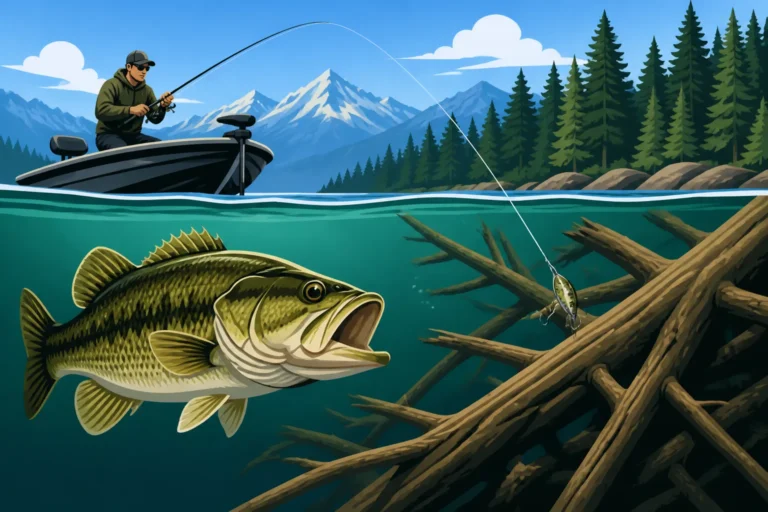
Before the spawning frenzy begins, bass in BC's lakes and rivers will congregate in specific areas, looking for food and warmth. These are their pre-spawn staging areas, and knowing where to find them is half the battle. Think about places that offer a combination of shelter, slightly warmer water, and proximity to deeper wintering grounds. Rock piles, for instance, absorb and retain heat better than mud flats, making them prime real estate. Submerged timber, old docks, and weed lines that managed to survive the winter also provide crucial cover.
Drop-offs and transition zones—where shallow water quickly gives way to deeper water—are also bass magnets. These areas allow bass to move up to feed when conditions are right and quickly retreat to deeper, more stable temperatures if a cold front rolls in. Look for points extending into the lake, channel swings in rivers, or humps that rise up from deeper water. Even a small increase in water temperature of a degree or two can make a huge difference, so focus on north-facing banks that get more sun exposure or darker bottom areas. Understanding these preferred hangouts, whether you're targeting Largemouth Bass in Okanagan Lakes or Smallmouth Bass in BC Lakes, will dramatically increase your chances.
Why Jerkbaits Shine in Early Spring
When it comes to tempting those lethargic bass, a jerkbait truly has an unfair advantage. It's designed to mimic exactly what a sluggish, cold-water bass is looking for: an easy, vulnerable meal.
Mimicking a Dying Baitfish
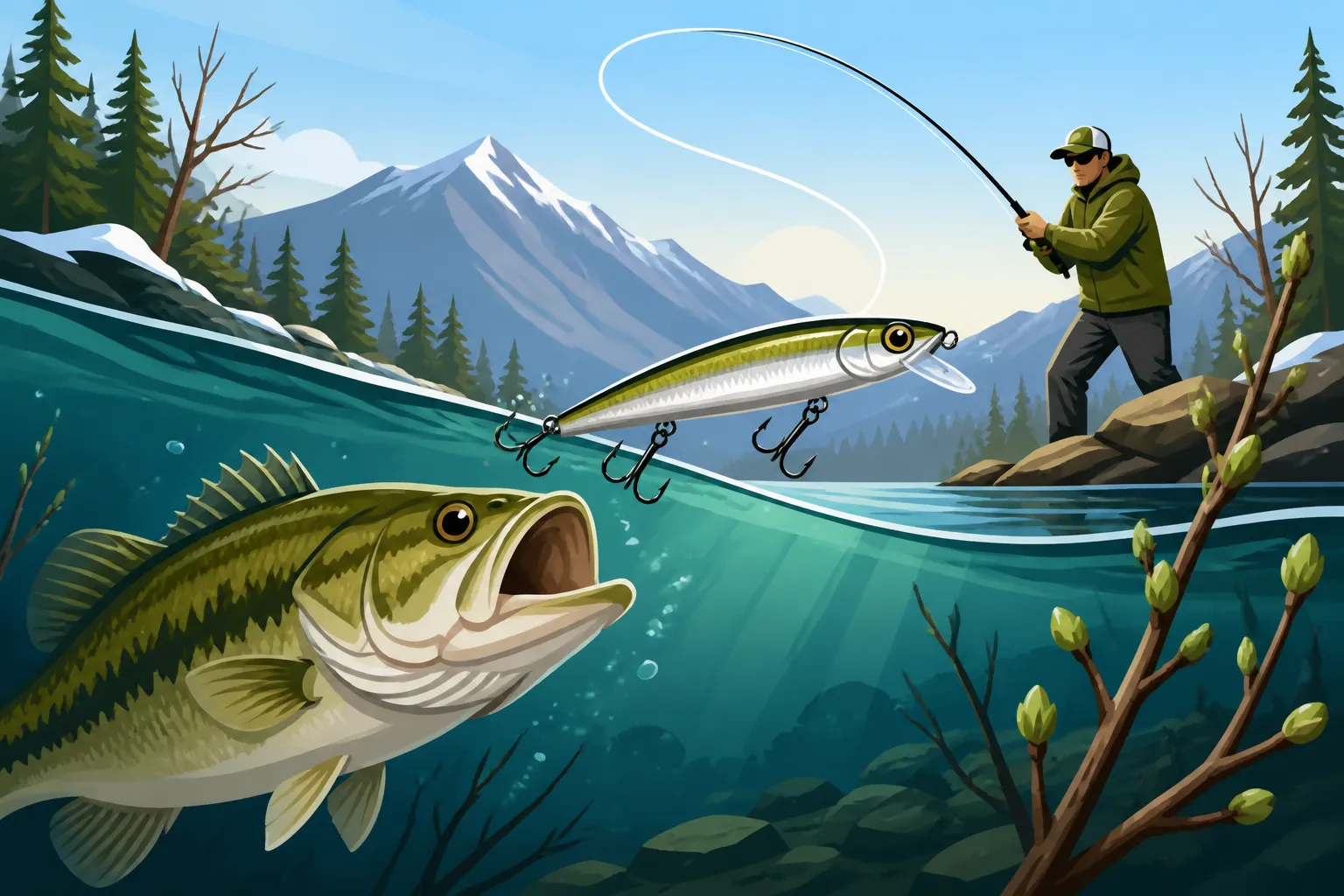
Imagine a minnow or shiner that's been stunned by the cold, swimming erratically, stopping, twitching, and then pausing. This is precisely the show a jerkbait puts on. Its slender profile and diving lip give it a darting, slashing action when you twitch your rod, making it look like a distressed baitfish struggling to swim. This erratic movement is often just enough to pique the interest of an otherwise uninterested bass.
But the real magic happens during the pause. Unlike a crankbait that constantly moves or a spinnerbait that requires continuous retrieve, a suspending jerkbait can hang motionless in the water column. For a cold-blooded bass, this prolonged "easy target" presentation is often too good to pass up. They don't have to chase it; they can simply glide over, flare their gills, and inhale it. This ability to trigger an instinctual strike, even when bass aren't actively feeding, is what sets jerkbaits apart as a premier early spring lure.
The Suspending Advantage
The term "suspending" is key here, and it's what truly elevates a jerkbait in cold water. Floating jerkbaits will rise to the surface during a pause, while sinking jerkbaits will slowly fall. Suspending jerkbaits, however, are neutrally buoyant, meaning they essentially "hang" at whatever depth they reach when you stop retrieving. This is a game-changer for early spring bass fishing.
When you work a suspending jerkbait down to the depth where bass are holding, you can stop it right in their face and leave it there for an extended period – sometimes 10, 15, or even 20 seconds. This allows a bass ample time to observe the lure, decide it's an easy meal, and commit to striking. It replicates a dying baitfish perfectly, just fluttering for a moment before hanging motionless, a prime target. This long pause, often the most crucial part of the retrieve, gives the bass the confidence and the minimal effort opportunity they need in cold water. Without this suspending ability, much of the jerkbait's cold-water effectiveness would be lost, as the lure would either float out of the strike zone or sink below it.
Choosing the Right Jerkbait for BC's Early Spring Waters
Just like any other lure, not all jerkbaits are created equal, especially when you're dealing with the specific conditions of early spring in British Columbia. Making the right choice in terms of size, profile, and color can significantly impact your success.
Size and Profile Considerations
When those water temperatures are still hovering near freezing, smaller, more subtle presentations often outperform larger, more aggressive ones. For early spring bass in BC, jerkbaits in the 3 to 5-inch range are typically your sweet spot. This size range accurately mimics many of the natural baitfish species found in BC's waters, such as shiners, minnows, and small kokanee that might be stressed by the cold. A slender, elongated profile is generally preferred over a chunkier, fatter body, as it gives a more realistic imitation of a struggling, thin baitfish.
The profile should also allow for that sharp, darting action when twitched, and then come to a complete stop without any residual wobble. Some jerkbaits have a wider, more erratic dart, while others have a tighter, more subtle wiggle. In colder water, starting with a more subtle action is often best, as it appears less threatening to a sluggish bass. You can find a wide variety of these sizes and profiles on platforms like Amazon, allowing you to stock up for different scenarios.
Color Selection for Different Water Conditions
Color choice in early spring can be surprisingly critical. While bass are often focused on profile and action, the right color can seal the deal.
- Clear Water: For the crystal-clear waters often found in many of BC's Interior lakes, natural baitfish patterns are typically best. Think silver sides with black or blue backs, pearl white, or translucent shades with a hint of green or brown. Colors like "ghost minnow," "ayu," or "shad" patterns work exceptionally well. The goal is to imitate what the bass are naturally feeding on without looking out of place. Remember, bass have excellent eyesight in clear water.
- Stained or Murky Water: If you're fishing waters with more stain, such as some river backwaters or post-runoff lake sections, you'll need colors with more contrast and flash to get noticed. Patterns with chartreuse, orange bellies, or even brighter blues and greens can be effective. Sometimes, a chrome or metallic finish can catch what little light penetrates the water, creating a flash that bass can key in on. Even in stained water, a hint of natural color in the back or along the top can still be beneficial. Don't be afraid to experiment with brighter "firetiger" or "clown" patterns if the bite is slow in darker water conditions.
Suspending vs. Floating vs. Sinking
While we've emphasized the importance of suspending jerkbaits for early spring, it's good to understand the other types briefly, though they're generally less effective in cold water.
- Suspending Jerkbaits: These are your bread and butter for early spring. They're designed to hang perfectly still at a given depth when you pause your retrieve. This neutral buoyancy is precisely what allows for those crucial long pauses in the strike zone, giving cold-water bass the time they need to commit. Most quality jerkbaits from brands like Rapala or Lucky Craft are suspending models for this reason.
- Floating Jerkbaits: These rise to the surface when paused. While they can be effective in warmer water, especially for topwater-style presentations or when fishing over shallow submerged cover, their tendency to move out of the strike zone quickly makes them less ideal for cold, sluggish bass. They might have a place in extremely shallow, sun-warmed coves in late spring, but not typically during the coldest periods.
- Sinking Jerkbaits: These lures slowly fall during a pause. They can be useful for quickly reaching deeper bass or fishing in strong currents where you need the lure to get down and stay down. However, their constant movement (even if slow) during the pause can sometimes be too much for truly lethargic fish. In some scenarios, where bass are holding on deep breaks or structure, a slow-sinking jerkbait might offer a different presentation, but typically you'll still want that prolonged, motionless hang. For the majority of early spring bass fishing in BC, focus almost exclusively on suspending models.
Mastering the Jerkbait Retrieve for Cold Water Success
Knowing what jerkbait to throw is only half the battle; knowing how to work it in cold water is where the real artistry comes in. The retrieve for early spring bass is often counter-intuitive to what you might do in warmer months.
The Jerk, Jerk, Pause Cadence
This is the quintessential jerkbait retrieve, and in early spring, the emphasis shifts heavily to the "pause." Here's how to break it down:
- Cast: Make a long, accurate cast to your target area, such as a rock pile, a point, or a section of submerged timber.
- Retrieve to Depth: Reel your line in quickly with your rod tip pointed down towards the water until the lure dives to its maximum depth or your desired depth. This usually takes just a few cranks.
- The "Jerk": With your rod tip still down (this prevents the lure from rising too quickly), make a sharp, downward twitch or "jerk" with your rod. This causes the jerkbait to dart erratically sideways. Don't move the lure with your reel handle; use your rod.
- The "Pause": Immediately after the jerk, stop your rod movement and let the line go slack (or near slack). This is where the suspending jerkbait hangs motionless. This pause is the critical element in cold water. Start with pauses of 5-7 seconds, but don't be afraid to extend them to 10-15 seconds, or even longer if the bite is tough. Seriously, count it out: one thousand one, one thousand two… it will feel like an eternity, but it often triggers the strike. Many strikes happen right at the beginning of the next twitch after a long pause, so be ready!
- Repeat: Reel up the slack from the previous jerk, then repeat the jerk, jerk, pause sequence all the way back to the boat or shore. Sometimes, a single sharp jerk is enough, followed by a long pause. Other times, a "jerk-jerk-pause" or "jerk-jerk-jerk-pause" might be more effective. The key is to experiment. The colder the water, generally the longer the pause. Think subtle twitches, not violent pulls. You're trying to make the bait look injured, not fleeing. This technique can be especially deadly when applied to areas where you might target Best Fishing Lakes in British Columbia during the early season.
Rod, Reel, and Line Setup
Your gear setup plays a crucial role in effectively working a jerkbait, especially when trying to impart subtle action and detect light bites in cold water.
- Rod: A medium-light to medium power casting or spinning rod, typically 6'6" to 7'2" in length, with a moderate or fast action, is ideal. The moderate action allows the rod to load properly on the cast and absorbs some of the shock of a sudden strike, preventing hooks from tearing out. A fast action can give you more precise control over the lure's darting motion. The key is a sensitive tip to feel those subtle cold-water takes, but enough backbone to set the hooks.
- Reel: For casting setups, a baitcasting reel with a gear ratio in the 6.1:1 to 7.1:1 range is perfect. This allows you to quickly take up slack line after a jerk, without moving the lure too much. For spinning setups, a 2500-3000 size reel is suitable. The smooth drag is vital for fighting larger bass, especially on lighter lines.
- Line: Fluorocarbon line, in the 8-12 lb test range, is highly recommended for jerkbait fishing in cold water. Fluorocarbon has several advantages: it's nearly invisible underwater, it has low stretch for better sensitivity and hook sets, and most importantly, it sinks. The sinking property of fluorocarbon helps your suspending jerkbait achieve and maintain its optimal depth, preventing it from riding up too high in the water column during those critical pauses. Braid can be used with a fluorocarbon leader, but its buoyancy can sometimes hinder the lure's suspending action. Remember, a sensitive setup helps you detect those sometimes incredibly subtle strikes that cold-water bass deliver. You can find quality rods, reels, and fluorocarbon lines from various brands on Amazon to suit your budget and preferences.
Essential Tips for Jerkbait Fishing in Early Spring BC
Beyond the mechanics of the retrieve, a few additional considerations can help you convert those tentative bites into landed fish during the challenging early spring season.
Targeting Specific Structure and Depths
Knowing where the bass are holding is paramount. In early spring, bass aren't usually roaming open water. They are typically hugging structure or points, trying to find pockets of slightly warmer water. Look for prominent features like main lake points, steep drop-offs into deeper channels, submerged humps, rock piles, or isolated stands of winter-hardy weeds. Even something like the shadow line of a dock or a section of riprap can hold fish.
When you cast, aim to get your jerkbait right up against or over these pieces of structure. Work the bait so it "bumps" or deflects off the cover. This erratic deflection can often be the trigger that sparks a strike. Pay attention to your electronics if you have them, looking for baitfish schools or individual fish arches near structure. The goal is to present your jerkbait at the depth where you expect the bass to be, whether it's 5 feet down or 15 feet down. Different jerkbait models dive to different maximum depths, so have a few options in your tackle box to cover various ranges. For those exploring Best Kayak Fishing Spots in BC, working a jerkbait along the shorelines or structure from a kayak allows for stealthy approaches to these key holding spots.
Experimentation is Key
Bass fishing, especially in early spring, is rarely a "one size fits all" endeavor. What worked yesterday might not work today, and what works on one lake might not work on another. This is where experimentation becomes your best friend. Don't be afraid to change things up. If you're not getting bites with a fast jerk-jerk-pause, try a single, subtle twitch followed by an incredibly long pause. If a natural color isn't working, switch to something brighter, especially if the clouds roll in.
Vary your retrieve speed, the number of jerks, and most importantly, the duration of your pauses. Sometimes a barely perceptible twitch on a long pause is what they want. Other times, a more aggressive set of jerks will trigger a reaction strike. Keep a mental log (or an actual fishing journal) of what worked, where it worked, and under what conditions. The more variables you test, the faster you'll dial in the pattern for that specific day and fishery. Pay attention to factors like light conditions, wind, and even Cold Front Fishing Tactics for BC Trout which can apply to bass too, as bass will respond to weather changes by becoming even more lethargic.
Patience and Persistence
Perhaps the most crucial tip for early spring jerkbait fishing in BC is patience. These fish are cold, they're slow, and they're not always eager to bite. It's not uncommon to fish for an hour or more without a single bite, only to have a flurry of activity when you finally hit on the right cadence or a subtle change in conditions. Don't get discouraged if the bites aren't coming fast and furious. Trust the process.
Keep making those casts, keep experimenting with your retrieve, and keep those pauses long. Sometimes it takes several casts to the same piece of cover to finally tempt a bass that's been watching your lure for minutes. The fish are often schooled up in early spring, so if you catch one, there are likely more nearby. Mark your spot, make similar casts, and refine your retrieve. The reward of landing a chunky pre-spawn bass from the cold waters of British Columbia makes all that patience and persistence absolutely worth it. You might even find some hidden gems around Best public boat launches on Okanagan Lake that require a bit more patient exploration.
Disclaimer
This article is for general informational purposes only and does not constitute professional advice. Laws, prices and regulations vary by location and change over time. Consult a qualified professional for guidance on your specific situation.