Fishing after a heavy rain on BC rivers
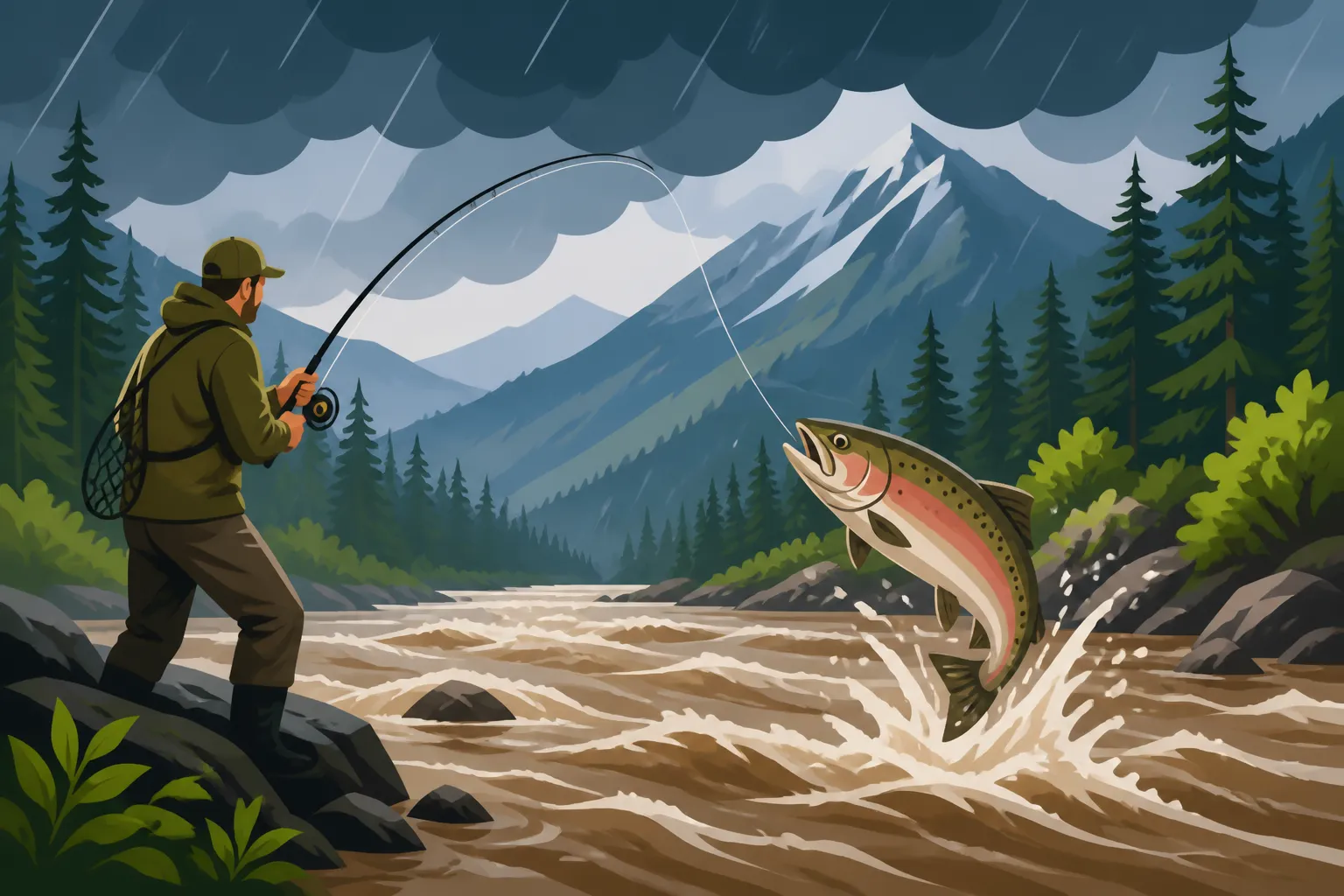
That sudden deluge can really throw a wrench into your fishing plans, can't it? One minute you're thinking about that perfect cast, the next the river's a raging torrent, brown and swollen. It's a common frustration for anglers in British Columbia, where the weather can change on a dime and heavy rains transform our pristine rivers. But don't despair! Fishing after a heavy rain on BC rivers isn't just possible; it can actually be incredibly productive if you know how to adapt. This guide will walk you through understanding how rain impacts our waterways and equip you with the strategies to find success when the weather takes a turn.
Understanding the Impact of Heavy Rain on BC Rivers
When the skies open up and deliver a substantial downpour, it kicks off a chain reaction in our river systems. It's not just about more water; it's a complete shift in the aquatic environment that affects fish behavior and your angling approach. Ignoring these changes means you'll likely be casting into unproductive water, while understanding them is the first step to turning a washout into a spectacular day on the water.
Water Levels and Flow Rates Fluctuate Dramatically
The most obvious change after a heavy rain is the dramatic increase in water levels and the acceleration of flow rates. Rivers that were once placid can become powerful, churning beasts. This surge of water often carries debris, from small twigs and leaves to entire logs, making navigation and casting more challenging. Fish, being creatures of efficiency, will naturally seek out areas where they can expend less energy to hold their position. This often means moving out of the main current and into slower, more protected lies.
Think about it from a fish's perspective: holding steady in a raging torrent is exhausting. They'll gravitate towards eddies, seams, back channels, and areas behind large obstructions like boulders or fallen trees. These spots offer a reprieve from the relentless current, allowing them to conserve energy while still being in a position to ambush food that gets washed downstream. Sometimes, they'll even move right into the flooded banks or side channels, especially if there's new access to submerged vegetation or insect life.
Turbidity and Visibility Drastically Change
Heavy rain, especially after a dry spell, washes a significant amount of sediment, dirt, and organic matter into the rivers from the surrounding banks and tributaries. This leads to increased turbidity, meaning the water becomes murky, often taking on a brown or silty appearance. The clarity you might be used to seeing in a clear mountain stream disappears, and with it, the fish's ability to see your line and lure from a distance.
While this might seem like a disadvantage, it's actually a huge opportunity. Reduced visibility often makes fish less wary. They can't scrutinize your presentation as easily, and they rely more on other senses, like their lateral line to detect vibrations, or their sense of smell. This means you can often get closer to fish without spooking them, and you can get away with using heavier leaders or more aggressive presentations than you might on a clear day. However, it also means your lure needs to be more noticeable, either through its size, vibration, or scent.
Water Temperature Can Shift
Depending on the time of year and the temperature of the rain itself, heavy downpours can also cause a noticeable shift in river water temperatures. In the summer, a cold rain can drop water temperatures, which might invigorate sluggish fish, particularly trout and salmon species that prefer cooler water. Conversely, a warm rain on an already cool autumn day might slightly raise water temperatures, again potentially stimulating fish activity.
These temperature fluctuations, even minor ones, can influence fish metabolism and feeding behavior. Fish are cold-blooded, and their activity levels are directly tied to water temperature. Understanding these subtle shifts can help you predict when fish might be more active and when they might be hunkered down. Keep an eye on local weather patterns and consider carrying a water thermometer to gauge these changes firsthand.
Strategic Approaches for Post-Rain Fishing Success
Navigating a river after a heavy rain requires a different mindset and a series of tactical adjustments. It’s about being observant, adaptable, and a little bit stubborn in a good way. The fish are still there, they’ve just moved and changed their feeding patterns, and it’s your job to figure out where and how.
Timing Your Trip for Optimal Conditions
The immediate aftermath of a torrential downpour can be chaotic and even dangerous, with debris-filled, raging currents. Often, the best fishing doesn't happen during the peak of the rain, but shortly after, or even a day or two later. The sweet spot usually occurs as the river begins to drop and clear slightly, often referred to as the "fall" or "drop-off."
- During the storm: It's usually not ideal. Water is rising fast, bringing too much debris, and can be unsafe. Fish are often hunkered down, focused on holding their position, not feeding.
- Immediately after the rain stops (rising or peak water): This can be hit or miss. If the water is still rising rapidly, it can be too challenging. However, sometimes at the peak of a rise, the first wave of food gets washed down, triggering a short feeding window.
- As the water begins to drop and clear (the "fall"): This is often the prime time. As the river recedes from its peak, the current stabilizes, and clarity slowly improves. Fish become more active as they feel safer and actively look for food that's been dislodged. It might take hours or even a full day for some rivers to start dropping significantly, so keep an eye on river gauges. Websites offering "BC Fishery Notices and In-Season Closures, Explained" often have links to real-time river data that can be incredibly useful.
- A day or two later: If the rain was truly massive, it might take a couple of days for the river to settle into a fishable state. Patience is key here. Check the forecast; if more rain is coming, the cycle might repeat.
Finding Fish in High, Murky Water
The key to success after heavy rain is understanding where fish will relocate. They're looking for refuge from strong currents and areas where food is concentrated. These spots are often different from where you'd find them during normal conditions.
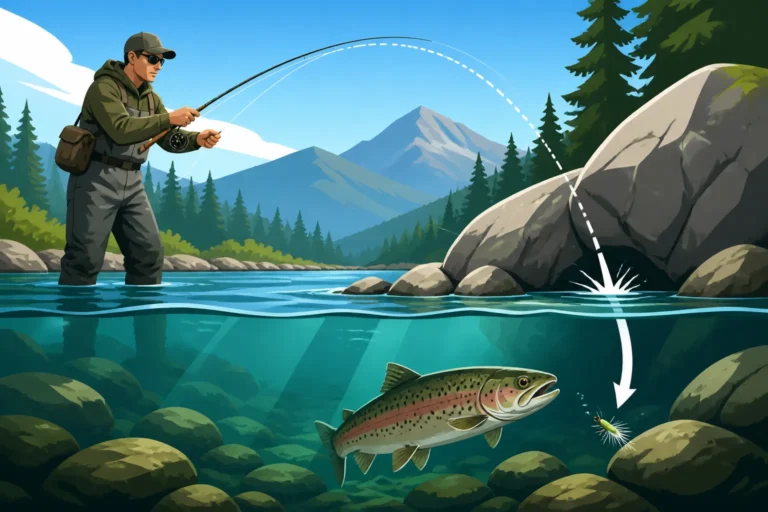
- Current Seams and Eddies: These are gold mines. Look for the transition lines where fast water meets slow water. Fish will hold in the slower water, waiting for food to drift by in the faster current. Eddies, where the water swirls back upstream, are also prime holding spots. Cast into the faster water upstream of the seam and let your offering drift naturally into the holding zone.
- Behind Obstructions: Large boulders, fallen trees, log jams, and even bridge pilings create natural breaks in the current. Fish will tuck in behind these structures, out of the main flow. Just be mindful of snagging your gear in the debris.
- Inside Bends and Back Channels: The inside bend of a river turn often has slower current. Similarly, smaller back channels or side sloughs that become accessible with higher water can be incredible holding areas, especially for species like salmon or steelhead looking for a place to rest during their migration.
- Flooded Banks and Overhanging Vegetation: When the river expands, it floods areas that are normally dry land, dislodging insects, worms, and other terrestrial food sources. Fish will move into these newly flooded areas, often right up against the bank, to gorge on this buffet. Casting close to the bank or targeting overhanging bushes can be very effective.
Consider areas like the lower reaches of the Fraser River where its sheer volume handles rain differently than smaller, steeper tributaries. Knowing the specific characteristics of the river you're fishing, like those found in a detailed Fraser River Fishing Guide, can give you a major advantage.
Selecting the Right Baits and Lures
With reduced visibility, your presentation needs to work harder to get noticed. Fish can't rely on sight as much, so vibration, scent, and a larger profile become crucial.
- Natural Baits: Worms, roe, and roe bags are incredibly effective after a rain. The rain washes terrestrial worms into the river, making them a natural food source, and the strong scent of roe is irresistible in murky water. Present these on a bottom-bouncing rig or under a float in slower water.
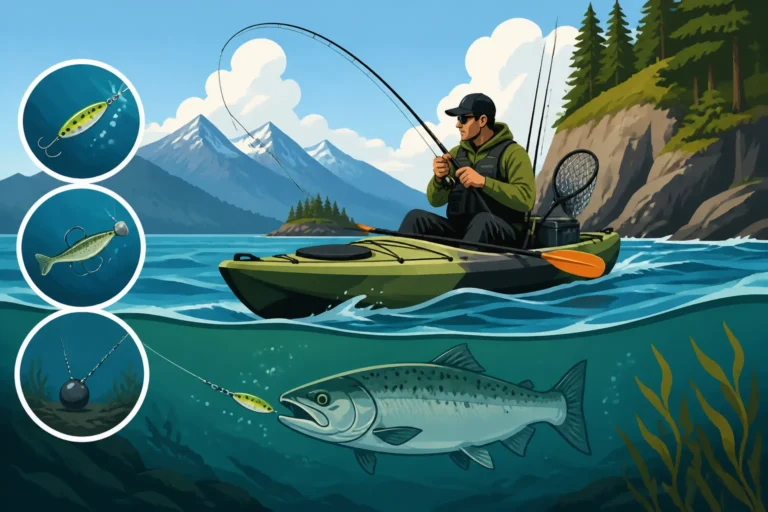
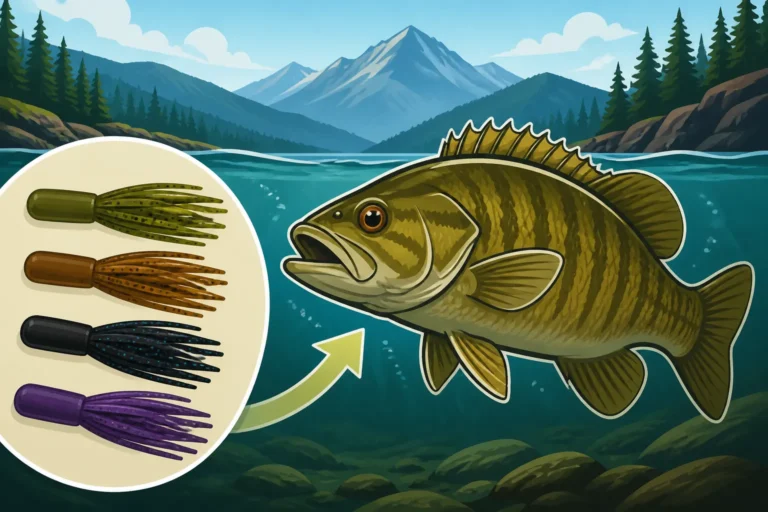
- Scented Soft Plastics: Brands like Berkley PowerBait or Gulp! often incorporate strong scents that can draw fish in from a distance. Larger profiles in bright colors can be very effective. You can find a wide variety of these on Amazon, perfect for experimenting with different sizes and scents.
- Vibrating Lures: Spinners, spoons, and diving crankbaits that produce a lot of vibration are excellent choices. The vibrations travel through the water and are picked up by the fish's lateral line, even if they can't see the lure.
- Spinners: Opt for larger blades (e.g., #4 or #5 Colorado blades) that create more flash and thump. Bright colors like chartreuse, orange, or hot pink can stand out in dirty water.
- Spoons: Wider, wobbling spoons in reflective finishes or bright, contrasting colors work well. The erratic action and flash are highly visible.
- Crankbaits: Deep-diving crankbaits that "walk" through the water creating a disturbance can be very effective, especially for bass or aggressive trout if the water isn't too fast.
- Bright Colors: Forget subtle, natural hues. In murky water, fluorescent colors like chartreuse, orange, pink, or even a stark white are often the most productive. These colors contrast sharply with the dark water and are easier for fish to pick up. Don't be afraid to go bold!
- Larger Profiles: A bigger bait means a bigger profile, making it easier for fish to detect in low visibility. If you'd normally throw a 1/4 oz jig, consider bumping it up to 1/2 oz or more.
A good principle is: the dirtier the water, the brighter and bulkier your presentation should be. For steelhead specifically, understanding Best Lure Color for Murky Water Steelhead Fishing is critical, as they often respond very well to vibrant colors and scent.
Adjusting Your Gear and Presentation
Beyond lure selection, you'll need to make some practical adjustments to your tackle and how you present your bait.
- Heavier Line and Leaders: With reduced visibility, fish are less likely to be line-shy. This is a great opportunity to bump up your mainline and leader strength. Heavier line is also more resistant to abrasion from debris in the water and gives you more leverage when fighting fish in strong currents.
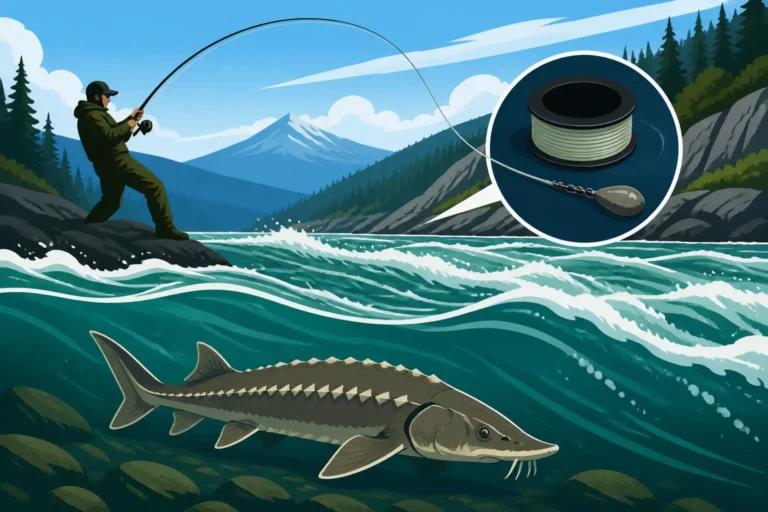
- More Weight: To get your lure or bait down to where the fish are holding in stronger currents, you'll likely need more weight than usual. This could mean heavier jig heads, larger split shots, or heavier bottom-bouncing weights. The goal is to get your offering to the fish, not have it swept away by the current.
- Slower Retrieve/Drift: Even if the surface current is fast, fish are holding in slower pockets. A slower, more controlled retrieve or a natural drift with just enough weight to tick bottom is often more effective. Fish aren't going to chase a fast-moving bait in a raging current; they want something that appears easy to catch.
- Casting Accuracy: With fish pushed closer to the banks or into tight eddies, accurate casting becomes paramount. You need to hit those small pockets of slower water or place your bait right along the seam. Practice your roll casts or short, accurate pitches.
- Longer Rods for Control: A longer rod (9-11 feet) can provide better line control, especially when float fishing or drift fishing in turbulent water. It allows you to mend your line more effectively, keeping your bait in the strike zone longer. When considering specific gear, checking what’s available on Amazon can give you a good idea of options for longer rods and heavier tackle.
Remember that Wading Techniques for BC Steelhead Rivers emphasizes caution in swift currents. Your gear choices, especially your wading boots and a wading staff, are part of this adjustment process.
Species-Specific Considerations After Heavy Rain
Different fish species react to heavy rain and the subsequent river changes in slightly different ways. While the general principles of seeking slower water and using noticeable presentations hold true, understanding the nuances for your target species can significantly boost your success.
Salmon: Adapting to Migration in High Water
For migrating salmon – Chinook, Coho, Sockeye, and Chum – heavy rains are often a blessing in disguise. Increased water levels can actually make their journey upstream easier by providing more flow, covering shallow obstacles, and sometimes masking their presence from predators. However, they still seek comfort.
- Chinook (King) Salmon: These powerful fish will often push hard upstream during a rain event. Look for them in deeper pools and runs, especially those with some current break. They might hold at the head of a pool or behind large rocks, taking a breather before continuing their journey. They’re aggressive, and larger, vibrating lures or heavily scented roe can entice them. For specific approaches, "Salmon Fishing Techniques for BC Rivers" offers great insights.
- Coho (Silver) Salmon: Coho are incredibly responsive to fresh water. A good rain often brings in fresh waves of these acrobatic fish. They tend to stick to the edges, side channels, and shallower, slower water, especially when the main river is raging. Spinners, small spoons, or heavily weighted flies in chartreuse, pink, or blue are excellent choices. They are often less leader-shy in murky conditions.
- Sockeye Salmon: Sockeye, famously picky, are generally harder to target effectively during heavy rain. They tend to hold tight in schools, often in deeper, slower pools or large eddies. Flossing with a small, unbaited hook can sometimes work if they are holding in dense schools, but they are primarily migration-focused and less prone to actively feeding after a rain.
- Chum Salmon: Known for their aggressive nature, Chum will move into estuaries and lower river sections quickly after a rain. They'll readily strike large, brightly colored flies or jigs, particularly in pink, purple, or chartreuse. They don't typically feed much in freshwater, but they will "strike" out of aggression or territoriality, especially in low visibility.
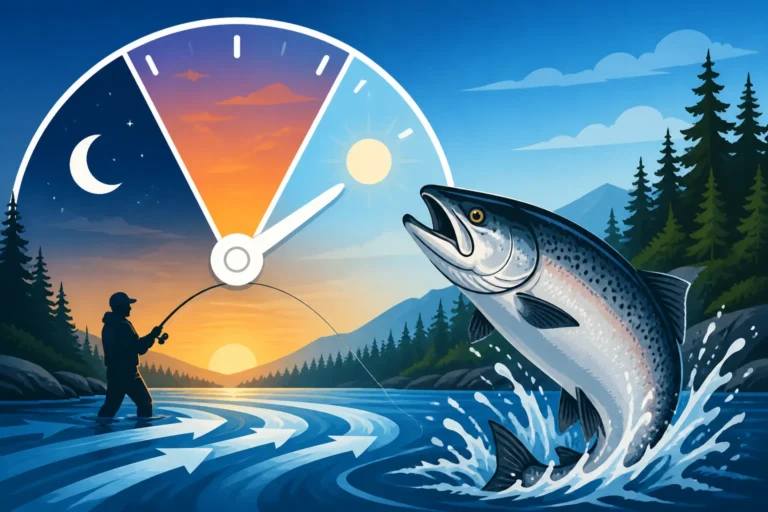
Regardless of the species, remember that Best Time of Day to Catch Salmon can still play a role, even in post-rain conditions, with dawn and dusk often providing enhanced activity.
Steelhead: The Rain-Fueled Chargers
Steelhead anglers often celebrate a good rain. These migratory rainbow trout are notoriously triggered by fresh water, which encourages them to enter rivers from the ocean and push upstream.
- Fresh Run Fish: Heavy rain often brings in new waves of chrome-bright steelhead. These fish are usually aggressive and willing to strike. Focus on the lower to middle sections of rivers first, then gradually move upstream as the run progresses.
- Holding Water: Like salmon, steelhead will seek out softer water. Look for them in current seams, behind boulders, in the tail-outs of larger pools, and in slower riffles. They’ll also hold close to bankside cover or submerged structure that offers a break from the main current.
- Presentation: Float fishing with jigs, pink worms, or roe bags is a highly effective method. The weight of the float and leader helps get your offering down, and the bright colors of a jig or the scent of roe are irresistible in murky water. Drift fishing with heavily weighted presentations (like a slinky weight with a yarn fly or roe bag) is another excellent choice, allowing your bait to bounce along the bottom. For a comprehensive guide, check out How to Catch Steelhead in BC.
- Fly Fishing: While challenging in high, dirty water, fly anglers can still succeed. Use heavier sink tips (T-14 or T-17), larger, brighter flies (intruder patterns in chartreuse, orange, or black/blue), and focus on swinging through slower, deeper pockets.
Trout: Capitalizing on Dislodged Food
Resident trout, including Rainbow Trout, Bull Trout, and Cutthroat Trout, also react strongly to heavy rains, often becoming more active due to the influx of food.
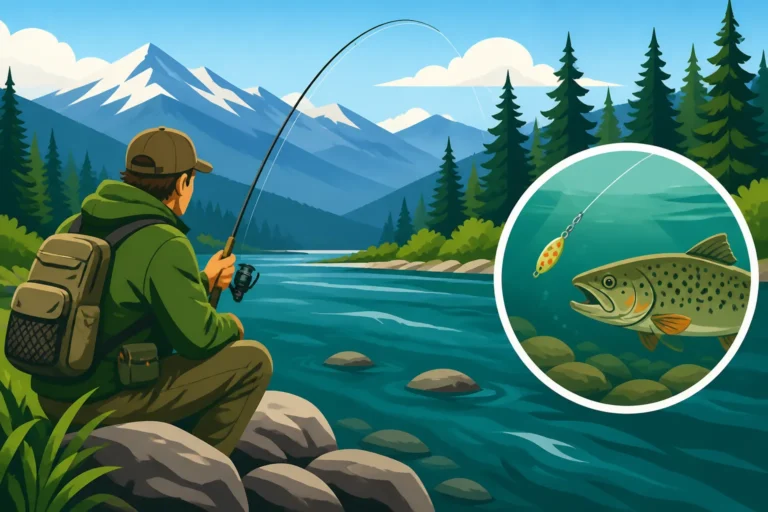
- Rainbow Trout: In streams and rivers, rainbows will move to the edges to feed on dislodged worms, insects, and other creatures. Fishing with natural baits like worms, or scented soft plastics, can be very effective. Spinners and spoons also work well, especially in brighter colors. When water levels begin to drop and clear slightly, nymphing can be productive, targeting stoneflies or caddis larvae that have been swept downstream. For lake fishing, learn How to Catch Rainbow Trout in BC Lakes, as rain can affect feeder streams and lake margins.
- Bull Trout: These predatory fish will capitalize on the disoriented baitfish and smaller trout that might be swept into the main current or pushed into vulnerable positions. Larger streamers, spoons, or jigs that imitate baitfish are excellent choices. Target ambush points: current seams, eddies, and the deeper sections of pools. They often feed aggressively in lower visibility conditions.
- Cutthroat Trout: Especially sea-run cutthroat in coastal streams, these fish will often move into estuaries and lower river sections after a rain to feed on dislodged organisms and small baitfish. Small spinners, spoons, or flashy streamers are very effective. Focus on pockets of slower water along the banks and around creek mouths.
Prioritizing Safety in Challenging Conditions
Fishing after heavy rain carries inherent risks that you absolutely cannot ignore. The thrill of potentially catching a trophy fish is never worth compromising your safety or the safety of others.
Assessing River Conditions Before and During Your Trip
Before you even leave the house, and continuously while you're on the water, you need to be a diligent observer of river conditions.
- Check River Levels and Flows: Use online resources like Water Survey of Canada or local angling forums. Many BC rivers have real-time stream gauges. Understand what "high water" means for your specific river. A river that's perfectly safe at 30 cubic meters per second might be a death trap at 100 cubic meters per second. Pay attention to the trend: is the water rising, peaking, or falling? The falling stage is generally safest.
- Observe Water Clarity and Debris: From a safe vantage point, look at the water. How murky is it? Is there a lot of debris (logs, branches, etc.) floating down? Heavy debris not only poses a physical hazard to you and your gear but can also signal extremely dangerous currents beneath the surface.
- Weather Forecast: Always check the forecast. Is more heavy rain expected? This could quickly turn a manageable situation into a dangerous one. Strong winds can also make conditions much more difficult and potentially unsafe, especially for boaters.
- Local Advisories: Always check BC Fishery Notices and In-Season Closures, Explained or local government advisories. Sometimes, rivers might be closed entirely due to extreme high water or safety concerns, or specific regulations might be in effect.
Wading and Boating Safely
High, swift water drastically increases the risk of accidents, whether you're wading or in a boat.
- Wading Safety:
- Wading Staff: This is non-negotiable in high water. A sturdy wading staff provides a crucial third point of contact and helps you feel the bottom for sudden drops or unstable footing. You can find excellent options for wading staffs on Amazon.
- Know Your Limits: Never wade into water that's faster than a brisk walk or deeper than your knees, especially if the bottom is uneven or unknown. The power of moving water is deceptive.
- Buddy System: Always fish with a buddy, especially in challenging conditions. They can help if you fall or get into trouble.
- Proper Footwear: Studded wading boots provide the best grip on slippery riverbeds.
- Life Jacket/PFD: For any deep or swift water wading, a personal flotation device (PFD) is a wise choice. It might feel overkill, but it could save your life if you take an unexpected tumble. Remember, Life Jacket Requirements for BC Boaters apply to many situations, and it's always better to be safe than sorry.
- Boating Safety:
- Expertise Required: Operating a boat in high, swift, debris-laden water requires significant experience and skill. If you're not an experienced boater in these conditions, it's best to stay off the water or hire a professional guide.
- Check for Hazards: Be extra vigilant for submerged logs, sweepers (fallen trees anchored to the bank), and strong eddies that can pull a boat sideways.
- Wear Your PFD: Everyone on board should be wearing a PFD at all times.
- Appropriate Vessel: Ensure your boat is rated for the conditions and equipped with all necessary safety gear. Check the BC Boating Laws for Anglers to ensure full compliance.
- Anchor Safely: If anchoring, use a strong anchor suitable for high currents and ensure you have a quick-release system.
Always Have a Plan B
Sometimes, despite your best intentions and preparation, the river simply isn't fishable or safe after a heavy rain. Be prepared to change your plans.
- Consider a Different River: If your primary river is blown out, a smaller, quicker-to-clear tributary or even a lake might be a better option. Lakes are generally less affected by heavy rain, though feeder streams can muddy up inlets.
- Wait it Out: Sometimes the best strategy is simply to wait a day or two for conditions to improve. This might mean rescheduling your trip, but it's a small price to pay for safety and potentially better fishing.
- Scout from Shore: Even if you can't fish, a post-rain trip to the river can be a great scouting opportunity. You can identify new holding water, observe fish movement, and learn more about the river's dynamics for future trips. Always adhere to BC Fishing Regulations Explained even when just observing.
Stay safe out there, my friends. No fish is worth risking your life over.
Disclaimer
Please remember that fishing regulations, conditions, and safety guidelines can change rapidly. Always consult the official British Columbia Freshwater Fishing Synopsis or the Fisheries and Oceans Canada (DFO) website for the most current regulations, closures, and advisories before heading out on any fishing trip. Conditions can vary widely by specific river and time of year. Stay informed and prioritize your safety above all else.