Best flies for winter steelhead on the Bulkley
Ah, the Bulkley River in winter. Just hearing those words conjures up images of frosty breath, icy rod guides, and the absolute thrill of connecting with a chromed-up steelhead in the raw beauty of a British Columbia winter. It’s a pursuit that tests your mettle, your patience, and most importantly, your fly box. Many anglers get frustrated because what works in the boisterous flows of autumn simply doesn't cut it when the mercury drops and the water turns to liquid glass. This guide is all about helping you conquer those cold-weather challenges by diving deep into the best fly patterns for winter steelhead on the Bulkley River.
Understanding Winter Steelhead Behavior on the Bulkley
Fishing for winter steelhead on the Bulkley isn't just about showing up with a rod and reel; it's a deep dive into understanding how these incredible fish adapt to the harsh realities of winter. When the air bites and the river's metabolism slows, so too does the steelhead's.
The Bulkley's Unique Winter Conditions
Winter on the Bulkley brings a distinct set of conditions that radically change the fishing landscape. Typically, you'll encounter much colder water temperatures, often hovering just above freezing. This isn't the raging, turbid river of fall. Instead, the Bulkley often becomes lower, clearer, and more stable in its flows during the winter months, especially after a prolonged cold snap. This clarity can be a double-edged sword: it allows you to spot fish sometimes, but it also means the fish can spot you and your offerings more easily.
The colder water makes steelhead far more lethargic than their fall counterparts. They're not chasing aggressively or moving around as much. They conserve energy, often holding in deeper, slower pools, behind large boulders, or along softer seams where they don't have to fight the current constantly. The challenge, and often the frustration, comes from knowing they're there but getting them to react. It's not about triggering an active feeding response, but rather provoking an aggressive "eat" or a purely instinctual "strike" out of annoyance or territoriality.
Why Fly Selection Matters So Much in Winter
Because of these altered conditions and the steelhead's reduced metabolism, your fly selection moves from being important to absolutely critical. A fly that might have been irresistible in warmer, faster water can be completely ignored in the cold, clear flows of winter. You need flies that do a few key things:
- Get Down: In cold water, steelhead are hugging the bottom. Your fly needs to reach them quickly and efficiently.
- Be Seen: Even in clear water, a subtle fly can be overlooked. You need enough profile or contrast to grab their attention without being overly gaudy.
- Move Naturally: A fly that twitches and breathes with minimal current can entice a fish that's otherwise unwilling to move much.
- Provoke a Reaction: Sometimes, it’s not about matching the hatch (there often isn't one in winter), but about presenting something so alluring or irritating that the steelhead can't help but snap at it.
This shift means you can't just rely on your standard fall patterns. You need to think about flies specifically designed for these winter scenarios – flies that present a different profile, offer more movement, or possess that extra bit of weight to get into the zone.
Essential Fly Categories for Winter Steelhead on the Bulkley
When you're facing down a frosty morning on the Bulkley, staring at a deep, slow pool, your fly selection becomes your most potent weapon. There are a few core categories of flies that consistently produce results for winter steelhead, each designed to address specific conditions and provoke different reactions from these elusive fish.
Intruders and Large Profile Flies
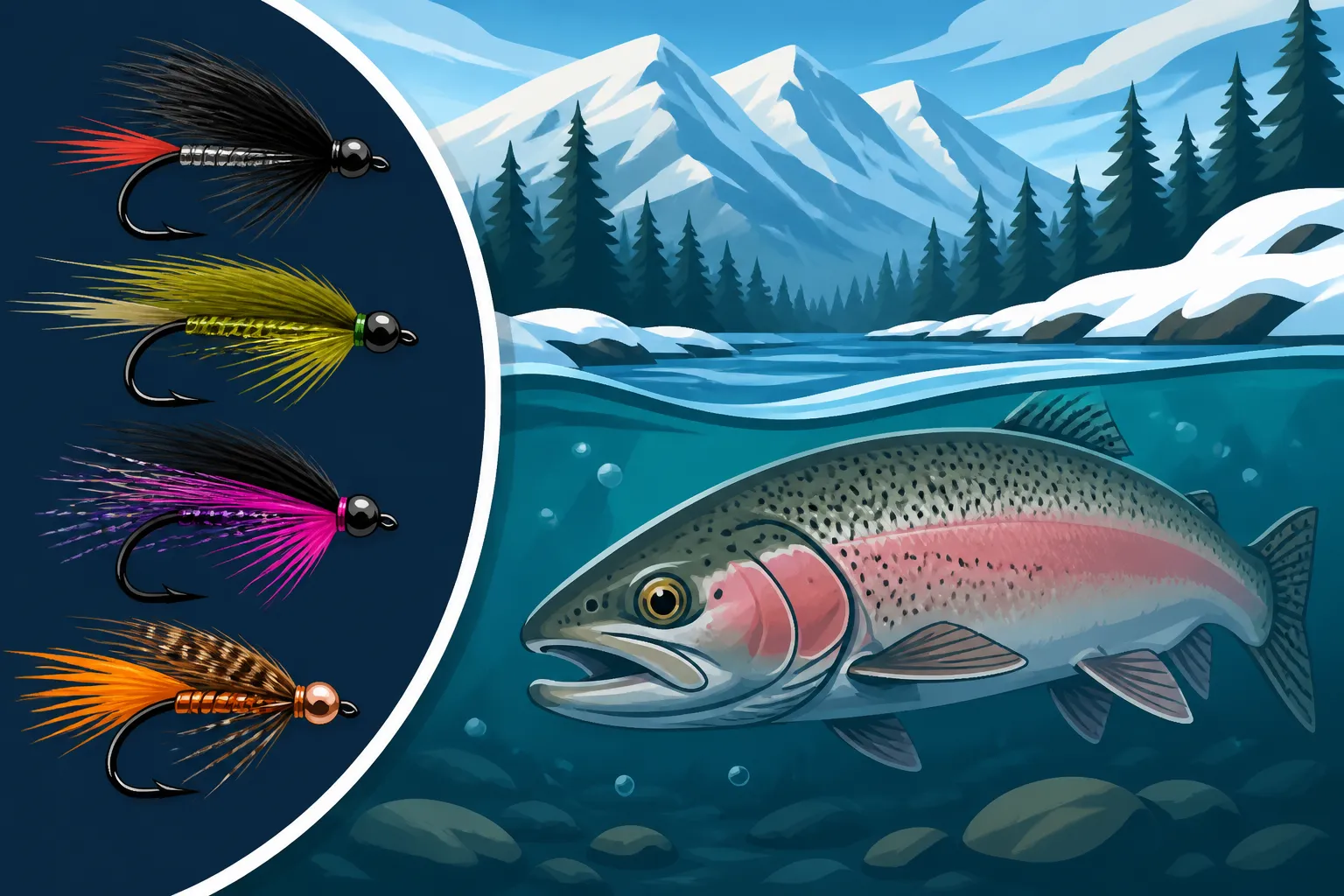
Intruders are the reigning champions of modern winter steelhead fly fishing, and for good reason. These flies are specifically designed to have a large profile in the water while remaining relatively sparse, allowing them to sink effectively. Their construction, often featuring composite loops of materials like marabou, Ostrich herl, and flash, creates a living, breathing movement that is incredibly enticing to steelhead, even when they're lethargic.
When the Bulkley is carrying a bit more color or when the fish are holding in deeper, faster runs, the larger silhouette of an intruder is paramount. Patterns like the Skagit Minnow, Trailer Trash, and various general Intruder patterns in black/blue, purple, or even vibrant chartreuse and pink, are absolute must-haves. The weight distribution in these flies, often with lead eyes or tungsten beads, helps them get down to the fish quickly. Many anglers tie them on shank hooks with a trailing stinger hook, which helps improve hook-ups on fish that might just be nipping at the tail. You can find a fantastic selection of tying materials for these, from hooks to marabou plumes, available on Amazon.
Sculpins and Baitfish Imitations
While steelhead aren't typically "feeding" in the traditional sense during winter, they are opportunistic predators, and imitating a vulnerable sculpin or small baitfish can be incredibly effective. These flies offer a realistic profile of a food source that is naturally present in the river, even in winter.
The key with sculpin patterns is to make them look like easy prey. Flies like the Dali Llama (often tied with rabbit strip for maximum movement), the Sculpzilla, or various other weighted sculpin patterns in natural tones like olive, black, or brown, are excellent choices. These flies should generally be fished slower, often with a dead-drift presentation or a very slow swing, mimicking a sculpin struggling in the current. The heavy heads on many sculpin patterns help them dive quickly and hug the bottom, exactly where those winter steelhead are often lurking. This can be particularly effective in those slower, deeper slots and riffle tails.
Classic Spey Flies and Traditional Patterns
Sometimes, the old ways are still the best ways. Classic Spey flies, with their elegant lines and subtle movement, have a time-honored place in the winter steelhead angler's box. These aren't about brute force or aggressive profiles; they're about finesse and natural allure.
Patterns like the Green Butt Skunk, Black Spey, or various Polar Bear patterns in sizes ranging from 2 to 4, are incredibly effective in clearer, lower water conditions that are often prevalent on the Bulkley in winter. Their long, flowing hackles and sparse dressings create a mesmerizing pulsation in the current that can trigger a strike from even the most reluctant fish. They don't have the inherent weight of intruders, so you'll rely more on your sink tip to get them to depth. The beauty of these flies lies in their ability to present a natural, non-threatening profile that can often fool wary fish that have seen everything else. For those looking to learn more about this classic approach, check out our guide on Fly Patterns for BC Steelhead Rivers.
Eggs and Glo Bugs (Controversial but Effective)
Let's be honest, egg patterns are often a topic of hot debate in the steelhead community. However, there's no denying their effectiveness, especially in specific situations. While wild steelhead don't necessarily "feed" on eggs throughout the winter, if there are earlier spawning fish (like fall Chinook or even some early winter steelhead) in the system, or if you're fishing near known spawning grounds, eggs can be an irresistible, instinctual trigger.
Glo Bugs or other synthetic egg patterns in vibrant colors like orange, pink, or chartreuse are highly visible and can often elicit a reaction strike when other patterns fail. They are typically fished dead-drift under an indicator or with a very subtle swing, mimicking a loose egg tumbling in the current. While not always the most "sporting" method in some anglers' eyes, having a few in your box for a tough day, particularly when fish are stacked in holding water or you suspect they might be keying in on available protein, can make all the difference. Just be mindful of local regulations and ethical considerations when choosing to fish these patterns.
Key Characteristics of Effective Winter Steelhead Flies
Beyond just the categories, certain attributes make a fly particularly deadly for winter steelhead on the Bulkley. Understanding these characteristics will help you not only choose the right fly but also tie your own or customize existing patterns.
Weight and Sink Rate
This is arguably the most crucial factor for winter steelhead. As mentioned, fish are typically hugging the bottom in colder water. If your fly isn't getting down to their depth, you're simply not fishing effectively.
- Weighted Flies: Look for flies tied with lead or tungsten eyes, lead wire wrapped bodies, or heavy beads. These add crucial mass. Intruders often incorporate weighted shanks or lead wire under the body.
- Sink Tips: Even with weighted flies, a good sink tip is essential. The right combination of fly weight and sink tip mass will dictate how quickly and efficiently your fly gets into the strike zone. You might need heavier sink tips (T-14 or T-17) for deeper, faster runs, or lighter ones (T-11 or T-8) for shallower, slower pools. This dance between fly weight and line weight is something you really get a feel for after a few trips. Our guide on Drift Fishing for Steelhead in BC Rivers can give you more insights into how weight affects your presentation.
Color and Contrast
The choice of color isn't just about personal preference in winter; it's about visibility and provoking a response in varied light and water conditions.
- Murky Water: If the Bulkley has any stain or off-color from recent rain or snowmelt, bright, contrasting colors become important. Chartreuse, hot pink, orange, or even white can stand out. Black is also excellent for contrast against a bright sky, creating a strong silhouette.
- Clear Water: In very clear, low water, sometimes more subdued, natural colors like olive, brown, or black can be effective, mimicking natural forage without alarming the fish. However, even in clear water, a subtle flash of blue or purple can sometimes be the trigger.
- Contrast within the Fly: Often, it's not just one color but the contrast between colors that makes a fly pop. A black body with a hot pink tag, or a purple intruder with a blue flash, can create an irresistible visual trigger.
Movement and Profile
A still, lifeless fly is unlikely to entice a sluggish winter steelhead. The best flies breathe and pulse even in slow current, mimicking a living organism.
- Materials that Move: Marabou, rabbit strip, Ostrich herl, and even synthetic materials like Flashabou and Krystal Flash, are chosen for their ability to undulate and create a lifelike profile with minimal effort from the angler or current. These materials make the fly appear larger and more alive than it actually is.
- Profile: A larger, more appealing profile can attract attention from a distance, especially important when fish aren't moving much. This is where intruders really shine, presenting a substantial meal-like silhouette without being overly bulky and difficult to cast or sink. The way the materials interact with the water creates a perceived size and movement that can trigger a strike.
Rigging and Presentation Strategies for the Bulkley
Having the right flies is only half the battle; knowing how to rig them and present them effectively is where true winter steelhead mastery comes into play. The subtle nuances of your cast, swing, and drift can make all the difference on a frigid day on the Bulkley.
Sink Tips and Leader Setups
Getting your fly into the "zone" – that precious few feet where a steelhead is holding – requires precision in your rigging.
- Sink Tip Selection: The Bulkley's varying depths and current speeds demand a versatile array of sink tips. For deeper, faster pools, you might reach for a T-14 (14 grains per foot) or even T-17 tip, typically 10 to 15 feet long. For shallower or slower runs, a T-8 or T-11 might be more appropriate. The key is to select a tip that gets your fly to depth without snagging the bottom too often. Matching the sink tip to the water you're fishing is crucial; too light, and you're over the fish; too heavy, and you're constantly snagging. Our article on Float Fishing the Bulkley River also touches upon line systems, which are foundational here.
- Leader Length and Material: After your sink tip, your leader should be relatively short – typically 3 to 6 feet of strong fluorocarbon. Fluorocarbon is less visible in clear water and much more abrasion-resistant, a real benefit when fishing around rocky bottom structure where steelhead often hold. Use a breaking strength appropriate for the size of fish you expect and the potential for snags; 12 to 15 lb test is common for winter steelhead. Too long of a leader can cause your fly to ride higher in the water column, defeating the purpose of your sink tip.
Swinging, Stripping, and Dead Drifting
Your presentation method is dictated by the water, the fly, and the mood of the fish.
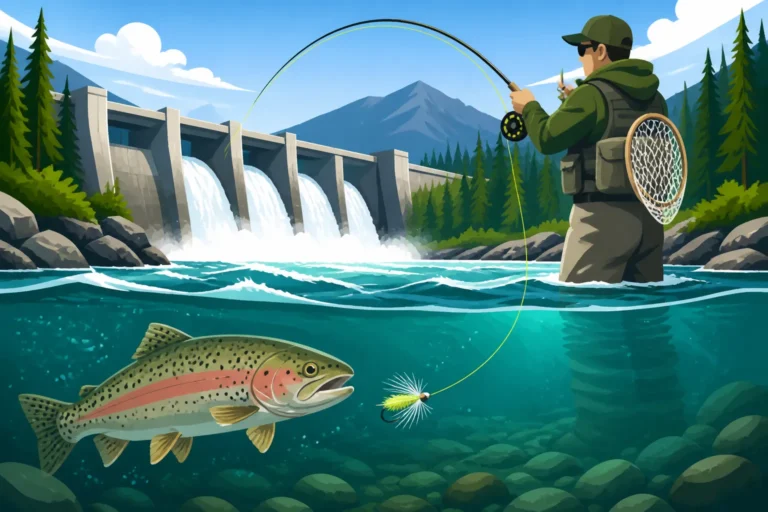
- The Swing: This is the bread and butter of steelhead fly fishing. Cast your fly across and slightly downstream, allowing it to swing through the run. The goal is to control the speed of the swing so that the fly presents broadside to the fish. In winter, this usually means a slower swing. Mend your line upstream to slow the fly down and allow it to sink deeper. Maintain a slight tension on the line so you can feel the subtle "grab" of a steelhead. It's often that hesitation at the end of the swing, when the fly is directly downstream, that gets the strike.
- Stripping: While less common for typical winter steelhead on the Bulkley, some larger, flashier baitfish or intruder patterns can be effective with a slow, short strip-and-pause retrieve. This technique can imitate an injured baitfish or a fleeing sculpin, sometimes triggering a chase response from an otherwise indifferent steelhead. Experiment with this in slower, wider pools where fish might have more room to move.
- Dead Drifting: For egg patterns or when fishing to particularly lethargic fish in very clear, slow pools, a dead drift can be deadly. This means casting upstream and allowing the fly to drift naturally with the current, as if it were unattached. Use an indicator if needed, but the goal is to present the fly as naturally as possible, without any drag. This technique often requires more precise casting and line management but can be incredibly effective when fish are unwilling to chase. You might find our piece on Wading Techniques for BC Steelhead Rivers helpful for getting into prime positions for these precise drifts.
Must-Have Flies for Your Bulkley Winter Steelhead Box
To make your life easier when packing for those chilly Bulkley mornings, here's a quick rundown of some indispensable patterns. Remember, variety is key, so don't be afraid to carry a few different colors and sizes within each category.
| Fly Pattern Name | Primary Colors | Weight/Size | Target Conditions |
|---|---|---|---|
| Skagit Minnow | Black/Blue, Olive, Purple | Heavy weighted shanks, 2-4 | Deep, turbulent runs; slightly off-color water |
| Intruder | Pink/Orange, Chartreuse, Black | Weighted shanks, 2-4 | All conditions, especially effective for reaction bites |
| Dali Llama | Black, Olive, Brown | Weighted head/eyes, 2-6 | Slower, deeper pools; clear to slightly stained water |
| Green Butt Skunk | Black body, green tag | Unweighted Spey, 2-4 | Clearer, lower water; subtle presentation |
| Glo Bug | Orange, Pink, Chartreuse | Unweighted, 6-10 | Post-spawn areas; reluctant fish; dead-drift |
| Trailer Trash | Black/Blue, Purple, Chartreuse | Weighted shanks, 2-4 | Deep, faster runs; good visibility in varied water |
| Pillager | Black/Red, Purple/Pink | Weighted shanks, 2-4 | General searching pattern; good movement |
Having a variety of these patterns, ready to go, will significantly increase your chances of success. And don't forget to consider a few different sizes; sometimes a slightly smaller fly is all it takes to get a bite on a tough day.
Where to Find These Flies and Other Essentials
Alright, you've got the knowledge, now where do you get the gear? When it comes to outfitting yourself for winter steelhead on the Bulkley, you've got a couple of solid options.
First and foremost, nothing beats supporting and getting advice from local fly shops. Shops in nearby towns like Smithers or Terrace are goldmines of up-to-the-minute information on river conditions, specific hot patterns, and subtle changes in regulations. These folks are on the water, know the fish, and often tie their own incredibly effective local patterns. They can tell you exactly what the local steelhead are keying into right now, and that kind of hyper-local intel is priceless. Many of these shops also offer guided trips and can connect you with experienced Bulkley guides.
However, for some specific tying materials, bulk purchases of hooks, or even ready-made patterns when you can't get to a local shop, online retailers like Amazon can be a convenient resource. You can often find a wide array of tungsten beads, various colors of marabou, high-quality hooks for tying your own intruders, or specific fluorocarbon tippet sizes. Just remember that while convenient, online shopping can't replace the personalized advice and community spirit you'll find at a dedicated local fly shop. When browsing, look for brands like Gamakatsu for hooks, Hareline Dubbin for materials, or Rio Products for leaders and tippet – all readily available online. Knowing What Gear a BC Charter Provides might also give you ideas for your personal setup, even if you're not on a charter.
Remember, winter steelhead fishing on the Bulkley is an experience, not just a catch count. The right flies, combined with thoughtful rigging and presentation, are your ticket to unlocking the magic of this incredible fishery during its most challenging, yet rewarding, season. Always check the BC Fishing Season Dates and Closures and BC Fishery Notices and In-Season Closures, Explained before heading out, as regulations can change, especially for sensitive species like steelhead. Good luck out there, and may your swing be true and your reel scream!
Disclaimer
The information provided in this guide is for general informational purposes only and is not intended as legal, financial, or professional advice. Fishing regulations and conditions in British Columbia can change frequently. Always consult the official British Columbia Freshwater Fishing Synopsis or the DFO Pacific Region Fishery Notices for the most current and accurate regulations before engaging in any fishing activities. Adherence to all local, provincial, and federal laws is the sole responsibility of the angler.