Thompson River Steelhead Fishing
You have heard the stories about the Thompson: chrome fish that pull like freight trains, swung flies in canyon light, and anglers who drive across the continent for one shot at a fish. Then you look at the regulations and find closures, protected status and confusing notices. This guide explains the river, the fish, the rules and how to plan a trip responsibly.
Why the Thompson River Holds Legendary Status
Ask any steelhead angler in British Columbia to name the rivers that built the sport’s mythology, and the Thompson will come up within the first breath. It is not the biggest steelhead river in the province, and it is certainly not the easiest, but it has a hold on people that is hard to explain until you have stood in the cold current below Spences Bridge with a long rod in your hands and sagebrush on the hills above you.
A Desert River With Ocean Fish
The first thing that surprises newcomers is the landscape. The lower Thompson runs through the dry interior, a country of benchland, ponderosa pine, sage and rock. It feels more like a western high desert than a coastal steelhead stream. Yet every fall, fish that spent two or three years feeding in the North Pacific push up the Fraser, turn right at Lytton and climb into this arid canyon.
That contrast is a big part of the appeal. You are not fighting through dripping rainforest. You are walking gravel bars under a big sky, often with frost on the grass in the morning and bighorn sheep picking their way across the slopes. Many anglers who fish the Thompson once describe it as the most beautiful place they have ever cast a fly.
The Size and Strength of Thompson Steelhead
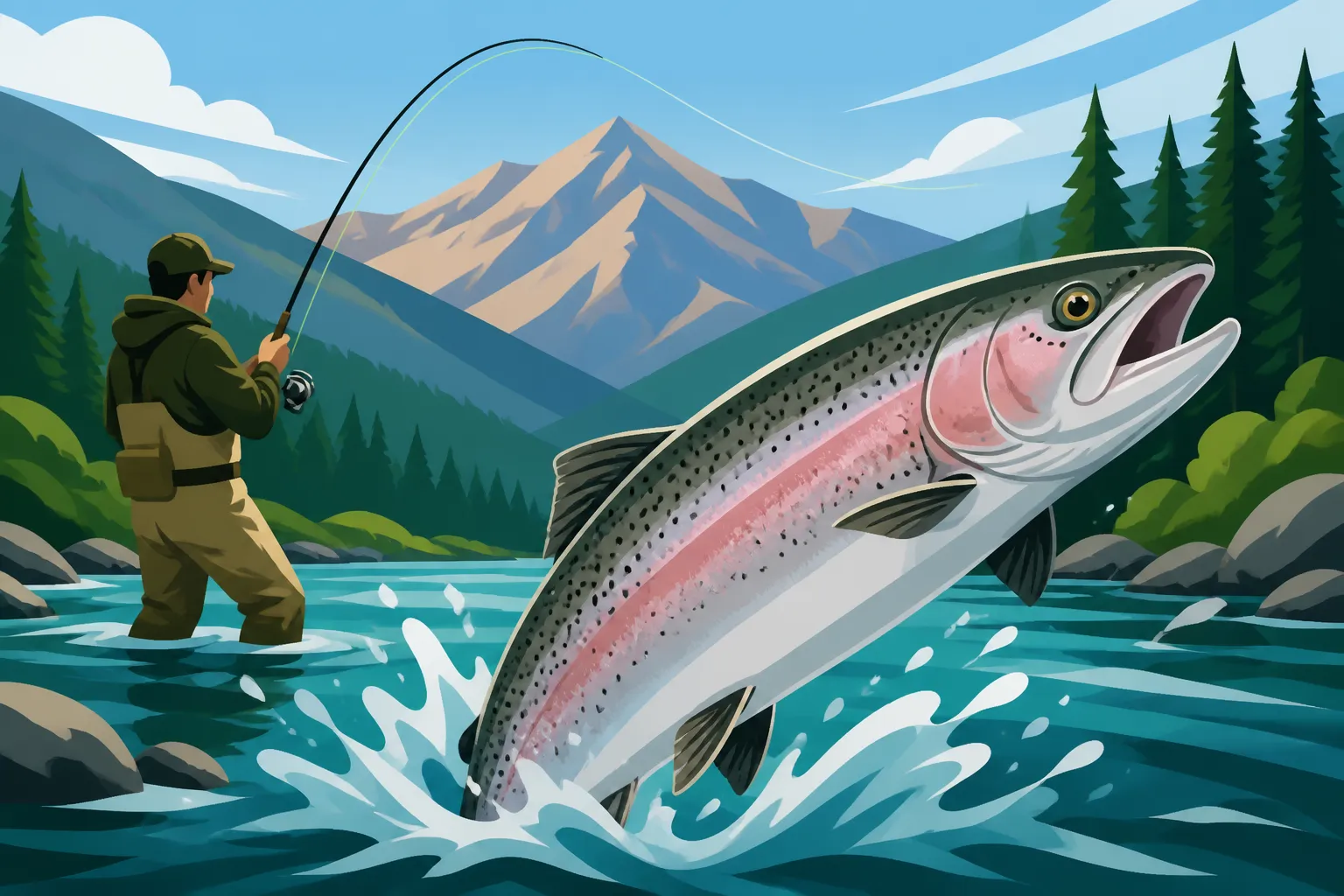
The second part of the legend is the fish themselves. Thompson steelhead have long been known as some of the largest and strongest summer-run steelhead in the world. They travel a long way from salt water, which favours big, powerful fish, and they arrive in a river with heavy, pushy flows. A fish hooked in a fast tailout here can take you well into your backing before you have any say in the matter.
Old fishing accounts talk about fish in the high teens and low twenties of pounds. Whether or not your own experience ever matches those stories, it is this reputation that keeps the river on bucket lists. For a broader look at how these fish compare with other runs, our guide to Steelhead Average Size in BC Rivers puts the Thompson in context.
A Story of Decline
There is no honest way to write about the Thompson without talking about the decline. Over the past few decades, returns of Interior Fraser steelhead, which include the Thompson and Chilcotin stocks, have fallen to a small fraction of their historical numbers. Poor ocean survival, bycatch in salmon net fisheries at sea and in the lower Fraser, and changing freshwater conditions all play a role.
The practical effect for anglers is that the Thompson has gone from a famous open fishery to one that is frequently closed or heavily restricted. That can be frustrating if you have been dreaming of this river for years. But understanding why it is closed is the first step to being part of its recovery rather than part of its problem. The background on this is covered in more depth in BC Interior Fraser steelhead protected status.
Understanding the Regulations Before You Go
Here is the most important part of this article: do not plan a Thompson steelhead trip based on old blog posts, a friend’s stories, or a guide’s website from a few seasons ago. The rules for this river change, sometimes in season, and the consequences of getting it wrong are serious both for you and for the fish.
Who Manages Thompson Steelhead
Steelhead in BC freshwater are managed by the provincial government, while salmon in both fresh and tidal water fall under the federal Department of Fisheries and Oceans. That split matters on the Thompson. A provincial closure on steelhead fishing can be in place at the same time as federal salmon openings or closures, and the two sets of rules do not always line up neatly.
In practice, you need to check two sources: the provincial freshwater fishing regulations and any in-season changes for the Thompson, plus the federal fishery notices for salmon on the same water. The specifics for this river are laid out in BC Thompson River steelhead regulations, and the wider closure picture for the whole Interior Fraser system is in BC Interior Fraser steelhead protection closures.
Licences, Stamps and Gear Rules
If and when the Thompson is open to steelhead angling, you need more than a basic licence. Anglers who fish for steelhead in BC rivers need a valid freshwater fishing licence plus the steelhead conservation surcharge stamp. Non-residents may also need additional classified waters licences on certain rivers. The details on the stamp itself are in BC Steelhead Conservation Surcharge Stamp.
Gear rules on the Thompson have historically been strict. A bait ban and single barbless hooks have long been standard on this river, and anglers are expected to keep wild steelhead in the water during release. Never assume that the gear you used on a coastal stream is legal here. Read the specific regulation for the section of river you plan to fish.
Checking for In-Season Closures
Even if the published regulations show an open season, the province can close the Thompson at short notice if the run forecast or early counts come in low. In many recent seasons, that is exactly what has happened. Before you book anything nonrefundable, and again the night before you drive in, check for current notices.
A good habit is to keep a short checklist on your phone:
- Confirm the provincial steelhead status for the Thompson and the Interior Fraser.
- Check federal salmon fishery notices for the same water.
- Confirm whether bait, hook and boat restrictions apply to your section.
- Confirm your licence, stamps and any classified waters licence are valid for your dates.
- Save screenshots of the notices with the date visible in case you are asked.
For a walkthrough of how to read and search those notices, see How to check BC fishery notices before a trip.
Where the Water Is: Key Sections of the Thompson
The Thompson system is big. The North and South Thompson meet at Kamloops, the combined river flows into Kamloops Lake, and the main stem leaves the lake at Savona before winding down through Ashcroft and Spences Bridge to meet the Fraser at Lytton. Steelhead anglers have traditionally concentrated on the lower river, below Kamloops Lake.
Savona to Ashcroft
The upper part of the lower Thompson, from the outlet of Kamloops Lake down toward Ashcroft, is a broad and fairly gentle stretch compared with the canyon below. Because Kamloops Lake acts as a giant settling basin, the river leaving it tends to run clearer than you might expect for a river of its size, especially in fall.
This section sees fewer steelhead anglers than the canyon water. It is often used by trout anglers and by people looking for easier wading. When steelhead are present and the river is open, the walk-in runs here can be quiet and rewarding, though the fish are spread over a lot of water.
Spences Bridge and the Nicola Confluence
Spences Bridge is the heart of Thompson steelhead culture. The small community sits at the confluence with the Nicola River, an important spawning tributary, and for generations it has been home base for anglers arriving each fall. The runs above and below the village have names that steelhead anglers repeat like a liturgy.
The water here is big and powerful. Long glides, ledgy rock, deep buckets and fast tailouts make it a classic swung fly river, but also a river that punishes careless wading. Highway 1 and Highway 8 provide access to many pullouts, though some runs require a scramble down steep banks. For a closer look at individual runs, see Best steelhead runs on the Thompson River.
Goldpan to Lytton
Below Spences Bridge the river tightens into a deeper canyon. Goldpan Provincial Park offers camping and river access, and there are several runs between there and the Fraser confluence at Lytton. This lower canyon water tends to be faster and more dangerous to wade, with fewer forgiving gravel bars.
Anglers who fish this section generally know it well or go with someone who does. The canyon also sees more whitewater rafting traffic in the warmer months, but by the late fall the river is quieter and colder.
Access and Etiquette
Most Thompson access is from highway pullouts, rail crossings and Crown land. Be aware that a major rail line runs along both banks for much of the river. Crossing tracks is dangerous and in many places illegal; use designated crossings and never walk the rails. Respect private land around Spences Bridge and Ashcroft, and ask before crossing.
Thompson etiquette has traditionally been to rotate through a run, starting at the top and taking a step or two downstream after each cast. Do not drop in below someone who is fishing through. If you are unsure about local customs, watch for a few minutes before you step in, and ask the angler already in the run where they started and which way they are rotating. Most people are happy to share water when they are asked politely, and that small courtesy goes a long way on a river where good holding water is limited.
| Section | Character | Access | Wading Difficulty |
|---|---|---|---|
| Savona to Ashcroft | Broad, gentler flows, clearer water below the lake | Highway pullouts, some walk-ins | Moderate |
| Ashcroft to Spences Bridge | Mix of glides and boulder runs | Highway and side roads | Moderate to hard |
| Spences Bridge and Nicola confluence | Classic big swing water, ledges and buckets | Village access, Highway 1 and 8 | Hard |
| Goldpan to Lytton | Deep canyon, fast water, fewer bars | Provincial park and pullouts | Very hard |
Timing and Conditions on the Thompson
Even in the best years, Thompson steelhead are not available all year. Understanding the run timing and the river’s seasonal mood is essential, both for planning and for understanding why closures fall when they do.
When Steelhead Arrive
Thompson steelhead enter the Fraser in late summer and early fall, move upriver through the Fraser Canyon and reach the Thompson from around October. Traditionally, the classic fly fishing window has been October through December, with fish holding in the river over winter before spawning in the tributaries in spring.
Peak timing varies each year with ocean conditions and water levels in the Fraser. A warm, low fall can delay entry, while cooler weather and good flows can pull fish in earlier. The general timing for the province is covered in When steelhead run in BC rivers.
Water Temperature and Clarity
Because Kamloops Lake buffers the main stem, the lower Thompson is often fishable when other rivers are blown out by rain. In the fall, water temperatures drop steadily, and fish become less aggressive as they get colder. Anglers who fished the river in its prime often talk about a shift from active, surface-oriented fish in October to deeper, slower presentations by late November.
Clarity can change suddenly after rain on the Nicola or other tributaries, especially below the confluence. A muddy Nicola can colour the main river for a stretch while the water above Spences Bridge stays green and clear.
Winter and Spring
Fish that hold through winter become lethargic in cold water, and ice can form along the margins. Late winter and spring see fish moving into the tributaries to spawn. These spawning fish are particularly vulnerable, and spring angling on the Thompson for steelhead is generally not permitted. Leave spawning fish alone, and avoid wading in or near redds in tributaries.
| Month | Typical Steelhead Situation | Angler Considerations |
|---|---|---|
| September | Fish still mostly in the lower Fraser | Too early in most years |
| October | Early fish enter the Thompson | Water cooling, fish often active |
| November | Main holding period for many fish | Colder water, slower swings |
| December | Fish holding, often deeper and slower | Ice and snow on roads possible |
| January to March | Overwintering fish, very cold water | Little traditional angling |
| April to May | Fish move into tributaries to spawn | Leave spawning fish alone |
Techniques Thompson Anglers Have Traditionally Used
If you do get the chance to fish the Thompson when it is open, you are stepping into a strong tradition. Even outside the steelhead season, learning how the river is fished will help you appreciate its unique character.
Swinging Flies With Spey Rods
The Thompson is synonymous with two-handed rods and swung flies. The river’s long, wide runs suit spey casting, which lets you cover water without a back cast against the steep banks. Typical setups have been 13 to 14 foot rods for 8 or 9 weight lines, paired with floating or sink-tip lines depending on water temperature.
The swing itself is slow and controlled. You cast across and slightly downstream, mend to slow the fly, and let it swing across the current until it hangs directly below you. Then you take a step and repeat. This is a method that rewards patience. A lot of Thompson anglers have spent days without a pull, and then had the fish of a lifetime on a single cast. Keep your casts consistent in length so you cover the run in an even grid, and resist the urge to rush through water that looks perfect. The fish that eat a swung fly here often take on the dangle or at the very end of the swing, so let the fly hang for a few seconds before you strip in.
Fly Choice
Thompson anglers often fished larger, darker flies, especially in low light or colder water. Patterns like the General Practitioner, intruders, marabou spey flies and classic hairwing patterns all had their followers. In the warmer early weeks, some anglers tried skated dry flies or waking patterns, hoping for the electric moment when a big fish rose to the surface.
Colour choices commonly revolved around black, purple, blue and orange, with a dash of flash. Fly size and weight changed with conditions. Many anglers kept a small box with only a handful of patterns rather than trying to match every possible scenario. For more ideas, see Fly Patterns for BC Steelhead Rivers.
Wading the Thompson Safely
Every Thompson story should come with a safety note. The river is big and fast, and the rocks are slick. People have drowned here. If you are fishing any section of the Thompson, always use a wading staff, wear studded boots and a wading belt, and consider an inflatable personal flotation device.
Never wade above your thighs in fast water, especially in a tailout where the river accelerates. If you hook a fish, do not chase it into deeper water. Let it run, walk downstream on the bank if you can, and let the line come back to you. The Wading Techniques for BC Steelhead Rivers guide expands on these safety basics.
Catch and Release Handling
Thompson steelhead are precious. If you ever hook one during an open period, keep it in the water as much as possible. Avoid lifting fish for photos, use barbless hooks, unhook quickly with forceps or pliers, and revive the fish facing upstream in moderate current until it swims away under its own power.
Studies on catch and release survival show that careful handling makes a real difference, especially in cold water. Fight fish firmly to avoid exhausting them, and never drag them over rocks. For more on this topic, see What percentage of steelhead survive catch and release.
Planning a Trip When the River Is Open, or Closed
Planning a Thompson trip takes flexibility. You may plan for months and then discover the river is closed. With a little forethought, you can still have a great trip and learn the river for when it reopens.
Booking Guides and Lodging
If the Thompson is open, some anglers book guides who know the river’s runs and access points. Online platforms like FishingBooker can be a good starting point for finding guides in the Kamloops, Spences Bridge and Fraser Canyon area. Use FishingBooker filters to compare trip types, and always confirm directly with the guide what species and methods they will be targeting, given the regulations.
When booking through FishingBooker or any similar platform, ask about cancellation policies tied to regulation changes. A responsible guide will be upfront about what they can do if the steelhead fishery closes. Check the provider’s page for current prices and terms, as they change.
Alternatives if Steelhead Are Closed
If the Thompson is closed to steelhead, there are still ways to enjoy the region. The Thompson has resident rainbow trout and a strong fall salmon component, though you must check whether retention or angling for those species is allowed. Kamloops-area lakes offer excellent trout fishing, and the region is famous for its stillwater fly fishing.
You could also travel to other steelhead rivers that may be open. Coastal and northern rivers have their own runs and timings, and FishingBooker lists guides on some of those rivers too. Our list of Best Steelhead Rivers in BC gives an overview of alternatives.
Being a Responsible Visitor
Spences Bridge, Ashcroft and Lytton are small communities, many of which have been hit hard by wildfire and floods in recent years. Spend your money locally where you can. Respect First Nations lands and fishing sites along the river, and be aware that some areas are not open to public access.
Leave no trace. Pack out your garbage, avoid creating new trails on fragile slopes, and give wildlife plenty of space. The Thompson’s future depends on people who care about the river beyond the fishing.
Supporting Recovery
If you love this river, support efforts to bring the fish back. Advocate for reduced bycatch in salmon fisheries, support habitat restoration in the Nicola and other tributaries, and stay informed on management decisions. Many anglers who fished the Thompson in its glory days now spend their time volunteering for conservation groups or sharing their stories to raise awareness.
Even if you never get to swing a fly for a Thompson steelhead, you can still be part of its story by learning about the fish, respecting closures and supporting recovery. The more people who care about this river, the better its chances of welcoming steelhead back in good numbers.
Disclaimer
This article is for general informational purposes only and does not constitute professional advice. Laws, prices and regulations vary by location and change over time. Consult a qualified professional for guidance on your specific situation.