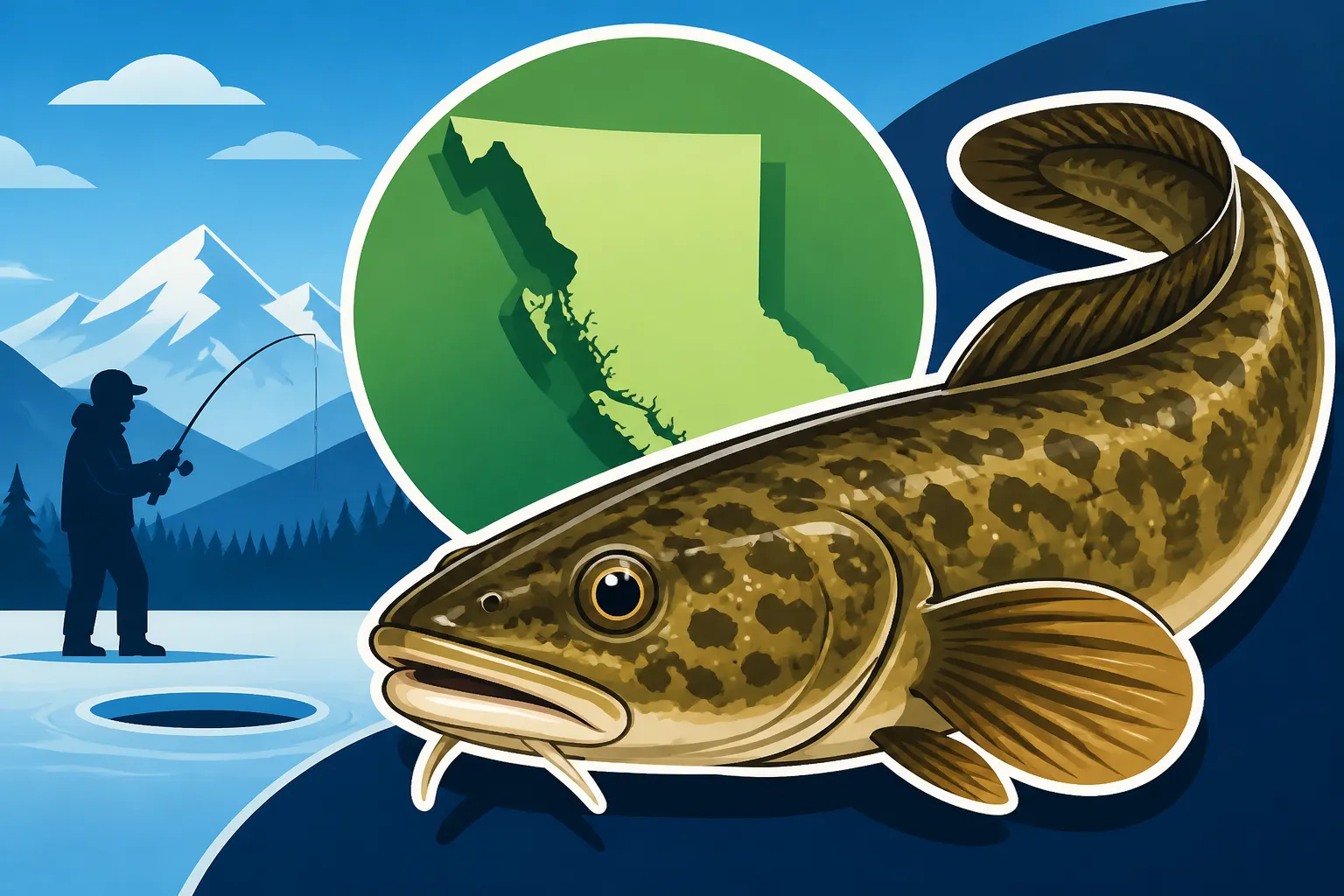
BC burbot limit
It can be incredibly frustrating trying to keep all the fishing regulations straight, especially when you're targeting a less common species like burbot in British Columbia. One minute you think you've got the general rules down, and the next you find out there's a special regulation for a specific lake you plan to visit, throwing everything into confusion. This comprehensive guide is here to untangle the complexities of BC's burbot limits, providing clarity on provincial guidelines, regional variations, and how to stay on the right side of conservation laws.
Understanding Burbot in British Columbia
Burbot, often affectionately called "freshwater cod" or "lingcod" due to their single, prominent barbel on their chin and similar elongated body shape, are a truly unique fish found in British Columbia's colder, deeper lakes and rivers. They're the only freshwater member of the cod family in North America, and they play an important role in the aquatic ecosystem. Getting to know a bit about these fascinating creatures helps us understand why their conservation and specific catch limits are so vital.
What are Burbot?
Picture this: A long, slender fish, often mottled brown and yellow-green, with smooth, scaleless skin and that distinctive single whisker-like barbel just under its chin. That's your typical burbot. They are primarily bottom-dwellers, preferring the cold, dark depths of large lakes and sometimes larger rivers, where they patiently ambush their prey. Unlike many other freshwater fish that are active in warmer months, burbot really come alive in the colder parts of the year, particularly under the ice. This makes them a prized target for ice anglers, offering a unique challenge and a delicious reward. They have a rather unique life cycle, often spawning under the ice in late winter, which is quite different from most other BC fish species.
Why are Burbot Limits Important?
The reason we have specific limits for burbot, and frankly, for any fish species, boils down to conservation and sustainability. While burbot might not always get the same spotlight as salmon or steelhead, they are a slow-growing, long-lived species, and their populations can be quite vulnerable to overfishing. If anglers were to remove too many adult burbot from a lake, especially during their vulnerable spawning periods, it could take years, even decades, for those populations to recover. The regulations are designed to ensure that there are enough burbot left in the water to reproduce and maintain a healthy population for future generations of anglers. It’s about striking that delicate balance so we can all enjoy the unique experience of fishing for them without depleting their numbers. It ties directly into the broader topic of BC Fishing Regulations Explained.
Current BC Burbot Limits: The Nitty-Gritty Details
Navigating fishing regulations in British Columbia can sometimes feel like trying to solve a puzzle with missing pieces. For burbot, it's not a one-size-fits-all situation. While there are general provincial guidelines, many specific waters have their own, often more restrictive, rules. This is where it gets crucial to do your homework before you head out, and a great place to start is the official BC Freshwater Fishing Regulations Synopsis, which you can often find a copy of on sites like Amazon, or download directly from the government website.
General Provincial Limits
For most of British Columbia's waters, if no specific regulation is listed, a general daily quota and possession limit applies. Typically, for burbot, this means a daily quota of two (2) burbot per day, with a possession limit that often matches the daily quota. This means you can only have two burbot in your possession at any given time, whether they're in your cooler, at your camp, or back home in your freezer. It’s important to understand that the "daily quota" refers to the number you can catch and retain in a 24-hour period, while the "possession limit" refers to the total number of fish you can have at any one time, regardless of when they were caught. This is consistent with BC Bag and Possession Limits by Species for many other freshwater fish.
However, and this is a big however, these general limits are a starting point. Always, always check the specific regulations for the water body you intend to fish.
Regional and Special Regulation Waters
This is where the burbot limit situation gets really localized. Many specific lakes, particularly those known for healthy burbot populations or those where conservation efforts are more intense, will have different, often more stringent, regulations. For instance, in some parts of northern BC, where burbot are a significant recreational species and can grow quite large, there might be specific size restrictions (e.g., only burbot between X and Y length can be retained) or even reduced daily quotas.
Let's look at some hypothetical examples, which are common in BC's regulatory landscape (always confirm current rules!):
- Williston Lake Area: You might find that while the general limit is two, a specific bay or tributary to Williston Lake might have a "catch and release only" regulation for burbot during certain periods, especially around spawning season.
- Cariboo Region Lakes: Some smaller, easily accessible lakes might have a reduced daily quota of one (1) burbot, or even a complete closure to protect recovering populations. This region is known for a variety of fish, so targeted regulations are common.
- Kootenay Region: Kootenay Lake itself is vast, but certain arms or smaller, connected lakes might have unique burbot rules. For example, some might have bait restrictions or specific seasons where burbot retention is prohibited to protect spawning fish.
These variations are why simply knowing the provincial general limit isn't enough. The local fishery managers are constantly assessing fish health, and regulations can change annually, sometimes even mid-season with a BC Fishery Notices and In-Season Closures, Explained. This is especially true for species like burbot that have distinct spawning behaviors and relatively slow growth rates.
Here's a simplified table illustrating how burbot limits might vary in BC (remember, always consult the official synopsis for current rules):
| Water Body Type / Region | Daily Quota | Possession Limit | Special Conditions |
|---|---|---|---|
| General Provincial (if not specified) | 2 | 2 | Applies to most waters unless otherwise noted. |
| Specific Northern BC Lake | 1 | 1 | Often includes size restrictions (e.g., 50-75 cm slot limit) to protect large breeders. |
| Interior BC Trout Lake | 0 | 0 | "Catch and Release Only" for burbot, sometimes to protect other species or specific burbot stocks. |
| Large Reservoir (e.g., Williston) | 2 | 4 | Some large, productive waters might have slightly higher possession limits, but daily limit remains key. |
Reading the Regulations
This brings us to the most critical piece of advice: always consult the current BC Freshwater Fishing Regulations Synopsis. This document is your bible for fishing in British Columbia. It’s updated annually, usually in late spring or early summer, and outlines all the general provincial regulations, as well as specific rules for every management region and individual water body.
You can find a digital copy of the synopsis on the official Government of British Columbia website, often under the Ministry of Water, Land and Resource Stewardship, or the BC Fisheries website. Many outdoor retailers across the province, like Cabela's or local tackle shops, also carry physical copies, or you can purchase one through online retailers like Amazon. It's truly indispensable.
When you're looking up burbot limits, pay close attention to the following sections:
- "General Regulations": This will give you the baseline provincial rules.
- "Region-Specific Regulations": British Columbia is divided into regions (e.g., Region 1 – Lower Mainland, Region 4 – Kootenay, Region 7A – Omineca-Peace). Find the region where you plan to fish.
- "Special Regulations by Water Body": Within each region, there will be an alphabetical list of lakes, rivers, and streams. This is where you absolutely must check for the specific water you are targeting. If a water body isn't listed here, the general regulations for that region apply.
Don't just skim it. Read carefully, paying attention to details like seasons, specific gear restrictions (e.g., no bait, single barbless hooks only), and of course, the exact daily and possession limits for burbot. Misunderstanding a regulation is not a valid excuse, and unknowingly fishing without the correct information can lead to significant penalties, as outlined in Fishing Without a License in BC: Penalties.
Best Practices for Responsible Burbot Fishing
Fishing for burbot, especially through the ice in the depths of winter, offers a truly memorable experience. However, like all fishing, it comes with the responsibility to ensure the health of the fishery for years to come. Practicing responsible angling is not just about following the rules; it's about being a good steward of our natural resources.
Catch and Release Considerations
Even if you're planning to keep a burbot for the table within your legal limit, you might end up catching more than you intend, or a fish that doesn't meet specific size requirements. This is where proper catch and release techniques become paramount. Burbot are surprisingly delicate in some ways, and their survival rate after release can be improved with a few key considerations:
- Minimize Air Exposure: Burbot have internal organs that are sensitive to air. Keep them in the water as much as possible if you intend to release them. If you must remove them for a quick photo, do it swiftly.
- Wet Hands: Always wet your hands before handling any fish. Dry hands can remove the protective slime layer, leaving the fish vulnerable to infection.
- Support the Body: When holding a burbot, support its entire body, especially if it's a larger specimen. Don't just hold it by the gill plate or tail.
- Quick Hook Removal: Use needle-nose pliers or a de-hooking tool to remove hooks quickly and gently. If the fish is deeply hooked, it’s often best to cut the line as close to the hook as possible rather than tearing internal organs.
- Revive Carefully: If the burbot seems sluggish after release, gently hold it in the water, facing into the current, until it regains strength and swims away on its own.
These practices contribute to the long-term health of burbot populations, especially in waters with lower daily limits or where catch and release is mandated. It ensures that the fish you release have the best chance of survival and future spawning.
Gear and Techniques
The gear and techniques you choose can also impact responsible burbot fishing. Burbot are often targeted through ice fishing, using jigs or baited set lines. When ice fishing, ensure you're using appropriate line weights and hook sizes for the potential size of the burbot, minimizing the chance of breaking off and leaving tackle in the water. For bait, local regulations often specify what's allowed; using dead baitfish is common, but invasive species or specific types of bait might be prohibited in certain areas to prevent the spread of disease or non-native species.
If you're using set lines (a method where lines are set and left unattended for a period, usually overnight), double-check the regulations for specific rules on how many lines you can deploy, whether they need to be marked, and how often they need to be checked. These rules are in place for both safety and to prevent excessive harvest or unintentional bycatch. These methods are quite different from the traditional Salmon Fishing Techniques for BC Rivers or even How to Catch Rainbow Trout in BC Lakes but are highly effective for burbot.
Reporting and Enforcement
The vast majority of anglers in BC are conservation-minded and follow the rules. However, sometimes you might encounter situations where regulations are not being followed. If you suspect illegal fishing activity, such as someone exceeding the burbot limit or fishing in a closed area, it’s important to report it to the Conservation Officer Service (COS). They are the frontline enforcement agency for fishing regulations in BC. You can typically find their RAPP line (Report All Poachers and Polluters) number in the BC Freshwater Fishing Regulations Synopsis or by a quick online search. Providing as much detail as possible, such as location, time, vehicle descriptions, and specific observations, can greatly assist their efforts.
It's also crucial to remember that regulations can change. Always carry a copy of the current synopsis (digital or physical) when you're fishing. Being informed is your first line of defense against accidental violations and helps you advocate for the resource. You can check for updated information, especially concerning BC Fishing Season Dates and Closures, on the official government websites.
Where and When to Find Burbot in BC
Knowing the limits is one thing, but knowing where and when to find these unique fish is another entirely. Burbot, being cold-water, bottom-dwelling predators, have distinct preferences that make them a prime target for anglers willing to brave the colder seasons.
Prime Burbot Habitats
Burbot are creatures of habit, preferring deep, cold, well-oxygenated lakes, often with rocky or gravel bottoms where they can hide and ambush prey. While they can be found in some of the province's larger rivers, especially those connected to productive lakes, their true strongholds are often the deeper, less disturbed lakes.
Some of the most well-known areas for burbot in BC include:
- Northern BC Lakes: This region is often considered prime burbot territory. Lakes like Williston Lake, Stuart Lake, Babine Lake, and François Lake are renowned for their burbot populations. These expansive, deep lakes provide ideal habitat for burbot to thrive. If you're looking for Burbot in Northern BC Lakes, these are definitely places to start your research. You'll find a lot of information on these specific lakes in a comprehensive Best Fishing Lakes in British Columbia guide.
- Cariboo and Kootenay Regions: While not as consistently prolific as the north, certain deep lakes in these regions also hold good numbers of burbot. Kootenay Lake, for example, is famous for its Gerrard rainbow trout, but its depths also harbor burbot, offering an exciting winter fishery.
- Okanagan Valley Lakes: Even in the warmer Okanagan, some of the deeper lakes like Okanagan Lake itself or Shuswap Lake can hold burbot, particularly in their deepest sections.
When scouting for burbot, look for areas with sudden depth changes, underwater humps, rock piles, or submerged timber. These structures provide both cover for the burbot and ambush points for their prey, which typically include smaller fish like kokanee, minnows, and various invertebrates.
Best Times for Burbot
Burbot are predominantly a cold-water species, meaning their activity levels increase significantly as water temperatures drop. This makes winter, particularly during the ice fishing season, the absolute prime time to target them.
- Winter (Ice Fishing): From late December through March, once safe ice has formed on BC's lakes, burbot fishing really takes off. They become more active under the ice, often moving into shallower areas (compared to their summer depths) to feed and eventually spawn. This is when anglers often find them most accessible. Night fishing is particularly effective for burbot during winter, as they are largely nocturnal predators. If you're familiar with Best techniques for ice fishing kokanee, many of the same principles (jigging, finding deep structure) can be applied to burbot.
- Late Fall/Early Spring: Before the ice sets in or just after it breaks up, burbot can still be actively feeding. While more challenging to target from a boat in these colder months, anglers who know how to fish deep structure can still find success.
- Summer (Challenging but Possible): During the warmer summer months, burbot retreat to the deepest, coldest parts of lakes, often exceeding 100 feet in depth. Targeting them requires specialized deep-water techniques, heavy tackle, and good sonar to locate them. While possible, it's generally considered a much more difficult time to fish for them. For a broader overview of seasonal opportunities, check out our guide on the Best Time of Year to Fish in BC.
Remember, while burbot are a hearty fish once hooked, they are sensitive to temperature changes. During ice fishing, keep them on the ice or in a cooler away from direct sunlight if you intend to retain them. If releasing, get them back into the water as quickly and gently as possible.
Disclaimer
Please remember that fishing regulations in British Columbia can change. While this guide provides comprehensive information based on typical regulations, it is your responsibility to consult the most current official BC Freshwater Fishing Regulations Synopsis before any fishing trip. The information provided here is for general guidance only and should not be considered a substitute for the official regulatory documents.