BC minimum fine for no Pleasure Craft Operator Card
Navigating British Columbia’s stunning waterways is a dream for many, but the excitement can quickly turn to anxiety when you're unsure about the rules. A common point of confusion, and frankly, a source of stress for many boaters, revolves around the seemingly simple requirement of a Pleasure Craft Operator Card (PCOC). It's easy to dismiss it as just another piece of paper until you're stopped on the water, facing the very real and immediate consequence of a fine. This guide is designed to cut through that confusion, directly addressing the minimum fine for not possessing a PCOC in BC, and helping you understand why having this card is not just a legal obligation, but a crucial step for safe and responsible boating.
Understanding the Pleasure Craft Operator Card Requirement in BC
Many of us grew up thinking that if you could steer a boat, you could operate it. But the reality of busy waterways, diverse vessel types, and the sheer power of modern engines has made formal training a necessity, not a suggestion. The Pleasure Craft Operator Card, often just called a PCOC, is at the heart of ensuring that anyone operating a motorized pleasure craft in Canada has a baseline understanding of safe boating practices and the rules of the road. It’s a federal requirement, meaning it applies across all of Canada, including every lake, river, and coastal stretch in British Columbia.
What Exactly is a PCOC and Who Needs It?
A Pleasure Craft Operator Card is essentially proof that you’ve successfully completed an accredited boating safety course and passed an exam. It’s designed to ensure that operators have the knowledge to handle their vessel safely, understand navigation rules, recognize hazards, and respond effectively in emergencies. Think of it like a driver’s license for the water – you wouldn't drive a car without one, and the same principle applies to operating a boat.
So, who exactly needs this card? In a nutshell, if you operate any recreational motorized boat, regardless of its size, horsepower, or whether it's rented or owned, you are required to have a PCOC. This includes everything from a small fishing boat with an outboard motor to a personal watercraft (PWC), or even a larger cabin cruiser. There are very few exceptions. For instance, if you're operating a boat in an emergency, or if you're under the direct supervision of someone who already possesses a PCOC, you might be temporarily exempt. However, for everyday recreational boating, it's a must. And yes, this applies to visitors from other provinces and even international visitors, though some foreign boating licenses are recognized under specific conditions. It's truly a universal requirement for anyone at the helm of a motorized vessel here.
The Legal Framework: Transport Canada's Role
The legal basis for the PCOC requirement stems from federal legislation, specifically the Canada Shipping Act, 2001, and its accompanying Small Vessel Regulations. This is a critical distinction because it means these rules aren't just local BC regulations; they're national standards enforced by various agencies. Transport Canada is the federal body responsible for marine safety, and they establish the requirements for the PCOC, approve course providers, and oversee the general framework.
What this means for you, out on the water in British Columbia, is that enforcement can come from several different authorities. The Royal Canadian Mounted Police (RCMP), local municipal police forces (like the Vancouver Police Marine Unit), and even the Canadian Coast Guard can and do stop boaters to check for compliance. They're not just looking for speeding or reckless operation; routine checks for safety equipment and proper licensing, including your PCOC, are commonplace. It's a comprehensive system designed to maintain a high standard of safety across all Canadian waters, ensuring everyone from experienced anglers chasing salmon on the Fraser River to casual paddlers on Okanagan Lake understands the fundamental responsibilities that come with operating a boat.
The Frustration of Unclear Boating Rules
Let’s be honest, trying to decipher all the boating rules can feel like slogging through quicksand. You’re excited to get out on the water, perhaps try your hand at salmon fishing in the Campbell River Fishing Guide, or explore the tranquil lakes of the Kootenays, and suddenly you’re bogged down by a myriad of regulations. It’s frustrating when you just want to enjoy the outdoors, but you’re constantly worried about missing a crucial detail that could lead to a fine or, worse, an accident.
Many seasoned boaters, especially those who’ve been on the water for decades, might feel particularly put out by the PCOC requirement. They might think, "I've been boating my whole life, why do I need a card now?" And while experience is invaluable, the PCOC ensures that everyone, new and old, has been exposed to the most current safety protocols, environmental considerations, and updated navigation rules. The waterways are changing, with more users and faster vessels, and unfortunately, accidents still happen. This card is a proactive measure to prevent those incidents, not just a bureaucratic hoop to jump through. It's also easy to confuse it with other requirements, like understanding the nuances of a BC Freshwater vs Tidal Waters License, Explained or the separate rules for your vessel, such as BC Boat Registration and Licensing Rules.
The Harsh Reality: Minimum Fines for Lacking a PCOC
Now, let's get to the brass tacks: what happens if you're caught without a Pleasure Craft Operator Card in British Columbia? It's a common scenario, often stemming from oversight rather than malice, but the consequences are very real and can put a significant dent in your wallet.
The Statutory Minimum Fine in British Columbia
Under the Canada Shipping Act, 2001, failing to have a Pleasure Craft Operator Card when required carries a specific penalty. While the maximum fine can be quite substantial, what most people want to know is the minimum financial hit they can expect. As of current regulations (and these are subject to change, so always check the latest Transport Canada guidelines), if you are found operating a pleasure craft without a PCOC, you can face a minimum fine of $250.
This isn't a provincial fine that varies from one municipality to the next; it's a federal penalty that applies consistently across Canada. So, whether you're cruising on the Pacific Ocean near Vancouver Island or enjoying a quiet paddle on a remote interior lake, the fine for not having your PCOC is the same. It's a standardized deterrent, designed to be impactful enough to encourage compliance without being excessively punitive for a first offense. However, while $250 might not seem catastrophic, it's a completely avoidable expense that could have been spent on better fishing gear or a nice meal after a day on the water. It’s certainly a lot more than the cost of taking the PCOC course in the first place!
Beyond the Minimum: Other Potential Penalties and Consequences
While $250 is the minimum fine, it's crucial to understand that a single infraction can open the door to other, potentially more severe, consequences. It's rarely just about the PCOC. When an enforcement officer stops you, they're not just checking for your card; they're also looking for other safety compliances.
Consider this hypothetical scenario: you're stopped by the RCMP while fishing on the Fraser River. You don't have your PCOC. That's your $250 fine right there. But then, during their routine check, they notice you're missing a Life Jacket Requirements for BC Boaters for every person on board, or your flares are expired, or your sound signaling device isn't working. Each of these deficiencies can carry its own separate fine, quickly compounding your initial penalty. Before you know it, a simple oversight can turn into hundreds, or even thousands, of dollars in fines.
Furthermore, if the officer deems your operation of the vessel unsafe due to a lack of knowledge (which the PCOC is meant to address), they might even order you off the water until a properly certified operator can take over. This means your fishing trip is over, and you might have to arrange for someone else to retrieve your boat. Repeat offenses could lead to higher fines or even more serious legal action, impacting your ability to operate a vessel in the future. It’s also important to remember that ignorance of the law is generally not a valid defense. Even if you genuinely didn’t know about the PCOC, the fine still applies.
Real-World Scenarios: How Fines are Issued
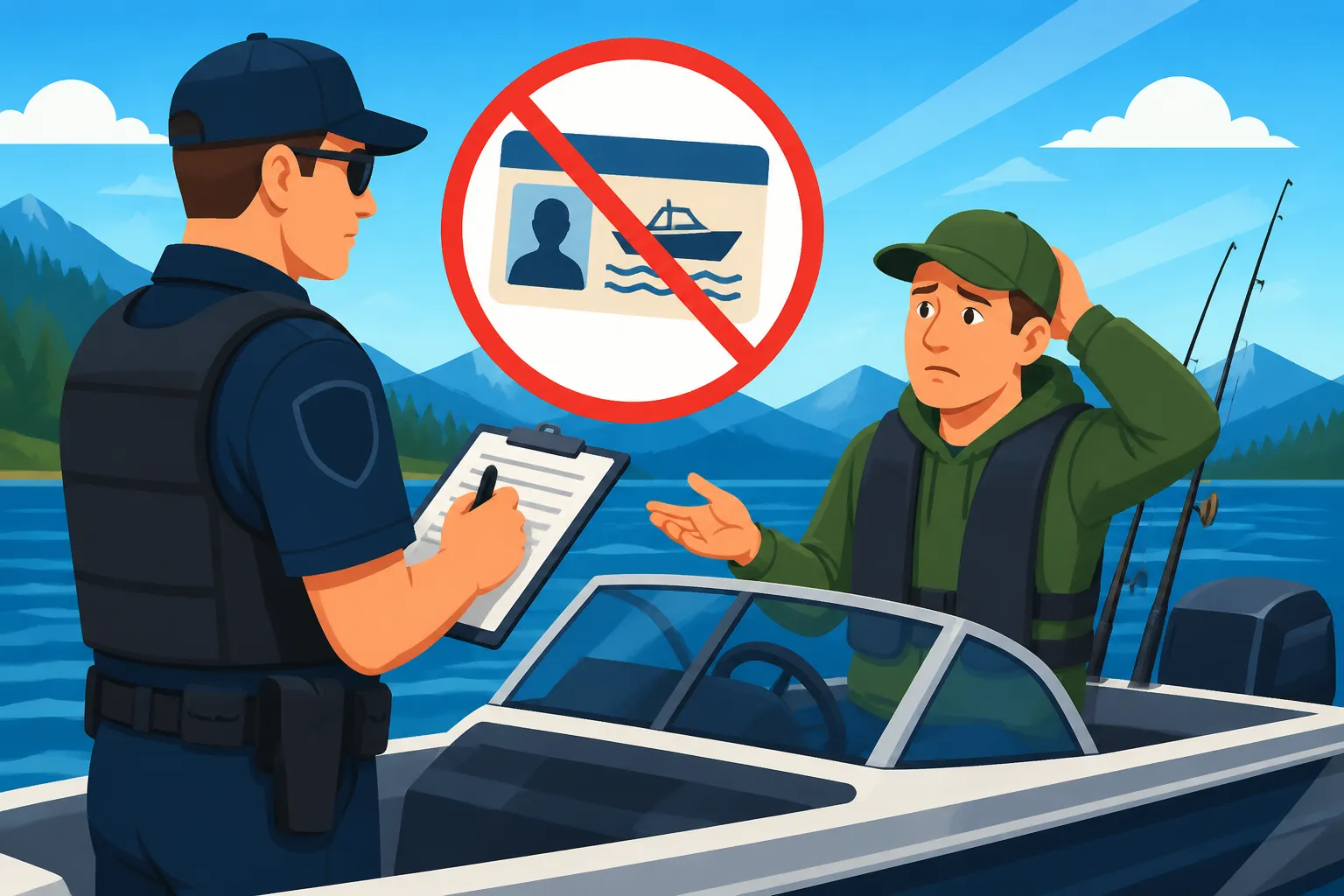
So, how does this actually play out on the water? It's not always a dramatic chase scene. More often, it's a routine stop. Imagine you’re enjoying a sunny afternoon on Harrison Lake, puttering along. A patrol boat, perhaps from the RCMP or a local marine unit, approaches. They’ll usually pull alongside, request you stop, and then ask for your identification and your PCOC. They might also ask to see your vessel's registration or license, and perform a quick check of your safety equipment using a BC required boat safety equipment checklist.
The interaction is typically professional. Once they confirm you don't have a PCOC, they will explain the infraction and issue you a ticket. This ticket will detail the specific offense, the fine amount, and instructions on how to pay or dispute it. The process is similar to getting a speeding ticket on the road. The officer will record the incident, including details about your vessel and location. It’s not a personal attack; it’s simply the enforcement of federal law. They are doing their job to ensure everyone on the water is safe. If you plan to dispute it, you’ll need to follow the instructions on the ticket, which usually involves appearing in court. However, for a clear-cut case of not possessing the card, disputing it is often an uphill battle unless there's a very specific, rare exemption you can prove.
Why Risk It? The Benefits of Getting Your PCOC
Given the potential headaches and financial penalties, it really makes you wonder why anyone would risk operating a boat without a PCOC. Beyond simply avoiding fines, there are profound and practical benefits to taking the time to get certified. It's an investment in your safety, your enjoyment, and the well-being of everyone else on the water.
Peace of Mind and On-Water Safety
The most significant benefit of obtaining your PCOC isn't about avoiding a $250 fine; it's about gaining the knowledge and confidence to operate your vessel safely. The PCOC course covers vital topics such as navigation rules (the "rules of the road" for boats), hazard awareness, emergency procedures (what to do if someone falls overboard, how to handle a fire, basic first aid), and environmental responsibilities.
Think about it: knowing how to properly anchor, how to react to unexpected weather changes, or how to navigate through congested waters near popular spots like False Creek in Vancouver, significantly reduces your risk of accidents. This knowledge means you can truly relax and enjoy your time on the water, whether you're leisurely cruising or focused on reeling in a big one. It also gives you the skills to help others in an emergency, making you a more responsible and valuable member of the boating community. Imagine the peace of mind knowing you've done everything to prepare for potential challenges, allowing you to fully immerse yourself in the beauty of BC's marine environment.
Avoiding Fines and Legal Headaches
Let's circle back to the practical aspect of avoiding fines. Getting your PCOC is a one-time process that saves you from repeated fines and the hassle of dealing with law enforcement. Once you have it, it's valid for life! There's no expiry date, unlike a regular driver's license. So, while you might wonder, "Does a Pleasure Craft Operator Card Expire in BC?", the answer is no, it does not. This makes it an incredibly worthwhile investment.
Consider the cost of the course itself, which typically ranges from $50 to $100 depending on the provider and any special offers. Compare that to the minimum $250 fine for being caught without it. It's a no-brainer. Plus, avoiding legal hassles means more time enjoying the lakes and coastlines, and less time worrying about police interactions or court dates. It keeps your record clean and your wallet intact. The PCOC is proof you understand the importance of marine safety and are doing your part to keep BC's waters enjoyable for everyone. It even contributes to the broader effort to protect our marine ecosystems, a critical aspect often overlooked when discussing boating regulations.
The Easy Path: How to Obtain Your PCOC
Gone are the days when you had to attend lengthy in-person classes. Obtaining your PCOC today is incredibly convenient and accessible, often taking less time than you might expect. Most people choose to complete their PCOC course online. There are numerous Transport Canada-approved course providers that offer comprehensive, engaging, and self-paced programs.
These online courses typically feature interactive modules, videos, and quizzes to help you grasp the material. You can work through them at your own speed, from the comfort of your home, and take the final exam online when you feel ready. Many providers also offer study guides and practice tests to ensure you're well-prepared. Some popular providers include Boat Smart Exam and AceBoater, which are readily accessible. You can even find study materials or companion books to these courses on platforms like Amazon if you prefer a physical resource. The entire process, from start to finish, can often be completed in a single weekend, or spread out over a few evenings. Once you pass the exam, your official PCOC is mailed to you, and you can often print a temporary card immediately.
Common Misconceptions and FAQs About the PCOC
Even with all the information out there, there are still a lot of misunderstandings floating around about the PCOC. Let's clear up some of the most common ones to ensure you're fully informed before you hit the water.
"I'm Just Renting a Boat" or "My Friend Has One"
This is one of the biggest and most common misconceptions we hear. People often assume that if they're renting a boat, the rental company handles the PCOC, or if a friend with a PCOC is on board, they don't need their own. This is generally incorrect and can lead to immediate fines.
If you are operating a rented pleasure craft, you still need a PCOC. The only temporary exception is if the rental company provides you with a rental boat safety checklist, clearly explains the safety equipment, and goes over local rules with you. This checklist acts as a temporary permit, but it’s only valid for the duration of that specific rental, and it only applies if you are the person who signed the rental agreement and received the safety briefing. It doesn't grant you a permanent PCOC, nor does it allow you to operate other vessels. Always confirm with the rental company what their specific requirements are and whether their checklist is a valid temporary substitute.
Regarding a friend with a PCOC: If you are at the helm, you are the operator, and you need a PCOC. It doesn't matter if your friend, who holds a PCOC, is sitting right next to you offering advice. The law states that the person operating the vessel must be certified. The only exception is if that certified individual is actively supervising you, and you are learning to operate the vessel. But even then, for regular operation, you need your own card. This is why understanding BC Fishing License Age Requirements and general boating age limits is crucial; operators must be of a certain age and have the card.
PCOC vs. Boat Registration/Licensing
Another frequent source of confusion is mixing up the PCOC with other vessel-related paperwork. It's easy to get them all tangled, but they serve different purposes and are distinct requirements.
- Pleasure Craft Operator Card (PCOC): This is about you, the operator. It proves you have the knowledge to operate a boat safely. It’s a lifetime certification.
- Pleasure Craft Licence: This is about your boat (if it has a motor of 10 hp or more, but is not commercially registered). It’s a unique number displayed on your boat that helps identify it, primarily for search and rescue purposes. This is free and must be renewed every 10 years.
- Vessel Registration: This is typically for larger vessels, commercial boats, or boats travelling internationally. It grants your boat a unique name and official number, similar to a car's registration, and provides proof of ownership. This is a more involved process and generally comes with fees and ongoing requirements.
Essentially, your PCOC certifies you, while a Pleasure Craft Licence or Vessel Registration certifies your boat. You need both if you're operating a motorized pleasure craft that meets the licensing criteria. Failing to have a Pleasure Craft Licence for your boat can also result in separate fines. This is a topic thoroughly covered in guides like BC Boat Registration and Licensing Rules. Always carry both your PCOC and proof of your boat's licence or registration when on the water.
Digital vs. Physical Card: What's Accepted?
In our increasingly digital world, it’s a natural question to ask: "Can I just show my PCOC on my phone?" The official stance from Transport Canada is that you must carry your PCOC onboard your vessel at all times while operating it. While many enforcement officers might accept a clear digital copy on your phone or a laminated printout, the safest and most legally compliant approach is to have the physical card with you.
Think of it this way: what if your phone battery dies? What if it gets wet? What if the signal is poor? Having the actual card ensures there are no ambiguities or technological hiccups when an officer requests to see your proof of certification. It's a small piece of plastic, easily stored in your wallet, tackle box, or a waterproof pouch. When you consider the importance of complying with rules like BC Boating Laws for Anglers, it’s always best to err on the side of caution and carry the physical card. It removes any doubt and makes the interaction with enforcement officials smooth and quick.
| Infraction | Minimum Federal Fine in BC | What it Covers | Additional Consequences |
|---|---|---|---|
| Operating without a Pleasure Craft Operator Card | $250 | The operator's certification to run a motorized pleasure craft | Potential for additional fines if other safety deficiencies are found, ordered off water, potential insurance issues. |
| Operating a boat without a Pleasure Craft Licence | $250 | The vessel's unique identification number (for boats over 10 hp) | Difficulties for search and rescue, hindering identification in case of an accident or theft. |
| Missing required safety equipment | $200 per item | Life jackets, flares, bailing device, sound signaling, fire extinguisher, etc. | Increased risk of injury or fatality in an emergency, legal liability, potential boat impoundment. |
| No proof of age onboard (for age-restricted vessels) | $250 | For operators under 16 on high-power boats | Could lead to further investigation, parental responsibility for fines. |
| Violation of fishing license rules | Varies by specific offense | Fishing without a valid license, exceeding bag limits, fishing closed areas | BC fishing without a license penalty can be substantial; confiscation of catch and gear, future license restrictions. |
Disclaimer
The information provided in this guide is for general informational purposes only and does not constitute legal advice. While we strive to keep the information up-to-date and correct, regulations can change. It is always recommended to consult the official Transport Canada website and the British Columbia Freshwater Fishing Regulations Synopsis for the most current and accurate information regarding Pleasure Craft Operator Card requirements, fines, and all other boating and fishing regulations.