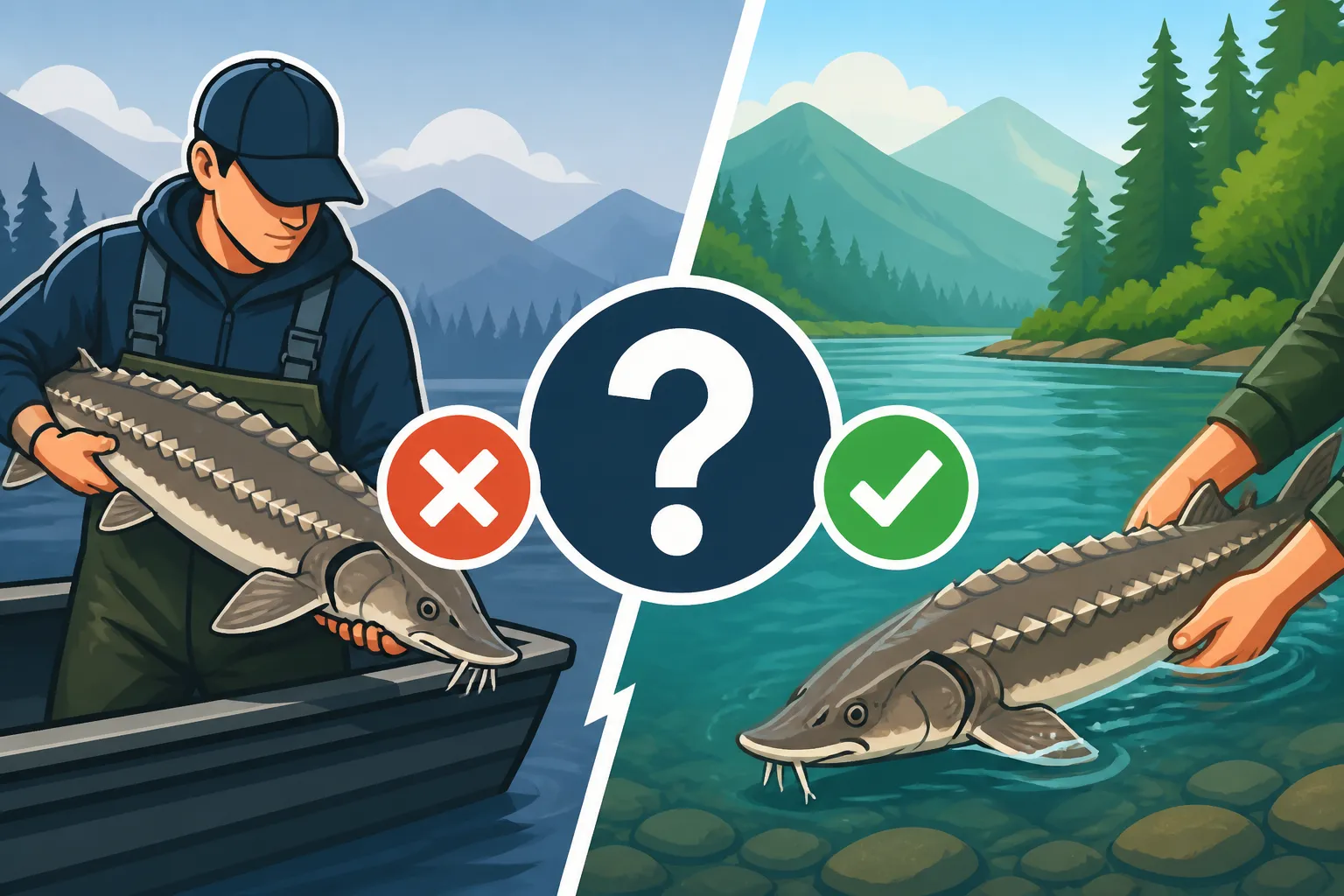
Is It Legal to Release a Sturgeon You Catch in BC?
There's nothing quite like the thrill of hooking into a powerful White Sturgeon in British Columbia. These ancient giants of the freshwater world offer an unparalleled angling experience, often leaving you with sore arms and an unforgettable story. But if you're new to sturgeon fishing, or even if you've done it a few times, a very common question pops up: "Is it actually legal to keep these magnificent fish?" It's a valid concern, and one that highlights a critical part of responsible angling in BC. This guide is here to clarify the regulations around White Sturgeon, specifically addressing why catch and release isn't just a suggestion, but a legal mandate, and how you can ensure you're fishing responsibly and ethically for these incredible creatures.
The Basics: Catch and Release Mandates for Sturgeon in BC
Let's get straight to the point because this is often the biggest question on people's minds: no, it is absolutely not legal to retain a White Sturgeon you catch in British Columbia. Every single White Sturgeon caught in BC waters, regardless of its size or where you caught it, must be released immediately and unharmed. This isn't just a guideline; it's a strict regulation put in place to protect a species that has faced, and continues to face, significant conservation challenges. If you find yourself wondering "can I keep this sturgeon?", the answer is always a resounding no. This mandatory catch and release policy is the cornerstone of White Sturgeon Fishing on the Fraser River and all other sturgeon fisheries in the province.
It’s easy to feel a pang of disappointment when you land a truly monumental fish, and the primal urge to show off your prize by taking it home is strong. But with sturgeon, that simply isn't an option, and for very good reason. Anglers need to mentally prepare for the release before they even cast a line. The thrill is in the battle, the encounter, and knowing you’ve played a part in helping this incredible species thrive for future generations.
Why Catch and Release is Law for Sturgeon
The mandate for 100% catch and release for White Sturgeon isn't an arbitrary rule; it's born out of necessity and a deep understanding of the species' vulnerability. White Sturgeon are an endangered species in many parts of their range, including the Fraser River system, which holds the largest remaining population in BC. They are incredibly long-lived, slow to mature, and have experienced significant population declines due to historical overfishing, habitat loss, and changes to their environment. For centuries, these fish were harvested for their meat and roe, leading to dramatic reductions in their numbers. Without strict regulations, the species simply wouldn't survive.
When you think about the life cycle of a sturgeon, you start to understand why this protection is so vital. They can live for over 100 years, often not reaching reproductive maturity until they are 15-20 years old, or even older for the really big ones. This slow growth and late maturation mean that every individual fish is precious. Removing even a few adults from the population can have a disproportionately large impact on their ability to reproduce and recover. The law explicitly states the BC Fraser River Sturgeon Catch and Release Requirement to give these fish the best possible chance at survival.
Understanding the Sturgeon Conservation Imperative
The conservation imperative extends beyond simply not keeping the fish. It involves minimizing stress, reducing injury, and ensuring the sturgeon has the best chance of survival after release. Every angler becomes a steward of this species, and understanding the "why" behind the rules helps foster a deeper respect for these magnificent creatures. This isn't just about avoiding a fine; it's about active participation in conservation. Groups like the Fraser River Sturgeon Conservation Society work tirelessly to monitor, research, and protect these fish, and responsible angling directly contributes to their efforts.
Imagine encountering a fish that was alive when your grandparents were children, or even your great-grandparents! These fish are living relics, and our actions today directly impact their future. The regulations are a collective agreement that the long-term health of the White Sturgeon population is paramount, and that the value of the species alive in the river far outweighs any short-term desire to harvest one.
How to Legally and Ethically Release a Sturgeon
Since retaining a sturgeon is illegal, knowing how to properly release one becomes paramount. A poor release can be just as detrimental as keeping the fish, potentially leading to injury, stress, or delayed mortality. The goal is always to get the sturgeon back into the water quickly and safely, minimizing its time out of the water and ensuring it's strong enough to swim away. This takes preparation, the right gear, and a solid understanding of fish handling best practices. It's not just about letting go; it's about a careful, respectful process.
Many anglers might be used to handling smaller fish, but a sturgeon is a different beast entirely. Their size, weight, and unique physiology demand a specialized approach. If you’re paying for a guided trip, your guide will be an expert in this, but if you’re fishing independently, the responsibility falls squarely on your shoulders. Education is key, and understanding Sturgeon catch and release survival tips before you even hook up is crucial.
Essential Gear for Responsible Sturgeon Handling
Having the right gear isn't just about catching the fish; it's critically important for handling and releasing it responsibly. For White Sturgeon, this means robust equipment that can handle their power and size, but also specialized tools designed to protect the fish. You'll need:
- Heavy-duty Rod and Reel: A sturdy rod and reel combo capable of handling powerful runs and the immense weight of these fish. You don't want your gear breaking mid-fight, prolonging the battle and stressing the fish. Check out options on Amazon for appropriate heavy-action rods and large capacity reels.
- Strong Line and Leader: Braided mainline with a heavy monofilament or fluorocarbon leader is standard. You need line that won't snap, but the leader should be strong enough to withstand abrasion from their rough scutes. Best line for sturgeon fishing in heavy current is crucial for control.
- Large, Barbless Hooks: This is non-negotiable. Barbless hooks minimize tissue damage and make hook removal quick and easy. Many guides will insist on them, and it's a legal requirement in many sturgeon fisheries. If you buy hooks, make sure they are barbless, or crimp down the barbs with pliers.
- Heavy-Duty Net or Cradle (optional for smaller fish): For smaller sturgeon, a very large, knotless, rubberized net can be used to bring the fish to the boat or shore safely. For larger fish, a specialized cradle or even just carefully handling the fish in the water is better.
- Long-Nose Pliers or Hook Removers: Essential for quickly and safely removing hooks, especially if they are deeply set. Having a set of good quality pliers is a must. You can find excellent options on Amazon.
- Measuring Tape/Scale (optional but recommended): For gathering data on the fish (length, girth), which contributes to conservation efforts. Many sturgeon are tagged, and knowing the fish's measurements can help identify it.
Having these items ready and accessible before you hook a fish will dramatically improve the release process.
The Step-by-Step Release Process
Once you've landed a sturgeon, the clock is ticking. Your actions in the next few minutes will largely determine the fish's survival. Here's a general step-by-step process for an ethical release:
- Minimize Fight Time: Use appropriate tackle (Best rod setup for Fraser River sturgeon) to bring the fish in as quickly and safely as possible without over-exerting it. A prolonged fight can exhaust the fish, making it less likely to survive.
- Keep the Fish in the Water: For larger sturgeon, try to keep as much of the fish in the water as possible, especially its head and gills. If fishing from a boat, bring the boat to the fish rather than dragging the fish to the boat.
- Quick Hook Removal: While the fish is still in the water, use your pliers or hook remover to quickly and gently remove the barbless hook. If the hook is too deep to remove easily, cut the line as close to the hook as possible. Don't yank or tear at the fish's mouth.
- Support the Fish: If you must take the fish out of the water for a quick photo (and we mean quick – seconds, not minutes!), ensure it is fully supported horizontally. Never hold a large sturgeon vertically by its head or tail, as this can cause severe internal organ damage. Use two people for larger fish, with one supporting the head/gills and the other supporting the tail. This applies even more so when considering How big white sturgeon get in the Fraser River – those massive fish need multiple people to lift safely.
- Revive if Necessary: If the sturgeon appears lethargic or has fought hard, hold it gently in the current, facing upstream, until it regains its strength and can swim away on its own. You'll feel it kick its tail strongly when it's ready. Never just toss it back in.
- Report the Catch (if part of a program): If the sturgeon is tagged, note the tag number. If it's untagged, or if you're participating in a citizen science program, you might be asked to record length, girth, and location. More on this below!
Remember, the goal is always to handle the fish as little as possible and return it to its environment in the best possible condition.
Avoiding Common Release Mistakes
Even with good intentions, mistakes happen. Being aware of the most common errors can help you prevent them:
- Prolonged Air Exposure: This is perhaps the biggest mistake. Sturgeon are not designed to be out of water for long periods. Their gills can collapse, and they can suffer internal damage. Keep them wet!
- Vertical Handling: As mentioned, holding large sturgeon vertically puts immense stress on their spine and internal organs. Always keep them horizontal and supported.
- Dragging on Rough Surfaces: Never drag a sturgeon over rocks, gravel, or abrasive surfaces. This removes their protective slime coat and can cause significant injury to their underside. Use a wet mat if on shore, or keep them submerged.
- Ignoring Signs of Distress: If a sturgeon is struggling to right itself, or if its gills aren't moving, it needs more time to revive. Don't assume it will be fine; actively assist its recovery.
- Leaving Hooks in Without Clipping: If a hook is deeply ingested or in a sensitive area, and you can't easily remove it, clip the line as close to the hook as possible. The barbless hook will often rust out or be dislodged naturally. Leaving long lengths of line attached can tangle the fish or interfere with feeding.
By focusing on minimizing stress and handling, you're not only complying with the law but actively contributing to the survival of these magnificent fish.
Reporting Your Sturgeon Catch: It's More Than Just a Good Story
Beyond the physical act of catch and release, there's another crucial component to responsible sturgeon fishing in BC: reporting your catch. This isn't just about bragging rights (though those are certainly earned!). It's about contributing to vital scientific data that helps manage and protect these endangered fish. Many White Sturgeon in BC's rivers, particularly the Fraser River, are part of a long-term mark-recapture program. So, that unique tag you might spot on a sturgeon isn't just decoration; it's a data point.
This often surprises new anglers. They think their job is done once the fish swims away. But the conservation story continues, and your role as an angler can extend to being a citizen scientist. This participation is voluntary but highly encouraged, and it provides invaluable information that fishery managers couldn't gather otherwise.
The Importance of Tagging and Reporting Programs
Imagine trying to understand the population dynamics of a species that can live for over a century, covers vast river systems, and hides in deep, murky waters. It's a massive undertaking! That's where tagging and reporting programs come in. Each White Sturgeon you encounter may have a small, plastic tag near its dorsal fin. These tags are like ID cards for the fish, providing a unique identifier. When you report a tagged sturgeon, you're helping scientists track:
- Growth Rates: How fast are these fish growing? This data helps us understand fish health and habitat quality.
- Migration Patterns: Where do sturgeon travel? Do they stay in certain areas, or do they move extensively throughout the river system?
- Population Size Estimates: By tracking how many tagged fish are recaptured over time, scientists can estimate the overall population size and trends.
- Survival Rates: How well do sturgeon survive after being caught and released? This feedback helps refine best handling practices.
- Longevity: Some tags are very old, giving insights into just How long white sturgeon live and thrive.
Without angler participation in reporting these tags, much of this crucial data would be lost. Every report, even of an untagged fish that you then report and measure, adds a piece to the larger puzzle of sturgeon conservation. It's a powerful way for recreational anglers to directly impact the future of the species. Many guides, especially those specializing in Best guide services for the Fraser River's sturgeon reach, are well-versed in these programs and can assist you with reporting.
How to Participate in Citizen Science
Participating in sturgeon citizen science is straightforward, and it doesn't require any special scientific training. It primarily involves observing, recording, and reporting.
- Look for Tags: Every time you catch a White Sturgeon, carefully check for a small, usually coloured, plastic tag near its dorsal fin. These tags typically have a unique alphanumeric code printed on them. Sometimes, a fish might have multiple tags from different programs or over different periods of its life.
- Record Information: If you find a tag, or if you catch an untagged fish that you wish to report, record the following:
- Tag Number: The exact code on the tag.
- Date and Time: When you caught the fish.
- Location: As specific as possible (e.g., "Fraser River, 5 km downstream of Mission bridge, north bank").
- Length (Optional but recommended): Measure the total length from the tip of the snout to the fork of the tail.
- Girth (Optional but recommended): Measure the circumference around the thickest part of the fish.
- Condition of Fish: Any visible injuries, or if it appeared healthy upon release.
- Your Contact Information: So researchers can follow up if needed.
- Report Your Catch: There are usually specific hotlines or online forms for reporting tagged sturgeon. The Fraser River Sturgeon Conservation Society is a primary contact for the Fraser River system. Your fishing license guide or local regulations summary will often provide the correct contact information. Alternatively, a quick search online for "BC sturgeon tag reporting" will point you in the right direction.
Think of it this way: your fishing trip isn't just a recreational outing; it's a valuable data collection mission. The more anglers who participate, the more robust the data set becomes, and the better equipped conservationists are to protect these incredible living fossils. It's a small effort that yields huge benefits for the future of White Sturgeon fishing.
Disclaimer
This article is for general informational purposes only and does not constitute professional advice. Laws, prices and regulations vary by location and change over time. Consult a qualified professional for guidance on your specific situation.