Kokanee Spawning Season in BC
For anyone who loves casting a line in British Columbia's pristine waters, understanding the unique behaviours of our local fish populations can truly elevate the experience. One species that captures the hearts of many anglers, and then completely transforms before their eyes, is the kokanee salmon. If you've ever wondered why these landlocked sockeye turn brilliant red or where they go when the leaves start to change, you're in the right place. This guide dives deep into the fascinating world of kokanee spawning season in BC, covering everything from their life cycle to prime viewing spots and how this natural phenomenon impacts your fishing opportunities.
Understanding Kokanee Salmon: A Unique BC Resident
Kokanee are truly special. They represent a fascinating adaptation of a sea-going species to a freshwater-only existence, and their life cycle is one of the most vibrant stories unfolding in BC's lakes and rivers each year.
What Exactly Are Kokanee?
At their core, kokanee are landlocked sockeye salmon. Imagine the mighty sockeye, known for its incredible ocean migrations, deciding to stay put in a freshwater lake for its entire life. That's a kokanee! They are smaller than their ocean-faring cousins, typically ranging from 8 to 16 inches, though some robust individuals in nutrient-rich lakes can grow larger. Unlike anadromous sockeye that spend years in the ocean before returning to spawn, kokanee live their entire lives within the freshwater systems of British Columbia, maturing in lakes and then migrating into tributary streams or along lake shoals to reproduce.
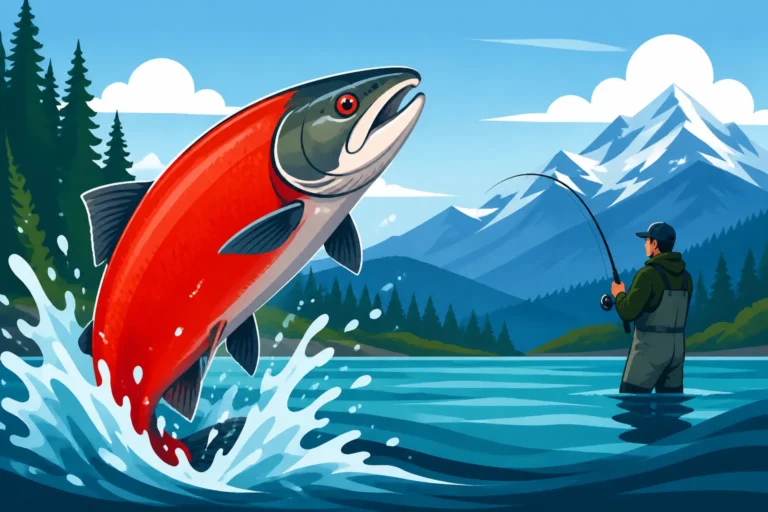
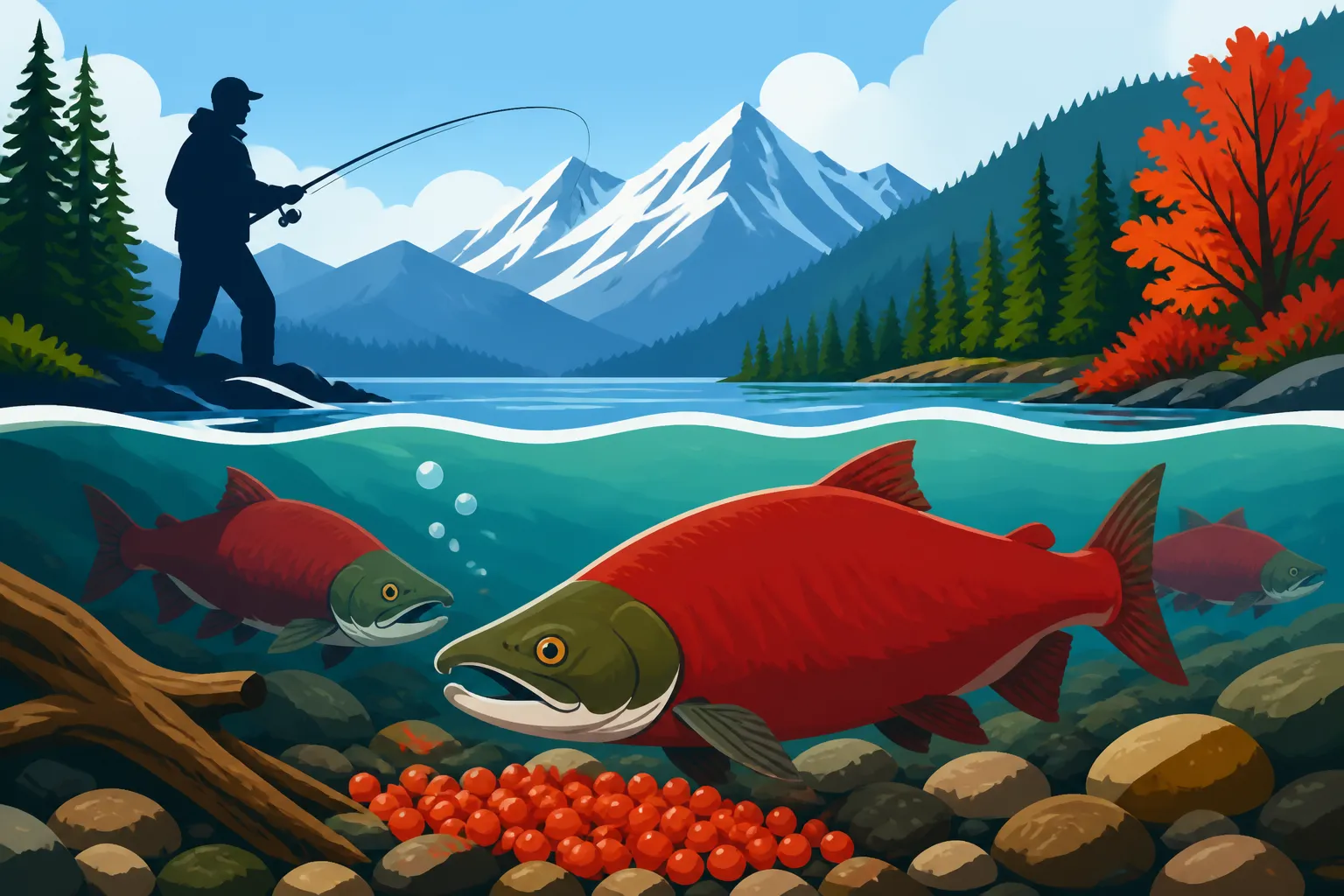
What really sets kokanee apart, especially as their spawning season approaches, is their appearance. For most of their lives in the lake, they have a silvery, somewhat iridescent body with a darker back, much like a miniature sockeye. But as the biological clock ticks towards their final act, their transformation is nothing short of spectacular. Their bodies turn a brilliant, unmistakable crimson red, their heads take on a greenish hue, and the males develop a distinct, hooked jaw known as a "kype" and often a humped back. This dramatic change is a clear signal of their reproductive readiness and is one of the most striking visual spectacles in BC's freshwater ecosystems.
The Importance of Kokanee in BC Ecosystems
Kokanee might be small, but their ecological role in British Columbia's freshwater lakes and rivers is absolutely huge. Think of them as the unsung heroes of the aquatic food chain. They are a primary forage fish, meaning they are a crucial food source for larger, predatory fish like rainbow trout, bull trout, and even the giant Gerrard rainbow trout in Kootenay Lake. Without a healthy kokanee population, these larger sportfish would struggle to find enough to eat, impacting their size, abundance, and the overall health of the fishery.
Beyond being dinner for bigger fish, kokanee also play a vital role in nutrient cycling. When they return to their spawning grounds, often upstream from the main lake, their bodies carry nutrients absorbed from the vastness of the lake environment. After they spawn and perish, these nutrients are released back into the ecosystem, fertilizing stream beds and lake shoals, providing food for aquatic insects, and ultimately supporting the entire aquatic food web, from microscopic organisms to the very plants growing along the banks. They truly are an indicator species, and a strong kokanee run often signifies a healthy and balanced lake environment. Understanding their life cycle, especially Kokanee Spawning Season in BC, is key to appreciating the delicate balance of these aquatic worlds.
The Kokanee Spawning Cycle: A Seasonal Transformation
The spawning cycle of kokanee is a dramatic, terminal event, much like other Pacific salmon. It's a journey fueled by instinct, leading to one final, magnificent act of reproduction.
When Do Kokanee Start Their Spawning Run?
The exact timing of the kokanee spawning run in British Columbia can vary a bit depending on the specific lake, local water temperatures, and weather patterns, but generally, this incredible migration begins in late summer and extends through the fall. You'll often see the first signs of activity around August or early September, with the peak usually occurring from mid-September through October. In some colder, higher elevation lakes, it might even stretch into early November.
What triggers this mass movement? It's a combination of factors. The shortening daylight hours are a primary signal, telling the fish that winter is approaching and it's time to reproduce. Declining lake and stream water temperatures also play a crucial role. As the water cools, it invigorates the kokanee, pushing them towards their ancestral spawning grounds. A significant rainfall event can also be a powerful catalyst, raising water levels in tributaries and making upstream migration easier, often leading to a surge in spawning activity. Anglers who understand these cues know that fishing for pre-spawning kokanee in the lake can be excellent just before this migration begins.
The Striking Physical Changes of Spawning Kokanee
If you've ever had the chance to witness kokanee during their spawning season, you know it's an unforgettable sight. The transformation from their sleek, silvery lake phase to their spawning colours is one of nature's most vivid displays. As mentioned, their bodies turn a stunning, deep crimson red, a stark contrast to the green head they develop. This vibrant colouration acts as a visual signal, helping them identify each other in the often-turbulent spawning waters.
But it's not just colour that changes. Male kokanee undergo significant physical modifications. Their jaws elongate and develop that pronounced "kype" – a hooked snout that makes them look almost prehistoric. Their backs become distinctly humped, and their skin thickens. These changes, while making them look formidable, are purely for the purpose of attracting mates and defending spawning territories. Females, while also turning red and green, typically have a less pronounced kype and hump. These incredible physiological changes are metabolically demanding and represent the final expenditure of all their energy reserves before their life cycle concludes.
Spawning Habitat: Where Kokanee Make Their Nests
Kokanee are very particular about where they choose to lay their eggs. They seek out very specific conditions to ensure the survival of their offspring. Their preferred spawning habitats typically fall into two categories: small, clear, gravel-bottomed tributary streams that flow into the main lake, or shallow, gravelly areas along the lake's shoreline where there's significant upwelling of groundwater.
The key requirement is clean, oxygenated water flowing through permeable gravel. Females, using their tails, excavate depressions in the gravel beds, called redds, where they deposit their eggs. Males then fertilize the eggs, and the females cover them with gravel, providing protection from predators and the elements. The upwelling groundwater in lake shoals provides a consistent flow of oxygen and stable temperatures, which are critical for the delicate developing embryos. These crucial spawning grounds are often found in relatively shallow water, making them vulnerable but also accessible for observation. Protecting these habitats is paramount for sustaining healthy kokanee populations, which in turn supports other species like the Gerrard Rainbow Trout of Kootenay Lake.
Prime Kokanee Spawning Locations Across British Columbia
British Columbia is blessed with numerous lakes that support thriving kokanee populations, each offering a unique glimpse into their incredible spawning journey. Knowing where to look can lead to some truly memorable wildlife viewing or pre-spawn angling adventures.
Major Interior Lakes and Their Tributaries
When we talk about kokanee in BC, the interior lakes immediately come to mind. These vast, deep bodies of water are the strongholds for some of the province's most robust kokanee runs.
- Okanagan Lake: This iconic lake in the Okanagan Valley is a prime example. During the fall, several creeks that feed into Okanagan Lake become bustling kokanee highways. Mission Creek, near Kelowna, is perhaps the most famous, drawing thousands of kokanee annually. Here, you can often observe masses of red-and-green fish pushing upstream. Other important tributaries include Mill Creek, Powers Creek, and Peachland Creek. The sheer volume of fish is astounding, making it a fantastic place for observing the cycle. When they're not spawning, Okanagan Lake Kokanee Fishing is a popular pastime.
- Kootenay Lake: Nestled in the Kootenay region, this large lake is renowned for its incredible kokanee population, which in turn fuels the growth of its famous Gerrard rainbow trout. Tributaries like Meadow Creek, Lardeau River, and the Kootenay River's upstream sections host impressive spawning runs. The scale of the spawning here can be breathtaking, with entire riverbeds appearing red with fish.
- Shuswap Lake: Further north, Shuswap Lake also boasts significant kokanee numbers. The Adams River, famous for its sockeye run, also sees kokanee. Other smaller creeks and even the main lake's shallow bays will see kokanee spawning activity. Knowing these spots is invaluable, both for observation and for understanding the wider ecosystem, as detailed in our Shuswap Lake Fishing Guide.
These major lakes act as central hubs, with a network of smaller streams becoming the vital arteries for the kokanee's final journey. It's a grand spectacle that highlights the intricate connections within BC's freshwater systems.
Smaller Lakes and Reservoirs with Healthy Runs
While the major lakes get a lot of attention, British Columbia is dotted with countless smaller lakes and reservoirs that also support healthy, though perhaps less spectacular, kokanee runs. These often provide more intimate viewing opportunities and can be fantastic fisheries in their own right, especially for anglers seeking less crowded experiences.
Lakes in the Cariboo-Chilcotin region, such as Horsefly Lake or Canim Lake, often have good kokanee populations. Further north, lakes like Williston Lake, although a reservoir, still supports kokanee that utilize its feeder streams. Even some smaller, accessible lakes near population centres, if they have suitable gravel beds and water quality, will host their own kokanee spawning events. These smaller populations are just as vital to their local ecosystems, providing forage for resident trout and contributing to the nutrient cycle. Exploring these hidden gems can be incredibly rewarding, both for the angler and the nature enthusiast. If you're looking for diversity, checking out a list of Best Kokanee Lakes in the interior of BC can give you a great head start.
Observing Spawning Kokanee: Ethics and Opportunities
Witnessing kokanee spawning is a privilege, and it comes with a responsibility to be respectful and mindful of these fish during their most vulnerable time. Many communities have established viewing platforms or designated areas to allow the public to observe this natural wonder without disturbing the fish.
When observing spawning kokanee, remember these key ethical guidelines:
- Keep your distance: Avoid wading into the spawning beds or harassing the fish. Their energy is entirely dedicated to reproduction, and any disturbance can negatively impact their success.
- No fishing in spawning areas: It is often illegal to fish in designated spawning channels or within a certain proximity to them during the spawning season. Even where it might be technically legal, it's generally considered unethical. The flesh of spawning kokanee is also soft and poor in quality, making them undesirable for eating. Always check the BC Fishing Regulations Explained before heading out.
- Leave no trace: Pack out everything you pack in. Preserve the pristine nature of these critical habitats.
- Learn and educate: Use the opportunity to learn more about the salmon life cycle and share your knowledge with others, fostering a greater appreciation for conservation.
Many provincial parks and local organizations offer interpretive programs during the peak spawning season, especially at popular spots like Mission Creek. It's an excellent family activity and a profound way to connect with the natural world of British Columbia.
Angling Implications and Conservation During Spawning Season
For anglers, the kokanee spawning season is a double-edged sword. It means a spectacular natural event, but also a shift in fishing strategies and a heightened awareness of conservation.
Why Spawning Kokanee Are Not Ideal for Catching
While the sight of brightly coloured kokanee pushing upstream might be tempting, attempting to catch them during their active spawning phase is generally discouraged and often prohibited. There are several very good reasons for this:
First and foremost, the flesh quality of spawning kokanee deteriorates significantly. As they cease feeding and convert all their body fat and muscle into reproductive energy, their meat becomes soft, pale, and loses much of its flavour. It's simply not good eating. Many anglers who accidentally catch a spawning kokanee quickly realize this and understand why it's best to leave them alone.
Secondly, and more importantly, is the ethical consideration. These fish are at the culmination of their life cycle, driven by an innate urge to reproduce. Any disturbance can interrupt this critical process, potentially jeopardizing the successful laying and fertilization of eggs. Catching and releasing a spawning fish, even carefully, can cause stress and injury, further reducing its chances of successful reproduction.
Finally, regulations often reflect these concerns. Many areas will have specific closures or restrictions on fishing for kokanee during their spawning runs to protect the population. Ignorance of these rules is not an excuse, and fishing in closed areas can lead to significant penalties, as outlined in Fishing Without a License in BC: Penalties. Always consult the most current Reading the BC Freshwater Fishing Regulations Synopsis before heading out.
Fishing Before and After the Spawning Peak
Just because kokanee are off-limits during their peak spawn doesn't mean you can't enjoy excellent fishing opportunities around this time! In fact, the periods immediately before and after the main spawning run can offer some of the best kokanee fishing of the year.
- Pre-Spawning Frenzy: In the weeks leading up to the spawning migration (late summer, often July and August), kokanee are in a feeding frenzy, trying to pack on as much energy as possible for their strenuous journey. This is often when they are at their largest and their flesh is at its firmest and tastiest. They are actively seeking out food in the open waters of the lake, making them a prime target for anglers using various trolling techniques. This is a fantastic time for consistent action and quality fish.
- Post-Spawn Opportunities (for Predators): Once the kokanee have spawned and died, their carcasses become a valuable food source for other opportunistic fish and wildlife. While you won't be targeting kokanee themselves, other predatory fish like rainbow trout and bull trout will often key in on the abundance of decaying kokanee and their eggs. Fishing nearby the spawning grounds, once the kokanee have completed their cycle and dispersed, can lead to encounters with larger trout that are gorging themselves. Remember to verify regulations regarding fishing near spawning beds, as some areas may remain closed even after the kokanee have passed. For techniques on how to catch other species, check out resources like How to Catch Rainbow Trout in BC Lakes.
Conservation Efforts and Angler Responsibility
The health of BC's kokanee populations is a shared responsibility, and anglers play a critical role in conservation efforts. Adhering to regulations is just the starting point.
Conservation involves a proactive approach:
- Respect Bag and Possession Limits: These limits are put in place to ensure sustainable harvesting. Over-harvesting, even accidentally, can quickly deplete local populations. Understanding BC Kokanee Retention Rules and BC Bag and Possession Limits by Species is non-negotiable.
- Protect Habitat: Avoid disturbing stream banks, riparian vegetation, and lake shoals, especially those known to be spawning areas. Erosion and sedimentation can smother eggs and destroy vital habitat.
- Practice Responsible Catch and Release: If you do accidentally hook a spawning kokanee, release it immediately and with as little handling as possible. Use barbless hooks to minimize harm.
- Report Concerns: If you observe poaching, pollution, or significant habitat degradation, report it to the appropriate BC Fisheries authorities.
Many organizations, like the Freshwater Fisheries Society of BC, actively manage and monitor kokanee populations, including stocking programs in some lakes to enhance fishing opportunities. Your license fees contribute to these vital programs, ensuring that future generations can also enjoy the beauty and bounty of BC's kokanee.
Gear and Techniques for Pre-Spawn Kokanee Fishing
To truly enjoy the best of kokanee fishing, you'll want to target them in the weeks and months leading up to their spawning migration when they are actively feeding and in prime condition. This requires specific gear and techniques that are tailored to their habits.
Essential Tackle for Kokanee
Kokanee are not giant fish, and their mouths are relatively delicate. Therefore, light tackle is the name of the game for successful and enjoyable kokanee fishing.
- Rods: A light to ultralight spinning rod, typically 6 to 7 feet in length with a fast or moderate-fast action, is perfect. This allows for sensitive feel, good casting distance (if still fishing), and enough flex to absorb the runs of a feisty kokanee without tearing the hook out of its mouth.
- Reels: Pair your rod with a small spinning reel (e.g., 1000 to 2500 size) spooled with light line.
- Line: Opt for 4 to 6-pound test monofilament or fluorocarbon. Monofilament offers good stretch and knot strength, while fluorocarbon is virtually invisible underwater and has less stretch, providing more sensitivity. Many anglers use a braided main line with a fluorocarbon leader for strength and invisibility. You can find excellent options for fishing line on sites like Amazon.
- Terminal Tackle: You'll need an assortment of small swivels, snap swivels, and perhaps some small lead weights or split shot, depending on your preferred technique.
The lighter your setup, the more sporting the fight will be, and the less stress you'll put on the fish, especially if you plan to practice catch and release for some of your day.
Best Lures and Baits to Entice Pre-Spawners
Kokanee are highly attracted to flash, colour, and scent. Their feeding habits are often opportunistic, and they respond well to presentations that mimic small invertebrates or offer a tempting aroma.
- Dodgers and Flashers: These are perhaps the most crucial components of a kokanee trolling setup. Dodgers and flashers don't have hooks themselves; their purpose is to create flash, vibration, and an erratic action that attracts kokanee and imparts movement to the trailing lure. Small sizes (2-4 inches) in silver, chrome, pink, chartreuse, or even specialized UV colours are highly effective. Brands like Dick Nite, Rocky Mountain Tackle, and Shasta Tackle are popular choices.
- Lures: Trailing behind your dodger, small lures like wedding bands, mini-hoochies, or small spoons (e.g., Gibbs Delta, Apex) are deadly.
- Wedding Bands: These consist of small beads, a spinner blade, and small hooks. They come in a dazzling array of colours.
- Hoochies: Tiny squid-like skirts in pink, orange, or chartreuse are very effective.
- Small Spoons: Spoons with a wobbling action, often tipped with bait, also work well.
- Bait: Tipping your lures with a small piece of shoepeg corn (often dyed with attractant scents) is a classic kokanee trick. The corn adds scent, flavour, and a visual trigger. Other anglers might use maggots or a small piece of worm. The right scent can make all the difference, and many anglers swear by kokanee-specific attractants found at local tackle shops or online at Amazon. Experimentation is key to finding what works best on a given day in a particular lake.
Trolling and Still Fishing Strategies
Effective kokanee fishing often involves covering water and finding the schools.
- Trolling: This is the most popular and effective method for kokanee in BC lakes.
- Depth: Kokanee often suspend at specific depths, usually in the cooler water layers. Using a downrigger or weighted lines (like lead core or simply adding sufficient weight to your main line) is essential for getting your lures down to the fish. A good fish finder is invaluable for locating schools and determining their depth.
- Speed: A slow trolling speed, typically between 0.8 and 1.5 miles per hour, is often ideal. This allows the dodger and lure to work effectively without overpowering their action.
- Leader Length: The distance between your dodger/flasher and your lure is critical. This "leader length" can vary, but a good starting point is usually 8 to 18 inches for hoochies and wedding bands, and perhaps a bit longer for small spoons. Experiment!
- Spreads: Don't be afraid to run multiple lines at different depths with different colour combinations until you find what the fish are biting on. Many boats will run a two-rod spread per angler, allowed under BC Freshwater vs Tidal Waters License, Explained.
- Still Fishing (or Anchoring): While less common for actively searching for kokanee, still fishing can be effective if you know where a school is holding, perhaps over a deep drop-off or a submerged structure. You'd typically use a bottom rig with a small bait (corn, worm) or a small jig, suspended at the known depth of the fish. This technique can be surprisingly effective in smaller lakes or at certain times of day. You can find specific jigs and rigs suitable for this method on Amazon.
- Jigging: During certain times, especially when fish are schooled up or just before they move to spawn, vertical jigging with small, flashy jigs can be incredibly effective. Drop a small jig (1/8 to 1/4 ounce) to the depth where fish are marked and use a subtle lift-and-drop motion. This can be particularly exciting and productive when the fish are concentrated.
| Lake Name | General Spawning Peak | Primary Spawning Habitat | Notable Features | Best for Angling (Pre-Spawn) |
|---|---|---|---|---|
| Okanagan Lake | Sep-Oct | Mission Creek, Mill Creek, Shoals | Large runs, easily viewable at Mission Creek. Forage for Rainbow Trout. | Mid-Summer to Early Fall |
| Kootenay Lake | Sep-Nov | Lardeau River, Meadow Creek | Supports massive Gerrard Rainbow Trout. Very strong runs. | Late Spring to Mid-Fall |
| Shuswap Lake | Sep-Oct | Adams River, smaller tributaries | Part of a complex salmon system. Good overall fishery. | Mid-Summer to Early Fall |
| Horsefly Lake | Sep-Oct | Horsefly River tributaries | Cariboo region gem, more remote opportunities. | Summer |
| Williston Lake | Sep-Oct | Feeder streams, gravel bars | Reservoir with healthy wild populations. | Summer |
The key to success with kokanee is persistence and a willingness to adapt your techniques based on what the fish are telling you. Keep an eye on local BC Fishery Notices and In-Season Closures, Explained for any updates or changes.
Disclaimer
This article is for general informational purposes only and does not constitute professional advice. Laws, prices and regulations vary by location and change over time. Consult a qualified professional for guidance on your specific situation.