Best technique for post-spawn steelhead
Trying to pinpoint and entice a steelhead after it's completed its arduous spawning journey can feel like searching for a ghost in the river. These fish, often called "kelts," are a shadow of their former aggressive selves, tired, thin, and focused solely on survival and returning to the ocean. Many anglers find themselves frustrated, using techniques that worked wonders just weeks prior, only to come up empty. But fear not, this comprehensive guide will walk you through the subtle art of targeting post-spawn steelhead in British Columbia, providing the insights and actionable steps you need to successfully connect with these resilient fish while prioritizing their recovery.
Understanding Post-Spawn Steelhead Behavior
Before you even cast a line, it's crucial to understand the unique challenges and characteristics of post-spawn steelhead. These aren't the chrome-bright, feisty fish that hammered your gear on the way upstream. They're in a different life stage entirely, and your approach needs to shift dramatically to match their current state.
The "Kelt" Life Stage
When we talk about post-spawn steelhead, we're really talking about "kelts." These are fish that have successfully spawned and are now making their way back downriver to the ocean. You'll recognize them by their distinct appearance: they're often noticeably thinner, sometimes with a sunken belly, and their colours can be faded or even slightly discoloured from the rigours of spawning. They might also bear the scars of their upstream journey or spawning activity.
Their primary drive now is simply to survive and get back to the abundant food sources of the saltwater environment. They've expended an incredible amount of energy, haven't fed much, and are in a highly vulnerable state. Their metabolism is slower, and they're not looking for a fight; they're looking for an easy meal and a safe passage. This means they won't typically chase a flashy lure or aggressively grab a swinging fly. Instead, they're likely to take a well-presented, subtle offering that appears effortlessly drifted right into their strike zone, requiring minimal energy to consume. Handling these fish with the utmost care is paramount for their survival, a practice we'll delve into later.
Where to Find Them
Finding kelts requires a shift in your usual steelhead river navigation. While pre-spawn fish might hold in faster, oxygenated runs or gravel beds, kelts often gravitate towards different types of water, seeking refuge and conservation of energy. Look for them in slower, deeper pools, often at the tail-outs where the current eases, or in the soft, swirling water of eddy lines and current seams. These areas provide a break from the main current, allowing them to rest without fighting the flow.
Cover is also incredibly important for these vulnerable fish. Overhanging banks, log jams, submerged boulders, or even deep troughs can offer them a sense of security from predators both above and below the water. Imagine a tired fish trying to recover; it won't be in the middle of a raging torrent. Instead, it will seek out a comfortable, low-energy hiding spot where it can intercept food with minimal effort. Think about the subtle changes in a river's flow: that slow, deep pocket behind a large rock, the calm water alongside a submerged tree, or the gradual deepening of a pool near an undercut bank. These are prime kelt lies. Remember that river conditions, like those described in Best Techniques for High Water Spring Conditions, can dramatically alter where fish hold, so always be observant.
Key Techniques for Post-Spawn Steelhead
Successfully hooking a post-spawn steelhead is less about brute force and more about finesse and understanding their current mindset. These fish are lethargic and easily spooked, so your presentation needs to be incredibly subtle and natural.
Delicacy and Presentation
The name of the game for kelts is "delicacy." Unlike aggressive pre-spawn fish that might chase a lure or fly, a kelt is looking for an easy meal that practically drifts into its mouth. This means heavy, splashy casts are out, and soft, precise presentations are in. The goal is to make your offering appear as natural as possible, mimicking an injured or dislodged food item struggling in the current.
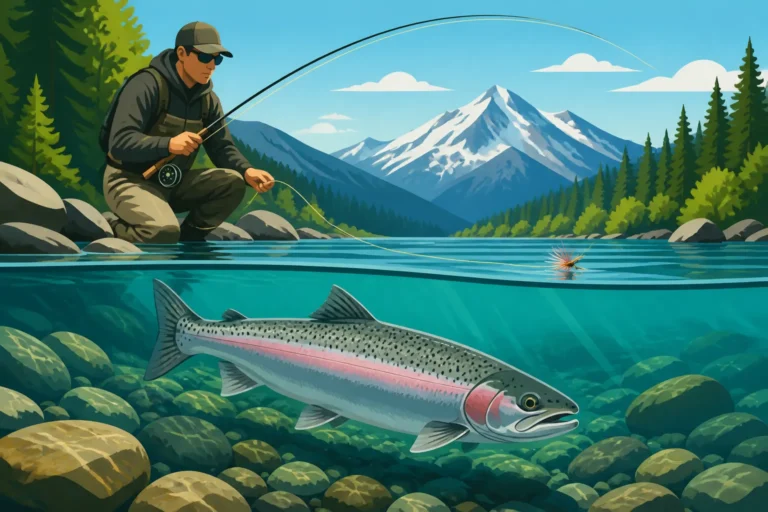
A dead drift is often the most effective technique, allowing your bait or fly to tumble naturally with the current, completely drag-free, right into the kelt's holding lie. This requires careful mending of your line to avoid any unnatural pull on the offering. Think about how a natural insect or piece of roe would drift downstream – it doesn't suddenly dart sideways against the current. Using light leaders, sometimes as thin as 6-8 lb fluorocarbon, is also crucial. These fish can be incredibly line-shy, especially in clearer water, and a heavy leader can easily put them off. The entire presentation, from the cast to the drift, should be as stealthy and unobtrusive as possible to avoid alarming these wary fish.
Effective Baits and Lures
Given their finicky nature, specific baits and lures tend to shine for post-spawn steelhead. They need something that looks appealing, requires little effort to consume, and is presented perfectly.
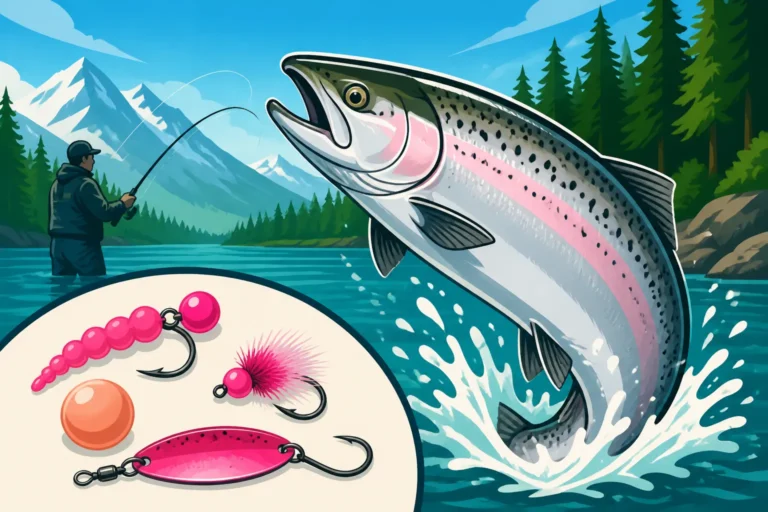
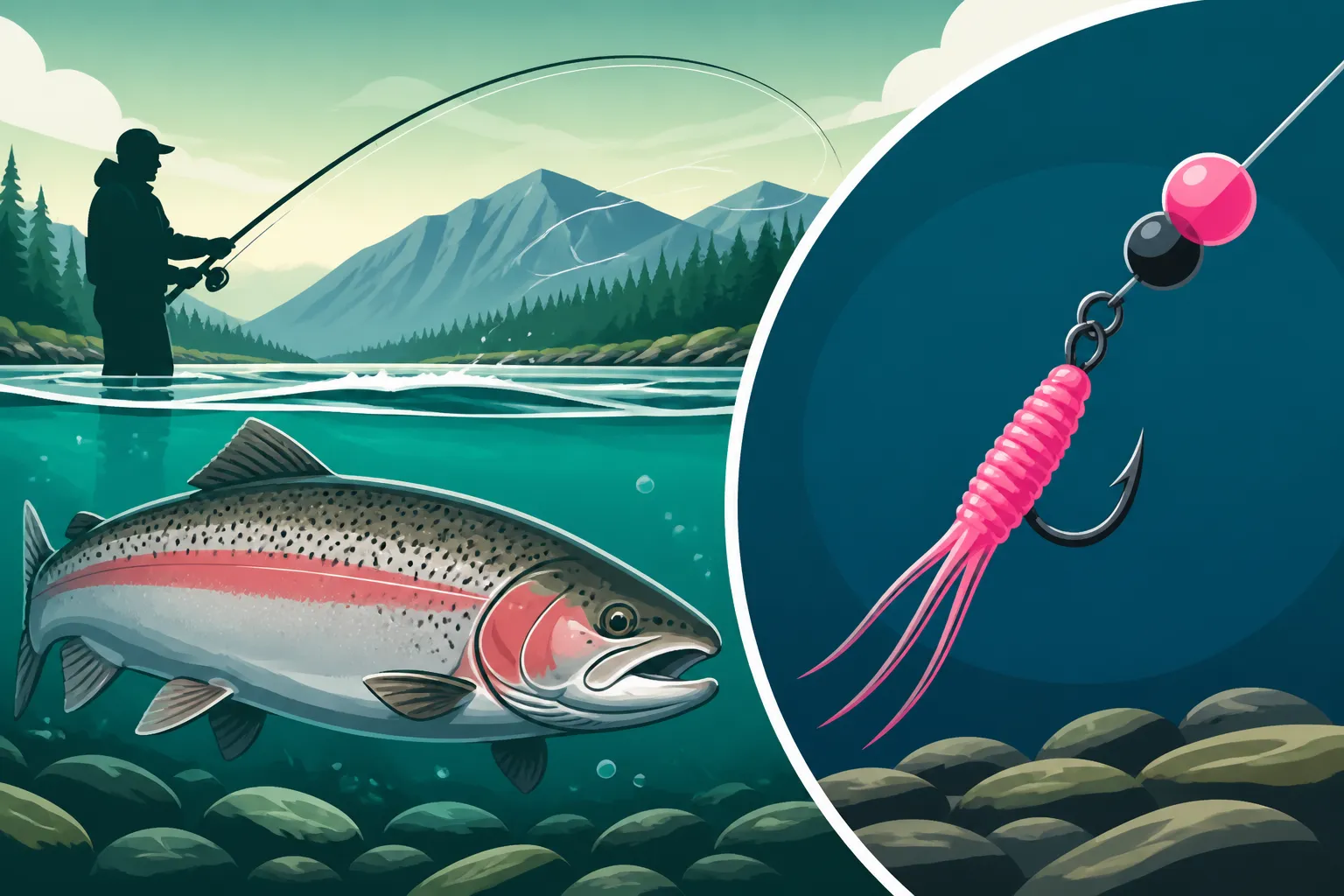
For bait anglers, small jigs tipped with a piece of roe, a small worm, or even a classic pink worm are often highly effective. The jig provides a subtle profile and can be drifted along the bottom or suspended under a float. Plastic worms, particularly the vibrant pink ones, are a long-standing favourite for kelts. Their soft texture and enticing colour often provoke a reaction strike even from the most lethargic fish. Beads, mimicking single salmon eggs, are another excellent choice, especially when fished under a float or as part of a drift rig. You can find a vast selection of these on platforms like Amazon, which allows you to experiment with different sizes and colours.
Fly anglers will want to scale down their patterns. Forget the large, flashy intruders you used for fresh chrome. Instead, opt for sparse, unweighted or lightly weighted nymphs, small leech patterns, or even tiny egg patterns. Focus on natural colours like olive, black, brown, or even pale pinks and oranges. The key is to present these flies with a perfect dead drift, allowing them to gently tumble through the fish's holding water. Sometimes, a tiny, almost invisible nymph is all it takes to trigger a take. For specific ideas, check out Fly Patterns for BC Steelhead Rivers or Best Baits for Steelhead on the Skeena.
Float Fishing and Bottom Bouncing
When targeting kelts, your chosen technique for delivering the bait or fly is just as important as the offering itself. Float fishing and bottom bouncing are two highly effective methods that allow for precise, natural presentations in the slower, deeper water where kelts often reside.
Float Fishing: This technique involves suspending your bait or fly under a float (or bobber) and allowing it to drift naturally with the current. It's excellent for covering slow, deep pools, eddy lines, and current seams where kelts tend to hold. The float helps you detect the slightest takes, which can be incredibly subtle from a tired fish. The key is to "match the hatch" of the current, ensuring your float moves at the exact same speed as the water, indicating a drag-free drift for your offering below. Adjusting your depth is critical; kelts are often holding very close to the bottom.
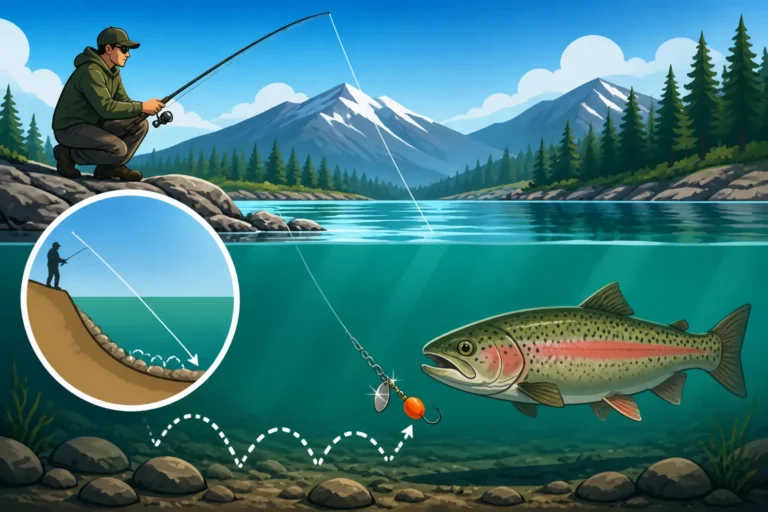
Bottom Bouncing: For deeper, more turbulent runs or when you want to ensure your offering stays in the immediate strike zone near the riverbed, bottom bouncing (or drift fishing with lead) can be incredibly effective. This method involves using a lead weight (pencil lead, slinky, or weighted dropper) that lightly "bounces" or "rolls" along the river bottom, keeping your bait or fly just above it. This allows you to present your offering in the lowest part of the water column where kelts are often resting. It's a more tactile method, as you're feeling for subtle bumps and taps that signal a fish. Both techniques require practice in Wading Techniques for BC Steelhead Rivers to ensure you're positioning yourself correctly for the best drift.
Gear and Setup Considerations
Your gear choices also play a significant role in successful kelt fishing. While you might use heavier setups for aggressive, fresh fish, a more sensitive, lighter approach is often better for post-spawn steelhead.
Rod, Reel, and Line Choices
For kelts, sensitivity is paramount. You'll want a rod that can detect those incredibly subtle takes and still have enough backbone to handle a strong, albeit tired, fish.
- Rods: A medium-light to medium power rod, typically 9 to 11 feet in length, is ideal. The longer length helps with line mending and controlling your drift, especially with float fishing. A moderate action will provide enough flex to absorb head shakes from a fish but still transmit those delicate taps. Graphite rods are excellent for their sensitivity.
- Reels: A good quality spinning reel or a centrepin reel for float fishing is recommended. Whatever you choose, ensure it has a smooth, reliable drag system. Kelts might be tired, but they can still make powerful runs, and a sticky drag can easily lead to a broken line or pulled hook.
- Line: For your mainline, 8-12 lb monofilament or braided line is a good starting point. Braided line offers excellent sensitivity and casting distance, especially when paired with a fluorocarbon leader. Monofilament provides a bit more stretch, which can be forgiving. Regardless of your mainline, always use a fluorocarbon leader. Its low visibility underwater and abrasion resistance are invaluable when fishing for wary fish in rocky environments. You can easily find high-quality fluorocarbon leader material on Amazon from brands like Seaguar or Berkeley.
Terminal Tackle for Finesse
The small details of your terminal tackle become incredibly important when chasing kelts.
- Hooks: Opt for smaller, high-quality, single barbless hooks. Sizes ranging from 4 to 1/0 are generally appropriate, depending on the size of your bait. Barbless hooks minimize damage to the fish, making their release much safer.
- Weights: For delicate presentations, small split shot or pencil lead are often preferred over heavier weights. The idea is to use just enough weight to get your offering to the desired depth without hindering its natural drift. A "slinky" style weight, which is soft and flexible, is also excellent for bottom bouncing as it snags less often.
- Swivels and Leaders: A small barrel or bead swivel can help prevent line twist, especially when using lighter lines and baits that might spin. Attach your fluorocarbon leader (typically 3-6 feet long) to your mainline via a swivel or a strong knot. The specific setup will vary depending on whether you're float fishing or bottom bouncing, but the principle remains the same: a clean, subtle presentation is key.
Ethical Angling and Safety
Catching a post-spawn steelhead is a privilege, and their well-being must be your absolute top priority. These fish are incredibly vulnerable, having just completed the most exhausting part of their life cycle.
Catch and Release Best Practices
Minimizing stress and ensuring a high survival rate for kelts is essential for the future of BC's steelhead populations. Every single fish counts.
- Minimize Fight Time: While you want to enjoy the fight, aim to bring the fish in as quickly and efficiently as possible without over-stressing it. Prolonged fights exhaust an already weakened fish.
- Keep Fish in Water: This is perhaps the most critical rule. Avoid taking the fish out of the water for photos unless absolutely necessary and for only a few seconds. The air can damage their gills and remove their protective slime layer, making them susceptible to disease. Unhook them while they are submerged.
- Proper Unhooking: Use long-nosed pliers or a de-hooking tool to remove the hook quickly and cleanly. If the hook is deeply embedded and cannot be easily removed, cut the line as close to the hook as possible. Barbless hooks make this process much easier.
- Avoid Nets with Knotting: Knotted mesh nets can strip a fish of its protective slime. Opt for a rubberized, knotless landing net if you need one, as these are much gentler on the fish.
- Revive Before Release: Gently hold the fish upright in the current, facing upstream, allowing water to flow over its gills. Don't move it back and forth; this doesn't help. Wait until the fish is strong enough to swim away under its own power. Sometimes, this can take a few minutes. Release it only when it gives a strong kick and swims off voluntarily. Following these guidelines, similar to Sturgeon catch and release survival tips, ensures you're doing your part for conservation.
Reading River Conditions
Understanding the river conditions is not just about finding fish; it's about fishing safely and effectively. Post-spawn season often coincides with spring runoff, which can lead to rapidly changing conditions.
- Water Levels: Spring can bring fluctuating water levels due to snowmelt and rain. High, murky water can make fishing difficult and even dangerous. Conversely, very low, clear water will make kelts even warier and harder to approach without spooking them. Always assess the river's flow and clarity before committing to a spot.
- Water Clarity: Clear water demands a more stealthy approach, lighter leaders, and smaller baits/flies. Murky water might allow for slightly heavier line and more scent-based baits, but visibility will be reduced, making it harder to spot holding lies or detect subtle takes.
- Water Temperature: Like all fish, steelhead activity is influenced by water temperature. Kelts are often more lethargic in very cold water. As temperatures slowly rise in the spring, their activity might increase slightly, making them a bit more receptive to an offering. Use a thermometer to gauge conditions.
- Fishery Notices: Always, always check BC Fishery Notices and In-Season Closures, Explained before you head out. Regulations can change quickly, especially for steelhead, with specific rivers or sections closing to protect vulnerable populations. Knowing the current rules for BC Steelhead Season Dates and having the required BC Steelhead Conservation Surcharge Stamp is not just good practice, it's the law.
Understanding and respecting the unique phase of life a post-spawn steelhead is in will not only increase your chances of success but also ensure you're contributing to the long-term health of these magnificent fish. Good luck out there, and remember to tread lightly and fish kindly.
Disclaimer
This article is for general informational purposes only and does not constitute professional advice. Laws, prices and regulations vary by location and change over time. Consult a qualified professional for guidance on your specific situation.