Best technique for sturgeon in cold water
There’s nothing quite like the crisp air of a late fall or winter day in British Columbia, but when the mercury drops, many anglers pack away their gear, convinced the fish aren't biting. For those of us obsessed with the colossal white sturgeon, though, cold water simply means adapting our approach. This comprehensive guide will arm you with the specific techniques and knowledge needed to successfully target these magnificent giants when the temperatures plummet, transforming a chilly outing into a potentially unforgettable angling adventure.
Understanding Sturgeon Behavior in Cooler Waters
Cold water fishing for sturgeon isn't just about bundling up; it's about understanding how these ancient fish react to the chill. Their metabolism, activity levels, and even their preferred hiding spots change significantly when the water temperature drops.
How Cold Water Affects Sturgeon Physiology and Activity
Imagine trying to sprint after a big meal right after waking up on a freezing morning – that’s kind of how a sturgeon feels in cold water. Like most cold-blooded creatures, their metabolic rate slows down considerably. This means they digest food much more slowly, require less energy, and aren't as actively cruising for a meal. Their movements become more sluggish, and their feeding windows shorten. They're still eating, make no mistake, but they're not expending a lot of energy to do so. This impacts everything from where they hold to how aggressively they strike your bait. You'll often find them conserving energy, holding in deeper, slower-moving sections of the river where the water temperature is more stable, rather than expending energy fighting heavy currents. This is why knowing What white sturgeon eat in the Fraser River is still relevant, but their pursuit of it changes.
Prime Cold Water Periods for Sturgeon Fishing in BC
In British Columbia, "cold water" sturgeon fishing typically encompasses late fall, winter, and very early spring. While the Fraser River system, particularly the Lower Fraser, is a year-round fishery, the techniques really shift when those water temperatures dip below 8-10 degrees Celsius (around 46-50°F).
- Late Fall (October-November): As salmon runs dwindle and water temperatures begin their descent, sturgeon are still actively feeding, but their movements become more predictable. This is often a fantastic time for trophy fish as they're still bulking up.
- Winter (December-February): This is the chilliest period. The river flow is usually lower and clearer, but the water is at its coldest. Sturgeon will be at their most lethargic, requiring extreme patience and precise bait presentation.
- Early Spring (March-April): As temperatures slowly start to rise, sturgeon activity gradually picks up. The transition from winter techniques to more active approaches is key during this time. You'll find them starting to venture out of their deep winter holes as food sources become more available.
These periods often coincide with quieter times on the river, meaning less fishing pressure and a more serene angling experience, even if the bites are fewer and far between.
Identifying Cold Water Sturgeon Haunts and Holds
Sturgeon are masters of efficiency, especially in cold water. They'll position themselves where they can get an easy meal without expending much effort. This means you need to think like a sturgeon and target specific types of structure and depth.
- Deep Holes and Eddies: These are classic sturgeon hangouts year-round, but they become even more critical in cold water. Deep holes offer thermal refuge from fluctuating surface temperatures. Eddies, especially large, slow-moving ones, provide a calm current where sturgeon can sit comfortably, letting food drift to them.
- Current Seams and Drop-offs: Look for the transition points where fast current meets slower water. Sturgeon will often hold just out of the main current, waiting for food items to be swept past them. Submerged drop-offs or ledges are also prime spots, as they create current breaks and offer quick access to deeper water. Knowing How deep white sturgeon go in the Fraser is crucial for pinpointing these areas.
- Below Spawning Beds (post-salmon run): After the salmon have spawned and died, their carcasses and eggs provide a rich, easy food source for sturgeon. While the primary salmon runs are over, residual nutrients can still accumulate in certain areas, attracting sluggish sturgeon. This is particularly true in areas like the lower Fraser River where massive salmon runs occur.
Essential Gear for Cold Water Sturgeon Fishing
When tackling BC sturgeon in cold water, your gear needs to be robust, reliable, and perfectly suited for the conditions. You can't just "make do" with a medium-heavy bass rod; you need specialized equipment that can handle a fish that can easily outweigh you. Many specialized items can be found on platforms like Amazon, making it easier to prepare.
Rod, Reel, and Line Selection for Heavy Hitters
Cold water sturgeon fishing demands serious tackle. These fish are incredibly powerful, even when lethargic, and you need to be able to turn their heads and bring them to the boat quickly and safely for release.
- Rods: Look for heavy to extra-heavy power rods, typically 7.5 to 9 feet in length, with a fast or moderate-fast action. The backbone is paramount for leverage against these giants. Rods designed for catfish or saltwater bottom fishing often translate well. Consider brands like Lamiglas or Shimano for their durability.
- Reels: A high-quality conventional (baitcasting) reel with a smooth, powerful drag system is non-negotiable. Look for models with a high line capacity (at least 300 yards of heavy braid) and robust gears. Reels like the Shimano Tekota or Penn Squall are popular choices. You'll want something that won't seize up in colder temperatures.
- Line: Braided line is the only way to go for sturgeon. Its no-stretch properties provide incredible sensitivity for detecting subtle cold-water bites and immense strength for fighting big fish. Opt for 100-150 lb test braid. Pair this with a heavy monofilament or fluorocarbon leader, typically 150-250 lb test, to provide abrasion resistance against the sturgeon's rough skin and rocky river bottom. If you're wondering Best line for sturgeon fishing in heavy current, braid is always the answer for your main line.
Rigging for Cold Water Success
The effectiveness of your setup hinges on your rig. For cold water sturgeon, a simple yet bomb-proof bottom rig is king.
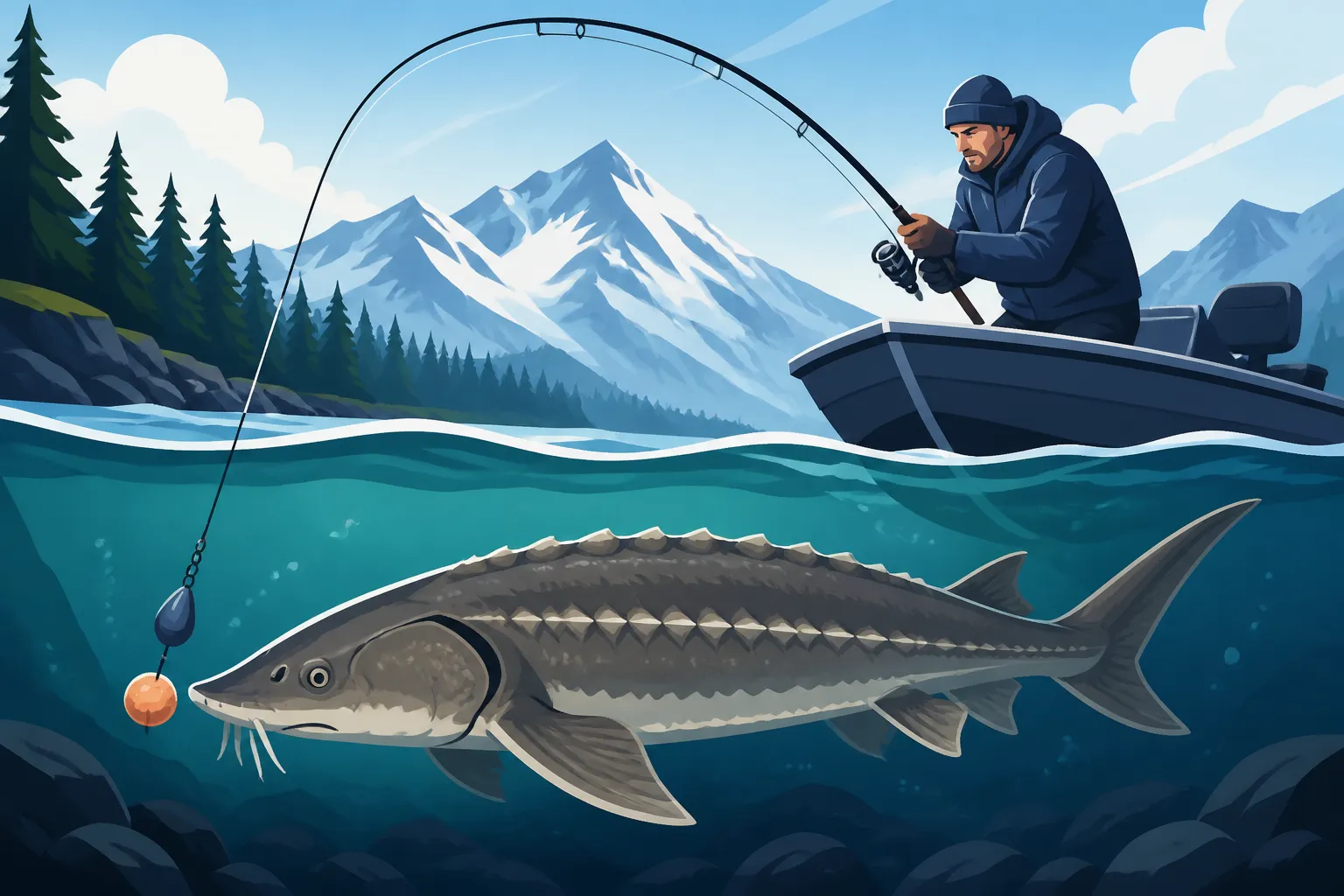
- Sliding Sinker Rig (Carolina Rig): This is the gold standard. Start with a heavy lead pyramid or flat-bottomed sinker (8-20 oz, depending on current) threaded onto your main line, followed by a robust bead to protect your knot. Then tie on a heavy-duty swivel (300-400 lb test). Your leader (3-6 feet of 150-250 lb mono/fluoro) is tied to the other end of the swivel. This setup allows the sturgeon to pick up the bait without immediately feeling the weight of the sinker, which is crucial for those light cold-water bites. If you need to stock up on sinkers or swivels, you can often find bulk packs on Amazon. For specific guidance, read up on the Best rig for bottom fishing for sturgeon.
- Hooks: Always use stout, non-offset circle hooks. Sizes 10/0 to 14/0 are standard. Circle hooks are essential for sturgeon conservation, as they are designed to hook in the corner of the fish's mouth, minimizing deep hooking and making for easier, safer releases, which is part of the BC Fraser River sturgeon catch and release requirement.
Bait Choices That Entice Lethargic Sturgeon
In cold water, scent and durability are paramount. Sturgeon aren't actively chasing; they're relying on their incredible sense of smell to locate an easy meal.
- Oily and Scent-Rich Baits:
- Lamprey: Often considered the ultimate sturgeon bait, especially in cold water. Lamprey are incredibly oily and release a potent scent trail that sturgeon can detect from a distance. You'll typically use sections of lamprey, sometimes butterfly-cut to expose more flesh.
- Eulachon (Oolichan): Another super oily baitfish, eulachon are seasonal but highly effective when available. Their strong scent is irresistible to sturgeon.
- Salmon Carcasses/Roe: While less common in the dead of winter, fresh or cured salmon roe bags can be highly effective, especially if there's any residual salmon activity. Sections of salmon carcasses (where legal) are also excellent.
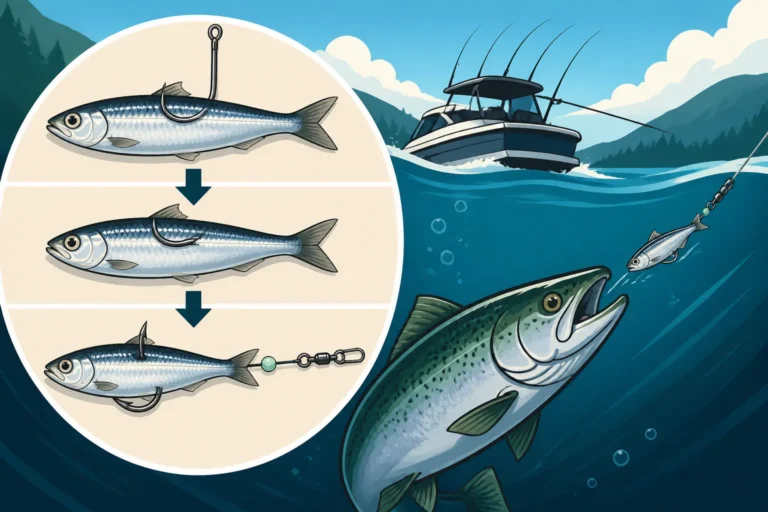
- Sardines/Herring: Readily available and very oily, these can be good alternatives if other premium baits are scarce. Ensure they are fresh or properly brined.
- Presentation: Ensure your bait is securely hooked and presented to waft naturally in the current. Some anglers inject their baits with additional scent attractants, which can be purchased on Amazon, to create an even stronger olfactory signature. The goal is to make it as easy and appealing as possible for a sturgeon to find and ingest. For more on this, check out Best bait for sturgeon on the Fraser River.
Master the Cold Water Sturgeon Technique
Success in cold water isn't about brute force; it's about finesse, patience, and meticulous attention to detail. Every step, from casting to the fight, needs to be considered.
Precise Casting and Strategic Bait Placement
Accuracy is key. You're not just casting anywhere; you're targeting specific holding areas where sluggish sturgeon are likely to be.
- Upstream Cast: Cast your rig upstream of your desired target area, allowing the heavy sinker to drag and roll slightly with the current until it settles precisely in the eddy, seam, or hole you're targeting. This natural drift makes your bait look more authentic.
- Anchor Management: When boat fishing, ensure your anchor is set firmly and precisely. You want your boat to be stable and positioned to present baits effectively without drifting off target. In strong currents, two anchors might be necessary.
- Multiple Rods (Where Permitted): If regulations allow, deploying multiple rods can increase your chances. Vary your casting distances and angles slightly to cover different parts of a promising holding area. This helps you figure out where the fish are concentrating.
The Waiting Game and Subtle Strike Detection
This is where patience truly becomes a virtue. Cold water sturgeon bites are often incredibly subtle – a far cry from the aggressive takes of warmer months.
- Rod Holders are Your Friends: Use sturdy rod holders. You'll want to keep your rod tip low, almost touching the water, to minimize bow in your line from the current and maximize sensitivity.
- Watch the Rod Tip: Don't take your eyes off your rod tip. A cold-water sturgeon bite might be a slight twitch, a gentle tap, or a slow, deliberate bend in the rod that doesn't immediately spring back. It could also be a sudden slackening of the line as the fish picks up the bait and moves upstream.
- Don't Strike Too Soon: With a circle hook, you generally don't need a massive hookset. Once you detect a positive bite, simply lift the rod deliberately and begin reeling to apply steady pressure. The circle hook is designed to set itself as the fish moves away with the bait. Striking too hard or too early can pull the bait from their mouth. Remember, they're not always aggressively gulping in cold water.
Fighting and Landing These Giants Safely
Bringing a massive sturgeon to the boat in cold conditions requires skill, strength, and a clear head.
- The Initial Run: Even a lethargic sturgeon can put on a powerful initial run. Be prepared to let it take line, maintaining steady pressure. Don't try to stop it dead; let your drag do the work.
- Leverage and Pumping: Once the initial run is over, use a continuous pumping motion: lift the rod to gain line, then quickly drop it while reeling down to recover slack. Keep your body positioned to use your legs and core, not just your arms. Consider the Best rod setup for Fraser River sturgeon for optimal leverage.
- Bring the Fish Alongside: When the fish is nearing the boat, guide it gently alongside. Avoid dragging it over shallow, rocky areas if possible.
- Proper Handling and Release: This is the most critical part, especially for the protected white sturgeon. Never bring a sturgeon completely out of the water, especially larger ones. Use a heavy-duty cradle or sling to support its body while it's still in the water, ideally with its head facing upstream into a gentle current. This allows it to breathe and reduces stress. Take photos quickly, being mindful of the fish’s time out of the water. For smaller fish that can be briefly brought aboard, ensure they are on a wet, padded surface. Adhere strictly to the BC Fraser River sturgeon catch and release requirement, which mandates immediate release and careful handling.
Safety and Conservation in Cold Water Sturgeon Fishing
Fishing in cold weather introduces additional safety concerns, and ethical angling is paramount for the long-term health of the sturgeon population.
Personal Safety Considerations in Icy Conditions
Your personal well-being is non-negotiable when fishing in cold water.
- Layer Up: Dress in multiple layers of warm, moisture-wicking clothing. A waterproof and windproof outer shell is essential. Don't forget a warm hat, gloves, and insulated, waterproof boots. You can find excellent base layers and outer shells on Amazon from brands like Helly Hansen or Columbia.
- Hypothermia Awareness: Know the signs of hypothermia (shivering, confusion, clumsiness) and how to prevent it. Always have dry spare clothes, a thermos of hot coffee or tea, and a way to start a fire if needed in an emergency.
- Boat Safety: If you're using a boat, ensure all safety equipment is in good working order. This includes life jackets (worn at all times in cold water!), flares, a whistle, and a fully charged cell phone or satellite communication device. Check your boat's battery and engine thoroughly before heading out. The water temperature dramatically reduces survival time in the event of an accidental capsize.
Sturgeon Handling and Release Protocols
White sturgeon are a protected species in British Columbia, and their conservation relies heavily on proper catch and release practices.
- Stay in the Water: For larger sturgeon, it's best to keep the fish in the water as much as possible. Use a sling to support its weight evenly under its belly.
- Minimize Air Exposure: If you must lift a sturgeon for a quick photo, keep it horizontal and support its entire body. Never hold a sturgeon vertically by its tail or head, as this can cause severe internal injury. Get your pictures quickly and gently ease the fish back into the water.
- Revive the Fish: Gently hold the fish facing into a slow current until it regains its strength and can swim away under its own power. Do not release it until you are sure it is strong enough.
- De-barbing Hooks: While not always required for circle hooks, de-barbing them makes for even easier and less damaging hook removal.
- Know the Rules: Always review the BC Fishing Regulations Explained before heading out. Pay close attention to specific restrictions for sturgeon, which are typically catch-and-release only with specific gear requirements. Fishing without the correct license or knowledge of regulations can lead to severe penalties, as outlined in Fishing Without a License in BC: Penalties.
By following these best practices, you not only increase your chances of landing a magnificent cold-water sturgeon but also contribute to the vital conservation efforts that ensure these prehistoric fish continue to thrive in BC waters for generations to come.
Here's a quick reference table for cold water sturgeon fishing baits:
| Bait Type | Key Characteristics | Best For Cold Water | Pros | Cons |
|---|---|---|---|---|
| Lamprey | Very oily, strong scent, durable | Excellent | Highly attractive, stays on hook well. | Can be expensive, sometimes hard to find. |
| Eulachon | Super oily, potent scent, soft flesh | Excellent | Irresistible to sturgeon. | Seasonal availability, can be fragile. |
| Salmon Carcass/Roe | Oily, natural food source, high scent | Good | Very natural, readily available post-spawn. | May require curing, can be messy. |
| Sardines/Herring | Oily, readily available | Good | Easy to find (e.g., on Amazon), affordable. | Can be soft, may not last as long. |
| Squid | Tough, decent scent, durable | Moderate | Stays on hook, good for smaller sturgeon. | Less potent scent than oily fish. |
Disclaimer
The information provided in this guide is for general informational purposes only and is not intended to be legal advice. Fishing regulations in British Columbia can change frequently. It is the angler's responsibility to consult the most current official BC Freshwater Fishing Synopsis and Fisheries and Oceans Canada (DFO) regulations, including any in-season closures or fishery notices, before fishing. Always prioritize safety and ethical angling practices.